Back to Network










3
Shared Docs
3
Same-Page
3 / 4
Mentions
Document Mentions (3 shared documents)
3 mentions1 same-page
Page ?Same page
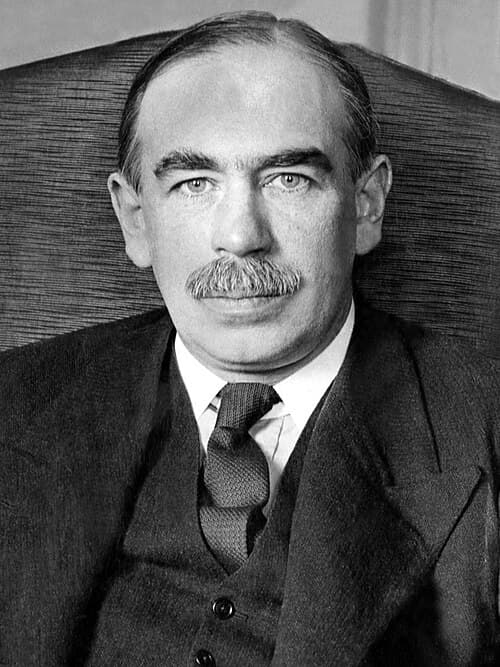
t holds still. But nothing in the equation says it will. It says that less consumption means either more growth or less output. It doesn’t say which. John Maynard Keynes, probably the most famous and influential economist of the 20" century, put this fact of math a special way in his General Theory of 1936. In his ana
vailable for business to borrow and invest. But business lacked the “animal spirits” to take such a risk ina slump. We saw the same story after 2008. Keynes’ proposal was for government to do the borrowing and investing instead. That’s part of the “fiscal policy” I described in Chapter 1. Here we tend to
saving is invested, as I use the word, but finds different returns. Saving under the mattress is investment at zero return, and drops output just as Keynes said. Investment at the current average return keeps output unchanged. That’s what Keynes meant. But investment at lower returns lowers output, and c
2 mentions1 same-page
Page ?Same page
cond-level thinkers double-think (and triple-think) every angle of every situation. A good example can be seen in the hypothetical newspaper contest John Maynard Keynes wrote about in 1936. Readers would be shown 100 photos and asked to choose the six prettiest girls, with prizes going to the readers who chose the
ipating what average opinion expects the average opinion to be. And there are some, I believe, who practice the fourth, fifth and higher degrees." (Keynes, The General Theory of Employment, Interest and Money, 1936). 3 0 Oaktree Capital Management, L.P. All Rights Resented EFTA00302098 Keynes cre
2 mentions1 same-page
Page ?Same page
country tuned exactly to the needs of her age. Three times over. Inevitably, the world now asks: Can this continue? 46 Eventually the entire world: John Maynard Keynes, The Economic Consequences of the Peace in The Essential Keynes (Boston: Penguin Classics, 2015) 47 It was possible: Herman Kahn, On Thermonuclear W
tire world was pulled into the fire. “In the autumn of 1919, in which I write, we are at the dead season of our fortunes,” the economist John Maynard Keynes wrote after the Paris Peace Conference settled The Great War, dimly aware that an even deader season lay somewhere in the future in the form of anoth
Sponsored
Mutual Connections (17)
Entities connected to both John Maynard Keynes and Keynes
George W. Bush
PERSON2 w/ John·19 w/ Keynes
Marc Rich
PERSON3 w/ John·18 w/ Keynes
Prince Charles
PERSON3 w/ John·13 w/ Keynes
Alan Dershowitz
PERSON2 w/ John·12 w/ Keynes
Harvey Weinstein
PERSON2 w/ John·11 w/ Keynes
Vietnam
LOCATION2 w/ John·8 w/ Keynes
Prince Andrew
PERSON3 w/ John·7 w/ Keynes
CW
Courtney Wild
PERSON2 w/ John·7 w/ Keynes
Warren Buffett
PERSON2 w/ John·6 w/ Keynes
Philadelphia
LOCATION2 w/ John·6 w/ Keynes
William Shakespeare
PERSON2 w/ John·6 w/ Keynes
Virginia Giuffre
PERSON2 w/ John·5 w/ Keynes
Paul Volcker
PERSON2 w/ John·3 w/ Keynes
Amherst
LOCATION2 w/ John·3 w/ Keynes
Karl Marx
PERSON2 w/ John·3 w/ Keynes
John Stuart Mill’s
PERSON2 w/ John·2 w/ Keynes
Pearl Harbor
LOCATION2 w/ John·2 w/ Keynes