Back to Network

















3
Shared Docs
3
Same-Page
3 / 5
Mentions
Document Mentions (3 shared documents)
3 mentions1 same-page
Page ?Same page
o firms. I got standard royalties from sales, not amounting to much, and they got the rest. Six published pieces by age 31 would not have impressed Mozart or Schubert. By lesser standards, it was a pretty good start. There are distinguished composers who have never found a publisher. Tomorrow the world!
vailable for business to borrow and invest. But business lacked the “animal spirits” to take such a risk ina slump. We saw the same story after 2008. Keynes’ proposal was for government to do the borrowing and investing instead. That’s part of the “fiscal policy” I described in Chapter 1. Here we tend to
saving is invested, as I use the word, but finds different returns. Saving under the mattress is investment at zero return, and drops output just as Keynes said. Investment at the current average return keeps output unchanged. That’s what Keynes meant. But investment at lower returns lowers output, and c
3 mentions1 same-page
Page ?Same page
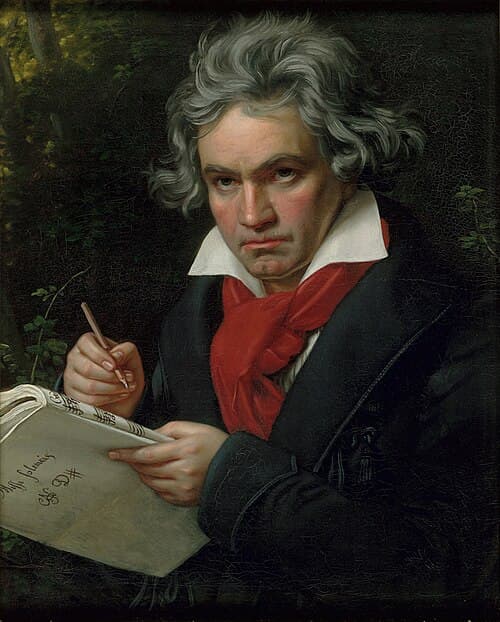
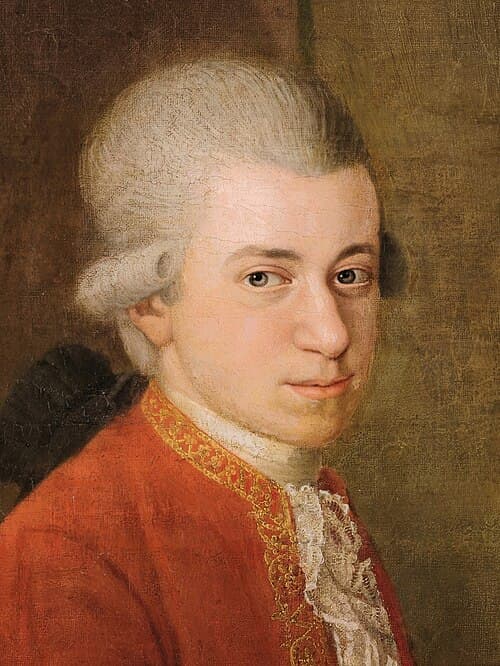
uld change in economics. My pantheon in music is Bach, Beethoven, Schubert, Wagner and Mahler. Mahler, the last-born, died in 1911 at 51. What about Mozart? Clearly colossal. Listen to the slow movements of almost any of his piano concertos. Childlike simplicity, then a slight surprise, then another, and
ht also be surprised at my choice of benchmarks in verse and economics. Masefield and Mill? A consensus might have picked T. S. Elliot, say, and Lord Keynes. Masefield and Mill are likelier to be remembered as old-fashioned fuddy-duddies already outmoded when they wrote. But that’s me. I am Don Quixote. N
b paragraph on growth. The candidates for third seem well behind. Maybe Jevons or John Rae or Leon Walras. Time has not been kind to the teachings of Keynes. I would now rank his teacher Alfred Marshall higher. I like Myrdal’s magnificent ex ante - ex post distinction. Boehm Bawerk and the Austrian school
2 mentions1 same-page
Page ?Same page
st unimaginable amounts of computing power - but what emerges is a subtle, lively kind of insight. A machine with a representational understanding of Mozart's 41 symphonies can write you an extremely convincing 424 - or, if you wish, an even earlier First Symphony based on what it knows about his evolutio
ooking back on his formative years, before Europe was ground up in the First World War, the powerfully brilliant and sensitive economist John Maynard Keynes bitterly recalled the iron certainty of his set of friends and their confident, diffident arrogance: “We were not aware that civilization was a thin
Sponsored
Mutual Connections (212)
Entities connected to both Mozart and Keynes
Jeffrey Epstein
PERSON98 w/ Mozart·9 w/ Keynes
Beethoven
PERSON70 w/ Mozart·4 w/ Keynes
Stephen Hawking
PERSON35 w/ Mozart·7 w/ Keynes
LB
Leon Black
PERSON31 w/ Mozart·9 w/ Keynes
Marvin Minsky
PERSON31 w/ Mozart·6 w/ Keynes
Marc Rich
PERSON16 w/ Mozart·18 w/ Keynes
George W. Bush
PERSON12 w/ Mozart·19 w/ Keynes
Prince Charles
PERSON13 w/ Mozart·13 w/ Keynes
Alan Dershowitz
PERSON14 w/ Mozart·12 w/ Keynes
DB
Doug Band
PERSON14 w/ Mozart·10 w/ Keynes
Julie K. Brown
PERSON12 w/ Mozart·8 w/ Keynes
Samantha Power
PERSON9 w/ Mozart·10 w/ Keynes
George Mitchell
PERSON17 w/ Mozart·2 w/ Keynes
Prince Andrew
PERSON11 w/ Mozart·7 w/ Keynes
Harvey Weinstein
PERSON7 w/ Mozart·11 w/ Keynes
United States
LOCATION9 w/ Mozart·8 w/ Keynes
Ghislaine Maxwell
PERSON6 w/ Mozart·11 w/ Keynes
Barry Diller
PERSON10 w/ Mozart·5 w/ Keynes
Eric Trump
PERSON7 w/ Mozart·8 w/ Keynes
Michael Cohen
PERSON11 w/ Mozart·3 w/ Keynes