Back to Network














4
Shared Docs
4
Same-Page
4 / 4
Mentions
Document Mentions (4 shared documents)
2 mentions1 same-page
Page ?Same page
se are the thoughts we would most like to study. It might be that computers are not yet powerful enough, and in another few years they will be giving Mozart a run for his money. But there may also be a fundamental difference which renders them incapable of this sort of thinking. This is the crux of the mo
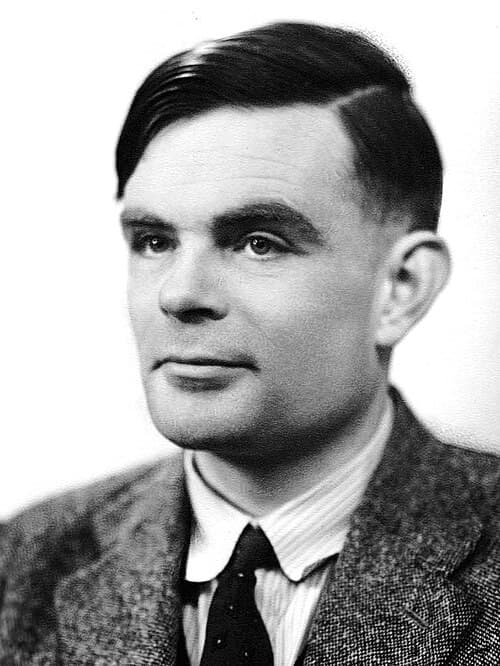
How Alan Turing invented the computer, helped win World War II and left us with one of the greatest puzzles of our time: are humans simply computers or are we more t
2 mentions1 same-page
Page ?Same page
ture, every galaxy could be the output of this single, simple program. My pocket calculator could, theoretically, paint like Picasso and compose like Mozart. All art, knowledge and science would be entirely determined in our Universe and we would have no free will. If you philosophically rebel against thi
, or even a physicist, could grasp! That thing is a Turing Machine. We will examine this next. HOUSE_OVERSIGHT_015898 Chapter 10 TURING’S MACHINE Alan Turing HOUSE_OVERSIGHT_015899 ‘A computer would deserve to be called intelligent if it could deceive a human into believing that it was human.” Alan Turi
2 mentions1 same-page
Page ?Same page
the web. Some people appear to have creativity in abundance and the things they create are truly wonderful. I’m thinking here of Picasso, Einstein, Mozart, Edison, or Maxwell, but a precise definition of creative thinking is hard to pin down. Here are some generally accepted categories: Divergent Think
In the nearly hundred years of investigation since Wallas proposed this theorem, we have not moved much further forward in understanding creativity. Alan Turing described his thoughts on the science behind creativity in a short piece he wrote about decision making: “When making a decision of minor importance
Sponsored
2 mentions1 same-page
Page ?Same page
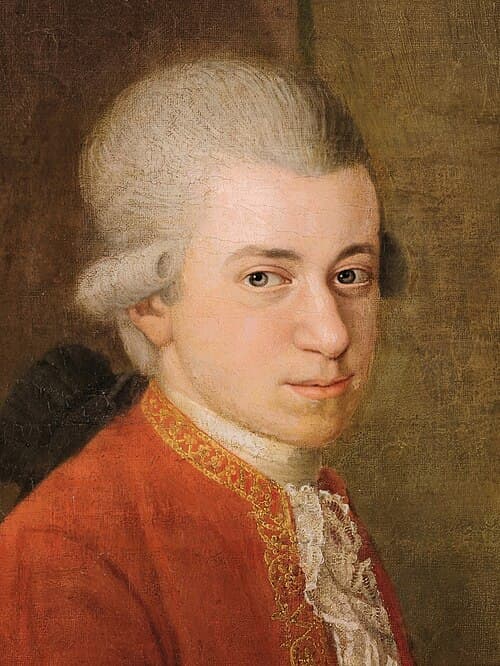
st unimaginable amounts of computing power - but what emerges is a subtle, lively kind of insight. A machine with a representational understanding of Mozart's 41 symphonies can write you an extremely convincing 424 - or, if you wish, an even earlier First Symphony based on what it knows about his evolutio
ended and the machine began. This was a puzzle that had been, in a sense, anticipated at the very dawn of the digital revolution by the mathematician Alan Turing in a 1950 paper called “Computing Machinery and Intelligence” that he published in the British journal Mind. “Can machines think?” Turing began.?5” H
Sponsored
Mutual Connections (217)
Entities connected to both Mozart and Alan Turing
Jeffrey Epstein
PERSON98 w/ Mozart·21 w/ Alan
Beethoven
PERSON70 w/ Mozart·2 w/ Alan
Stephen Hawking
PERSON35 w/ Mozart·27 w/ Alan
Alan Dershowitz
PERSON14 w/ Mozart·34 w/ Alan
LB
Leon Black
PERSON31 w/ Mozart·9 w/ Alan
Marvin Minsky
PERSON31 w/ Mozart·6 w/ Alan
Prince Charles
PERSON13 w/ Mozart·14 w/ Alan
Marc Rich
PERSON16 w/ Mozart·10 w/ Alan
George W. Bush
PERSON12 w/ Mozart·13 w/ Alan
Prince Andrew
PERSON11 w/ Mozart·12 w/ Alan
Turing
PERSON6 w/ Mozart·17 w/ Alan
Samantha Power
PERSON9 w/ Mozart·14 w/ Alan
George Mitchell
PERSON17 w/ Mozart·5 w/ Alan
Eric Trump
PERSON7 w/ Mozart·13 w/ Alan
Julie K. Brown
PERSON12 w/ Mozart·7 w/ Alan
Michael Douglas
PERSON10 w/ Mozart·9 w/ Alan
Harvey Weinstein
PERSON7 w/ Mozart·12 w/ Alan
DB
Doug Band
PERSON14 w/ Mozart·5 w/ Alan
Michael Jackson
PERSON8 w/ Mozart·10 w/ Alan
Earth
LOCATION7 w/ Mozart·10 w/ Alan