Back to Network













4
Shared Docs
4
Same-Page
4 / 4
Mentions
Document Mentions (4 shared documents)
2 mentions1 same-page
Page ?Same page
iled in over a hundred countries. He studied Physics and Computer Science at Manchester University, Design at Lancaster University and Engineering at Cambridge University. He lives with his family on a farm in Kent, England. www.jamestagg.com HOUSE_OVERSIGHT_015675 “T can't tell you when the last time was that I had
lso respond exponentially, albeit somewhat delayed, so we survive. In the case of computer power there is no opposing immune system fighting back, so Kurzweil thinks computers will achieve almost limitless processing power; perhaps even within our lifetime. He thinks this will lead to some interesting conse
2 mentions1 same-page
Page ?Same page
rfly creating tornados 173 Byrd, William 259 bytes 129 C calculating machines 15 California Institute of Technology (Caltech) xii Call of Duty 290 Cambridge University 17,72, 195, 221 King’s College 211 Mathematical Bridge x Trinity College 193 Wolfson College ix CaMKII 119 Candidate for a Pullet Surprise 139 Canton
sed edition. Penguin, 2001. Jr, Frederick P. Brooks. The Mythical Man Month and Other Essays on Software Engineering. 2nd ed. Addison Wesley, 1995. Kurzweil, Ray. How to Create a Mind: The Secret of Human Thought Revealed. Penguin, 2012. Matiyasevich, Yuri. HILBERT’S TENTH PROBLEM: What Can We Do with Di
2 mentions1 same-page
Page ?Same page
Case for Reason, Science, Humanism, and Progress. Venki Ramakrishnan is a scientist at the Medical Research Council Laboratory of Molecular Biology, Cambridge University; recipient of the Nobel Prize in Chemistry (2009); current president of the Royal Society; and the author of Gene Machine: The Race to Discover the S
blication of Ray Kurzweil’s The Singularity is Near, the idea of technological advance leading to superintelligence is back in force. Some believers, Kurzweil included, regard this singularity as an opportunity: Humans can merge their brains with the superintelligence and thereby live forever. Others, such
Sponsored
Mutual Connections (464)
Entities connected to both Cambridge University and Kurzweil
Prince Charles
PERSON30 w/ Cambridge·2 w/ Kurzweil
Jeffrey Epstein
PERSON22 w/ Cambridge·7 w/ Kurzweil
Julie K. Brown
PERSON24 w/ Cambridge·3 w/ Kurzweil
Michael Douglas
PERSON18 w/ Cambridge·4 w/ Kurzweil
J. Robert Oppenheimer
PERSON19 w/ Cambridge·2 w/ Kurzweil
Marc Rich
PERSON13 w/ Cambridge·8 w/ Kurzweil
Stephen Hawking
PERSON17 w/ Cambridge·4 w/ Kurzweil
Prince Andrew
PERSON14 w/ Cambridge·5 w/ Kurzweil
George W. Bush
PERSON14 w/ Cambridge·3 w/ Kurzweil
Tufts University
ORGANIZATION13 w/ Cambridge·3 w/ Kurzweil
Alan Dershowitz
PERSON10 w/ Cambridge·6 w/ Kurzweil
Eric Trump
PERSON10 w/ Cambridge·5 w/ Kurzweil
Robert Gates
PERSON10 w/ Cambridge·3 w/ Kurzweil
Samantha Power
PERSON10 w/ Cambridge·3 w/ Kurzweil
MF
Maria Farmer
PERSON9 w/ Cambridge·3 w/ Kurzweil
Marvin Minsky
PERSON6 w/ Cambridge·6 w/ Kurzweil
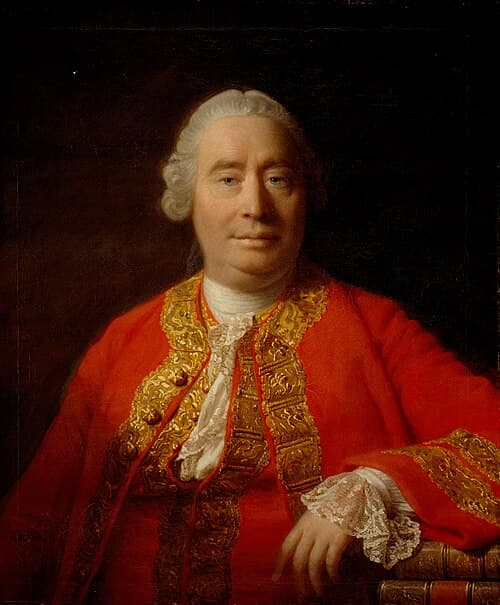
David Hume
PERSON9 w/ Cambridge·3 w/ Kurzweil
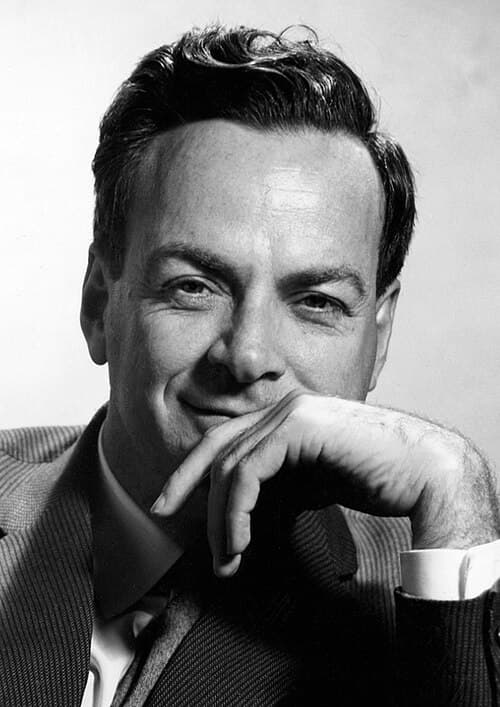
Feynman
PERSON8 w/ Cambridge·4 w/ Kurzweil
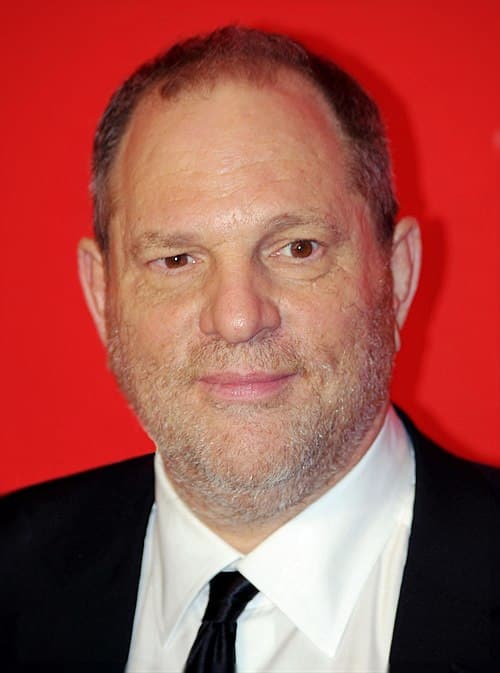
Harvey Weinstein
PERSON8 w/ Cambridge·3 w/ Kurzweil
Joseph Weizenbaum
PERSON8 w/ Cambridge·3 w/ Kurzweil