Back to Network




















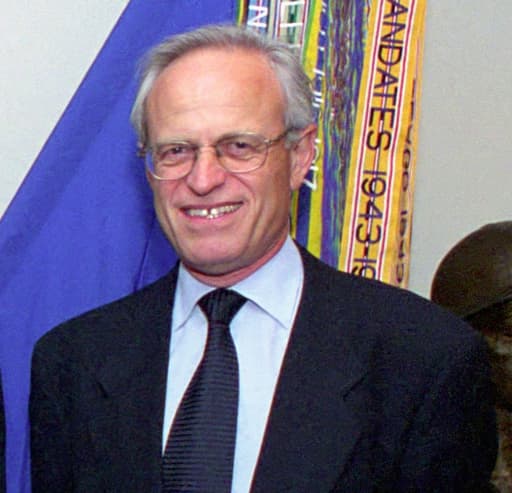
4
Shared Docs
4
Same-Page
12 / 4
Mentions
Document Mentions (4 shared documents)
4 mentions1 same-page
Page ?Same page
ver for the international-Arab alliance which led Saddam Hussein out of Kuwait around 20 years ago, while
the international-Arab alliance which led Saddam Hussein out of Kuwait around 20 years ago, while prior t
Damascus. EFTA00712753 Even President Hosni Mubarak never hesitated for a second to provide a cover for the international-Arab alliance which led Saddam Hussein out of Kuwait around 20 years ago, while prior to that, he had established the Arab Cooperation Council with Baghdad, Amman and Sana'a to remain a
im for a speech in May that accused Moscow of bribing Kyrgyzstan, McFaul tweeted, "Still learning the craft of speaking more diplomatically." 47. Martin Indyk Having spent years in top diplomatic posts during the Clinton administration -- U.S. ambassador to Israel (twice), assistant secretary of state fo
4 mentions1 same-page
Page ?Same page
onomic sanctions have "kicked in" strongly enough to produce the desired result—until now. Sanctions against the regimes led by Slobodan Milosevic, Saddam Hussein and Bashar al-Assad produced scarcity and hardship for the poorest of their citizens but enriched the leadership circle, who exacted higher rents o
s against the regimes led by Slobodan Milosevic, Saddam Hussein and Bashar al-Assad produced scarcity and
st the regimes led by Slobodan Milosevic, Saddam Hussein and Bashar al-Assad produced scarcity and hardsh
nian Talks on Course, but what about the spoiler? Start with the track that is best-positioned: the Israeli-Palestinian negotiations. US negotiator Martin Indyk brings the expertise and the diplomatic and bureaucratic credentials necessary to hold his own in a negotiation where required compromises can be b
4 mentions1 same-page
Page ?Same page
not based on anyone's consent but on coercion and domestic terror. The governing 12 percent minority of the Alawite sect is Syria's equivalent to Saddam Hussein's clan of Tikriti Sunnis, both having ruled cruelly and bloodily. Indeed, the Assads have nursed a particular grudge against the Palestinians, almost
ity of the Alawite sect is Syria's equivalent to Saddam Hussein's clan of Tikriti Sunnis, both having ru
the Alawite sect is Syria's equivalent to Saddam Hussein's clan of Tikriti Sunnis, both having ruled crue
ver, there was almost no hope for such an agreement even before the challenge in the streets. Anyway, which seasoned analysts? The one he quotes is Martin Indyk, who almost always believes that tout va bien, but especially when things are going horridly. Well, we don't really know how badly or, for that mat
Sponsored
4 mentions1 same-page
Page ?Same page
But Israel also has a short-term objective — and that is to play for time. Israel notes that its 1981 bombing of a nuclear reactor in Iraq set back Saddam Hussein's program — and did not result in some sort of massive retaliation. Something similar happened with the 2007 bombing of a Syrian installation. Neithe
e modest number of outside ground troops. They could be partly modeled on the protection we afforded Kurds in Iraq throughout the 1990s, even while Saddam was still in power. Alas, this task would be harder here. There is no natural geographic or demographic logic to any particular possible safe zone
ing of a nuclear reactor in Iraq set back Saddam Hussein's program — and did not result in some sort of ma
can hope for—even if it requires uncomfortable talk of military intervention. Michael 0 'Hanlon is a senior fellow at Brookings and coauthor with Martin Indyk and Kenneth Lieberthal of Bending History: Barack Obama's Foreign Policy. EFTA00660567
Sponsored
Mutual Connections (234)
Entities connected to both Saddam Hussein and Martin Indyk
Barack Obama
PERSON152 w/ Saddam·9 w/ Martin
George W. Bush
PERSON137 w/ Saddam·7 w/ Martin
United States
LOCATION118 w/ Saddam·8 w/ Martin
Bill Clinton
PERSON113 w/ Saddam·9 w/ Martin
Bashar al-Assad
PERSON108 w/ Saddam·7 w/ Martin
Jeffrey Epstein
PERSON107 w/ Saddam·6 w/ Martin
Lebanon
LOCATION98 w/ Saddam·10 w/ Martin
Tehran
LOCATION91 w/ Saddam·7 w/ Martin
Benjamin Netanyahu
PERSON83 w/ Saddam·9 w/ Martin
Marc Rich
PERSON84 w/ Saddam·4 w/ Martin
Middle East
LOCATION80 w/ Saddam·5 w/ Martin
Jerusalem
LOCATION73 w/ Saddam·9 w/ Martin
Hosni Mubarak
PERSON73 w/ Saddam·5 w/ Martin
Damascus
LOCATION70 w/ Saddam·6 w/ Martin
Donald Trump
PERSON72 w/ Saddam·2 w/ Martin
Joe Biden
PERSON70 w/ Saddam·2 w/ Martin
Terje Rod-Larsen
PERSON64 w/ Saddam·7 w/ Martin
Yemen
LOCATION67 w/ Saddam·4 w/ Martin
Tunisia
LOCATION65 w/ Saddam·4 w/ Martin
Hillary Clinton
PERSON62 w/ Saddam·7 w/ Martin