Back to Network



















5
Shared Docs
4
Same-Page
16 / 5
Mentions
Document Mentions (5 shared documents)
5 mentions1 same-page
Page ?Same page
What Judis conveniently neglects to describe fully, however, is the central role the owner of the house in question, the Grand Mufti, Hajj Ammin al- Husseini, had in stirring things up. He didn't just convene international conferences, as Judis notes. Throughout the 1920s, he distributed The Protocols of
ed simulacrum of democracy rather than doing away with it altogether, and thus discrediting it further. The next big setback was the Iraq war. When Saddam Hussein's fabled weapons of mass destruction failed to materialise after the American-led EFTA00684346 invasion of 2003, Mr Bush switched instead to justif
her. The next big setback was the Iraq war. When Saddam Hussein's fabled weapons of mass destruction fai
he next big setback was the Iraq war. When Saddam Hussein's fabled weapons of mass destruction failed to m
ey are built on firm foundations. Getting democracy right THE most striking thing about the founders of modern democracy such as James Madison and John Stuart Mill is how hard-headed they were. They regarded democracy as a powerful but imperfect mechanism: something that needed to be designed carefully, in ord
4 mentions1 same-page
Page ?Same page
n exist. All of this changed in 1990, when Saddam Hussein invaded Kuwait, and President George H. W. Bush
Central Command, which oversees U.S. military operations in the Middle East and Central Asia, did not even exist. All of this changed in 1990, when Saddam Hussein invaded Kuwait, and President George H. W. Bush dispatched 700,000 troops to expel him and defend Saudi Arabia. After the war was won, thousands st
t, and President George H. W. Bush dispatched 700,000 troops to expel him and defend Saudi Arabia. After the war was won, thousands stayed to deter Saddam, and to enforce no-fly zones over Iraq. Before the Gulf War, the Saudi native Osama bin Laden and his associates had focused on supporting the Muja
lity. Free migration, like totally free trade, remains a utopian prospect, even though within regions (such as Europe) this has proved workable. As John Stuart Mill forcefully argued, we need to ensure that the local and short-term social costs of immigration do not detract from their role "as one of the primary
4 mentions1 same-page
Page ?Same page
quickly loses its appeal when one is dealing with dictators who are less noxious. And even when they are not less noxious, as in the case of Iraq's Saddam Hussein, the moral argument for their removal is still fraught with difficulty since the worse the autocrat, the worse the chaos left in his wake. That is
y are not less noxious, as in the case of Iraq's Saddam Hussein, the moral argument for their removal is
ot less noxious, as in the case of Iraq's Saddam Hussein, the moral argument for their removal is still f
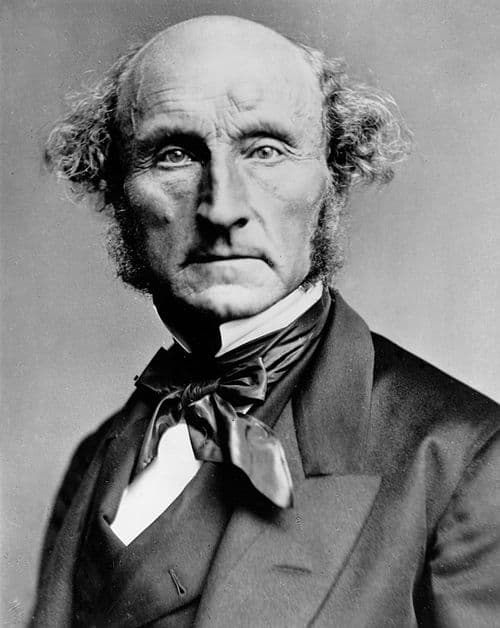
tional Interest The Good Autocrat Robert D. Kaplan June 21, 2011 -- IN HIS extended essay, On Liberty, published in 1859, the English philosopher John Stuart Mill famously declares, "That the only purpose for which power can be rightfully exercised over any member of a civilized community, against his will, i
Sponsored
4 mentions1 same-page
Page ?Same page
ions of = military strike are not widely discussed. This ominously echoes the run up to the war in Iraq.ap> When Washington was preparing t= invade Saddam Hussein's Iraq, little consideration was given to what ca=e next. Ten years later, the mistakes are evident. Iraq did not pose the immediate security threat t
Iraq.ap> When Washington was preparing t= invade Saddam Hussein's Iraq, little consideration was given to
> When Washington was preparing t= invade Saddam Hussein's Iraq, little consideration was given to what ca
ding someone in an Indian vi=lage or in a remote part of China or Africa who has access to the internet= can see it and can hear about Aristotle and John Stuart Mill, follow the lectures and engage in the onli=e discussion if they want to. For me it's a way of giving expression to =he idea that higher education
Page HOUSE_OVERSIGHT_032192
e National Interest The Good Autocrat Robert D. Kaplan June 21, 2011 -- IN HIS extended essay, On Liberty, published in 1859, the English philosopher John Stuart Mill famously declares, "That the only purpose for which power can be rightfully exercised over any member of a civilized community, against his will, is
Page: HOUSE_OVERSIGHT_032192 →Page HOUSE_OVERSIGHT_032195
g quickly loses its appeal when one is dealing with dictators who are less noxious. And even when they are not less noxious, as in the case of Iraq's Saddam Hussein, the moral argument for their removal is still fraught with difficulty since the worse the autocrat, the worse the chaos left in his wake. That is be
Page: HOUSE_OVERSIGHT_032195 →ey are not less noxious, as in the case of Iraq's Saddam Hussein, the moral argument for their removal is
Page: HOUSE_OVERSIGHT_032195 →not less noxious, as in the case of Iraq's Saddam Hussein, the moral argument for their removal is still fr
Page: HOUSE_OVERSIGHT_032195 →Sponsored
Mutual Connections (130)
Entities connected to both Saddam Hussein and John Stuart Mill
Barack Obama
PERSON152 w/ Saddam·5 w/ John
George W. Bush
PERSON137 w/ Saddam·5 w/ John
Bill Clinton
PERSON113 w/ Saddam·3 w/ John
Bashar al-Assad
PERSON108 w/ Saddam·4 w/ John
Lebanon
LOCATION98 w/ Saddam·2 w/ John
Tehran
LOCATION91 w/ Saddam·3 w/ John
Marc Rich
PERSON84 w/ Saddam·2 w/ John
Middle East
LOCATION80 w/ Saddam·4 w/ John
Hosni Mubarak
PERSON73 w/ Saddam·4 w/ John
Jerusalem
LOCATION73 w/ Saddam·4 w/ John
Damascus
LOCATION70 w/ Saddam·2 w/ John
Yemen
LOCATION67 w/ Saddam·2 w/ John
Vladimir Putin
PERSON66 w/ Saddam·3 w/ John
Tunisia
LOCATION65 w/ Saddam·2 w/ John
Samantha Power
PERSON63 w/ Saddam·3 w/ John
Hillary Clinton
PERSON62 w/ Saddam·2 w/ John
Ronald Reagan
PERSON57 w/ Saddam·2 w/ John
LB
Leon Black
PERSON52 w/ Saddam·2 w/ John
Condoleezza Rice
PERSON48 w/ Saddam·3 w/ John
Mahmoud Abbas
PERSON45 w/ Saddam·4 w/ John