Back to Network




10
Shared Docs
10
Same-Page
21 / 20
Mentions
Document Mentions (10 shared documents)
5 mentions1 same-page
Page ?Same page
and now, Bashar al-Assad is under the protection of the Security Council because of the chemical weapons resolution. And [U.S.] Secretary [of State John] Kerry is saying that Bashar al-Assad has to stay in power until the chemical weapons are removed and everybody is saying these weapons aren't going to be
ixty-seventh secretary will be remembered more for talking about diplomacy's importance than for actually using it to great effect. By contrast Mr. Kerry's legacy as Secretary of State is already sure to be defined by the success or failure of major U.S. diplomatic initiatives to secure compromises f
s by mediating conflicting territorial claims—as Secretary Kerry proposed in his recent Asia travels—and probing
istances. In a 75-minute conversation, Hagel gave me his version of the Middle East crisis tour. Talking with him, I found, was not like talking to Donald Rumsfeld. Interviewing Rumsfeld at this table was like interviewing a razor blade; one wrong move and you'd get cut. Hagel, on the other hand, is tranquil,
rsation, Hagel gave me his version of the Middle East crisis tour. Talking with him, I found, was not like talking to Donald Rumsfeld. Interviewing Rumsfeld at this table was like interviewing a razor blade; one wrong move and you'd get cut. Hagel, on the other hand, is tranquil, conversational, and ver
4 mentions1 same-page
Page ?Same page
nist, Charles Krauthammer wrote this op- ed -- Why we give foreign aid -- supporting the Obama Administration and in particular, Secretary of State John Kerry, traveling to Cairo and handing President Mohamed Morsi of Egypt, a cool $250 million in foreign aid during the current sequestration. Remember, Mor
ation and in particular, Secretary of State John Kerry, traveling to Cairo and handing President Mohamed
, Bush belatedly moved to rein in his vice president, siding with Justice Department lawyers on surveillance issues; firing Cheney's dearest friend, Donald Rumsfeld, from his Pentagon job; letting Secretary of State Condoleezza Rice win the argument over whether to bomb a Syrian nuclear reactor site (we didn't)
ened. After Iraq, there has been a weird amnesty and amnesia about people's misjudgment on the most consequential decision of our times.... Cheney, Rumsfeld, Wolfowitz, Bremer, Rice, McCain, Abrams, and others including the pro-war press claque are still offering their judgments unfazed. One of my fathe
4 mentions1 same-page
Page ?Same page
-- despite Obama's protestations to the contrary -- make them likely to be less effective. While the president, and particularly Secretary of State John Kerry in his effective remarks on Friday, have made a compelling case for American action in Syria, one can never underestimate this Congress's ability t
rs of his presidency. As Secretary of State John Kerry said on Friday, in making the case for a militar
c 5. Project Syndicate Autumn's Known Unknowns Nouriel Roubini 31 August 2013 -- During the height of the Iraq war, then-US Secretary of Defense Donald Rumsfeld spoke of "known unknowns" — foreseeable risks whose realization is uncertain. Today, the global economy is facing many known unknowns, most of whic
he Iraq war, then-US Secretary of Defense Donald Rumsfeld spoke of "known unknowns" — foreseeable risks wh
Sponsored
4 mentions1 same-page
Page ?Same page
won his by nine points. In 2004, Bush beat John Kerry by just 2.5 points, the smallest margin of victo
margin of twenty-three points. In 1984, Reagan won his reelection by eighteen points. In 1992, Clinton won his by nine points. In 2004, Bush beat John Kerry by just 2.5 points, the smallest margin of victory for the reelection of a President since the nineteenth century. Obama won in 2008 by seven point
esident Dick Cheney and Defense Secretary Donald Rumsfeld—most associated with extreme views of how to han
of the first four years. During the 2004 campaign, Bush came close to jettisoning the two people—Vice-President Dick Cheney and Defense Secretary Donald Rumsfeld—most associated with extreme views of how to handle post-9/11 foreign affairs. After the election, Cheney saw the influence of his principal ideolo
4 mentions1 same-page
Page ?Same page
ith Secrets,” Los Angeles Mirror, Aug. 2, 1960, 1. Also see Rick Anderson, “Before Edward Snowden,” Salon, July 1, 2013. 115 “man up”: Interview with John Kerry, CBS This Morning, May 28, 2014. 115 By the Lawfare Institute’s count: https://www.lawfareblog.com/snowden -revelations. 116 British cyber service GC
, July 1, 2013. 115 “man up”: Interview with John Kerry, CBS This Morning, May 28, 2014. 115 By the Lawfa
, neither it nor its allies were able to find a trace of Snowden during that time. It was, in a phrase made famous by the former secretary of defense Donald Rumsfeld, “a known unknown.” Just as likely he could have been staying in a well-prepared safe house anywhere in Hong Kong or even at the home of an unknown a
famous by the former secretary of defense Donald Rumsfeld, “a known unknown.” Just as likely he could have
4 mentions1 same-page
Page ?Same page
on, July 1, 2013 5. “Man up”—Interview with John Kerry, CBS This Morning (TV), May 28, 2014 6. “British
Secrets.” Los Angeles Mirror, p.1, August 2, 1960. Also see, Rick Anderson,, “Before Edward Snowden,” Salon, July 1, 2013 5. “Man up”—Interview with John Kerry, CBS This Morning (TV), May 28, 2014 6. “British cyber service GCHQ ...”—RT Television report “NSA, GCHQ targeted Kaspersky, other cyber security co
made famous by former Secretary of Defense Donald Rumsfeld. “A known unknown.” Yet there HOUSE_OVERSIGHT_02
CCTV cameras, neither it, nor its allies, were able to find a trace of Snowden. It was, in a phrase later made famous by former Secretary of Defense Donald Rumsfeld. “A known unknown.” Yet there HOUSE_OVERSIGHT_020371 220 provided no basis to speculate that he was in mainland China. He could have been staying
Sponsored
4 mentions1 same-page
Page ?Same page
when leading officials remark that their main concern is a rising China or revanchist Russia or that we live in a world where, as Secretary of State John Kerry said, “terrorism is the principal challenge,” they are missing the point. The fundamental threat to American interests isn’t China or Al Qaeda or Ira
live in a world where, as Secretary of State John Kerry said, “terrorism is the principal challenge,” the
ging the most expensive war on terrorism in human history, the US was uneasily discovering that it was creating more terrorists. Secretary of Defense Donald Rumsfeld had sketched the nature of this puzzle in an October, 2003 memo with acid clarity. He asked: “Are we capturing, killing or deterring and dissuading m
yond what the soldiers and analysts could match or even fully monitor. “Is our current situation such that ‘the harder we work, the behinder we get?” Rumsfeld asked in 2003.38 To be constantly behind. This was a commander’s nightmare. Among other things it was that sense of never quite catching up that had
4 mentions1 same-page
Page ?Same page
4.4 ME PALM BEACH POST • MONDAY. AUGUST 14. 2006 Jeffrey Epstein has donated more than $100,000 to Democratic candidates' campaigns, including John Kerry's presidential bid, the reelection campaign of New Mexico Gov. Bill Richardson and the Senate bids of Joe Lieberman, Hillary Clinton, Christopher Dod
Sintilarly. Mr Bush defeated Sen. John Kerry, D-Mass.. two years ago by constantly resurrecting the sear- ing memory of 9/11 and questioning Sen. Kerry's toughness against terror- ism. In the months leading up to the election. the Bush administration is- sued a terror alert about once a week. O(kll
estimating $200 billion for Iraq. but that was before a monumentally mismanaged occupation and a civil war. Back then, in 2002. Defense Secretary Donald Rtunsfeld thought $50 billion to $60 billion woukl do the job, but he asked people not to hold him to a hard number. For the record, the price tag pas
" he said, "what history decides." U.S. troops and their families, as well as the Iraqis dying every day. are more than Interested" in whether Mr. Rumsfeld and President Bush are making good decisions. The generals and Mr. Rumsfeld also continued the administration's soft retreat from taking full res
4 mentions1 same-page
Page ?Same page
ndidates and organizations, including Sen. John Kerry's presidential bid, and the Senate campaigns of
after Clinton left the Oval Office and moved to New York. Epstein. has donated more than $100,000 to Democratic candidates' campaigns, including John Kerry's• presidential bid, the reelection campaign of New Mexico. Gov. BM Richardson and the Senate bids of Joe Lieberman, Hillary Rodham Clinton, Christop
e Chairman Citicorp/Citibank, Brussels Donald H. Rumsfeld, U.S. Secretary of Defense Arthur F. Ryan, CEO,
or Development, Mexico City William D. Ruckershaus, Chairman, CEO, Browning-Ferris Ind. H. Onno Ruding, vice Chairman Citicorp/Citibank, Brussels Donald H. Rumsfeld, U.S. Secretary of Defense Arthur F. Ryan, CEO, The Prudential Insurance Co. of America Rusdu Saracoglu, President of the Finance Group, Turkey Si
Sponsored
4 mentions1 same-page
Page ?Same page
Democratic candidates' campaigns, including John Kerry's presidential bid, the reelection campaign of N
til after Clinton left the Oval Office and moved to New York. Epstein has donated more than $100,000 to Democratic candidates' campaigns, including John Kerry's presidential bid, the reelection campaign of New Mexico Gov. Bill Richardson and the Senate bids of Joe Lieberman, Hillary Rodham Clinton, Christop
recently for writing a book in defence of Donald Rumsfeld in which she argued passionately for the former d
the New York Review of Books' founder Robert Silvers and Midge Decter - an ultra-conservative writer known recently for writing a book in defence of Donald Rumsfeld in which she argued passionately for the former defence secretary's "manliness". http://www.smh.com.au/news/business/surprise-party-cost-no-mere-tru
Sponsored
Mutual Connections (998)
Entities connected to both John Kerry and Donald Rumsfeld
Jeffrey Epstein
PERSON397 w/ John·31 w/ Donald
George W. Bush
PERSON172 w/ John·47 w/ Donald
Prince Andrew
PERSON167 w/ John·24 w/ Donald
Barack Obama
PERSON141 w/ John·40 w/ Donald
Bill Clinton
PERSON133 w/ John·37 w/ Donald
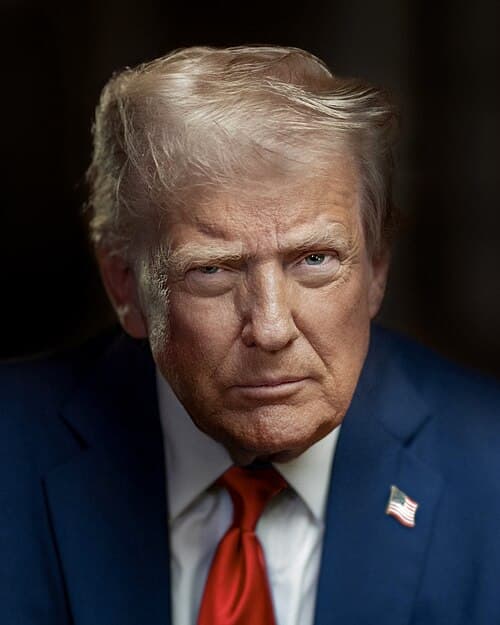
Donald Trump
PERSON131 w/ John·32 w/ Donald
United States
LOCATION122 w/ John·31 w/ Donald
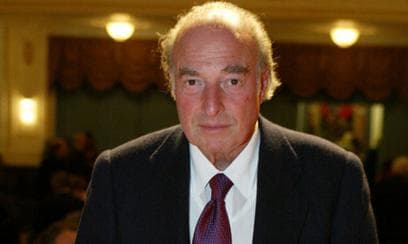
Marc Rich
PERSON130 w/ John·18 w/ Donald
LB
Leon Black
PERSON125 w/ John·15 w/ Donald
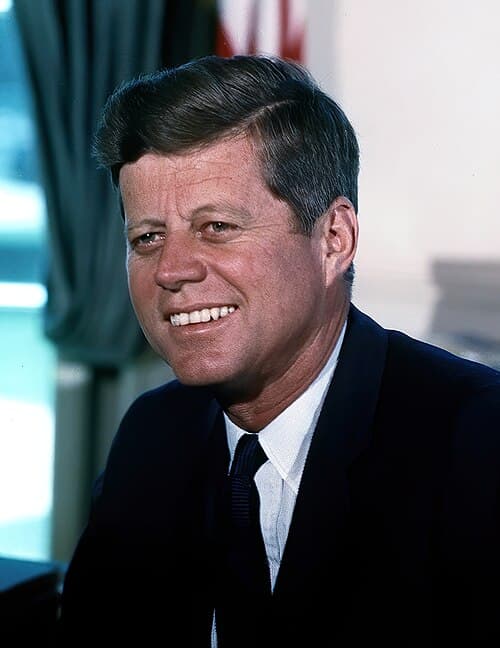
John F. Kennedy
PERSON117 w/ John·21 w/ Donald
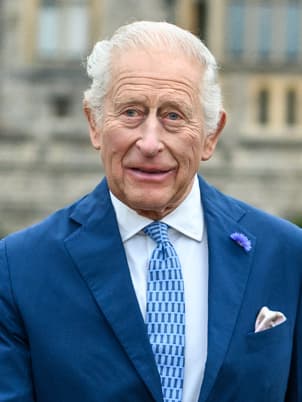
Prince Charles
PERSON110 w/ John·24 w/ Donald
Joe Biden
PERSON112 w/ John·21 w/ Donald
Julie K. Brown
PERSON114 w/ John·17 w/ Donald
Richard Kahn
PERSON120 w/ John·7 w/ Donald
Alan Dershowitz
PERSON107 w/ John·13 w/ Donald
Stephen Hawking
PERSON95 w/ John·22 w/ Donald
Ghislaine Maxwell
PERSON98 w/ John·17 w/ Donald
Department of Justice
ORGANIZATION86 w/ John·28 w/ Donald
George Mitchell
PERSON90 w/ John·18 w/ Donald
Eric Trump
PERSON84 w/ John·22 w/ Donald