Back to Network














4
Shared Docs
4
Same-Page
7 / 4
Mentions
Document Mentions (4 shared documents)
3 mentions1 same-page
Page ?Same page
n officials talk frequently about China in domestic contexts, the president's policy toward Beijing is fundamentally incoherent. Two recent books, Henry Kissinger's On China and Aaron Friedberg's A Contest for Supremacy: China, America, and the Struggle for Mastery in Asia, suggest two very different interpret
a, and the Struggle for Mastery in Asia, suggest two very different interpretations of Chinese conduct and propose alternative American responses. Kissinger views China as a rising but thus far moderate power and warns against creating a self-fulfilling prophecy that could lead to zero-sum competition b
ut it's kind of like, "Mirror, mirror, on the wall, who's the most important Muslim Arab Third World leader of them all?" And the answer is, "You, Muammar." He is really going have a very difficult time seeing people celebrating his going down, in terms of trying to sustain that heroic inner image. E
3 mentions1 same-page
Page ?Same page
ne in emergency talks with his Soviet counterpart. The risk of war passed despite Beijing's provocative rhetoric, but Chinese bitterness did not—as Henry Kissinger would learn during his first meeting with Deng Xiaoping in 1974, when the topic of a U.S.-Soviet arms summit in Vladivostok prompted the future Chi
hetoric, but Chinese bitterness did not—as Henry Kissinger would learn during his first meeting with Deng X
ged to assume ownership of that process in an inclusive manner and thereby make it self-sustaining. Ditto Libya, where President Obama removed Col. Muammar el- Qaddafi's top-down, iron-fisted regime, but he declined to put U.S. troops on the ground to midwife a new social contract. The result: Libya to
Sponsored
2 mentions1 same-page
Page ?Same page
emical attack, 183-84, 188-93 Kim Jong-un, 293 King, Martin Luther, Jr., 50-51 Kirk, Russell, 127 Kislyak, Sergey, 95, 106, 151, 154-55, 218, 236 Kissinger, Henry, 41, 77, 142, 145, 193, 226-28 Koch brothers, 178 Kudlow, Larry, 143, 207 Ku Klux Klan (KKK), 294-95 Kurtz, Howard, 217 Kushner, Charlie,
127-28, 140, 159, 195-97, 205, 217, 223, 237, 272, 284, 298 Franken, Al, 151-52 Freedom Caucus, 161, 171 Fusion GPS, 37, 99 G20 summit, 257 Gaddafi, Muammar, 270 Gamergate, 59 Gawker, 308 Gaza, 6 Gazprom, 101 Geffen, David, 12, 178 General Electric (GE), 88 HOUSE_OVERSIGHT_020126 General Motors, 88
Sponsored
Mutual Connections (192)
Entities connected to both Henry Kissinger and Muammar
Jeffrey Epstein
PERSON143 w/ Henry·3 w/ Muammar
Bill Clinton
PERSON70 w/ Henry·3 w/ Muammar
George W. Bush
PERSON66 w/ Henry·7 w/ Muammar
Marc Rich
PERSON67 w/ Henry·5 w/ Muammar
Barack Obama
PERSON53 w/ Henry·9 w/ Muammar
Donald Trump
PERSON55 w/ Henry·5 w/ Muammar
United States
LOCATION55 w/ Henry·4 w/ Muammar
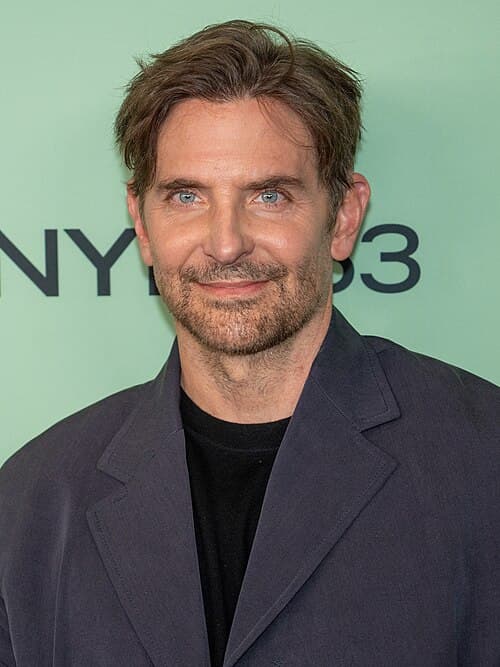
Bradley Cooper
PERSON51 w/ Henry·3 w/ Muammar
John F. Kennedy
PERSON48 w/ Henry·2 w/ Muammar
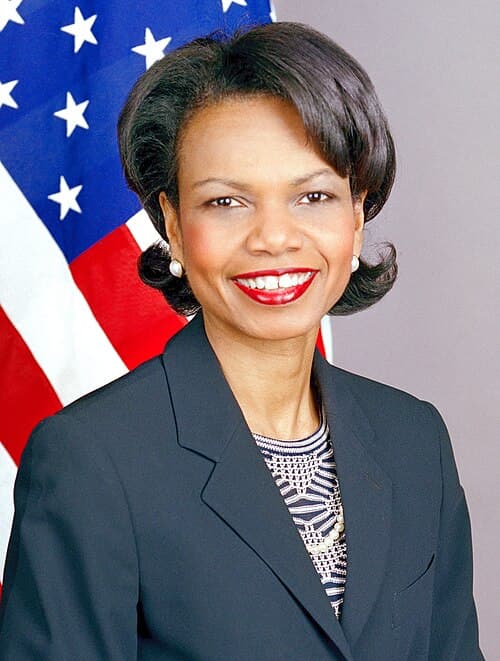
Condoleezza Rice
PERSON43 w/ Henry·4 w/ Muammar
Bashar al-Assad
PERSON38 w/ Henry·9 w/ Muammar
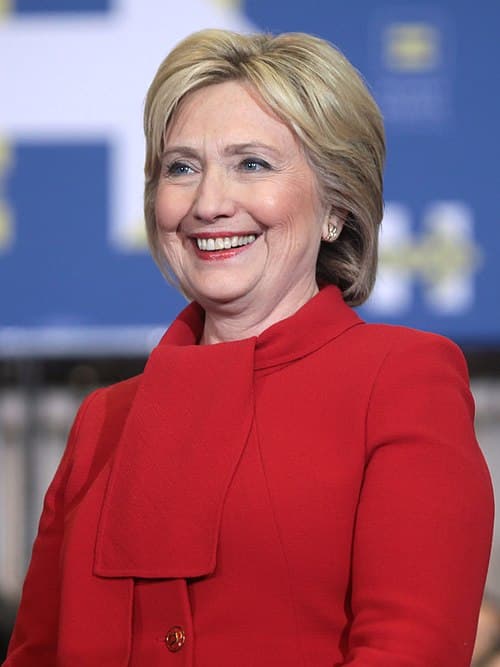
Hillary Clinton
PERSON41 w/ Henry·3 w/ Muammar
Samantha Power
PERSON37 w/ Henry·5 w/ Muammar
Hosni Mubarak
PERSON32 w/ Henry·7 w/ Muammar
Saddam Hussein
PERSON30 w/ Henry·9 w/ Muammar
Lebanon
LOCATION33 w/ Henry·6 w/ Muammar
Middle East
LOCATION32 w/ Henry·6 w/ Muammar
Yemen
LOCATION28 w/ Henry·9 w/ Muammar
Tunisia
LOCATION27 w/ Henry·9 w/ Muammar
Jerusalem
LOCATION30 w/ Henry·4 w/ Muammar