Back to Network
















5
Shared Docs
4
Same-Page
15 / 5
Mentions
Document Mentions (5 shared documents)
4 mentions1 same-page
Page ?Same page
me during this critical stage of Israel’s history, had guided me from the moment I became Prime Minister. In my very first discussions with President Clinton a year earlier — a long weekend, beginning at the White House and moving on to Camp David — I had mapped out at great length, in great detail, every
ut with guns and explosives — would be only a matter of time. I knew something else as well. This would be a moment of truth not just for me. Or for Bill Clinton, a man who understood our conflict more deeply, and was more determined to help us end it, than any other president before him. It was a moment of tr
Prime Minister. In my very first discussions with President Clinton a year earlier — a long weekend, beginning at the
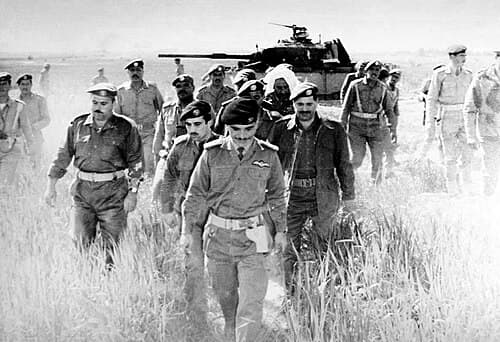
ter Israel had defeated the armies of our three main Arab enemies — Egypt, Syria and Jordan. Israeli forces were advancing on a Jordanian town called Karameh, across the 5 HOUSE_OVERSIGHT_011476 Jordan River from the West Bank, from which a fledgling group called Fatah, under the command of Arafat, had b
4 mentions1 same-page
Page ?Same page
central role meant the threat to Israel would be dramatically reduced. I’m much less sure whether the elder President Bush, whose election defeat to Bill Clinton came just two days before our final exercise in the Negev, would have agreed with the attack. After the victory in the Gulf War, Bush had deliberatel
ut international politics. I remember one afternoon in the summer of 1992 when he mentioned the then US presidential candidate Bill Clinton. He’d met Clinton for the first time in Washington, after two days of talks with President Bush at his summer home in Maine. Rabin was naturally more comfortable deali
ld go on to forge a much closer relationship with President Clinton than between any previous Israeli and US leader.
ut. My own hope was that the nod would go to any even closer friend of mine: Dan Shomron. I had first got to know Dan well in the late sixties after Karameh, Israel’s costly standoff with Arafat, when Fatah’s influence was in its infancy. We exchanged impressions on what had gone wrong, and why? When I be
4 mentions1 same-page
Page ?Same page
me during this critical stage of Israel’s history, had guided me from the moment I became Prime Minister. In my very first discussions with President Clinton a year earlier — a long weekend, beginning at the White House and moving on to Camp David — I had mapped out at great length, in great detail, every
ut with guns and explosives — would be only a matter of time. I knew something else as well. This would be a moment of truth not just for me. Or for Bill Clinton, a man who understood our conflict more deeply, and was more determined to help us end it, than any other president before him. It was a moment of tr
Prime Minister. In my very first discussions with President Clinton a year earlier — a long weekend, beginning at the
ter Israel had defeated the armies of our three main Arab enemies — Egypt, Syria and Jordan. Israeli forces were advancing on a Jordanian town called Karameh, across the 5 HOUSE_OVERSIGHT_027853 Jordan River from the West Bank, from which a fledgling group called Fatah, under the command of Arafat, had b
Sponsored
4 mentions1 same-page
Page ?Same page
central role meant the threat to Israel would be dramatically reduced. I'm much less sure whether the elder President Bush, whose election defeat to Bill Clinton came just two days before our final exercise in the Negev, would have agreed with the attack. After the victory in the Gulf War, Bush had deliberatel
ut international politics. I remember one afternoon in the summer of 1992 when he mentioned the then US presidential candidate Bill Clinton. He'd met Clinton for the first time in Washington, after two days of talks with President Bush at his summer home in Maine. Rabin was naturally more comfortable deali
ld go on to forge a much closer relationship with President Clinton than between any previous Israeli and US leader.
rut. My own hope was that the nod would go to any even closer friend of mine: Dan Shomron. I had first got to know Dan well in the late sixties after Karameh, Israel's costly standoff with Arafat, when Fatah's influence was in its infancy. We exchanged impressions on what had gone wrong, and why? When I be
Page HOUSE_OVERSIGHT_023140
1995) 441 Sharm el-Sheikh Summit of Peacemakers Final Statement (13 March 1996) 454 Camp David Statement (25 July 2000) 456 Remarks by US President Bill Clinton and President Hosni Mubarak of Egypt in Delivery of Joint Statements at the Conclusion of the Middle East Peace Summit (17 October 2000) 458 Clinton
Page: HOUSE_OVERSIGHT_023140 →Page HOUSE_OVERSIGHT_023152
eights. 1 September 1967 Khartoum Resolution of the three ‘Noes’. 22 November 1967 UN Security Council Resolution 242. 21 March 1968 The battle of Karameh between Israel and Fatah and Jordanian forces. First direct military confrontation between Israeli and Palestinian forces. 17 July 1968 The Palestini
Page: HOUSE_OVERSIGHT_023152 →Page HOUSE_OVERSIGHT_023156
ber 1998 Wye River Agreement signed by Arafat and Netanyahu. 14 December 1998 The Palestinian National Council convenes in the presence of President Clinton to reaffirm the annulling of clauses of the Palestinian Charter which denied Israel’s right to exist. 7 February 1999 King Hussein of Jordan dies. A
Page: HOUSE_OVERSIGHT_023156 →12/9/2014, SPi xxiv Chronology 15 December 1999 President Clinton hosts summit meeting with Israel’s Prime Minister
Page: HOUSE_OVERSIGHT_023156 →Sponsored
Mutual Connections (636)
Entities connected to both Bill Clinton and Karameh
George W. Bush
PERSON800 w/ Bill·5 w/ Karameh
Barack Obama
PERSON648 w/ Bill·3 w/ Karameh
Marc Rich
PERSON599 w/ Bill·2 w/ Karameh
LB
Leon Black
PERSON566 w/ Bill·5 w/ Karameh
United States
LOCATION528 w/ Bill·3 w/ Karameh
Virginia Giuffre
PERSON408 w/ Bill·2 w/ Karameh
John F. Kennedy
PERSON337 w/ Bill·2 w/ Karameh
Stephen Hawking
PERSON311 w/ Bill·2 w/ Karameh
DB
Doug Band
PERSON246 w/ Bill·4 w/ Karameh
Michael Cohen
PERSON239 w/ Bill·6 w/ Karameh
Ehud Barak
PERSON222 w/ Bill·7 w/ Karameh
Wilbur Ross
PERSON217 w/ Bill·2 w/ Karameh
Benjamin Netanyahu
PERSON199 w/ Bill·7 w/ Karameh
CW
Courtney Wild
PERSON201 w/ Bill·4 w/ Karameh
Ronald Reagan
PERSON186 w/ Bill·5 w/ Karameh
Condoleezza Rice
PERSON177 w/ Bill·3 w/ Karameh
CS
Christopher Steele
PERSON157 w/ Bill·2 w/ Karameh
Lebanon
LOCATION146 w/ Bill·7 w/ Karameh
James Baker
PERSON149 w/ Bill·2 w/ Karameh
Bashar al-Assad
PERSON143 w/ Bill·5 w/ Karameh