Back to Network



















4
Shared Docs
4
Same-Page
7 / 4
Mentions
Document Mentions (4 shared documents)
3 mentions1 same-page
Page ?Same page
f I firms. Now, thirteen months after his inauguration, he was facing p sonal legal trouble at least as great as that faced by Richard Nixon and E Clinton, and doing so with what seemed like, at best, a Court Street lei team. But Trump appeared to be oblivious to this exposed flank. Ratch' ing up his
convince liberals that the populist way ought to be their way, too. Early in the year, Bannon went to Cambridge to see Larry Summers, who had been Bill Clinton's Treasury secretary, Barack Obama's director of the National Economic Council, and, for a time, president of Harvard. Summers's wife refused to allo
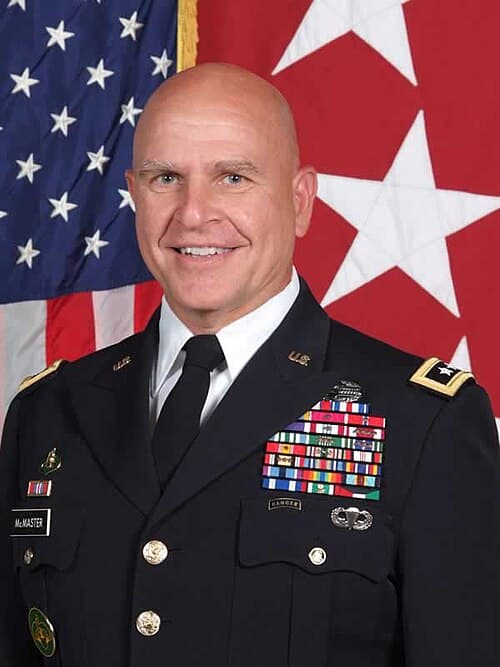
on people carrying Bannon's message as well as the president's. What's more, his enemies in the White House were moving out, includ- ing Hope Hicks, H. R. McMaster, the former national security advisor, and the ever shrinking circle of allies supporting the president's son-in- law and daughter. Bannon was ofte
3 mentions1 same-page
Page ?Same page
ooks products and media. His partner in this enterprise was David Bossie, the far-right pamphleteer and congressional committee investigator into the Clintons’ Whitewater affair, who would join him as deputy campaign manager on the Trump campaign. Bannon met Breitbart News founder Andrew Breitbart at a scre
he simply had no scruples. He was a rebel, a disruptor, and, living outside the rules, contemptuous of them. A close Trump friend who was also a good Bill Clinton friend found them eerily similar—except that Clinton had a respectable front and Trump did not. One manifestation of this outlaw personality, for bo
sidestep the people in your organization and to dominate them. It was just one irony of his courtship of admired military figures like James Mattis, H. R. McMaster, and John Kelly: they found themselves working in an administration that was in every way inimical to basic command principles. 7 OK Ok Almost from
3 mentions1 same-page
Page ?Same page
as Monica Lewinsky and Ken Starr were to the Clinton White House, and he saw the model for escaping a mortal fate in the Clinton response. “What the Clintons did was to go to the mattresses with amazing discipline,” he explained. “They set up an outside shop and then Bill and Hillary never mentioned it aga
ven weeks in office, Trump saw his own predicament as unique and overwhelming. Like no other president before (though he did make some allowances for Bill Clinton), his enemies were out to get him. Worse, the system was rigged against him. The bureaucratic swamp, the intelligence agencies, the unfair courts, th
invariably incurred Trump’s annoyance.) Kushner enlisted Scarborough and Brzezinski in something of a regular morning television Bannon slag-a-thon. H. R. McMaster, the three-star general who had replaced Michael Flynn as National Security Advisor, had secured the president’s pledge that he could veto members of
Sponsored
2 mentions1 same-page
Page ?Same page
n and distribute damaging information about Hillary Clinton—and, indeed, within days of the Don Jr. meeting, WikiLeaks announced that it had obtained Clinton emails. Less than a month later, it started to release them. ¢ The wide-eyed Trump campaign, largely still playacting at running for president— and
was “not taking a pencil to anything.” Nearby, in a small conference room watching the movie Fargo, were Dina Powell, Gary Cohn, Stephen Miller, and H. R. McMaster, all of whom would later insist that they were, however physically close to the unfolding crisis, removed from it. And, indeed, anyone “in the room”
Sponsored
Mutual Connections (266)
Entities connected to both Bill Clinton and H. R. McMaster
Jeffrey Epstein
PERSON2,372 w/ Bill·3 w/ H.
Prince Andrew
PERSON997 w/ Bill·4 w/ H.
Donald Trump
PERSON951 w/ Bill·4 w/ H.
George W. Bush
PERSON800 w/ Bill·4 w/ H.
Hillary Clinton
PERSON777 w/ Bill·4 w/ H.
Barack Obama
PERSON648 w/ Bill·4 w/ H.
Marc Rich
PERSON599 w/ Bill·4 w/ H.
United States
LOCATION528 w/ Bill·2 w/ H.
Department of Justice
ORGANIZATION477 w/ Bill·2 w/ H.
Joe Biden
PERSON446 w/ Bill·3 w/ H.
Virginia Giuffre
PERSON408 w/ Bill·3 w/ H.
John F. Kennedy
PERSON337 w/ Bill·3 w/ H.
Prince Charles
PERSON320 w/ Bill·3 w/ H.
Stephen Hawking
PERSON311 w/ Bill·4 w/ H.
MF
Maria Farmer
PERSON288 w/ Bill·2 w/ H.
George Mitchell
PERSON285 w/ Bill·3 w/ H.
Eric Trump
PERSON272 w/ Bill·2 w/ H.
Bloomberg L.P.
ORGANIZATION252 w/ Bill·2 w/ H.
Michael Jackson
PERSON244 w/ Bill·3 w/ H.
Woody Allen
PERSON244 w/ Bill·2 w/ H.