HOUSE_OVERSIGHT_019874_sub_001 - HOUSE_OVERSIGHT_019973
Document Information
Bates Range
HOUSE_OVERSIGHT_019874_sub_001 - HOUSE_OVERSIGHT_019973
Pages
100
Source
House Oversight Committee
Original Filename
Fire and Fury - Michael Wolff.pdf
Document Content
Page 1 - HOUSE_OVERSIGHT_019874
INSIDE THE TRUMP WHITE HOUSE = — c a4 HOUSE_OVERSIGHT_019874
Page 2 - HOUSE_OVERSIGHT_019875
ALSO BY MICHAEL WOLFF Television Is the New Television: The Unexpected Triumph of Old Media in the Digital Age The Man Who Owns the News: Inside the Secret World of Rupert Murdoch Autumn of the Moguls: My Misadventures with the Titans, Poseurs, and Money Guys Who Mastered and Messed Up Big Media Burn Rate: How I Survived the Gold Rush Years on the Internet Where We Stand White Kids HOUSE_OVERSIGHT_019875
Page 3 - HOUSE_OVERSIGHT_019876
FIRE AND FURY INSIDE THE TRUMP WHITE HOUSE MICHAEL WOLFF HOUSE_OVERSIGHT_019876
Sponsored
Page 4 - HOUSE_OVERSIGHT_019877
LITTLE, BROWN First published in the United States in 2018 by Henry Holt and Company First published in Great Britain in 2018 by Little, Brown Copyright @ 2018 by Michael Wolff The moral right of the author has been asserted. Designed by Meryl Sussman Levavi All rights reserved. No part of this publication may be reproduced, stored in a retrieval system, or transmitted, in any form or by any means, without the prior permission in writing of the publisher, nor be otherwise circulated in any form of binding or cover other than that in which it is published and without a similar condition including this condition being imposed on the subsequent purchaser. A CIP catalogue record for this book is available from the British Library. ISBN 978-1-4087-1138-5 Little, Brown An imprint of Little, Brown Book Group Carmelite House 50 Victoria Embankment London EC4Y 0DZ An Hachette UK Company www.hachette.co.uk www.littlebrown.co.uk HOUSE_OVERSIGHT_019877
Page 5 - HOUSE_OVERSIGHT_019878
For Victoria and Louise, mother and daughter HOUSE_OVERSIGHT_019878
Page 6 - HOUSE_OVERSIGHT_019879
CONTENTS AUTHOR’S NOTE PROLOGUE: AILES AND BANNON 1. ELECTION DAY 2. TRUMP TOWER 3. DAY ONE 4. BANNON 5. JARVANKA 6. AT HOME 7. RUSSIA 8. ORG CHART 9. CPAC 10. GOLDMAN 11. WIRETAP 12. REPEAL AND REPLACE 13. BANNON AGONISTES 14. SITUATION ROOM 15. MEDIA 16. COMEY 17. ABROAD AND AT HOME 18. BANNON REDUX 19. MIKA WHO? 20. MCMASTER AND SCARAMUCCI 21. BANNON AND SCARAMUCCI HOUSE_OVERSIGHT_019879
Sponsored
Page 7 - HOUSE_OVERSIGHT_019880
22. GENERAL KELLY EPILOGUE: BANNON AND TRUMP ACKNOWLEDGMENTS INDEX HOUSE_OVERSIGHT_019880
Page 8 - HOUSE_OVERSIGHT_019881
AUTHOR’S NOTE The reason to write this book could not be more obvious. With the inauguration of Donald Trump on January 20, 2017, the United States entered the eye of the most extraordinary political storm since at least Watergate. As the day approached, I set out to tell this story in as contemporaneous a fashion as possible, and to try to see life in the Trump White House through the eyes of the people closest to it. This was originally conceived as an account of the Trump administration’s first hundred days, that most traditional marker of a presidency. But events barreled on without natural pause for more than two hundred days, the curtain coming down on the first act of Trump’s presidency only with the appointment of retired general John Kelly as the chief of staff in late July and the exit of chief strategist Stephen K. Bannon three weeks later. The events I’ve described in these pages are based on conversations that took place over a period of eighteen months with the president, with most members of his senior staff —some of whom talked to me dozens of times—and with many people who they in turn spoke to. The first interview occurred well before I could have imagined a Trump White House, much less a book about it, in late May 2016 at Trump’s home in Beverly Hills— the then candidate polishing off a pint of Haagen-Dazs vanilla as he happily and idly opined about a range of topics while his aides, Hope Hicks, Corey Lewandowski, and Jared Kushner, went in and out of the room. Conversations with members of the campaign’s team continued through the Republican Convention in Cleveland, when it was still hardly possible to conceive of Trump’s election. They moved on to Trump Tower with a voluble Steve Bannon—before the election, when he still seemed like an entertaining oddity, and later, after the election, when he seemed like a miracle worker. Shortly after January 20, I took up something like a semipermanent seat on a couch in the West Wing. Since then I have conducted more than two hundred interviews. While the Trump administration has made hostility to the press a virtual policy, it has also been more open to the media than any White House in recent memory. In the beginning, I sought a level of formal access to this White House, something of a fly-on- the-wall status. The president himself encouraged this idea. But, given the many fiefdoms in the Trump White House that came into open conflict from the first days of the administration, there seemed no one person able to make this happen. Equally, there was HOUSE_OVERSIGHT_019881
Page 9 - HOUSE_OVERSIGHT_019882
no one to say “Go away.” Hence I became more a constant interloper than an invited guest —something quite close to an actual fly on the wall—having accepted no rules nor having made any promises about what I might or might not write. Many of the accounts of what has happened in the Trump White House are in conflict with one another; many, in Trumpian fashion, are baldly untrue. Those conflicts, and that looseness with the truth, if not with reality itself, are an elemental thread of the book. Sometimes I have let the players offer their versions, in turn allowing the reader to judge them. In other instances I have, through a consistency in accounts and through sources I have come to trust, settled on a version of events I believe to be true. Some of my sources spoke to me on so-called deep background, a convention of contemporary political books that allows for a disembodied description of events provided by an unnamed witness to them. I have also relied on off-the-record interviews, allowing a source to provide a direct quote with the understanding that it was not for attribution. Other sources spoke to me with the understanding that the material in the interviews would not become public until the book came out. Finally, some sources spoke forthrightly on the record. At the same time, it is worth noting some of the journalistic conundrums that I faced when dealing with the Trump administration, many of them the result of the White House’s absence of official procedures and the lack of experience of its principals. These challenges have included dealing with off-the-record or deep-background material that was later casually put on the record; sources who provided accounts in confidence and subsequently shared them widely, as though liberated by their first utterances; a frequent inattention to setting any parameters on the use of a conversation; a source’s views being so well known and widely shared that it would be risible not to credit them; and the almost samizdat sharing, or gobsmacked retelling, of otherwise private and deep-background conversations. And everywhere in this story is the president’s own constant, tireless, and uncontrolled voice, public and private, shared by others on a daily basis, sometimes virtually as he utters it. For whatever reason, almost everyone I contacted—senior members of the White House staff as well as dedicated observers of it—shared large amounts of time with me and went to great effort to help shed light on the unique nature of life inside the Trump White House. In the end, what I witnessed, and what this book is about, is a group of people who have struggled, each in their own way, to come to terms with the meaning of working for Donald Trump. I owe them an enormous debt. HOUSE_OVERSIGHT_019882
Sponsored
Page 10 - HOUSE_OVERSIGHT_019883
PROLOGUE: AILES AND BANNON he evening began at six-thirty, but Steve Bannon, suddenly among the world’s most powerful men and now less and less mindful of time constraints, was late. Bannon had promised to come to this small dinner arranged by mutual friends in a Greenwich Village town house to see Roger Ailes, the former head of Fox News and the most significant figure in right-wing media and Bannon’s sometime mentor. The next day, January 4, 2017—little more than two weeks before the inauguration of his friend Donald Trump as the forty-fifth president—Ailes would be heading to Palm Beach, into a forced, but he hoped temporary, retirement. Snow was threatening, and for a while the dinner appeared doubtful. The seventy-six- year-old Ailes, with a long history of leg and hip problems, was barely walking, and, coming in to Manhattan with his wife Beth from their upstate home on the Hudson, was wary of slippery streets. But Ailes was eager to see Bannon. Bannon’s aide, Alexandra Preate, kept texting steady updates on Bannon’s progress extracting himself from Trump ‘Tower. As the small group waited for Bannon, it was Ailes’s evening. Quite as dumbfounded by his old friend Donald Trump’s victory as most everyone else, Ailes provided the gathering with something of a mini-seminar on the randomness and absurdities of politics. Before launching Fox News in 1996, Ailes had been, for thirty years, among the leading political operatives in the Republican Party. As surprised as he was by this election, he could yet make a case for a straight line from Nixon to Trump. He just wasn’t sure, he said, that Trump himself, at various times a Republican, Independent, and Democrat, could make the case. Still, he thought he knew Trump as well as anyone did and was eager to offer his help. He was also eager to get back into the right-wing media game, and he energetically described some of the possibilities for coming up with the billion or so dollars he thought he would need for a new cable network. Both men, Ailes and Bannon, fancied themselves particular students of history, both autodidacts partial to universal field theories. They saw this in a charismatic sense—they had a personal relationship with history, as well as with Donald Trump. HOUSE_OVERSIGHT_019883
Page 11 - HOUSE_OVERSIGHT_019884
Now, however reluctantly, Ailes understood that, at least for the moment, he was passing the right-wing torch to Bannon. It was a torch that burned bright with ironies. Ailes’s Fox News, with its $1.5 billion in annual profits, had dominated Republican politics for two decades. Now Bannon’s Breitbart News, with its mere $1.5 million in annual profits, was claiming that role. For thirty years, Ailes—until recently the single most powerful person in conservative politics—had humored and tolerated Donald Trump, but in the end Bannon and Breitbart had elected him. Six months before, when a Trump victory still seemed out of the realm of the possible, Ailes, accused of sexual harassment, was cashiered from Fox News in a move engineered by the liberal sons of conservative eighty-five-year-old Rupert Murdoch, the controlling shareholder of Fox News and the most powerful media owner of the age. Ailes’s downfall was cause for much liberal celebration: the greatest conservative bugbear in modern politics had been felled by the new social norm. Then Trump, hardly three months later, accused of vastly more louche and abusive behavior, was elected president. OOK Ok Ailes enjoyed many things about Trump: his salesmanship, his showmanship, his gossip. He admired Trump’s sixth sense for the public marketplace—or at least the relentlessness and indefatigability of his ceaseless attempts to win it over. He liked Trump’s game. He liked Trump’s impact and his shamelessness. “He just keeps going,” Ailes had marveled to a friend after the first debate with Hillary Clinton. “You hit Donald along the head, and he keeps going. He doesn’t even know he’s been hit.” But Ailes was convinced that Trump had no political beliefs or backbone. The fact that Trump had become the ultimate avatar of Fox’s angry common man was another sign that we were living in an upside-down world. The joke was on somebody—and Ailes thought it might be on him. Still, Ailes had been observing politicians for decades, and in his long career he had witnessed just about every type and style and oddity and confection and cravenness and mania. Operatives like himself—and now, like Bannon—worked with all kinds. It was the ultimate symbiotic and codependent relationship. Politicians were front men in a complex organizational effort. Operatives knew the game, and so did most candidates and officeholders. But Ailes was pretty sure Trump did not. Trump was undisciplined—he had no capacity for any game plan. He could not be a part of any organization, nor was he likely to subscribe to any program or principle. In Ailes’s view, he was “a rebel without a cause.” He was simply “Donald”—as though nothing more need be said. In early August, less than a month after Ailes had been ousted from Fox News, Trump asked his old friend to take over the management of his calamitous campaign. Ailes, knowing Trump’s disinclination to take advice, or even listen to it, turned him down. This was the job Bannon took a week later. HOUSE_OVERSIGHT_019884
Page 12 - HOUSE_OVERSIGHT_019885
After Trump’s victory, Ailes seemed to balance regret that he had not seized the chance to run his friend’s campaign with incredulity that Trump’s offer had turned out to be the ultimate opportunity. Trump’s rise to power, Ailes understood, was the improbable triumph of many things that Ailes and Fox News represented. After all, Ailes was perhaps the person most responsible for unleashing the angry-man currents of Trump’s victory: he had invented the right-wing media that delighted in the Trump character. Ailes, who was a member of the close circle of friends and advisers Trump frequently called, found himself hoping he would get more time with the new president once he and Beth moved to Palm Beach; he knew Trump planned to make regular trips to Mar-a-Lago, down the road from Ailes’s new home. Still, though Ailes was well aware that in politics, winning changes everything—the winner is the winner—he couldn’t quite get his head around the improbable and bizarre fact that his friend Donald Trump was now president of the United States. OOK Ok At nine-thirty, three hours late, a good part of the dinner already eaten, Bannon finally arrived. Wearing a disheveled blazer, his signature pairing of two shirts, and military fatigues, the unshaven, overweight sixty-three-year-old joined the other guests at the table and immediately took control of the conversation. Pushing a proffered glass of wine away “T don’t drink’—he dived into a live commentary, an urgent download of information about the world he was about to take over. “We’re going to flood the zone so we have every cabinet member for the next seven days through their confirmation hearings,” he said of the business-and-military 1950s-type cabinet choices. “Tillerson is two days, Session is two days, Mattis is two days... .” Bannon veered from “Mad Dog” Mattis—the retired four-star general whom Trump had nominated as secretary of defense—to a long riff on torture, the surprising liberalism of generals, and the stupidity of the civilian-military bureaucracy. Then it was on to the looming appointment of Michael Flynn—a favorite Trump general who’d been the opening act at many Trump rallies—as the National Security Advisor. “He’s fine. He’s not Jim Mattis and he’s not John Kelly ... but he’s fine. He just needs the right staff around him.” Still, Bannon averred: “When you take out all the never- Trump guys who signed all those letters and all the neocons who got us in all these wars ... It’s not a deep bench.” Bannon said he’d tried to push John Bolton, the famously hawkish diplomat, for the job as National Security Advisor. Bolton was an Ailes favorite, too. “He’s a bomb thrower,” said Ailes. “And a strange little fucker. But you need him. Who else is good on Israel? Flynn is a little nutty on Iran. Tillerson”—the secretary of state designate—“just knows oil.” HOUSE_OVERSIGHT_019885
Sponsored
Page 13 - HOUSE_OVERSIGHT_019886
“Bolton’s mustache is a problem,” snorted Bannon. “Trump doesn’t think he looks the part. You know Bolton is an acquired taste.” “Well, rumors were that he got in trouble because he got in a fight in a hotel one night and chased some woman.” “If I told Trump that, he might have the job.” OOK Ok Bannon was curiously able to embrace Trump while at the same time suggesting he did not take him entirely seriously. He had first met Trump, the on-again off-again presidential candidate, in 2010; at a meeting in Trump Tower, Bannon had proposed to Trump that he spend half a million dollars backing Tea Party-style candidates as a way to further his presidential ambitions. Bannon left the meeting figuring that Trump would never cough up that kind of dough. He just wasn’t a serious player. Between that first encounter and mid- August 2016, when he took over the Trump campaign, Bannon, beyond a few interviews he had done with Trump for his Breitbart radio show, was pretty sure he hadn’t spent more than ten minutes in one-on-one conversation with Trump. But now Bannon’s Zeitgeist moment had arrived. Everywhere there was a sudden sense of global self-doubt. Brexit in the UK, waves of immigrants arriving on Europe’s angry shores, the disenfranchisement of the workingman, the specter of more financial meltdown, Bernie Sanders and his liberal revanchism—everywhere was backlash. Even the most dedicated exponents of globalism were hesitating. Bannon believed that great numbers of people were suddenly receptive to a new message: the world needs borders— or the world should return to a time when it had borders. When America was great. Trump had become the platform for that message. By that January evening, Bannon had been immersed in Donald Trump’s world for almost five months. And though he had accumulated a sizable catalogue of Trump’s peculiarities, and cause enough for possible alarm about the unpredictability of his boss and his views, that did not detract from Trump’s extraordinary, charismatic appeal to the right-wing, Tea Party, Internet meme base, and now, in victory, from the opportunity he was giving Steve Bannon. OOK Ok “Does he get it?” asked Ailes suddenly, pausing and looking intently at Bannon. He meant did Trump get it. This seemed to be a question about the right-wing agenda: Did the playboy billionaire really get the workingman populist cause? But it was possibly a point-blank question about the nature of power itself. Did Trump get where history had put him? Bannon took a sip of water. “He gets it,” said Bannon, after hesitating for perhaps a beat too long. “Or he gets what he gets.” HOUSE_OVERSIGHT_019886
Page 14 - HOUSE_OVERSIGHT_019887
With a sideways look, Ailes continued to stare him down, as though waiting for Bannon to show more of his cards. “Really,” Bannon said. “He’s on the program. It’s his program.” Pivoting from Trump himself, Bannon plunged on with the Trump agenda. “Day one we’re moving the U.S. embassy to Jerusalem. Netanyahu’s all in. Sheldon’—Sheldon Adelson, the casino billionaire, far-right Israel defender, and Trump supporter—‘‘is all in. We know where we're heading on this.” “Does Donald know?” asked a skeptical Ailes. Bannon smiled—as though almost with a wink—and continued: “Let Jordan take the West Bank, let Egypt take Gaza. Let them deal with it. Or sink trying. The Saudis are on the brink, Egyptians are on the brink, all scared to death of Persia ... Yemen, Sinai, Libya ... this thing is bad... . That’s why Russia is so key... . Is Russia that bad? They’re bad guys. But the world is full of bad guys.” Bannon offered all this with something like ebullience—a man remaking the world. “But it’s good to know the bad guys are the bad guys,” said Ailes, pushing Bannon. “Donald may not know.” The real enemy, said an on-point Bannon, careful not to defend Trump too much or to dis him at all, was China. China was the first front in a new cold war. And it had all been misunderstood in the Obama years—what we thought we understood we didn’t understand at all. That was the failure of American intelligence. “I think Comey is a third-rate guy. I think Brennan is a second-rate guy,” Bannon said, dismissing the FBI director and the CIA director. “The White House right now is like Johnson’s White House in 1968. Susan Rice”— Obama’s National Security Advisor—“is running the campaign against ISIS as a National Security Advisor. They’re picking the targets, she’s picking the drone strikes. I mean, they’re running the war with just as much effectiveness as Johnson in sixty-eight. The Pentagon is totally disengaged from the whole thing. Intel services are disengaged from the whole thing. The media has let Obama off the hook. Take the ideology away from it, this is complete amateur hour. I don’t know what Obama does. Nobody on Capitol Hill knows him, no business guys know him—what has he accomplished, what does he do?” “Where’s Donald on this?” asked Ailes, now with the clear implication that Bannon was far out ahead of his benefactor. “He’s totally on board.” “Focused?” “He buys it.” “T wouldn’t give Donald too much to think about,” said an amused Ailes. HOUSE_OVERSIGHT_019887
Page 15 - HOUSE_OVERSIGHT_019888
Bannon snorted. “Too much, too little—doesn’t necessarily change things.” OOK Ok “What has he gotten himself into with the Russians?” pressed Ailes. “Mostly,” said Bannon, “he went to Russia and he thought he was going to meet Putin. But Putin couldn’t give a shit about him. So he’s kept trying.” “He’s Donald,” said Ailes. “It’s a magnificent thing,” said Bannon, who had taken to regarding Trump as something like a natural wonder, beyond explanation. Again, as though setting the issue of Trump aside—merely a large and peculiar presence to both be thankful for and to have to abide—Bannon, in the role he had conceived for himself, the auteur of the Trump presidency, charged forward: “China’s everything. Nothing else matters. We don’t get China right, we don’t get anything right. This whole thing is very simple. China is where Nazi Germany was in 1929 to 1930. The Chinese, like the Germans, are the most rational people in the world, until they’re not. And they’re gonna flip like Germany in the thirties. You’re going to have a hypernationalist state, and once that happens you can’t put the genie back in the bottle.” “Donald might not be Nixon in China,” said Ailes, deadpan, suggesting that for Trump to seize the mantle of global transformation might strain credulity. Bannon smiled. “Bannon in China,” he said, with both remarkable grandiosity and wry self-deprecation. “How’s the kid?” asked Ailes, referring to Trump’s son-in-law and paramount political adviser, thirty-six-year-old Jared Kushner. “He’s my partner,” said Bannon, his tone suggesting that if he felt otherwise, he was nevertheless determined to stay on message. “Really?” said a dubious Ailes. “He’s on the team.” “He’s had lot of lunches with Rupert.” “In fact,” said Bannon, “I could use your help here.” Bannon then spent several minutes trying to recruit Ailes to help kneecap Murdoch. Ailes, since his ouster from Fox, had become only more bitter towards Murdoch. Now Murdoch was frequently jawboning the president-elect and encouraging him toward establishment moderation—all a strange inversion in the ever-stranger currents of American conservatism. Bannon wanted Ailes to suggest to Trump, a man whose many neuroses included a horror of forgetfulness or senility, that Murdoch might be losing it. “Tll call him,” said Ailes. “But Trump would jump through hoops for Rupert. Like for HOUSE_OVERSIGHT_019888
Sponsored
Page 16 - HOUSE_OVERSIGHT_019889
Putin. Sucks up and shits down. I just worry about who’s jerking whose chain.” The older right-wing media wizard and the younger (though not by all that much) continued on to the other guests’ satisfaction until twelve-thirty, the older trying to see through to the new national enigma that was Trump—although Ailes would say that in fact Trump’s behavior was ever predictable—and the younger seemingly determined not to spoil his own moment of destiny. “Donald Trump has got it. He’s Trump, but he’s got it. Trump is Trump,” affirmed Bannon. “Yeah, he’s Trump,” said Ailes, with something like incredulity. HOUSE_OVERSIGHT_019889
Page 17 - HOUSE_OVERSIGHT_019890
ELECTION DAY n the afternoon of November 8, 2016, Kellyanne Conway—Donald Trump’s () campaign manager and a central, indeed starring, personality of Trumpworld— settled into her glass office at Trump Tower. Right up until the last weeks of the race, the Trump campaign headquarters had remained a listless place. All that seemed to distinguish it from a corporate back office were a few posters with right-wing slogans. Conway now was in a remarkably buoyant mood considering she was about to experience a resounding if not cataclysmic defeat. Donald Trump would lose the election —of this she was sure—but he would quite possibly hold the defeat to under 6 points. That was a substantial victory. As for the looming defeat itself, she shrugged it off: it was Reince Priebus’s fault, not hers. She had spent a good part of the day calling friends and allies in the political world and blaming Priebus. Now she briefed some of the television producers and anchors with whom she’d built strong relationships—and with whom, actively interviewing in the last few weeks, she was hoping to land a permanent on-air job after the election. She’d carefully courted many of them since joining the Trump campaign in mid-August and becoming the campaign’s reliably combative voice and, with her spasmodic smiles and strange combination of woundedness and imperturbability, peculiarly telegenic face. Beyond all of the other horrible blunders of the campaign, the real problem, she said, was the devil they couldn’t control: the Republican National Committee, which was run by Priebus, his sidekick, thirty-two-year-old Katie Walsh, and their flack, Sean Spicer. Instead of being all in, the RNC, ultimately the tool of the Republican establishment, had been hedging its bets ever since Trump won the nomination in early summer. When Trump needed the push, the push just wasn’t there. That was the first part of Conway’s spin. The other part was that despite everything, the campaign had really clawed its way back from the abyss. A severely underresourced team with, practically speaking, the worst candidate in modern political history—Conway offered either an eye-rolling pantomime whenever Trump’s name was mentioned, or a HOUSE_OVERSIGHT_019890
Page 18 - HOUSE_OVERSIGHT_019891
dead stare—had actually done extraordinarily well. Conway, who had never been involved in a national campaign, and who, before Trump, ran a small-time, down-ballot polling firm, understood full well that, post-campaign, she would now be one of the leading conservative voices on cable news. In fact, one of the Trump campaign pollsters, John McLaughlin, had begun to suggest within the past week or so that some key state numbers, heretofore dismal, might actually be changing to Trump’s advantage. But neither Conway nor Trump himself nor his son-in- law Jared Kushner—the effective head of the campaign, or the designated family monitor of 1it—wavered in their certainty: their unexpected adventure would soon be over. Only Steve Bannon, in his odd-man view, insisted the numbers would break in their favor. But this being Bannon’s view—crazy Steve—it was quite the opposite of being a reassuring one. Almost everybody in the campaign, still an extremely small outfit, thought of themselves as a clear-eyed team, as realistic about their prospects as perhaps any in politics. The unspoken agreement among them: not only would Donald Trump not be president, he should probably not be. Conveniently, the former conviction meant nobody had to deal with the latter issue. As the campaign came to an end, Trump himself was sanguine. He had survived the release of the Billy Bush tape when, in the uproar that followed, the RNC had had the gall to pressure him to quit the race. FBI director James Comey, having bizarrely hung Hillary out to dry by saying he was reopening the investigation into her emails eleven days before the election, had helped avert a total Clinton landslide. “IT can be the most famous man in the world,” Trump told his on-again, off-again aide Sam Nunberg at the outset of the campaign. “But do you want to be president?” Nunberg asked (a qualitatively different question than the usual existential candidate test: “Why do you want to be president?”). Nunberg did not get an answer. The point was, there didn’t need to be an answer because he wasn’t going to be president. Trump’s longtime friend Roger Ailes liked to say that if you wanted a career in television, first run for president. Now Trump, encouraged by Ailes, was floating rumors about a Trump network. It was a great future. He would come out of this campaign, Trump assured Ailes, with a far more powerful brand and untold opportunities. “This is bigger than I ever dreamed of,” he told Ailes in a conversation a week before the election. “I don’t think about losing because it isn’t losing. We’ve totally won.” What’s more, he was already laying down his public response to losing the election: /t was stolen! HOUSE_OVERSIGHT_019891
Sponsored
Page 19 - HOUSE_OVERSIGHT_019892
Donald Trump and his tiny band of campaign warriors were ready to lose with fire and fury. They were not ready to win. OOK Ok In politics somebody has to lose, but invariably everybody thinks they can win. And you probably can’t win unless you believe that you will win—except in the Trump campaign. The leitmotif for Trump about his own campaign was how crappy it was and how everybody involved in it was a loser. He was equally convinced that the Clinton people were brilliant winners—“They’ve got the best and we’ve got the worst,” he frequently said. Time spent with Trump on the campaign plane was often an epic dissing experience: everybody around him was an idiot. Corey Lewandowski, who served as Trump’s first more or less official campaign manager, was often berated by the candidate. For months Trump called him “the worst,” and in June 2016 he was finally fired. Ever after, Trump proclaimed his campaign doomed without Lewandowski. “We’re all losers,” he would say. “All our guys are terrible, nobody knows what they’re doing... . Wish Corey was back.” Trump quickly soured on his second campaign manager, Paul Manafort, as well. By August, trailing Clinton by 12 to 17 points and facing a daily firestorm of eviscerating press, Trump couldn’t conjure even a far-fetched scenario for achieving an electoral victory. At this dire moment, Trump in some essential sense sold his losing campaign. The right-wing billionaire Bob Mercer, a Ted Cruz backer, had shifted his support to Trump with a $5 million infusion. Believing the campaign was cratering, Mercer and his daughter Rebekah took a helicopter from their Long Island estate out to a scheduled fundraiser—with other potential donors bailing by the second—at New York Jets owner and Johnson & Johnson heir Woody Johnson’s summer house in the Hamptons. Trump had no real relationship with either father or daughter. He’d had only a few conversations with Bob Mercer, who mostly talked in monosyllables; Rebekah Mercer’s entire history with Trump consisted of a selfie taken with him at Trump Tower. But when the Mercers presented their plan to take over the campaign and install their lieutenants, Steve Bannon and Kellyanne Conway, Trump didn’t resist. He only expressed vast incomprehension about why anyone would want to do that. “This thing,” he told the Mercers, “is so fucked up.” By every meaningful indicator, something greater than even a sense of doom shadowed what Steve Bannon called “the broke-dick campaign’ —a sense of structural impossibility. The candidate who billed himself as a billionaire—ten times over—trefused even to invest his own money in it. Bannon told Jared Kushner—who, when Bannon signed on to the campaign, had been off with his wife on a holiday in Croatia with Trump enemy David Geffen—that, after the first debate in September, they would need an additional $50 million to cover them until election day. HOUSE_OVERSIGHT_019892
Page 20 - HOUSE_OVERSIGHT_019893
“No way we'll get fifty million unless we can guarantee him victory,” said a clear-eyed Kushner. “Twenty-five million?” prodded Bannon. “If we can say victory 1s more than likely.” In the end, the best Trump would do is loan the campaign $10 million, provided he got it back as soon as they could raise other money. (Steve Mnuchin, then the campaign’s finance chairman, came to collect the loan with the wire instructions ready to go, so Trump couldn’t conveniently forget to send the money.) There was in fact no real campaign because there was no real organization, or at best only a uniquely dysfunctional one. Roger Stone, the early de facto campaign manager, quit or was fired by Trump—with each man publicly claiming he had slapped down the other. Sam Nunberg, a Trump aide who had worked for Stone, was noisily ousted by Lewandowski, and then Trump exponentially increased the public dirty-clothes-washing by suing Nunberg. Lewandowski and Hope Hicks, the PR aide put on the campaign by Ivanka Trump, had an affair that ended in a public fight on the street—an incident cited by Nunberg in his response to Trump’s suit. The campaign, on its face, was not designed to win anything. Even as Trump eliminated the sixteen other Republican candidates, however far- fetched that might have seemed, it did not make the ultimate goal of winning the presidency any less preposterous. And if, during the fall, winning seemed slightly more plausible, that evaporated with the Billy Bush affair. “I’m automatically attracted to beautiful—I just start kissing them,” Trump told the NBC host Billy Bush on an open mic, amid the ongoing national debate about sexual harassment. “It’s like a magnet. Just kiss. I don’t even wait. And when you’re a star they let you do it. You can do anything... . Grab them by the pussy. You can do anything.” It was an operatic unraveling. So mortifying was this development that when Reince Priebus, the RNC head, was called to New York from Washington for an emergency meeting at Trump Tower, he couldn’t bring himself to leave Penn Station. It took two hours for the Trump team to coax him across town. “Bro,” said a desperate Bannon, cajoling Priebus on the phone, “I may never see you again after today, but you gotta come to this building and you gotta walk through the front door.” OOK Ok The silver lining of the ignominy Melania Trump had to endure after the Billy Bush tape was that now there was no way her husband could become president. HOUSE_OVERSIGHT_019893
Page 21 - HOUSE_OVERSIGHT_019894
Donald Trump’s marriage was perplexing to almost everybody around him—or it was, anyway, for those without private jets and many homes. He and Melania spent relatively little time together. They could go days at a time without contact, even when they were both in Trump Tower. Often she did not know where he was, or take much notice of that fact. Her husband moved between residences as he would move between rooms. Along with knowing little about his whereabouts, she knew little about his business, and took at best modest interest in it. An absentee father for his first four children, Trump was even more absent for his fifth, Barron, his son with Melania. Now on his third marriage, he told friends he thought he had finally perfected the art: live and let live—‘Do your own thing.” He was a notorious womanizer, and during the campaign became possibly the world’s most famous masher. While nobody would ever say Trump was sensitive when it came to women, he had many views about how to get along with them, including a theory he discussed with friends about how the more years between an older man and a younger woman, the less the younger woman took an older man’s cheating personally. Still, the notion that this was a marriage in name only was far from true. He spoke of Melania frequently when she wasn’t there. He admired her looks—often, awkwardly for her, in the presence of others. She was, he told people proudly and without irony, a “trophy wife.” And while he may not have quite shared his life with her, he gladly shared the spoils of it. “A happy wife is a happy life,” he said, echoing a popular rich-man truism. He also sought Melania’s approval. (He sought the approval of all the women around him, who were wise to give it.) In 2014, when he first seriously began to consider running for president, Melania was one of the few who thought it was possible he could win. It was a punch line for his daughter, Ivanka, who had carefully distanced herself from the campaign. With a never-too-hidden distaste for her stepmother, Ivanka would say to friends: All you have to know about Melania is that she thinks if he runs he’ll certainly win. But the prospect of her husband’s actually becoming president was, for Melania, a horrifying one. She believed it would destroy her carefully sheltered life—one sheltered, not inconsiderably, from the extended Trump family—which was almost entirely focused on her young son. Don’t put the cart before the horse, her amused husband said, even as he spent every day on the campaign trail, dominating the news. But her terror and torment mounted. There was a whisper campaign about her, cruel and comical in its insinuations, going on in Manhattan, which friends told her about. Her modeling career was under close scrutiny. In Slovenia, where she grew up, a celebrity magazine, Suzy, put the rumors about her into print after Trump got the nomination. Then, with a sickening taste of what might be ahead, the Daily Mail blew the story across the world. The New York Post got its hands on outtakes from a nude photo shoot that Melania had HOUSE_OVERSIGHT_019894
Sponsored
Page 22 - HOUSE_OVERSIGHT_019895
done early in her modeling career—a leak that everybody other than Melania assumed could be traced back to Trump himself. Inconsolable, she confronted her husband. Is this the future? She told him she wouldn’t be able to take it. Trump responded in his fashion—We’ll sue/—and set her up with lawyers who successfully did just that. But he was unaccustomedly contrite, too. Just a little longer, he told her. It would all be over in November. He offered his wife a solemn guarantee: there was simply no way he would win. And even for a chronically—he would say helplessly— unfaithful husband, this was one promise to his wife that he seemed sure to keep. OOK Ok The Trump campaign had, perhaps less than inadvertently, replicated the scheme from Mel Brooks’s The Producers. In that classic, Brooks’s larcenous and dopey heroes, Max Bialystock and Leo Bloom, set out to sell more than 100 percent of the ownership stakes in the Broadway show they are producing. Since they will be found out only if the show is a hit, everything about the show is premised on its being a flop. Accordingly, they create a show so outlandish that it actually succeeds, thus dooming our heroes. Winning presidential candidates—driven by hubris or narcissism or a preternatural sense of destiny—have, more than likely, spent a substantial part of their careers, if not their lives from adolescence, preparing for the role. They rise up the ladder of elected offices. They perfect a public face. They manically network, since success in politics is largely about who your allies are. They cram. (Even in the case of an uninterested George W. Bush, he relied on his father’s cronies to cram for him.) And they clean up after themselves—or, at least, take great care to cover up. They prepare themselves to win and to govern. The Trump calculation, quite a conscious one, was different. The candidate and his top lieutenants believed they could get all the benefits of almost becoming president without having to change their behavior or their fundamental worldview one whit: we don’t have to be anything but who and what we are, because of course we won’t win. Many candidates for president have made a virtue of being Washington outsiders; in practice, this strategy merely favors governors over senators. Every serious candidate, no matter how much he or she disses Washington, relies on Beltway insiders for counsel and support. But with Trump, hardly a person in his innermost circle had ever worked in politics at the national level—his closest advisers had not worked in politics at all. Throughout his life, Trump had few close friends of any kind, but when he began his campaign for president he had almost no friends in politics. The only two actual politicians with whom Trump was close were Rudy Giuliani and Chris Christie, and both men were in their own way peculiar and isolated. And to say that he knew nothing— nothing at all—about the basic intellectual foundations of the job was a comic HOUSE_OVERSIGHT_019895
Page 23 - HOUSE_OVERSIGHT_019896
understatement. Early in the campaign, in a Producers-worthy scene, Sam Nunberg was sent to explain the Constitution to the candidate: “I got as far as the Fourth Amendment before his finger is pulling down on his lip and his eyes are rolling back in his head.” Almost everybody on the Trump team came with the kind of messy conflicts bound to bite a president or his staff. Mike Flynn, Trump’s future National Security Advisor, who became Trump’s opening act at campaign rallies and whom Trump loved to hear complain about the CIA and the haplessness of American spies, had been told by his friends that it had not been a good idea to take $45,000 from the Russians for a speech. “Well, it would only be a problem if we won,” he assured them, knowing that it would therefore not be a problem. Paul Manafort, the international lobbyist and political operative who Trump retained to run his campaign after Lewandowski was fired—and who agreed not to take a fee, amping up questions of quid pro quo—had spent thirty years representing dictators and corrupt despots, amassing millions of dollars in a money trail that had long caught the eye of U.S. investigators. What’s more, when he joined the campaign, he was being pursued, his every financial step documented, by the billionaire Russian oligarch Oleg Deripaska, who claimed he stole $17 million from him in a crooked real estate scam. For quite obvious reasons, no president before Trump and few politicians ever have come out of the real estate business: a lightly regulated market, based on substantial debt with exposure to frequent market fluctuations, it often depends on government favor, and is a preferred exchange currency for problem cash—money laundering. Trump’s son-in- law Jared Kushner, Jared’s father Charlie, Trump’s sons Don Jr. and Eric, and his daughter Ivanka, as well as Trump himself, all supported their business enterprises to a greater or lesser extent working in the dubious limbo of international free cash flow and gray money. Charlie Kushner, to whose real estate business interests Trump’s son-in-law and most important aide was wholly tied, had already spent time in a federal prison for tax evasion, witness tampering, and making illegal campaign donations. Modern politicians and their staffs perform their most consequential piece of opposition research on themselves. If the Trump team had vetted their candidate, they would have reasonably concluded that heightened ethical scrutiny could easily put them in jeopardy. But Trump pointedly performed no such effort. Roger Stone, Trump’s longtime political adviser, explained to Steve Bannon that Trump’s psychic makeup made it impossible for him to take such a close look at himself. Nor could he tolerate knowing that somebody else would then know a lot about him—and therefore have something over him. And anyway, why take such a close and potentially threatening look, because what were the chances of winning? Not only did Trump disregard the potential conflicts of his business deals and real estate holdings, he audaciously refused to release his tax returns. Why should he if he wasn’t going to win? HOUSE_OVERSIGHT_019896
Page 24 - HOUSE_OVERSIGHT_019897
What’s more, Trump refused to spend any time considering, however hypothetically, transition matters, saying it was “bad luck’”—but really meaning it was a waste of time. Nor would he even remotely contemplate the issue of his holdings and conflicts. He wasnt going to win! Or losing was winning. Trump would be the most famous man in the world—a martyr to crooked Hillary Clinton. His daughter Ivanka and son-in-law Jared would have transformed themselves from relatively obscure rich kids into international celebrities and brand ambassadors. Steve Bannon would become the de facto head of the Tea Party movement. Kellyanne Conway would be a cable news star. Reince Priebus and Katie Walsh would get their Republican Party back. Melania Trump could return to inconspicuously lunching. That was the trouble-free outcome they awaited on November 8, 2016. Losing would work out for everybody. Shortly after eight o’clock that evening, when the unexpected trend—Trump might actually win—seemed confirmed, Don Jr. told a friend that his father, or DJT, as he called him, looked as if he had seen a ghost. Melania, to whom Donald Trump had made his solemn guarantee, was in tears—and not of joy. There was, in the space of little more than an hour, in Steve Bannon’s not unamused observation, a befuddled Trump morphing into a disbelieving Trump and then into a quite horrified Trump. But still to come was the final transformation: suddenly, Donald Trump became a man who believed that he deserved to be and was wholly capable of being the president of the United States. HOUSE_OVERSIGHT_019897
Sponsored
Page 25 - HOUSE_OVERSIGHT_019898
2 TRUMP TOWER n the Saturday after the election, Donald Trump received a small group of well- wishers in his triplex apartment in Trump Tower. Even his close friends were still shocked and bewildered, and there was a dazed quality to the gathering. But Trump himself was mostly looking at the clock. Rupert Murdoch, heretofore doubtlessly certain Trump was a charlatan and a fool, said he and his new wife, Jerry Hall, would pay a call on the president-elect. But Murdoch was late—quite late. Trump kept assuring his guests that Rupert was on his way, coming soon. When some of the guests made a move to leave, Trump cajoled them to stay a little longer. You’ll want to stay to see Rupert. (Or, one of the guests interpreted, you’ll want to stay to see Trump with Rupert.) Murdoch, who, with his then wife, Wendi, had often socialized with Jared and Ivanka, in the past made little effort to hide his lack of interest in Trump. Murdoch’s fondness for Kushner created a curious piece of the power dynamic between Trump and his son-in-law, one that Kushner, with reasonable subtly, played to his advantage, often dropping Murdoch’s name into conversations with his father-in-law. When, in 2015, Ivanka Trump told Murdoch that her father really, truly was going to run for president, Murdoch dismissed the possibility out of hand. But now, the new president-elect—after the most astonishing upset in American history —was on tenterhooks waiting for Murdoch. “He’s one of the greats,” he told his guests, becoming more agitated as he waited. “Really, he’s one of the greats, the last of the greats. You have to stay to see him.” It was a matched set of odd reversals—an ironic symmetry. Trump, perhaps not yet appreciating the difference between becoming president and elevating his social standing, was trying mightily to curry favor with the previously disdainful media mogul. And Murdoch, finally arriving at the party he was in more than one way sorely late to, was as subdued and thrown as everyone else, and struggling to adjust his view of a man who, for more than a generation, had been at best a clown prince among the rich and famous. HOUSE_OVERSIGHT_019898
Page 26 - HOUSE_OVERSIGHT_019899
OOK Ok Murdoch was hardly the only billionaire who had been dismissive of Trump. In the years before the election, Carl Icahn, whose friendship Trump often cited, and who Trump had suggested he’d appoint to high office, openly ridiculed his fellow billionaire (whom he said was not remotely a billionaire). Few people who knew Trump had illusions about him. That was almost his appeal: he was what he was. Twinkle in his eye, larceny in his soul. But now he was the president-elect. And that, in a reality jujitsu, changed everything. So say whatever you want about him, he had done this. Pulled the sword from the stone. That meant something. Everything. The billionaires had to rethink. So did everyone in the Trump orbit. The campaign staff, now suddenly in a position to snag West Wing jobs—career- and history-making jobs—had to see this odd, difficult, even ridiculous, and, on the face of it, ill-equipped person in a new light. He had been elected president. So he was, as Kellyanne Conway liked to point out, by definition, presidential. Still, nobody had yet seen him be presidential—that is, make a public bow to political ritual and propriety. Or even to exercise some modest self-control. Others were now recruited and, despite their obvious impressions of the man, agreed to sign on. Jim Mattis, a retired four-star general, one of the most respected commanders in the U.S. armed forces; Rex Tillerson, CEO of ExxonMobil; Scott Pruitt and Betsy De Vos, Jeb Bush loyalists—all of them were now focused on the singular fact that while he might be a peculiar figure, even an absurd-seeming one, he had been elected president. We can make this work, is what everybody in the Trump orbit was suddenly saying. Or, at the very least, this could possibly work. In fact, up close, Trump was not the bombastic and pugilistic man who had stirred rabid crowds on the campaign trail. He was neither angry nor combative. He may have been the most threatening and frightening and menacing presidential candidate in modern history, but in person he could seem almost soothing. His extreme self-satisfaction rubbed off. Life was sunny. Trump was an optimist—at least about himself. He was charming and full of flattery; he focused on you. He was funny—self-deprecating even. And incredibly energetic—Let’s do it whatever it is, Jets do it. He wasn’t a tough guy. He was “a big warm-hearted monkey,” said Bannon, with rather faint praise. PayPal cofounder and Facebook board member Peter Thiel—really the only significant Silicon Valley voice to support Trump—was warned by another billionaire and longtime Trump friend that Trump would, in an explosion of flattery, offer Thiel his undying friendship. Everybody says you’re great, you and I are going to have an amazing working relationship, anything you want, call me and we'll get it done! Thiel was advised not to HOUSE_OVERSIGHT_019899
Page 27 - HOUSE_OVERSIGHT_019900
take Trump’s offer too seriously. But Thiel, who gave a speech supporting Trump at the Republican Convention in Cleveland, reported back that, even having been forewarned, he absolutely was certain of Trump’s sincerity when he said they’d be friends for life—only never to basically hear from him again or have his calls returned. Still, power provides its own excuses for social lapses. Other aspects of the Trump character were more problematic. Almost all the professionals who were now set to join him were coming face to face with the fact that it appeared he knew nothing. There was simply no subject, other than perhaps building construction, that he had substantially mastered. Everything with him was off the cuff. Whatever he knew he seemed to have learned an hour before—and that was mostly half-baked. But each member of the new Trump team was convincing him- or herself otherwise—because what did they know, the man had been elected president. He offered something, obviously. Indeed, while everybody in his rich-guy social circle knew about his wide-ranging ignorance—Trump, the businessman, could not even read a balance sheet, and Trump, who had campaigned on his deal-making skills, was, with his inattention to details, a terrible negotiator—they yet found him somehow instinctive. That was the word. He was a force of personality. He could make you believe. “Is Trump a good person, an intelligent person, a capable person?” asked Sam Nunberg, Trump’s longtime political aide. “I don’t even know. But I know he’s a star.” Trying to explain Trump’s virtues and his attraction, Piers Morgan—the British newspaper man and ill-fated CNN anchor who had appeared on Celebrity Apprentice and stayed a loyal Trump friend—said it was all in Trump’s book The Art of the Deal. Everything that made him Trump and that defined his savvy, energy, and charisma was there. If you wanted to know Trump, just read the book. But Trump had not written 7he Art of the Deal. His co-writer, Tony Schwartz, insisted that he had hardly contributed to it and might not even have read all of it. And that was perhaps the point. Trump was not a writer, he was a character—a protagonist and hero. A pro wrestling fan who became a World Wrestling Entertainment supporter and personality (inducted into the WWE Hall of Fame), Trump lived, like Hulk Hogan, as a real-life fictional character. To the amusement of his friends, and unease of many of the people now preparing to work for him at the highest levels of the federal government, Trump often spoke of himself in the third person. Trump did this. The Trumpster did that. So powerful was this persona, or role, that he seemed reluctant, or unable, to give it up in favor of being president—or presidential. However difficult he was, many of those now around him tried to justify his behavior —tried to find an explanation for his success in it, to understand it as an advantage, not a limitation. For Steve Bannon, Trump’s unique political virtue was as an alpha male, maybe the last of the alpha males. A 1950s man, a Rat Pack type, a character out of Mad Men. HOUSE_OVERSIGHT_019900
Sponsored
Page 28 - HOUSE_OVERSIGHT_019901
Trump’s understanding of his own essential nature was even more precise. Once, coming back on his plane with a billionaire friend who had brought along a foreign model, Trump, trying to move in on his friend’s date, urged a stop in Atlantic City. He would provide a tour of his casino. His friend assured the model that there was nothing to recommend Atlantic City. It was a place overrun by white trash. “What is this “white trash’?” asked the model. “They’re people just like me,” said Trump, “only they’re poor.” He looked for a license not to conform, not to be respectable. It was something of an outlaw prescription for winning—and winning, however you won, was what it was all about. Or, as his friends would observe, mindful themselves not to be taken in, he simply had no scruples. He was a rebel, a disruptor, and, living outside the rules, contemptuous of them. A close Trump friend who was also a good Bill Clinton friend found them eerily similar—except that Clinton had a respectable front and Trump did not. One manifestation of this outlaw personality, for both Trump and Clinton, was their brand of womanizing—and indeed, harassing. Even among world-class womanizers and harassers, they seemed exceptionally free of doubt or hesitation. Trump liked to say that one of the things that made life worth living was getting your friends’ wives into bed. In pursuing a friend’s wife, he would try to persuade the wife that her husband was perhaps not what she thought. Then he’d have his secretary ask the friend into his office; once the friend arrived, Trump would engage in what was, for him, more or less constant sexual banter. Do you still like having sex with your wife? How often? You must have had a better fuck than your wife? Tell me about it. I have girls coming in from Los Angeles at three o’clock. We can go upstairs and have a great time. I promise ... And all the while, Trump would have his friend’s wife on the speakerphone, listening in. Previous presidents, and not just Clinton, have of course lacked scruples. What was, to many of the people who knew Trump well, much more confounding was that he had managed to win this election, and arrive at this ultimate accomplishment, wholly lacking what in some obvious sense must be the main requirement of the job, what neuroscientists would call executive function. He had somehow won the race for president, but his brain seemed incapable of performing what would be essential tasks in his new job. He had no ability to plan and organize and pay attention and switch focus; he had never been able to tailor his behavior to what the goals at hand reasonably required. On the most basic level, he simply could not link cause and effect. The charge that Trump colluded with the Russians to win the election, which he scoffed at, was, in the estimation of some of his friends, a perfect example of his inability to connect the dots. Even if he hadn’t personally conspired with the Russians to fix the election, his efforts to curry favor with, of all people, Vladimir Putin had no doubt left a HOUSE_OVERSIGHT_019901
Page 29 - HOUSE_OVERSIGHT_019902
trail of alarming words and deeds likely to have enormous political costs. Shortly after the election, his friend Ailes told him, with some urgency, “You’ve got to get right on Russia.” Even exiled from Fox News, Ailes still maintained a fabled intelligence network. He warned Trump of potentially damaging material coming his way. “You need to take this seriously, Donald.” “Jared has this,” said a happy Trump. “It’s all worked out.” 7 OK Ok Trump Tower, next door to Tiffany and now headquarters of a populist revolution, suddenly seemed like an alien spaceship—the Death Star—on Fifth Avenue. As the great and good and ambitious, as well as angry protesters and the curious hoi polloi, began beating a path to the next president’s door, mazelike barricades were hurriedly thrown up to shield him. The Pre-Election Presidential Transition Act of 2010 established funding for presidential nominees to start the process of vetting thousands of candidates for jobs in a new administration, codifying policies that would determine the early actions of a new White House, and preparing for the handoff of bureaucratic responsibilities on January 20. During the campaign, New Jersey governor Chris Christie, the nominal head of the Trump transition office, had to forcefully tell the candidate that he couldn’t redirect these funds, that the law required him to spend the money and plan for a transition—even one he did not expect to need. A frustrated Trump said he didn’t want to hear any more about it. The day after the election, Trump’s close advisers—suddenly eager to be part of a process that almost everybody had ignored—immediately began blaming Christie for a lack of transition preparations. Hurriedly, the bare-bones transition team moved from downtown Washington to Trump Tower. This was certainly some of the most expensive real estate ever occupied by a transition team (and, for that matter, a presidential campaign). And that was part of the point. It sent a Trump-style message: we’re not only outsiders, but we’re more powerful than you insiders. Richer. More famous. With better real estate. And, of course, it was personalized: his name, fabulously, was on the door. Upstairs was his triplex apartment, vastly larger than the White House living quarters. Here was his private office, which he’d occupied since the 1980s. And here were the campaign and now transition floors—firmly in his orbit and not that of Washington and the “swamp.” Trump’s instinct in the face of his unlikely, if not preposterous, success was the opposite of humility. It was, in some sense, to rub everybody’s face in it. Washington insiders, or would-be insiders, would have to come to him. Trump Tower immediately upstaged the White House. Everybody who came to see the president-elect was acknowledging, or accepting, an outsider government. Trump forced them to endure what HOUSE_OVERSIGHT_019902
Page 30 - HOUSE_OVERSIGHT_019903
was gleefully called by insiders the “perp walk” in front of press and assorted gawkers. An act of obeisance, if not humiliation. The otherworldly sense of Trump Tower helped obscure the fact that few in the thin ranks of Trump’s inner circle, with their overnight responsibility for assembling a government, had almost any relevant experience. Nobody had a political background. Nobody had a policy background. Nobody had a legislative background. Politics is a network business, a who-you-know business. But unlike other presidents- elect—all of whom invariably suffered from their own management defects—Trump did not have a career’s worth of political and government contacts to call on. He hardly even had his own political organization. For most of the last eighteen months on the road, it had been, at its core, a three-person enterprise: his campaign manager, Corey Lewandowski (until he was forced out a month before the Republican National Convention); his spokesperson-bodyperson-intern, the campaign’s first hire, twenty-six-year-old Hope Hicks; and Trump himself. Lean and mean and gut instincts—the more people you had to deal with, Trump found, the harder it was to turn the plane around and get home to bed at night. The professional team—although in truth there was hardly a political professional among them—that had joined the campaign in August was a last-ditch bid to avoid hopeless humiliation. But these were people he’d worked with for just a few months. Reince Priebus, getting ready to shift over from the RNC to the White House, noted, with alarm, how often Trump offered people jobs on the spot, many of whom he had never met before, for positions whose importance Trump did not particularly understand. Ailes, a veteran of the Nixon, Reagan, and Bush 41 White Houses, was growing worried by the president-elect’s lack of immediate focus on a White House structure that could serve and protect him. He tried to impress on Trump the ferocity of the opposition that would greet him. “You need a son of a bitch as your chief of staff. And you need a son of a bitch who knows Washington,” Ailes told Trump not long after the election. “You’ll want to be your own son of a bitch, but you don’t know Washington.” Ailes had a suggestion: “Speaker Boehner.” (John Boehner had been the Speaker of the House until he was forced out in a Tea Party putsch in 2011.) “Who’s that?” asked Trump. Everybody in Trump’s billionaire circle, concerned about his contempt for other people’s expertise, tried to impress upon him the importance of the people, the many people, he would need with him in the White House, people who understood Washington. Your people are more important than your policies. Your people are your policies. “Frank Sinatra was wrong,” said David Bossie, one of Trump’s longtime political HOUSE_OVERSIGHT_019903
Sponsored
Page 31 - HOUSE_OVERSIGHT_019904
advisers. “If you can make it in New York, you can’t necessarily make it in Washington.” OOK Ok The nature of the role of the modern chief of staff is a focus of much White House scholarship. As much as the president himself, the chief of staff determines how the White House and executive branch—which employs 4 million people, including 1.3 million people in the armed services—will run. The job has been construed as deputy president, or chief operating officer, or even prime minister. Larger-than-life chiefs have included Richard Nixon’s H. R. Haldeman and Alexander Haig; Gerald Ford’s Donald Rumsfeld and Dick Cheney; Jimmy Carter’s Hamilton Jordan; Ronald Reagan’s James Baker; George H. W. Bush’s return of James Baker; Bill Clinton’s Leon Panetta, Erskine Bowles, and John Podesta; George W. Bush’s Andrew Card; and Barack Obama’s Rahm Emanuel and Bill Daley. Anyone studying the position would conclude that a stronger chief of staff is better than a weaker one, and a chief of staff with a history in Washington and the federal government is better than an outsider. Donald Trump had little, if any, awareness of the history of or the thinking about this role. Instead, he substituted his own management style and experience. For decades, he had relied on longtime retainers, cronies, and family. Even though Trump liked to portray his business as an empire, it was actually a discrete holding company and boutique enterprise, catering more to his peculiarities as proprietor and brand representative than to any bottom line or other performance measures. His sons, Don Jr. and Eric—jokingly behind their backs known to Trump insiders as Uday and Qusay, after the sons of Saddam Hussein—wondered if there couldn’t somehow be two parallel White House structures, one dedicated to their father’s big-picture views, personal appearances, and salesmanship and the other concerned with day-to-day management issues. In this construct, they saw themselves tending to the day-to-day operations. One of Trump’s early ideas was to recruit his friend Tom Barrack—part of his kitchen cabinet of real estate tycoons including Steven Roth and Richard Lefrak—and make him chief of staff. Barrack, the grandson of Lebanese immigrants, is a starstruck real estate investor of legendary acumen who owns Michael Jackson’s former oddball paradise, Neverland Ranch. With Jeffrey Epstein—the New York financier who would become a tabloid regular after a guilty plea to one count of soliciting prostitution that sent him to jail in 2008 in Palm Beach for thirteen months—Trump and Barrack were a 1980s and 90s set of nightlife Musketeers. The founder and CEO of the private equity firm Colony Capital, Barrack became a billionaire making investments in distress debt investments in real estate around the world, HOUSE_OVERSIGHT_019904
Page 32 - HOUSE_OVERSIGHT_019905
including helping to bail out his friend Donald Trump. More recently, he had helped bail out his friend’s son-in-law, Jared Kushner. He watched with amusement Trump’s eccentric presidential campaign and brokered the deal to have Paul Manafort replace Corey Lewandowski after Lewandowski fell out of favor with Kushner. Then, as confounded as everyone else by the campaign’s continuing successes, Barrack introduced the future president in warm and personal terms at the Republican National Convention in July (at odds with its otherwise dark and belligerent tone). It was Trump’s perfect fantasy that his friend Tom—an organizational whiz fully aware of his friend’s lack of interest in day-to-day management—would sign on to run the White House. This was Trump’s instant and convenient solution to the unforeseen circumstance of suddenly being president: to do it with his business mentor, confidant, investor, and friend, someone whom acquaintances of the two men describe as “being one of the best Donald handlers.” In the Trump circle this was called the “two amigos” plan. (Epstein, who remained close to Barrack, had been whitewashed out of the Trump biography.) Barrack, among the few people whose abilities Trump, a reflexive naysayer, didn’t question, could, in Trump’s hopeful view, really get things running smoothly and let Trump be Trump. It was, on Trump’s part, an uncharacteristic piece of self-awareness: Donald Trump might not know what he didn’t know, but he knew Tom Barrack knew. He would run the business and Trump would sell the product—making American great again. #MAGA. For Barrack, as for everybody around Trump, the election result was a kind of beyond- belief lottery-winning circumstance—your implausible friend becoming president. But Barrack, even after countless pleading and cajoling phone calls from Trump, finally had to disappoint his friend, telling him “I’m just too rich.” He would never be able to untangle his holdings and interests—including big investments in the Middle East—in a way that would satisfy ethics watchdogs. Trump was unconcerned or in denial about his own business conflicts, but Barrack saw nothing but hassle and cost for himself. Also, Barrack, on his fourth marriage, had no appetite for having his colorful personal life—often, over the years, conducted with Trump—become a public focus. OOK Ok Trump’s fallback was his son-in-law. On the campaign, after months of turmoil and outlandishness (if not to Trump, to most others, including his family), Kushner had stepped in and become his effective body man, hovering nearby, speaking only when spoken to, but then always offering a calming and flattering view. Corey Lewandowski called Jared the butler. Trump had come to believe that his son-in-law, in part because he seemed to understand how to stay out of his way, was uniquely sagacious. In defiance of law and tone, and everybody’s disbelieving looks, the president seemed HOUSE_OVERSIGHT_019905
Page 33 - HOUSE_OVERSIGHT_019906
intent on surrounding himself in the White House with his family. The Trumps, all of them —except for his wife, who, mystifyingly, was staying in New York—were moving in, all of them set to assume responsibilities similar to their status in the Trump Organization, without anyone apparently counseling against it. Finally, it was the right-wing diva and Trump supporter Ann Coulter who took the president-elect aside and said, “Nobody is apparently telling you this. But you can’t. You just can’t hire your children.” Trump continued to insist that he had every right to his family’s help, while at the same time asking for understanding. This is family, he said—“It’s a /eettle, leettle tricky.” His staffers understood not only the inherent conflicts and difficult legal issues in having Trump’s son-in-law run the White House, but that it would become, even more than it already was, family first for Trump. After a great deal of pressure, he at least agreed not to make his son-in-law the chief of staff—not officially, anyway. OOK Ok If not Barrack or Kushner, then, Trump thought the job should probably go to New Jersey governor Chris Christie, who, with Rudy Giuliani, comprised the sum total of his circle of friends with actual political experience. Christie, like most Trump allies, fell in and out of favor. In the final weeks of the campaign, Trump contemptuously measured Christie’s increasing distance from his losing enterprise, and then, with victory, his eagerness to get back in. Trump and Christie went back to Trump’s days trying—and failing—to become an Atlantic City gaming mogul. 7he Atlantic City gaming mogul. (Trump had long been competitive with and in awe of the Las Vegas gaming mogul Steve Wynn, whom Trump would name finance chairman of the RNC.) Trump had backed Christie as he rose through New Jersey politics. He admired Christie’s straight-talk style, and for a while, as Christie anticipated his own presidential run in 2012 and 2013—and as Trump was looking for a next chapter for himself with the fading of The Apprentice, his reality TV franchise— Trump even wondered whether he might be a vice presidential possibility for Christie. Early in the campaign, Trump said he wouldn’t have run against Christie but for the Bridgegate scandal (which erupted when Christie’s associates closed traffic lanes on the George Washington Bridge to undermine the mayor of a nearby town who was a Christie opponent, and which Trump privately justified as “just New Jersey hardball”). When Christie dropped out of the race in February 2016 and signed on with the Trump campaign, he endured a torrent of ridicule for supporting his friend, whom he believed had promised him a clear track to the VP slot. It had personally pained Trump not to be able to give it to him. But if the Republican establishment had not wanted Trump, they had not wanted Christie almost as much. So Christie got the job of leading the transition and the implicit promise of a central job— HOUSE_OVERSIGHT_019906
Sponsored
Page 34 - HOUSE_OVERSIGHT_019907
attorney general or chief of staff. But when he was the federal prosecutor in New Jersey, Christie had sent Jared’s father, Charles Kushner, to jail in 2005. Charlie Kushner, pursued by the feds for an income tax cheat, set up a scheme with a prostitute to blackmail his brother-in-law, who was planning to testify against him. Various accounts, mostly offered by Christie himself, make Jared the vengeful hatchet man in Christie’s aborted Trump administration career. It was a kind of perfect sweet- revenge story: the son of the wronged man (or, in this case—there’s little dispute—the guilty-as-charged man) uses his power over the man who wronged his family. But other accounts offer a subtler and in a way darker picture. Jared Kushner, like sons-in-law everywhere, tiptoes around his father-in-law, carefully displacing as little air as possible: the massive and domineering older man, the reedy and pliant younger one. In the revised death-of-Chris-Christie story, it is not the deferential Jared who strikes back, but—in some sense even more satisfying for the revenge fantasy—Charlie Kushner himself who harshly demands his due. It was his daughter-in-law who held the real influence in the Trump circle, who delivered the blow. Ivanka told her father that Christie’s appointment as chief of staff or to any other high position would be extremely difficult for her and her family, and it would be best that Christie be removed from the Trump orbit altogether. 7 OK Ok Bannon was the heavy of the organization. Trump, who seemed awestruck by Bannon’s conversation—a mix of insults, historical riffs, media insights, right-wing bons mots, and motivational truisms—now began suggesting Bannon to his circle of billionaires as chief of staff, only to have this notion soundly ridiculed and denounced. But Trump pronounced many people in favor of it anyway. In the weeks leading up to the election, Trump had labeled Bannon a flatterer for his certainty that Trump would win. But now he had come to credit Bannon with something like mystical powers. And in fact Bannon, with no prior political experience, was the only Trump insider able to offer a coherent vision of Trump’s populism—aka Trumpism. The anti-Bannon forces—which included almost every non-Tea Party Republican— were quick to react. Murdoch, a growing Bannon nemesis, told Trump that Bannon would be a dangerous choice. Joe Scarborough, the former congressman and cohost of MSNBC’s Morning Joe, a favorite Trump show, privately told Trump “Washington will go up in flames” if Bannon became chief of staff, and, beginning a running theme, publicly denigrated Bannon on the show. In fact, Bannon presented even bigger problems than his politics: he was profoundly disorganized, seemingly on the spectrum given what captured his single-minded focus to the disregard of everything else. Might he be the worst manager who ever lived? He might. He seemed incapable of returning a phone call. He answered emails in one word— HOUSE_OVERSIGHT_019907
Page 35 - HOUSE_OVERSIGHT_019908
partly a paranoia about email, but even more a controlling crypticness. He kept assistants and minders at constant bay. You couldn’t really make an appointment with Bannon, you just had to show up. And somehow, his own key lieutenant, Alexandra Preate, a conservative fundraiser and PR woman, was as disorganized as he was. After three marriages, Bannon lived his bachelor’s life on Capitol Hill in a row house known as the Breitbart Embassy that doubled as the Breitbart office—the life of a messy party. No sane person would hire Steven Bannon for a job that included making the trains run on time. OOK Ok Hence, Reince Priebus. For the Hill, he was the only reasonable chief among the contenders, and he quickly became the subject of intense lobbying by House Speaker Paul Ryan and Senate Majority Leader Mitch McConnell. If they were going to have to deal with an alien like Donald Trump, then best they do it with the help of a member of their own kind. Priebus, forty-five, was neither politician nor policy wonk nor strategist. He was political machine worker, one of the oldest professions. A fundraiser. A working-class kid originally from New Jersey and then Wisconsin, at thirty-two he made his first and last run for elective office: a failed bid for Wisconsin state senate. He became the chairman of the state party and then the general counsel of the Republican National Committee. In 2011 he stepped up to chairmanship of the RNC. Priebus’s political cred came from appeasing the Tea Party in Wisconsin, and his association with Wisconsin governor Scott Walker, a rising Republican star (and, briefly—very briefly— the 2016 front-runner). With significant parts of the Republican Party inalterably opposed to Trump, and with an almost universal belief within the party that Trump would go down to ignominious defeat, taking the party with him, Priebus was under great pressure after Trump captured the nomination to shift resources down the ticket and even to abandon the Trump campaign entirely. Convinced himself that Trump was hopeless, Priebus nevertheless hedged his bets. The fact that he did not abandon Trump entirely became a possible margin of victory and made Priebus something of a hero (equally, in the Kellyanne Conway version, if they had lost, he would have been a reasonable target). He became the default choice for chief. And yet his entry into the Trump inner circle caused Priebus his share of uncertainty and bewilderment. He came out of his first long meeting with Trump thinking it had been a disconcertingly weird experience. Trump talked nonstop and constantly repeated himself. “Here’s the deal,” a close Trump associate told Priebus. “In an hour meeting with him you're going to hear fifty-four minutes of stories and they’re going to be the same stories HOUSE_OVERSIGHT_019908
Page 36 - HOUSE_OVERSIGHT_019909
over and over again. So you have to have one point to make and you have to pepper it in whenever you can.” The Priebus appointment as chief of staff, announced in mid-November, also put Bannon on a coequal level. Trump was falling back on his own natural inclinations to let nobody have real power. Priebus, even with the top job, would be a weaker sort of figure, in the traditional mold of most Trump lieutenants over the years. The choice also worked well for the other would-be chiefs. Tom Barrack could easily circumvent Priebus and continue to speak directly to Trump. Jared Kushner’s position as son-in-law and soon top aide would not be impeded. And Steve Bannon, reporting directly to Trump, remained the undisputed voice of Trumpism in the White House. There would be, in other words, one chief of staff in name—the unimportant one—and various others, more important, in practice, ensuring both chaos and Trump’s own undisputed independence. Jim Baker, chief of staff for both Ronald Reagan and George H. W. Bush and almost everybody’s model for managing the West Wing, advised Priebus not to take the job. OOK Ok The transmogrification of Trump from joke candidate, to whisperer for a disaffected demographic, to risible nominee, to rent-in-the-fabric-of-time president-elect, did not inspire in him any larger sense of sober reflection. After the shock of it, he immediately seemed to rewrite himself as the inevitable president. One instance of his revisionism, and of the new stature he now seemed to assume as president, involved the lowest point of the campaign—the Billy Bush tape. His explanation, in an off-the-record conversation with a friendly cable anchor, was that it “really wasn’t me.” The anchor acknowledged how unfair it was to be characterized by a single event. “No,” said Trump, “it wasn’t me. I’ve been told by people who understand this stuff about how easy it is to alter these things and put in voices and completely different people.” He was the winner and now expected to be the object of awe, fascination, and favor. He expected this to be binary: a hostile media would turn into a fannish one. And yet here he was, the winner who was treated with horror and depredations by a media that in the past, as a matter of course and protocol, could be depended on to shower lavish deference on an incoming president no matter who he was. (Trump’s shortfall of three million votes continued to rankle and was a subject best avoided.) It was nearly incomprehensible to him that the same people—that is, the media—who had violently criticized him for saying he might dispute the election result were now calling him HOUSE_OVERSIGHT_019909
Sponsored
Page 37 - HOUSE_OVERSIGHT_019910
illegitimate. Trump was not a politician who could parse factions of support and opprobrium; he was a salesman who needed to make a sale. “I won. I am the winner. I am not the loser,” he repeated, incredulously, like a mantra. Bannon described Trump as a simple machine. The On switch was full of flattery, the Off switch full of calumny. The flattery was dripping, slavish, cast in ultimate superlatives, and entirely disconnected from reality: so-and-so was the best, the most incredible, the ne plus ultra, the eternal. The calumny was angry, bitter, resentful, ever a casting out and closing of the iron door. This was the nature of Trump’s particular salesmanship. His strategic belief was that there was no reason not to heap excessive puffery on a prospect. But if the prospect was ruled out as a buyer, there was no reason not to heap scorn and lawsuits on him or her. After all, if they don’t respond to sucking up, they might respond to piling on. Bannon felt —perhaps with overconfidence—that Trump could be easily switched on and off. Against the background of a mortal war of wills—with the media, the Democrats, and the swamp—that Bannon was encouraging him to wage, Trump could also be courted. In some sense, he wanted nothing so much as to be courted. Amazon’s Jeff Bezos, the owner of the Washington Post, which had become one of the many Trump media bétes noires in the media world, nevertheless took pains to reach out not only to the presidentelect but to his daughter Ivanka. During the campaign, Trump said Amazon was getting “away with murder taxwise” and that if he won, “Oh, do they have problems.” Now Trump was suddenly praising Bezos as “a top-level genius.” Elon Musk, in Trump Tower, pitched Trump on the new administration’s joining him in his race to Mars, which Trump jumped at. Stephen Schwarzman, the head of the Blackstone Group— and a Kushner friend—offered to organize a business council for Trump, which Trump embraced. Anna Wintour, the Vogue editor and fashion industry queen, had hoped to be named America’s ambassador to the UK under Obama and, when that didn’t happen, closely aligned herself with Hillary Clinton. Now Wintour arrived at Trump Tower (but refused to do the perp walk) and suggested that she become Trump’s ambassador to the Court of St. James’s. And Trump was inclined to entertain the idea. (“Fortunately,” said Bannon, “there was no chemistry.”’) On December 14, a high-level delegation from Silicon Valley came to Trump Tower to meet the president-elect, though Trump had repeatedly criticized the tech industry throughout the campaign. Later that afternoon, Trump called Rupert Murdoch, who asked him how the meeting had gone. “Oh, great, just great,” said Trump. “Really, really good. These guys really need my help. Obama was not very favorable to them, too much regulation. This is really an opportunity for me to help them.” HOUSE_OVERSIGHT_019910
Page 38 - HOUSE_OVERSIGHT_019911
“Donald,” said Murdoch, “for eight years these guys had Obama in their pocket. They practically ran the administration. They don’t need your help.” “Take this H-1B visa issue. They really need these H-1B visas.” Murdoch suggested that taking a liberal approach to H-1B visas might be hard to square with his immigration promises. But Trump seemed unconcerned, assuring Murdoch, “We’ll figure it out.” “What a fucking idiot,” said Murdoch, shrugging, as he got off the phone. OOK Ok Ten days before Donald Trump’s inauguration as the forty-fifth president, a group of young Trump staffers—the men in regulation Trump suits and ties, the women in the Trump-favored look of high boots, short skirts, and shoulder-length hair—were watching President Barack Obama give his farewell speech as it streamed on a laptop in the transition offices. “Mr. Trump said he’s never once listened to a whole Obama speech,” said one of the young people authoritatively. “They’re so boring,” said another. While Obama bade his farewell, preparations for Trump’s first press conference since the election, to be held the next day, were under way down the hall. The plan was to make a substantial effort to show that the president-elect’s business conflicts would be addressed in a formal and considered way. Up until now, Trump’s view was that he’d been elected because of those conflicts—his business savvy, connections, experience, and brand—not in spite of them, and that it was ludicrous for anyone to think he could untangle himself even if he wanted to. Indeed, to reporters and anyone else who would listen, Kellyanne Conway offered on Trump’s behalf a Sself-pitying defense about how great his sacrifice had already been. After fanning the flames of his intention to disregard rules regarding conflicts of interest, now, in a bit of theater, he would take a generous new tack. Standing in the lobby of Trump Towner next to a table stacked high with document folders and legal papers, he would describe the vast efforts that had been made to do the impossible and how, henceforth, he would be exclusively focused on the nation’s business. But suddenly this turned out to be quite beside the point. Fusion GPS, an opposition research company (founded by former journalists, it provided information to private clients), had been retained by Democratic Party interests. Fusion had hired Christopher Steele, a former British spy, in June 2016, to help investigate Trump’s repeated brags about his relationship with Vladimir Putin and the nature of Trump’s relationship with the Kremlin. With reports from Russian sources, many HOUSE_OVERSIGHT_019911
Page 39 - HOUSE_OVERSIGHT_019912
connected to Russian intelligence, Steele assembled a damaging report—now dubbed the “dossier’—suggesting that Donald Trump was being blackmailed by the Putin government. In September, Steele briefed reporters from the New York Times, the Washington Post, Yahoo! News, the New Yorker, and CNN. All declined to use this unverified information, with its unclear provenance, especially given that it was about an unlikely election winner. But the day before the scheduled press conference, CNN broke details of the Steele dossier. Almost immediately thereafter, Buzzfeed published the entire report—an itemized bacchanal of beyond-the-pale behavior. On the verge of Trump’s ascendancy to the presidency, the media, with its singular voice on Trump matters, was propounding a conspiracy of vast proportions. The theory, suddenly presented as just this side of a likelihood, was that the Russians had suborned Donald Trump during a trip to Moscow with a crude blackmail scheme involving prostitutes and videotaped sexual acts pushing new boundaries of deviance (including “golden showers”) with prostitutes and videotaped sex acts. The implicit conclusion: a compromised Trump had conspired with the Russians to steal the election and to install him in the White House as Putin’s dupe. If this was true, then the nation stood at one of the most extraordinary moments in the history of democracy, international relations, and journalism. If it was not true—and it was hard to fathom a middle ground—then it would seem to support the Trump view (and the Bannon view) that the media, in also quite a dramatic development in the history of democracy, was so blinded by an abhorrence and revulsion, both ideological and personal, for the democratically elected leader that it would pursue any avenue to take him down. Mark Hemingway, in the conservative, but anti-Trump, Weekly Standard, argued the novel paradox of two unreliable narrators dominating American public life: the president-elect spoke with little information and frequently no factual basis, while “the frame the media has chosen to embrace 1s that everything the man does is, by default, unconstitutional or an abuse of power.” On the afternoon of January 11, these two opposing perceptions faced off in the lobby of Trump Tower: the political antichrist, a figure of dark but buffoonish scandal, in the pocket of America’s epochal adversary, versus the would-be revolutionary-mob media, drunk on virtue, certainty, and conspiracy theories. Each represented, for the other side, a wholly discredited “fake” version of reality. If these character notes seemed comic-book in style, that was exactly how the press conference unfolded. First Trump’s encomiums to himself: “I will be the greatest jobs producer that God ever created... .” HOUSE_OVERSIGHT_019912
Sponsored
Page 40 - HOUSE_OVERSIGHT_019913
A smattering of the issues before him: “Veterans with a little cancer can’t see a doctor until they are terminal... .” Then the incredulity: “IT was in Russia years ago with the Ms. Universe contest—did very very well—I tell everyone be careful, because you don’t want to see yourself on television—cameras all over the place. And again, not just Russia, all over. So would anyone really believe that story? I’m also very much of a germaphobe, by the way. Believe me.” Then the denial: “IT have no deals in Russia, I have no deal that could happen in Russia because we’ve stayed away, and I have no loans with Russia. I have to say one thing ... Over the weekend I was offered two billion dollars to do a deal in Dubai and I turned it down. I didn’t have to turn it down, because as you know I have a no-conflict situation as president. I didn’t know about that until three months ago but it’s a nice thing to have. But I didn’t want to take advantage of something. I have a no-conflict-of-interest provision as president. I could actually run my business, run my business and run government at the same time. I don’t like the way that looks but I would be able to do that if I wanted to. I could run the Trump organization, a great, great company, and I could run the country, but I don’t want to do that.” Then the direct attack on CNN, his nemesis: “Your organization is terrible. Your organization is terrible... . Quiet ... quiet ... don’t be rude ... Don’t be... . No, ’'m not going to give you a question ... I’m not going to give you a question... . You are fake news... .” And in summation: “That report first of all should never have been printed because it’s not worth the paper it’s printed on. I will tell you that should never ever happen. Twenty-two million accounts were hacked by China. That’s because we have no defense, because we’re run by people who don’t know what they’re doing. Russia will have far greater respect for our country when I’m leading it. And not just Russia, China, which has taken total advantage of us. Russia, China, Japan, Mexico, all countries will respect us far more, far more than they do under past administrations... .” Not only did the president-elect wear his deep and bitter grievances on his sleeve, but it was now clear that the fact of having been elected president would not change his unfiltered, apparently uncontrollable, utterly shoot-from-the-hip display of wounds, resentments, and ire. “T think he did a fantastic job,” said Kellyanne Conway after the news conference. “But the media won’t say that. They never will.” HOUSE_OVERSIGHT_019913
Page 41 - HOUSE_OVERSIGHT_019914
3 DAY ONE ared Kushner at thirty-six prided himself on his ability to get along with older men. By J the time of Donald Trump’s inauguration he had become the designated intermediary between his father-in-law and the establishment, such as it was—more moderate Republicans, corporate interests, the New York rich. Having a line to Kushner seemed to offer an alarmed elite a handle on a volatile situation. Several of his father-in-law’s circle of confidants also confided in Kushner—often confiding their worries about their friend, the presidentelect. “IT give him good advice about what he needs to do and for three hours the next day he does it, and then goes hopelessly off script,” complained one of them to Trump’s son-in- law. Kushner, whose pose was to take things in and not give much back, said he understood the frustration. These powerful figures tried to convey a sense of real-world politics, which they all claimed to comprehend at some significantly higher threshold than the soon-to-be president. They were all concerned that Trump did not understand what he was up against. That there was simply not enough method to his madness. Each of these interlocutors provided Kushner with something of a tutorial on the limitations of presidential power—that Washington was as much designed to frustrate and undermine presidential power as to accommodate it. “Don’t let him piss off the press, don’t let him piss off the Republican Party, don’t threaten congressmen because they will fuck you if you do, and most of all don’t let him piss off the intel community,” said one national Republican figure to Kushner. “If you fuck with the intel community they will figure out a way to get back at you and you'll have two or three years of a Russian investigation, and every day something else will leak out.” A vivid picture was painted for the preternaturally composed Kushner of spies and their power, of how secrets were passed out of the intelligence community to former members of the community or to other allies in Congress or even to persons in the executive branch and then to the press. HOUSE_OVERSIGHT_019914
Page 42 - HOUSE_OVERSIGHT_019915
One of Kushner’s now-frequent wise-men callers was Henry Kissinger. Kissinger, who had been a front-row witness when the bureaucracy and intelligence community revolted against Richard Nixon, outlined the kinds of mischief, and worse, that the new administration could face. “Deep state,” the left-wing and right-wing notion of an _ intelligence-network permanent-government conspiracy, part of the Breitbart lexicon, became the Trump team term of art: he’s poked the deep state bear. Names were put to this: John Brennan, the CIA director; James Clapper, the director of national intelligence; Susan Rice, the outgoing National Security Advisor; and Ben Rhodes, Rice’s deputy and an Obama favorite. Movie scenarios were painted: a cabal of intelligence community myrmidons, privy to all sorts of damning evidence of Trump’s recklessness and dubious dealings, would, with a strategic schedule of wounding, embarrassing, and distracting leaks, make it impossible for the Trump White House to govern. What Kushner was told, again and again, is that the president had to make amends. He had to reach out. He had to mollify. These were forces not to be trifled with was said with utmost gravity. Throughout the campaign and even more forcefully after the election, Trump had targeted the American intelligence community—the CIA, FBI, NSC, and, altogether, seventeen separate intelligence agencies—as incompetent and mendacious. (His message was “on auto pilot,” said one aide.) Among the various and plentiful Trump mixed messages at odds with conservative orthodoxy, this was a particularly juicy one. His case against American intelligence included its faulty information about weapons of mass destruction that preceded the Iraq war, a litany of Obama Afghanistan-Iraq-Syria-Libya and other war-related intelligence failures, and, more recently, but by no means least of all, intelligence leaks regarding his purported Russian relationships and subterfuges. Trump’s criticism seemed to align him with the left in its half century of making a bogeyman of American intelligence agencies. But, in quite some reversal, the liberals and the intelligence community were now aligned in their horror of Donald Trump. Much of the left—which had resoundingly and scathingly rejected the intelligence community’s unambiguous assessment of Edward Snowden as a betrayer of national secrets rather than a well-intentioned whistle-blower—now suddenly embraced the intelligence community’s authority in its suggestion of Trump’s nefarious relationships with the Russians. Trump was dangerously out in the cold. Hence, Kushner thought it was sensible to make a reach-out to the CIA among the first orders of the new administration’s business. 7 OK Ok HOUSE_OVERSIGHT_019915
Sponsored
Page 43 - HOUSE_OVERSIGHT_019916
Trump did not enjoy his own inauguration. He had hoped for a big blowout. Tom Barrack, the would-be showman—in addition to Michael Jackson’s Neverland Ranch, he had bought Miramax Pictures from Disney with the actor Rob Lowe—may have declined the chief of staff job, but, as part of his shadow involvement with his friend’s White House, he stepped up to raise the money for the inaugural and to create an event that—seemingly quite at odds with the new president’s character, and with Steve Bannon’s wish for a no- frills populist inauguration—he promised would have a “soft sensuality” and “poetic cadence.” But Trump, imploring friends to use their influence to nail some of the A-level stars who were snubbing the event, started to get angry and hurt that stars were determined to embarrass him. Bannon, a soothing voice as well as a professional agitator, tried to argue the dialectical nature of what they had achieved (without using the word “dialectical’’). Because Trump’s success was beyond measure, or certainly beyond all expectations, the media and the liberals had to justify their own failure, he explained to the new president. In the hours before the inauguration, the whole of Washington seemed to be holding its breath. On the evening before Trump was sworn in, Bob Corker, the Republican senator from Tennessee and the chairman of the Senate Foreign Relations Committee, opened his remarks as the featured speaker at a gathering at the Jefferson Hotel with the existential question, “Where are things going?” He paused for a moment and then answered, as though from some deep well of bewilderment, “I have no idea.” Later that evening, a concert at the Lincoln Memorial, part of an always awkward effort to import pop culture to Washington, ended up, absent any star power, with Trump himself taking the stage as the featured act, angrily insisting to aides that he could outdraw any star. Dissuaded by his staff from staying at the Trump International Hotel in Washington and regretting his decision, the president-elect woke up on inaugural morning complaining about the accommodations at Blair House, the official guest residence across the street from the White House. Too hot, bad water pressure, bad bed. His temper did not improve. Throughout the morning, he was visibly fighting with his wife, who seemed on the verge of tears and would return to New York the next day; almost every word he addressed to her was sharp and peremptory. Kellyanne Conway had taken up Melania Trump as a personal PR mission, promoting the new First Lady as a vital pillar of support for the president and a helpful voice in her own right, and was trying to convince Trump that she could have an important role in the White House. But, in general, the Trumps’ relationship was one of those things nobody asked too many questions about—another mysterious variable in the presidential mood. At the ceremonial meeting of the soon-to-be-new president and the soon-to-be-old president at the White House, which took place just before they set off for the swearing-in ceremony, Trump believed the Obamas acted disdainfully—“very arrogant”’—toward him HOUSE_OVERSIGHT_019916
Page 44 - HOUSE_OVERSIGHT_019917
and Melania. Instead of wearing a game face, going into the inaugural events, the president-elect wore what some around him had taken to calling his golf face: angry and pissed off, shoulders hunched, arms swinging, brow furled, lips pursed. This had become the public Trump—truculent Trump. An inauguration is supposed to be a love-in. The media gets a new and upbeat story. For the party faithful, happy times are here again. For the permanent government—the swamp—it’s a chance to curry favor and seek new advantage. For the country, it’s a coronation. But Bannon had three messages or themes he kept trying to reinforce with his boss: his presidency was going to be different—as different as any since Andrew Jackson’s (he was supplying the less-than-well-read president-elect with Jackson-related books and quotes); they knew who their enemies were and shouldn’t fall into the trap of trying to make them their friends, because they wouldn’t be; and so, from day one, they should consider themselves on a war footing. While this spoke to Trump’s combative “counterpuncher” side, it was hard on his eager-to-be-liked side. Bannon saw himself as managing these two impulses, emphasizing the former and explaining to his boss why having enemies here created friends somewhere else. In fact, Trump’s aggrieved mood became a perfect match for the Bannon-written agerieved inaugural address. Much of the sixteen-minute speech was part of Bannon’s daily joie de guerre patter—his take-back-the-country America-first, carnage-everywhere vision for the country. But it actually became darker and more forceful when filtered through Trump’s disappointment and delivered with his golf face. The administration purposely began on a tone of menace—a Bannon-driven message to the other side that the country was about to undergo profound change. Trump’s wounded feelings—his sense of being shunned and unloved on the very day he became president—helped send that message. When he came off the podium after delivering his address, he kept repeating, “Nobody will forget this speech.” George W. Bush, on the dais, supplied what seemed likely to become the historic footnote to the Trump address: “That’s some weird shit.” OOK Ok Trump, despite his disappointment at Washington’s failure to properly greet and celebrate him, was, like a good salesman, an optimist. Salesmen, whose primary characteristic and main asset is their ability to keep selling, constantly recast the world in positive terms. Discouragement for everyone else is merely the need to improve reality for them. By the next morning, Trump was soliciting affirmation of his view that the inauguration had been a great success. “That crowd went all the way back. That were more than a million people at least, right?” He made a series of phone calls to friends who largely yes’d him on this. Kushner confirmed a big crowd. Conway did nothing to dissuade him. Priebus agreed. Bannon made a joke. HOUSE_OVERSIGHT_019917
Page 45 - HOUSE_OVERSIGHT_019918
Among Trump’s first moves as president was to have a series of inspirational photographs in the West Wing replaced with images of big crowd scenes at his inaugural ceremony. Bannon had come to rationalize Trump’s reality distortions. Trump’s hyperbole, exaggerations, flights of fancy, improvisations, and general freedom toward and mangling of the facts, were products of the basic lack of guile, pretense, and impulse control that helped create the immediacy and spontaneity that was so successful with so many on the stump—while so horrifying to so many others. For Bannon, Obama was the north star of aloofness. “Politics,” said Bannon with an authority that belayed the fact that until the previous August he had never worked in politics, “is a more immediate game than he ever played it.” Trump was, for Bannon, a modern-day William Jennings Bryan. (Bannon had long talked about the need for a new Williams Jennings Bryan in right-wing politics, with friends assuming Bannon meant himself.) At the turn of the twentieth century, Bryan had enthralled rural audiences with his ability to speak passionately and extemporaneously for apparently unlimited periods of time. Trump compensated—in the theory of some intimates, including Bannon—for his difficulties with reading, writing, and close focus with an improvisational style that produced, if not exactly a William Jennings Bryan effect, certainly close to the exact opposite of the Obama effect. It was part hortatory, part personal testimony, part barstool blow-hard, a rambling, disjointed, digressive, what-me-worry approach that combined aspects of cable television rage, big-tent religious revivalism, Borscht Belt tummler, motivational speaking, and YouTube vlogging. Charisma in American politics had come to define an order of charm, wit, and style—a coolness. But another sort of American charisma was more in the Christian evangelical vein, an emotional, experiential spectacle. The Trump campaign had built its central strategy around great rallies regularly attracting tens of thousands, a political phenomenon that the Democrats both failed to heed and saw as a sign of Trump’s limited appeal. For the Trump team, this style, this unmediated connection—his speeches, his tweets, his spontaneous phone calls to radio and television shows, and, often, to anyone who would listen—was revelatory, a new, personal, and inspirational politics. For the other side, it was clownishness that, at best, aspired to the kind of raw, authoritarian demagoguery that had long been discredited by and assigned to history and that, when it appeared in American politics, reliably failed. While the advantages of this style for the Trump team were now very clear, the problem was that it often—in fact regularly—produced assertions that were not remotely true. This had led increasingly to the two-different-realities theory of Trump politics. In the one reality, which encompassed most of Trump’s supporters, his nature was understood HOUSE_OVERSIGHT_019918
Sponsored
Page 46 - HOUSE_OVERSIGHT_019919
and appreciated. He was the anti-wonk. He was the counterexpert. His was the gut call. He was the everyman. He was jazz (some, in the telling, made it rap), everybody else an earnest folk music. In the other reality, in which resided most of his antagonists, his virtues were grievous if not mental and criminal flaws. In this reality lived the media, which, with its conclusion of a misbegotten and bastard presidency, believed it could diminish him and wound him (and wind him up) and rob him of all credibility by relentlessly pointing out how literally wrong he was. The media, adopting a “shocked, shocked” morality, could not fathom how being factually wrong was not an absolute ending in itself. How could this not utterly shame him? How could his staff defend him? The facts were the facts! Defying them, or ignoring them, or subverting them, made you a liar—intending to deceive, bearing false witness. (A minor journalism controversy broke out about whether these untruths should be called inaccuracies or lies.) In Bannon’s view: (1) Trump was never going to change; (2) trying to get him to change would surely cramp his style; (3) it didn’t matter to Trump supporters; (4) the media wasn’t going to like him anyway; (5) it was better to play against the media than to the media; (6) the media’s claim to be the protector of factual probity and accuracy was itself a sham; (7) the Trump revolution was an attack on conventional assumptions and expertise, so better to embrace Trump’s behavior than try to curb it or cure it. The problem was that, for all he was never going to stick to a script (“his mind just doesn’t work that way” was one of the internal rationalizations), Trump craved media approval. But, as Bannon emphasized, he was never going to get the facts right, nor was he ever going to acknowledge that he got them wrong, so therefore he was not going to get that approval. This meant, next best thing, that he had to be aggressively defended against the media’s disapproval. The problem here was that the more vociferous the defense—mostly of assertions that could easily be proved wrong—the more the media redoubled its attacks and censure. What’s more, Trump was receiving the censure of his friends, too. And it was not only calls from friends worried about him, but staffers calling people to call him and say Simmer down. “Who do you have in there?” said Joe Scarborough in a frantic call. “Who’s the person you trust? Jared? Who can talk you through this stuff before you decided to act on it?” “Well,” said the president, “you won’t like the answer, but the answer is me. Me. I talk to myself.” Hence, within twenty-four hours of the inauguration, the president had invented a million or so people who did not exist. He sent his new press secretary, Sean Spicer— whose personal mantra would shortly become “You can’t make this shit up’—to argue his case in a media moment that turned Spicer, quite a buttoned-down political professional, HOUSE_OVERSIGHT_019919
Page 47 - HOUSE_OVERSIGHT_019920
into a national joke, which he seemed destined to never recover from. To boot, the president blamed Spicer for not making the million phantom souls seem real. It was the first presidential instance of what the campaign regulars had learned over many months: on the most basic level, Trump just did not, as Spicer later put it, give a fuck. You could tell him whatever you wanted, but he knew what he knew, and if what you said contradicted what he knew, he simply didn’t believe you. The next day Kellyanne Conway, her aggressive posture during the campaign turning more and more to petulance and self-pity, asserted the new president’s right to claim “alternative facts.” As it happened, Conway meant to say “alternative information,” which at least would imply there might be additional data. But as uttered, it certainly sounded like the new administration was claiming the right to recast reality. Which, in a sense, it was. Although, in Conway’s view, it was the media doing the recasting, making a mountain (hence “fake news”) out of a molehill (an honest minor exaggeration, albeit of vast proportions). Anyway, the frequently asked question about whether Trump would continue his unsupervised and often inexplicable tweets now that he was officially in the White House and the president of the United States—a question as hotly asked inside the White House as out—was answered: he would. This was his fundamental innovation in governing: regular, uncontrolled bursts of anger and spleen. 7 OK Ok The president’s immediate official business, however, was to make nice with the CIA. On Saturday, January 21, in an event organized by Kushner, the president, in his first presidential act, paid a call on Langley to, in Bannon’s hopeful description, “play some politics.” In carefully prepared remarks in his first act as president, he would lay some of the famous Trump flattery on the CIA and the rest of the sprawling, and leaking, U.S. intelligence world. Not taking off his dark overcoat, lending him quite a hulking gangster look, pacing in front of the CIA’s wall of stars for its fallen agents, in front of a crowd of about three hundred agency personnel and a group of White House staffers, and, suddenly, in a mood of sleepless cockiness and pleasure at having a captive crowd, the new president, disregarding his text, launched into what we could confidently call some of the most peculiar remarks ever delivered by an American president. “IT know a lot about West Point, ’'m a person who very strongly believes in academics. Every time I say I had an uncle who was a great professor at MIT for 35 years, who did a fantastic job in so many ways academically—he was an academic genius—and then they say, Is Donald Trump an intellectual? Trust me, I’m like a smart person.” HOUSE_OVERSIGHT_019920
Page 48 - HOUSE_OVERSIGHT_019921
Which was all somehow by way of praise for the new, soon-to-be-confirmed CIA director, Mike Pompeo, who had attended West Point and who Trump had brought with him to stand in the crowd—and who now found himself as bewildered as everyone else. “You know when I was young. Of course I feel young—I feel like I was 30 ... 35 ... 39 ... . Somebody said, Are you young? I said, I think I’m young. I was stopping in the final months of the campaign, four stops, five stops, seven stops—speeches, speeches in front of twenty-five, thirty thousand people ... fifteen, nineteen thousand. I feel young—I think we’re all so young. When I was young we were always winning things in this country. We’d win with trade, we’d win with wars—at a certain age I remembering hearing from one of my instructors, the United States has never lost a war. And then, after that, it’s like we haven’t won anything. You know the old expression, to the victor belongs the spoils? You remember I always say, keep the oil.” “Who should keep the oil?” asked a bewildered CIA employee, leaning over to a colleague in the back of the room. “T wasn’t a fan of Iraq, I didn’t want to go into Iraq. But I will tell you when we were in we got out wrong and I always said in addition to that keep the oil. Now I said it for economic reasons, but if you think about it, Mike”’—he called out across the room, addressing the soon-to-be director—“if we kept the oil we wouldn’t have ISIS because that’s where they made their money in the first place, so that’s why we should have kept the oil. But okay—maybe you’ll have another chance—but the fact is we should have kept the oil.” The president paused and smiled with evident satisfaction. “The reason you are my first stop, as you know I have a running war with the media, they are among the most dishonest human beings on earth, and they sort of made it sound like I had a feud with the intelligence community and I just want to let you know the reason you’re the number one stop is exactly the opposite, exactly, and they understand that. I was explaining about the numbers. We did, we did a thing yesterday at the speech. Did everybody like the speech? You had to like it. But we had a massive field of people. You saw them. Packed. I get up this morning, I turn on one of the networks, and they show an empty field and I say, Wait a minute, I made a speech. I looked out—the field was—it looked like a million, million and half people. They showed a field where there were practically nobody standing there. And they said Donald Trump did not draw well and I said it was almost raining, the rain should have scared them away, but God looked down and said we’re not going to let it rain on your speech and in fact when I first started I said, Oooh no, first line I got hit by a couple of drops, and I said, Oh this is too bad, but we’ll go right through it, the truth is it stopped immediately... .” “No, it didn’t,” one of the staffers traveling with him said reflexively, then catching herself and, with a worried look, glancing around to see if she had been overheard. HOUSE_OVERSIGHT_019921
Sponsored
Page 49 - HOUSE_OVERSIGHT_019922
“... and then it became really sunny and I walked off and it poured right after I left. It poured but we have something amazing because—honestly it looked like a million, million and a half people, whatever it was it was, but it went all the way back to the Washington Monument and by mistake I get this network and it showed an empty field and it said we drew two hundred fifty thousand people. Now that’s not bad, but it’s a lie... . And we had another one yesterday which was interesting. In the Oval Office there’s a beautiful statue of Dr. Martin Luther King and I also happen to like Churchill—Winston Churchill—I think most of us like Churchill, doesn’t come from our country but had a lot to do with it, helped us, real ally, and as you know the Churchill statue was taken out... . So a reporter for Zime magazine and I have been on the cover like fourteen or fifteen times. I think I have the all-time record in the history of 7Zime magazine. Like if Tom Brady is on the cover it’s one time because he won the Super Bowl or something. I’ve been on fifteen times this year. I don’t think, Mike, that’s a record that can ever be broken, do you agree with that ... . What do you think?” “No,” said Pompeo in a stricken voice. “But I will say that they said it was very interesting that ‘Donald Trump took down the bust, the statue, of Dr. Martin Luther King,’ and it was right there, there was a cameraman that was in front of it. So Zeke ... Zeke ... from Time magazine ... writes a story that I took it down. I would never do that. I have great respect for Dr. Martin Luther King. But this is how dishonest the media is. Now big story, but the retraction was like this”—he indicated ever-so-small with his fingers. “Is it a line or do they even bother putting it in? I only like to say I love honesty, I like honest reporting. I will tell you, final time, although I will say it when you let in your thousands of other people who have been trying to come in, because I am coming back, we may have to get you a larger room, we may have to get you a larger room and maybe, maybe, it will be built by somebody that knows how to build and we won’t have columns. You understand that? We get rid of the columns, but you know I just wanted to say that I love you, I respect you, there’s nobody I respect more. You do a fantastic job and we’re going to start winning again, and you’re going to be leading the charge, so thank you all very much.” In a continuing sign of Trump’s Rashomon effect—his speeches inspiring joy or horror —witnesses would describe his reception at the CIA as either a Beatles-like emotional outpouring or a response so confounded and appalled that, in the seconds after he finished, you could hear a pin drop. HOUSE_OVERSIGHT_019922
Page 50 - HOUSE_OVERSIGHT_019923
4 BANNON teve Bannon was the first Trump senior staffer in the White House after Trump was S sworn in. On the inauguration march, he had grabbed the newly appointed deputy chief of staff, Katie Walsh, Reince Priebus’s deputy at the RNC, and together they had peeled off to inspect the now vacant West Wing. The carpet had been shampooed, but little else had changed. It was a warren of tiny offices in need of paint, not rigorously cleaned on a regular basis, the décor something like an admissions office at a public university. Bannon claimed the nondescript office across from the much grander chief of staff’s suite, and he immediately requisitioned the white boards on which he intended to chart the first hundred days of the Trump administration. And right away he began moving furniture out. The point was to leave no room for anyone to sit. There were to be no meetings, at least no meetings where people could get comfortable. Limit discussion. Limit debate. This was war. This was a war room. Many who had worked with Bannon on the campaign and through the transition shortly noticed a certain change. Having achieved one goal, he was clearly on to another. An intense man, he was suddenly at an even higher level of focus and determination. “What’s up with Steve?” Kushner began to ask. And then, “Is something wrong with Steve?” And then finally, “I don’t understand. We were so close.” Within the first week, Bannon seemed to have put away the camaraderie of Trump Tower—including a willingness to talk at length at any hour—and become far more remote, if not unreachable. He was “focused on my shit.” He was just getting things done. But many felt that getting things done was was more about him hatching plots against them. And certainly, among his basic character notes, Steve Bannon was a plotter. Strike before being struck. Anticipate the moves of others—counter them before they can make their moves. To him this was seeing things ahead, focusing on a set of goals. The first goal was the election of Donald Trump, the second the staffing of the Trump government. Now it was capturing the soul of the Trump White House, and he understood what others did not yet: this would be a mortal competition. HOUSE_OVERSIGHT_019923
Page 51 - HOUSE_OVERSIGHT_019924
OOK Ok In the early days of the transition, Bannon had encouraged the Trump team to read David Halberstam’s The Best and the Brightest. (One of the few people who seem actually to have taken him up on this reading assignment was Jared Kushner.) “A very moving experience reading this book. It makes the world clear, amazing characters and all true,” Bannon enthused. This was a personal bit of branding—Bannon made sure to exhibit the book to many of the liberal reporters he was courting. But he was also trying to make a point, an important one considering the slapdash nature of the transition team’s staffing protocols: be careful who you hire. Halberstam’s book, published in 1972, is a Tolstoyan effort to understand how great figures of the academic, intellectual, and military world who had served during the Kennedy and Johnson years had so grievously misapprehended the nature of the Vietnam War and mishandled its prosecution. The Best and the Brightest was a cautionary tale about the 1960s establishment—the precursor of the establishment that Trump and Bannon were now so aggressively challenging. But the book also served as a reverential guide to the establishment. For the 1970s generation of future policy experts, would-be world leaders, and Ivy League journalists aiming for big-time careers—though it was Bannon’s generation, he was far outside this self-selected elite circle—The Best and the Brightest was a handbook about the characteristics of American power and the routes to it. Not just the right schools and right backgrounds, although that, too, but the attitudes, conceits, affect, and language that would be most conducive to finding your way into the American power structure. Many saw the book as a set of prescriptions about how to get ahead, rather than, as intended, what not to do when you are ahead. The Best and the Brightest described the people who should be in power. A college-age Barack Obama was smitten with the book, as was Rhodes Scholar Bill Clinton. Halberstam’s book defined the look and feel of White House power. His language, resonant and imposing and, often, boffo pompous, had set the tone for the next half century of official presidential journalism. Even scandalous or unsuccessful tenants of the White House were treated as unique figures who had risen to the greatest heights after mastering a Darwinian political process. Bob Woodward, who helped bring Nixon down —and who himself became a figure of unchallengeable presidential mythmaking—wrote a long shelf of books in which even the most misguided presidential actions seemed part of an epochal march of ultimate responsibility and life-and-death decision making. Only the most hardhearted reader would not entertain a daydream in which he or she was not part of this awesome pageant. Steve Bannon was such a daydreamer. HOUSE_OVERSIGHT_019924
Sponsored
Page 52 - HOUSE_OVERSIGHT_019925
OOK Ok But if Halberstam defined the presidential mien, Trump defied 1t—and defiled it. Not a single attribute would place him credibly in the revered circle of American presidential character and power. Which was, in a curious reversal of the book’s premise, just what created Steve Bannon’s opportunity. The less likely a presidential candidate is, the more unlikely, and, often, inexperienced, his aides are—that is, an unlikely candidate can attract only unlikely aides, as the likely ones go to the more likely candidates. When an unlikely candidate wins—and as outsiders become ever more the quadrennial flavor of the month, the more likely an unlikely candidate is to get elected—ever more peculiar people fill the White House. Of course, a point about the Halberstam book and about the Trump campaign was that the most obvious players make grievous mistakes, too. Hence, in the Trump narrative, unlikely players far outside the establishment hold the true gentus. Still, few have been more unlikely than Steve Bannon. At sixty-three, Bannon took his first formal job in politics when he joined the Trump campaign. Chief Strategist—his title in the new administration—was his first job not just in the federal government but in the public sector. (“Szrategist!” scoffed Roger Stone, who, before Bannon, had been one of Trump’s chief strategists.) Other than Trump himself, Bannon was certainly the oldest inexperienced person ever to work in the White House. It was a flaky career that got him here. Catholic school in Richmond, Virginia. Then a local college, Virginia Tech. Then seven years in the Navy, a lieutenant on ship duty and then in the Pentagon. While on active duty, he got a master’s degree at Georgetown’s School of Foreign Service, but then he washed out of his naval career. Then an MBA from Harvard Business School. Then four years as an investment banker at Goldman Sachs—his final two years focusing on the media industry in Los Angeles—but not rising above a midlevel position. In 1990, at the age of thirty-seven, Bannon entered peripatetic entre-preneurhood under the auspices of Bannon & Co., a financial advisory firm to the entertainment industry. This was something of a hustler’s shell company, hanging out a shingle in an industry with a small center of success and concentric rings radiating out of rising, aspiring, falling, and failing strivers. Bannon & Co., skirting falling and failing, made it to aspiring by raising small amounts of money for independent film projects—none a hit. Bannon was rather a movie figure himself. A type. Alcohol. Bad marriages. Cash- strapped in a business where the measure of success is excesses of riches. Ever scheming. Ever disappointed. For a man with a strong sense of his own destiny, he tended to be hardly noticed. Jon HOUSE_OVERSIGHT_019925
Page 53 - HOUSE_OVERSIGHT_019926
Corzine, the former Goldman chief and future United States senator and governor of New Jersey, climbing the Goldman ranks when Bannon was at the firm, was unaware of Bannon. When Bannon was appointed head of the Trump campaign and became an overnight press sensation—or question mark—his credentials suddenly included a convoluted story about how Bannon & Co. had acquired a stake in the megahit show Seinfeld and hence its twenty-year run of residual profits. But none of the Seinfeld principals, creators, or producers seem ever to have heard of him. Mike Murphy, the Republican media consultant who ran Jeb Bush’s PAC and became a leading anti-Trump movement figure, has the vaguest recollection of Bannon’s seeking PR services from Murphy’s firm for a film Bannon was producing a decade or so ago. “I’m told he was in the meeting, but I honestly can’t get a picture of him.” The New Yorker magazine, dwelling on the Bannon enigma—one that basically translated to: How is it that the media has been almost wholly unaware of someone who is suddenly among the most powerful people in government?—tried to trace his steps in Hollywood and largely failed to find him. The Washington Post traced his many addresses to no clear conclusion, except a suggestion of possible misdemeanor voter fraud. In the midnineties, he inserted himself in a significant role into Biosphere 2, a project copiously funded by Edward Bass, one of the Bass family oil heirs, about sustaining life in space, and dubbed by Jime one of the hundred worst ideas of the century—a rich man’s folly. Bannon, having to find his opportunities in distress situations, stepped into the project amid its collapse only to provoke further breakdown and litigation, including harassment and vandalism charges. After the Biosphere 2 disaster, he participated in raising financing for a virtual currency scheme (MMORPGs, or MMOs) called Internet Gaming Entertainment (IGE). This was a successor company to Digital Entertainment Network (DEN), a dot-com burnout, whose principals included the former child star Brock Pierce (The Mighty Ducks) who went on to be the founder of IGE, but was then pushed out. Bannon was put in as CEO, and the company was subsumed by endless litigation. Distress is an opportunistic business play. But some distress is better than others. The kinds of situations available to Bannon involved managing conflict, nastiness, and relative hopelessness—in essence managing and taking a small profit on dwindling cash. It’s a living at the margins of people who are making a much better living. Bannon kept trying to make a killing but never found the killing sweet spot. Distress is also a contrarian’s game. And the contrarian’s impulse—equal parts personal dissatisfaction, general resentment, and gambler’s instinct—started to ever more strongly fuel Bannon. Part of the background for his contrarian impulse lay in an Irish Catholic union family, Catholic schools, and three unhappy marriages and bad divorces (journalists would make much of the recriminations in his second wife’s divorce filings). HOUSE_OVERSIGHT_019926
Page 54 - HOUSE_OVERSIGHT_019927
Not so long ago, Bannon might have been a recognizably modern figure, something of a romantic antihero, an ex-military and up-from-the-working-class guy, striving, through multiple marriages and various careers, to make it, but never finding much comfort in the establishment world, wanting to be part of it and wanting to blow it up at the same time— a character for Richard Ford, or John Updike, or Harry Crews. An American man’s story. But now such stories have crossed a political line. The American man story is a right-wing story. Bannon found his models in political infighters like Lee Atwater, Roger Ailes, Karl Rove. All were larger-than-life American characters doing battle with conformity and modernity, relishing ways to violate liberal sensibilities. The other point is that Bannon, however smart and even charismatic, however much he extolled the virtue of being a “stand-up guy,” was not necessarily a nice guy. Several decades as a grasping entrepreneur without a satisfying success story doesn’t smooth the hustle in hustler. One competitor in the conservative media business, while acknowledging his intelligence and the ambitiousness of his ideas, also noted, “He’s mean, dishonest, and incapable of caring about other people. His eyes dart around like he’s always looking for a weapon with which to bludgeon or gouge you.” Conservative media fit not only his angry, contrarian, and Roman Catholic side, but it had low barriers to entry—tiberal media, by contrast, with its corporate hierarchies, was much harder to break into. What’s more, conservative media is a highly lucrative target market category, with books (often dominating the bestseller lists), videos, and other products available through direct sales avenues that can circumvent more expensive distribution channels. In the early 2000s, Bannon became a purveyor of conservative books products and media. His partner in this enterprise was David Bossie, the far-right pamphleteer and congressional committee investigator into the Clintons’ Whitewater affair, who would join him as deputy campaign manager on the Trump campaign. Bannon met Breitbart News founder Andrew Breitbart at a screening of one of the Bannon-Bossie documentaries Jn the Face of Evil (billed as “Ronald Reagan’s crusade to destroy the most tyrannical and depraved political systems the world has ever known”), which in turn led to a relationship with the man who offered Bannon the ultimate opportunity: Robert Mercer. OOK Ok In this regard, Bannon was not so much an entrepreneur of vision or even business discipline, he was more simply following the money—or trying to separate a fool from his money. He could not have done better than Bob and Rebekah Mercer. Bannon focused his entrepreneurial talents on becoming courtier, Svengali, and political investment adviser to father and daughter. Theirs was a consciously quixotic mission. They would devote vast sums—albeit still just a small part of Bob Mercer’s many billions—to trying to build a radical free-market, HOUSE_OVERSIGHT_019927
Sponsored
Page 55 - HOUSE_OVERSIGHT_019928
small-government, home-schooling, antiliberal, gold-standard, pro-death-penalty, anti- Muslim, pro-Christian, monetarist, anti-civil-rights political movement in the United States. Bob Mercer is an ultimate quant, an engineer who designs investment algorithms and became a co-CEO of one of the most successful hedge funds, Renaissance Technologies. With his daughter, Rebekah, Mercer set up what is in effect a private Tea Party movement, self-funding whatever Tea Party or alt-right project took their fancy. Bob Mercer is almost nonverbal, looking at you with a dead stare and either not talking or offering only minimal response. He had a Steinway baby grand on his yacht; after inviting friends and colleagues on the boat, he would spend the time playing the piano, wholly disengaged from his guests. And yet his political beliefs, to the extent they could be discerned, were generally Bush-like, and his political discussions, to the extent that you could get him to be responsive, were about issues involving ground game and data gathering. It was Rebekah Mercer—who had bonded with Bannon, and whose politics were grim, unyielding, and doctrinaire—who defined the family. “She’s ... like whoa, ideologically there is no conversation with her,” said one senior Trump White House staffer. With the death of Andrew Breitbart in 2012, Bannon, in essence holding the proxy of the Mercers’ investment in the site, took over the Breitbart business. He leveraged his gaming experience into using Gamergate—a precursor alt-right movement that coalesced around an antipathy toward, and harassment of, women working in the online gaming industry—to build vast amounts of traffic through the virality of political memes. (After hours one night in the White House, Bannon would argue that he knew exactly how to build a Breitbart for the left. And he would have the key advantage because “people on the left want to win Pulitzers, whereas I want to be Pulitzer!”) Working out of—and living in—the town house Breitbart rented on Capitol Hill, Bannon became one of the growing number of notable Tea Party figures in Washington, the Mercers’ consigliere. But a seeming measure of his marginality was that his big project was the career of Jeff Sessions—“Beauregard,” Sessions’s middle name, in Bannon’s affectionate moniker and evocation of the Confederate general—among the least mainstream and most peculiar people in the Senate, whom Bannon tried to promote to run for president in 2012. Donald Trump was a step up—and early in the 2016 race, Trump became the Breitbart totem. (Many of Trump’s positions in the campaign were taken from the Breitbart articles he had printed out for him.) Indeed, Bannon began to suggest to people that he, like Ailes had been at Fox, was the true force behind his chosen candidate. Bannon didn’t much question Donald Trump’s bona fides, or behavior, or electability, because, in part, Trump was just his latest rich man. The rich man is a fixed fact, which you have to accept and deal with in an entrepreneurial world—at least a lower-level entrepreneurial world. And, of course, if Trump had had firmer bona fides, better behavior, HOUSE_OVERSIGHT_019928
Page 56 - HOUSE_OVERSIGHT_019929
and clear electability, Bannon would not have had his chance. However much a marginal, invisible, small-time hustler Bannon had been—something of an Elmore Leonard character—he was suddenly transformed inside Trump Tower, an office he entered on August 15, and for practical purposes, did not exit, save for a few hours a night (and not every night) in his temporary midtown Manhattan accommodations, until January 17, when the transition team moved to Washington. There was no competition in Trump Tower for being the brains of the operation. Of the dominant figures in the transition, neither Kushner, Priebus, nor Conway, and certainly not the president- elect, had the ability to express any kind of coherent perception or narrative. By default, everybody had to look to the voluble, aphoristic, shambolic, witty, off-the-cuff figure who was both ever present on the premises and who had, in an unlikely attribute, read a book or two. And indeed who, during the campaign, turned out to be able to harness the Trump operation, not to mention its philosophic disarray, to a single political view: that the path to victory was an economic and cultural message to the white working class in Florida, Ohio, Michigan, and Pennsylvania. OOK Ok Bannon collected enemies. Few fueled his savagery and rancor toward the standard-issue Republican world as much as Rupert Murdoch—not least because Murdoch had Donald Trump’s ear. It was one of the key elements of Bannon’s understanding of Trump: the last person Trump spoke to ended up with enormous influence. Trump would brag that Murdoch was always calling him; Murdoch, for his part, would complain that he couldn’t get Trump off the phone. “He doesn’t know anything about American politics, and has no feel for the American people,” said Bannon to Trump, always eager to point out that Murdoch wasn’t an American. But Trump couldn’t get enough of him. With his love of “winners”—and he saw Murdoch as the ultimate winner—Trump was suddenly bad-mouthing his friend Ailes as a “loser.” And yet in one regard Murdoch’s message was useful to Bannon. Having known every president since Harry Truman—as Murdoch took frequent opportunities to point out— and, he conjectured, as many heads of state as anyone living, Murdoch believed he understood better than younger men, even seventy-year-old Trump, that political power was fleeting. (This was in fact the same message he had imparted to Barack Obama.) A president really had only, max, six months to make an impact on the public and set his agenda, and he’d be lucky to get six months. After that it was just putting out fires and battling the opposition. This was the message whose urgency Bannon himself had been trying to impress on an often distracted Trump. Indeed, in his first weeks in the White House, an inattentive HOUSE_OVERSIGHT_019929
Page 57 - HOUSE_OVERSIGHT_019930
Trump was already trying to curtail his schedule of meetings, limit his hours in the office, and keep his normal golf habits. Bannon’s strategic view of government was shock and awe. Dominate rather than negotiate. Having daydreamed his way into ultimate bureaucratic power, he did not want to see himself as a bureaucrat. He was of a higher purpose and moral order. He was an avenger. He was also, he believed, a straight shooter. There was a moral order in aligning language and action—if you said you were going to do something, you do it. In his head, Bannon carried a set of decisive actions that would not just mark the new administration’s opening days, but make it clear that nothing ever again would be the same. At the age of sixty-three, he was in a hurry. 7 OK Ok Bannon had delved deeply into the nature of executive orders—EOs. You can’t rule by decree in the United States, except you really can. The irony here was that it was the Obama administration, with a recalcitrant Republican Congress, that had pushed the EO envelope. Now, in something of a zero-sum game, Trump’s EOs would undo Obama’s EOs. During the transition, Bannon and Stephen Miller, a former Sessions aide who had earlier joined the Trump campaign and then become Bannon’s effective assistant and researcher, assembled a list of more than two hundred EOs to issue in the first hundred days. But the first step in the new Trump administration had to be immigration, in Bannon’s certain view. Foreigners were the ne plus ultra mania of Trumpism. An issue often dismissed as living on the one-track-mind fringe—Jeff Sessions was one of its cranky exponents—it was Trump’s firm belief that a lot of people had had it up to here with foreigners. Before Trump, Bannon had bonded with Sessions on the issue. The Trump campaign became a sudden opportunity to see if nativism really had legs. And then when they won, Bannon understood there could be no hesitation about declaring their ethnocentric heart and soul. To boot, it was an issue that made liberals bat-shit mad. Laxly enforced immigration laws reached to the center of the new liberal philosophy and, for Bannon, exposed its hypocrisy. In the liberal worldview, diversity was an absolute good, whereas Bannon believed any reasonable person who was not wholly blinded by the liberal light could see that waves of immigrants came with a load of problems—just look at Europe. And these were problems borne not by cosseted liberals but by the more exposed citizens at the other end of the economic scale. It was out of some instinctive or idiot-savant-like political understanding that Trump had made this issue his own, frequently observing, Wasnt anybody an American HOUSE_OVERSIGHT_019930
Sponsored
Page 58 - HOUSE_OVERSIGHT_019931
anymore? In some of his earliest political outings, even before Obama’s election in 2008, Trump talked with bewilderment and resentment about strict quotas on European immigration and the deluge from “Asia and other places.” (This deluge, as liberals would be quick to fact-check, was, even as it had grown, still quite a modest stream.) His obsessive focus on Obama’s birth certificate was in part about the scourge of non- European foreignness—a certain race-baiting. Who were these people? Why were they here? The campaign sometimes shared a striking graphic. It showed a map of the country reflecting dominant immigration trends in each state from fifty years ago—here was a multitude of countries, many European. Today, the equivalent map showed that every state in the United States was now dominated by Mexican immigration. This was the daily reality of the American workingman, in Bannon’s view, the ever growing presence of an alternative, discount workforce. Bannon’s entire political career, such as it was, had been in political media. It was also in Internet media—that is, media ruled by immediate response. The Breitbart formula was to so appall the liberals that the base was doubly satisfied, generating clicks in a ricochet of disgust and delight. You defined yourself by your enemy’s reaction. Conflict was the media bait—hence, now, the political chum. The new politics was not the art of the compromise but the art of conflict. The real goal was to expose the hypocrisy of the liberal view. Somehow, despite laws, rules, and customs, liberal globalists had pushed a myth of more or less open immigration. It was a double liberal hypocrisy, because, sotto voce, the Obama administration had been quite aggressive in deporting illegal aliens—except don’t tell the liberals that. “People want their countries back,” said Bannon. “A simple thing.” 7 OK Ok Bannon meant his EO to strip away the liberal conceits on an already illiberal process. Rather than seeking to accomplish his goals with the least amount of upset—keeping liberal fig leaves in place—he sought the most. Why would you? was the logical question of anyone who saw the higher function of government as avoiding conflict. This included most people in office. The new appointees in place at the affected agencies and departments, among them Homeland Security and State—General John Kelly, then the director of Homeland Security, would carry a grudge about the disarray caused by the immigration EO—wanted nothing more than a moment to get their footing before they might even consider dramatic and contentious new policies. Old appointees— Obama appointees who still occupied most executive branch jobs—found it unfathomable that the new administration would go out of its way to take procedures that largely already existed and to restate them in incendiary, red-flag, and ad hominem terms, such that HOUSE_OVERSIGHT_019931
Page 59 - HOUSE_OVERSIGHT_019932
liberals would have to oppose them. Bannon’s mission was to puncture the global-liberal-emperor-wears-no-clothes bubble, nowhere, in his view, as ludicrously demonstrated as the refusal to see the colossally difficult and costly effects of uncontrolled immigration. He wanted to force liberals to acknowledge that even liberal governments, even the Obama government, were engaged in the real politics of slowing immigration—ever hampered by the liberal refusal to acknowledge this effort. The EO would be drafted to remorselessly express the administration’s (or Bannon’s) pitiless view. The problem was, Bannon really didn’t know how to do this—change rules and laws. This limitation, Bannon understood, might easily be used to thwart them. Process was their enemy. But just doing it—the hell with how—and doing it immediately, could be a powerful countermeasure. Just doing things became a Bannon principle, the sweeping antidote to bureaucratic and establishment ennui and resistance. It was the chaos of just doing things that actually got things done. Except, even if you assumed that not knowing how to do things didn’t much matter if you just did them, it was still not clear who was going to do what you wanted to do. Or, a corollary, because nobody in the Trump administration really knew how to do anything, it was therefore not clear what anyone did. Sean Spicer, whose job was literally to explain what people did and why, often simply could not—because nobody really had a job, because nobody could do a job. Priebus, as chief of staff, had to organize meetings, schedules, and the hiring of staff; he also had to oversee the individual functions of the executive office departments. But Bannon, Kushner, Conway, and the president’s daughter actually had no specific responsibilities—they could make it up as they went along. They did what they wanted. They would seize the day if they could—even if they really didn’t know how to do what they wanted to do. Bannon, for instance, even driven by his imperative just to get things done, did not use a computer. How did he do anything? Katie Walsh wondered. But that was the difference between big visions and small. Process was bunk. Expertise was the last refuge of liberals, ever defeated by the big picture. The will to get big things done was how big things got done. “Don’t sweat the small stuff’ was a pretty good gist of Donald Trump’s—and Steve Bannon’s—worldview. “Chaos was Steve’s strategy,” said Walsh. Bannon got Stephen Miller to write the immigration EO. Miller, a fifty-five-year-old trapped in a thirty-two-year-old’s body, was a former Jeff Sessions staffer brought on to the Trump campaign for his political experience. Except, other than being a dedicated far- right conservative, it was unclear what particular abilities accompanied Miller’s political views. He was supposed to be a speechwriter, but if so, he seemed restricted to bullet points and unable to construct sentences. He was supposed to be a policy adviser but knew HOUSE_OVERSIGHT_019932
Page 60 - HOUSE_OVERSIGHT_019933
little about policy. He was supposed to be the house intellectual but was purposely unread. He was supposed to be a communications specialist, but he antagonized almost everyone. Bannon, during the transition, sent him to the Internet to learn about and to try to draft the EO. By the time he arrived in the White House, Bannon had his back-of-the-envelope executive order on immigration and his travel ban, a sweeping, Trumpian exclusion of most Muslims from the United States, only begrudgingly whittled down, in part at Priebus’s urging, to what would shortly be perceived as merely draconian. In the mania to seize the day, with an almost total lack of knowing how, the nutty inaugural crowd numbers and the wacky CIA speech were followed, without almost anybody in the federal government having seen it or even being aware of it, by an executive order overhauling U.S. immigration policy. Bypassing lawyers, regulators, and the agencies and personnel responsible for enforcing it, President Trump—with Bannon’s low, intense voice behind him, offering a rush of complex information—signed what was put in front of him. On Friday, January 27, the travel ban was signed and took immediate effect. The result was an emotional outpouring of horror and indignation from liberal media, terror in immigrant communities, tumultuous protests at major airports, confusion throughout the government, and, in the White House, an inundation of lectures, warnings, and opprobrium from friends and family. What have you done? Do you know what you’re doing? You have to undo this! You’re finished before you even start! Who is in charge there? But Steve Bannon was satisfied. He could not have hoped to draw a more vivid line between the two Americas—Trump’s and liberals’—and between his White House and the White House inhabited by those not yet ready to burn the place down. Why did we do this on a Friday when it would hit the airports hardest and bring out the most protesters? almost the entire White House staff demanded to know. “Ertr ... that’s why,” said Bannon. “So the snowflakes would show up at the airports and riot.” That was the way to crush the liberals: make them crazy and drag them to the left. HOUSE_OVERSIGHT_019933
Sponsored
Page 61 - HOUSE_OVERSIGHT_019934
s) JARVANKA n the Sunday after the immigration order was issued, Joe Scarborough and his cohost () on the MSNBC show Morning Joe, Mika Brzezinski, came for lunch at the White House. Scarborough is a former Republican congressman from Pensacola, Florida, and Brzezinski is the daughter of Zbigniew Brzezinski, a high-ranking aide in the Johnson White House and Jimmy Carter’s National Security Advisor. Morning Joe had gone on the air in 2007 and developed a following among New York political and media types. Trump was a longtime devotee. Early in the 2016 campaign, with a change of leadership at NBC News, it seemed likely that the show, its ratings falling, would be canceled. But Scarborough and Brzezinski embraced their relationship with Trump and became one of the few media outlets not only with a positive outlook on him, but that seemed to know his thinking. Trump became a frequent call-in guest and the show a way to speak more or less directly to him. It was the kind of relationship Trump dreamed of: media people who took him seriously, talked about him often, solicited his views, provided him with gossip, and retailed the gossip he offered them. The effect was to make them all insiders together, which was exactly where Trump wanted to be. Though he branded himself as a political outsider, actually finding himself on the outside wounded him. Trump believed that the media, which he propelled (in the case of Scarborough and Brzezinski, helping them keep their jobs), owed him something, and the media, giving him vast amounts of free coverage, believed he owed them, with Scarborough and Brzezinski seeing themselves as something like semiofficial advisers, if not the political fixers who had put him in his job. In August, they had had a public spat, resulting in Trump’s tweet: “Some day, when things calm down, I'll tell the real story of @JoeNBC and his very insecure long-time girlfriend, @morningmika. Two clowns!” But Trump’s spats often ended in a tacit HOUSE_OVERSIGHT_019934
Page 62 - HOUSE_OVERSIGHT_019935
admission, however grudging, of mutual advantage, and in short order they were back on cordial terms again. On their arrival at the White House, the ninth day of his presidency, Trump proudly showed them into the Oval Office and was momentarily deflated when Brzezinski said she had been there many times before with her father, beginning at age nine. Trump showed them some of the memorabilia and, eagerly, his new portrait of Andrew Jackson—the president whom Steve Bannon had made the totem figure of the new administration. “So how do you think the first week has gone?” Trump asked the couple, in a buoyant mood, seeking flattery. Scarborough, puzzled by Trump’s jauntiness in the face of the protests spreading across the nation, demurred and then said, “Well, I love what you did with U.S. Steel and that you had the union guys come into the Oval Office.” Trump had pledged to use U.S.-made steel in U.S. pipelines and, in a Trump touch, met at the White House with union representatives from building and sheet metal unions and then invited them back to the Oval Office—something Trump insisted Obama never did. But Trump pressed his question, leaving Scarborough with the feeling that nobody had actually told Trump that he had had a very bad week. Bannon and Priebus, wandering in and out of the office, might actually have convinced him that the week had been a success, Scarborough thought. Scarborough then ventured his opinion that the immigration order might have been handled better and that, all in all, it seemed like a rough period. Trump, surprised, plunged into a long monologue about how well things had gone, telling Bannon and Priebus, with a gale of laughter, “Joe doesn’t think we had a good week.” And turning to Scarborough: “I could have invited Hannity!” At lunch—fish, which Brzezinski doesn’t eat—Jared and Ivanka joined the president and Scarborough and Brzezinski. Jared had become quite a Scarborough confidant and would continue to supply Scarborough with an inside view of the White House—that is, leaking to him. Scarborough subsequently became a defender of Kushner’s White House position and view. But, for now, both son-in-law and daughter were subdued and deferential as Scarborough and Brzezinski chatted with the president, and the president— taking more of the air time as usual—held forth. Trump continued to cast for positive impressions of his first week and Scarborough again reverted to his praise of Trump’s handling of the steel union leadership. At which point, Jared interjected that reaching out to unions, a traditional Democratic constituency, was Bannon’s doing, that this was “the Bannon way.” “Bannon?” said the president, jumping on his son-in-law. “That wasn’t Bannon’s idea. That was my idea. It’s the Trump way, not the Bannon way.” HOUSE_OVERSIGHT_019935
Page 63 - HOUSE_OVERSIGHT_019936
Kushner, going concave, retreated from the discussion. Trump, changing the topic, said to Scarborough and Brzezinski, “So what about you guys? What’s going on?” He was referencing their not-so-secret secret relationship. Scarborough and Brzezinski said it was all still complicated, and not public, officially, but it was good and everything was getting resolved. “You guys should just get married,” prodded Trump. “T can marry you! I’m an Internet Unitarian minister,” Kushner, otherwise an Orthodox Jew, said suddenly. “What?” said the president. “What are you talking about? Why would they want you to marry them when / could marry them? When they could be married by the president! At Mar-a-Lago!” 7 OK Ok Almost everybody advised Jared not to take the inside job. As a family member, he would command extraordinary influence from a position that no one could challenge. As an insider, a staffer, not only could his experience be challenged, but while the president himself might not yet be exposed, a family member on staff would be where enemies and critics might quite effectively start chipping from. Besides, inside Trump’s West Wing, if you had a title—that is, other than son-in-law—people would surely want to take it from you. Both Jared and Ivanka listened to this advice—from among others it came from Jared’s brother, Josh, doubly making this case not only to protect his brother but also because of his antipathy to Trump—but both, balancing risk against reward, ignored it. Trump himself variously encouraged his son-in-law and his daughter in their new ambitions and, as their excitement mounted, tried to express his skepticism—while at the same time telling others that he was helpless to stop them. For Jared and Ivanka, as really for everybody else in the new administration, quite including the president, this was a random and crazy turn of history such that how could you not seize it? It was a joint decision by the couple, and, in some sense, a joint job. Jared and Ivanka had made an earnest deal between themselves: if sometime in the future the time came, she’d be the one to run for president (or the first one of them to take the shot). The first woman president, Ivanka entertained, would not be Hillary Clinton, it would be Ivanka Trump. Bannon, who had coined the Jarvanka conflation now in ever greater use, was horrified when the couple’s deal was reported to him. “They didn’t say that? Stop. Oh come on. They didn’t actually say that? Please don’t tell me that. Oh my god.” And the truth was that at least by then Ivanka would have more experience than almost HOUSE_OVERSIGHT_019936
Sponsored
Page 64 - HOUSE_OVERSIGHT_019937
anybody else now serving in the White House. She and Jared, or Jared, but by inference she, too, were in effect the real chief of staff—or certainly as much a chief of staff as Priebus or Bannon, all of them reporting directly to the president. Or, even more to the organizational point, Jared and Ivanka had a wholly independent standing inside the West Wing. A super status. Even as Priebus and Bannon tried, however diplomatically, to remind the couple of staff procedures and propriety, they would in turn remind the West Wing leadership of their overriding First Family prerogatives. In addition, the president had immediately handed Jared the Middle East portfolio, making him one of the significant international players in the administration—indeed, in the world. In the first weeks, this brief extended out to virtually every other international issue, about which nothing in Kushner’s previous background would have prepared him for. Kushner’s most cogent reason for entering the White House was “leverage,” by which he meant proximity. Quite beyond the status of being inside the family circle, anyone who had proximity to the president had leverage, the more proximity the more leverage. Trump himself you could see as a sort of Delphic oracle, sitting in place and throwing out pronouncements which had to be interpreted. Or as an energetic child, and whomever could placate or distract him became his favorite. Or as the Sun God (which is effectively how he saw himself), the absolute center of attention, dispensing favor and delegating power, which could, at any moment, be withdrawn. The added dimension was that this Sun God had little calculation. His inspiration existed in the moment, hence all the more reason to be there with him in the moment. Bannon, for one, joined Trump for dinner every night, or at least made himself available—one bachelor there for the effective other bachelor. (Priebus would observe that in the beginning everyone would try to be part of these dinners, but within a few months, they had become a torturous duty to be avoided.) Part of Jared and Ivanka’s calculation about the relative power and influence of a formal job in the West Wing versus an outside advisory role was the knowledge that influencing Trump required you to be all in. From phone call to phone call—and his day, beyond organized meetings, was almost entirely phone calls—you could lose him. The subtleties here were immense, because while he was often most influenced by the last person he spoke to, he did not actually listen to anyone. So it was not so much the force of an individual argument or petition that moved him, but rather more just someone’s presence, the connection of what was going through his mind—and although he was a person of many obsessions, much of what was on his mind had no fixed view—to whomever he was with and their views. Ultimately Trump may not be that different in his fundamental solipsism from anyone of great wealth who has lived most of his life in a highly controlled environment. But one clear difference was that he had acquired almost no formal sort of social discipline—he could not even attempt to imitate decorum. He could not really converse, for instance, not in the sense of sharing information, or of a balanced back-and-forth conversation. He neither particularly listened to what was said to him, nor particularly considered what he HOUSE_OVERSIGHT_019937
Page 65 - HOUSE_OVERSIGHT_019938
said in response (one reason he was so repetitive). Nor did he treat anyone with any sort of basic or reliable courtesy. If he wanted something, his focus might be sharp and attention lavish, but if someone wanted something from him, he tended to become irritable and quickly lost interest. He demanded you pay him attention, then decided you were weak for groveling. In a sense, he was like an instinctive, pampered, and hugely successful actor. Everybody was either a lackey who did his bidding or a high-ranking film functionary trying to coax out his attention and performance—and to do this without making him angry or petulant. The payoff was his enthusiasm, quickness, spontaneity, and—if he departed for a moment from the nonstop focus on himself—an often incisive sense of the weaknesses of his opponents and a sense of their deepest desires. Politics was handicapped by incrementalism, of people knowing too much who were defeated by all the complexities and conflicting interests before they began. Trump, knowing little, might, Trumpers tried to believe, give a kooky new hope to the system. Jared Kushner in quite a short period of time—trather less than a year—had crossed over from the standard Democratic view in which he was raised, to an acolyte of Trumpism, bewildering many friends and, as well, his own brother, whose insurance company, Oscar, funded with Kushner-family money, was destined to be dealt a blow by a repeal of Obamacare. This seeming conversion was partly the result of Bannon’s insistent and charismatic tutoring—a kind of real-life engagement with world-bending ideas that had escaped Kushner even at Harvard. And it was helped by his own resentments toward the liberal elites whom he had tried to court with his purchase of the New York Observer, an effort that had backfired terribly. And it was, once he ventured onto the campaign trail, about having to convince himself that close up to the absurd everything made sense—that Trumpism was a kind of unsentimental realpolitik that would show everybody in the end. But most of all, it was that they had won. And he was determined not to look a gift horse in the mouth. And, everything that was bad about Trumpism, he had convinced himself, he could help fix. 7 OK Ok As much as it might have surprised him—for many years, he had humored Trump more than embraced him—Kushner was in fact rather like his father-in-law. Jared’s father, Charlie, bore an eerie resemblance to Donald’s father, Fred. Both men dominated their children, and they did this so completely that their children, despite their demands, became devoted to them. In both instances, this was extreme stuff: belligerent, uncompromising, ruthless men creating long-suffering offspring who were driven to achieve their father’s approval. (Trump’s older brother, Freddy, failing in this effort, and, by many reports, gay, drank himself to death; he died in 1981 at age forty-three.) In business meetings, observers would be nonplussed that Charlie and Jared Kushner HOUSE_OVERSIGHT_019938
Page 66 - HOUSE_OVERSIGHT_019939
invariably greeted each other with a kiss and that the adult Jared called his father Daddy. Neither Donald nor Jared, no matter their domineering fathers, went into the world with humility. Insecurity was soothed by entitlement. Both out-of-towners who were eager to prove themselves or lay rightful claim in Manhattan (Kushner from New Jersey, Trump from Queens), they were largely seen as overweening, smug, and arrogant. Each cultivated a smooth affect, which could appear more comical than graceful. Neither, by choice nor awareness, could seem to escape his privilege. “Some people who are very privileged are aware of it and put it away; Kushner not only seemed in every gesture and word to emphasize his privilege, but also not to be aware of it,’ said one New York media executive who dealt with Kushner. Both men were never out of their circle of privilege. The main challenge they set for themselves was to enter further into the privileged circle. Social climbing was their work. Jared’s focus was often on older men. Rupert Murdoch spent a surprising amount of time with Jared, who sought advice from the older media mogul about the media business —which the young man was determined to break into. Kushner paid long court to Ronald Perelman, the billionaire financier and takeover artist, who later would host Jared and Ivanka in his private shul on Jewish high holy days. And, of course, Kushner wooed Trump himself, who became a fan of the young man and was uncharacteristically tolerant about his daughter’s conversion to Orthodox Judaism when that became a necessary next step toward marriage. Likewise, Trump as a young man had carefully cultivated a set of older mentors, including Roy Cohn, the flamboyant lawyer and fixer who had served as right-hand man to the red-baiting Senator Joe McCarthy. And then there was the harsh fact that the world of Manhattan and particular its living voice, the media, seemed to cruelly reject them. The media long ago turned on Donald Trump as a wannabe and lightweight, and wrote him off for that ultimate sin—anyway, the ultimate sin in media terms—of trying to curry favor with the media too much. His fame, such as it was, was actually reverse fame—he was famous for being infamous. It was joke fame. To understand the media snub, and its many levels of irony, there is no better place to look than the New York Observer, the Manhattan media and society weekly that Kushner bought in 2006 for $10 million—by almost every estimate $10 million more than it was worth. 7 OK Ok The New York Observer was, when it launched in 1987, a rich man’s fancy, as much failed media often is. It was a bland weekly chronicle of the Upper East Side, New York’s wealthiest neighborhood. Its conceit was to treat this neighborhood like a small town. But nobody took any notice. Its frustrated patron, Arthur Carter, who made his money in the first generation of Wall Street consolidations, was introduced to Graydon Carter (no HOUSE_OVERSIGHT_019939
Sponsored
Page 67 - HOUSE_OVERSIGHT_019940
relation), who had started Spy magazine, a New York imitation of the British satirical publication Private Eye. Spy was part of a set of 1980s publications—Manhattan, Inc., a relaunched Vanity Fair, and New York— obsessed with the new rich and what seemed to be a transformational moment in New York. Trump was both symbol of and punch line for this new era of excess and celebrity and the media’s celebration of those things. Graydon Carter became the editor of the New York Observer in 1991 and not only refocused the weekly on big-money culture, but essentially made it a tip-sheet for the media writing about media culture, and for members of the big-money culture who wanted to be in the media. There may never have been such a self-conscious and self-referential publication as the New York Observer. As Donald Trump, along with many others of this new-rich ilk, sought to be covered by the media—Murdoch’s New York Post was the effective court recorder of this new publicity-hungry aristocracy—the New York Observer covered the process of him being covered. The story of Trump was the story of how he tried to make himself a story. He was shameless, campy, and instructive: if you were willing to risk humiliation, the world could be yours. Trump became the objective correlative for the rising appetite for fame and notoriety. Trump came to believe he understood everything about the media—who you need to know, what pretense you need to maintain, what information you could profitably trade, what lies you might tell, what lies the media expected you to tell. And the media came to believe it knew everything about Trump—his vanities, delusions, and lies, and the levels, uncharted, to which he would stoop for ever more media attention. Graydon Carter soon used the New York Observer as his stepping-stone to Vanity Fair —where, he believed, he might have access to a higher level of celebrity than Donald Trump. Carter was followed at the Observer in 1994 by Peter Kaplan, an editor with a heightened sense of postmodern irony and ennui. Trump, in Kaplan’s telling, suddenly took on a new persona. Whereas he had before been the symbol of success and mocked for it, now he became, in a shift of zeitgeist (and of having to refinance a great deal of debt), a symbol of failure and mocked for it. This was a complicated reversal, not just having to do with Trump, but of how the media was now seeing itself. Donald Trump became a symbol of the media’s own self-loathing: the interest in and promotion of Donald Trump was a morality tale about the media. Its ultimate end was Kaplan’s pronouncement that Trump should not be covered anymore because every story about Donald Trump had become a cliché. An important aspect of Kaplan’s New York Observer and its self-conscious inside media baseball was that the paper became the prime school for a new generation of media reporters flooding every other publication in New York as journalism itself became ever more self-conscious and self-referential. To everyone working in media in New York, Donald Trump represented the ultimate shame of working in media in New York: you might have to write about Donald Trump. Not writing about him, or certainly not taking HOUSE_OVERSIGHT_019940
Page 68 - HOUSE_OVERSIGHT_019941
him at face value, became a moral stand. In 2006, after Kaplan had edited the paper for fifteen years, Arthur Carter sold the Observer—which had never made a profit—to the then twenty-five-year-old Kushner, an unknown real estate heir interested in gaining stature and notoriety in the city. Kaplan was now working for someone twenty-five years his junior, a man who, ironically, was just the kind of arriviste he would otherwise have covered. For Kushner, owning the paper soon paid off, because, with infinite ironies not necessarily apparent to him, it allowed him into the social circle where he met Donald Trump’s daughter, Ivanka, whom he married in 2009. But the paper did not, irksomely for Kushner, pay off financially, which put him into increasing tension with Kaplan. Kaplan, in turn, began telling witty and devastating tales about the pretensions and callowness of his new boss, which spread, in constant retelling, among his many media protégés and hence throughout the media itself. In 2009, Kaplan left the paper, and Kushner—making a mistake that many rich men who have bought vanity media properties are prone to making—tried to find a profit by cutting costs. In short order, the media world came to regard Kushner as the man who not only took Peter Kaplan’s paper from him, but also ruined it, brutally and incompetently. And worse: in 2013, Kaplan, at fifty-nine, died of cancer. So, effectively, in the telling, Kushner had killed him, too. Media is personal. It is a series of blood scores. The media in its often collective mind decides who is going to rise and who is going to fall, who lives and who dies. If you stay around long enough in the media eye, your fate, like that of a banana republic despot, is often an unkind one—a law Hillary Clinton was not able to circumvent. The media has the last word. Long before he ran for president, Trump and his sidekick son-in-law Kushner had been marked not just for ignominy, but for slow torture by ridicule, contempt, and ever-more amusing persiflage. These people are nothing. They are media debris. For goodness’ sake! Trump, in a smart move, picked up his media reputation and relocated it from a hypercritical New York to a more value-free Hollywood, becoming the star of his own reality show, The Apprentice, and embracing a theory that would serve him well during his presidential campaign: in flyover country, there is no greater asset than celebrity. To be famous is to be loved—or at least fawned over. The fabulous, incomprehensible irony that the Trump family had, despite the media’s distaste, despite everything the media knows and understands and has said about them, risen to a level not only of ultimate consequence but even of immortality is beyond worst- case nightmare and into cosmic-joke territory. In this infuriating circumstance, Trump and his son-in-law were united, always aware and yet never quite understanding why they should be the butt of a media joke, and now the target of its stunned outrage. HOUSE_OVERSIGHT_019941
Page 69 - HOUSE_OVERSIGHT_019942
OOK Ok The fact that Trump and his son-in-law had many things in common did not mean they operated on a common playing field. Kushner, no matter how close to Trump, was yet a member of the Trump entourage, with no more ultimate control of his father-in-law than anybody else now in the business of trying to control Trump. Still, the difficulty of controlling him had been part of Kushner’s self-justification or rationalization for stepping beyond his family role and taking a senior White House job: to exercise restraint on his father-in-law and even—a considerable stretch for the inexperienced young man—to help lend him some gravitas. If Bannon was going to pursue as his first signature White House statement the travel ban, then Kushner was going to pursue as his first leadership mark a meeting with the Mexican president, whom his father-in-law had threatened and insulted throughout the campaign. Kushner called up the ninety-three-year-old Kissinger for advice. This was both to flatter the old man and to be able to drop his name, but it was also actually for real advice. Trump had done nothing but cause problems for the Mexican president. To bring the Mexican president to the White House would be, despite Bannon’s no-pivot policy from the campaign’s harshness, a truly meaningful pivot for which Kushner would be able to claim credit (although don’t call it a pivot). It was what Kushner believed he should be doing: quietly following behind the president and with added nuance and subtlety clarifying the president’s real intentions, if not recasting them entirely. The negotiation to bring Mexican president Enrique Pefia Nieto to the White House had begun during the transition period. Kushner saw the chance to convert the issue of the wall into a bilateral agreement addressing immigration—hence a tour de force of Trumpian politics. The negotiations surrounding the visit reached their apogee on the Wednesday after the inaugural, with a high-level Mexican delegation—the first visit by any foreign leader to the Trump White House—meeting with Kushner and Reince Priebus. Kushner’s message to his father-in-law that afternoon was that Pefia Nieto had signed on to a White House meeting and planning for the visit could go forward. The next day Trump tweeted: “The U.S. has a 60 billion dollar trade deficit with Mexico. It has been a one-sided deal from the beginning of NAFTA with massive numbers ...” And he continued in the next tweet ... “of jobs and companies lost. If Mexico is unwilling to pay for the badly needed wall, then it would be better to cancel the upcoming meeting ...” At which point Pefia Nieto did just that, leaving Kushner’s negotiation and statecraft as so much scrap on the floor. OOK Ok HOUSE_OVERSIGHT_019942
Sponsored
Page 70 - HOUSE_OVERSIGHT_019943
On Friday, February 3, at breakfast at the Four Seasons hotel in Georgetown, an epicenter of the swamp, Ivanka Trump, flustered, came down the stairs and entered the dining room, talking loudly on her cell phone: “Things are so messed up and I don’t know how to fix The week had been overwhelmed by continuing fallout from the immigration order— the administration was in court and headed to a brutal ruling against it—and more embarrassing leaks of two theoretically make-nice phone calls, one with the Mexican president (“bad hombres”) and the other with the Australian prime minister (“my worst call by far’). What’s more, the day before, Nordstrom had announced that it was dropping Ivanka Trump’s clothing line. The thirty-five-year-old was a harried figure, a businesswoman who had had to abruptly shift control of her business. She was also quite overwhelmed by the effort of having just moved her three children into a new house in a new city—and having to do this largely on her own. Asked how his children were adjusting to their new school several weeks after the move, Jared said that yes, they were indeed in school—but he could not immediately identify where. Still, in another sense, Ivanka was landing on her feet. Breakfast at the Four Seasons was a natural place for her. She was among everyone who was anyone. In the restaurant that morning: House Minority Leader Nancy Pelosi; Blackstone CEO Stephen Schwarzman; Washington fixture, lobbyist, and Clinton confidant Vernon Jordan; labor secretary nominee Wilbur Ross; Bloomberg Media CEO Justin Smith; Washington Post national reporter Mark Berman; and a table full of women lobbyists and fixers, including the music industry’s longtime representative in Washington, Hillary Rosen; Elon Musk’s D.C. adviser, Juleanna Glover; Uber’s political and policy executive, Niki Christoff; and Time Warner’s political affairs executive, Carol Melton. In some sense—putting aside both her father’s presence in the White House and his tirades against draining the swamp, which might otherwise include most everyone here, this was the type of room Ivanka had worked hard to be in. Following the route of her father, she was crafting her name and herself into a multifaceted, multiproduct brand; she was also transitioning from her father’s aspirational male golf and business types to aspirational female mom and business types. She had, well before her father’s presidency could have remotely been predicted, sold a book, Women Who Work: Rewriting the Rules for Success, for $1 million. In many ways, it had been an unexpected journey, requiring more discipline than you might expect from a contented, distracted, run-of-the-mill socialite. As a twenty-one-year- old, she appeared in a film made by her then boyfriend, Jamie Johnson, a Johnson & Johnson heir. It’s a curious, even somewhat unsettling film, in which Johnson corrals his set of rich-kid friends into openly sharing their dissatisfactions, general lack of ambition, and contempt for their families. (One of his friends would engage in long litigation with HOUSE_OVERSIGHT_019943
Page 71 - HOUSE_OVERSIGHT_019944
him over the portrayal.) Ivanka, speaking with something like a Valley Girl accent—which would transform in the years ahead into something like a Disney princess voice—seems no more ambitious or even employed than anyone else, but she is notably less angry with her parents. She treated her father with some lightness, even irony, and in at least one television interview she made fun of his comb-over. She often described the mechanics behind it to friends: an absolutely clean pate—a contained island after scalp reduction surgery— surrounded by a furry circle of hair around the sides and front, from which all ends are drawn up to meet in the center and then swept back and secured by a stiffening spray. The color, she would point out to comical effect, was from a product called Just for Men—the longer it was left on, the darker it got. Impatience resulted in Trump’s orange-blond hair color. Father and daughter got along almost peculiarly well. She was the real mini-Trump (a title that many people now seemed to aspire to). She accepted him. She was a helper not just in his business dealings, but in his marital realignments. She facilitated entrances and exits. If you have a douchebag dad, and if everyone is open about it, then maybe it becomes fun and life a romantic comedy—sort of. Reasonably, she ought to be much angrier. She grew up not just in the middle of a troubled family but in one that was at all times immersed in bad press. But she was able to bifurcate reality and live only in the uppermost part of it, where the Trump name, no matter how often tarnished, nevertheless had come to be an affectionately tolerated presence. She resided in a bubble of other wealthy people who thrived on their relationship with one another—at first among private school and Upper East Side of Manhattan friends, then among social, fashion, and media contacts. What’s more, she tended to find protection as well as status in her boyfriends’ families, aggressively bonding with a series of wealthy suitors’ families—including Jamie Johnson’s before the Kushners —over her own. The Ivanka-Jared relationship was shepherded by Wendi Murdoch, herself a curious social example (to nobody so much as to her then husband, Rupert). The effort among a new generation of wealthy women was to recast life as a socialite, turning a certain model of whimsy and noblesse oblige into a new status as a power woman, a kind of postfeminist socialite. In this, you worked at knowing other rich people, the best rich people, and of being an integral and valuable part of a network of the rich, and of having your name itself evoke, well ... riches. You weren’t satisfied with what you had, you wanted more. This required quite a level of indefatigability. You were marketing a product—yourself. You were your own start-up. This was what her father had always done. This, more than real estate, was the family business. HOUSE_OVERSIGHT_019944
Page 72 - HOUSE_OVERSIGHT_019945
She and Kushner then united as a power couple, consciously recasting themselves as figures of ultimate attainment, ambition, and satisfaction in the new global world and as representatives of a new eco-philanthropic-art sensibility. For Ivanka, this included her friendship with Wendi Murdoch and with Dasha Zhukova, the then wife of the Russian oligarch Roman Abramovich, a fixture in the international art world, and, just a few months before the election, attending a Deepak Chopra seminar on mediation with Kushner. She was searching for meaning—and finding it. This transformation was further expressed not just in ancillary clothing, jewelry, and footwear lines, as well as reality TV projects, but in a careful social media presence. She became a superbly coordinated everymom, who would, with her father’s election, recast herself again, this time as royal family. And yet, the larger truth was that Ivanka’s relationship with her father was in no way a conventional family relationship. If it wasn’t pure opportunism, it was certainly transactional. It was business. Building the brand, the presidential campaign, and now the White House—it was all business. But what did Ivanka and Jared really think of their father and father-in-law? “There’s great, great, great affection—you see it, you really do,” replied Kellyanne Conway, somewhat avoiding the question. “They’re not fools,” said Rupert Murdoch when asked the question. “They understand him, I think truly,” reflected Joe Scarborough. “And they appreciate his energy. But there’s detachment.” That is, Scarborough went on, they have tolerance but few illusions. OOK Ok Ivanka’s breakfast that Friday at the Four Seasons was with Dina Powell, the latest Goldman Sachs executive to join the White House. In the days after the election, Ivanka and Jared had both met with a revolving door of lawyers and PR people, most of them, the couple found, leery of involvement, not least because the couple seemed less interested in bending to advice and more interested in shopping for the advice they wanted. In fact, much of the advice they were getting had the same message: surround yourself—acquaint yourselves—with figures of the greatest establishment credibility. In effect: you are amateurs, you need professionals. One name that kept coming up was Powell’s. A Republican operative who had gone on to high influence and compensation at Goldman Sachs, she was quite the opposite of anyone’s notion of a Trump Republican. Her family emigrated from Egypt when she was a girl, and she is fluent in Arabic. She worked her way up through a series of stalwart Republicans, including Texas senator Kay Bailey Hutchison and House Speaker Dick Armey. In the Bush White House she served as chief of the personnel office and an assistant secretary of state for educational and cultural affairs. She went to Goldman in HOUSE_OVERSIGHT_019945
Sponsored
Page 73 - HOUSE_OVERSIGHT_019946
2007 and became a partner in 2010, running its philanthropic outreach, the Goldman Sachs Foundation. Following a trend in the careers of many political operatives, she had become, as well as an tiber networker, a corporate public affairs and PR-type adviser— someone who knew the right people in power and had a keen sensitivity to how other people’s power can be used. The table of women lobbyists and communications professionals in the Four Seasons that morning was certainly as interested in Powell, and her presence in the new administration, as they were in the president’s daughter. If Ivanka Trump was a figure more of novelty than of seriousness, the fact that she had helped bring Powell into the White House and was now publicly conferring with her added a further dimension to the president’s daughter. In a White House seeming to pursue a dead-set Trumpian way, this was a hint of an alternative course. In the assessment of the other fixers and PR women at the Four Seasons, this was a potential shadow White House—Trump’s own family not assaulting the power structure but expressing an obvious enthusiasm for it. Ivanka, after a long breakfast, made her way through the room. Between issuing snappish instructions on her phone, she bestowed warm greetings and accepted business cards. HOUSE_OVERSIGHT_019946
Page 74 - HOUSE_OVERSIGHT_019947
6 At HQME ithin the first weeks of his presidency a theory emerged among Trump’s friends WV that he was not acting presidential, or, really, in any way taking into account his new status or restraining his behavior—from early morning tweets, to his refusal to follow scripted remarks, to his self-pitying calls to friends, details of which were already making it into the press—because he hadn’t taken the leap that others before him had taken. Most presidents arrived in the White House from more or less ordinary political life, and could not help but be awed and reminded of their transformed circumstances by their sudden elevation to a mansion with palacelike servants and security, a plane at constant readiness, and downstairs a retinue of courtiers and advisers. But this would not have been that different from Trump’s former life in Trump Tower, which was more commodious and to his taste than the White House, with servants, security, courtiers, and advisers always on the premises and a plane at the ready. The big deal of being president was not so apparent to him. But another theory of the case was exactly opposite: he was totally off-kilter here because everything in his orderly world had been thrown on its head. In this view, the seventy-year-old Trump was a creature of habit at a level few people without despotic control of their environment could ever imagine. He had lived in the same home, a vast space in Trump Tower, since shortly after the building was completed in 1983. Every morning since, he had made the same commute to his office a few floors down. His corner office was a time capsule from the 1980s, the same gold-lined mirrors, the same 7ime magazine covers fading on the wall; the only substantial change was the substitution of Joe Namath’s football for Tom Brady’s. Outside the doors to his office, everywhere he looked there were the same faces, the same retainers—servants, security, courtiers, the “yes people’”—who had attended him basically always. “Can you imagine how disruptive it would be if that’s what you did every day and then suddenly you’re in the White House?” marveled a longtime Trump friend, smiling broadly at this trick of fate, if not abrupt comeuppance. Trump found the White House, an old building with only sporadic upkeep and HOUSE_OVERSIGHT_019947
Page 75 - HOUSE_OVERSIGHT_019948
piecemeal renovations—as well as a famous roach and rodent problem—to be vexing and even a little scary. Friends who admired his skills as a hotelier wondered why he just didn’t remake the place, but he seemed cowed by the weight of the watchful eyes on him. Kellyanne Conway, whose family had remained in New Jersey, and who had anticipated that she could commute home when the president went back to New York, was surprised that New York and Trump Tower were suddenly stricken from his schedule. Conway thought that the president, in addition to being aware of the hostility in New York, was making a conscious effort to be “part of this great house.” (But, acknowledging the difficulties inherent in his change of circumstances and of adapting to presidential lifestyle, she added, “How often will he go to Camp David?’—the Spartan, woodsy presidential retreat in Catoctin Mountain Park in Maryland—“How ’bout never.”’) At the White House, he retreated to his own bedroom—the first time since the Kennedy White House that a presidential couple had maintained separate rooms (although Melania was spending scant time so far in the White House). In the first days he ordered two television screens in addition to the one already there, and a lock on the door, precipitating a brief standoff with the Secret Service, who insisted they have access to the room. He reprimanded the housekeeping staff for picking up his shirt from the floor: “If my shirt is on the floor, it’s because I want it on the floor.” Then he imposed a set of new rules: nobody touch anything, especially not his toothbrush. (He had a longtime fear of being poisoned, one reason why he liked to eat at McDonald’s—nobody knew he was coming and the food was safely premade.) Also, he would let housekeeping know when he wanted his sheets done, and he would strip his own bed. If he was not having his six-thirty dinner with Steve Bannon, then, more to his liking, he was in bed by that time with a cheeseburger, watching his three screens and making phone calls—the phone was his true contact point with the world—to a small group of friends, among them most frequently Tom Barrack, who charted his rising and falling levels of agitation through the evening and then compared notes with one another. OOK Ok But after the rocky start, things started to look better—even, some argued, presidential. On Tuesday, January 31, in an efficiently choreographed prime-time ceremony, an upbeat and confident President Trump announced the nomination of federal appellate judge Neil Gorsuch to the Supreme Court. Gorsuch was a perfect combination of impeccable conservative standing, admirable probity, and gold-standard legal and judicial credentials. The nomination not only delivered on Trump’s promise to the base and to the conservative establishment, but it was a choice that seemed perfectly presidential. Gorsuch’s nomination was also a victory for a staff that had seen Trump, with this plum job and rich reward in his hand, waver again and again. Pleased by how the nomination was received, especially by how little fault the media could find with it, HOUSE_OVERSIGHT_019948
Sponsored
Page 76 - HOUSE_OVERSIGHT_019949
Trump would shortly become a Gorsuch fan. But before settling on Gorsuch, he wondered why the job wasn’t going to a friend and loyalist. In the Trump view, it was rather a waste to give the job to someone he didn’t even know. At various points in the process he had run through almost all his lawyer friends—all of them unlikely, if not peculiar, choices, and, in almost every case, political nonstarters. The one unlikely, peculiar, and nonstarter choice that he kept returning to was Rudy Gtuliani. Trump owed Giuliani; not that he was so terribly focused on his debts, but this was one that was certainly unpaid. Not only was Giuliani a longtime New York friend, but when few Republicans were offering Trump their support, and almost none with a national reputation, Giuliani was there for him—and in combative, fiery, and relentless fashion. This was particularly true during the hard days following Billy Bush: when virtually everybody, including the candidate himself, Bannon, Conway, and his children, believed the campaign would implode, Giuliani barely allowed himself a break from his nonstop, passionate, and unapologetic Trump defense. Giuliani wanted to be the secretary of state, and Trump had in so many words offered him the job. The resistance to Giuliani from the Trump circle derived from the same reason Trump was inclined to give him the job—Giuliani had Trump’s ear and wouldn’t let go. The staff whispered about his health and stability. Even his full-on pussygate defense now started to seem like a liability. He was offered attorney general, Department of Homeland Security, and director of national intelligence, but he turned them all down, continuing to hold out for State. Or, in what staffers took to be the ultimate presumption, or grand triangulation, the Supreme Court. Since Trump could not put someone openly pro-choice on the court without both sundering his base and risking defeat of his nominee, then, of course, he’d have to give Giuliani State. When this strategy failed—Rex Tillerson got the secretary of state job—that should have been the end of it, but Trump kept returning to the idea of putting Giuliani on the court. On February 8, during the confirmation process, Gorsuch took public exception to Trump’s disparagement of the courts. Trump, in a moment of pique, decided to pull his nomination and, during conversations with his after-dinner callers, went back to discussing how he should have given the nod to Rudy. He was the only loyal guy. It was Bannon and Priebus who kept having to remind him, and to endlessly repeat, that in one of the campaign’s few masterful pieces of issue-defusing politics, and perfect courtship of the conservative base, it had let the Federalist Society produce a list of candidates. The campaign had promised that the nominee would come from that list—and needless to say, Giuliani wasn’t on it. Gorsuch was it. And Trump would shortly not remember when he had ever wanted anyone but Gorsuch. HOUSE_OVERSIGHT_019949
Page 77 - HOUSE_OVERSIGHT_019950
OOK Ok On February 3, the White House hosted a carefully orchestrated meeting of one of the newly organized business councils, the president’s Strategic and Policy Forum. It was a group of highly placed CEOs and weighty business types brought together by Blackstone chief Stephen Schwarzman. The planning for the event—with a precise agenda, choreographed seating and introductions, and fancy handouts—was more due to Schwarzman than to the White House. But it ended up being the kind of event that Trump did very well at and very much enjoyed. Kellyanne Conway, often referencing the Schwarzman gathering, would soon begin a frequent theme of complaint, namely that these kinds of events—Trump sitting down with serious-minded people and looking for solutions to the nation’s problems—were the soul of Trump’s White House and the media was giving them scant coverage. Hosting business advisory councils was a Kushner strategy. It was an enlightened business approach, distracting Trump from what Kushner viewed as the unenlightened right-wing agenda. To an increasingly scornful Bannon, its real purpose was to allow Kushner himself to consort with CEOs. Schwarzman reflected what to many was a surprising and sudden business and Wall Street affinity for Trump. Although few major-company CEOs had publicly supported him —with many, if not all, big companies planning for a Hillary Clinton victory and already hiring Clinton-connected public policy teams and with a pervasive media belief that a Trump victory would assure a market tailspin—there was suddenly an overnight warming. An antiregulatory White House and the promise of tax reform outweighed the prospect of disruptive tweeting and other forms of Trump chaos; besides, the market had not stopped climbing since November 9, the day after the election. What’s more, in one-on-one meetings, CEOs were reporting good vibes from Trump’s effusive and artful flattery—and the sudden relief of not having to deal with what some knew to be relentless Clinton-team hondling (what can you do for us today and can we use your plan?). On the other hand, while there was a warming C-suite feeling for Trump, there was also rising concern about the consumer side of many big brands. The Trump brand was suddenly the world’s biggest brand—the new Apple, except the opposite, since it was universally disdained (at least among many of the consumers who most top brands sought to court). Hence, on inaugural morning, the employees of Uber, the ride sharing company, whose then CEO Travis Kalanick had signed on to the Schwarzman council, woke up to find people chained to the doors of their San Francisco headquarters. The charge was that Uber and Kalanick were “collaborating”—with its whiff of Vichy—a much different status than a business looking to sober forums with the president as a way to influence the government. Indeed, the protesters who believed they were seeing the company’s relationship with Trump in political terms were actually seeing this in conventional brand HOUSE_OVERSIGHT_019950
Page 78 - HOUSE_OVERSIGHT_019951
terms and zooming in on the disconnect. Uber’s customer base is strongly young, urban, and progressive, and therefore out of sync with the Trump base. Brand-conscious millennials saw this as beyond policy dickering and as part of an epic identity clash. The Trump White House stood less for government and the push-pull of competing interests and developing policies, and more, in a brand-savvy world, as a fixed and unpopular cultural symbol. Uber’s Kalanick resigned from the council. Disney CEO Bob Iger simply found that he was otherwise occupied on the occasion of the forum’s first meeting. But most of the people on the council—other than Elon Musk, the investor, inventor, and founder of Tesla (who would later resign)—-were not from media or tech companies, with their liberal bent, but from old-line, when-America-was-great enterprises. They included Mary Barra, the CEO of General Motors; Ginni Rometty of IBM; Jack Welch, the former CEO of GE; Jim McNerney, the former CEO of Boeing; and Indra Nooyi of PepsiCo. If the new right had elected Trump, it was the older Fortune 100 executives who most pleased him. Trump attended the meeting with his full retinue—the circle that seemed always to move with him in lockstep, including Bannon, Priebus, Kushner, Stephen Miller, and National Economic Council chief Gary Cohn—but conducted it entirely himself. Each of the people at the table, taking a point of interest, spoke for five minutes, with Trump then asking follow-up questions. Though Trump appeared not to have particularly, or at all, prepared for any of the subjects being discussed, he asked engaged and interested questions, pursuing things he wanted to know more about, making the meeting quite an easy back-and-forth. One of the CEOs observed that this seemed like the way Trump preferred to get information—talking about what he was interested in and getting other people to talk about his interests. The meeting went on for two hours. In the White House view, this was Trump at his best. He was most at home around people he respected—and these were “the most respected people in the country,” according to Trump—who seemed to respect him, too. This became a staff goal—to create situations in which he was comfortable, to construct something of a bubble, to wall him off from a mean-spirited world. Indeed, they sought to carefully replicate this formula: Trump in the Oval or in a larger West Wing ceremonial room presiding in front of a receptive audience, with a photo opportunity. Trump was often his own stage manager at these events, directing people in and out of the picture. OOK Ok The media has a careful if selective filter when it comes to portraying real life in the White House. The president and First Family are not, at least not usually, subjected to the sort of paparazzi pursuit that in celebrity media results in unflattering to embarrassing to mocking HOUSE_OVERSIGHT_019951
Sponsored
Page 79 - HOUSE_OVERSIGHT_019952
photographs, or in endless speculation about their private lives. Even in the worst scandals, a businesslike suit-and-tie formality is still accorded the president. Saturday Night Live presidential skits are funny in part because they play on our belief that in reality, presidents are quite contained and buttoned-down figures, and their families, trotting not far behind, colorless and obedient. The joke on Nixon was that he was pitiably uptight—even at the height of Watergate, drinking heavily, he remained in his coat and tie, kneeling in prayer. Gerald Ford merely tripped coming off Air Force One, providing great hilarity in this break from formal presidential poise. Ronald Reagan, likely suffering the early effects of Alzheimer’s, remained a carefully managed picture of calm and confidence. Bill Clinton, amid the greatest break in presidential decorum in modern history, was even so always portrayed as a man in control. George W. Bush, for all his disengagement, was allowed by the media to be presented as dramatically in charge. Barack Obama, perhaps to his disadvantage, was consistently presented as thoughtful, steady, and determined. This is partly a benefit of overweening image control, but it is also because the president is thought to be the ultimate executive—or because the national myth requires him to be. That was actually the kind of image that Donald Trump had worked to project throughout most of his career. His is a 1950s businessman sort of ideal. He aspires to look like his father—or, anyway, not to displease his father. Except when he’s in golf wear, it is hard to imagine him out of a suit and tie, because he almost never is. Personal dignity— that is, apparent uprightness and respectability—is one of his fixations. He is uncomfortable when the men around him are not wearing suit and ties. Formality and convention—before he became president, almost everybody without high celebrity or a billion dollars called him “Mr. Trump”—are a central part of his identity. Casualness is the enemy of pretense. And his pretense was that the Trump brand stood for power, wealth, arrival. On the February 5, the New York Times published an inside-the-White-House story that had the president, two weeks into his term, stalking around in the late hours of the night in his bathrobe, unable to work the light switches. Trump fell apart. It was, the president not incorrectly saw, a way of portraying him as losing it, as Norma Desmond in the movie Sunset Boulevard, a faded or even senile star living in a fantasy world. (This was Bannon’s interpretation of the Times’s image of Trump, which was quickly adopted by everyone in the White House.) And, of course, once again, it was a media thing—he was being treated in a way that no other president had ever been treated. This was not incorrect. The New York Times, in its efforts to cover a presidency that it openly saw as aberrant, had added to its White House beat something of a new form of coverage. Along with highlighting White House announcements—separating the trivial from the significant—the paper would also highlight, often in front-page coverage, the sense of the absurd, the pitiable, and the all-too-human. These stories turned Trump into a figure of ridicule. The two White House reporters most consistently on this beat, Maggie HOUSE_OVERSIGHT_019952
Page 80 - HOUSE_OVERSIGHT_019953
Haberman and Glenn Thrush, would become part of Trump’s constant refrain about the media being out to get him. Thrush would even become a fixture in Saturday Night Live sketches that mocked the president, his children, his press secretary Sean Spicer, and his advisers Bannon and Conway. The president, while often a fabulist in his depiction of the world, was quite a literalist when it came to how he saw himself. Hence he rebutted this picture of him as a half- demented or seriously addled midnight stalker in the White House by insisting that he didn’t own a bathrobe. “Do I seem like a bathrobe kind of guy, really?” he demanded, not humorously, of almost every person with whom he spoke over the next forty-eight hours. “Seriously, can you see me in a bathrobe?” Who had leaked it? For Trump, the details of his personal life suddenly became a far greater matter of concern than all the other kinds of leaks. The New York Times Washington bureau, itself quite literal and worried by the possible lack of an actual bathrobe, reverse-leaked that Bannon was the source of the story. Bannon, who styled himself as a kind of black hole of silence, had also become a sort of official black-hole voice, everybody’s Deep Throat. He was witty, intense, evocative, and bubbling over, his theoretical discretion ever giving way to a constant semipublic commentary on the pretensions and fatuousness and hopeless lack of seriousness of most everyone else in the White House. By the second week of the Trump presidency, everybody in the White House seemed to be maintaining their own list of likely leakers and doing their best to leak before being leaked about. But another likely leak source about his angst in the White House was Trump himself. In his calls throughout the day and at night from his bed, he frequently spoke to people who had no reason to keep his confidences. He was a river of grievances—including about what a dump the White House was on close inspection—examples of which many recipients of his calls promptly spread throughout the ever attentive and merciless gossip world. OOK Ok On February 6, Trump made one of his seething, self-pitying, and unsolicited phone calls without presumption of confidentiality to a passing New York media acquaintance. The call had no discernible point other than to express his bent-out-of-shape feelings about the relentless contempt of the media and the disloyalty of his staff. The initial subject of his ire was the New York Times and its reporter Maggie Haberman, whom he called “a nut job.” The Zimes’s Gail Collins, who had written a column unfavorably comparing Trump to Vice President Pence, was “a moron.” But then, continuing under the rubric of media he hated, he veered to CNN and the deep disloyalty HOUSE_OVERSIGHT_019953
Page 81 - HOUSE_OVERSIGHT_019954
of its chief, Jeff Zucker. Zucker, who as the head of NBC had commissioned 7he Apprentice, had been “made by Trump,” Trump said of himself in the third person. And Trump had “personally” gotten Zucker his job at CNN. “Yes, yes, I did,” said Trump. He then repeated a story that he was obsessively telling almost everyone he spoke to. He’d gone to a dinner, he didn’t remember when, where he had sat next to “a gentleman named Kent’—undoubtedly Phil Kent, a former CEO of Turner Broadcasting, the Time Warner division that oversaw CNN—“and he had a list of four names.” Three of them Trump had never heard of, but he knew Jeff Zucker because of The Apprentice. “Zucker was number four on the list, so I talked him up to number one. I probably shouldn’t have because Zucker is not that smart but I like to show I can do that sort of thing.” But Zucker, “a very bad guy who has done terrible with the ratings,” had turned around after Trump had gotten him the job and had said, well, it’s “unbelievably disgusting.” This was the Russian “dossier” and the “golden shower” story—the practice CNN had accused him of being party to in the Moscow hotel suite with assorted prostitutes. Having dispensed with Zucker, the president of the United States went on to speculate on what was involved with a golden shower. And how this was all just part of a media campaign that would never succeed in driving him from the White House. Because they were sore losers and hated him for winning, they spread total lies, 100 percent made-up things, totally untrue, for instance, the cover that week of 7ime magazine—which, Trump reminded his listeners, he had been on more than anyone in history—that showed Steve Bannon, a good guy, saying he was the real president. “How much influence do you think Steve Bannon has over me?” Trump demanded and repeated the question, and then repeated the answer: “Zero! Zero!” And that went for his son-in-law, too, who had a lot to learn. The media was not only hurting him, he said—he was not looking for any agreement or really even any response—but hurting his negotiating capabilities, which hurt the nation. And that went for Saturday Night Live, too, which might think it was very funny but was actually hurting everybody in the country. And while he understood that SNZ was there to be mean to him, they were being very, very mean. It was “fake comedy.” He had reviewed the treatment of all other presidents in the media and there was nothing like this ever, even of Nixon who was treated very unfairly. “Kellyanne, who is very fair, has this all documented. You can look at it.” The point is, he said, that that very day, he had saved $700 million a year in jobs that were going to Mexico but the media was talking about him in his bathrobe, which “I don’t have because I’ve never worn a bathrobe. And would never wear one, because I’m not that kind of guy.” And what the media was doing was undermining this very dignified house, and “dignity is so important.” But Murdoch, “who had never called me, never once,” was now calling all the time. So that should tell people something. The call went on for twenty-six minutes. HOUSE_OVERSIGHT_019954
Sponsored
Page 82 - HOUSE_OVERSIGHT_019955
7 RUSSIA ven before there was reason to suspect Sally Yates, they suspected her. The transition E report said Trump wouldn’t like the fifty-six-year-old Atlanta-born University of Georgia career Justice Department lawyer slated to step up to acting attorney general. There was something about a particular kind of Obama person. Something about the way they walked and held themselves. Superiority. And about a certain kind of woman who would immediately rub Trump the wrong way—Obama women being a good tip-off, Hillary women another. Later this would be extended to “DOJ women.” Here was an elemental divide: between Trump and career government employees. He could understand politicians, but he was finding it hard to get a handle on these bureaucrat types, their temperament and motives. He couldn’t grasp what they wanted. Why would they, or anyone, be a permanent government employee? “They max out at what? Two hundred grand? Tops,” he said, expressing something like wonder. Sally Yates could have been passed over for the acting AG spot—to serve in place while the attorney-general-designate, Jeff Sessions, waited for confirmation—and before long Trump would be furious about why she wasn’t. But she was the sitting deputy and she’d been confirmed by the Senate, and the acting AG job needed someone with Senate confirmation. And even though she seemed to see herself as something of a prisoner held in hostile territory, Yates accepted the job. Given this context, the curious information she presented to White House counsel Don McGahn during the administration’s first week—this was before, in the second week, she refused to enforce the immigration order and was thereupon promptly fired—seemed not only unwelcome but suspect. The newly confirmed National Security Advisor, Michael Flynn, had brushed off reports in the Washington Post about a conversation with Russian ambassador Sergey Kislyak. It was a simple meet and greet, he said. He assured the transition team—among others, Vice President-elect Pence—that there were no discussions of Obama administration sanctions against the Russians, an assurance Pence publicly repeated. HOUSE_OVERSIGHT_019955
Page 83 - HOUSE_OVERSIGHT_019956
Yates now told the White House that Flynn’s conversation with Kislyak had actually been captured as part of an “incidental collection” of authorized wiretaps. That is, a wiretap had presumably been authorized on the Russian ambassador by the secret Foreign Intelligence Surveillance Court and, incidentally, picked up Flynn. The FISA court had achieved a moment of notoriety after the Edward Snowden revelations briefly made it a béte noire for liberals who were angry about privacy incursions. Now it was achieving another moment, but this time as the friend of liberals, who hoped to use these “incidental” wiretaps as a way to tie the Trump camp to a wide- ranging conspiracy with Russia. In short order, McGahn, Priebus, and Bannon, each with prior doubts about Flynn’s reliability and judgment—“a fuck-up,” according to Bannon—conferred about the Yates message. Flynn was asked again about his call with Kislyak; he was also told that a recording might exist. Again he scoffed at any suggestion that this was a meaningful conversation about anything. In one White House view, Yates’s tattling was little more than “like she found out her gitlfriend’s husband flirted with somebody else and, standing on principle, had to tell on him.” Of more alarm to the White House was how, in an incidental collection wherein the names of American citizens are supposedly “masked”—with complicated procedures required to “unmask” them—had Yates so handily and conveniently picked up Flynn? Her report would also seem to confirm that the leak to the Post about these recordings came from the FBI, DOJ, or Obama White House sources—part of the growing river of leaks, with the Zimes and the Post the leakers’ favored destinations. The White House in its assessment of the Yates message ended up seeing this as less a problem with an always hard-to-handle Flynn than as a problem with Yates, even as a threat from her: the Justice Department, with its vast staff of career and Obama-inclined prosecutors, had ears on the Trump team. 7 OK Ok “It’s unfair,” said Kellyanne Conway, sitting in her yet undecorated second-floor office while representing the president’s hurt feelings. “It’s obviously unfair. It’s very unfair. They lost. They didn’t win. This is so unfair. So POTUS just doesn’t want to talk about it.” There was nobody in the White House who wanted to talk about—or even anyone who had been officially delegated to talk about—Russia, the story that, evident to most, even before they entered the White House, was certain to overwhelm the first year of the Trump administration at the very least. Nobody was prepared to deal with it. “There’s no reason to even talk about it,” said Sean Spicer, sitting on the couch in his HOUSE_OVERSIGHT_019956
Page 84 - HOUSE_OVERSIGHT_019957
office, firmly crossing his arms. “There’s no reason to even talk about it,” he said again, stubbornly. For his part, the president did not use, though he might have, the word “Kafkaesque.” He regarded the Russia story as senseless and inexplicable and having no basis in reality. They were just being sucked in. They had survived scandal during the campaign—the Billy Bush weekend—which virtually no one in Trump’s inner circle had thought they could survive, only to be hit by the Russia scandal. Compared to Pussy-gate, Russia seemed like the only-desperate-thing- left-gate. What seemed unfair now was that the issue still wasn’t going away, and that, incomprehensibly, people took it seriously. When at best it was ... nothing. It was the media. The White House had quickly become accustomed to media-led scandals, but they were also used to their passing. But now this one was, frustratingly, holding on. If there was any single piece of proof not just of media bias but of the intention of the media to do anything it could to undermine this president, it was—in the view of the Trump circle—this, the Russia story, what the Washington Post termed “Russia’s attack on our political system.” (“So terribly, terribly unfair, with no proof of one vote changed,” according to Conway.) It was insidious. It was, to them, although they didn’t put it this way, similar to the kind of dark Clinton-like conspiracies that Republicans were more wont to accuse liberals of—Whitewater, Benghazi, Email-gate. That is, an obsessive narrative that leads to investigations, which lead to other investigations, and to more obsessive no-escape media coverage. This was modern politics: blood-sport conspiracies that were about trying to destroy people and careers. When the comparison to Whitewater was made to Conway, she, rather proving the point about obsessions, immediately began to argue the particulars involving Webster Hubbell, a mostly forgotten figure in the Whitewater affair, and the culpability of the Rose Law Firm in Arkansas, where Hillary Clinton was a partner. Everybody believed their side’s conspiracies, while utterly, and righteously, rejecting the conspiracies leveled at them. To call something a conspiracy was to dismiss it. As for Bannon, who had himself promoted many conspiracies, he dismissed the Russia story in textbook fashion: “It’s just a conspiracy theory.” And, he added, the Trump team wasn’t capable of conspiring about anything. OOK Ok The Russia story was—just two weeks into the new presidency—a dividing line with each side viewing the other as pushing fake news. The greater White House wholly believed that the story was an invented construct of weak if not preposterous narrative threads, with a mind-boggling thesis: We fixed the HOUSE_OVERSIGHT_019957
Sponsored
Page 85 - HOUSE_OVERSIGHT_019958
election with the Russians, OMG! The anti-Trump world, and especially its media—that is, the media—believed that there was a high, if not overwhelming, likelihood that there was something significant there, and a decent chance that it could be brought home. If the media, self-righteously, saw it as the Holy Grail and silver bullet of Trump destruction, and the Trump White House saw it, with quite some self-pity, as a desperate effort to concoct a scandal, there was also a range of smart money in the middle. The congressional Democrats had everything to gain by insisting, Benghazi-like, that where there was smoke (even if they were desperately working the bellows) there was fire, and by using investigations as a forum to promote their minority opinion (and for members to promote themselves). For Republicans in Congress, the investigations were a card to play against Trump’s vengefulness and unpredictability. Defending him—or something less than defending him and, indeed, possibly pursuing him—offered Republicans a new source of leverage in their dealings with him. The intelligence community—with its myriad separate fiefdoms as suspicious of Trump as of any incoming president in memory—would, at will, have the threat of drip- drip-drip leaks to protect its own interests. The FBI and DOJ would evaluate the evidence—and the opportunity—through their own lenses of righteousness and careerism. (“The DOJ is filled with women prosecutors like Yates who hate him,” said a Trump aide, with a curiously gender-biased view of the growing challenge.) If all politics is a test of your opponent’s strength, acumen, and forbearance, then this, regardless of the empirical facts, was quite a clever test, with many traps that many people might fall into. Indeed, in many ways the issue was not Russia but, in fact, strength, acumen, and forbearance, the qualities Trump seemed clearly to lack. The constant harping about a possible crime, even if there wasn’t an actual crime—and no one was yet pointing to a specific act of criminal collusion, or in fact any other clear violation of the law—could force a cover-up which might then turn into a crime. Or turn up a perfect storm of stupidity and cupidity. “They take everything I’ve ever said and exaggerate it,” said the president in his first week in the White House during a late-night call. “It’s all exaggerated. My exaggerations are exaggerated.” OOK Ok Franklin Foer, the Washington-based former editor of the New Republic, made an early case for a Trump-Putin conspiracy on July 4, 2016, in S/ate. His piece reflected the incredulity that had suddenly possessed the media and political intelligentsia: Trump, the unserious candidate, had, however incomprehensibly, become a more or less serious one. HOUSE_OVERSIGHT_019958
Page 86 - HOUSE_OVERSIGHT_019959
And somehow, because of his prior unseriousness, and his what-you-see-is-what-you-get nature, the braggart businessman, with his bankruptcies, casinos, and beauty pageants, had avoided serious vetting. For Trump students—which, over his thirty years of courting attention, many in the media had become—the New York real estate deals were dirty, the Atlantic City ventures were dirty, the Trump airline was dirty, Mar-a-Lago, the golf courses, and the hotels all dirty. No reasonable candidate could have survived a recounting of even one of these deals. But somehow a genial amount of corruption had been figured into the Trump candidacy—that, after all, was the platform he was running on. /’// do for you what a tough businessman does for himself. To really see his corruption, you had to see it on a bigger stage. Foer was suggesting a fabulous one. Assembling a detailed road map for a scandal that did not yet exist, Foer, without anything resembling smoking guns or even real evidence, pulled together in July virtually all of the circumstantial and thematic threads and many of the various characters that would play out over the next eighteen months. (Unbeknownst to the public or even most media or political insiders, Fusion GPS had by this point hired the former British spy Christopher Steele to investigate a connection between Trump and the Russian government.) Putin was seeking a resurgence of Russian power and, as well, to block encroachments by the European Union and NATO. Trump’s refusal to treat Putin as a semi-outlaw—not to mention what often seemed like a man crush on him—meant, ipso facto, that Trump was sanguine about a return of Russian power and might actually be promoting it. Why? What could possibly be in it for an American politician to publicly embrace— sycophantically embrace—Vladimir Putin and to encourage what the West saw as Russian adventurism? Theory 1: Trump was drawn to authoritarian strongmen. Foer recounted Trump’s longtime fascination with Russia, including being duped by a Gorbachev look-alike who visited Trump Tower in the 1980s, and his many fulsome and unnecessary “odes to Putin.” This suggested a lie-down-with-dogs-wake-up-with-fleas vulnerability: consorting with or looking favorably upon politicians whose power lies partly in their tolerance of corruption brings you closer to corruption. Likewise, Putin was drawn to populist strongmen in his own image: hence, Foer asked, “Why wou/dnt the Russians offer him the same furtive assistance they’ ve lavished on Le Pen, Berlusconi, and the rest?” Theory 2: Trump was part of a less-than-blue-chip (much less) international business set, feeding off the rivers of dubious wealth that had been unleashed by all the efforts to move cash, much of it from Russia and China, out of political harm’s way. Such money, or rumors of such money, became an explanation—still only a circumstantial one—in trying to assess all the Trump business dealings that largely remained hidden from view. (There HOUSE_OVERSIGHT_019959
Page 87 - HOUSE_OVERSIGHT_019960
were two contradictory theories here: he had hidden these dealings because he didn’t want to admit their paucity, or he had hidden them to mask their disreputableness.) Because Trump is less than creditworthy, Foer was among many who concluded that Trump needed to turn to other sources—more or less dirty money, or money with other sorts of strings attached. (One way the process can work is, roughly speaking, as follows: an oligarch makes an investment in a more or less legitimate third-party investment fund, which, quid pro quo, makes an investment in Trump.) And while Trump would categorically deny that he had any loans or investments from Russia, one would, of course, not have dirty money on one’s books. As a subset of this theory, Trump—never very scrupulous about vetting his people— surrounded himself with a variety of hustlers working their own deals, and, plausibly, aiding Trump’s deals. Foer identified the following characters as part of a possible Russian conspiracy: ¢ Tevfik Arif, a former Rus sian official who ran the Bayrock Group, a middleman in Trump financings with an office in Trump Tower. ¢ Felix Sater (sometimes spelled Satter), a Russian-born immigrant to Brighton Beach in Brooklyn, who had previously served time in prison in connection with a fraud at a Mafia-run brokerage and who went to work for Bayrock and had a business card identifying him as senior adviser to Donald Trump. (When Sater’s name later continued to surface, Trump assured Bannon he didn’t know Sater at all.) * Carter Page, a banker of uncertain portfolio who had spent time in Russia and billed himself as having advised the state-run oil company, Gazprom, and who showed up on a hastily assembled list of Trump foreign policy advisers and who, it would turn out, the FBI was closely monitoring in what it said was a Russian intelligence effort to turn him. (Trump would later deny ever meeting Page, and the FBI would say that it believed Russian intelligence had targeted Page in an effort to turn him.) ¢ Michael Flynn, the former head of the Defense Intelligence Agency—fired by Obama for unclear reasons—who had yet to emerge as Trump’s key foreign policy counselor and future National Security Advisor, but who was accompanying him on many campaign trips and who earlier in the year had been paid a $45,000 speaking fee in Moscow and been photographed sitting at a dinner with Putin. ¢ Paul Manafort, whom, along with serving as Trump’s campaign manager, Foer highlighted as a political operative and consultant who had generated substantial income advising Kremlin-backed Viktor Yanukovych, who successfully ran for the presidency of Ukraine in 2010, was later deposed in 2014, and had been in business with the Russian oligarch and Putin crony Oleg Deripaska. More than a year later, each of these men would be part of the near-daily Russia-Trump news cycle. HOUSE_OVERSIGHT_019960
Sponsored
Page 88 - HOUSE_OVERSIGHT_019961
Theory 3: The Holy Grail proposition was that Trump and the Russians—perhaps even Putin himself—had gotten together to hack the Democratic National Committee. Theory 4: But then there was the those-that-know-him-best theory, some version of which most Trumpers would come to embrace. He was just star-fucking. He took his beauty pageant to Russia because he thought Putin was going to be his friend. But Putin couldn’t have cared less, and in the end Trump found himself at the promised gala dinner seated on one side next to a guy who looked like he had never used a utensil and on the other side Jabba the Hutt in a golf shirt. In other words, Trump—however foolish his sucking-up might have been, and however suspicious it might look in hindsight—just wanted a little respect. Theory 5: The Russians, holding damaging information about Trump, were blackmailing him. He was a Manchurian Candidate. OOK Ok On January 6, 2017—nearly six months to the day after Foer’s piece was published—the CIA, FBI, and NSA announced their joint conclusion that “Vladimir Putin ordered an influence campaign in 2016 aimed at the U.S. presidential election.” From the Steele dossier, to the steady leaks from the U.S. intelligence community, to testimony and statements from the leadership of U.S. intelligence agencies, a firm consensus had emerged. There was a nefarious connection, perhaps an ongoing one, between Trump and his campaign and the Russian government. Still, this could yet be seen as highly wishful thinking by Trump opponents. “The underlying premise of the case is that spies tell the truth,” said the veteran intelligence community journalist Edward Jay Epstein. “Who knew?” And, indeed, the worry in the White House was not about collusion—which seemed implausible if not farcical—but what, if the unraveling began, would likely lead to the messy Trump (and Kushner) business dealings. On this subject every member of the senior staff shrugged helplessly, covering eyes, ears, and mouth. This was the peculiar and haunting consensus—not that Trump was guilty of all that he was accused of, but that he was guilty of so much else. It was all too possible that the hardly plausible would lead to the totally credible. 7 OK Ok On February 13, twenty-four days into the new administration, National Security Advisor Michael Flynn became the first actual link between Russia and the White House. Flynn had really only one supporter in the Trump administration, and that was the president himself. They were best friends during the campaign—buddy movie stuff. Post- inauguration, this translated into a total-access relationship. On Flynn’s part, it led to a set of misapprehensions that was common inside Trump’s circle: that the president’s personal HOUSE_OVERSIGHT_019961
Page 89 - HOUSE_OVERSIGHT_019962
endorsement indicated your status in the White House and that Trump’s level of flattery was a convincing indication that you had an unbreakable bond with him and that you were, in his eyes, and in his White House, something close to omnipotent. Trump, with his love of generals, had even for a moment wanted to make Michael Flynn his vice president. Intoxicated by Trump’s flattery during the campaign, Flynn—a lower-tier general and quite a flaky one at that—had become something of a Trump dancing monkey. When former generals make alliances with political candidates, they customarily position themselves as providers of expertise and figures of a special maturity. But Flynn had become quite a maniacal partisan, part of the Trump traveling road show, one of the ranters and ravers opening Trump rallies. This all-in enthusiasm and loyalty had helped win him access to Trump’s ear, into which he poured his anti-intelligence-community theories. During the early part of the transition, when Bannon and Kushner had seemed joined at the hip, this was part of their bond: an effort to disintermediate Flynn and his often problematic message. A subtext in the White House estimation of Flynn, slyly insinuated by Bannon, was that Defense Secretary Mattis was a four-star general and Flynn but a three-star. “T like Flynn, he reminds me of my uncles,” said Bannon. “But that’s the problem: he reminds me of my uncles.” Bannon used the general odor that had more and more attached to Flynn among everybody except the president to help secure a seat for himself on the National Security Council. This was, for many in the national security community, a signal moment in the effort by the nationalist right wing to seize power. But Bannon’s presence on the council was just as much driven by the need to babysit the impetuous Flynn, prone to antagonizing almost everyone else in the national security community. (Flynn was “a colonel in a general’s uniform,” according to one senior intelligence figure.) Flynn, like everyone around Trump, was besotted by the otherworldly sense of opportunity that came with, against all odds, being in the White House. And inevitably, he had been made more grandiose by it. In 2014, Flynn had been roughly cashiered out of government, for which he blamed his many enemies in the CIA. But he had energetically set himself up in business, joining the ranks of former government officials profiting off the ever growing globalist corporate- financial-government policy and business networks. Then, after flirting with several other Republican presidential candidates, he bonded with Trump. Both Flynn and Trump were antiglobalists—or, anyway, they believed the United States was getting screwed in global transactions. Still, money was money, and Flynn, who, when he retired, had been receiving a few hundred thousand a year on his general’s pension, was not turning any of it down. Various friends and advisers—including Michael Ledeen, a longtime anti-Iran HOUSE_OVERSIGHT_019962
Page 90 - HOUSE_OVERSIGHT_019963
and anti-CIA crony, and the coauthor of Flynn’s book, whose daughter now worked for Flynn—advised Flynn that he ought not to accept fees from Russia or the larger “consulting” assignments from Turkey. It was in fact the sort of carelessness that almost everyone in Trump’s world, including the president and his family, was guilty of. They lived with parallel realities in which, while proceeding with a presidential campaign, they also had to live in a vastly more likely world—rather a certain world—in which Donald Trump would never be president. Hence, business as usual. In early February, an Obama administration lawyer friendly with Sally Yates remarked with some relish and considerable accuracy: “It certainly is an odd circumstance if you live your life without regard for being elected and then get elected—and quite an opportunity for your enemies.” In this, there was not only the Russian cloud hanging over the administration, but a sense that the intelligence community so distrusted Flynn, and so blamed its bad blood with Trump on him, that Flynn was the target here. Within the White House there was even a feeling that a soft trade was being implicitly offered: Flynn for the goodwill of the intelligence community. At the same time, in what some thought a direct result of the president’s rage over the Russia insinuations—particularly the insinuation about the golden shower—the president seemed to bond even more strongly with Flynn, assuring his National Security Advisor over and over again that he had his back, that the Russia accusations, those related both to Flynn and to himself, were “garbage.” After Flynn’s dismissal, a narrative describing Trump’s increasing doubts about his adviser would be offered to the press, but in fact the opposite was true: the more doubts gathered around Flynn, the more certain the president became that Flynn was his all-important ally. OOK Ok The final or deadliest leak during Michael Flynn’s brief tenure is as likely to have come from the National Security Advisor’s antagonists inside the White House as from the Justice Department. On Wednesday, February 8, the Washington Post’s Karen DeYoung came to visit Flynn for what was billed as an off-the-record interview. They met not in his office but in the most ornate room in the Eisenhower Executive Office Building—the same room where Japanese diplomats waited to meet with Secretary of State Cordell Hull as he learned of the attack on Pearl Harbor. To all outward appearances, it was an uneventful background interview, and DeYoung, Columbo-like in her affect, aroused no suspicions when she broached the de rigueur question: “My colleagues asked me to ask you this: Did you talk to the Russians about sanctions?” HOUSE_OVERSIGHT_019963
Sponsored
Page 91 - HOUSE_OVERSIGHT_019964
Flynn declared that he had had no such conversations, absolutely no conversation, he confirmed again, and the interview, attended by senior National Security Council official and spokesman Michael Anton, ended soon thereafter. But later that day, DeYoung called Anton and asked if she could use Flynn’s denial on the record. Anton said he saw no problem—after all, the White House wanted Flynn’s denial to be clear—and notified Flynn. A few hours later, Flynn called Anton back with some worries about the statement. Anton applied an obvious test: “If you knew that there might be a tape of this conversation that could surface, would you still be a hundred percent sure?” Flynn equivocated, and Anton, suddenly concerned, advised him that if he couldn’t be sure they ought to “walk it back.” The Post piece, which appeared the next day under three other bylines—indicating that DeYoung’s interview was hardly the point of the story—contained new leaked details of the Kislyak phone call, which the Post now said had indeed dealt with the issue of sanctions. The article also contained Flynn’s denial—‘he twice said ‘no’ ”—as well as his walk-back: “On Thursday, Flynn, through his spokesman, backed away from the denial. The spokesman said Flynn ‘indicated that while he had no recollection of discussing sanctions, he couldn’t be certain that the topic never came up.’ ” After the Post story, Priebus and Bannon questioned Flynn again. Flynn professed not to remember what he had said; if the subject of sanctions came up, he told them, it was at most glossed over. Curiously, no one seemed to have actually heard the conversation with Kislyak or seen a transcript. Meanwhile, the vice president’s people, caught unaware by the sudden Flynn controversy, were taking particular umbrage, less about Flynn’s possible misrepresentations than about the fact that they had been kept out of the loop. But the president was undisturbed—or, in one version, “aggressively defensive’—and, while the greater White House looked on askance, Trump chose to take Flynn with him to Mar-a- Lago for his scheduled weekend with Shinzo Abe, the Japanese prime minister. That Saturday night, in a bizarre spectacle, the Mar-a-Lago terrace became a public Situation Room when President Trump and Prime Minister Abe openly discussed how to respond to North Korea’s launch of a missile three hundred miles into the Sea of Japan. Standing right over the president’s shoulder was Michael Flynn. If Bannon, Priebus, and Kushner believed that Flynn’s fate hung in the balance, the president seemed to have no such doubts. For the senior White House staff, the underlying concern was less about getting rid of Flynn than about the president’s relationship with Flynn. What had Flynn, in essence a spy in a soldier’s uniform, roped the president into? What might they have got up to together? HOUSE_OVERSIGHT_019964
Page 92 - HOUSE_OVERSIGHT_019965
On Monday morning, Kellyanne Conway appeared on MSNBC and offered a firm defense of the National Security Advisor. “Yes,” she said, “General Flynn does enjoy the full confidence of the president.” And while this seemed to many an indication that Conway was out of the loop, it was more accurately an indication that she had been talking directly to the president. A White House meeting that morning failed to convince Trump to fire Flynn. He was concerned about what it would look like to lose his National Security Advisor after just twenty-four days. And he was adamant about not wanting to blame Flynn for talking to the Russians, even about sanctions. In Trump’s view, condemning his adviser would connect him to a plot where there was no plot. His fury wasn’t directed toward Flynn but to the “incidental” wiretap that had surveilled him. Making clear his confidence in his adviser, Trump insisted that Flynn come to Monday’s lunch with the Canadian prime minister, Justin Trudeau. Lunch was followed by another meeting about the furor. There were yet more details of the phone call and a growing itemization of the money Flynn had been paid by various Russian entities; there was also increasing focus on the theory that the leaks from the intel community—that is, the whole Russia mess—was directed at Flynn. Finally, there was a new rationale that Flynn should be fired not because of his Russian contacts, but because he had lied about them to the vice president. This was a convenient invention of a chain of command: in fact, Flynn did not report to Vice President Pence, and he was arguably a good deal more powerful than Pence. The new rationale appealed to Trump, and he at last agreed that Flynn had to go. Still, the president did not waiver in his belief in Flynn. Rather, Flynn’s enemies were his enemies. And Russia was a gun to his head. He might, however ruefully, have had to fire Flynn, but Flynn was still his guy. Flynn, ejected from the White House, had become the first established direct link between Trump and Russia. And depending on what he might say to whom, he was now potentially the most powerful person in Washington. HOUSE_OVERSIGHT_019965
Page 93 - HOUSE_OVERSIGHT_019966
8 ORG CHART he White House, realized former naval officer Steve Bannon after a few weeks, was "LT really a military base, a government-issue office with a mansion’s fagade and a few ceremonial rooms sitting on top of a secure installation under military command. The juxtaposition was striking: military hierarchy and order in the background, the chaos of the temporary civilian occupants in the fore. You could hardly find an entity more at odds with military discipline than a Trump organization. There was no real up-and-down structure, but merely a figure at the top and then everyone else scrambling for his attention. It wasn’t task-based so much as response- oriented—whatever captured the boss’s attention focused everybody’s attention. That was the way in Trump Tower, just as it was now the way in the Trump White House. The Oval Office itself had been used by prior occupants as the ultimate power symbol, a ceremonial climax. But as soon as Trump arrived, he moved in a collection of battle flags to frame him sitting at his desk, and the Oval immediately became the scene of a daily Trump cluster-fuck. It’s likely that more people had easy access to this president than any president before. Nearly all meetings in the Oval with the president were invariably surrounded and interrupted by a long list of retainers—indeed, everybody strove to be in every meeting. Furtive people skulked around without clear purpose: Bannon invariably found some reason to study papers in the corner and then to have a last word; Priebus kept his eye on Bannon; Kushner kept constant tabs on the whereabouts of the others. Trump liked to keep Hicks, Conway, and, often, his old Apprentice sidekick Omarosa Manigault —now with a confounding White House title—in constant hovering presence. As always, Trump wanted an eager audience, encouraging as many people as possible to make as many attempts as possible to be as close to him as possible. In time, however, he would take derisive notice of those who seemed most eager to suck up to him. Good management reduces ego. But in the Trump White House, it could often seem that nothing happened, that reality simply did not exist, if it did not happen in Trump’s presence. This made an upside-down kind of sense: if something happened and he wasn’t present, he didn’t care about it and barely recognized it. His response then was often just a HOUSE_OVERSIGHT_019966
Sponsored
Page 94 - HOUSE_OVERSIGHT_019967
blank stare. It also fed one theory of why hiring in the West Wing and throughout the executive branch was so slow—filling out the vast bureaucracy was out of his view and thus he couldn’t care less. Likewise, visitors with appointments were befuddled by the West Wing’s own lack of staff: after being greeted with a smart military salute by the dress marine at the West Wing door, they discovered that the West Wing often lacked a political- appointee receptionist, leaving guests to find their own way through the warren that was the Western world’s pinnacle of power. Trump, a former military academy cadet—albeit not an enthusiastic one—had touted a return to military values and expertise. In fact, he most of all sought to preserve his personal right to defy or ignore his own organization. This, too, made sense, since not really having an organization was the most efficient way to sidestep the people in your organization and to dominate them. It was just one irony of his courtship of admired military figures like James Mattis, H. R. McMaster, and John Kelly: they found themselves working in an administration that was in every way inimical to basic command principles. 7 OK Ok Almost from the beginning, the West Wing was run against the near-daily report that the person charged with running it, Chief of Staff Reince Priebus, was about to lose his job. Or, if he was not about to lose his job, the only reason he was keeping it was that he had not had it long enough to yet be fired from it. But no one in Trump’s inner circle doubted that he would lose his job as soon as, practically speaking, his losing it would not embarrass the president too much. So, they reasoned, no one need pay any attention to him. Priebus, who, during the transition, doubted he would make it to the inauguration, and then, once in, wondered if he could endure the torture for the minimally respectable period of a year, shortly reduced his goal to six months. The president himself, absent any organizational rigor, often acted as his own chief of staff, or, in a sense, elevated the press secretary job to the primary staff job, and then functioned as his own press secretary—treviewing press releases, dictating quotes, getting reporters on the phone—which left the actual press secretary as a mere flunky and whipping boy. Moreover, his relatives acted as ad hoc general managers of whatever areas they might choose to be general managers in. Then there was Bannon, conducting something of an alternate-universe operation, often launching far-reaching undertakings that no one else knew about. And thus Priebus, at the center of an operation that had no center, found it easy to think there was no reason for him to be there at all. At the same time, the president seemed to like Priebus more and more quite for the reason that he seemed entirely expendable. He took Trump’s verbal abuse about his height and stature affably, or anyway stoically. He was a convenient punching bag when things went wrong—and he didn’t punch back, to Trump’s pleasure and disgust. HOUSE_OVERSIGHT_019967
Page 95 - HOUSE_OVERSIGHT_019968
“I love Reince,” said the president, with the faintest praise. “Who else would do this job?” Among the three men with effectively equal rank in the West Wing—Priebus and Bannon and Kushner—only a shared contempt kept them from ganging up on one another. In the early days of Trump’s presidency, the situation seemed clear to everybody: three men were fighting to run the White House, to be the real chief of staff and power behind the Trump throne. And of course there was Trump himself, who didn’t want to relinquish power to anyone. In these crosshairs was thirty-two-year-old Katie Walsh. 7 OK Ok Walsh, the White House deputy chief of staff, represented, at least to herself, a certain Republican ideal: clean, brisk, orderly, efficient. A righteous bureaucrat, pretty but with a permanently grim expression, Walsh was a fine example of the many political professionals in whom competence and organizational skills transcend ideology. (To wit: “T would much rather be part of an organization that has a clear chain of command that I disagree with than a chaotic organization that might seem to better reflect my views.’’) Walsh was an inside-the-Beltway figure—a swamp creature. Her expertise was prioritizing Beltway goals, coordinating Beltway personnel, marshaling Beltway resources. A head-down-get-things-done kind of person was how she saw herself. And no nonsense. “Any time someone goes into a meeting with the president there are like sixty-five things that have to happen first,” she enumerated. “What cabinet secretary has to be alerted about what person is going in there; what people on the Hill should be consulted; the president needs a policy briefing, so who’s owning the brief and getting it to appropriate staff members, oh and by the way you have to vet the guy... . Then you have to give it to comms and figure out if it’s a national story, a regional story and are we doing op-eds, going on national TV ... and that’s before you get to political affairs or public liaison... . And for anybody who meets with the president, it has to be explained why other people are not meeting with him, or else they’ll go out there and shit all over the last person who was in... .” Walsh was what politics is supposed to be—or what it has been. A business supported by, tended to, and, indeed, ennobled, by a professional political class. Politics, evident in the sameness and particular joylessness of Washington dress, a determined anti-fashion statement, is about procedure and temperament. Flash passes. No flash stays in the game. From an all-girl Catholic school in St. Louis (still wearing a diamond cross around her neck) and volunteer work on local political campaigns, Walsh went to George Washington University—D.C. area colleges being among the most reliable feeders of swamp talent (government is not really an Ivy League profession). Most government and political HOUSE_OVERSIGHT_019968
Page 96 - HOUSE_OVERSIGHT_019969
organizations are not run, for better or worse, by MBAs, but by young people distinguished only by their earnestness and public sector idealism and ambition. (It is an anomaly of Republican politics that young people motivated to work in the public sector find themselves working to limit the public sector.) Careers advance by how well you learn on the job and how well you get along with the rest of the swamp and play its game. In 2008, Walsh became the McCain campaign’s midwest regional finance director— having majored in marketing and finance at GW, she was trusted to hold the checkbook. Then on to deputy finance director of the National Republican Senatorial Committee, deputy finance director and then finance director of the Republican National Committee, and finally, pre-White House, chief of staff of the RNC and its chairman, Reince Priebus. In retrospect, the key moment in saving the Trump campaign might be less the Mercer- led takeover and imposition of Bannon and Conway in mid-August than the acceptance that the bare-bones and still largely one-man organization would need to depend on the largesse of the RNC. The RNC had the ground game and the data infrastructure; other campaigns might not normally trust the national committee, with its many snakes in the grass, but the Trump campaign had chosen not to build this sort of organization or make this investment. In late August, Bannon and Conway, with Kushner’s consent, made a deal with the deep-swamp RNC despite Trump’s continued insistence that they’d gotten this far without the RNC, so why come crawling now? Almost right away Walsh became a key player in the campaign, a dedicated, make-the- trains-run-on-time power centralizer—a figure without which few organizations can run. Commuting between RNC headquarters in Washington and Trump Tower, she was the quartermaster who made national political resources available to the campaign. If Trump himself was often a disruption in the final months of the race and during the transition, the campaign around him, in part because its only option was to smoothly integrate with the RNC, was a vastly more responsive and unified organization than, say, the Hillary Clinton campaign with its significantly greater resources. Facing catastrophe and seeming certain humiliation, the Trump campaign pulled together—with Priebus, Bannon, and Kushner all starring in buddy-movie roles. The camaraderie barely survived a few days in the West Wing. OOK Ok To Katie Walsh, it became almost immediately clear that the common purpose of the campaign and the urgency of the transition were lost as soon as the Trump team stepped into the White House. They had gone from managing Donald Trump to the expectation of being managed by him—or at least through him and almost solely for his purposes. Yet the president, while proposing the most radical departure from governing and policy norms in several generations, had few specific ideas about how to turn his themes and vitriol into policy, nor a team that could reasonably unite behind him. HOUSE_OVERSIGHT_019969
Sponsored
Page 97 - HOUSE_OVERSIGHT_019970
In most White Houses, policy and action flow down, with staff trying to implement what the president wants—or, at the very least, what the chief of staff says the president wants. In the Trump White House, policy making, from the very first instance of Bannon’s immigration EO, flowed up. It was a process of suggesting, in throw-it-against-the-wall style, what the president might want, and hoping he might then think that he had thought of this himself (a result that was often helped along with the suggestion that he had in fact already had the thought). Trump, observed Walsh, had a set of beliefs and impulses, much of them on his mind for many years, some of them fairly contradictory, and little of them fitting legislative or political conventions or form. Hence, she and everyone else was translating a set of desires and urges into a program, a process that required a lot of guess work. It was, said Walsh, “like trying to figure out what a child wants.” But making suggestions was deeply complicated. Here was, arguably, the central issue of the Trump presidency, informing every aspect of Trumpian policy and leadership: he didn’t process information in any conventional sense—or, in a way, he didn’t process it at all. Trump didn’t read. He didn’t really even skim. If it was print, it might as well not exist. Some believed that for all practical purposes he was no more than semiliterate. (There was some argument about this, because he could read headlines and articles about himself, or at least headlines on articles about himself, and the gossip squibs on the New York Post’s Page Six.) Some thought him dyslexic; certainly his comprehension was limited. Others concluded that he didn’t read because he just didn’t have to, and that in fact this was one of his key attributes as a populist. He was postliterate—total television. But not only didn’t he read, he didn’t listen. He preferred to be the person talking. And he trusted his own expertise—no matter how paltry or irrelevant—more than anyone else’s. What’s more, he had an extremely short attention span, even when he thought you were worthy of attention. The organization therefore needed a set of internal rationalizations that would allow it to trust a man who, while he knew little, was entirely confident of his own gut instincts and reflexive opinions, however frequently they might change. Here was a key Trump White House rationale: expertise, that liberal virtue, was overrated. After all, so often people who had worked hard to know what they knew made the wrong decisions. So maybe the gut was as good, or maybe better, at getting to the heart of the matter than the wonkish and data-driven inability to see the forest for the trees that often seemed to plague U.S. policy making. Maybe. Hopefully. Of course, nobody really believed that, except the president himself. Still, here was the basic faith, overriding his impetuousness and eccentricities and limited knowledge base: nobody became the president of the United States—that camel- HOUSE_OVERSIGHT_019970
Page 98 - HOUSE_OVERSIGHT_019971
through-the-eye-of-the-needle accomplishment—without unique astuteness and cunning. Right? In the early days of the White House, this was the fundamental hypothesis of the senior staff, shared by Walsh and everyone else: Trump must know what he was doing, his intuition must be profound. But then there was the other aspect of his supposedly superb insight and apprehension, and it was hard to miss: he was often confident, but he was just as often paralyzed, less a savant in these instances than a figure of sputtering and dangerous insecurities, whose instinctive response was to lash out and behave as if his gut, however silent and confused, was in fact in some clear and forceful way telling him what to do. During the campaign, he became a kind of vaunted action figure. His staff marveled at his willingness to keep moving, getting back on the plane and getting off the plane and getting back on, and doing rally after rally, with a pride in doing more events than anybody else—double Hillary’s!—and ever ridiculing his opponent’s slow pace. He performed. “This man never takes a break from being Donald Trump,” noted Bannon, with a complicated sort of faint praise, a few weeks after joining the campaign full time. It was during Trump’s early intelligence briefings, held soon after he captured the nomination, that alarm signals first went off among his new campaign staff: he seemed to lack the ability to take in third-party information. Or maybe he lacked the interest; whichever, he seemed almost phobic about having formal demands on his attention. He stonewalled every written page and balked at every explanation. “He’s a guy who really hated school,” said Bannon. “And he’s not going to start liking it now.” However alarming, Trump’s way of operating also presented an opportunity to the people in closest proximity to him: by understanding him, by observing the kind of habits and reflexive responses that his business opponents had long learned to use to their advantage, they might be able to game him, to move him. Still, while he might be moved today, nobody underestimated the complexities of continuing to move him in the same direction tomorrow. OOK Ok One of the ways to establish what Trump wanted and where he stood and what his underlying policy intentions were—or at least the intentions that you could convince him were his—came to involve an improbably close textual analysis of his largely off-the-cuff speeches, random remarks, and reflexive tweets during the campaign. Bannon doggedly went through the Trump oeuvre highlighting possible insights and policy proscriptions. Part of Bannon’s authority in the new White House was as keeper of the Trump promises, meticulously logged onto the white board in his office. Some of these promises Trump enthusiastically remembered making, others he had little memory of, but was happy to accept that he had said it. Bannon acted as disciple and promoted Trump to guru—or inscrutable God. HOUSE_OVERSIGHT_019971
Page 99 - HOUSE_OVERSIGHT_019972
This devolved into a further rationalization, or Trump truth: “The president was very clear on what he wanted to deliver to the American public,” said Walsh. He was “excellent in communicating this.” At the same time, she acknowledged that it was not at all clear in any specific sense what he wanted. Hence, there was another rationalization: Trump was “inspirational not operational.” Kushner, understanding that Bannon’s white board represented Bannon’s agenda more than the president’s agenda, got to wondering how much of this source text was being edited by Bannon. He made several attempts to comb through his father-in-law’s words on his own before expressing frustration with the task and giving up. Mick Mulvaney, the former South Carolina congressman now head of the Office of Management and Budget and directly charged with creating the Trump budget that would underlie the White House program, also fell back on the Trump spoken record. Bob Woodward’s 1994 book, The Agenda, is a blow-by-blow account of the first eighteen months of the Clinton White House, most of it focused on creating the Clinton budget, with the single largest block of the president’s time devoted to deep contemplation and arguments about how to allocate resources. In Trump’s case, this sort of close and continuous engagement was inconceivable; budgeting was simply too small-bore for him. “The first couple of times when I went to the White House, someone had to say, This is Mick Mulvaney, he’s the budget director,” said Mulvaney. And in Mulvaney’s telling Trump was too scattershot to ever be of much help, tending to interrupt planning with random questions that seem to have come from someone’s recent lobbying or by some burst of free association. If Trump cared about something, he usually already had a fixed view based on limited information. If he didn’t care, he had no view and no information. Hence, the Trump budget team was also largely forced to return to Trump’s speeches when searching for the general policy themes they could then fasten into a budget program. OOK Ok Walsh, sitting within sight of the Oval Office, was located at something like the ground zero of the information flow between the president and his staff. As Trump’s primary scheduler, her job was to ration the president’s time and organize the flow of information to him around the priorities that the White House had set. In this, Walsh became the effective middle person among the three men working hardest to maneuver the president —Bannon, Kushner, and Priebus. Each man saw the president as something of a blank page—or a scrambled one. And each, Walsh came to appreciate with increasing incredulity, had a radically different idea of how to fill or remake that page. Bannon was the alt-right militant. Kushner was the New York Democrat. And Priebus was the establishment Republican. “Steve wants to force a million people out of the country and repeal the nation’s health law and lay on a HOUSE_OVERSIGHT_019972
Sponsored
Page 100 - HOUSE_OVERSIGHT_019973
bunch of tariffs that will completely decimate how we trade, and Jared wants to deal with human trafficking and protecting Planned Parenthood.” And Priebus wanted Donald Trump to be another kind of Republican altogether. As Walsh saw it, Steve Bannon was running the Steve Bannon White House, Jared Kushner was running the Michael Bloomberg White House, and Reince Priebus was running the Paul Ryan White House. It was a 1970s video game, the white ball pinging back and forth in the black triangle. Priebus—who was supposed to be the weak link, thus allowing both Bannon and Kushner, variously, to be the effective chief of staff—was actually turning out to be quite a barking dog, even if a small one. In the Bannon world and in the Kushner world, Trumpism represented politics with no connection to the Republican mainstream, with Bannon reviling that mainstream and Kushner operating as a Democrat. Priebus, meanwhile, was the designated mainstream terrier. Bannon and Kushner were therefore more than a little irritated to discover that the unimposing Priebus had an agenda of his own: heeding Senate leader Mitch McConnell’s prescription that “this president will sign whatever is put in front of him,” while also taking advantage of the White House’s lack of political and legislative experience and outsourcing as much policy as possible to Capitol Hill. In the early weeks of the administration, Priebus arranged for House Speaker Paul Ryan, however much a Trumpist béte noire for much of the campaign, to come into the White House with a group of ranking committee chairmen. In the meeting, the president blithely announced that he had never had much patience for committees and so was glad someone else did. Ryan, henceforth, became another figure with unfettered access to the president—and to whom the president, entirely uninterested in legislative strategy or procedures, granted virtual carte blanche. Almost nobody represented what Bannon opposed as well as Paul Ryan. The essence of Bannonism (and Mercerism) was a radical isolationism, a protean protectionism, and a determined Keynesianism. Bannon ascribed these principles to Trumpism, and they ran as counter to Republicanism as it was perhaps possible to get. What’s more, Bannon found Ryan, in theory the House’s policy whiz, to be slow-witted if not incompetent, and an easy and constant target of Bannon’s under-his-breath ridicule. Still, if the president had unaccountably embraced Priebus-Ryan, he also could not do without Bannon. Bannon’s unique ability—partly through becoming more familiar with the president’s own words than the president was himself, and partly through a cunning self-effacement (upended by his bursts of self-promotion)—was to egg the president on by convincing him that Bannon’s own views were entirely derived from the president’s views. Bannon didn’t promote internal debate, provide policy rationale, or deliver Power-Point presentations; instead, he was the equivalent of Trump’s personal talk radio. Trump could turn him on at HOUSE_OVERSIGHT_019973
Entities Mentioned
Abraham Lincoln
PERSON
President of the United States from 1861 to 1865 (1809–1865)
Ailes
PERSON
Surname reference in documents
Alexander Haig
PERSON
Former U.S. Secretary of State and U.S. Army general (1924-2010)
AP
Alexandra Preate
PERSON
Name reference in documents
Andrew Breitbart
PERSON
American writer and publisher (1969–2012)
Andrew Card
PERSON
U.S. Secretary of Transportation, White House Chief of Staff
Andrew Jackson
PERSON
Person referenced in documents
Ann Coulter
PERSON
American author, political commentator
Anna Wintour
PERSON
English magazine editor
Anthony Scaramucci
PERSON
American financier and political figure (born 1964)
AC
Arthur Carter
PERSON
American sculptor
Barack Obama
PERSON • 2 mentions
President of the United States from 2009 to 2017

Barron
PERSON
Ambiguous surname - refers to John Barron and Barron's financial publication
Benjamin Netanyahu
PERSON
Prime Minister of Israel (1996–1999; 2009–2021; since 2022)
Berlusconi
PERSON
Italian politician and media tycoon (1936–2023)
Bernie Sanders
PERSON • 3 mentions
United States Senator from Vermont since 2007
Betsy De Vos
PERSON
Name reference in documents
Bill Clinton
PERSON • 2 mentions
President of the United States from 1993 to 2001 (born 1946)
Bill Daley
PERSON
American football player (1919-2015)
Billy Bush
PERSON
American radio and television host (born 1971)
Bob Corker
PERSON
American politician
Bob Iger
PERSON
American businessman and CEO of The Walt Disney Company (born 1951)
Bob Mercer’s
PERSON
Name reference in documents
Bob Woodward
PERSON
American investigative journalist (born 1943)
Boehner
PERSON
53rd Speaker of the U.S. House of Representatives from 2011 to 2015
Brock Pierce
PERSON
Entrepreneur, former child actor

Brooks
PERSON
Ambiguous surname - refers to David Brooks, Alonzo Brooks, Rodney Brooks in various contexts
Brzezinski
PERSON
Surname or name fragment in documents
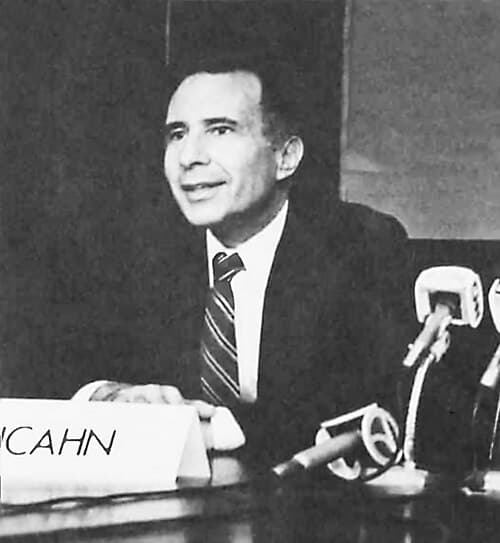
Carl Icahn
PERSON
American businessman
Carol Melton
PERSON
Name reference in documents
Carter Page
PERSON
American oil industry consultant
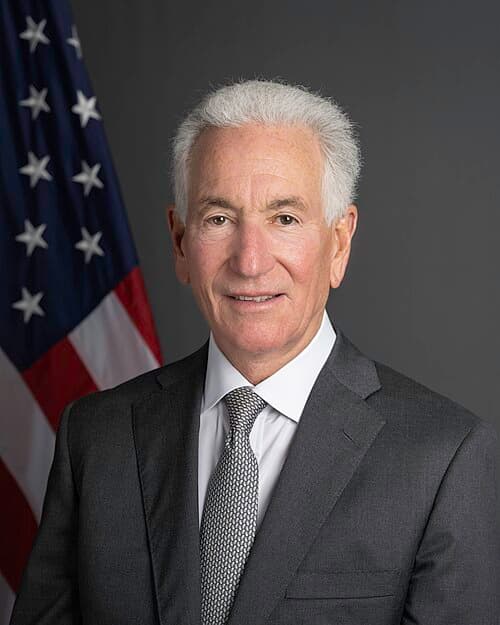
Charlie Kushner
PERSON
Name reference in documents
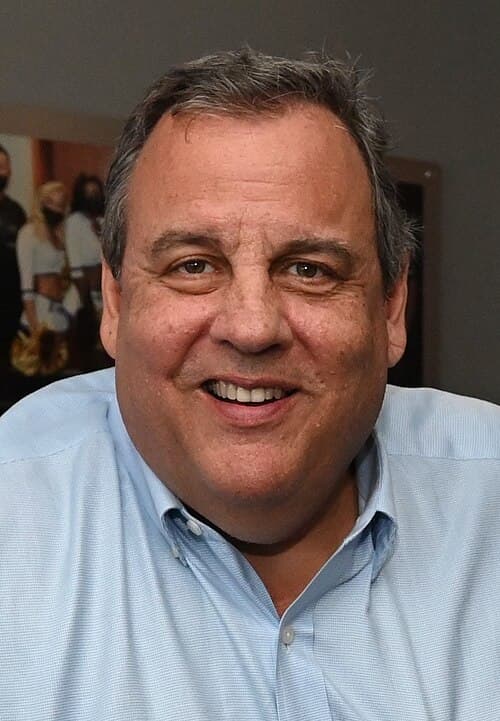
Chris Christie
PERSON • 4 mentions
55th Governor of New Jersey and former U.S. Attorney for the District of New Jersey
CS
Christopher Steele
PERSON • 2 mentions
Former British intelligence officer
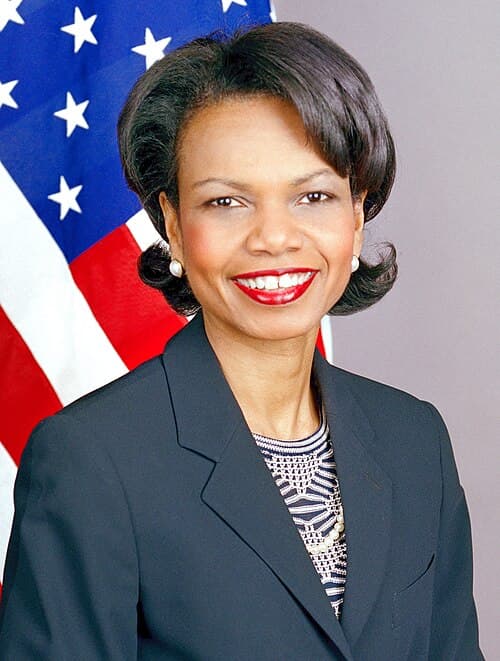
Condoleezza Rice
PERSON
American diplomat and political scientist (born 1954)

Conway
PERSON • 2 mentions
Refers to Kellyanne Conway (White House advisor) in news coverage within Epstein-related DOJ documents
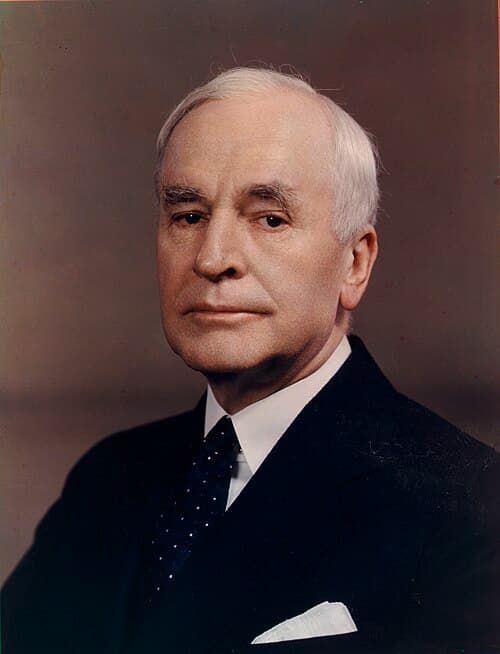
Cordell Hull
PERSON
Name reference in documents
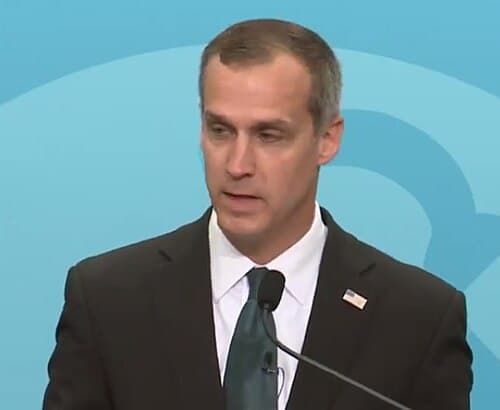
Corey Lewandowski
PERSON
American political operative and commentator
Cynthia Nixon
PERSON
American actress and politician
DZ
Dasha Zhukova
PERSON
Russian model
David Boies
PERSON
American lawyer and chairman
Deep Throat
PERSON
Alias of Mark Felt, the whistleblower who exposed the Watergate scandal
Deepak Chopra
PERSON • 2 mentions
Indian-born American author and alternative-medicine advocate, physician and public speaker
DeYoung
PERSON
Surname reference in documents
Dick Cheney
PERSON • 2 mentions
Vice President of the United States from 2001 to 2009
Dina Powell
PERSON
Egyptian-American diplomat and banker
Donald Rumsfeld
PERSON • 2 mentions
American politician and diplomat (1932–2021)
Donald Trump
PERSON • 9 mentions
President of the United States (2017–2021, 2025–present)
Donald Trump Jr.
PERSON
American businessman and reality television personality (born 1977)
DB
Doug Band
PERSON
American presidential advisor
EB
Edward Bass
PERSON
Name reference in documents
Edward Jay Epstein
PERSON
American journalist
Edward Snowden
PERSON • 2 mentions
American whistleblower and former NSA contractor (born 1983)
Elmore Leonard
PERSON
American novelist and screenwriter (1925–2013)
Elon Musk
PERSON • 3 mentions
Businessman and entrepreneur (born 1971)
EN
Enrique Pefia Nieto
PERSON
Name reference in documents
Eric Trump
PERSON
American businessman and reality television personality (born 1984)
Erskine Bowles
PERSON
American politician and businessman
FS
Felix Sater
PERSON
Real estate developer associated with Donald Trump
Frank Sinatra
PERSON
American singer and actor (1915–1998)
Franklin Foer
PERSON
American journalist
FO
FREDDY IVAN OCHOA
PERSON
Person referenced in documents
Gail Collins
PERSON
American songwriter and visual artist
Gary Cohn
PERSON
American businessman & politician (born 1960)
George H. W. Bush
PERSON
Person referenced in documents
George H.W. Bush
PERSON
President of the United States from 1989 to 1993 (1924–2018)
George Mitchell
PERSON
Former U.S. Senator from Maine and special envoy, connected to Epstein through flight logs and social events

George W. Bush
PERSON • 3 mentions
President of the United States from 2001 to 2009
George Washington
PERSON
American literary and historical figure, referenced in Epstein documents
Gerald Ford
PERSON
President of the United States from 1974 to 1977 (1913–2006)
Ginni Rometty
PERSON
American business executive
Glenn Thrush
PERSON
American political journalist
Gorbachev
PERSON
Leader of the Soviet Union from 1985 to 1991 (1931–2022)
Graydon Carter
PERSON
Canadian-born American journalist
H. R. Haldeman
PERSON
American political aide and Watergate Scandal figure (1926–1993)
H. R. McMaster
PERSON
Name reference in documents
HA
Halberstam
PERSON
Surname or name fragment in documents
Hamilton Jordan
PERSON
Chief of Staff to President of the United States Jimmy Carter (1944-2008)
HC
Harry Crews
PERSON
American writer (1935-2012)
Harry Truman
PERSON
Person referenced in documents
Henry Kissinger
PERSON • 2 mentions
American politician and diplomat (1923–2023)
HI
Hicks
PERSON
Ambiguous surname - appears in Epstein emails and news coverage contexts
Hillary Clinton
PERSON • 2 mentions
American politician and diplomat (born 1947)
Hillary Rosen
PERSON
American politician and diplomat (born 1947)

Hope Hicks
PERSON
American public relations executive and political advisor (born 1988)

Hudson
PERSON
Surname reference in Epstein documents
Hulk Hogan
PERSON
American professional wrestler, actor and television personality (1953–2025)
Indra Nooyi
PERSON
Indian-American business executive and former CEO of PepsiCo

Ivanka Trump
PERSON • 2 mentions
American businesswoman, socialite and political advisior (born 1981)
JA
Jabba
PERSON
Name reference in documents
Jack Welch
PERSON
American executive: General Electric CEO (1935–2020)
James Baker
PERSON • 2 mentions
American lawyer and statesman (born 1930)
James Clapper
PERSON
US government official (born 1941)
James Comey
PERSON • 2 mentions
American lawyer and 7th director of the Federal Bureau of Investigation (born 1960)
James Mattis
PERSON
United States 26th Secretary of Defense
JJ
Jamie Johnson
PERSON
Name reference in documents
Jared Kushner
PERSON • 3 mentions
American businessman and real estate investor (born 1981)
Jeb Bush
PERSON
Governor of Florida from 1999 to 2007
Jeff Bezos
PERSON • 2 mentions
American business magnate (born 1964)
Jeff Sessions
PERSON • 2 mentions
American politician and lawyer (born 1946)
Jeff Sessions—“Beauregard
PERSON
Name reference in documents
Jeff Zucker
PERSON
American Businessman

Jeffrey Epstein
PERSON • 3 mentions
American sex offender and financier (1953–2019)
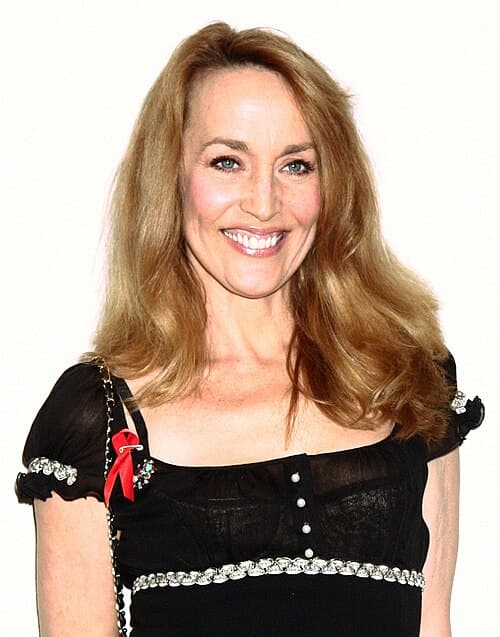
Jerry Hall
PERSON
American model
JB
Jim Baker
PERSON
British science teacher
Jim Mattis
PERSON
United States 26th Secretary of Defense
Jim McNerney
PERSON
Name reference in documents
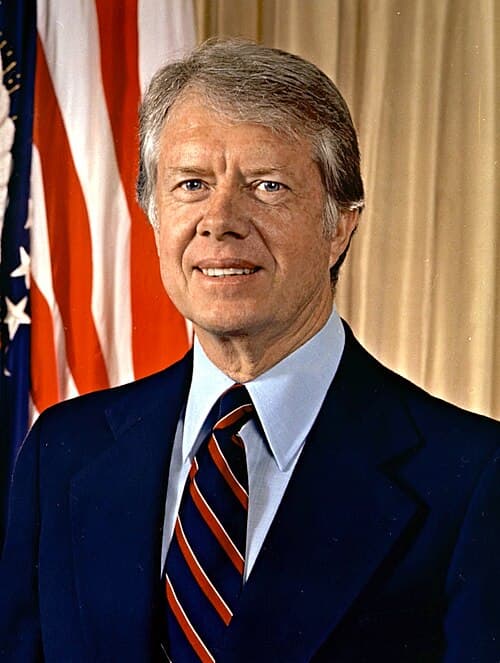
Jimmy Carter
PERSON
President of the United States from 1977 to 1981 (1924–2024)
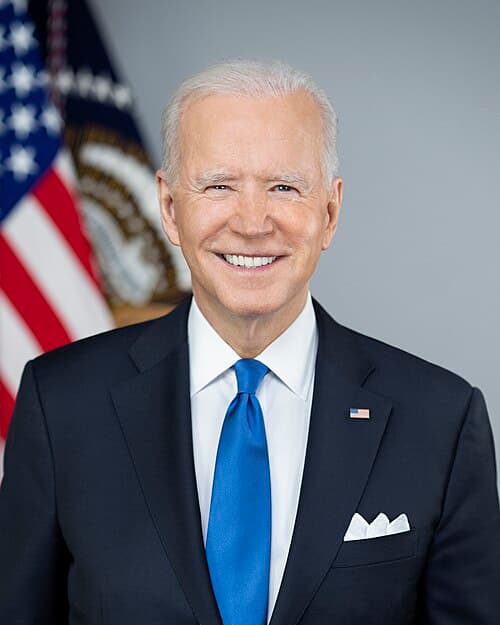
Joe Biden
PERSON
46th President of the United States (2021–2025)
Joe Namath’s
PERSON
Name reference in documents
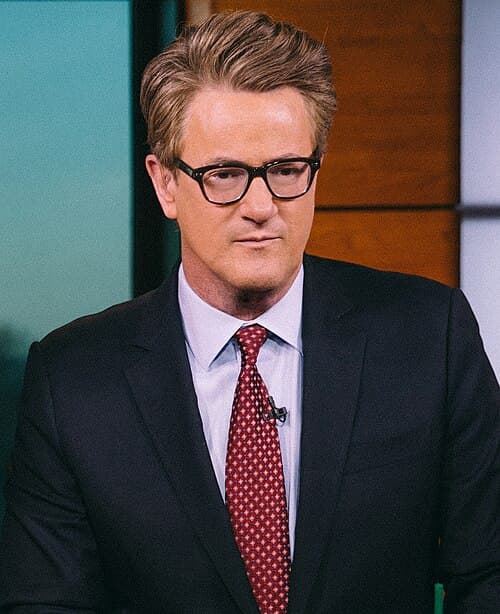
Joe Scarborough
PERSON
American television host and politician
John Boehner
PERSON
53rd Speaker of the U.S. House of Representatives from 2011 to 2015
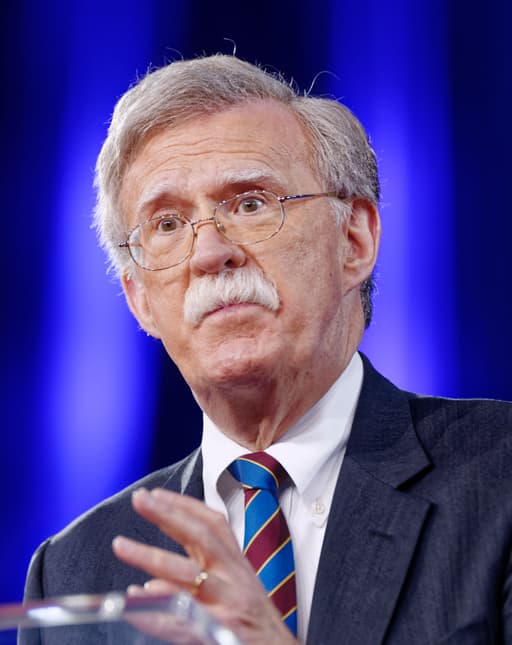
John Bolton
PERSON
American lawyer and diplomat (born 1948)
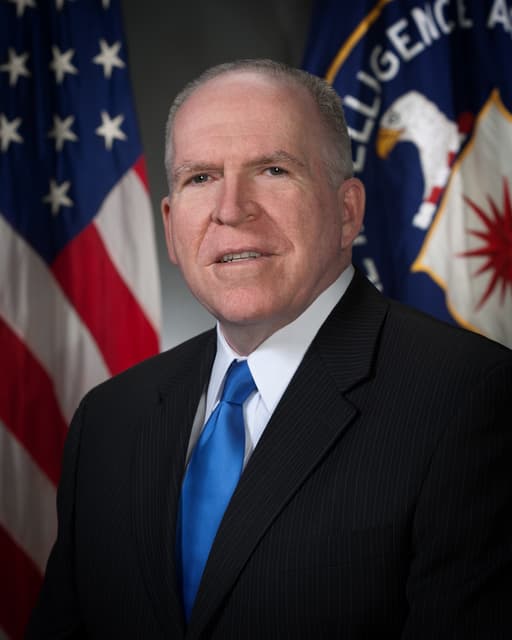
John Brennan
PERSON • 2 mentions
Director of the Central Intelligence Agency from 2013 to 2017
John F. Kennedy
PERSON
President of the United States from 1961 to 1963 (1917–1963)
John Kelly
PERSON
Former White House Chief of Staff and Former United States Marine Corps General
John McCain
PERSON
American politician, military officer, and presidential candidate (1936–2018)
John McLaughlin
PERSON
English guitarist, founder of the Mahavishnu Orchestra
John Podesta
PERSON
American political consultant (born 1949)
John Updike
PERSON
American novelist, poet (1932–2009)
Joseph McCarthy
PERSON
American politician (1908–1957)
JG
Juleanna Glover
PERSON
American political consultant and lobbyist

Julie K. Brown
PERSON
American journalist
Justin Smith
PERSON
American football player, linebacker, defensive end
Justin Trudeau
PERSON • 3 mentions
23rd prime minister of Canada from 2015 to 2025
Kalanick
PERSON
American-Saudi entrepreneur ly
Kaplan
PERSON
Surname reference in Epstein documents
Karen DeYoung
PERSON
Person referenced in documents
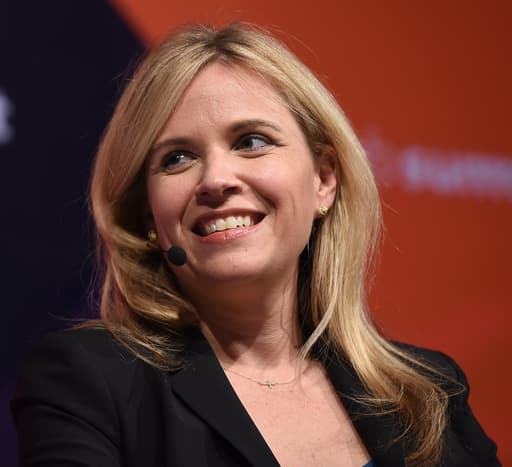
Katie Walsh
PERSON
Name reference in documents
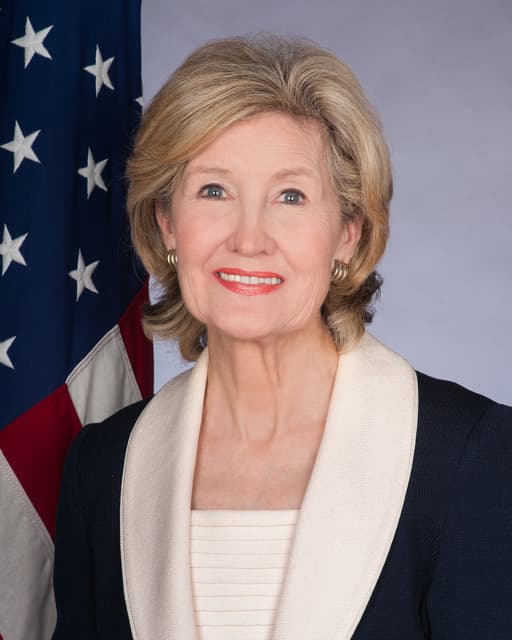
Kay Bailey Hutchison
PERSON
American politician (born 1943)
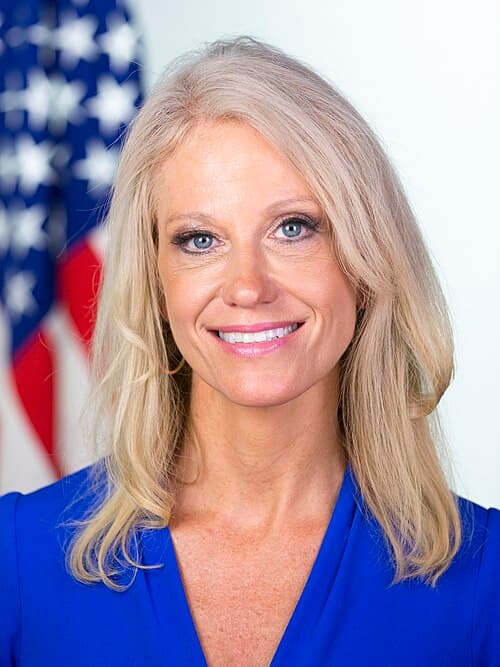
Kellyanne
PERSON
Researcher
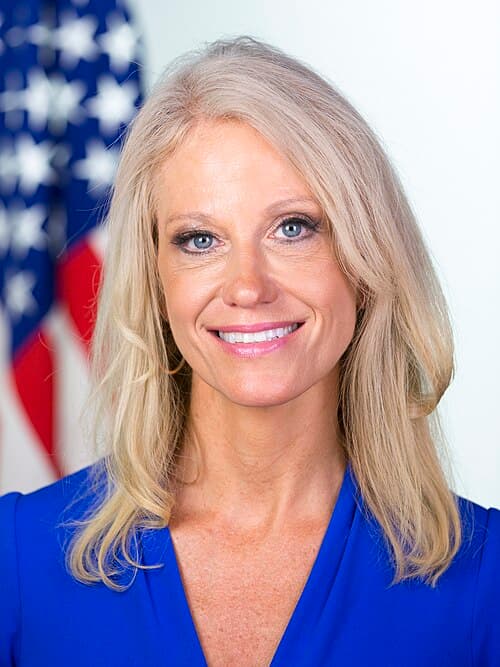
Kellyanne Conway
PERSON
Senior Counselor to the President of the United States from 2017 to 2020
Kislyak
PERSON • 2 mentions
Surname reference in documents
Langley
PERSON
Surname reference in Epstein-related documents
Lee Atwater
PERSON
American political consultant and strategist (1951–1991)
LB
Leo Bloom
PERSON
Name reference in documents
Leon Panetta
PERSON
American politician, Secretary of Defense 2011–2013
Lewandowski
PERSON
Surname reference in documents
LO
Louise
PERSON
Ambiguous first name reference to multiple individuals in Epstein documents
Marc Rich
PERSON
American commodities trader (1934–2013)
Marine Le Pen
PERSON
French politician (born 1968)
MB
Mark Berman
PERSON
American jazz musician
Mark Hemingway
PERSON
Name reference in documents
Martin Luther
PERSON
Name reference in Epstein documents, likely referring to Martin Luther King Jr.
Martin Luther King
PERSON
American Baptist minister and civil rights leader (1929–1968)
Mary Barra
PERSON
Chief Executive Officer of General Motors
Mattis
PERSON
Reference to James Mattis, former U.S. Secretary of Defense
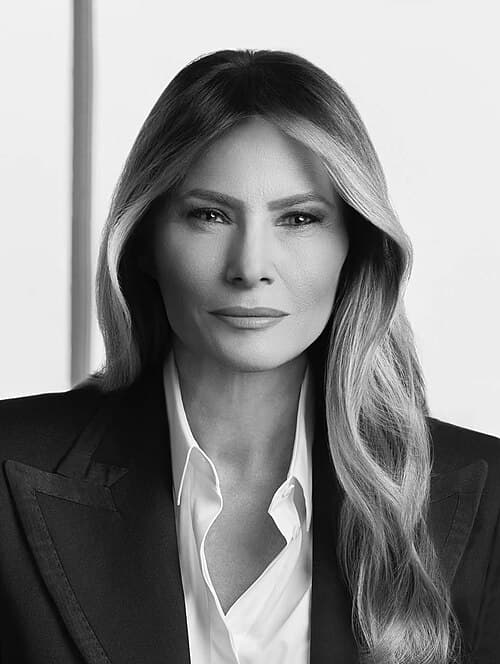
Melania Trump
PERSON • 2 mentions
First Lady of the United States (2017–2021; since 2025)
ME
Mercer
PERSON
Surname reference in Epstein-related documents
ME
Mercers
PERSON
Name reference in documents
ML
Meryl Sussman Levavi
PERSON
Name reference in documents
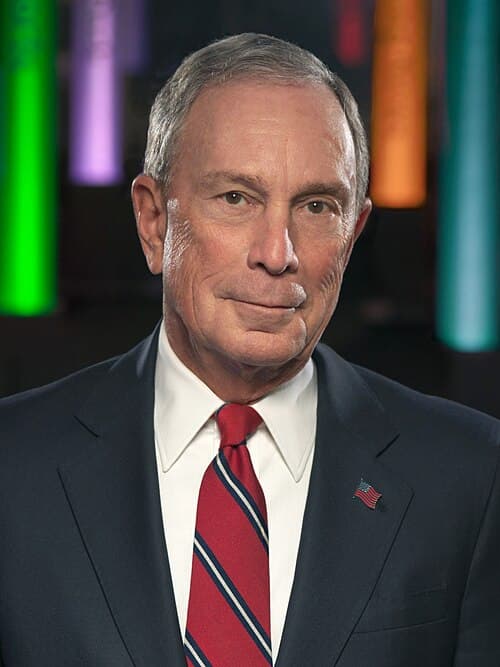
Michael Bloomberg
PERSON
American businessman and politician; 108th Mayor of New York City
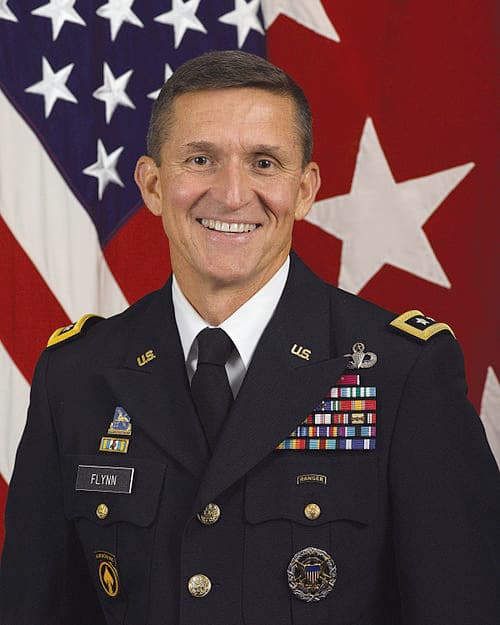
Michael Flynn
PERSON • 3 mentions
U.S. Army general and former U.S. National Security Advisor (born 1958)
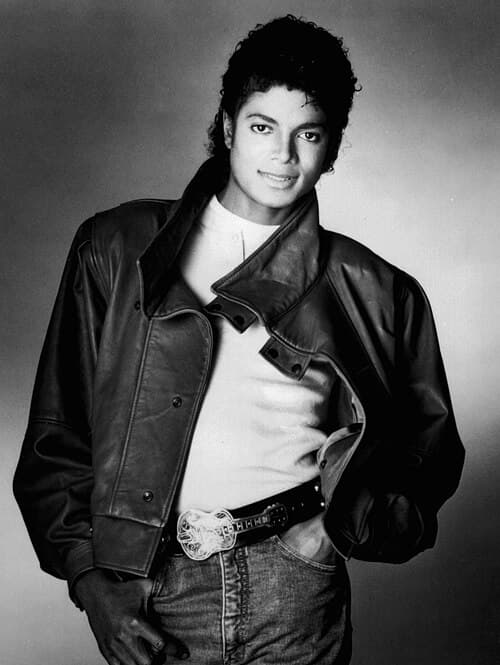
Michael Jackson
PERSON • 2 mentions
American singer, songwriter, record producer, and dancer (1958–2009)
Michael Ledeen
PERSON
American historian and foreign policy analyst
Michael Shannon
PERSON
Person referenced in documents
Michael Wolff
PERSON • 2 mentions
American author, essayist, and journalist
Mick Mulvaney
PERSON • 2 mentions
Former Director of the Office of Management and Budget and White House Chief of Staff
Mika Brzezinski
PERSON
American television host
Mike Flynn
PERSON
U.S. Army general and former U.S. National Security Advisor (born 1958)
MM
Mike Murphy
PERSON
Irish presenter
Mike Pence
PERSON • 2 mentions
Vice President of the United States from 2017 to 2021
Mike Pompeo
PERSON
American politician (born 1963) and former United States Secretary of State (2018–2021)
Mitch McConnell
PERSON • 2 mentions
American politician and lawyer (born 1942)

Murphy
PERSON
Ambiguous surname - refers to multiple people in Epstein documents
Nancy Pelosi
PERSON • 2 mentions
American politician (born 1940)
Neil Gorsuch
PERSON • 3 mentions
Associate Justice of the Supreme Court of the United States since 2017 (born 1967)

Niki Christoff
PERSON
American lawyer
Norma Desmond
PERSON
Name reference in documents
Oleg Deripaska
PERSON
Russian businessman
Oliver Stone
PERSON
American film director, screenwriter, and producer (born 1946)
Omarosa Manigault
PERSON
American reality television personality and political aide (born 1974)
Oscar
PERSON
First name reference in Epstein documents
Paul Manafort
PERSON
American political consultant
Paul Ryan
PERSON • 2 mentions
Speaker of the United States House of Representatives from 2015 to 2019
PN
Pefia Nieto
PERSON
Name reference in documents
Peter Kaplan’s
PERSON
Name reference in documents
Peter Thiel
PERSON • 2 mentions
German-American entrepreneur and venture capitalist (born 1967)

Phil Kent
PERSON
Person referenced in documents
Piers Morgan
PERSON
British journalist and television host (born 1965)
Prince Andrew
PERSON
Third child of Queen Elizabeth II and Prince Philip, Duke of Edinburgh (born 1960)
Prince Charles
PERSON
King of the United Kingdom and other Commonwealth realms since 2022 (born 1948)
QU
Qusay
PERSON
Name reference in documents
Rahm Emanuel
PERSON • 2 mentions
American politician (born 1959)
Rashomon
PERSON
Name reference in documents
RE
Rebekah
PERSON
First name reference to multiple individuals in Epstein-related documents
RM
Rebekah Mercer’s
PERSON
Name reference in documents
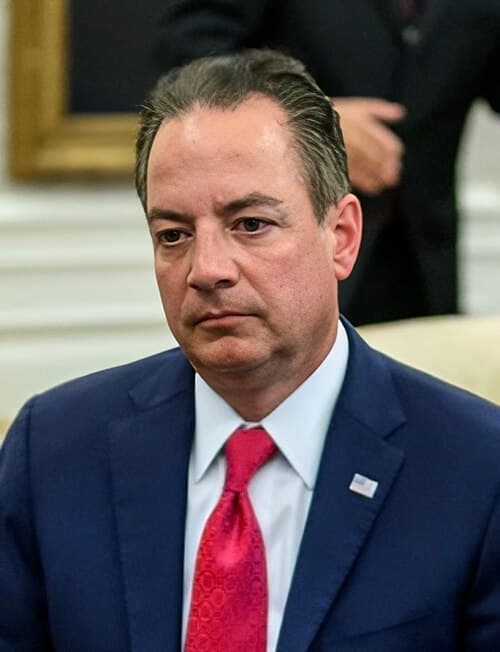
Reince Priebus
PERSON • 2 mentions
Chairman of the Republican National Committee from 2011 to 2017
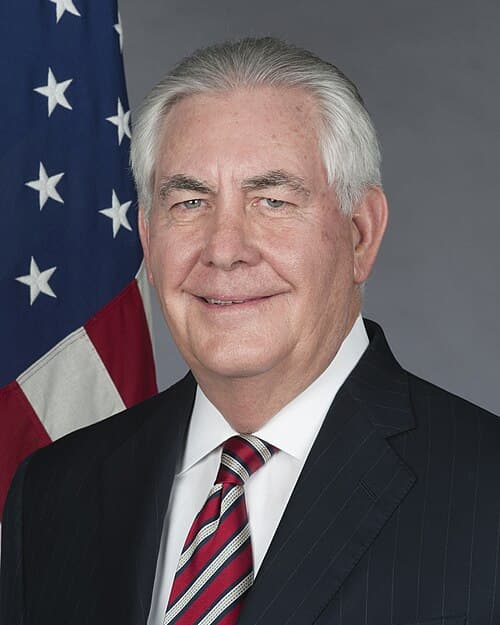
Rex Tillerson
PERSON • 2 mentions
69th United States Secretary of State
Rhodes
PERSON
Ambiguous surname reference in Epstein documents
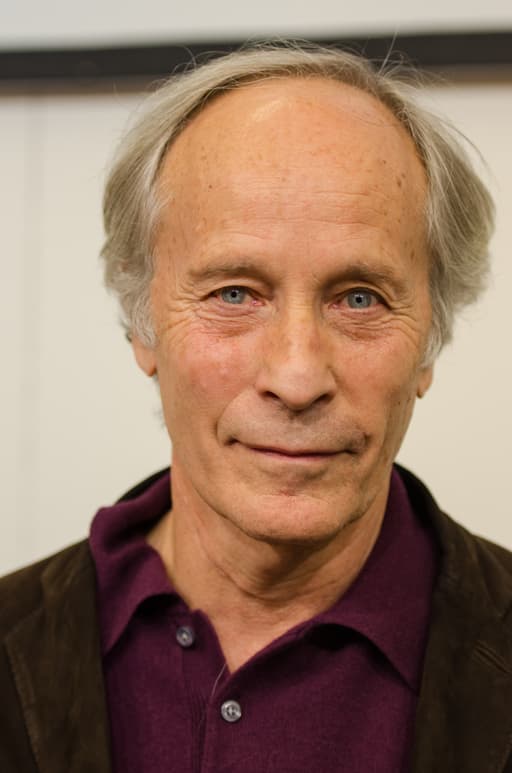
Richard Ford
PERSON
American novelist and short story writer
RL
Richard Lefrak
PERSON
Name reference in documents
Richard Nixon
PERSON
President of the United States from 1969 to 1974 (1913–1994)
Rob Lowe
PERSON
American actor (born 1964)
Robert Mercer
PERSON
American computer scientist and businessman
Roger Ailes
PERSON
American TV executive and consultant (1940–2017)
Roger Stone
PERSON
American political consultant and lobbyist (born 1952)
Roman Abramovich
PERSON
Russian-Israeli oligarch, and politician
Ronald Reagan
PERSON • 2 mentions
President of the United States from 1981 to 1989 and actor (1911–2004)
Roy Cohn
PERSON
American lawyer (1927–1985)
Rudy Giuliani
PERSON • 3 mentions
American attorney and politician (born 1944)
RU
Rupert
PERSON
Primarily refers to Rupert Sheldrake (biologist), also Rupert Murdoch and Rupert Adams in Epstein documents
Rupert Murdoch
PERSON • 2 mentions
Australian-American business magnate (born 1931)
Saddam Hussein
PERSON • 3 mentions
Iraqi president, army officer and Baathist politician (1937–2006)
Sally Yates
PERSON
American lawyer, 36th United States Deputy Attorney General
SN
Sam Nunberg
PERSON
American political operative
Samantha Power
PERSON
Irish-American academic, author and diplomat
SA
Sater
PERSON
Refers to Felix Sater, Trump Organization associate referenced in financial fraud documents

Scarborough
PERSON • 2 mentions
NER artifact - Scarborough media measurement company referenced in DOJ Bulletin Intelligence methodology
Scarlett Johansson
PERSON • 2 mentions
American actress (born 1984)
Scott Pruitt
PERSON
14th Administrator of the EPA; former Attorney General from Oklahoma
Scott Walker
PERSON
British-American singer-songwriter, composer and record producer (1943–2019)
Sean Hannity
PERSON
American television host and political commentator (born 1961)
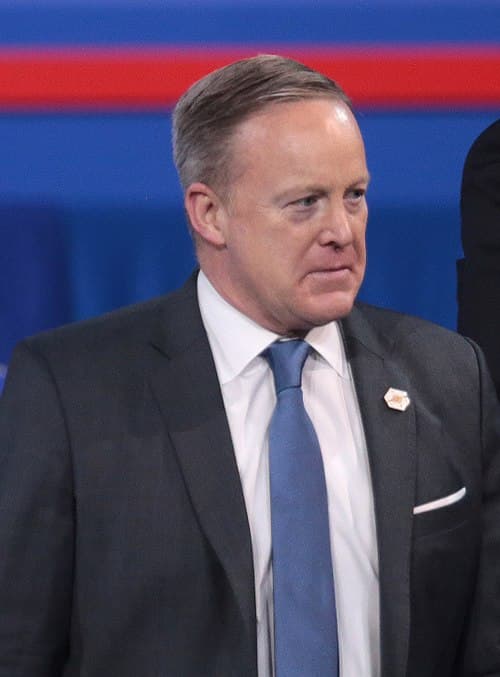
Sean Spicer
PERSON • 3 mentions
American political strategist and former White House Press Secretary and Communications Director for President Donald Trump

Seinfeld
PERSON
Reference to Jerry Seinfeld, comedian
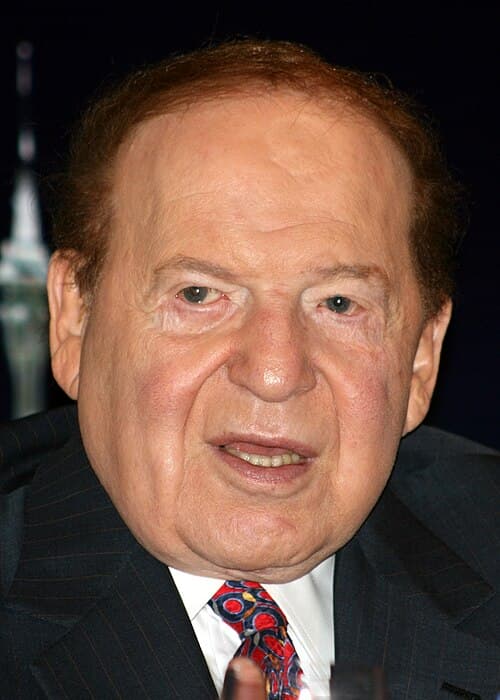
Sheldon’—Sheldon Adelson
PERSON
Name reference in documents
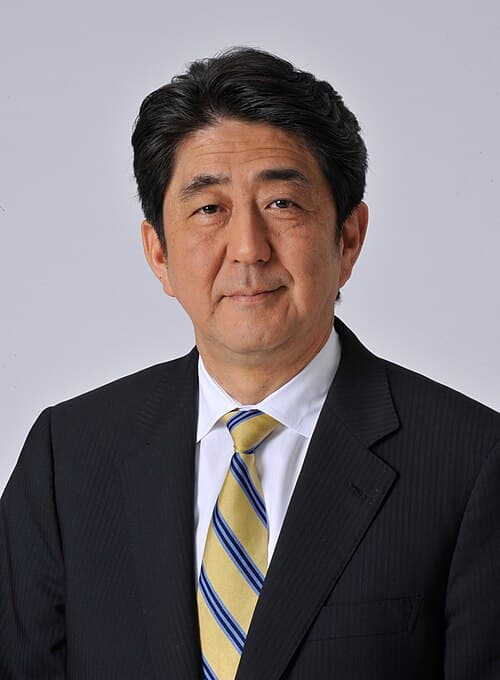
Shinzo Abe
PERSON • 3 mentions
Prime Minister of Japan from 2006–2007 and 2012–2020 (1954–2022)
Stephen Hawking
PERSON
British theoretical physicist, cosmologist and author (1942–2018)
Stephen Miller
PERSON
American political advisor and Trump administration official (born 1985)
Stephen Schwarzman
PERSON
American businessman and investor
Steve Bannon
PERSON • 3 mentions
American media executive & political strategist (born 1953)
Steve Schwarzman
PERSON
American businessman and investor
Steve Wynn
PERSON
American businessman
Steven Mnuchin
PERSON • 2 mentions
United States Secretary of the Treasury from 2017 to 2021
SR
Steven Roth
PERSON
Businessperson
Susan Rice
PERSON
American diplomat and policy advisor (born 1964)
Ted Cruz
PERSON
American politician (born 1970)
TA
Tevfik Arif
PERSON
Turkish-Russian real estate developer (born 1953)
the Billy Bush weekend
PERSON
Name reference in documents

the Holy Grail
PERSON
Name reference in documents
Thomas Jefferson
PERSON
President of the United States from 1801 to 1809
TH
Thrush
PERSON
Surname reference in Epstein-related documents
Tiffany Trump
PERSON
American socialite, research assistant and reality television personality (born 1993)
Tolstoyan
PERSON
Name reference in documents
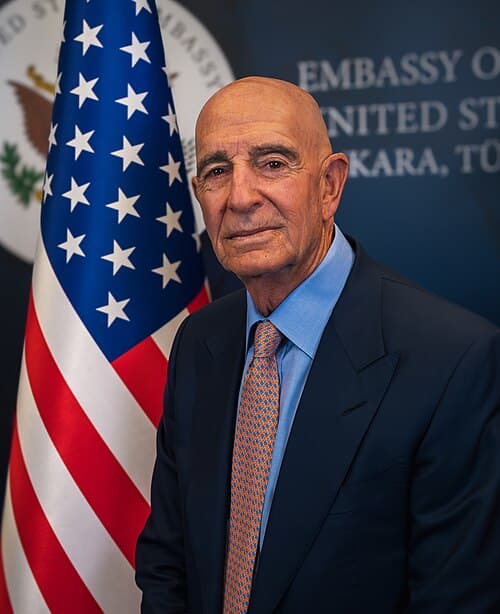
Tom Barrack
PERSON • 2 mentions
American private equity investor, founder of Colony Capital, longtime Epstein associate
Tom Brady’s
PERSON
Name reference in documents
Tony Blair
PERSON
Prime Minister of the United Kingdom from 1997 to 2007
TS
Tony Schwartz
PERSON
American writer
Travis Kalanick
PERSON
American-Saudi entrepreneur ly
Trump White House
PERSON
Person referenced in documents
TR
Trumpster
PERSON
Surname or name fragment in documents
Vernon Jordan
PERSON
American lawyer and civil rights activist (1935–2021)
Viktor Yanukovych
PERSON
President of Ukraine from 2010 to 2014
Virginia Giuffre
PERSON
Advocate for sex trafficking victims (1983–2025)
Vladimir Putin
PERSON • 3 mentions
2nd and 4th President of Russia (2000-2008, 2012-present), 7th and 11th Prime Minister of Russia (1999-2000, 2008-2012), Director of the Federal Security Service (1998-1999) and Deputy Mayor of Saint Petersburg (1994-1996)
WA
Walsh
PERSON • 2 mentions
Ambiguous surname - primarily appears in legal case citations within Epstein court documents
WE
Wendi
PERSON
First name reference to multiple individuals in Epstein-related documents
Wendi Murdoch
PERSON
Chinese-American businesswoman (1968-)
Wilbur Ross
PERSON • 2 mentions
United States 39th Secretary of Commerce
Williams Jennings Bryan
PERSON
Name reference in documents
Winston Churchill
PERSON
British statesman, soldier and writer (1874–1965)
Wintour
PERSON
Surname reference in documents
Wish Corey
PERSON
Name reference in documents
Woody Allen
PERSON
American filmmaker, actor and comedian (born 1935)
Woody Johnson
PERSON
American businessman, ambassador
Yates
PERSON • 2 mentions
Surname reference in Epstein-related documents
Zbigniew Brzezinski
PERSON
Polish-American diplomat and political scientist (1928–2017)
ZU
Zucker
PERSON
Surname reference in documents
AILES
ORGANIZATION
Organization referenced in documents
Bannon & Co.
ORGANIZATION
Organization referenced in documents
Bayrock
ORGANIZATION
Organization referenced in documents

Blackstone
ORGANIZATION
Canadian television series

Bloomberg L.P.
ORGANIZATION
American privately held financial, software, data, and media company
Breitbart Embassy
ORGANIZATION
Organization referenced in documents

Capitol Hill
ORGANIZATION • 2 mentions
Neighborhood in Washington, D.C., USA
Carmelite House
ORGANIZATION
Organization referenced in documents
Christie almost
ORGANIZATION
Organization referenced in documents
Christie himself
ORGANIZATION
Organization referenced in documents
Colony Capital
ORGANIZATION
American private equity real estate firm
Confederate
ORGANIZATION
Organization referenced in documents
Delphic oracle
ORGANIZATION
Organization referenced in documents
Democratic Party
ORGANIZATION
Organization referenced in documents
Digital Entertainment Network
ORGANIZATION
Organization referenced in documents

ExxonMobil
ORGANIZATION
American multinational oil and gas corporation
First Family
ORGANIZATION
Organization referenced in documents
Fusion GPS
ORGANIZATION
Commercial research and strategic intelligence firm based in Washington D.C.
Gamergate
ORGANIZATION
Organization referenced in documents
Gazprom
ORGANIZATION
Russian oil and gas company
General Motors
ORGANIZATION
American multinational automotive company
Georgetown
ORGANIZATION • 2 mentions
Private university in Washington, D.C., United States
Haagen-Dazs
ORGANIZATION
Organization referenced in documents
Hachette UK Company
ORGANIZATION
Organization referenced in documents

Harvard Business School
ORGANIZATION
Business school in Boston, Massachusetts, USA

Henry Holt
ORGANIZATION
Organization referenced in documents

Homeland Security
ORGANIZATION
U.S. Department of Homeland Security
Internet Gaming Entertainment
ORGANIZATION
Organization referenced in documents

Johnson & Johnson
ORGANIZATION
U.S multinational medical devices, pharmaceutical and consumer packaged goods manufacturer
Kaplan’s New York Observer
ORGANIZATION
Organization referenced in documents
Kremlin
ORGANIZATION
Fortified complex in Moscow, Russia
Manhattan, Inc.
ORGANIZATION
Organization referenced in documents
McGahn
ORGANIZATION
Organization referenced in documents
Miramax Pictures
ORGANIZATION
Organization referenced in documents
NAFTA
ORGANIZATION
North American Free Trade Agreement
National Committee
ORGANIZATION
Organization referenced in documents
National Economic Council
ORGANIZATION
Financial and public policy development institution of the Government of Bangladesh

National Security
ORGANIZATION
Organization referenced in documents
non-Tea Party
ORGANIZATION
Organization referenced in documents

Nordstrom
ORGANIZATION
American chain of luxury department stores
Nunberg
ORGANIZATION
Organization referenced in documents
Obama White House
ORGANIZATION
Organization referenced in documents

Observer
ORGANIZATION
Newspaper
Orthodox Judaism
ORGANIZATION
Organization referenced in documents
PepsiCo
ORGANIZATION
American soft drink company
Planned Parenthood
ORGANIZATION
Organization that provides reproductive health services in the United States and internationally
Power-Point
ORGANIZATION
Organization referenced in documents
Priebus-Ryan
ORGANIZATION
Organization referenced in documents

Private Eye
ORGANIZATION
British satirical and current affairs magazine
Producers
ORGANIZATION
Organization referenced in documents
Rat Pack
ORGANIZATION
Organization referenced in documents
Renaissance Technologies
ORGANIZATION
Organization referenced in documents
said—“It
ORGANIZATION
Organization referenced in documents
School of Foreign Service
ORGANIZATION
School of international affairs at Georgetown University
Sself
ORGANIZATION
Organization referenced in documents
Staff Reince Priebus
ORGANIZATION
Organization referenced in documents
Steinway
ORGANIZATION
Piano and musical instrument manufacturer
Svengali
ORGANIZATION
Organization referenced in documents
Tea Party
ORGANIZATION
Organization referenced in documents
the Bayrock Group
ORGANIZATION
Organization referenced in documents
the Blackstone Group
ORGANIZATION
Organization referenced in documents

the British Library
ORGANIZATION
Organization referenced in documents

the Defense Intelligence Agency
ORGANIZATION
Organization referenced in documents
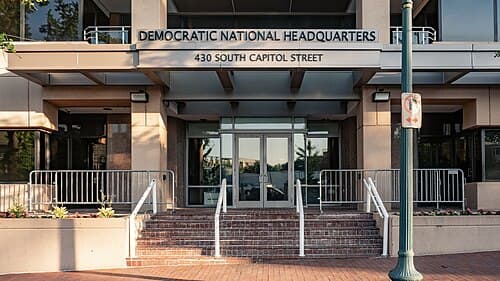
the Democratic National Committee
ORGANIZATION
Organization referenced in documents
the Eisenhower Executive Office Building
ORGANIZATION
Organization referenced in documents
the Federalist Society
ORGANIZATION
Organization referenced in documents
the Gold Rush Years
ORGANIZATION
Organization referenced in documents
The Mighty Ducks
ORGANIZATION
Organization referenced in documents
the National Republican Senatorial Committee
ORGANIZATION
Organization referenced in documents
the New York Observer
ORGANIZATION
Organization referenced in documents
the New York Post’s
ORGANIZATION
Organization referenced in documents
The Oval Office
ORGANIZATION
Organization referenced in documents
the Republican Convention
ORGANIZATION
Organization referenced in documents
the Republican National Convention
ORGANIZATION
Organization referenced in documents
the Senate Foreign Relations Committee
ORGANIZATION
Organization referenced in documents
the Tea Party
ORGANIZATION
Organization referenced in documents
the Trump International Hotel
ORGANIZATION
Organization referenced in documents

the Trump Organization
ORGANIZATION
The Trump Organization

The Washington Post
ORGANIZATION
Daily broadsheet newspaper in Washington, D.C.
the WWE Hall of Fame
ORGANIZATION
Organization referenced in documents
their Republican Party
ORGANIZATION
Organization referenced in documents
Time Warner’s
ORGANIZATION
Organization referenced in documents
Trump assured Ailes
ORGANIZATION
Organization referenced in documents
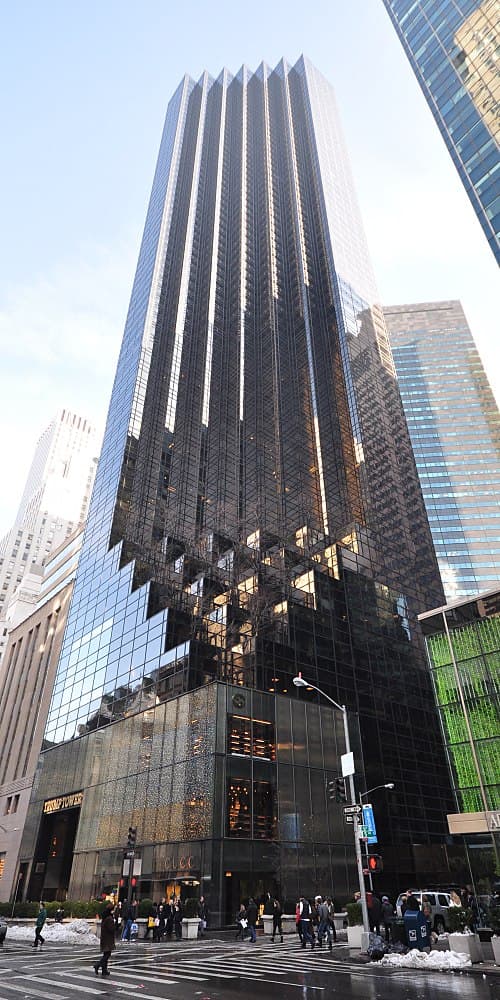
Trump Tower
ORGANIZATION
Skyscraper in Manhattan, New York
Trump Towner
ORGANIZATION
Organization referenced in documents
Trump-Putin
ORGANIZATION
Organization referenced in documents
Turner Broadcasting
ORGANIZATION
Organization referenced in documents

U.S. Steel
ORGANIZATION
US steel-producing company
Vichy
ORGANIZATION
Organization referenced in documents

Virginia Tech
ORGANIZATION
Public university with the main campus in Blacksburg, Virginia

Vogue
ORGANIZATION
American fashion and lifestyle magazine

Warner
ORGANIZATION
International TV channel showing American films and shows
Weekly Standard
ORGANIZATION
Warez scene rules
West Point
ORGANIZATION • 2 mentions
Organization referenced in documents
West Wing
ORGANIZATION • 2 mentions
Organization referenced in documents
White House
ORGANIZATION • 4 mentions
Official residence and office of the President of the United States
Whitewater
ORGANIZATION • 2 mentions
Organization referenced in documents
World Wrestling Entertainment
ORGANIZATION
Organization referenced in documents
Zeitgeist
ORGANIZATION
Organization referenced in documents
Zimes
ORGANIZATION
Organization referenced in documents
Atlanta
LOCATION
Capital city of Georgia, United States
Atlantic City
LOCATION
City in Atlantic County, New Jersey, United States
Beltway
LOCATION
Location referenced in documents
Beverly Hills
LOCATION
City in Los Angeles County, California, United States
Borscht Belt
LOCATION
Summer resort area in the Catskill Mountains, USA
Brighton Beach
LOCATION
Neighborhood of Brooklyn in New York City, United States
Catoctin Mountain Park
LOCATION
U.S. National Park system unit and historic district, in north-central Maryland
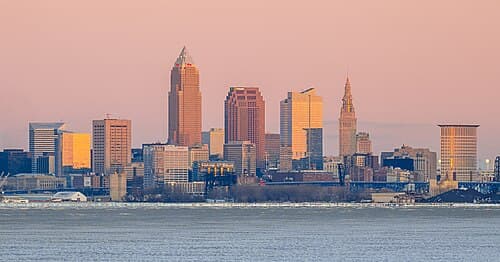
Cleveland
LOCATION
City in and county seat of Cuyahoga County, Ohio, United States
Croatia
LOCATION
Country in Central Europe

Greenwich Village
LOCATION
Neighborhood in Manhattan, New York City, New York, United States
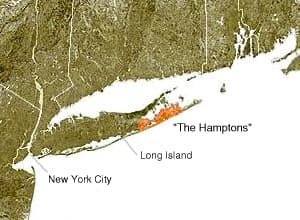
Hamptons
LOCATION
Seaside group of towns, villages and hamlets in Long Island, New York

Jerusalem
LOCATION
City in the Middle East, holy to the three Abrahamic religions

Kansas
LOCATION
State of the United States of America
Keynesianism
LOCATION
Location referenced in documents
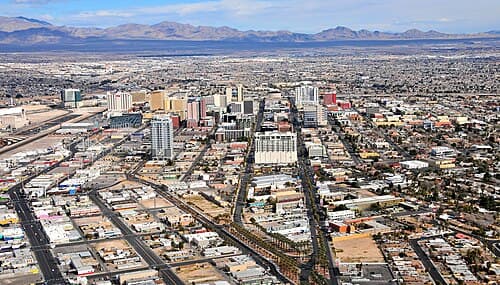
Las Vegas
LOCATION
City of Clark County, and largest city in state of Nevada, United States
Long Island
LOCATION
Island in New York, United States of America
Maryland—“How
LOCATION
Location referenced in documents

Michigan
LOCATION
State of the United States of America

New York City
LOCATION
Most populous city in the United States
North Korea’s
LOCATION
Location referenced in documents
Pearl Harbor
LOCATION
Location referenced in documents
Pensacola
LOCATION
County seat of Escambia County, Florida, United States
Queens
LOCATION
Borough in New York City, New York, United States

Richmond
LOCATION
Capital city of Virginia, United States of America

Silicon Valley
LOCATION
2014–2019 American television series
Sinai
LOCATION
Peninsula in the Middle East

Slovenia
LOCATION
Country in Central Europe

South Carolina
LOCATION
State of the United States of America
St. Louis
LOCATION
Independent city in Missouri, United States
the Sea of Japan
LOCATION
Location referenced in documents
the Upper East Side
LOCATION
Neighborhood in Manhattan, New York City
the West Bank
LOCATION
Territory in the Middle East

United States
LOCATION • 2 mentions
Country located primarily in North America
Victoria Embankment
LOCATION
Location referenced in documents
Wisconsin
LOCATION
State of the United States of America

Yemen
LOCATION
Country in West Asia
Statistics
Pages:100
Entities:394
Avg. OCR:95.0%
Sponsored