Back to Network













3
Shared Docs
3
Same-Page
3 / 4
Mentions
Document Mentions (3 shared documents)
3 mentions1 same-page
Page ?Same page
tells us about social cognition: A rapprochement between developmental psychology and cognitive neuroscience. The Philosophical Transactions of the Royal Society, London, 358, 491-500. Decety, J., & Sommerville, J.A. (2003). Shared representations between self and others: A social cognitive neuroscience view.
results of each catch. After extensive sampling, the scientist concluded that there were no fish smaller than two inches in the sea. The moral of Sir Eddington's analogy is twofold. First, scientific instruments are shaped by people’s intuitive theories of the phenomena to be investigated. Second, once devel
|29 Epley N, Waytz A, Akalis S, Cacioppo JT. When we need a human: Motivational determinants of anthropomorphism. Social Cognition 2008;26:143-55. Eddington AS. The philosophy of physical science : Tarner lectures. Cambridge: Cambridge University Press; 1939. Rilling J, Gutman D, Zeh T, Pagnoni G, Berns
2 mentions1 same-page
Page ?Same page
s us about social cognition: A rapprochement between developmental psychology and cognitive neuroscience. The Philosophical Transactions of the Royal Society. London. 358 491-500. 5. Decety, J., & Sommerville, J.A. (2003). Shared representations between self and others: A social cognitive neuroscienc
ults of each catch. After extensive sampling, the scientist concluded that there were no fish smaller than two inches in the sea. The moral of Sir Eddington's analogy is twofold. First, scientific instruments are shaped by people's intuitive theories of the phenomena to be investigated. Second, once d
2 mentions1 same-page
Page ?Same page
ments in 1932, he sent a letter to Nature entitled "Possible Existence of a Neutron" and followed this up with a more detailed article sent to the Royal Society. The neutron, which we now know makes up most of the mass of heavier nuclei, and thus most of the mass in our bodies, had been discovered. For his
evidence, once wrote a hoax paper while a postdoc poking fun at a paper he deemed ridiculous by the famous physicist Sir Arthur Stanley Eddington. Eddington claimed to "derive" a fundamental constant of electromagne- tism using some fundamental principles, but Bethe correctly viewed the claim as nothing
Sponsored
Mutual Connections (480)
Entities connected to both Royal Society and Eddington
Berkeley
LOCATION4 w/ Royal·4 w/ Eddington
Bradley Edwards
PERSON4 w/ Royal·3 w/ Eddington
Jeffrey Epstein
PERSON5 w/ Royal·2 w/ Eddington
LB
Leon Black
PERSON4 w/ Royal·3 w/ Eddington
Earth
LOCATION3 w/ Royal·3 w/ Eddington
Julie K. Brown
PERSON3 w/ Royal·3 w/ Eddington
SH
Sheldon
PERSON3 w/ Royal·3 w/ Eddington
Naomi Campbell
PERSON3 w/ Royal·3 w/ Eddington
Michael Jackson
PERSON3 w/ Royal·3 w/ Eddington
George W. Bush
PERSON3 w/ Royal·3 w/ Eddington
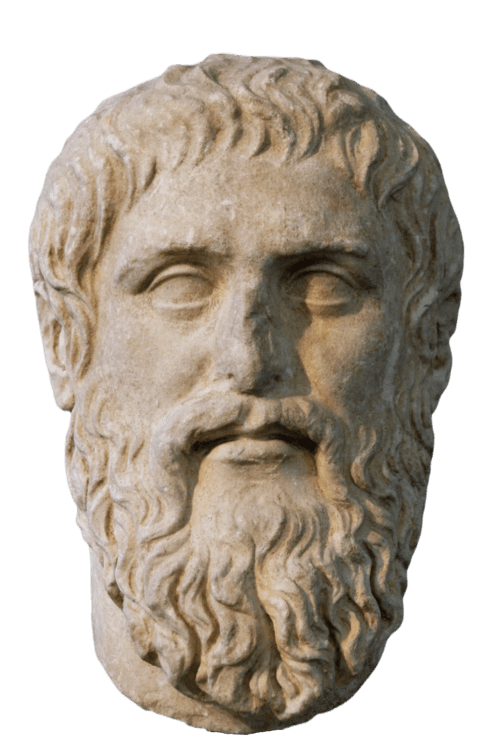
Plato
PERSON3 w/ Royal·3 w/ Eddington
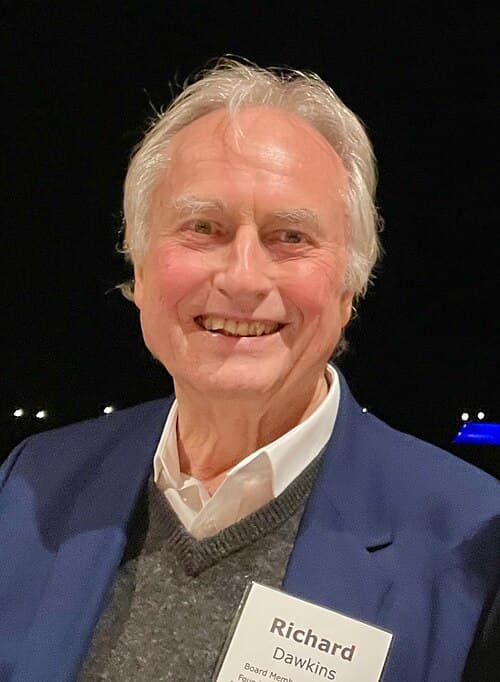
Richard Dawkins
PERSON3 w/ Royal·2 w/ Eddington
University of Oxford
ORGANIZATION2 w/ Royal·3 w/ Eddington
University of California
ORGANIZATION3 w/ Royal·2 w/ Eddington
NE
Nicholas Epley
PERSON3 w/ Royal·2 w/ Eddington
Harcourt
LOCATION2 w/ Royal·3 w/ Eddington
Stephen Hawking
PERSON3 w/ Royal·2 w/ Eddington
Louisville
LOCATION3 w/ Royal·2 w/ Eddington
Random House
ORGANIZATION2 w/ Royal·3 w/ Eddington
Prince Charles
PERSON3 w/ Royal·2 w/ Eddington