Back to Network









5
Shared Docs
5
Same-Page
5 / 5
Mentions
Document Mentions (5 shared documents)
2 mentions1 same-page
Page ?Same page
statute applies only if the defendant's dominant motive for interstate travel was to engage in unlawful sexual activity. See, e.g., United States v. Tvkarsky, 446 F.3d 458, 471 (3d Cir. 2006) ("[T]he government must show that the criminal sexual act was a dominant purpose of the trip, not a merely incide
the removal of language from draft legislation as proof that the enacted bill carried the same meaning. Instead, courts draw the opposite inference. Russello 464 U.S. at 23-24 ("Where Congress includes limiting language in an earlier version of a bill but deletes it prior to enactment, it may be presumed tha
Sponsored
2 mentions1 same-page
Page ?Same page
statute applies only if the defendant's dominant motive for interstate travel was to engage in unlawful sexual activity. See, e.g., United States v. Tvkarsky, 446 F.3d 458, 471 (3d Cir. 2006) ("[T]he government must show that the criminal sexual act was a dominant purpose of the trip, not a merely incide
the removal of language from draft legislation as proof that the enacted bill carried the same meaning. Instead, courts draw the opposite inference. Russello 464 U.S. at 23-24 ("Where Congress includes limiting language in an earlier version of a bill but deletes it prior to enactment, it may be presumed tha
Sponsored
Mutual Connections (101)
Entities connected to both Tvkarsky and Russello 464
H.R.
PERSON5 w/ Tvkarsky·7 w/ Russello
Jeffrey Epstein
PERSON5 w/ Tvkarsky·7 w/ Russello
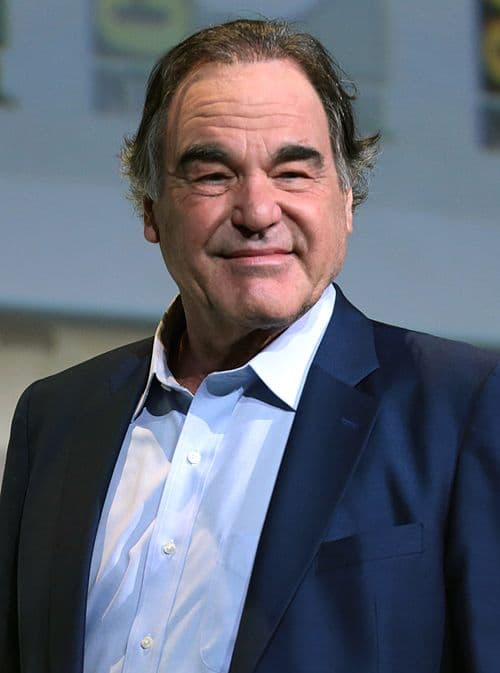
Oliver Stone
PERSON5 w/ Tvkarsky·7 w/ Russello
George W. Bush
PERSON5 w/ Tvkarsky·7 w/ Russello
LB
Leon Black
PERSON5 w/ Tvkarsky·7 w/ Russello
United States
LOCATION5 w/ Tvkarsky·7 w/ Russello
EV
Evans
PERSON5 w/ Tvkarsky·5 w/ Russello
Jennifer Lopez
PERSON5 w/ Tvkarsky·5 w/ Russello
Supreme Court
ORGANIZATION5 w/ Tvkarsky·5 w/ Russello
HA
Hansen
PERSON5 w/ Tvkarsky·5 w/ Russello
Mortensen
PERSON5 w/ Tvkarsky·5 w/ Russello
Searcy
PERSON5 w/ Tvkarsky·5 w/ Russello
Estelle
PERSON5 w/ Tvkarsky·5 w/ Russello
Griffith
PERSON5 w/ Tvkarsky·5 w/ Russello
WA
Walker
PERSON5 w/ Tvkarsky·5 w/ Russello
WE
Weaver
PERSON5 w/ Tvkarsky·5 w/ Russello
Bowen
PERSON5 w/ Tvkarsky·5 w/ Russello
Merritt
PERSON5 w/ Tvkarsky·5 w/ Russello
James River Ins. Co.
ORGANIZATION5 w/ Tvkarsky·5 w/ Russello
Prince Andrew
PERSON5 w/ Tvkarsky·5 w/ Russello