Back to Network












4
Shared Docs
4
Same-Page
4 / 6
Mentions
Document Mentions (4 shared documents)
3 mentions1 same-page
Page ?Same page
e year, which is more than in all of 2013." Putin didn't miss that. For reinforcement, I'd point to the very original take on this story offered by Michael Mandelbaum, the Johns Hopkins foreign policy expert whose new book, "The Road to Global Prosperity," argues that while global economics does not eliminate geo
ed that in the 19th century. America does so today and will have to continue to do so even if Putin becomes a vegetarian pacifist. But get a grip, Mandelbaum said in an interview: "Putin is not some strange creature from the past. He is as much a product of globalization as Davos Man." Putin runs a petr
that while global economics does not eliminate geopolitics, it does indeed trump global geopolitics today. It's the key to trumping Putin, too. As Mandelbaum (my co-author on a previous work) explains in his book, it is not either-or. Geopolitics never went away, even as globalization has become more imp
3 mentions1 same-page
Page ?Same page
. During the cold war, American foreign EFTA_R1_00441188 EFTA01964440 policy "was all about how we affect the external behavior of states," said Michael Mandelbaum, the Johns Hopkins University foreign affairs expert. We were ready to overlook the internal behavior of states, both because we needed them as al
ry's political culture and getting age- old adversaries to reconcile. The primary foreign policy tools that served us so well in the cold war, said Mandelbaum, "guns, money, and rhetoric — simply don't work for these new tasks. It is like trying to open a can with a sponge." To help another country change
uperpower confrontation. Post-cold-war foreign policy today is largely about "affecting the internal composition and governance of states," added Mandelbaum, many of which in the Middle East are failing and threaten us more by their collapse into ungoverned regions — not by their strength or ability to p
2 mentions1 same-page
Page ?Same page
democratic institutions, traditions and examples much greater. "There is a saying that inside every fat man is a thin man dying to get out," notes Michael Mandelbaum, the foreign policy expert at Johns Hopkins School of Advanced International Studies. "We also tend to believe that inside every autocracy is a de
ide every autocracy is a democracy dying to get out, but that might not be true in the Middle East." It was true in Eastern Europe in 1989, added Mandelbaum, but there are two big differences between Eastern Europe and the Middle East. Many Eastern European countries had a recent liberal past to fall b
Sponsored
2 mentions1 same-page
Page ?Same page
democratic institutions, traditions and examples much greater. "There is a saying that inside every fat man is a thin man dying to get out," notes Michael Mandelbaum, the foreign policy expert at Johns Hopkins School of Advanced International Studies. "We also tend to believe that inside every autocracy is a dem
nside every autocracy is a democracy dying to get out, but that might not be true in the Middle East." It was true in Eastern Europe in 1989, added Mandelbaum, but there are two big differences between Eastern Europe and the Middle East. Many Eastern European countries had a recent liberal past to fall ba
Sponsored
Mutual Connections (146)
Entities connected to both Michael Mandelbaum and Mandelbaum
Barack Obama
PERSON5 w/ Michael·4 w/ Mandelbaum
Mahmoud Abbas
PERSON5 w/ Michael·4 w/ Mandelbaum
Lebanon
LOCATION4 w/ Michael·4 w/ Mandelbaum
Bashar al-Assad
PERSON4 w/ Michael·4 w/ Mandelbaum
Saddam Hussein
PERSON4 w/ Michael·4 w/ Mandelbaum
Tunisia
LOCATION4 w/ Michael·4 w/ Mandelbaum
United States
LOCATION4 w/ Michael·4 w/ Mandelbaum
Security Council
ORGANIZATION4 w/ Michael·4 w/ Mandelbaum
George W. Bush
PERSON4 w/ Michael·4 w/ Mandelbaum
Damascus
LOCATION4 w/ Michael·3 w/ Mandelbaum
Benjamin Netanyahu
PERSON4 w/ Michael·3 w/ Mandelbaum
HU
Hurriyet
PERSON3 w/ Michael·3 w/ Mandelbaum
the Palestinian Authority
ORGANIZATION3 w/ Michael·3 w/ Mandelbaum
Thomas L. Friedman
PERSON3 w/ Michael·3 w/ Mandelbaum
Yemen
LOCATION3 w/ Michael·3 w/ Mandelbaum
Terje Rod-Larsen
PERSON3 w/ Michael·3 w/ Mandelbaum
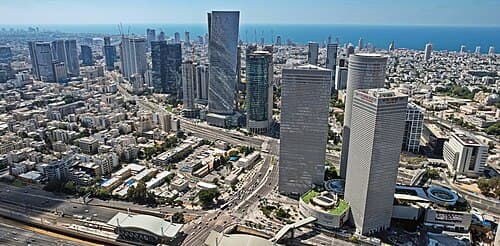
Tel Aviv
LOCATION3 w/ Michael·3 w/ Mandelbaum
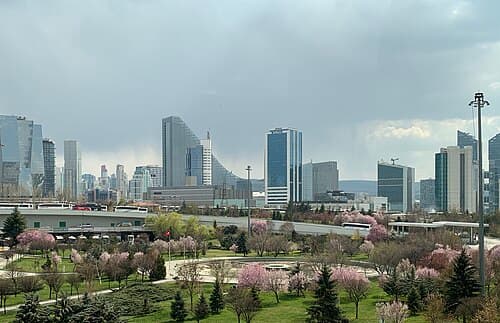
Ankara
LOCATION3 w/ Michael·3 w/ Mandelbaum
MANPADS
ORGANIZATION3 w/ Michael·3 w/ Mandelbaum
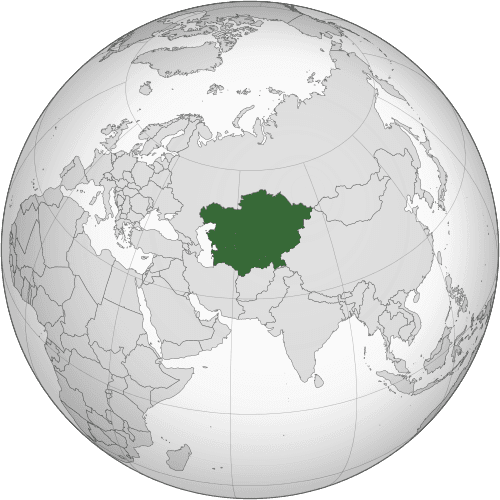
Central Asia
LOCATION3 w/ Michael·3 w/ Mandelbaum