Back to Network











7
Shared Docs
7
Same-Page
7 / 7
Mentions
Document Mentions (7 shared documents)
2 mentions1 same-page
Page ?Same page
, and trade secrets). Ms. Maxwell is aware, based on publicly reported statements by Plaintiff, Plaintiff's counsel, the United States Attorney for the Southern District of New York, and the Attorney General for the U.S. Virgin Islands, that investigations surrounding the alleged conduct of Mr. Epstein survive his d
nt is filed with a court, it is a judicial document; otherwise it is not. See id. (citing Pansy, 23 F.3d at 782). The Amodeo I court cited two other Third Circuit cases confirming that circuit's litmus-test approach to identifying judicial documents: Bank of America National Trust and Savings Association v. H
2 mentions1 same-page
Page ?Same page
orrn, among other things, recruiting services. 4. Defendant JEFFREY EPSTEIN owned a property located at 358 El Brillo Way, Palm Beach, Florida, in the Southern District of Florida (hereinafter referred to as "358 El Brillo Way"). 5. DefendRJEFFREY EPSTEIN owned a property located at 9 East 71st Street, New York,
nding that it was not frivol- ous. It is a `close' question or one that very well could be decided the othe " Gi- ancola, 754 F.2d at 901. In the Third Circuit said that a "substan r ues- tion under § 3143(6)(2) is one white is either novel, which has not been decided by controllaedent, or which is fairl
2 mentions1 same-page
Page ?Same page
the £ieconb (Circuit UNITED STATES OF AMERICA. Appellee, v. GHISLAINE MAXWELL, Appellant. On Appeal from the United States District Court for the Southern District of New York, 20-CR-330 (MN) Appellant Ghislaine Maxwell's Motion for Pretrial Release David Oscar Markus MARKUS/MOSS PLLC 40 N.W. Third Street P
d. Cir. 1982). Every circuit with published pattern instructions inform juries that they are not to consider the indictment as evidence. See, e.g., Third Circuit ("An indictment is simply a description of the charge(s) against a defendant. It is an accusation only. An indictment is not evidence of anything,
Sponsored
2 mentions1 same-page
Page ?Same page
w, the motions should be denied in their entirety. First, the non-prosecution agreement between Jeffrey Epstein and the U.S. Attorney's Office for the Southern District of Florida is entirely irrelevant to this case, and the defendant's motion fails as a matter of law. Second, the indictment is timely under 18 U.S.C
ges, 346 U.S. at 216. There is no corresponding indication that Congress intended the "essential ingredients" test to apply to Section 3283. As the Third Circuit has explained in rejecting an identical argument: While Bridges did adopt an "essential ingredient" test, the limitations-extending statute at issu
Sponsored
2 mentions1 same-page
Page ?Same page
w, the motions should be denied in their entirety. First, the non-prosecution agreement between Jeffrey Epstein and the U.S. Attorney's Office for the Southern District of Florida is entirely irrelevant to this case, and the defendant's motion fails as a matter of law. Second, the indictment is timely under 18 U.S.C
ges, 346 U.S. at 216. There is no corresponding indication that Congress intended the "essential ingredients" test to apply to Section 3283. As the Third Circuit has explained in rejecting an identical argument: While Bridges did adopt an "essential ingredient" test, the limitations-extending statute at issu
Sponsored
Mutual Connections (493)
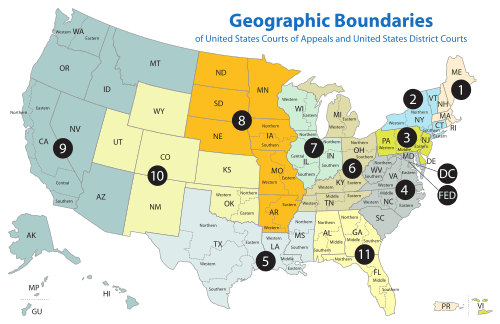
Entities connected to both the Southern District and Third Circuit
Jeffrey Epstein
PERSON2,140 w/ the·10 w/ Third
United States
LOCATION1,096 w/ the·6 w/ Third
Department of Justice
ORGANIZATION982 w/ the·5 w/ Third
Ghislaine Maxwell
PERSON820 w/ the·6 w/ Third
FBI
ORGANIZATION759 w/ the·4 w/ Third
Prince Andrew
PERSON739 w/ the·7 w/ Third
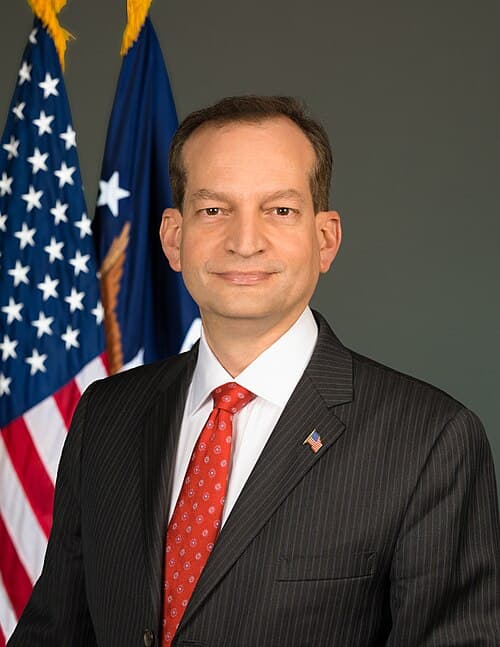
Alexander Acosta
PERSON680 w/ the·6 w/ Third
JD
Jane Doe
PERSON627 w/ the·4 w/ Third
Bradley Edwards
PERSON614 w/ the·7 w/ Third
George W. Bush
PERSON475 w/ the·7 w/ Third
the United States District Court
ORGANIZATION444 w/ the·3 w/ Third
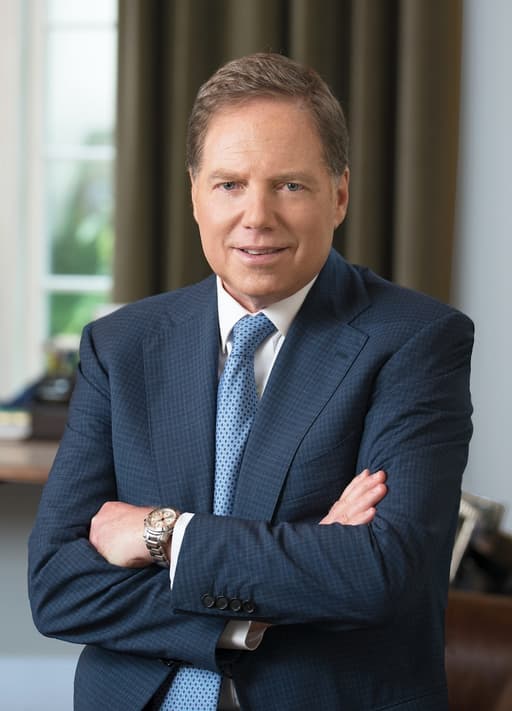
Geoffrey S. Berman
PERSON417 w/ the·2 w/ Third
Alan Dershowitz
PERSON416 w/ the·2 w/ Third
Southern District of New York
ORGANIZATION384 w/ the·6 w/ Third
Virginia Giuffre
PERSON348 w/ the·4 w/ Third
Scarlett Johansson
PERSON340 w/ the·5 w/ Third
MF
Maria Farmer
PERSON318 w/ the·7 w/ Third
A. Marie Villafana
PERSON254 w/ the·2 w/ Third
Julie K. Brown
PERSON242 w/ the·5 w/ Third
MW
Martin Weinberg
PERSON201 w/ the·7 w/ Third