Back to Network




















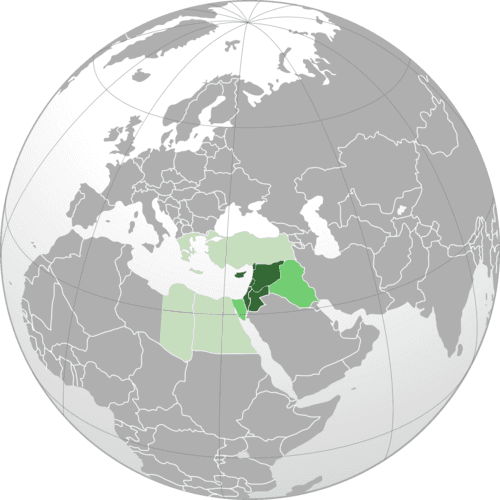
10
Shared Docs
10
Same-Page
15 / 10
Mentions
Document Mentions (10 shared documents)
3 mentions1 same-page
Page ?Same page
yptian president Mohamed Morsi made mistakes: giving himself immunity from prosecution, refusing to compromise with secular groups. EFTA00706415 Morsi committed mistakes, but they don't justify a military coup. And whatever mistakes were committed do not justify Western countries staying silent ab
ccess of the transition to democracy in Tunisia that we will export to Egypt a working democratic model. Some argue that former Egyptian president Mohamed Morsi made mistakes: giving himself immunity from prosecution, refusing to compromise with secular groups. EFTA00706415 Morsi committed mistakes, but
y lies in tatters. Washington and London were forced to act after Islamist rebels, including the al-Qaida-affiliated Islamic State of Iraq and the Levant, took over the headquarters and warehouses of the western-backed FSA and reportedly seized anti-aircraft and anti-tank missiles, some of which are
3 mentions1 same-page
Page ?Same page
er in the audience named Yousef Eid Hamid, 38, said he was campaigning for Aboul Fotouh in defiance of his organization's strict orders to vote for Morsi. "We are not machines," he said. "You cannot love a candidate, and then just change." Backroom deals with the military will likely be decisive in d
tesman who can stand against what he portrays as a power-hungry Islamist tide, personified by the other two front-runners: the Muslim Brotherhood's Mohamed Morsi and the ex-Muslim Brother Abdel Moneim Aboul Fotouh. It is Aboul Fotouh who most worries Moussa's strategists: he is giving the former minister a
an as well as the EFTA00630297 Lebanese resistance from a Syrian perspective. This is well understood in the light of the three decades of Iran's Levant policy and partnership with Syria. Thirty three years ago, after the fall of the Shah, Yasser Arafat was the first foreign leader who arrived to r
3 mentions1 same-page
Page ?Same page
d on religion Two articles approved on Sunday would expand the role of the military, which installed the current interim government after removing Morsi, in Egypt's politics. Photo: AP Washington: Egypt's constitutional panel approved an amended charter, clearing a key hurdle in the military-backed
titution marked a milestone in the government's so-called road map to restoring democratic rule following the military's July 3 ouster of President Mohamed Morsi. His overthrow was followed by the suspension of the old charter, which, while approved in a referendum, fueled deadly protests that encouraged the
nterest Gazprom Goes to the Middle East Allison Good December 2, 2013 -- There is no question that Russia is making a play for natural gas in the Levant basin. Between the overt ambitions of President Vladimir Putin's government, state-owned energy giant Gazprom, and private companies, a concerted e
Sponsored
3 mentions1 same-page
Page ?Same page
ally, given the mood on the Egyptian street as pictures of Palestinian casualties in EFTA_R1_00464351 EFTA01977735 Gaza provoke anger, President Mohamed Morsi instinctively supports Hamas. And, so, without any recognition that Israeli civilians are targeted by Hamas rockets from a territory Israel left c
orts Hamas. And, so, without any recognition that Israeli civilians are targeted by Hamas rockets from a territory Israel left completely in 2005, Morsi has condemned the Israeli "aggression" in Gaza and recalled Egypt's ambassador to Israel. He has sent his Prime Minister, Hesham Kandil, to Gaza to
ties to the Egyptian Muslim Brotherhood to achieve political legitimacy. When unrest spread into Syria and began to threaten Iran's position in the Levant, Hamas made a strategic decision to move away from the Iran-Syria axis, now on the decline, and to latch itself onto the new apparent regional tren
3 mentions1 same-page
Page ?Same page
esman who can stand against what he portrays as a power-hungry Islamist tide, personified by the other two front-runners: the Muslim Brotherhood's Mohamed Morsi and the ex-Muslim Brother Abdel Moneim Aboul Fotouh. It is Aboul Fotouh who most worries Moussa's strategists: he is giving the former minister a
er in the audience named Yousef Eid Hamid, 38, said he was campaigning for Aboul Fotouh in defiance of his organization's strict orders to vote for Morsi. "We are not machines," he said. "You cannot love a candidate, and then just change." Backroom deals with the military will likely be decisive in
h the Palestinian as well as the Lebanese resistance from a Syrian perspective. This is well understood in the light of the three decades of Iran's Levant policy and partnership with Syria. Thirty three years ago, after the fall of the Shah, Yasser Arafat was the first foreign leader who arrived to r
2 mentions1 same-page
Page ?Same page
coup and are now running the country. The trip was ill advised for several reasons, starting with its timing. Mr. Kerry arrived one day before Mr. Morsi was to go on trial for murder in a politically motivated case (now postponed until Jan. 8) that had the whole country on edge. Mr. Morsi has been
in power. Having no other major clients for its arms-export industry since the fall of Muammar Qadhafi, no other port of access for its navy in the Levant, and an affinity for a secular regime—however brutal—that bills itself as a bulwark against Sunni Arab religious extremism, Russia has deftly kept
Sponsored
2 mentions1 same-page
Page ?Same page
economy. A currency crisis at the beginning of 2013 that left the Egyptian pound at a record low against the US dollar appears to have prompted the Morsi government to resume talks with the IMF on January 7th for a $4.8 billion loan. Securing the loan has become a top priority for the government give
have taken place in the past two months—previously rare occurrences. In the midst of these changing political winds, a fierce winter storm hit the Levant on January 9th, leaving at least eight people dead in the region and bringing an unusual foot of snow to Jordan. Kuwait: The Constitutional Court i
2 mentions1 same-page
Page ?Same page
ent Al Sisi. Terrorist attacks on and around the first anniversary of the June 30th uprising that led to the ousting of Muslim Brotherhood President Morsi highlighted that the security threat remains high: two bomb disposal experts were killed that day as they attempted to defuse bombs outside the pre
hborhoods and an attack on Lebanese soldiers carrying out a raid in a Sunni neighborhood in Tripoli. It seems that the Islamic State of Iraq and the Levant (ISIL), which recently renamed itself the Islamic State (IS), and/or its allies have turned their sights on Lebanon. This recent flurry of attacks
2 mentions1 same-page
Page ?Same page
by itself spawn something new and workable to take its place is just that, mere hope. In his Delphic interview with Time, former Egyptian President Mohamed Morsi put it this way: "The world is now much more difficult than it was during your revolution. It's even more difficult. The world. More complicated,
ia, ISIS would not be on the rampage. A plague on both their houses! It's unseemly to fight Washington's talk-show wars over the myriad dead of the Levant. The facts are plain enough. The United States invaded Iraq in 2003 because of its weapons of mass destruction program. However Iraq did not have a
Sponsored
2 mentions1 same-page
Page ?Same page
-- A new reality and an alternative reality are shaping up in Egypt. President Mohamed Morsi and the Muslim Brotherhood appear firmly in control . Morsi seized on the killing of 16 Egyptian soldiers in the EFTA00712943 Sinai early this month — an embarrassment for the military and particularly the
ping into the EFTA00712951 disillusionment and disorder of transitions. A new Salafi Crescent, radiating from the Persian Gulf sheikdoms into the Levant and North Africa, is one of the most underappreciated and disturbing byproducts of the Arab revolts. In varying degrees, these populist puritans ar
Sponsored
Mutual Connections (377)
Entities connected to both Mohamed Morsi and Levant
Barack Obama
PERSON59 w/ Mohamed·29 w/ Levant
Bashar al-Assad
PERSON55 w/ Mohamed·30 w/ Levant
United States
LOCATION50 w/ Mohamed·28 w/ Levant
Lebanon
LOCATION45 w/ Mohamed·31 w/ Levant
Cairo
LOCATION55 w/ Mohamed·20 w/ Levant
Hosni Mubarak
PERSON54 w/ Mohamed·19 w/ Levant
Tehran
LOCATION45 w/ Mohamed·26 w/ Levant
Terje Rod-Larsen
PERSON54 w/ Mohamed·15 w/ Levant
George W. Bush
PERSON39 w/ Mohamed·24 w/ Levant
Benjamin Netanyahu
PERSON39 w/ Mohamed·18 w/ Levant
Tunisia
LOCATION34 w/ Mohamed·21 w/ Levant
Damascus
LOCATION37 w/ Mohamed·18 w/ Levant
Saddam Hussein
PERSON31 w/ Mohamed·23 w/ Levant
Marc Rich
PERSON35 w/ Mohamed·16 w/ Levant
Middle East
LOCATION33 w/ Mohamed·17 w/ Levant
Yemen
LOCATION28 w/ Mohamed·21 w/ Levant
Bill Clinton
PERSON32 w/ Mohamed·15 w/ Levant
Jerusalem
LOCATION29 w/ Mohamed·16 w/ Levant
Fatah
ORGANIZATION28 w/ Mohamed·11 w/ Levant
Mahmoud Abbas
PERSON25 w/ Mohamed·13 w/ Levant