Back to Network















4
Shared Docs
4
Same-Page
6 / 4
Mentions
Document Mentions (4 shared documents)
3 mentions1 same-page
Page ?Same page
19995 11 WIRETAP ith three screens in his White House bedroom, the president was his own best cable y Y curator. But for print he depended on Hope Hicks. Hicks, who had been his junior aide for most of the campaign and his spokesperson (although, as he would point out, he was really his own spokespers
the media that could not be positively spun. The day after his “reset” speech before the joint session of Congress presented a certain conundrum for Hicks. Here were the first generally good notices for the administration. But in the Post, the Times, and the New Yorker that day, there was also an ugly b
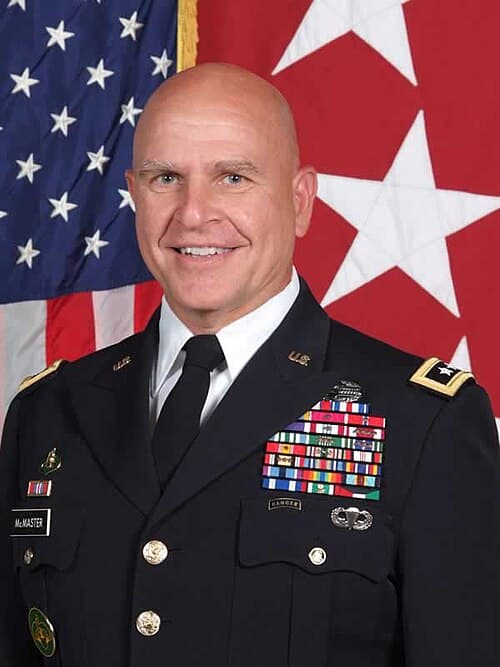
invariably incurred Trump’s annoyance.) Kushner enlisted Scarborough and Brzezinski in something of a regular morning television Bannon slag-a-thon. H. R. McMaster, the three-star general who had replaced Michael Flynn as National Security Advisor, had secured the president’s pledge that he could veto members of
3 mentions1 same-page
Page ?Same page
n aggrieved, unyielding, and threatening president dominated the discussion, pushing HOUSE_OVERSIGHT_020079 into line his daughter and her husband, Hicks, and Raffel. Kasowitz—the lawyer whose specific job was to keep Trump at arm’s length from Russian-related matters—was kept on hold on the phone for
s the ultimate facilitator of unmediated behavior. His impulses and thoughts—unedited, unreviewed, unchallenged—not only passed through him, but, via Hicks, traveled out into the world without any other White House arbitration. “The problem isn’t Twitter, it’s Hope,” observed one communication staffer.
was “not taking a pencil to anything.” Nearby, in a small conference room watching the movie Fargo, were Dina Powell, Gary Cohn, Stephen Miller, and H. R. McMaster, all of whom would later insist that they were, however physically close to the unfolding crisis, removed from it. And, indeed, anyone “in the room”
2 mentions1 same-page
Page ?Same page
s anywhere near it. » * * The ultimate keeper of the secrets from the campaign, the transition, through the first year in the White House was Hope Hicks, the 14, House communications director. She had witnessed most everyth EFTA00316518 6 MICHAEL WOLFF She saw what the president saw: she knew wh
on people carrying Bannon's message as well as the president's. What's more, his enemies in the White House were moving out, includ- ing Hope Hicks, H. R. McMaster, the former national security advisor, and the ever shrinking circle of allies supporting the president's son-in- law and daughter. Bannon was ofte
Sponsored
2 mentions1 same-page
Page ?Same page
rly Hills— the then candidate polishing off a pint of Haagen-Dazs vanilla as he happily and idly opined about a range of topics while his aides, Hope Hicks, Corey Lewandowski, and Jared Kushner, went in and out of the room. Conversations with members of the campaign’s team continued through the Republica
sidestep the people in your organization and to dominate them. It was just one irony of his courtship of admired military figures like James Mattis, H. R. McMaster, and John Kelly: they found themselves working in an administration that was in every way inimical to basic command principles. 7 OK Ok Almost from
Sponsored
Mutual Connections (266)
Entities connected to both Hicks and H. R. McMaster
Donald Trump
PERSON62 w/ Hicks·4 w/ H.
Jared Kushner
PERSON50 w/ Hicks·4 w/ H.
Vladimir Putin
PERSON46 w/ Hicks·4 w/ H.
George W. Bush
PERSON45 w/ Hicks·4 w/ H.
Jeffrey Epstein
PERSON43 w/ Hicks·3 w/ H.
Justin Trudeau
PERSON29 w/ Hicks·3 w/ H.
Steve Bannon
PERSON28 w/ Hicks·4 w/ H.
SA
Sater
PERSON26 w/ Hicks·2 w/ H.
Marc Rich
PERSON22 w/ Hicks·4 w/ H.
Barack Obama
PERSON22 w/ Hicks·4 w/ H.
Prince Andrew
PERSON22 w/ Hicks·4 w/ H.
Bill Clinton
PERSON20 w/ Hicks·4 w/ H.
Michael Jackson
PERSON20 w/ Hicks·3 w/ H.
Stephen Hawking
PERSON18 w/ Hicks·4 w/ H.
MF
Maria Farmer
PERSON20 w/ Hicks·2 w/ H.
Joe Biden
PERSON18 w/ Hicks·3 w/ H.
Mike Pence
PERSON16 w/ Hicks·4 w/ H.
Nancy Pelosi
PERSON17 w/ Hicks·3 w/ H.
Paul Ryan
PERSON15 w/ Hicks·4 w/ H.
Department of Justice
ORGANIZATION17 w/ Hicks·2 w/ H.