Back to Network





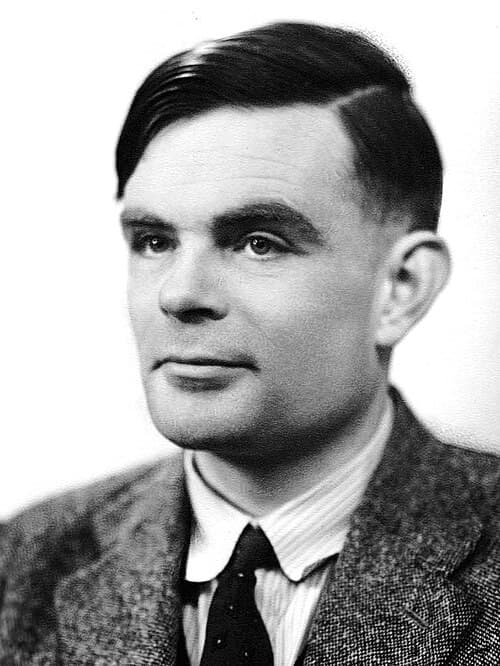






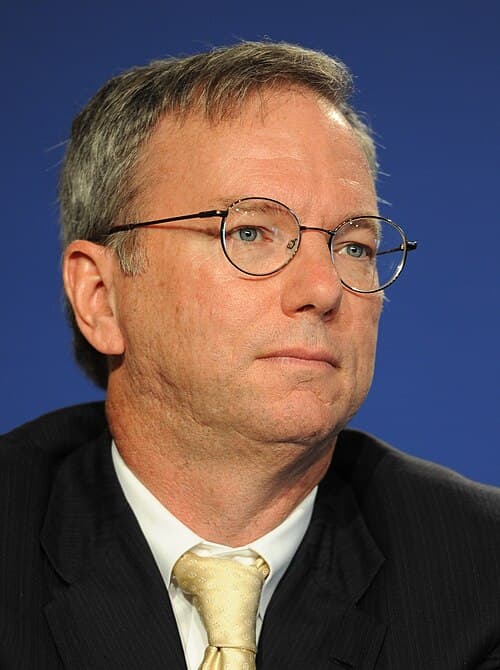
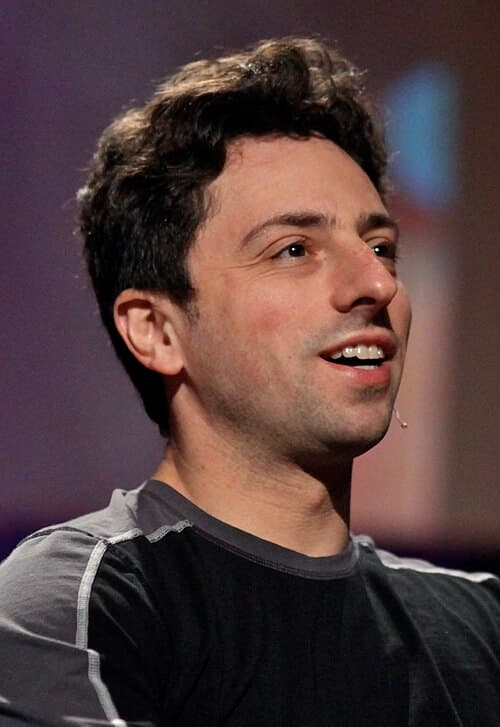



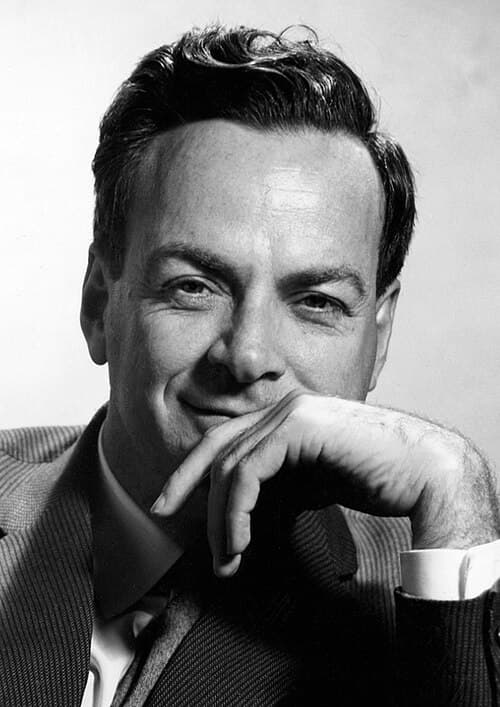
5
Shared Docs
5
Same-Page
5 / 5
Mentions
Document Mentions (5 shared documents)
2 mentions1 same-page
Page ?Same page
eidungproblem." This paper was a key inspira- tion towards the future work of Claude Shannon creating modern cryptographt via his collaboration with Alan Turing at Bletchlcy Park during WWII. (see: http://en.wikipedia.org/wiki/Claude_Shannon) ii) 55 years since Kurt Gadd% 1956 letter to John von Neumann
Mitogen-Stimulated and Transformed Cells Lower Bound for Sparse Euclidean Spanners. 5. Radhika Nagpal (Harvard) Radhika Nagpal is a Professor of Computer Science at Harvard and also is a core faculty member of the Wyss Institute. Her specialization is in self- organizing systems and collective "swarm" robotic
2 mentions1 same-page
Page ?Same page
How Alan Turing invented the computer, helped win World War II and left us with one of the greatest puzzles of our time: are humans simply computers or are we more t
s, including Truphone, the world’s first global mobile network. He holds numerous patents, filed in over a hundred countries. He studied Physics and Computer Science at Manchester University, Design at Lancaster University and Engineering at Cambridge University. He lives with his family on a farm in Kent, England
Sponsored
2 mentions1 same-page
Page ?Same page
In the nearly hundred years of investigation since Wallas proposed this theorem, we have not moved much further forward in understanding creativity. Alan Turing described his thoughts on the science behind creativity in a short piece he wrote about decision making: “When making a decision of minor importance
HOUSE_OVERSIGHT_016072 Appendix 2 — — Bibliography company with access to a broad range of journal subscriptions. I have a degree in Physics and Computer Science, so I am no layman. The modern web gives amateurs like me, easy access to enormous information resources that would only have been available from the
2 mentions1 same-page
Page ?Same page
ended and the machine began. This was a puzzle that had been, in a sense, anticipated at the very dawn of the digital revolution by the mathematician Alan Turing in a 1950 paper called “Computing Machinery and Intelligence” that he published in the British journal Mind. “Can machines think?” Turing began.?5” H
ical Mediation — Philosophy, Sociology, Geneaology” in Common Knowledge, Fall 1994 Vol 3 No 2. p. 23 167 It suggests other dangers: Leslie Lamport, “Computer Science and State Machines”, Contribution to a Festschrift honoring Willem-Paul de Roever on his retirement” (Redmond: Microsoft Research, 2008). In its enti
Sponsored
Mutual Connections (227)
Entities connected to both Alan Turing and Computer Science
Jeffrey Epstein
PERSON21 w/ Alan·36 w/ Computer
Alan Dershowitz
PERSON34 w/ Alan·9 w/ Computer
Stephen Hawking
PERSON27 w/ Alan·12 w/ Computer
Eric Trump
PERSON13 w/ Alan·19 w/ Computer
Prince Charles
PERSON14 w/ Alan·12 w/ Computer
George W. Bush
PERSON13 w/ Alan·10 w/ Computer
Turing
PERSON17 w/ Alan·5 w/ Computer
Samantha Power
PERSON14 w/ Alan·7 w/ Computer
Harvey Weinstein
PERSON12 w/ Alan·9 w/ Computer
Prince Andrew
PERSON12 w/ Alan·8 w/ Computer
Barack Obama
PERSON5 w/ Alan·14 w/ Computer
Virginia Giuffre
PERSON5 w/ Alan·13 w/ Computer
Marc Rich
PERSON10 w/ Alan·8 w/ Computer
Eric Schmidt
PERSON13 w/ Alan·4 w/ Computer
Sergey Brin
PERSON3 w/ Alan·13 w/ Computer
Michael Douglas
PERSON9 w/ Alan·6 w/ Computer
Julie K. Brown
PERSON7 w/ Alan·8 w/ Computer
CalTech
ORGANIZATION2 w/ Alan·13 w/ Computer
Michael Jackson
PERSON10 w/ Alan·5 w/ Computer
Feynman
PERSON8 w/ Alan·6 w/ Computer