Back to Network


















5
Shared Docs
5
Same-Page
5 / 5
Mentions
Document Mentions (5 shared documents)
2 mentions1 same-page
Page ?Same page
ell as in the strategic planning of the Axis powers during World War II. It also explains America's long-term drive to remain the dominant power in the Persian Gulf that culminated in the first Gulf War of 1990-91 and its inevitable sequel, the 2003 invasion of Iraq. The years since World War II have seen a var
r goal of "exporting the Islamic revolution" would not succeed. No doubt that Arafat's close ties with Saddam Hussein, a nemesis of both Assad and Khomeini, and his concession to recognize Israel also widened the chasm between the PLO and the Islamic Republic. From Assad's standpoint, Arafat's relation
2 mentions1 same-page
Page ?Same page
d Nations that declared EFTA_R1_00225757 EFTA01840701 Zionism to be a form of racism. The shah even came to oppose the U.S. military presence in the Persian Gulf. Neighborhood Hegemony Iran in the last years of the shah manifested a striving for local hegemony that transcended the country's strongest allian
in the last years of the shah manifested a striving for local hegemony that transcended the country's strongest alliances with the U.S. and Israel. Khomeini's regime went on to reveal how even messianic ideologies can bow to long-established imperatives and dramatically different security environments.
2 mentions1 same-page
Page ?Same page
rder to win tit-for-tat concessions from Iran in 2012. Better, they calculate, to stall, look tough, and if need be engage in a military buildup in the Persian Gulf now and then. That U.S. and E.U. sanctions against Iran aren't likely to force Iran to back down doesn't mean that Tehran isn't feeling the pain. P
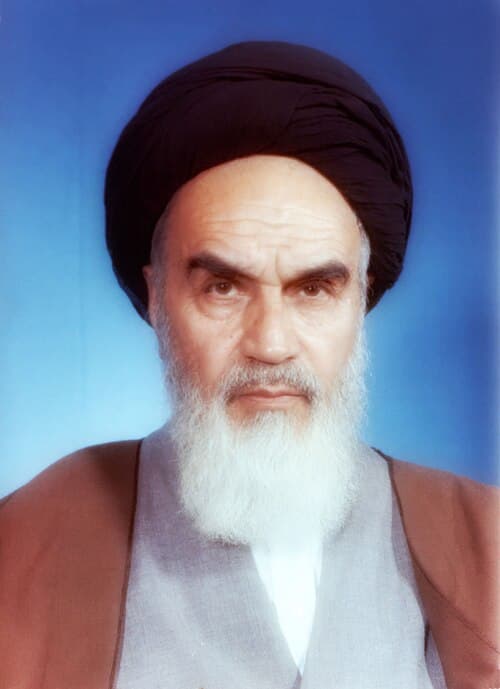
nctions, corruption and mismanagement, oil exports are down by almost a half and production is nearing twenty year lows. Before the late Ayatollah Khomeini announced that "economics is for donkeys" Iran's oil production stood at close to six million barrels per day. Today, after thirty- two years of "th
Sponsored
2 mentions1 same-page
Page ?Same page
ll as in the strategic planning of the Axis powers during World War II. It also explains America's long-term drive to remain the dominant power in the Persian Gulf that culminated in the first Gulf War of 1990-91 and its inevitable sequel, the 2003 invasion of Iraq. The years since World War II have seen a va
r goal of "exporting the Islamic revolution" would not succeed. No doubt that Arafat's close ties with Saddam Hussein, a nemesis of both Assad and Khomeini, and his concession to recognize Israel also widened the chasm between the PLO and the Islamic Republic. From Assad's standpoint, Arafat's relatio
2 mentions1 same-page
Page ?Same page
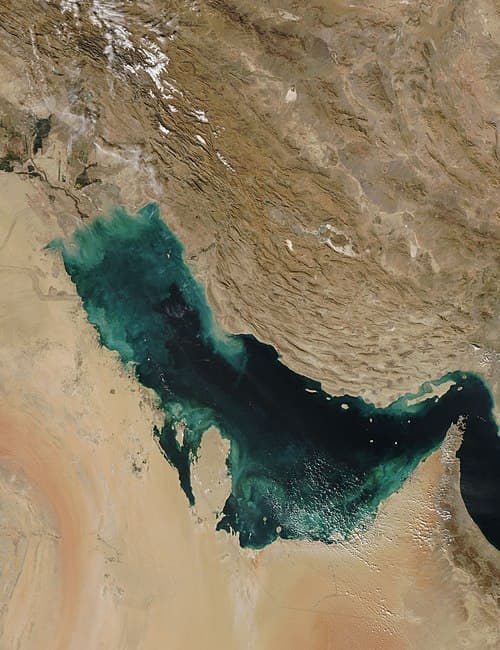
for two centuries. Because of its oil, because of its geostrategic location between two of the world's great energy sources, the Caspian Basin and the Persian Gulf, Tehran believes the country will always be a target for more powerful nations; but the shameful capitulations of history will be consigned to hist
onversely, views the world as essentially hostile, and many hardliners argue for a national security policy based on the most atavistic elements of Khomeini's worldview: international institutions and diplomacy are symptoms of an inequitable world, and a farce — self-reliance is the only option. And if
Sponsored
Mutual Connections (285)
Entities connected to both the Persian Gulf and Khomeini
Barack Obama
PERSON72 w/ the·16 w/ Khomeini
United States
LOCATION59 w/ the·11 w/ Khomeini
Tehran
LOCATION59 w/ the·11 w/ Khomeini
George W. Bush
PERSON54 w/ the·14 w/ Khomeini
Bashar al-Assad
PERSON48 w/ the·14 w/ Khomeini
Lebanon
LOCATION50 w/ the·10 w/ Khomeini
Benjamin Netanyahu
PERSON43 w/ the·8 w/ Khomeini
Bill Clinton
PERSON46 w/ the·5 w/ Khomeini
Saddam Hussein
PERSON37 w/ the·13 w/ Khomeini
Hosni Mubarak
PERSON37 w/ the·12 w/ Khomeini
Yemen
LOCATION36 w/ the·9 w/ Khomeini
Damascus
LOCATION33 w/ the·12 w/ Khomeini
Jeffrey Epstein
PERSON40 w/ the·4 w/ Khomeini
Middle East
LOCATION35 w/ the·8 w/ Khomeini
Marc Rich
PERSON34 w/ the·8 w/ Khomeini
Tunisia
LOCATION29 w/ the·11 w/ Khomeini
Hillary Clinton
PERSON34 w/ the·4 w/ Khomeini
Terje Rod-Larsen
PERSON29 w/ the·9 w/ Khomeini
Bahrain
LOCATION30 w/ the·8 w/ Khomeini
Cairo
LOCATION26 w/ the·8 w/ Khomeini