Back to Network



















9
Shared Docs
9
Same-Page
9 / 9
Mentions
Document Mentions (9 shared documents)
2 mentions1 same-page
Page ?Same page
li governments recognize that when the United States says it is unacceptable for Iran to have a nuclear weapon, we mean what we say." The 45-minute Oval Office conversation took place less than a week before the president was scheduled to address the annual convention of AIPAC, the pro-Israel lobbying grou
l Israeli dominion and sparing the country a wrenching internal conflict. The idea is not new: Mooted in Gaza in 2005, its planned extension to the West Bank was halted when Palestinians' acquisition of weapons through a porous border with Egypt soured Israelis' mood. Sooner or later, the plan could be
2 mentions1 same-page
Page ?Same page
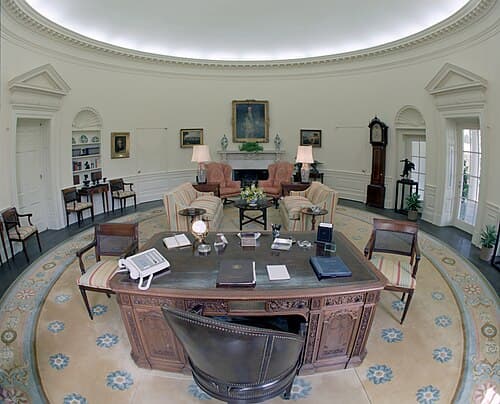
n's Approach To Oval Office Art "Distinct" From Predecessors. A New York limes (5/5, Buchanan, Stevens, 20.6M) analysis reports that "the art in the Oval Office is ever-present, carefully chosen and deliberately placed adding historical weight, silently commenting on the moment, the present, now more than e
ranationalist." The Times says Bennett is "a former settler leader who opposes Palestinian statehood and seeks to annex large parts of the occupied West Bank." According to the Times, Lapid "will need to persuade an ideologically incoherent array of other parties to set aside their differences to form an
2 mentions1 same-page
Page ?Same page
li governments recognize that when the United States says it is unacceptable for Iran to have a nuclear weapo=, we mean what we say." The 45-minute Oval Office convers=tion took place less than a week before the president was scheduled to add=ess the annual convention of AIPAC, the pro-Israel lobbying group
and Israel calls an interim arrangement. Here, too, their perspectives col=ide, as Hamas's conception of a truce entails a full withdrawal from the=West Bank and the right of return for Palestinian refugees, steps Israel w=ll adamantly reject in a permanent or temporary agreement. Still, an 9 EFTA_R1_01
Sponsored
2 mentions1 same-page
Page ?Same page
that the president has been qualified for the power of life and death by his reading. Perhaps he once taught the texts and their arguments; but the Oval Office is not a seminar room. This raises an interesting scruple about the relation of ideas to power. It is that the relation should never be unmediated
ai in 1982 and from Gaza in 2007, and no one is discussing the Golan these days due to Syria's internal crisis. But the future of Jerusalem and the West Bank remains a matter of intense international -- including American -- diplomatic effort. While professional peacemakers may want to E FTA_R 1_02204150
2 mentions1 same-page
Page ?Same page
Clinton on November 9. I was due to follow him three days later. I met Clinton and Dennis Ross over dinner in a little kitchen area attached to the Oval Office, and both seemed surprisingly upbeat. The President said he’d told Arafat the broad points that would be in the new American negotiating paper. It wa
rrangements, with what timeline? We met through the summer, as the 301 HOUSE_OVERSIGHT_011772 / BARAK / 16 talks with the Americans on the further West Bank redeployments meandered ahead. We also discussed in detail how a unity government would work. We agreed it would be presented, like the Shamir-Peres
2 mentions1 same-page
Page ?Same page
restart negotiations, declaring it “intolerable” that there was still not a Palestinian state. He was explicit about what Israel needed to do. In an Oval Office meeting with Bibi in May 2009, and in a speech in Cairo the next month, he called for a total halt to settlement construction on the West Bank. US op
orts on the security front had also made it easier for us to do next to nothing. Intermittent outbreaks of violence always remained a threat. Yet the West Bank security fence, along with our military, police and intelligence measures, meant it was very unlikely we’d see a return to the full-blown terror war
Sponsored
2 mentions1 same-page
Page ?Same page
e Clinton on November 9. I was due to follow him three days later. I met Clinton and Dennis Ross over dinner in a little kitchen area attached to the Oval Office, and both seemed surprisingly upbeat. The President said he'd told Arafat the broad points that would be in the new American negotiating paper. It wa
arrangements, with what timeline? We met through the summer, as the 301 HOUSE_OVERSIGHT_028149 / BARAK / 16 talks with the Americans on the further West Bank redeployments meandered ahead. We also discussed in detail how a unity government would work. We agreed it would be presented, like the Shamir-Peres
2 mentions1 same-page
Page ?Same page
restart negotiations, declaring it "intolerable" that there was still not a Palestinian state. He was explicit about what Israel needed to do. In an Oval Office meeting with Bibi in May 2009, and in a speech in Cairo the next month, he called for a total halt to settlement construction on the West Bank. US op
orts on the security front had also made it easier for us to do next to nothing. Intermittent outbreaks of violence always remained a threat. Yet the West Bank security fence, along with our military, police and intelligence measures, meant it was very unlikely we'd see a return to the full-blown terror war
2 mentions1 same-page
Page ?Same page
Ivanka and, 69-71, 79-80, 181, 187, 237, 252, 257-58, 290 Jews and, 140-44 Kelly as chief of staff and, 285-91, 294-97, 304-7 Kislyak meeting in Oval Office and, 218-19 Kushner and, 40, 69-73, 93, 122, 126, 142, 145, 179, 181-82, 211, 252-53, 290 McMaster and, 188-90, 193, 289 Melania and, 14-15, 43 Mer
236, 237, 266 Washington Times, 129 Watergate scandal, 212-13, 278 Weekly Standard, 38 Weinstein, Harvey, 203 Weissmann, Andrew, 278 Welch, Jack, 88 West Bank, 6 White House communications director Dubke as, 208 Hicks as, 297, 307 Scaramuccci as, 273-74, 281-86 White House Correspondents’ Dinner, 198-99, 20
Sponsored
Mutual Connections (891)
Entities connected to both Oval Office and West Bank
Barack Obama
PERSON20 w/ Oval·100 w/ West
Benjamin Netanyahu
PERSON11 w/ Oval·102 w/ West
Jeffrey Epstein
PERSON50 w/ Oval·60 w/ West
George W. Bush
PERSON22 w/ Oval·87 w/ West
United States
LOCATION18 w/ Oval·85 w/ West
Jerusalem
LOCATION10 w/ Oval·88 w/ West
Bill Clinton
PERSON25 w/ Oval·71 w/ West
Lebanon
LOCATION9 w/ Oval·79 w/ West
Marc Rich
PERSON32 w/ Oval·54 w/ West
Bashar al-Assad
PERSON9 w/ Oval·69 w/ West
Donald Trump
PERSON21 w/ Oval·49 w/ West
Tehran
LOCATION6 w/ Oval·64 w/ West
Joe Biden
PERSON18 w/ Oval·51 w/ West
Hillary Clinton
PERSON19 w/ Oval·46 w/ West
Mahmoud Abbas
PERSON5 w/ Oval·57 w/ West
Fatah
ORGANIZATION7 w/ Oval·55 w/ West
the West Bank
LOCATION7 w/ Oval·54 w/ West
Prince Andrew
PERSON19 w/ Oval·41 w/ West
Cairo
LOCATION5 w/ Oval·54 w/ West
Prince Charles
PERSON20 w/ Oval·39 w/ West