Back to Network















4
Shared Docs
2
Same-Page
4 / 6
Mentions
Document Mentions (4 shared documents)
3 mentions1 same-page
Page ?Same page
ed to meet the demands of its people for far reaching reforms. Arguably, the same reversal of outlook in Ankara occurred in relation to Libya after Muammar Gaddafi threatened to massacre his opposition, leading even to extending some Turkish support to the UN-backed NATO intervention in Libya in 2011 that shap
Armenians in Turkey a crime. Troubles to be sure, but should these be interpreted as "failures," and more precisely as "Turkish failures"? Perhaps, Davutoglu was insufficiently cautious, or alternatively too optimistic, when he articulated the zero problems diplomacy, but was it not an accurate way of si
sociated with Ottoman rule over much of the Arab world. It should be recalled that Turkish foreign policy began charting a new course years before Davutoglu became foreign minister. In an important sense, the turning point came in 2003 when the Turkish government refused to allow the United States to us
3 mentions1 same-page
Page ?Same page
d to meet the demands of its people for far reaching reforms. Arguably, the same reversal of outlook in Ankara occurred in relation to Libya after Muammar Gaddafi threatened to massacre his opposition, leading even to extending some Turkish support to the UN- EFTA_R1_00228271 EFTA01841735 backed NATO interv
accurate way of signaling a new dawn for Turkey's approach to neighbors, especially its Arab neighbors, and actually, to the world as a whole. And Davutoglu followed through with a dizzying series of initiatives, conceiving of the neighborhood in a broad sense and managing to banish many of the bad mem
Europe and North America in recent months have delighted in citing with a literary smirk "zero problems with neighbors," the centerpiece of Ahmet Davutoglu's foreign policy agenda since he became foreign minister on May 1, 2009, having previously served as chief advisor to both the prime minister and f
Page HOUSE_OVERSIGHT_031580
ce or whatever for a Cyprus deal? All through the past many decades, somehow many prominent and otherwise effective personalities, including not only Davutoglu and people of his caliber, but many premiers, presidents and at least every American leader since George Bush Sr. have declared many of the past year
Page: HOUSE_OVERSIGHT_031580 →Page HOUSE_OVERSIGHT_031587
regime change in Iraq in 2003. The frustration was even greater during the Libyan crisis that ended with the overthrow and execution of former leader Muammar Gaddafi. Indeed, from Beijing's perspective, resolution 1973 of the United Nations seeking to impose a no-fly zone in Libya did not give any foreign power th
Page: HOUSE_OVERSIGHT_031587 →Sponsored
Page HOUSE_OVERSIGHT_031953
essage to President Assad that ... he should step down," said Ben Rhodes, Barack Obama's deputy national security adviser. In a series of statements, Davutoglu has insisted it is "no longer possible to trust the Syrian government" ". Adding provocation to insult, he underscored Ankara's support for the prote
Page: HOUSE_OVERSIGHT_031953 →Page HOUSE_OVERSIGHT_031955
as the bin Laden raid and this year's withdrawal from Iraq -- albeit on a timetable negotiated by his predecessor -- and the successful overthrow of Muammar al-Qaddafi. All the same, "apology tours" and "leading from behind" -- referring to an unfortunate description of Obama's diplomatic strategy by a White House s
Page: HOUSE_OVERSIGHT_031955 →Sponsored
Mutual Connections (177)
Entities connected to both Muammar Gaddafi and Davutoglu
Barack Obama
PERSON54 w/ Muammar·9 w/ Davutoglu
Bashar al-Assad
PERSON46 w/ Muammar·11 w/ Davutoglu
Tehran
LOCATION41 w/ Muammar·10 w/ Davutoglu
United States
LOCATION41 w/ Muammar·9 w/ Davutoglu
George W. Bush
PERSON35 w/ Muammar·11 w/ Davutoglu
Bill Clinton
PERSON40 w/ Muammar·6 w/ Davutoglu
Lebanon
LOCATION32 w/ Muammar·10 w/ Davutoglu
Benjamin Netanyahu
PERSON35 w/ Muammar·7 w/ Davutoglu
Hosni Mubarak
PERSON35 w/ Muammar·6 w/ Davutoglu
Saddam Hussein
PERSON33 w/ Muammar·5 w/ Davutoglu
Tunisia
LOCATION34 w/ Muammar·2 w/ Davutoglu
Damascus
LOCATION29 w/ Muammar·7 w/ Davutoglu
Yemen
LOCATION31 w/ Muammar·3 w/ Davutoglu
Cairo
LOCATION29 w/ Muammar·5 w/ Davutoglu
Hillary Clinton
PERSON29 w/ Muammar·5 w/ Davutoglu
Jeffrey Epstein
PERSON25 w/ Muammar·8 w/ Davutoglu
Marc Rich
PERSON26 w/ Muammar·3 w/ Davutoglu
Bahrain
LOCATION23 w/ Muammar·5 w/ Davutoglu
Mediterranean
LOCATION22 w/ Muammar·5 w/ Davutoglu
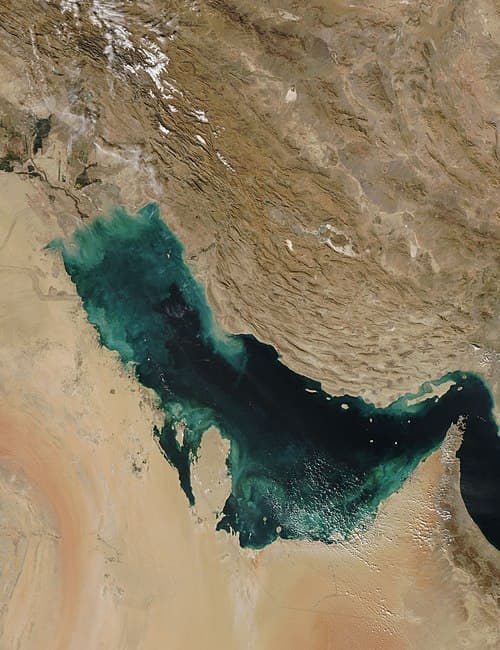
the Persian Gulf
LOCATION20 w/ Muammar·6 w/ Davutoglu