Back to Network










4
Shared Docs
4
Same-Page
4 / 4
Mentions
Document Mentions (4 shared documents)
2 mentions1 same-page
Page ?Same page
Cynthia Solomon is a computer scientist, educator and an inventor of the Logo programming language for children. She has been engaged -- along with Seymour Papert, Marvin Minsky, and others -- in foundational research on children constructing knowledge with computers. Holding an MS in Computer Science from Bo
that model, we envision three new creations that are needed to fit together with Marvin's existing books (Computation: Finite and Infinite Machines, Perceptrons, The Society of Mind, and The Emotion Machine), his papers, his website, and those of his lectures and conference talks that are informally availab
2 mentions1 same-page
Page ?Same page
ter need to face. The 1=63 paper, "Matter, Mind, and Models" addressed the problem of making self-a=are machines. In "Perceptrons," 1969, Minsky and Seymour Papert characteriz=d the capabilities and limitations of loop-free learning and pattern recogn=tion machines. In "A Framework for Representing Knowledge" (
m, Ph.D. thesis, Princeton 1954. Computation: Finite and Infinite Machines, Prentice-Hall, 1967. Semantic Information Processing, MIT Press, 1968. Perceptrons, (with Papert), MIT Press, 1969, 1988 Artificial Intelligence (with Papert) Univ. of Oregon, 1972. Robotics, Doubleday, 1986. The Society of Mind,
2 mentions1 same-page
Page ?Same page
h. Frank Rosenblatt invented a learning device he called the perceptron, which was a one-layer neural network. In the late sixties, Marvin Minsky and Seymour Papert wrote a book titled Perceptrons, in which they basically proved that perceptrons couldn’t do anything interesting, which is correct. Perceptrons coul
dify and then replace the knowledge of experts. These ran into difficulty in assembling that knowledge and reasoning about cases not already covered. Perceptrons sought to get around these problems by modeling how the brain learns, but they were unable to do much of anything. Multilayer perceptrons could handl
Sponsored
Mutual Connections (384)
Entities connected to both Seymour Papert and Perceptrons
Marvin Minsky
PERSON5 w/ Seymour·6 w/ Perceptrons
Stephen Hawking
PERSON6 w/ Seymour·3 w/ Perceptrons
Alan Dershowitz
PERSON5 w/ Seymour·3 w/ Perceptrons
George W. Bush
PERSON5 w/ Seymour·3 w/ Perceptrons
Eric Trump
PERSON5 w/ Seymour·3 w/ Perceptrons
Jeffrey Epstein
PERSON4 w/ Seymour·3 w/ Perceptrons
Julie K. Brown
PERSON4 w/ Seymour·3 w/ Perceptrons
University of Oxford
ORGANIZATION3 w/ Seymour·4 w/ Perceptrons
Danny Hillis
PERSON5 w/ Seymour·2 w/ Perceptrons
Joseph McCarthy
PERSON3 w/ Seymour·4 w/ Perceptrons
Prince Andrew
PERSON4 w/ Seymour·2 w/ Perceptrons
Marc Rich
PERSON3 w/ Seymour·3 w/ Perceptrons
Elon Musk
PERSON4 w/ Seymour·2 w/ Perceptrons
EV
Evans
PERSON3 w/ Seymour·3 w/ Perceptrons
Aristotle
PERSON4 w/ Seymour·2 w/ Perceptrons
Robert Gates
PERSON4 w/ Seymour·2 w/ Perceptrons
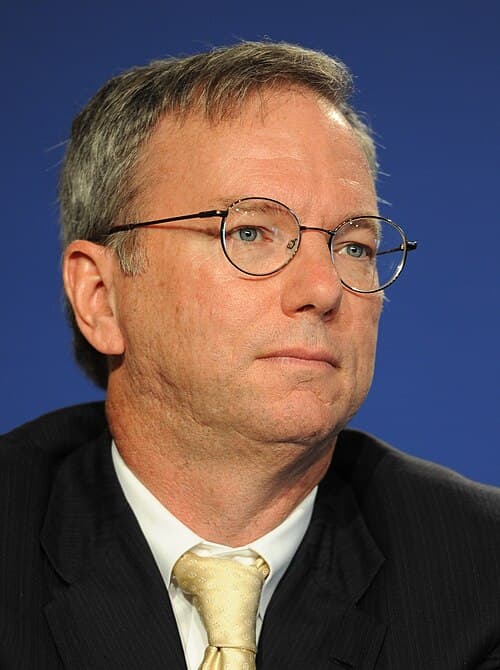
Eric Schmidt
PERSON4 w/ Seymour·2 w/ Perceptrons
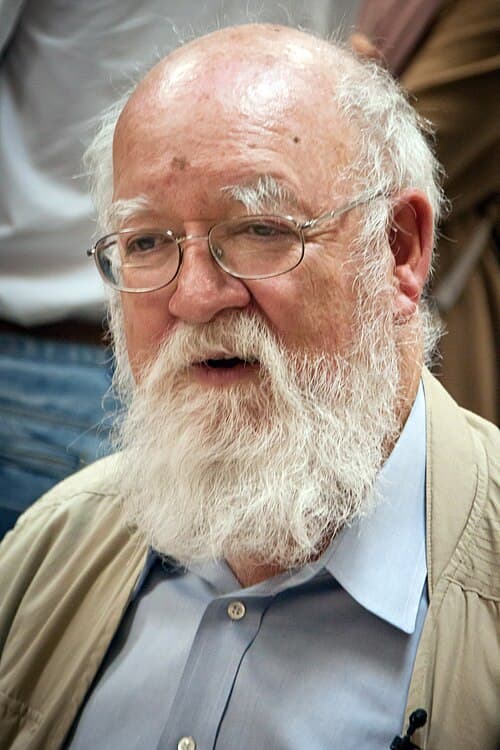
Daniel Dennett
PERSON4 w/ Seymour·2 w/ Perceptrons
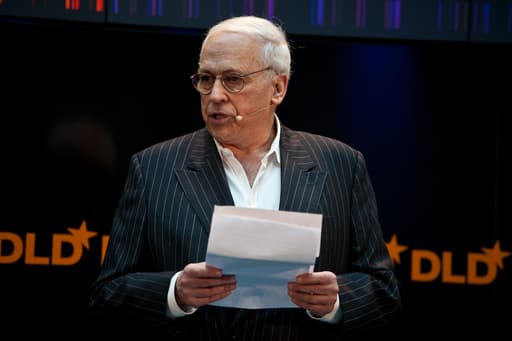
John Brockman
PERSON4 w/ Seymour·2 w/ Perceptrons
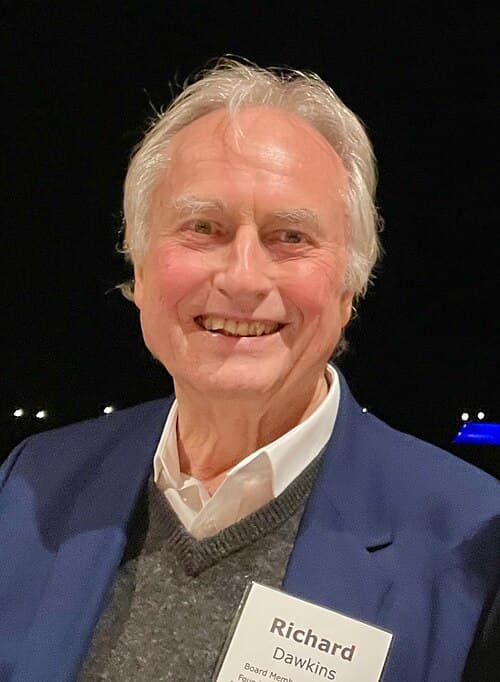
Richard Dawkins
PERSON4 w/ Seymour·2 w/ Perceptrons