Back to Network











4
Shared Docs
4
Same-Page
4 / 4
Mentions
Document Mentions (4 shared documents)
2 mentions1 same-page
Page ?Same page
ticipated: Douglas Rushkoff, Marc D. Hauser, Stewart Brand, Jim O'Donnell, Jaron Lanier, Bruce Sterling, Roger Schank, George Dyson, Howard Gardner, Seymour Papert, Freeman Dyson, Esther Dyson, Kai Krause, ans Pamela McCorduck. In 2005, George Dyson noted in his prescient EDGE essay "Turing's Cathedral": My v
one of my hosts after my talk. "We are scanning them to be read by an AI." "When I returned to highway 101, I found myself recollecting the words of Alan Turing, in his seminal paper Computing Machinery and Intelligence, a founding document in the quest for true Al. "In attempting to construct such machines
2 mentions1 same-page
Page ?Same page
ticipated: Douglas Rushkoff, Marc D. Hauser, Stewart Brand, Jim O'Donnell, Jaron Lanier, Bruce Sterling, Roger Schank, George Dyson, Howard Gardner, Seymour Papert, Freeman Dyson, Esther Dyson, Kai Krause, ans Pamela McCorduck. In 2005, George Dyson noted in his prescient EDGE essay "Turing's Cathedral": My v
one of my hosts after my talk. "We are scanning them to be read by an AI." "When I returned to highway 101, I found myself recollecting the words of Alan Turing, in his seminal paper Computing Machinery and Intelligence, a founding document in the quest for true AI. "In attempting to construct such machines
2 mentions1 same-page
Page ?Same page
h. Frank Rosenblatt invented a learning device he called the perceptron, which was a one-layer neural network. In the late sixties, Marvin Minsky and Seymour Papert wrote a book titled Perceptrons, in which they basically proved that perceptrons couldn’t do anything interesting, which is correct. Perceptrons coul
- reproducing systems. As an abstraction of life, he modeled a machine that can communicate a computation that constructs itself. And the final thing Alan Turing, who is credited with the theoretical framework for computer science, studied was how the instructions in genes can give rise to physical forms. Thes
Sponsored
Mutual Connections (453)
Entities connected to both Seymour Papert and Alan Turing
Alan Dershowitz
PERSON5 w/ Seymour·34 w/ Alan
Stephen Hawking
PERSON6 w/ Seymour·27 w/ Alan
Jeffrey Epstein
PERSON4 w/ Seymour·21 w/ Alan
Turing
PERSON2 w/ Seymour·17 w/ Alan
George W. Bush
PERSON5 w/ Seymour·13 w/ Alan
Eric Trump
PERSON5 w/ Seymour·13 w/ Alan
Eric Schmidt
PERSON4 w/ Seymour·13 w/ Alan
Prince Andrew
PERSON4 w/ Seymour·12 w/ Alan
Samantha Power
PERSON2 w/ Seymour·14 w/ Alan
Richard Dawkins
PERSON4 w/ Seymour·12 w/ Alan
Prince Charles
PERSON2 w/ Seymour·14 w/ Alan
Harvey Weinstein
PERSON2 w/ Seymour·12 w/ Alan
Daniel Dennett
PERSON4 w/ Seymour·10 w/ Alan
Marc Rich
PERSON3 w/ Seymour·10 w/ Alan
Michael Douglas
PERSON3 w/ Seymour·9 w/ Alan
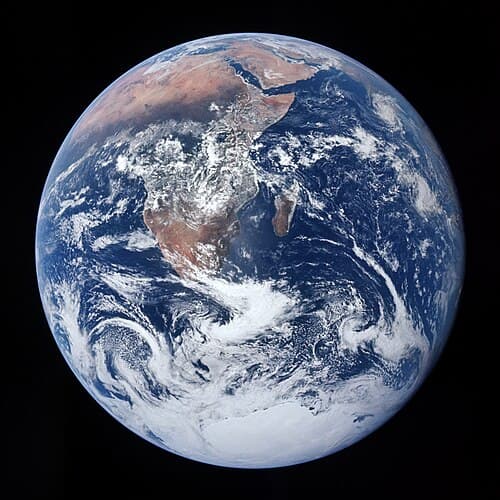
Earth
LOCATION2 w/ Seymour·10 w/ Alan
Marvin Minsky
PERSON5 w/ Seymour·6 w/ Alan
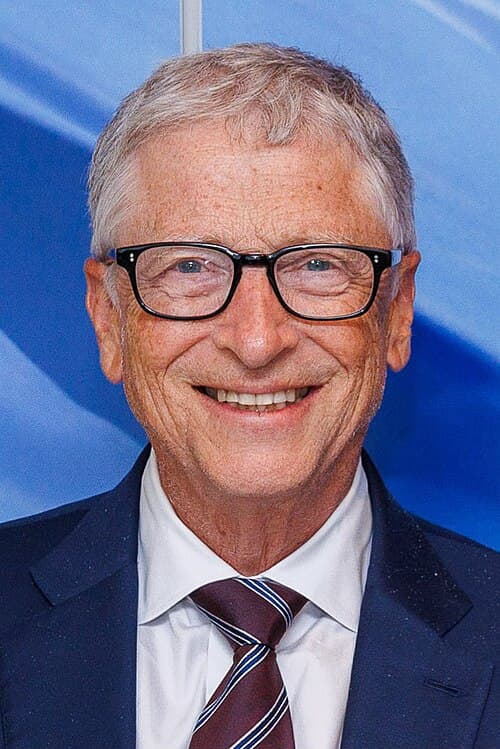
Bill Gates
PERSON4 w/ Seymour·7 w/ Alan
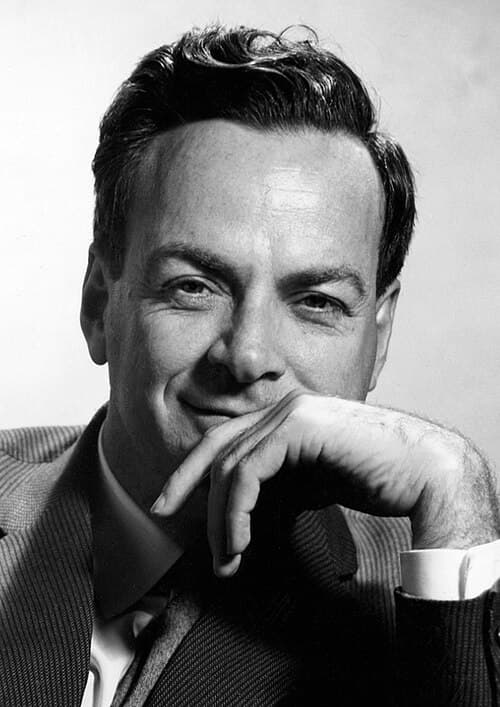
Feynman
PERSON3 w/ Seymour·8 w/ Alan
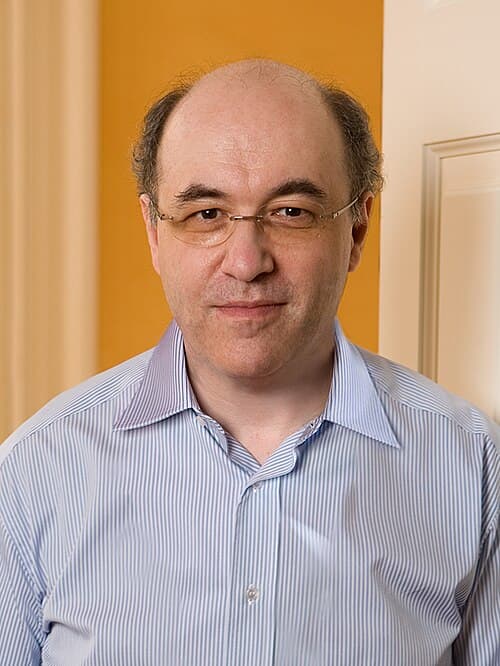
Stephen Wolfram
PERSON4 w/ Seymour·7 w/ Alan