Back to Network













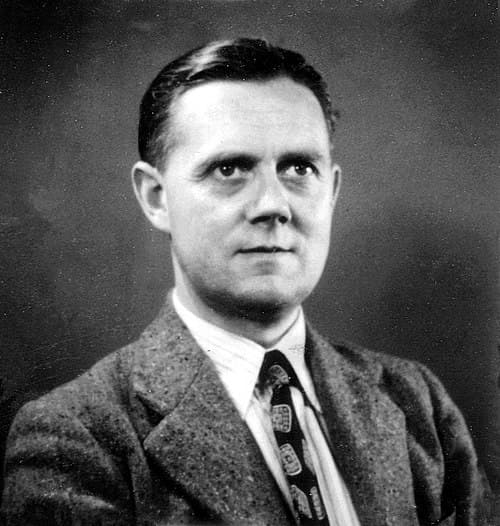
4
Shared Docs
4
Same-Page
4 / 4
Mentions
Document Mentions (4 shared documents)
2 mentions1 same-page
Page ?Same page
use, because this method lacks transparency. While recognizing the impressive achievements in deep learning by colleagues such as Michael Jordan and Geoffrey Hinton, he feels uncomfortable with this kind of opacity. He set out to understand the theoretical limitations of deep-learning systems and points out that
fic even though no one seems to be in control. There are three laws of artificial intelligence. The first, known as Ashby’s Law, after cybernetician W. Ross Ashby, author of Design for a Brain, states that any effective control system must be as complex as the system it controls. The second law, articulated by
2 mentions1 same-page
Page ?Same page
euroscience communities need to interact closely, something that is happening already. Some of today’s greatest exponents of machine learning—such as Geoffrey Hinton, Zoubin Ghahramani, and Demis Hassabis—have backgrounds in cognitive neuroscience, and their success has been at least in part due to attempts to mod
rence to make a difference. In this way of looking at the world, a control system needed to be as complex as the system it controlled. Cyberneticist W. Ross Ashby proved that this was true in a precise mathematical sense, in what is now called Ashby’s Law of Requisite Variety, or sometimes the First Law of Cybe
2 mentions1 same-page
Page ?Same page
use, because this method lacks transparency. While recognizing the impressive achievements in deep learning by colleagues such as Michael Jordan and Geoffrey Hinton, he feels uncomfortable with this kind of opacity. He set out to understand the theoretical limitations of deep-learning systems and points out that
fic even though no one seems to be in control. There are three laws of artificial intelligence. The first, known as Ashby’s Law, after cybernetician W. Ross Ashby, author of Design for a Brain, states that any effective control system must be as complex as the system it controls. The second law, articulated by
Sponsored
2 mentions1 same-page
Page ?Same page
euroscience communities need to interact closely, something that is happening already. Some of today’s greatest exponents of machine learning—such as Geoffrey Hinton, Zoubin Ghahramani, and Demis Hassabis—have backgrounds in cognitive neuroscience, and their success has been at least in part due to attempts to mod
rence to make a difference. In this way of looking at the world, a control system needed to be as complex as the system it controlled. Cyberneticist W. Ross Ashby proved that this was true in a precise mathematical sense, in what is now called Ashby’s Law of Requisite Variety, or sometimes the First Law of Cybe
Sponsored
Mutual Connections (688)
Entities connected to both Geoffrey Hinton and W. Ross Ashby
Marc Rich
PERSON7 w/ Geoffrey·4 w/ W.
Wilbur Ross
PERSON7 w/ Geoffrey·4 w/ W.
LB
Leon Black
PERSON6 w/ Geoffrey·4 w/ W.
Stephen Hawking
PERSON5 w/ Geoffrey·4 w/ W.
Julie K. Brown
PERSON5 w/ Geoffrey·4 w/ W.
Berkeley
LOCATION5 w/ Geoffrey·4 w/ W.
Harvey Weinstein
PERSON5 w/ Geoffrey·4 w/ W.
George W. Bush
PERSON5 w/ Geoffrey·4 w/ W.
Prince Andrew
PERSON5 w/ Geoffrey·4 w/ W.
Marvin Minsky
PERSON5 w/ Geoffrey·4 w/ W.
Eric Trump
PERSON5 w/ Geoffrey·4 w/ W.
Garry Kasparov
PERSON4 w/ Geoffrey·4 w/ W.
Joseph Weizenbaum
PERSON4 w/ Geoffrey·4 w/ W.
Genetics
ORGANIZATION4 w/ Geoffrey·4 w/ W.
Designing Reality
ORGANIZATION4 w/ Geoffrey·4 w/ W.
CG
Clement Greenberg
PERSON4 w/ Geoffrey·4 w/ W.
David Hume
PERSON4 w/ Geoffrey·4 w/ W.
Heinz von Foerster
PERSON4 w/ Geoffrey·4 w/ W.
Norbert Wiener’s
PERSON4 w/ Geoffrey·4 w/ W.
J. Robert Oppenheimer
PERSON4 w/ Geoffrey·4 w/ W.