Back to Network


















9
Shared Docs
9
Same-Page
14 / 9
Mentions
Document Mentions (9 shared documents)
4 mentions1 same-page
Page ?Same page
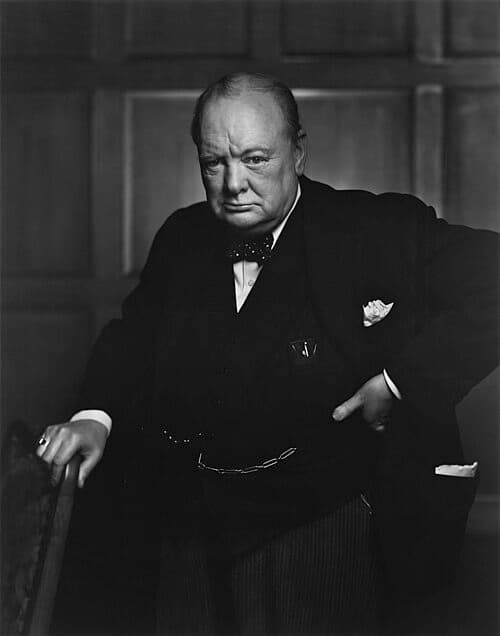
Street shortly before his U.S. trip, he is looking fit and relaxed—the very antithesis of the man whose portrait glares down from his office wall. Winston Churchill overate, guzzled champagne and brandy, smoked Cuban cigars, and liked nothing better than to work into the EFTA_R1_00225770 EFTA01840714 small h
ox [of official papers] at 5:45 a.m. My grandmother always said it's the hours before midnight that count. My hours are completely the opposite of Churchill's." He plays tennis every Sunday and goes for a run through Hyde Park once a week. Only rarely do the pressures of the job disturb his sleep. And
t to see the spread of democracy and rights and freedoms that we enjoy here." It is in the realm of foreign policy that Cameron is most obviously Churchillian. Like Tony Blair, he is drawn to the idea of military intervention where human rights as well as national interest are at stake. It was he, not Pre
ct government involvement in the markets." Tantawi's skepticism of neoliberal economics has little to do with his loyalty to the socialist model of the Soviet Union, where he received his training as a young officer. Rather, he resents the potential of privatization to encroach on the military's vast economic
3 mentions1 same-page
Page ?Same page
e mutual respect. British Prime Minister Winston Churchill's attempt to undo this in a meeting he immediate
k of any previous experience with Western culture and technology, the two leaders managed to forge a genuine mutual respect. British Prime Minister Winston Churchill's attempt to undo this in a meeting he immediately arranged soon after that turned out to be quite counter-productive, as he was seen as "arrogant"
ir Putin, the Russian President and autocrat, had a plan for the winter of 2014: to reassert his country's power a generation after the collapse of the Soviet Union. He thought that he would achieve this by building an Olympic wonderland on the Black Sea for fifty-one billion dollars and putting on a dazzling t
3 mentions1 same-page
Page ?Same page
ided to use that gesture for the crowds. Winston Churchill had used the V-sign to signify Victory. Then the
arms, two fingers from each hand extending up into the air. “Both,” he said. This was the exact moment | decided to use that gesture for the crowds. Winston Churchill had used the V-sign to signify Victory. Then the antiwar protesters perverted its meaning to signify Defeat. Now | was restoring its original victori
ssible to bring about the collapse of an entire economy by shutting down one integral aspect, especially communications or transportation. Moreover, the Soviet Union was trying to cut off the United States’ supply of a metal vital to jet engine production, by their support of the Allende government in Chile and al
Sponsored
3 mentions1 same-page
Page ?Same page
pt to changing realities and perceptions. Winston Churchill famously quipped, “Show me a young conservative a
for those with open minds and hearts, and, though ideologies may remain relatively fixed over time, they adapt to changing realities and perceptions. Winston Churchill famously quipped, “Show me a young conservative and I’ll show you someone with no heart. Show me an old liberal and I’ll show you someone with no bra
d declaration that after 2,000 years of exile, there arose a Jewish state in the Land of Israel, (supported by the United Nations, the United States, the Soviet Union and most western nations), the nascent state was attacked by the armies of the surrounding Arab countries. That summer I went to a Hebrew speaking Zi
2 mentions1 same-page
Page ?Same page
avrilo Princip, the 19-year-old Bosnian Serb nationalist whose assassination of Archduke Franz Ferdinand in Sarajevo on June 28, 1914, ignited what Churchill called "the hardest, the cruelest and the least-rewarded" of all wars. Yes, the Great War, the end of empires and the old order, was triggered by
ally in the region, Iran. Historically, first under the tsars and then under the Soviets, Tehran feared Russian expansionism. With the break-up of the Soviet Union, however, relations improved greatly, as Russian and Iranian interests began to substantially converge—particularly when it came to limiting Americ
2 mentions1 same-page
Page ?Same page
policy. Non-Gaullist (or anti-Gaullist) political figures like Francois Mitterand and Sarkozy adopted Gaullist stances on multiple occasions. From Churchill during the Second World War to Obama today, the United States and Great Britain have always found French leaders too rambunctious, too difficult to
The reassertion of France's world role was the primary concern of Charles de Gaulle. It was a goal he pursued in many ways, from early outreach to the Soviet Union to withdrawal of French troops from NATO. He wove a strong relationship with Israel during the Algerian war, at a time when the United States was p
Sponsored
2 mentions1 same-page
Page ?Same page
century leader exerting most influence on the coming century is China's Deng Xiaoping. "If you look at the other figures of the century, Roosevelt, Churchill, Stalin and Mao, none will leave the legacy in terms of the 21st century that Deng leaves," he says. "He walked away from the ideology of the Commu
leaves," he says. "He walked away from the ideology of the Communist Party just as effectively as Mikhail Gorbachev walked away from the essence of the Soviet Union." By 2050 Keating sees a world order with nations in terms of gross domestic product in this hierarchy: (1) China, (2) US, (3) India, (4) Japan, (5
2 mentions1 same-page
Page ?Same page
ical application of his work very important, and in Chapter 8 I will relate some of the code breaking stories that were to make him famous and caused Churchill to credit him with shortening the war by two years. Calling Turing’s work an ‘invention’ is probably the wrong term; ‘discovery might be more approp
mminent destruction that had hung over the world since 1945. Gorbachev, on the other hand, felt this was just another escalation in the Cold War, and the Soviet Union would be forced to build yet more weapons to overcome the American defenses. He wanted Reagan's plans shelved, arguing that it broke the Anti-Ballist
2 mentions1 same-page
Page ?Same page
ve her his word.” Snowden emails to Laura Poitras, see: http://www.wired.com/2014/10/snowdens-first-emails-to-poitras/ 35.”a bodyguard of lies...” — Churchill wrote “In wartime, truth is so precious that she should always be attended by a bodyguard of lies” in the fifth volume of his autobiography Closing t
. 209-240 4. “I don’t know him...”—Author’s interview with Andrei Lugovoi 5. “It was a rare...”— The vast majority of the 15 Americans defectors to the Soviet Union in the Cold War, including Joel Barr, Morris and Lona Cohen, Victor Hamilton, Edward Lee Howard, George Koval, Bernon Mitchell, William Martin, Isaia
Sponsored
Mutual Connections (1,036)
Entities connected to both Winston Churchill and the Soviet Union
Jeffrey Epstein
PERSON118 w/ Winston·63 w/ the
George W. Bush
PERSON60 w/ Winston·80 w/ the
Barack Obama
PERSON51 w/ Winston·88 w/ the
United States
LOCATION36 w/ Winston·86 w/ the
Bill Clinton
PERSON45 w/ Winston·72 w/ the
Marc Rich
PERSON39 w/ Winston·57 w/ the
LB
Leon Black
PERSON23 w/ Winston·61 w/ the
Benjamin Netanyahu
PERSON32 w/ Winston·52 w/ the
Prince Andrew
PERSON36 w/ Winston·48 w/ the
Vladimir Putin
PERSON30 w/ Winston·51 w/ the
John F. Kennedy
PERSON33 w/ Winston·48 w/ the
Joe Biden
PERSON24 w/ Winston·55 w/ the
Donald Trump
PERSON33 w/ Winston·45 w/ the
Bashar al-Assad
PERSON26 w/ Winston·51 w/ the
Michael Cohen
PERSON25 w/ Winston·50 w/ the
Lebanon
LOCATION22 w/ Winston·51 w/ the
Stephen Hawking
PERSON27 w/ Winston·45 w/ the
Prince Charles
PERSON34 w/ Winston·37 w/ the
Samantha Power
PERSON26 w/ Winston·43 w/ the
Julie K. Brown
PERSON21 w/ Winston·47 w/ the