Back to Network



















4
Shared Docs
3
Same-Page
12 / 4
Mentions
Document Mentions (4 shared documents)
5 mentions1 same-page
Page ?Same page
with Secretary of State John Kerry here this week, the =ussian foreign minister, Sergey Lavrov, hinted that Moscow might finally pressure President Bashir al-Assad of Syria to l=ave office. 2 EFTA_R1_00107015 EFTA01785153 "We are not interested in the fate =f certain individuals," Mr. Lavrov said at a late
y furt=er. Jerusalem, ultimately, has little interest in actively hastening the f=ll of Bashar al-Assad. Israel knows one important thin= about the Assads: for the past 40 years, they have managed to preserve so=e form of calm along the border. Technically, the two countries have always been at war --
e, the Alawite regime in Damascus and Hezbol=ah in Lebanon) is hell-bent on robbing them of their historic place in Iraq, their government's tilt to=ard Bashar al-Assad provided it. 5 EFTA_R1_00107018 EFTA01785156 It was a matter of time before =hese millennial conflicts were given new life by the Syrian civil w
untries have always been at war -- Syria has yet to officially r=cognize Israel -- but Israel has been able to count on the governments of =afez and Bashar Assad to enforce the Separation of Forces Agreement from 1=74, in which both sides agreed to a cease-fire in the Golan Heights, the disputed vantage poin
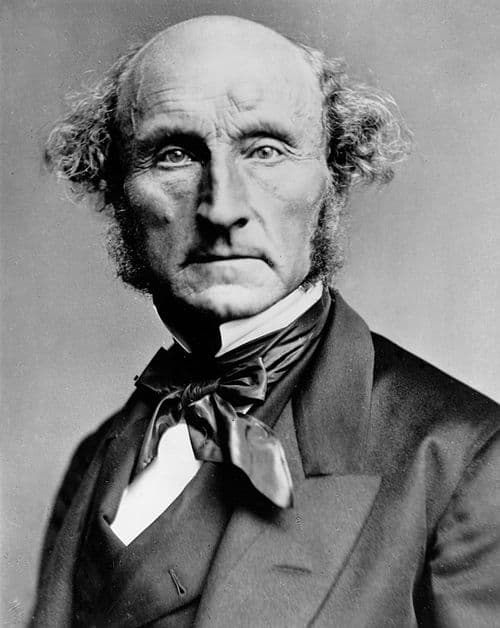
ding someone in an Indian vi=lage or in a remote part of China or Africa who has access to the internet= can see it and can hear about Aristotle and John Stuart Mill, follow the lectures and engage in the onli=e discussion if they want to. For me it's a way of giving expression to =he idea that higher education
4 mentions1 same-page
Page ?Same page
ther bureaucracies, and thus had no legitimacy. Marcus Aurelius was one thing; Tunisia's Zine el- Abidine Ben Ali, Egypt's Hosni Mubarak and Syria's Bashar al- Assad, quite another. Certainly, the Arab Spring has proved much: that there is no otherness to Arab civilization, that Arabs yearn for univers
r supply have diminished. There are three reasons. First, the most substantial fallout from the Arab world's recent upheaval is behind us. Syria's Bashar al-Assad continues to fight for survival and Yemen continues to flirt with failed-state status, but the Gulf's major oil-producing states are quite stable.
cracies, and thus had no legitimacy. Marcus Aurelius was one thing; Tunisia's Zine el- Abidine Ben Ali, Egypt's Hosni Mubarak and Syria's Bashar al- Assad, quite another. Certainly, the Arab Spring has proved much: that there is no otherness to Arab civilization, that Arabs yearn for universal values
tional Interest The Good Autocrat Robert D. Kaplan June 21, 2011 -- IN HIS extended essay, On Liberty, published in 1859, the English philosopher John Stuart Mill famously declares, "That the only purpose for which power can be rightfully exercised over any member of a civilized community, against his will, i
3 mentions1 same-page
Page ?Same page
. Then, after Syrians rebelled against Bashar al-Assad, the Islamic State expanded across Iraq's western
tion's inattention allowed Iraq's Shia prime minister, Nuri al-Malild, to intensify his persecution of Sunnis. Then, after Syrians rebelled against Bashar al-Assad, the Islamic State expanded across Iraq's western border into Syria, later renaming itself the Islamic State of Iraq and Syria. Significantly, when
lity. Free migration, like totally free trade, remains a utopian prospect, even though within regions (such as Europe) this has proved workable. As John Stuart Mill forcefully argued, we need to ensure that the local and short-term social costs of immigration do not detract from their role "as one of the primary
Sponsored
Page ?
e terrifying scale of Libya's Qaddafi and Syria's Assad nor stifled economic progress with such alacrity.
Page HOUSE_OVERSIGHT_032192
e National Interest The Good Autocrat Robert D. Kaplan June 21, 2011 -- IN HIS extended essay, On Liberty, published in 1859, the English philosopher John Stuart Mill famously declares, "That the only purpose for which power can be rightfully exercised over any member of a civilized community, against his will, is
Page: HOUSE_OVERSIGHT_032192 →Page HOUSE_OVERSIGHT_032194
other bureaucracies, and thus had no legitimacy. Marcus Aurelius was one thing; Tunisia's Zine el- Abidine Ben Ali, Egypt's Hosni Mubarak and Syria's Bashar al- Assad, quite another. Certainly, the Arab Spring has proved much: that there is no otherness to Arab civilization, that Arabs yearn for universal values ju
Page: HOUSE_OVERSIGHT_032194 →Sponsored
Mutual Connections (131)
Entities connected to both Bashar al-Assad and John Stuart Mill
Barack Obama
PERSON235 w/ Bashar·5 w/ John
George W. Bush
PERSON176 w/ Bashar·5 w/ John
Lebanon
LOCATION166 w/ Bashar·2 w/ John
Tehran
LOCATION149 w/ Bashar·3 w/ John
Bill Clinton
PERSON143 w/ Bashar·3 w/ John
Damascus
LOCATION137 w/ Bashar·2 w/ John
Hosni Mubarak
PERSON122 w/ Bashar·4 w/ John
Middle East
LOCATION114 w/ Bashar·4 w/ John
Tunisia
LOCATION112 w/ Bashar·2 w/ John
Saddam Hussein
PERSON108 w/ Bashar·5 w/ John
Yemen
LOCATION108 w/ Bashar·2 w/ John
Marc Rich
PERSON105 w/ Bashar·2 w/ John
Jerusalem
LOCATION95 w/ Bashar·4 w/ John
Vladimir Putin
PERSON96 w/ Bashar·3 w/ John
Hillary Clinton
PERSON96 w/ Bashar·2 w/ John
Fatah
ORGANIZATION75 w/ Bashar·4 w/ John
Mahmoud Abbas
PERSON69 w/ Bashar·4 w/ John
West Bank
LOCATION69 w/ Bashar·2 w/ John
Sinai
LOCATION66 w/ Bashar·4 w/ John
Samantha Power
PERSON66 w/ Bashar·3 w/ John