Back to Network


















5
Shared Docs
5
Same-Page
5 / 5
Mentions
Document Mentions (5 shared documents)
2 mentions1 same-page
Page ?Same page
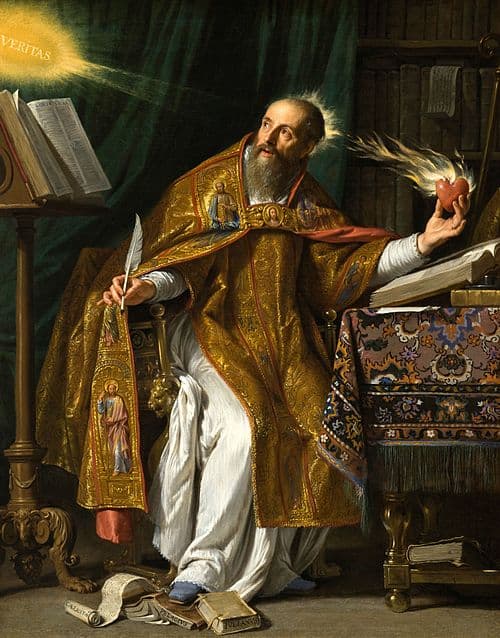
hn's identification of Jesus with the Platonic and Stoic idea of the pre-existent "Word." 5 A more intentional religious humanism can be found in Augustine's use of the neo-Platonic Plotinus, especially in the philosophical psychology of remembrance developed in his Confessions . 6 But the most dram
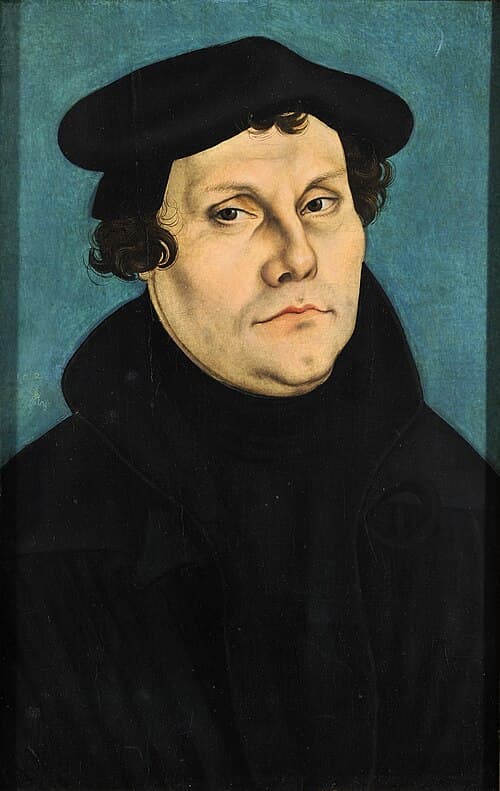
ional strivings of humans. He believed he found this view of Christian love in the New Testament (especially the writing of the apostle Paul) and Martin Luther, the giant of the Protestant Reformation. Nygren was particularly interested in dismantling the classical medieval Roman Catholic view of Christ
2 mentions1 same-page
Page ?Same page
nd partly by the natural agent; rather, it is wholly done by both." For prominent examples of such a view in the history of Christian thought, see Augustine, The Literal Meaning of Genesis, trans. John Hammond Taylor (New York: Newman Press, 1982), chapters 10-12, pp. 49-51; and Cyril of Alexandria, C
ction 2, p. SS. See again, for example, Thomas Aquinas, Summo Contra Gentiles, Book Two: Creation, chapters 31-38, pp. 91-115. See, for example, Martin Luther, Lectures on Galatians (1535), in Luther's Works, ed. Jaroslav Pelikan (St Louis, Missouri: Concordia Publishing House, 1964), vols. 26-27. Thoma
2 mentions1 same-page
Page ?Same page
hilosopher, Walter Kaufman, has noted in his Religion in Four t Dimensions “...compassion for unbelievers is implicitly condemned and proscribed...Augustine argued expressly against compassion for the damned and Luther used invectives against his (religious) enemies...” How can this be God’s 145 HOUSE_
ad landed. When | asked my synagogue’s young people’s spiritual counselor, Rabbi Kleigfeld, to explain the feelings and actions of these children of Martin Luther’s Post-Reformation Christian Church, he answered that | already knew about similarly difficult places and times of our Twelve Tribes’ like Rome, Mediev
Sponsored
2 mentions1 same-page
Page ?Same page
of John’s identification of Jesus with the Platonic and Stoic idea of the pre-existent “Word.” A more intentional religious humanism can be found in Augustine’s use of the neo-Platonic Plotinus, especially in the philosophical psychology of remembrance developed in his Confessions.° But the most dramatic ex
irational strivings of humans. He believed he found this view of Christian love in the New Testament (especially the writing of the apostle Paul) and Martin Luther, the giant of the Protestant Reformation. Nygren was particularly interested in dismantling the classical medieval Roman Catholic view of Christian
2 mentions1 same-page
Page ?Same page
nd partly by the natural agent; rather, it is wholly done by both.” * For prominent examples of such a view in the history of Christian thought, see Augustine, The Literal Meaning of Genesis, trans. John Hammond Taylor (New York: Newman Press, 1982), chapters 10-12, pp. 49-51; and Cyril of Alexandria, Comme
ection 2, p.55. *See again, for example, Thomas Aquinas, Summa Contra Gentiles, Book Two: Creation, chapters 31-38, pp. 91-115. ‘ See, for example, Martin Luther, Lectures on Galatians (1535), in Luther’s Works, ed. Jaroslav Pelikan (St Louis, Missouri: Concordia Publishing House, 1964), vols. 26-27. * Thomas
Sponsored
Mutual Connections (710)
Entities connected to both Augustine and Martin Luther
Jeffrey Epstein
PERSON7 w/ Augustine·159 w/ Martin
George W. Bush
PERSON7 w/ Augustine·77 w/ Martin
Prince Charles
PERSON6 w/ Augustine·72 w/ Martin
LB
Leon Black
PERSON4 w/ Augustine·74 w/ Martin
John F. Kennedy
PERSON4 w/ Augustine·66 w/ Martin
Prince Andrew
PERSON5 w/ Augustine·60 w/ Martin
Marc Rich
PERSON6 w/ Augustine·58 w/ Martin
Barack Obama
PERSON5 w/ Augustine·59 w/ Martin
Joe Biden
PERSON2 w/ Augustine·61 w/ Martin
Julie K. Brown
PERSON4 w/ Augustine·58 w/ Martin
Donald Trump
PERSON3 w/ Augustine·57 w/ Martin
United States
LOCATION3 w/ Augustine·56 w/ Martin
Samantha Power
PERSON5 w/ Augustine·52 w/ Martin
Stephen Hawking
PERSON6 w/ Augustine·50 w/ Martin
Michael Jackson
PERSON4 w/ Augustine·46 w/ Martin
George Mitchell
PERSON2 w/ Augustine·47 w/ Martin
Virginia Giuffre
PERSON3 w/ Augustine·45 w/ Martin
Woody Allen
PERSON2 w/ Augustine·45 w/ Martin
Eric Trump
PERSON3 w/ Augustine·44 w/ Martin
Michigan
LOCATION2 w/ Augustine·43 w/ Martin