Back to Network













4
Shared Docs
4
Same-Page
4 / 4
Mentions
Document Mentions (4 shared documents)
2 mentions1 same-page
Page ?Same page
r, they are worth learning about and exploring. They stand out as trailguides to a fresh sensibility in the same way Nijinsky’s 20" century dances or Goethe’s 19" century poetry once did. We flip back and forth between real and virtual in our every day lives now, popping our head from screen to street. O
redictability and emergence are regarded as the best way to grow. 119 Long before the idea of a smart phone or 3D goggles, the British mathematician Alan Turing anticipated their arrival when he dreamed of what he called a “universal device”!2°: A notional box that, starting from the ones and zeros of digitiz
2 mentions1 same-page
Page ?Same page
ese sacrifices marked sailing adventure. But they knew the rewards for areal mastery of the sea: Fame, riches, knowledge, adventure. Sloterdijk cites Goethe, who reflecting on the power of nautical life in 1787, defined the edgy advantage of that ocean-mapping caste in his age: They had perspective. “No o
ended and the machine began. This was a puzzle that had been, in a sense, anticipated at the very dawn of the digital revolution by the mathematician Alan Turing in a 1950 paper called “Computing Machinery and Intelligence” that he published in the British journal Mind. “Can machines think?” Turing began.?5” H
2 mentions1 same-page
Page ?Same page
particular, sun-scorched, caterpillar-chewed clover found outside your house in an atlas. No, you aimed—if you were a genius natural philosopher like Goethe, Albinus, or Cheselden—to observe nature but then to perfect the object in question, to abstract it visually to the ideal. Take a skeleton, view it t
- reproducing systems. As an abstraction of life, he modeled a machine that can communicate a computation that constructs itself. And the final thing Alan Turing, who is credited with the theoretical framework for computer science, studied was how the instructions in genes can give rise to physical forms. Thes
Sponsored
Mutual Connections (459)
Entities connected to both Goethe and Alan Turing
Alan Dershowitz
PERSON5 w/ Goethe·34 w/ Alan
Stephen Hawking
PERSON6 w/ Goethe·27 w/ Alan
Jeffrey Epstein
PERSON5 w/ Goethe·21 w/ Alan
George W. Bush
PERSON8 w/ Goethe·13 w/ Alan
Turing
PERSON3 w/ Goethe·17 w/ Alan
Samantha Power
PERSON4 w/ Goethe·14 w/ Alan
Prince Andrew
PERSON6 w/ Goethe·12 w/ Alan
Marc Rich
PERSON7 w/ Goethe·10 w/ Alan
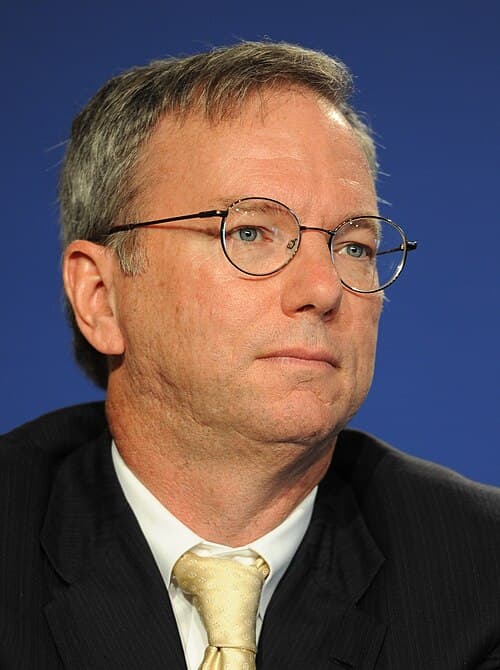
Eric Schmidt
PERSON4 w/ Goethe·13 w/ Alan
Eric Trump
PERSON4 w/ Goethe·13 w/ Alan
Prince Charles
PERSON3 w/ Goethe·14 w/ Alan
Harvey Weinstein
PERSON4 w/ Goethe·12 w/ Alan
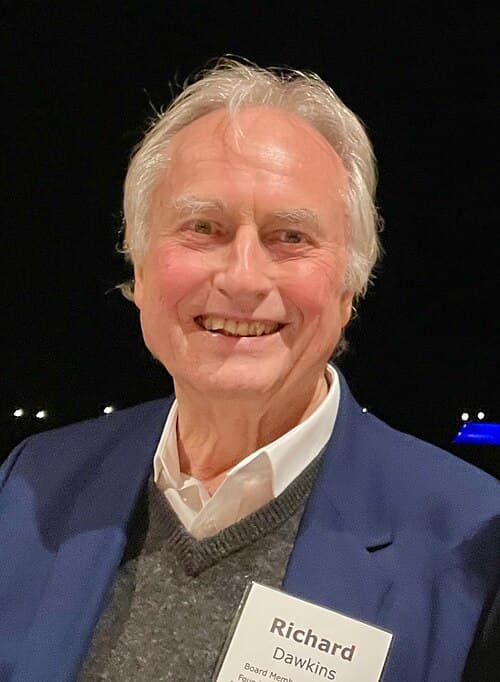
Richard Dawkins
PERSON2 w/ Goethe·12 w/ Alan
Michael Jackson
PERSON4 w/ Goethe·10 w/ Alan
Earth
LOCATION4 w/ Goethe·10 w/ Alan
LB
Leon Black
PERSON4 w/ Goethe·9 w/ Alan
Julie K. Brown
PERSON6 w/ Goethe·7 w/ Alan
Renaissance
ORGANIZATION6 w/ Goethe·6 w/ Alan
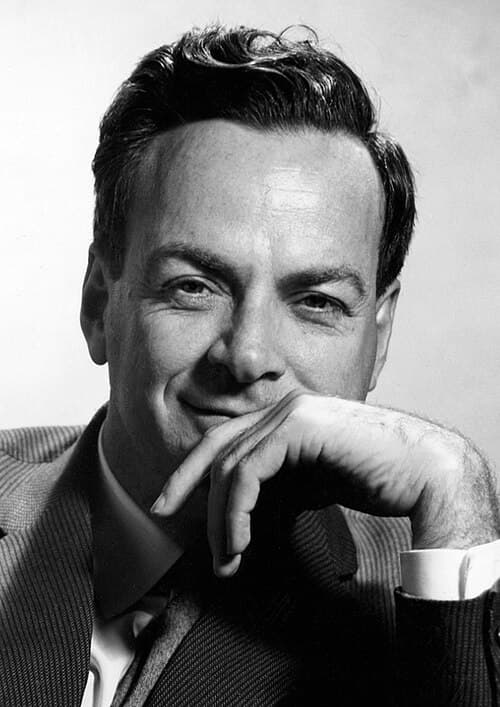
Feynman
PERSON4 w/ Goethe·8 w/ Alan
Quantum
ORGANIZATION3 w/ Goethe·9 w/ Alan