Back to Network


5
Shared Docs
5
Same-Page
5 / 5
Mentions
Document Mentions (5 shared documents)
2 mentions1 same-page
Page ?Same page
drives creativity. There are also some myths to dispel about creative people. Inventors are portrayed as eccentric and hopelessly disorganized, but Feynman kept notes of every idea he ever had. I have kept a series of notebooks, now computer based, since J left university. I still have almost all of thes
tial calculus despite it being invented independently by Gottfried Leibniz. Newton managed to have himself appointed to chair the committee reviewing Leibniz’s work and determine who had come up with the idea first. Unsurprisingly, the committee found for Newton! We see Newton's laws of reflection and tra
2 mentions1 same-page
Page ?Same page
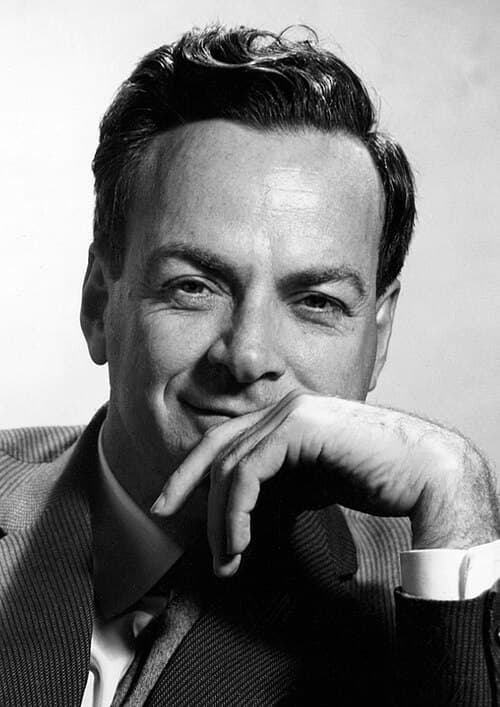
to spend time with physicists, the reason being that they think about the universe, 1.e. everything. And no physicist was reputed to be articulate as Feynman. I couldn’t wait to meet him. I accepted. That said, I am not a scientist, and I had never entertained the idea of getting on a stage and delivering
er straddled as those tools did from each other. Wiener was a giant of the earlier era and built on the tools developed since the time of Newton and Leibniz to describe and analyze continuous processes in the physical world. In 1948 he published Cybernetics, a word he coined to describe the science of com
2 mentions1 same-page
Page ?Same page
ard Feynman, at which the celebrated physicist remarked, “That is positively the dopiest idea I ever heard.” Maybe “despite” is the wrong word, since Feynman had a well-known predilection for playing with dopey ideas. In the event, he showed up on the day the company was incorporated and stayed on, for sum
nd systems thinking that had been around since the Enlightenment (boosted by the Industrial Revolution). The names in this lineage include Descartes, Leibniz, Sadi Carnot, Clausius, Maxwell, and Watt. Wiener’s coinage nonetheless had profound cultural effects.4”7 The ubiquity today of the prefix “cyber-” c
Sponsored
2 mentions1 same-page
Page ?Same page
to spend time with physicists, the reason being that they think about the universe, 1.e. everything. And no physicist was reputed to be articulate as Feynman. I couldn’t wait to meet him. I accepted. That said, I am not a scientist, and I had never entertained the idea of getting on a stage and delivering
er straddled as those tools did from each other. Wiener was a giant of the earlier era and built on the tools developed since the time of Newton and Leibniz to describe and analyze continuous processes in the physical world. In 1948 he published Cybernetics, a word he coined to describe the science of com
2 mentions1 same-page
Page ?Same page
ard Feynman, at which the celebrated physicist remarked, “That is positively the dopiest idea I ever heard.” Maybe “despite” is the wrong word, since Feynman had a well-known predilection for playing with dopey ideas. In the event, he showed up on the day the company was incorporated and stayed on, for sum
nd systems thinking that had been around since the Enlightenment (boosted by the Industrial Revolution). The names in this lineage include Descartes, Leibniz, Sadi Carnot, Clausius, Maxwell, and Watt. Wiener’s coinage nonetheless had profound cultural effects.4”7 The ubiquity today of the prefix “cyber-” c
Sponsored
Mutual Connections (693)
Entities connected to both Feynman and Leibniz
Jeffrey Epstein
PERSON32 w/ Feynman·15 w/ Leibniz
Alan Dershowitz
PERSON15 w/ Feynman·5 w/ Leibniz
Harvey Weinstein
PERSON14 w/ Feynman·6 w/ Leibniz
Earth
LOCATION14 w/ Feynman·6 w/ Leibniz
DB
Doug Band
PERSON9 w/ Feynman·11 w/ Leibniz
Quantum
ORGANIZATION13 w/ Feynman·7 w/ Leibniz
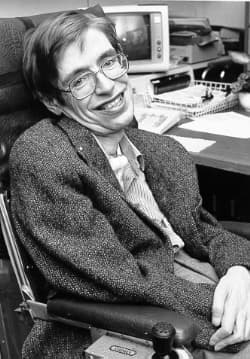
Stephen Hawking
PERSON13 w/ Feynman·5 w/ Leibniz
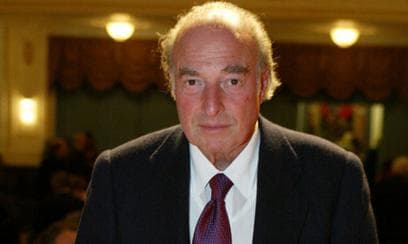
Marc Rich
PERSON11 w/ Feynman·6 w/ Leibniz
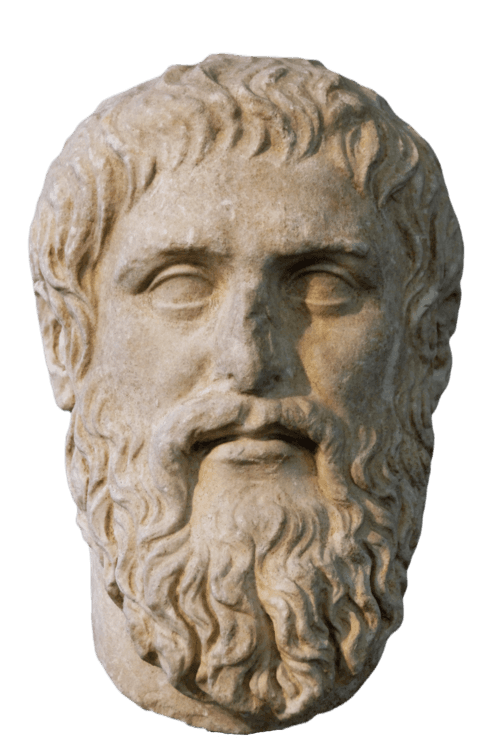
Plato
PERSON8 w/ Feynman·9 w/ Leibniz
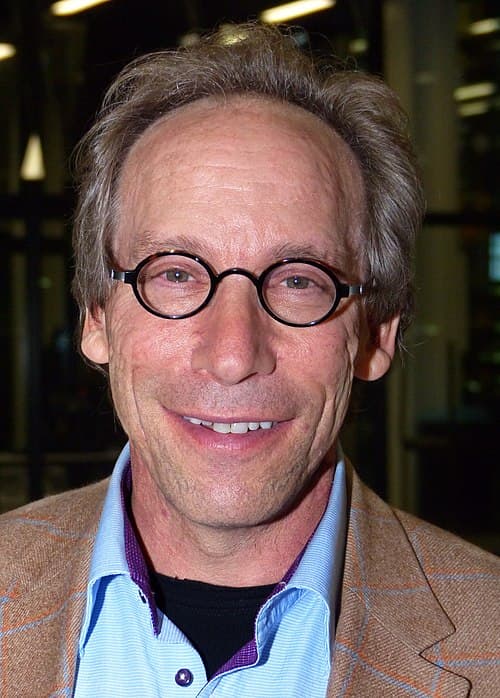
Lawrence Krauss
PERSON14 w/ Feynman·2 w/ Leibniz
Eric Trump
PERSON11 w/ Feynman·5 w/ Leibniz
Richard Feynman
PERSON12 w/ Feynman·4 w/ Leibniz
Turing
PERSON10 w/ Feynman·5 w/ Leibniz
Samantha Power
PERSON10 w/ Feynman·5 w/ Leibniz
Prince Andrew
PERSON10 w/ Feynman·5 w/ Leibniz
Ghislaine Maxwell
PERSON10 w/ Feynman·5 w/ Leibniz
George W. Bush
PERSON9 w/ Feynman·5 w/ Leibniz
LB
Leon Black
PERSON9 w/ Feynman·5 w/ Leibniz
Julie K. Brown
PERSON10 w/ Feynman·4 w/ Leibniz
Michael Douglas
PERSON10 w/ Feynman·3 w/ Leibniz