Back to Network

















4
Shared Docs
4
Same-Page
4 / 4
Mentions
Document Mentions (4 shared documents)
2 mentions1 same-page
Page ?Same page
ong Two Dangerous Tribes—the Yanomamo and the Anthropologists. STEVEN PINKER, psychologist, is Johnstone Family Professor, Department of Psychology; Harvard University; Author, The Better Angles of Our Nature: Why Violence Has Declined; The Blank Slate: The Modern Denial of Human Nature. RICHARD WRANGHAM is Ruth M
DENNETT & DAVID HAIG) "What I've discovered is that life was very much filled with terror of your neighbors, constantly in a position— sort of like Hobbes' argument—foul weather is not a shower or two but a tendency thereto for months on end. So you always have your eye open to the frontier and try to
2 mentions1 same-page
Page ?Same page
ress, 1993), 178. The most lucid and succinct historical treatment remains Frank E. Manuel, The Eighteenth Century Confronts the Gods (Cambridge: Harvard University Press. 1959). I have in mind such authors as John William Draper, History of the Conflict between Religion and Science (1874), and Andrew Dickson White
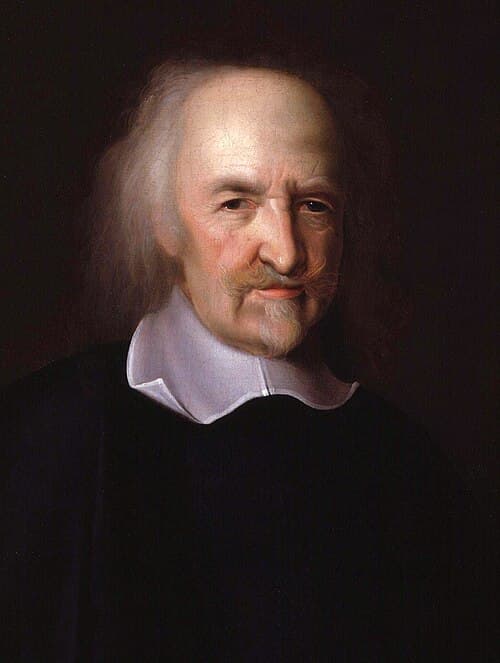
ll) and life would be "solitary, poor, nasty, brutish, and short"( I). While this colorful description is often quoted, less attention is paid to Hobbes' premise that such misery can be avoided if humans codify and enforce the rules of a civil society. Not everyone agrees with Hobbes' views, but hi
2 mentions1 same-page
Page ?Same page
War and Peace (New Haven: Yale University Press, 1991); Edward N. Luttwak, Strategy: The Logic of War and Peace (Cambridge, Mass:.: Belknap Press of Harvard University Press, 1987); Peter Paret with Gordon A. Craig 43 HOUSE_OVERSIGHT_018275 usually talk about “tactical”, “operational” and “strategic” levels as we watch
in awe, they are in that condition which is called war,” he wrote. “Such a war as is of every man against every man.”°’ A precondition of peace, for Hobbes, was that some country or force or tribe decisively grips a region, an empire, even the globe. “A common power to keep them all in awe,” fulfilled a
Sponsored
2 mentions1 same-page
Page ?Same page
ty Press, 1993), 178. The most lucid and succinct historical treatment remains Frank E. Manuel, 7he Fighteenth Century Confronts the Gods (Cambridge: Harvard University Press, 1959). 'Thave in mind such authors as John William Draper, History of the Conflict between Religion and Science (1874), and Andrew Dickson White, A
nst all) and life would be “solitary, poor, nasty, brutish, and short”(1). While this colorful description is often quoted, less attention is paid to Hobbes’ premise that such misery can be avoided if humans codify and enforce the rules of a civil society. Not everyone agrees with Hobbes’ views, but histo
Sponsored
Mutual Connections (289)
Entities connected to both Harvard University and Hobbes
Jeffrey Epstein
PERSON207 w/ Harvard·7 w/ Hobbes
George W. Bush
PERSON68 w/ Harvard·7 w/ Hobbes
Marc Rich
PERSON68 w/ Harvard·7 w/ Hobbes
Bill Clinton
PERSON64 w/ Harvard·3 w/ Hobbes
Prince Andrew
PERSON60 w/ Harvard·4 w/ Hobbes
United States
LOCATION54 w/ Harvard·4 w/ Hobbes
LB
Leon Black
PERSON53 w/ Harvard·2 w/ Hobbes
Prince Charles
PERSON46 w/ Harvard·5 w/ Hobbes
Samantha Power
PERSON39 w/ Harvard·10 w/ Hobbes
Lawrence Krauss
PERSON47 w/ Harvard·2 w/ Hobbes
Stephen Hawking
PERSON40 w/ Harvard·5 w/ Hobbes
Donald Trump
PERSON39 w/ Harvard·3 w/ Hobbes
Virginia Giuffre
PERSON36 w/ Harvard·2 w/ Hobbes
Barack Obama
PERSON34 w/ Harvard·3 w/ Hobbes
Alan Dershowitz
PERSON33 w/ Harvard·3 w/ Hobbes
Michael Jackson
PERSON34 w/ Harvard·2 w/ Hobbes
CW
Courtney Wild
PERSON31 w/ Harvard·3 w/ Hobbes
John F. Kennedy
PERSON31 w/ Harvard·3 w/ Hobbes
ET
Emmy Taylor
PERSON25 w/ Harvard·2 w/ Hobbes
New York City
LOCATION22 w/ Harvard·4 w/ Hobbes