Back to Network











5
Shared Docs
5
Same-Page
9 / 5
Mentions
Document Mentions (5 shared documents)
4 mentions1 same-page
Page ?Same page
sdom says each brain cell is a single processing unit making an on-off decision — fire, or don't fire - depending on the state of its neighbors. But, Stuart Hameroff, Professor of Anesthesiology at the University of Arizona, thinks neurons are not the fundamental information-processing unit in the brain. He sugges
e neurons. Penrose had been looking for a mechanism in the brain that would explain how brains solve non-computational problems. Together Penrose and Hameroff propose tubulin micro tubes are quantum gravity computers that allow us to think non-computationally and are the seat of consciousness. The ideas are
. After all, nerves have wiring within them to carry information to the synapses and it’s likely this wiring is involved in the thinking process. But Hameroff is not finished. He has teamed up with Roger Penrose to bring quantum mechanics into the picture. HOUSE_OVERSIGHT_015813 124 Are the Androids Dream
up in the morning and does not stop until you get into the office.” Robert Frost “The brain looks like nothing more than a bowl of cold porridge.” Alan Turing HOUSE_OVERSIGHT_015786 as looking like a bowl of cold porridge. To get to the porridge you must first cut through the skull, a two-millimeter thic
4 mentions1 same-page
Page ?Same page
tubulin molecules can flip between two states, propagating a ripple along the tube wall. The scale is small enough for quantum effects to matter, and Hameroff suggests quantum error correction keeps the ripples from decohering too fast. Because the processing is happening at a molecular level rather than at
is also, interestingly, the protein that unzips the double helix when a cell divides, and so plays a fundamental role in our evolution. Penrose and Hameroff suggest these tubes form the true processing element in our brains. The walls of the tubes are formed of successive alpha and beta tubulin molecules.
in non-computable thought. It is his ‘machines’ we will look at next. Penrose-Hameroff Machines, aka Brains Roger Penrose of Oxford University and Stuart Hameroff of the University of Arizona have proposed a very different way to understand the workings of the brain. They focus on the much smaller scale structu
, or even a physicist, could grasp! That thing is a Turing Machine. We will examine this next. HOUSE_OVERSIGHT_015898 Chapter 10 TURING’S MACHINE Alan Turing HOUSE_OVERSIGHT_015899 ‘A computer would deserve to be called intelligent if it could deceive a human into believing that it was human.” Alan Turi
2 mentions1 same-page
Page ?Same page
:21:55 +0000 Hmm... I'll ping you closer to Oct. Will be on West Coast (will also be with James) but fly specifically to see you. I may try to drag Stuart Hameroff along. He's developing something with your friend Noam Chomsky. He says that Noam may speak by video at TSC in Shanghai. Let me know when you'll be
lities of most humans (ALPHAGO, DEEPBLUE). These recent feats have rekindled discussions of computer based human-like intelligence first proposed by Alan Turing (TURING TEST), the notion of artificial consciousness (Buttazzo, 2001) and the possibility of "uploading" one's mind to a computer substrate (MIND
Sponsored
2 mentions1 same-page
Page ?Same page
ulation of the human mind. Development and Learning, International Conf. on, 0, 2002. AGBD+08. Derek Abbott, Julio Gea-Banacloche, Paul C W Davies, Stuart Hameroff, Anton Zeilinger, lens Eisert, Howard M. Wiseman, Sergey M. Bezrukov, and Hans Frauenfelder. Plenary debate: quan- tum effects in biologetrivial or
XI. Taylor and P. Stone. Cross-domain transfer for reinforcement learning. Proc. of the 24th International Conf. on Machine Learning, 2007. Tur50. Alan Turing. Computing machinery and intelligence. Mind, 59, 1950. Tur77. Valentin F. Thrchin. The Phenomenon of Science. Columbia University Press, 1977. TV9
2 mentions1 same-page
Page ?Same page
mulation of the human mind. Development and Learning, International Conf. on, 0, 2002. AGBDt08. Derek Abbott, Julio Gea-Banacloche, Paul C W Davies, Stuart Hameroff, Anton Zeilinger, Jens Eisert, Howard M. Wiseman, Sergey M. Bezrukov, and Hans Frauenfelder. Plenary debate: quan- tum effects in biology?trivial or
7. M. Taylor and P. Stone. Cross-domain transfer for reinforcement learning. Proc. of the 24th International Conf. on Machine Learning, 2007. Tur50. Alan Turing. Computing machinery and intelligence. Mind, 59, 1950. Tur77. Valentin F. Turchin. The Phenomenon of Science. Columbia University Press, 1977. TV96
Sponsored
Mutual Connections (662)
Entities connected to both Stuart Hameroff and Alan Turing
Jeffrey Epstein
PERSON101 w/ Stuart·21 w/ Alan
Deepak Chopra
PERSON45 w/ Stuart·6 w/ Alan
Alan Dershowitz
PERSON13 w/ Stuart·34 w/ Alan
Stephen Hawking
PERSON15 w/ Stuart·27 w/ Alan
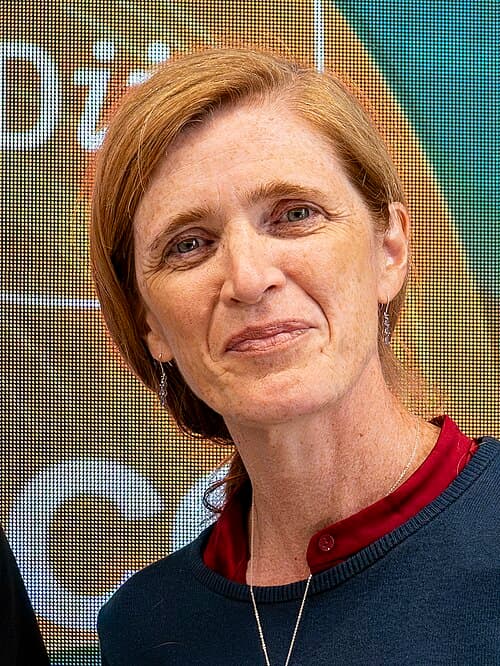
Samantha Power
PERSON23 w/ Stuart·14 w/ Alan
Gino Yu
PERSON31 w/ Stuart·4 w/ Alan
JT
James Tagg
PERSON27 w/ Stuart·3 w/ Alan
Woody Allen
PERSON23 w/ Stuart·6 w/ Alan
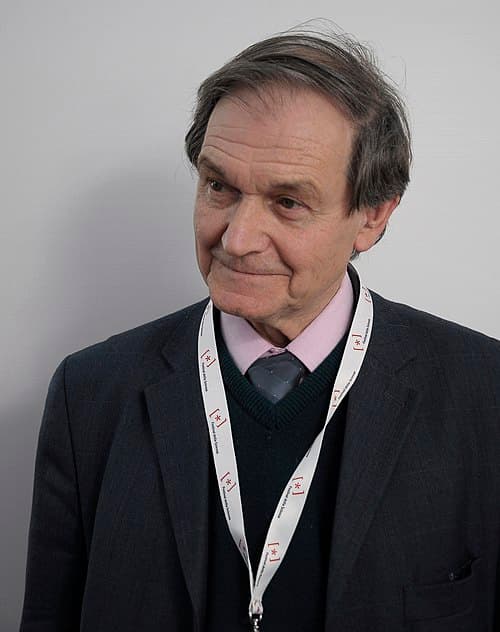
Roger Penrose
PERSON24 w/ Stuart·4 w/ Alan
Prince Charles
PERSON13 w/ Stuart·14 w/ Alan
Quantum
ORGANIZATION16 w/ Stuart·9 w/ Alan
Shanghai
LOCATION18 w/ Stuart·6 w/ Alan
Penrose
PERSON11 w/ Stuart·11 w/ Alan
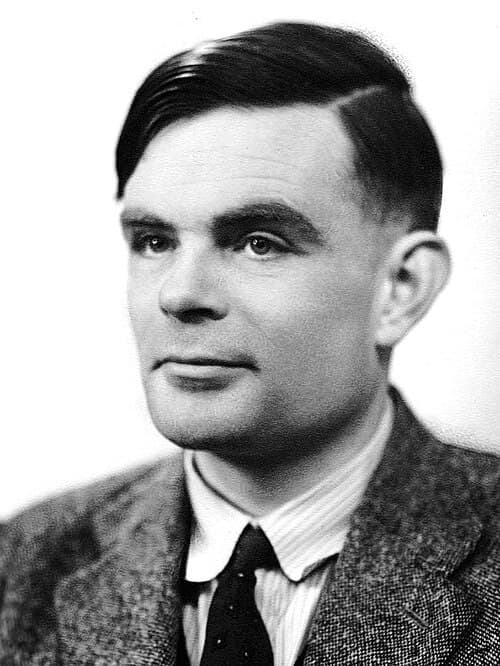
Turing
PERSON4 w/ Stuart·17 w/ Alan
LB
Leon Black
PERSON12 w/ Stuart·9 w/ Alan
George W. Bush
PERSON7 w/ Stuart·13 w/ Alan
Prince Andrew
PERSON8 w/ Stuart·12 w/ Alan
Noam Chomsky
PERSON16 w/ Stuart·3 w/ Alan
Travis Craddock
PERSON14 w/ Stuart·4 w/ Alan
Sergey Brin
PERSON15 w/ Stuart·3 w/ Alan