Back to Network








4
Shared Docs
4
Same-Page
7 / 6
Mentions
Document Mentions (4 shared documents)
4 mentions1 same-page
Page ?Same page
n. Bantam, 2008. Chapter 4 Derren Brown. Tricks of the Mind. Channel 4, 2006. Gurney, Kevin. An Introduction to Neural Networks. CRC Press, 1997. Hameroff, S. R. “Quantum Coherence in Microtubules: A Neural Basis for Emergent Consciousness?” Journal of Consciousness Studies 1, no. 1 (1994): 91-118. Hig
eryday Life. Reprint. The Free Press, 1993. Gregory, Robert J. Psychological Testing: History, Principles, and Applications. 6th ed. Pearson, 2010. Hameroff, $. R. “Quantum Coherence in Microtubules: A Neural Basis for Emergent Consciousness?” Journal of Consciousness Studies 1, no. 1 (1994): 91-118. Ham
7. HOUSE_OVERSIGHT_016078 Bibliography 389 Franzén, Torkel. Gédel’s Theorem: An Incomplete Guide to Its Use and Abuse. AK Peters/CRC Press, 2005. Godel, Kurt. On Formally Undecidable Propositions of “Principia Mathematica” and Related Systems. New edition. Dover Publications Inc., 2003. Goldrei, D.C
f Software Engineering 231 Nova Institute 50 Nova Southeastern University 124 Nuclear Magnetic Resonance 104 numbers counting system 181 defining 199 Godel numbers 203 infinity 179 nature of 155 prime 156, 243, 343 random 188 real 186, 280 Turing numbers 190 zero 179 Nyquist, Harry xiii O Occam's Razor
4 mentions1 same-page
Page ?Same page
tubulin molecules can flip between two states, propagating a ripple along the tube wall. The scale is small enough for quantum effects to matter, and Hameroff suggests quantum error correction keeps the ripples from decohering too fast. Because the processing is happening at a molecular level rather than at
is also, interestingly, the protein that unzips the double helix when a cell divides, and so plays a fundamental role in our evolution. Penrose and Hameroff suggest these tubes form the true processing element in our brains. The walls of the tubes are formed of successive alpha and beta tubulin molecules.
in non-computable thought. It is his ‘machines’ we will look at next. Penrose-Hameroff Machines, aka Brains Roger Penrose of Oxford University and Stuart Hameroff of the University of Arizona have proposed a very different way to understand the workings of the brain. They focus on the much smaller scale structu
ents is a proof, we can generate proof numbers. They are just the sequential list of all the instructions. These numbers are sometimes referred to as Godel numbers. Gédel’s next step was to say one number demonstrates the proof of another number. For example, the number 000820962 might demonstrate the p
3 mentions1 same-page
Page ?Same page
mulation of the human mind. Development and Learning, International Conf. on, 0, 2002. AGBDt08. Derek Abbott, Julio Gea-Banacloche, Paul C W Davies, Stuart Hameroff, Anton Zeilinger, Jens Eisert, Howard M. Wiseman, Sergey M. Bezrukov, and Hans Frauenfelder. Plenary debate: quan- tum effects in biology?trivial or
ting human intelli- gence. Neuron vol. 76 issue 6, 2012. Hib02. Bill Hibbard. Superintelligent Machines. Springer, 2002. Hof79. Douglas Hofstadter. Godel, Escher, Bach: An Eternal Golden Braid. Basic, 1979. Hof95. Douglas Hofstadter. Fluid Concepts and Creative Analogies. Basic Books, 1995. Hof96. Do
NN’95, 1995. Sch02. Juergen Schmidhuber. Exploring the predictable.. Springer, 2002. HOUSE_OVERSIGHT_013265 350 A Glossary Sch06. J. Schmidhuber. Godel machines: Fully Self-referential Optimal Universal Self-improvers. In B. Goertzel and C. Pennachin, editors, Artificial General Intelligence, pages 1
Sponsored
2 mentions1 same-page
Page ?Same page
ulation of the human mind. Development and Learning, International Conf. on, 0, 2002. AGBD+08. Derek Abbott, Julio Gea-Banacloche, Paul C W Davies, Stuart Hameroff, Anton Zeilinger, lens Eisert, Howard M. Wiseman, Sergey M. Bezrukov, and Hans Frauenfelder. Plenary debate: quan- tum effects in biologetrivial or
c. ICANN'95, 1995. Sch02. Juergen Schmidhuber. Exploring the predictable.. Springer, 2002. EFTA00624125 350 A Glossary Sch06. J. Schmidhuber. Godel machines: Ashy Self-referential Optimal Universal Self-improvers. In B. Goertzel and C. Pennachin, editors, Artificial General Intelligence, pages 1
Sponsored
Mutual Connections (636)
Entities connected to both Stuart Hameroff and Godel
Jeffrey Epstein
PERSON101 w/ Stuart·9 w/ Godel
Deepak Chopra
PERSON45 w/ Stuart·2 w/ Godel
Gino Yu
PERSON31 w/ Stuart·2 w/ Godel
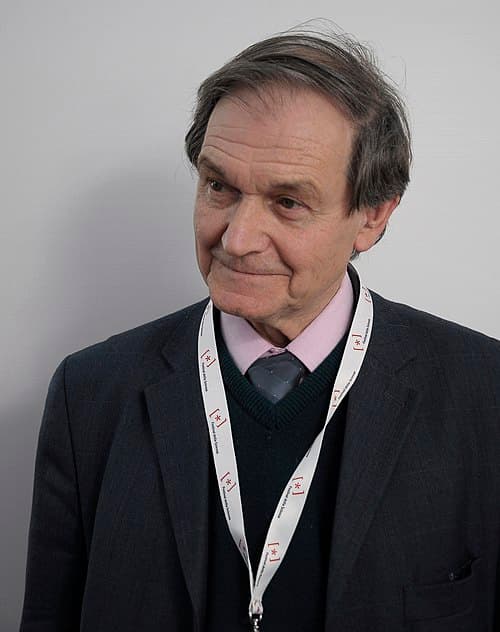
Roger Penrose
PERSON24 w/ Stuart·4 w/ Godel
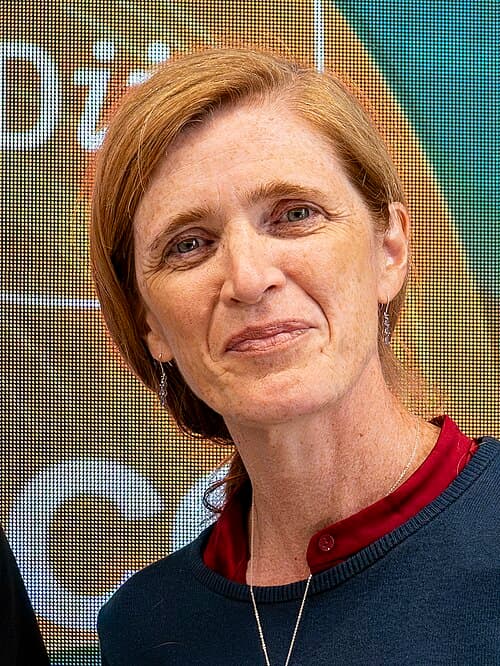
Samantha Power
PERSON23 w/ Stuart·4 w/ Godel
Woody Allen
PERSON23 w/ Stuart·3 w/ Godel
Stephen Hawking
PERSON15 w/ Stuart·8 w/ Godel
Alan Dershowitz
PERSON13 w/ Stuart·8 w/ Godel
Shanghai
LOCATION18 w/ Stuart·2 w/ Godel
Joscha Bach
PERSON16 w/ Stuart·4 w/ Godel
Prince Charles
PERSON13 w/ Stuart·6 w/ Godel
Quantum
ORGANIZATION16 w/ Stuart·2 w/ Godel
Penrose
PERSON11 w/ Stuart·6 w/ Godel
LB
Leon Black
PERSON12 w/ Stuart·2 w/ Godel
Lawrence Krauss
PERSON11 w/ Stuart·3 w/ Godel
Julie K. Brown
PERSON11 w/ Stuart·3 w/ Godel
Turing
PERSON4 w/ Stuart·9 w/ Godel
George W. Bush
PERSON7 w/ Stuart·5 w/ Godel
Prince Andrew
PERSON8 w/ Stuart·4 w/ Godel
Indiana University
ORGANIZATION8 w/ Stuart·3 w/ Godel