Back to Network









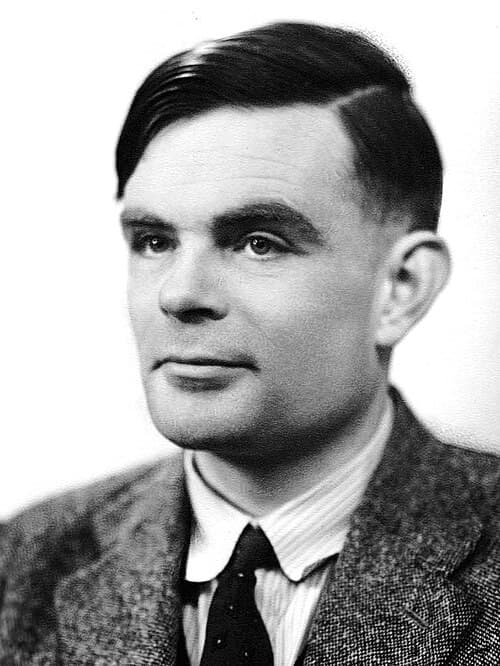




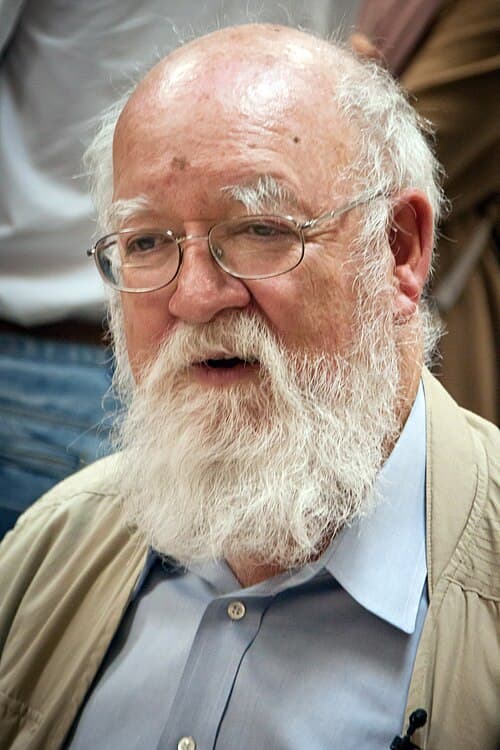

6
Shared Docs
6
Same-Page
11 / 6
Mentions
Document Mentions (6 shared documents)
3 mentions1 same-page
Page ?Same page
abbage — but he was the first to fully understand its power. When we talk about computers today we mean machines, but it is worth noting computers in Turing’s time were more often humans using pencil and paper. The mechanical computers before Turing were elementary at best. Rudimentary calculating machi
not Turing complete and his Analytical Engine has never been built. 19" Century Calculators HOUSE_OVERSIGHT_015706 Mind over Computer 17 In 1935, Turing was made a Fellow of King’s College, Cambridge, and became interested in whether mathematical proofs could be found automatically. He wanted to know
d on interview, rather than practical tests. Could a computer hold a conversation with me and persuade me it is intelligent? Meet Eliza. Invented by Joseph Weizenbaum of the Massachusetts Institute of Technology, and named after George Bernard Shaw’s character in Pygmalion, Eliza runs an algorithm pretending to be
3 mentions1 same-page
Page ?Same page
at they tend to favor or ignore. Surely (ding!)?, any man who could beat a woman at being perceived to be a woman would be an intelligent agent. What Turing did not foresee is the power of deep-learning AI to acquire this wealth of information in an exploitable form without having to understand it. Turing
the CIRL framework, one can formulate and solve the off-switch problem—that is, the problem of how to prevent a robot from disabling its off-switch. (Turing may rest easier.) A robot that’s uncertain about human preferences actually benefits from being switched off, because it understands that the human w
owing it to detect dissent and subversion as it arises and make resistance to state power futile. Orwell’s telescreens are the prototype, and in 1976 Joseph Weizenbaum, one of the gloomiest tech prophets of all time, warned my class of graduate students not to pursue automatic speech recognition because government s
3 mentions1 same-page
Page ?Same page
a topic absent from a typical computer-science education: the physical configuration of a 118 HOUSE_OVERSIGHT_016921 computation. Von Neumann and Turing posed their questions as theoretical studies, because it was beyond the technology of their day to realize them. But with the convergence of communic
ce in terms of feedback, exploring the cultural rather than engineering uptake of this idea. She begins with primary readings by Wiener, Shannon, and Turing and then pivots from the scientists and engineers to the work and ideas of artists, feminists, postmodern theorists. Her goal: to come up with a new
e; the Fair Access to Science and Technology Research Act (FASTR); and the Open Humans Foundation. In his 1976 book Computer Power and Human Reason, Joseph Weizenbaum argued that machines should not replace Homo in situations requiring respect, dignity, or care, while others (author Pamela McCorduck and computer sc
Sponsored
3 mentions1 same-page
Page ?Same page
at they tend to favor or ignore. Surely (ding!)?, any man who could beat a woman at being perceived to be a woman would be an intelligent agent. What Turing did not foresee is the power of deep-learning AI to acquire this wealth of information in an exploitable form without having to understand it. Turing
the CIRL framework, one can formulate and solve the off-switch problem—that is, the problem of how to prevent a robot from disabling its off-switch. (Turing may rest easier.) A robot that’s uncertain about human preferences actually benefits from being switched off, because it understands that the human w
owing it to detect dissent and subversion as it arises and make resistance to state power futile. Orwell’s telescreens are the prototype, and in 1976 Joseph Weizenbaum, one of the gloomiest tech prophets of all time, warned my class of graduate students not to pursue automatic speech recognition because government s
3 mentions1 same-page
Page ?Same page
a topic absent from a typical computer-science education: the physical configuration of a 118 HOUSE_OVERSIGHT_016338 computation. Von Neumann and Turing posed their questions as theoretical studies, because it was beyond the technology of their day to realize them. But with the convergence of communic
ce in terms of feedback, exploring the cultural rather than engineering uptake of this idea. She begins with primary readings by Wiener, Shannon, and Turing and then pivots from the scientists and engineers to the work and ideas of artists, feminists, postmodern theorists. Her goal: to come up with a new
e; the Fair Access to Science and Technology Research Act (FASTR); and the Open Humans Foundation. In his 1976 book Computer Power and Human Reason, Joseph Weizenbaum argued that machines should not replace Homo in situations requiring respect, dignity, or care, while others (author Pamela McCorduck and computer sc
2 mentions1 same-page
Page ?Same page
ere? A dim, honest, slow-multiplying human? Impossible to tell. The distinction between machine and man blurred a bit. Buried in the very premise of Turing’s test was an assumption about what machines could do, and how they might do it. “The idea behind digital computers may be explained by saying that t
government (or our enemies) behave. We are, ina sense, being engineered by the damn opaque systems we are using. In 1965 the MIT computer scientist Joseph Weizenbaum found himself, somewhat unexpectedly, considering this same problem. 175 Weizenbaum had written a primitive computer program to perform what is now k
Sponsored
Mutual Connections (718)
Entities connected to both Turing and Joseph Weizenbaum
Jeffrey Epstein
PERSON44 w/ Turing·2 w/ Joseph
Stephen Hawking
PERSON29 w/ Turing·10 w/ Joseph
Alan Dershowitz
PERSON27 w/ Turing·7 w/ Joseph
Samantha Power
PERSON19 w/ Turing·10 w/ Joseph
Marc Rich
PERSON16 w/ Turing·10 w/ Joseph
Harvey Weinstein
PERSON17 w/ Turing·7 w/ Joseph
Earth
LOCATION18 w/ Turing·6 w/ Joseph
George W. Bush
PERSON18 w/ Turing·6 w/ Joseph
Bill Gates
PERSON15 w/ Turing·8 w/ Joseph
Marvin Minsky
PERSON18 w/ Turing·5 w/ Joseph
Alan Turing
PERSON17 w/ Turing·5 w/ Joseph
Robert Gates
PERSON14 w/ Turing·8 w/ Joseph
Prince Charles
PERSON15 w/ Turing·6 w/ Joseph
Prince Andrew
PERSON13 w/ Turing·7 w/ Joseph
Wilbur Ross
PERSON16 w/ Turing·4 w/ Joseph
Seth Lloyd
PERSON18 w/ Turing·2 w/ Joseph
Daniel Dennett
PERSON14 w/ Turing·5 w/ Joseph
Quantum
ORGANIZATION12 w/ Turing·6 w/ Joseph
DB
Doug Band
PERSON11 w/ Turing·7 w/ Joseph
Elon Musk
PERSON13 w/ Turing·4 w/ Joseph