Back to Network











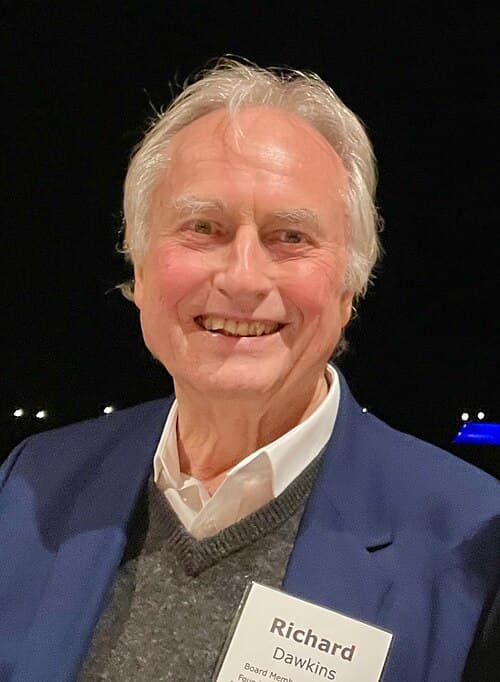
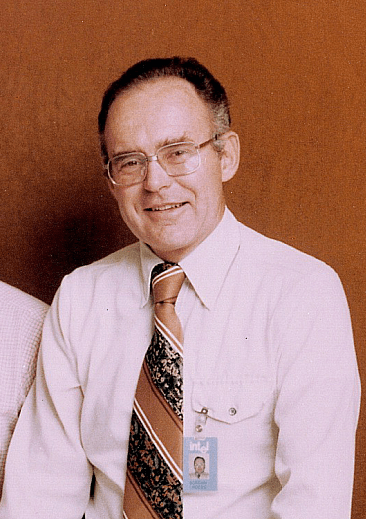
4
Shared Docs
4
Same-Page
7 / 4
Mentions
Document Mentions (4 shared documents)
3 mentions1 same-page
Page ?Same page
abbage — but he was the first to fully understand its power. When we talk about computers today we mean machines, but it is worth noting computers in Turing’s time were more often humans using pencil and paper. The mechanical computers before Turing were elementary at best. Rudimentary calculating machi
not Turing complete and his Analytical Engine has never been built. 19" Century Calculators HOUSE_OVERSIGHT_015706 Mind over Computer 17 In 1935, Turing was made a Fellow of King’s College, Cambridge, and became interested in whether mathematical proofs could be found automatically. He wanted to know
r the world’ science fiction genre — is that computers are improving exponentially fast in line with Moores Law, and the parity point is coming soon. Gordon Moore founded Intel with Andy Grove, and ran the engineering department there for more than 20 years. According to Moore's Law, the power of a computer dou
3 mentions1 same-page
Page ?Same page
a topic absent from a typical computer-science education: the physical configuration of a 118 HOUSE_OVERSIGHT_016921 computation. Von Neumann and Turing posed their questions as theoretical studies, because it was beyond the technology of their day to realize them. But with the convergence of communic
ce in terms of feedback, exploring the cultural rather than engineering uptake of this idea. She begins with primary readings by Wiener, Shannon, and Turing and then pivots from the scientists and engineers to the work and ideas of artists, feminists, postmodern theorists. Her goal: to come up with a new
ystopian scenarios prevail; we generally end up muddling along somewhere in between. But history also suggests that we don’t have to wait on history. Gordon Moore in 1965 was able to use five years of the doubling of the specifications of integrated circuits to project what turned out to be fifty years of expon
3 mentions1 same-page
Page ?Same page
a topic absent from a typical computer-science education: the physical configuration of a 118 HOUSE_OVERSIGHT_016338 computation. Von Neumann and Turing posed their questions as theoretical studies, because it was beyond the technology of their day to realize them. But with the convergence of communic
ce in terms of feedback, exploring the cultural rather than engineering uptake of this idea. She begins with primary readings by Wiener, Shannon, and Turing and then pivots from the scientists and engineers to the work and ideas of artists, feminists, postmodern theorists. Her goal: to come up with a new
ystopian scenarios prevail; we generally end up muddling along somewhere in between. But history also suggests that we don’t have to wait on history. Gordon Moore in 1965 was able to use five years of the doubling of the specifications of integrated circuits to project what turned out to be fifty years of expon
Sponsored
2 mentions1 same-page
Page ?Same page
ere? A dim, honest, slow-multiplying human? Impossible to tell. The distinction between machine and man blurred a bit. Buried in the very premise of Turing’s test was an assumption about what machines could do, and how they might do it. “The idea behind digital computers may be explained by saying that t
LA to New York would be about 1,000 per week, jet airline pioneers assumed. Would more than a few hundred engineers really want their own computers, Gordon Moore asked at a dinner party shortly after Intel proposed putting his chips in the first PCs. Yes, it turned out. Billions more. Highway designers call th
Sponsored
Mutual Connections (418)
Entities connected to both Turing and Gordon Moore
Jeffrey Epstein
PERSON44 w/ Turing·2 w/ Gordon
Stephen Hawking
PERSON29 w/ Turing·8 w/ Gordon
Alan Dershowitz
PERSON27 w/ Turing·5 w/ Gordon
Samantha Power
PERSON19 w/ Turing·8 w/ Gordon
Marc Rich
PERSON16 w/ Turing·8 w/ Gordon
Harvey Weinstein
PERSON17 w/ Turing·5 w/ Gordon
George W. Bush
PERSON18 w/ Turing·4 w/ Gordon
Earth
LOCATION18 w/ Turing·4 w/ Gordon
Alan Turing
PERSON17 w/ Turing·5 w/ Gordon
Prince Charles
PERSON15 w/ Turing·6 w/ Gordon
Marvin Minsky
PERSON18 w/ Turing·3 w/ Gordon
Bill Gates
PERSON15 w/ Turing·6 w/ Gordon
Robert Gates
PERSON14 w/ Turing·6 w/ Gordon
Prince Andrew
PERSON13 w/ Turing·5 w/ Gordon
Wilbur Ross
PERSON16 w/ Turing·2 w/ Gordon
Daniel Dennett
PERSON14 w/ Turing·3 w/ Gordon
Richard Dawkins
PERSON15 w/ Turing·2 w/ Gordon
DB
Doug Band
PERSON11 w/ Turing·5 w/ Gordon
Quantum
ORGANIZATION12 w/ Turing·4 w/ Gordon
WO
Wolfram
PERSON13 w/ Turing·2 w/ Gordon