Back to Network











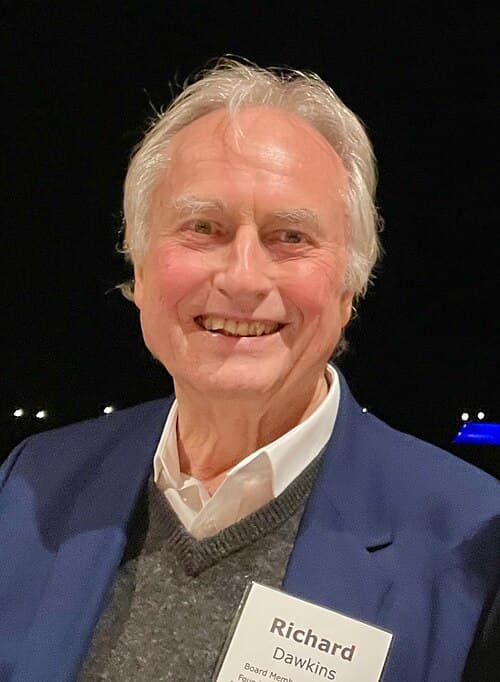
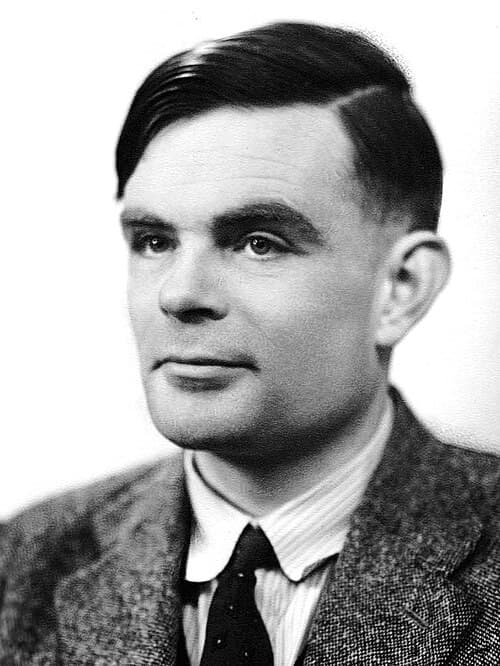
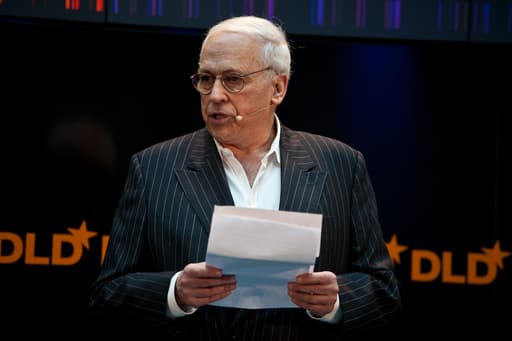
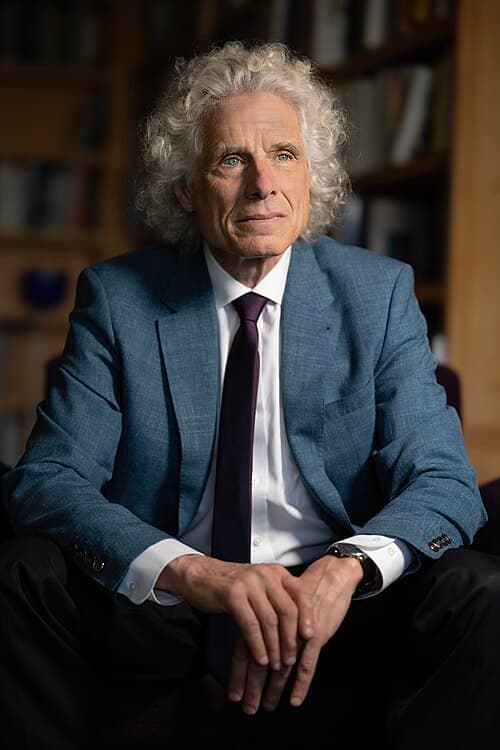
9
Shared Docs
9
Same-Page
14 / 9
Mentions
Document Mentions (9 shared documents)
3 mentions1 same-page
Page ?Same page
abbage — but he was the first to fully understand its power. When we talk about computers today we mean machines, but it is worth noting computers in Turing’s time were more often humans using pencil and paper. The mechanical computers before Turing were elementary at best. Rudimentary calculating machi
not Turing complete and his Analytical Engine has never been built. 19" Century Calculators HOUSE_OVERSIGHT_015706 Mind over Computer 17 In 1935, Turing was made a Fellow of King’s College, Cambridge, and became interested in whether mathematical proofs could be found automatically. He wanted to know
to good communication as the elegance of the content, and that information is a complex thing. If you want a lighthearted poke at PowerPoint here is Peter Norvig’s PowerPoint version of the Gettysburg Address. Understanding Next time you are in a business meeting, count the number of times the word ‘understand
3 mentions1 same-page
Page ?Same page
at they tend to favor or ignore. Surely (ding!)?, any man who could beat a woman at being perceived to be a woman would be an intelligent agent. What Turing did not foresee is the power of deep-learning AI to acquire this wealth of information in an exploitable form without having to understand it. Turing
the CIRL framework, one can formulate and solve the off-switch problem—that is, the problem of how to prevent a robot from disabling its off-switch. (Turing may rest easier.) A robot that’s uncertain about human preferences actually benefits from being switched off, because it understands that the human w
OVERSIGHT_016806 Stuart Russell is a professor of computer science and Smith-Zadeh Professor in Engineering at UC Berkeley. He is the coauthor (with Peter Norvig) of Artificial Intelligence: A Modern Approach. Jaan Tallin, a computer programmer, theoretical physicist, and investor, 1s a co- developer of Skype
3 mentions1 same-page
Page ?Same page
a topic absent from a typical computer-science education: the physical configuration of a 118 HOUSE_OVERSIGHT_016921 computation. Von Neumann and Turing posed their questions as theoretical studies, because it was beyond the technology of their day to realize them. But with the convergence of communic
ce in terms of feedback, exploring the cultural rather than engineering uptake of this idea. She begins with primary readings by Wiener, Shannon, and Turing and then pivots from the scientists and engineers to the work and ideas of artists, feminists, postmodern theorists. Her goal: to come up with a new
the game, and in some cases it finds a loophole that it exploits to gain infinitely many points without actually winning the race. Stuart Russell and Peter Norvig give a beautiful example in their book Artificial Intelligence: A Modern Approach: rewarding a vacuuming robot for how much dust it sucks in results
Sponsored
3 mentions1 same-page
Page ?Same page
at they tend to favor or ignore. Surely (ding!)?, any man who could beat a woman at being perceived to be a woman would be an intelligent agent. What Turing did not foresee is the power of deep-learning AI to acquire this wealth of information in an exploitable form without having to understand it. Turing
the CIRL framework, one can formulate and solve the off-switch problem—that is, the problem of how to prevent a robot from disabling its off-switch. (Turing may rest easier.) A robot that’s uncertain about human preferences actually benefits from being switched off, because it understands that the human w
OVERSIGHT_016223 Stuart Russell is a professor of computer science and Smith-Zadeh Professor in Engineering at UC Berkeley. He is the coauthor (with Peter Norvig) of Artificial Intelligence: A Modern Approach. Jaan Tallin, a computer programmer, theoretical physicist, and investor, 1s a co- developer of Skype
3 mentions1 same-page
Page ?Same page
a topic absent from a typical computer-science education: the physical configuration of a 118 HOUSE_OVERSIGHT_016338 computation. Von Neumann and Turing posed their questions as theoretical studies, because it was beyond the technology of their day to realize them. But with the convergence of communic
ce in terms of feedback, exploring the cultural rather than engineering uptake of this idea. She begins with primary readings by Wiener, Shannon, and Turing and then pivots from the scientists and engineers to the work and ideas of artists, feminists, postmodern theorists. Her goal: to come up with a new
the game, and in some cases it finds a loophole that it exploits to gain infinitely many points without actually winning the race. Stuart Russell and Peter Norvig give a beautiful example in their book Artificial Intelligence: A Modern Approach: rewarding a vacuuming robot for how much dust it sucks in results
2 mentions1 same-page
Page ?Same page
-of-ai#25990 Stuart A. Kauffman Professor of Biological Sciences, Physics, Astronomy, University of Calgary; Author; REINVENTING THE SACRED Since Turing and the explosive growth of algorithmic artificial intelligence, many of us think we are machines. I will argue we are surely not machines at all, b
Levy, Andrei Linde, Chiara Marletto, John Markoff, Yuri Milner, Marvin Minsky, Evgeny Morozov, Walt Mossberg, Sendhil Mullainathan, Nathan Myhrvold, Peter Norvig, Hans Ulrich Obrist, Tim O'Reilly, Larry Page, Bruce Parker, David Pescovitz, Steven Pinker, Martin Rees, Douglas Rushkoff, Terrence Sejnowski, Mic
Sponsored
2 mentions1 same-page
Page ?Same page
-of-ai#25990 Stuart A. Kauffman Professor of Biological Sciences, Physics, Astronomy, University of Calgary; Author; REINVENTING THE SACRED Since Turing and the explosive growth of algorithmic artificial intelligence, many of us think we are machines. I will argue we are surely not machines at all, b
Levy, Andrei Linde, Chiara Marietta, John Markoff, Yuri Milner, Marvin Minsky, Evgeny Morozov, Walt Mossberg, Sendhil Mullainathan, Nathan Myhrvold, Peter Norvig, Hans Ulrich Obrist, Tim O'Reilly, Larry Page, Bruce Parker, David Pescovitz, Steven Pinker, Martin Rees, Douglas Rushkoff, Terrence Sejnowski, Mich
2 mentions1 same-page
Page ?Same page
FTA00698649 Stuart A. Kauffman Professor of Biological Sciences, Physics, Astronomy, University of Calgary; Author; REINVENTING THE SACRED Since Turing and the explosive growth of algorithmic artificial intelligence, many of us think we are machines. I will argue we are surely not machines at all, b
Levy, Andrei Linde, Chiara Marletto, John Markoff, Yuri Milner, Marvin Minsky, Evgeny Morozov, Walt Mossberg, Sendhil Mullainathan, Nathan Myhrvold, Peter Norvig, Hans Ulrich Obrist, Tim O'Reilly, Larry Page, EFTA00698645 Bruce Parker, David Pescovitz, Steven Pinker, Martin Rees, Douglas Rushkoff, Terrence
2 mentions1 same-page
Page ?Same page
se could be preprogrammed with every theory we could ever discover within it. (There would be no arbitrary problems.) This argument neatly sidesteps Turing’s theorem by specifying there is no such thing as an arbitrary problem - a random problem picked from the infinite set of problems. At the same time,
er Company- The Netherlands. All rights reserved. www.mceescher.com US Government, Joint Chiefs of Staff, PD USA Navy Photo, PD Kind permission of Peter Norvig Credit NASA US Government, PD Credit NASA Illustrated by James Tagg Illustrated by James Tagg Associated Press Associated Press New Yorker @ C
Sponsored
Mutual Connections (844)
Entities connected to both Turing and Peter Norvig
Jeffrey Epstein
PERSON44 w/ Turing·13 w/ Peter
Stephen Hawking
PERSON29 w/ Turing·17 w/ Peter
Alan Dershowitz
PERSON27 w/ Turing·9 w/ Peter
Earth
LOCATION18 w/ Turing·10 w/ Peter
Marvin Minsky
PERSON18 w/ Turing·10 w/ Peter
George W. Bush
PERSON18 w/ Turing·8 w/ Peter
Prince Andrew
PERSON13 w/ Turing·12 w/ Peter
Harvey Weinstein
PERSON17 w/ Turing·8 w/ Peter
Marc Rich
PERSON16 w/ Turing·8 w/ Peter
Samantha Power
PERSON19 w/ Turing·5 w/ Peter
Seth Lloyd
PERSON18 w/ Turing·5 w/ Peter
Robert Gates
PERSON14 w/ Turing·9 w/ Peter
Daniel Dennett
PERSON14 w/ Turing·9 w/ Peter
Bill Gates
PERSON15 w/ Turing·8 w/ Peter
Wilbur Ross
PERSON16 w/ Turing·7 w/ Peter
Elon Musk
PERSON13 w/ Turing·9 w/ Peter
Richard Dawkins
PERSON15 w/ Turing·7 w/ Peter
Alan Turing
PERSON17 w/ Turing·4 w/ Peter
John Brockman
PERSON13 w/ Turing·8 w/ Peter
Steven Pinker
PERSON13 w/ Turing·7 w/ Peter