Back to Network

















3
Shared Docs
3
Same-Page
5 / 3
Mentions
Document Mentions (3 shared documents)
3 mentions1 same-page
Page ?Same page
a topic absent from a typical computer-science education: the physical configuration of a 118 HOUSE_OVERSIGHT_016921 computation. Von Neumann and Turing posed their questions as theoretical studies, because it was beyond the technology of their day to realize them. But with the convergence of communic
ce in terms of feedback, exploring the cultural rather than engineering uptake of this idea. She begins with primary readings by Wiener, Shannon, and Turing and then pivots from the scientists and engineers to the work and ideas of artists, feminists, postmodern theorists. Her goal: to come up with a new
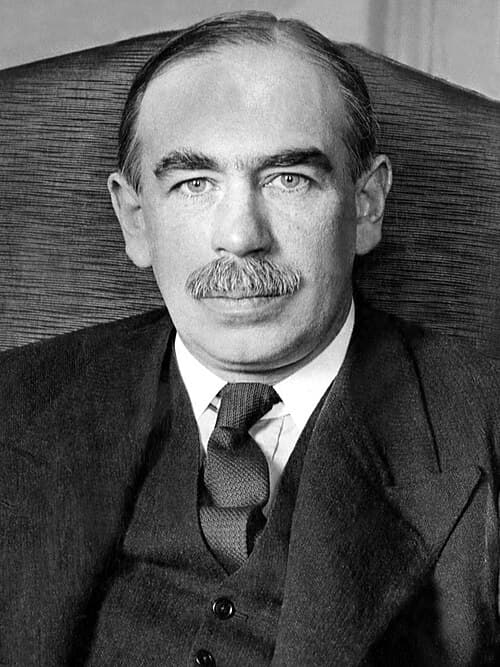
ovement of goods is largely automated, as are many services. What’s left for humans to do? In 1930—long before the advent of computers, let alone AI—John Maynard Keynes wrote, in an essay called “Economic Possibilities for our Grandchildren,” that as a result of improvements in productivity, society could prod
3 mentions1 same-page
Page ?Same page
a topic absent from a typical computer-science education: the physical configuration of a 118 HOUSE_OVERSIGHT_016338 computation. Von Neumann and Turing posed their questions as theoretical studies, because it was beyond the technology of their day to realize them. But with the convergence of communic
ce in terms of feedback, exploring the cultural rather than engineering uptake of this idea. She begins with primary readings by Wiener, Shannon, and Turing and then pivots from the scientists and engineers to the work and ideas of artists, feminists, postmodern theorists. Her goal: to come up with a new
ovement of goods is largely automated, as are many services. What’s left for humans to do? In 1930—long before the advent of computers, let alone AI—John Maynard Keynes wrote, in an essay called “Economic Possibilities for our Grandchildren,” that as a result of improvements in productivity, society could prod
2 mentions1 same-page
Page ?Same page
ere? A dim, honest, slow-multiplying human? Impossible to tell. The distinction between machine and man blurred a bit. Buried in the very premise of Turing’s test was an assumption about what machines could do, and how they might do it. “The idea behind digital computers may be explained by saying that t
ine power. Looking back on his formative years, before Europe was ground up in the First World War, the powerfully brilliant and sensitive economist John Maynard Keynes bitterly recalled the iron certainty of his set of friends and their confident, diffident arrogance: “We were not aware that civilization was
Sponsored
Mutual Connections (426)
Entities connected to both Turing and John Maynard
Jeffrey Epstein
PERSON44 w/ Turing·4 w/ John
Stephen Hawking
PERSON29 w/ Turing·5 w/ John
Alan Dershowitz
PERSON27 w/ Turing·6 w/ John
George W. Bush
PERSON18 w/ Turing·8 w/ John
Samantha Power
PERSON19 w/ Turing·5 w/ John
Marc Rich
PERSON16 w/ Turing·7 w/ John
Earth
LOCATION18 w/ Turing·5 w/ John
Harvey Weinstein
PERSON17 w/ Turing·5 w/ John
Alan Turing
PERSON17 w/ Turing·4 w/ John
Marvin Minsky
PERSON18 w/ Turing·3 w/ John
Prince Charles
PERSON15 w/ Turing·4 w/ John
Prince Andrew
PERSON13 w/ Turing·5 w/ John
Bill Gates
PERSON15 w/ Turing·3 w/ John
Richard Dawkins
PERSON15 w/ Turing·3 w/ John
Wilbur Ross
PERSON16 w/ Turing·2 w/ John
Eric Trump
PERSON11 w/ Turing·6 w/ John
Robert Gates
PERSON14 w/ Turing·3 w/ John
DB
Doug Band
PERSON11 w/ Turing·6 w/ John
Daniel Dennett
PERSON14 w/ Turing·2 w/ John
Quantum
ORGANIZATION12 w/ Turing·4 w/ John