Back to Network













7
Shared Docs
7
Same-Page
11 / 7
Mentions
Document Mentions (7 shared documents)
3 mentions1 same-page
Page ?Same page
at they tend to favor or ignore. Surely (ding!)?, any man who could beat a woman at being perceived to be a woman would be an intelligent agent. What Turing did not foresee is the power of deep-learning AI to acquire this wealth of information in an exploitable form without having to understand it. Turing
the CIRL framework, one can formulate and solve the off-switch problem—that is, the problem of how to prevent a robot from disabling its off-switch. (Turing may rest easier.) A robot that’s uncertain about human preferences actually benefits from being switched off, because it understands that the human w
llough wanted to include mind. He turned to cultural anthropologists Gregory Bateson and Margaret Mead to make the connection to the social sciences. Bateson in particular was increasingly talking about patterns and processes, or “the pattern that connects.” He called for a new kind of systems ecology in w
3 mentions1 same-page
Page ?Same page
a topic absent from a typical computer-science education: the physical configuration of a 118 HOUSE_OVERSIGHT_016921 computation. Von Neumann and Turing posed their questions as theoretical studies, because it was beyond the technology of their day to realize them. But with the convergence of communic
ce in terms of feedback, exploring the cultural rather than engineering uptake of this idea. She begins with primary readings by Wiener, Shannon, and Turing and then pivots from the scientists and engineers to the work and ideas of artists, feminists, postmodern theorists. Her goal: to come up with a new
ly in the body but also in pathways outside the body, and there is a larger Mind, of which the individual mind is only a subsystem. This larger Mind, Bateson holds, is comparable to God, and is perhaps what some people mean by “God,” but it is still immanent in the total interconnected social system and pl
3 mentions1 same-page
Page ?Same page
at they tend to favor or ignore. Surely (ding!)?, any man who could beat a woman at being perceived to be a woman would be an intelligent agent. What Turing did not foresee is the power of deep-learning AI to acquire this wealth of information in an exploitable form without having to understand it. Turing
the CIRL framework, one can formulate and solve the off-switch problem—that is, the problem of how to prevent a robot from disabling its off-switch. (Turing may rest easier.) A robot that’s uncertain about human preferences actually benefits from being switched off, because it understands that the human w
llough wanted to include mind. He turned to cultural anthropologists Gregory Bateson and Margaret Mead to make the connection to the social sciences. Bateson in particular was increasingly talking about patterns and processes, or “the pattern that connects.” He called for a new kind of systems ecology in w
Sponsored
3 mentions1 same-page
Page ?Same page
a topic absent from a typical computer-science education: the physical configuration of a 118 HOUSE_OVERSIGHT_016338 computation. Von Neumann and Turing posed their questions as theoretical studies, because it was beyond the technology of their day to realize them. But with the convergence of communic
ce in terms of feedback, exploring the cultural rather than engineering uptake of this idea. She begins with primary readings by Wiener, Shannon, and Turing and then pivots from the scientists and engineers to the work and ideas of artists, feminists, postmodern theorists. Her goal: to come up with a new
ly in the body but also in pathways outside the body, and there is a larger Mind, of which the individual mind is only a subsystem. This larger Mind, Bateson holds, is comparable to God, and is perhaps what some people mean by “God,” but it is still immanent in the total interconnected social system and pl
2 mentions1 same-page
Page ?Same page
onstructed to make sense of the world and our place in it. Consider the developments during the 1930s- 1940s: Godel's Incompleteness Theorems (1931); Turing's "On Computable Numbers, With An Application To The Entscheidungsproblem" (1936); Bateson's theory of "Schismogenesis" in Naven (1936); Rosenblueth
the 1930s- 1940s: Godel's Incompleteness Theorems (1931); Turing's "On Computable Numbers, With An Application To The Entscheidungsproblem" (1936); Bateson's theory of "Schismogenesis" in Naven (1936); Rosenblueth, Weiner & Bigelow's "Behavior, Purpose and Teleology" (1943); McCullouch & Pitts's "A Logi
2 mentions1 same-page
Page ?Same page
ake c to denote algorithmic information measured on some reference Turing machine, and F(X) to denote what appears on the second tape of a two-tape Turing machine t time-steps after placing X on its first tape. Other more naturalistic computational models are also possible here and are discussed extens
ouglas Hofstadter 1110179, I lo1961, in Benjamin Whorl's tj linguistic philosophy and Gregory Bateson's lam 79] systems theory of mind and nature. Bateson spoke of the Metapattern: "that it is pattern which connects." In Goertzel's writings on philosophy of mind, an effort has been made to pursue this
Sponsored
2 mentions1 same-page
Page ?Same page
take c to denote algorithmic information measured on some reference Turing machine, and F(X) to denote what appears on the second tape of a two-tape Turing machine ¢ time-steps after placing X on its first tape. Other more naturalistic computational models are also possible here and are discussed extensi
Douglas Hofstadter [Hof79, Hof96], in Benjamin Whorf’s [Who64] linguistic philosophy and Gregory Bateson’s [Bat79] systems theory of mind and nature. Bateson spoke of the Metapattern: “that it is pattern which connects.” In Goertzel’s writings on philosophy of mind, an effort has been made to pursue this t
Sponsored
Mutual Connections (943)
Entities connected to both Turing and Bateson
Jeffrey Epstein
PERSON44 w/ Turing·7 w/ Bateson
Stephen Hawking
PERSON29 w/ Turing·7 w/ Bateson
Alan Dershowitz
PERSON27 w/ Turing·8 w/ Bateson
George W. Bush
PERSON18 w/ Turing·9 w/ Bateson
Marc Rich
PERSON16 w/ Turing·9 w/ Bateson
Marvin Minsky
PERSON18 w/ Turing·6 w/ Bateson
Earth
LOCATION18 w/ Turing·6 w/ Bateson
Wilbur Ross
PERSON16 w/ Turing·7 w/ Bateson
Samantha Power
PERSON19 w/ Turing·4 w/ Bateson
Seth Lloyd
PERSON18 w/ Turing·4 w/ Bateson
Daniel Dennett
PERSON14 w/ Turing·8 w/ Bateson
John Brockman
PERSON13 w/ Turing·9 w/ Bateson
Harvey Weinstein
PERSON17 w/ Turing·4 w/ Bateson
Martha Stewart
PERSON12 w/ Turing·9 w/ Bateson
Prince Andrew
PERSON13 w/ Turing·6 w/ Bateson
Bill Gates
PERSON15 w/ Turing·4 w/ Bateson
Penrose
PERSON17 w/ Turing·2 w/ Bateson
Alan Turing
PERSON17 w/ Turing·2 w/ Bateson
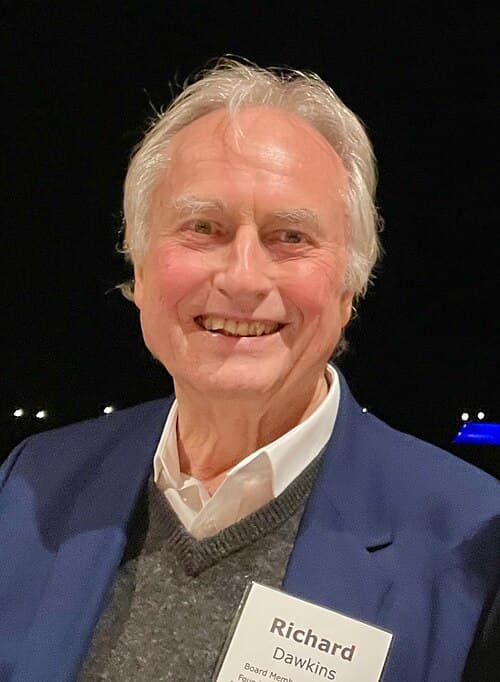
Richard Dawkins
PERSON15 w/ Turing·3 w/ Bateson
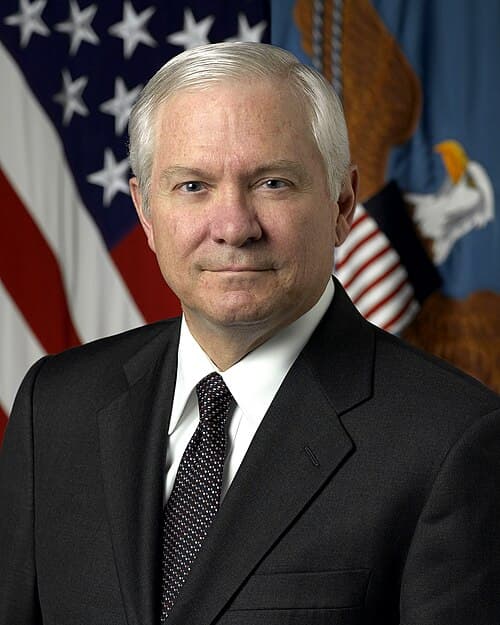
Robert Gates
PERSON14 w/ Turing·4 w/ Bateson