Back to Network


















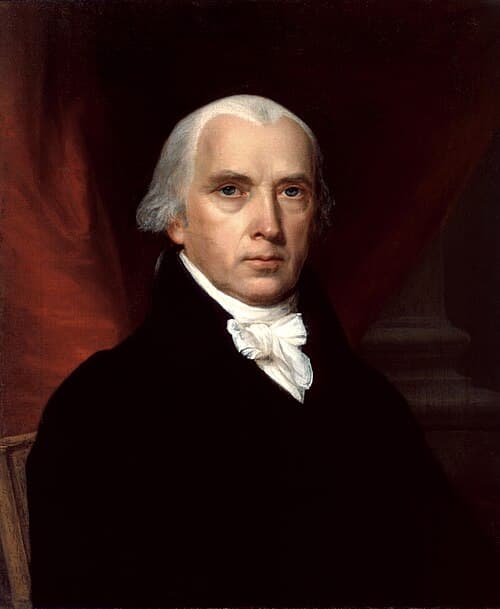
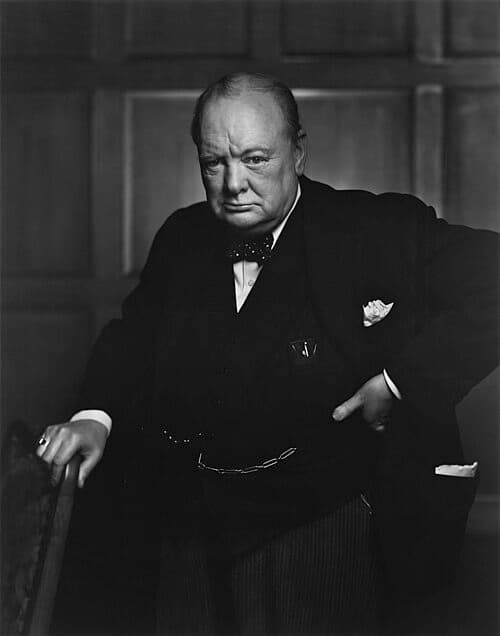
3
Shared Docs
2
Same-Page
3 / 4
Mentions
Document Mentions (3 shared documents)
3 mentions1 same-page
Page ?Same page
f the era? About the nature of our age? 3. A few days before Christmas of December of 1787, Thomas Jefferson sat down in Paris to write a letter to James Madison.*? Madison was on the other side of the Atlantic, in Philadelphia, and struggling with refinements to the new American constitution, which had been d
xperience. The problem is that sucha comfortable posture is at odds with nearly any book of history you might pick up, from The Peloponnesian Wars to Churchill's The Hinge of Fate, all of which will remind you in the most violent terms that liberty and freedom demand struggle and defense; that epochal change
ny’s efficient, iron-and-blood commercial engines. Size and scale and safety became linked. This sense of the undeniable power of industrial mass was Winston Churchill's only comfort for two nervous, lonely years after 1939 as he paced the hours until what he hoped was America’s entry into The Second World War. “] kne
2 mentions1 same-page
Page ?Same page
f L17 HOUSE_OVERSIGHT_017204 4.2.12 WC: 191694 our democratic system of checks and balances in which the ultimate check is an informed public. As James Madison cautioned nearly two centuries ago: “A popular government, without popular information, or the means of acquiring it, is but a prologue to a farce o
him as a scholar in a class with Ward Churchill. He’s the Colorado professor who called the 9/11 victims “little Eichmanns” comparing Finkelstein to Churchill is a characterization with which I would not quarrel. Mr. Finkelstein does not do “scholarship” in any meaningful sense. Although his writings cente
Page HOUSE_OVERSIGHT_018099
t’s precisely Republican factionalism in Washington that’s stopping the United States from attaining again the greatness Republicans invoke. Remember James Madison’s HOUSE_OVERSIGHT_018098 --- PAGE BREAK --- 15 admonition to “break and control the violence of faction” through a “well-constructed Union.” Right
Page: HOUSE_OVERSIGHT_018099 →Page HOUSE_OVERSIGHT_018118
Both courses are fraught and logically open-ended. Thus the fear of potentially negative consequences from a war should not necessarily rule one out. Winston Churchill, reflecting on British policy before World War II, wrote: If the circumstances are such as to warrant it, force may be used. And if this be so, it s
Page: HOUSE_OVERSIGHT_018118 →Sponsored
Mutual Connections (299)
Entities connected to both James Madison and Winston Churchill
Jeffrey Epstein
PERSON16 w/ James·118 w/ Winston
George W. Bush
PERSON11 w/ James·60 w/ Winston
Barack Obama
PERSON14 w/ James·51 w/ Winston
Bill Clinton
PERSON10 w/ James·45 w/ Winston
Marc Rich
PERSON14 w/ James·39 w/ Winston
John F. Kennedy
PERSON12 w/ James·33 w/ Winston
Prince Charles
PERSON10 w/ James·34 w/ Winston
Prince Andrew
PERSON7 w/ James·36 w/ Winston
Donald Trump
PERSON9 w/ James·33 w/ Winston
United States
LOCATION4 w/ James·36 w/ Winston
Benjamin Netanyahu
PERSON5 w/ James·32 w/ Winston
Vladimir Putin
PERSON7 w/ James·30 w/ Winston
Stephen Hawking
PERSON5 w/ James·27 w/ Winston
Virginia Giuffre
PERSON9 w/ James·22 w/ Winston
Cynthia Nixon
PERSON3 w/ James·28 w/ Winston
Samantha Power
PERSON5 w/ James·26 w/ Winston
Joe Biden
PERSON6 w/ James·24 w/ Winston
LB
Leon Black
PERSON7 w/ James·23 w/ Winston
Bashar al-Assad
PERSON3 w/ James·26 w/ Winston
Michael Cohen
PERSON4 w/ James·25 w/ Winston