Back to Network











8
Shared Docs
7
Same-Page
10 / 8
Mentions
Document Mentions (8 shared documents)
2 mentions1 same-page
Page EFTA00013981Same page
een but not heard. The Crime Victims' Rights Act sought to change this by making victims independent participants in the criminal justice process." Kenna v. U.S. Dist. Court for C.D. Cal., 435 F.3d 1011, 1013 (9th Cir. 2006). Accordingly, because the CVRA is remedial legislation, courts should interp
Page: EFTA00013981 →Feinstein)). Congress intended the CVRA to dramatically rework the federal criminal justice system. In the course of construing the CVRA generously, the Ninth Circuit observed: "The criminal justice system has long functioned on the assumption that crime victims should behave like good Victorian children -- seen b
Page: EFTA00013981 →2 mentions1 same-page
Page ?Same page
ernment's files"); cf. In re Sikr, 571 F.3d 604, 609 (6th Cir. 2009) (holding that "the CVRA does not provide an independent right to obtain PSRs"); Kenna United States, 453 F.3d 1136, 1137 (9th Cir. 2006) (affirming the district court's rejection of victim's argument that the CVRA conferred a general
F. App'x 337, 346 (6th Cir. 2002) ("Here, the district court exceeded its equitable power when it ordered [defendant] to apologize.")). In Woodruff, the Ninth Circuit affirmed its prior holding that courts "are not commissioned to run around getting apologies" and reasoned that the law is not usually concerned wi
2 mentions1 same-page
Page ?Same page
nment's files"); cf. In re Slier, 571 F.3d 604, 609 (6th Cir. 2009) (holding that "the CVRA does not provide an independent right to obtain PSRs"); Kenna v. United States, 453 F.3d 1136, 1137 (9th Cir. 2006) (affirming district court's rejection of victim's argument that the CVRA conferred a general
, the Sixth Circuit held that the district court exceeded its equitable powers when it ordered a party to apologize. In so holding, the court cited the Ninth Circuit, which has recognized that courts "are not commissioned to run around getting apologies," and reasoned that the law is not usually concerned with p
Sponsored
2 mentions1 same-page
Page ?Same page
rnment's files"); cf. In re Siler, 571 F.3d 604, 609 (6th Cir. 2009) (holding that "the CVRA does not provide an independent right to obtain PSRs"); Kenna v. United States, 453 F.3d 1136, 1137 (9th Cir. 2006) (affirming the district court's rejection of victim's argument that the CVRA conferred a gene
F. App'x 337, 346 (6th Cir. 2002) ("Here, the district court exceeded its equitable power when it ordered [defendant] to apologize.")). In Woodruff, the Ninth Circuit affirmed its prior holding that courts "are not commissioned to run around getting apologies" and reasoned that the law is not usually concerned wi
2 mentions1 same-page
Page ?Same page
rnment's files"); cf. In re Siler, 571 F.3d 604, 609 (6th Cir. 2009) (holding that "the CVRA does not provide an independent right to obtain PSRs"); Kenna v. United States, 453 F.3d 1136, 1137 (9th Cir. 2006) (affirming the district court's rejection of victim's argument that the CVRA conferred a gene
F. App'x 337, 346 (6th Cir. 2002) ("Here, the district court exceeded its equitable power when it ordered [defendant] to apologize.")). In Woodruff, the Ninth Circuit affirmed its prior holding that courts "are not commissioned to run around getting apologies" and reasoned that the law is not usually concerned wi
2 mentions1 same-page
Page ?Same page
ernment's files"); cl In re Siler, 571 F.3d 604, 609 (6th Cir. 2009) (holding that "the CVRA does not provide an independent right to obtain PSRs"); Kenna v. United States, 453 F.3d 1136, 1137 (9th Cir. 2006) (affirming the district court's rejection of victim's argument that the CVRA conferred a gene
F. App'x 337, 346 (6th Cir. 2002) ("Here, the district court exceeded its equitable power when it ordered [defendant] to apologize.")). In Woodruff, the Ninth Circuit affirmed its prior holding that courts "are not commissioned to run around getting apologies" and reasoned that the law is not usually concerned wi
Sponsored
2 mentions1 same-page
Page ?Same page
rnment's files"); cf. In re Siler, 571 F.3d 604, 609 (6th Cir. 2009) (holding that "the CVRA does not provide an independent right to obtain PSRs"); Kenna v. United States, 453 F.3d 1136, 1137 (9th Cir. 2006) (affirming the district court's rejection of victim's argument that the CVRA conferred a gene
F. App'x 337, 346 (6th Cir. 2002) ("Here, the district court exceeded its equitable power when it ordered [defendant] to apologize.")). In Woodruff, the Ninth Circuit affirmed its prior holding that courts "are not commissioned to run around getting apologies" and reasoned that the law is not usually concerned wi
HOUSE_OVERSIGHT_017635 - HOUSE_OVERSIGHT_017713
ARTICLE: Treating Crime Victims Fairly: Integrating Victims into the Federal Rules of Criminal Procedure
4 mentions
Page HOUSE_OVERSIGHT_017646
language in [the CVRA] was agreed to."). °! 150 Cong. Rec. H8208-09 (daily ed. Oct. 6, 2004). °2 150 Cong. Rec. $10910 (daily ed. Oct. 9, 2004). % Kenna v. U.S. Dist. Court for the Cent. Dist. of Cal., 435 F.3d 1011, 1015-16 (9th Cir. 2006) (internal quotations and citations omitted); accord United St
Page: HOUSE_OVERSIGHT_017646 →Page HOUSE_OVERSIGHT_017676
ght of the conference report on Rule 16, compelling disclosure of witness names before trial appears inconsistent with the federal rules. And even if the Ninth Circuit's approach was valid at the time Armstrong was decided, such an approach is no longer valid in light of the CVRA. Rule 57(b) only provides a basis for
Page: HOUSE_OVERSIGHT_017676 →Page HOUSE_OVERSIGHT_017686
to situations where victims seek "relevant" contents of the presentence report to make a victim impact statement at sentencing. Second, the victim in Kenna sought the entire presentence report. The Ninth Circuit pointedly observed: "We note that Kenna refused the district court's offer to consider disclo
Page: HOUSE_OVERSIGHT_017686 →Sponsored
Mutual Connections (357)
Entities connected to both Kenna and the Ninth Circuit
Jeffrey Epstein
PERSON58 w/ Kenna·32 w/ the
United States
LOCATION42 w/ Kenna·32 w/ the
JD
Jane Doe
PERSON42 w/ Kenna·14 w/ the
Kenneth Marra
PERSON39 w/ Kenna·11 w/ the
Bradley Edwards
PERSON38 w/ Kenna·9 w/ the
Scarlett Johansson
PERSON36 w/ Kenna·10 w/ the
Department of Justice
ORGANIZATION25 w/ Kenna·20 w/ the
the Southern District
LOCATION32 w/ Kenna·9 w/ the
George W. Bush
PERSON23 w/ Kenna·13 w/ the
LB
Leon Black
PERSON17 w/ Kenna·18 w/ the
Marc Rich
PERSON14 w/ Kenna·18 w/ the
Supreme Court
ORGANIZATION10 w/ Kenna·20 w/ the
Alexander Acosta
PERSON20 w/ Kenna·9 w/ the
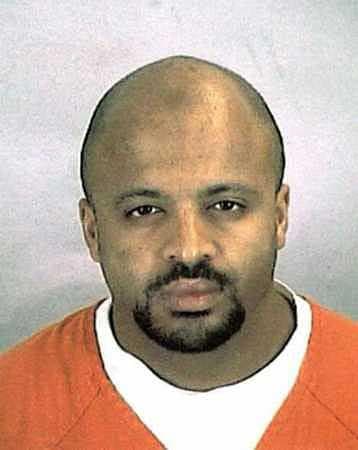
Moussaoui
PERSON22 w/ Kenna·6 w/ the
Paul Cassell
PERSON20 w/ Kenna·8 w/ the
WA
Walker
PERSON19 w/ Kenna·7 w/ the
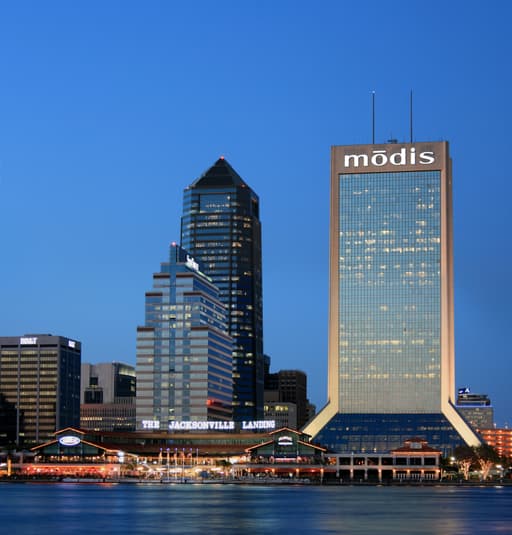
Jacksonville
LOCATION12 w/ Kenna·13 w/ the
Joe Biden
PERSON12 w/ Kenna·13 w/ the
RU
Rubin
PERSON19 w/ Kenna·6 w/ the
ET
Emmy Taylor
PERSON10 w/ Kenna·15 w/ the