Back to People & Entities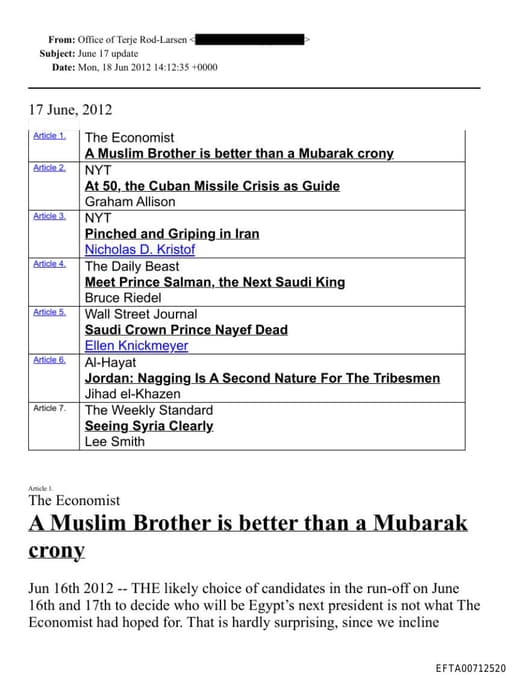



Alawites
Organization
30
Total Mentions
26
Documents
561
Connected Entities
Shia Muslim sect primarily in Syria
Document Mentions (20 of 26)
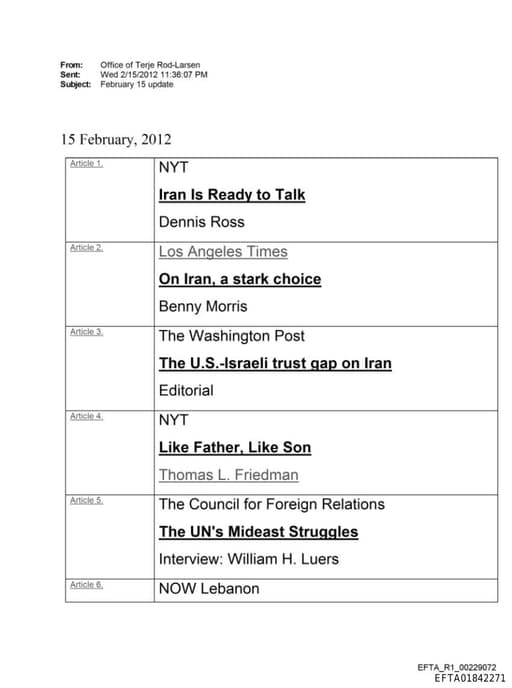
EFTA00712520.pdf
2 mentionsEFTA00712520
cluding elements of al Qaeda. Subsequently, there's worry that the Sunnis will target the Christian community and take their vengeance against the Alawites, from whom the ruling Assad regime is drawn. The idea then, EFTA00712537 now corroborated by this Syrian disinformation campaign, is that the opp
sition, rather than Assad's forces, that was responsible for the massacre at Houla. On this reading, it wasn't Sunnis who were killed en masse, but Alawites and other minorities. The facts are otherwise. As this list of casualties from the Houla killings shows, the dead were Sunnis, with the majority of
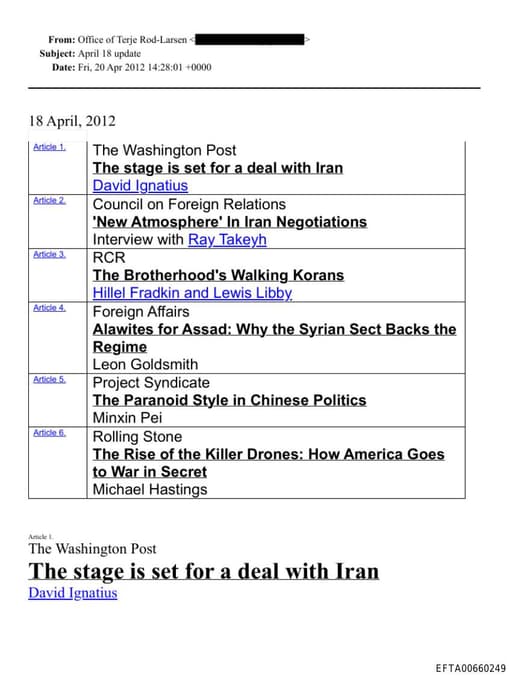
EFTA00660249.pdf
2 mentionsEFTA00660249
revolt in Syria, the country's Alawites have been instrumental in maintaining President Bashar al- Assad's hold on power. A sect of Shia Islam, the Alawites comprise roughly 13 percent of the population and form the bulk of Syria's key military units, intelligence services, and ultra-loyalist militias,
Alawites for Assad: Why the Syrian Sect Backs the Regime Leon Goldsmith April 16, 2012 -- Since the start of the revolt in Syria, the country's Alawites have been instrumental in maintaining President Bashar al- Assad's hold on power. A sect of Shia Islam, the Alawites comprise roughly 13 percent of
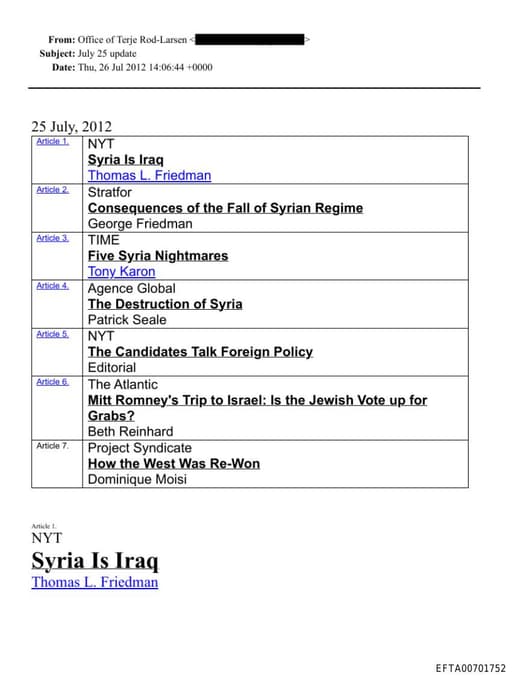
EFTA00701752.pdf
2 mentionsEFTA00701752
e Assad clan, and the country's majority of Sunni Muslims. That's why the opposite of the Assad dictatorship could be the breakup of Syria — as the Alawites retreat to their coastal redoubt — and a permanent civil war. There are two things that could divert us from that outcome. One is the Iraq alterna
sustainable outcomes, of course, but they could map the outlines of a next phase of warfare after Assad loses control of the Syrian state. But the Alawites aren't the only breakup threat. The consensus among Syria's Kurdish political factions, encouraged by Iraqi Kurd leader Massoud Barzani, who has ho
Sponsored
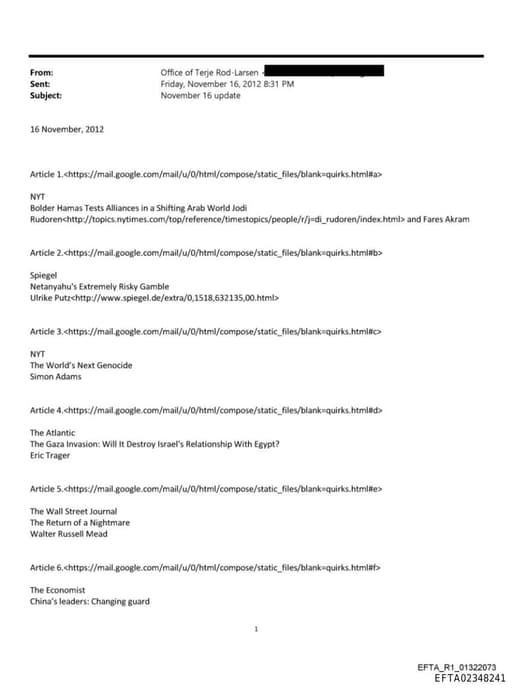
EFTA02348241.pdf
2 mentionsEFTA02348241
opics.nytimes.com/top/newsAnternational/countriesandterritories/syria/index.html?inline=nyt-geo>.=94 A few months ago, talk of possible massacres of Alawites, who dominate Bash=r al- Assad<http://topics.nytimes.com/top/reference/timestopics/people/a/ba=har_al_assad/index.html?inline=nyt-per>'s government
ted themselves to helping end Syria'= misery, including the United States, must immediately do two things to he=p prevent a violent backlash against Alawites and other minorities. First, they must 5 EFTA_R1_01322077 EFTA02348245 impress upon the newly united Syrian opposition that support dep=nds on s
EFTA00694113.pdf
1 mentionEFTA00694113
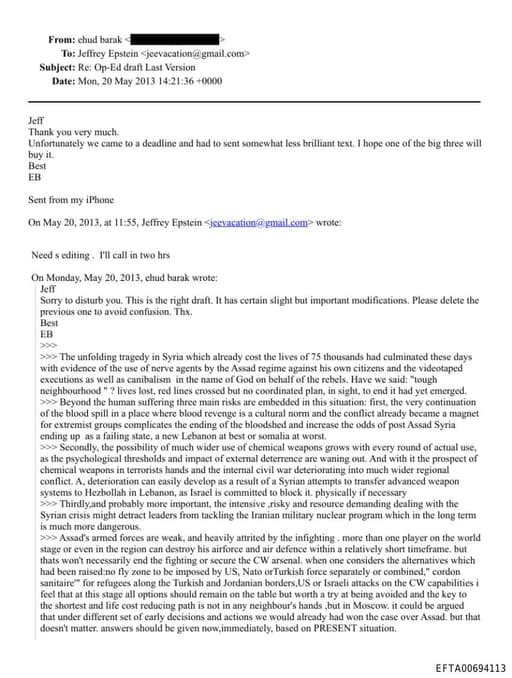
lf we want to see an end of fighting and do not want to see Jabhat al Nosra or the likes running Syria added probably by years of bloody massacre of Alawites and others in a no man's land Syria we need Russia to be asked to lead the international effort to end it,with all other players supporting it. in a
EFTA00707105.pdf
1 mentionEFTA00707105
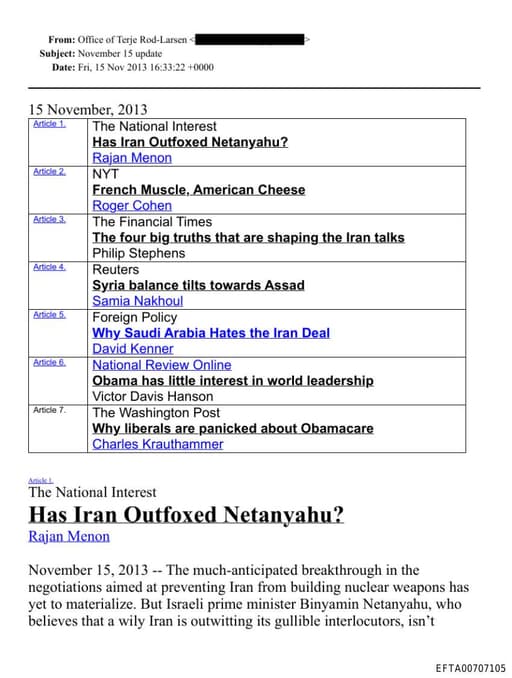
ity to remain, even if Syria has already been carved up into enclaves - Sunni rebels in the north and east, secessionist Kurds in the northeast and Alawites and others in the capital and north-western coastal area. According to these sources, U.S. and Russian officials have privately been discussing wh
Sponsored
EFTA00712749.pdf
1 mentionEFTA00712749
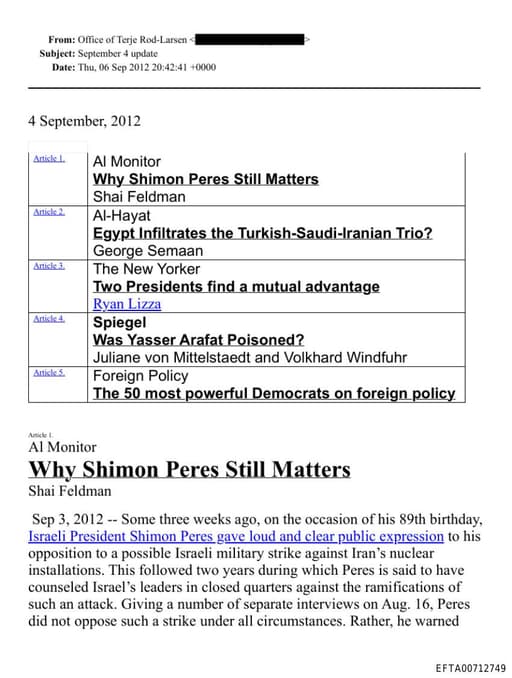
ome sort of a settlement granting tripartite attention to Syria's Sunnis, while Tehran and Moscow will find a way to tend to their interest and the Alawites' affairs. But is it too late for settlements? The New Yorker Two Presidents find a mutual advantage Ryan Lizza September 10, 2012 -- Barack Obama
EFTA00701043.pdf
1 mentionEFTA00701043
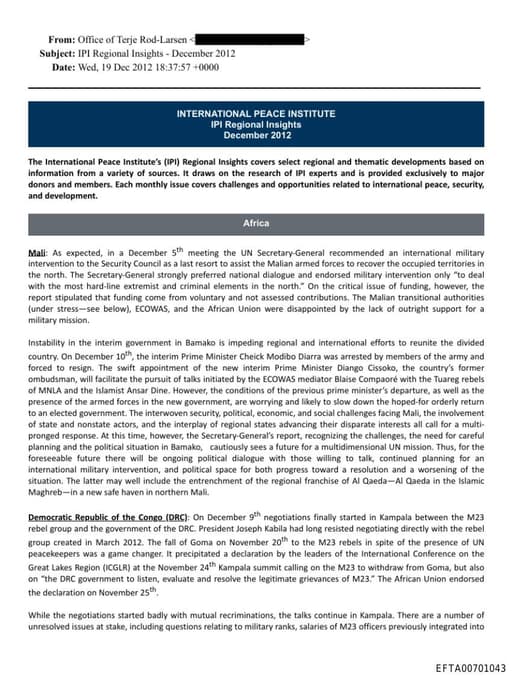
Syria meeting in Marrakech. Lebanon: Spillover from Syria reached a climax on December 10th when several days of clashes between Sunni Muslims and Alawites left 19 people dead in the northern city of Tripoli. The second-largest city in Lebanon is a historic site of sectarian conflict and home to a large
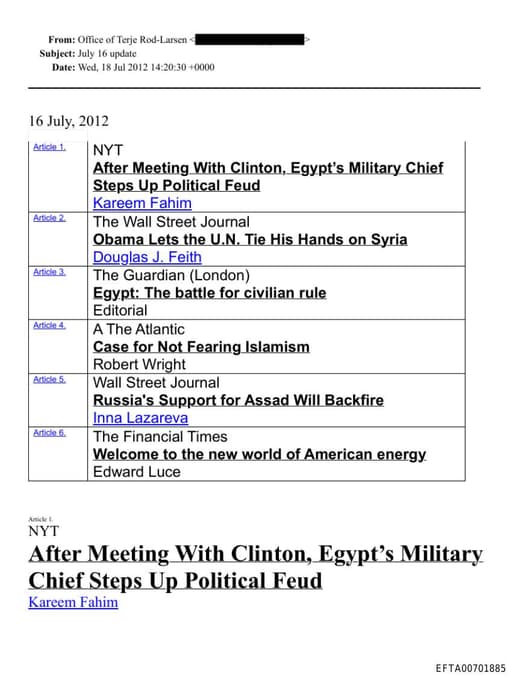
EFTA00701885.pdf
1 mentionEFTA00701885
closer integration with the West via European Union membership; and it was more vocally supportive of the rights of religious minorities, such as Alawites and Christians. Still, though more cosmopolitan than the Welfare Party, the AKP retained enough of an Islamic flavor to make religious Turks feel t
Sponsored
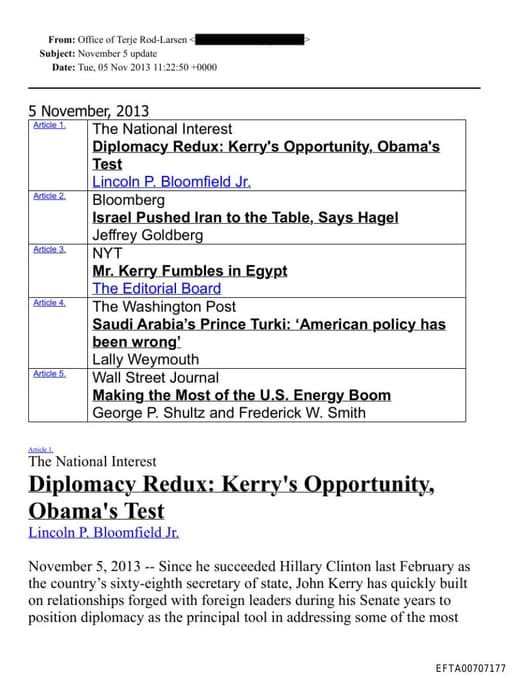
EFTA00707177.pdf
1 mentionEFTA00707177
t they continue to say, 'We are afraid these weapons will fall in the wrong hands.' Do you see Syria splitting up? I hope it doesn't split up. The Alawites are not confined to Syria. You have Kurds in Turkey, Iran and Iraq. ... There will be this incentive to reach out to fellow ethnics — and then it w
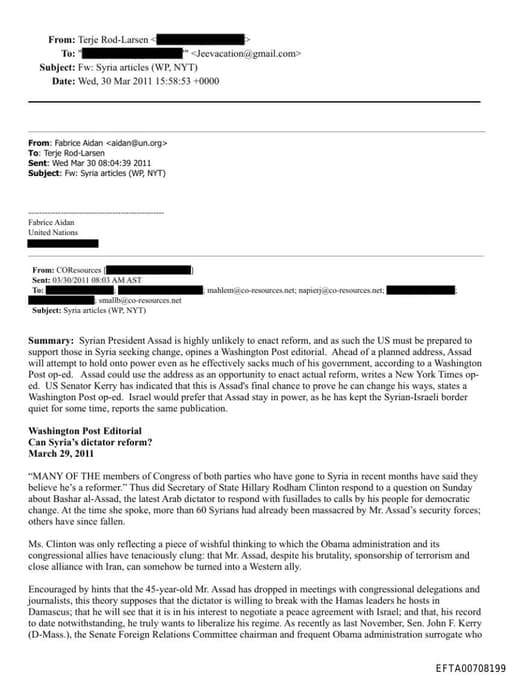
EFTA00708199.pdf
1 mentionEFTA00708199
y to American interests, he firmly believes Lebanon should be within Syria's sphere of influence, and he is a member of a minority Islamic sect, the Alawites, that has had a chokehold on power in Syria for decades. In 2004 and 2005, while writing a book on him, I had long interviews with Mr. Assad; after
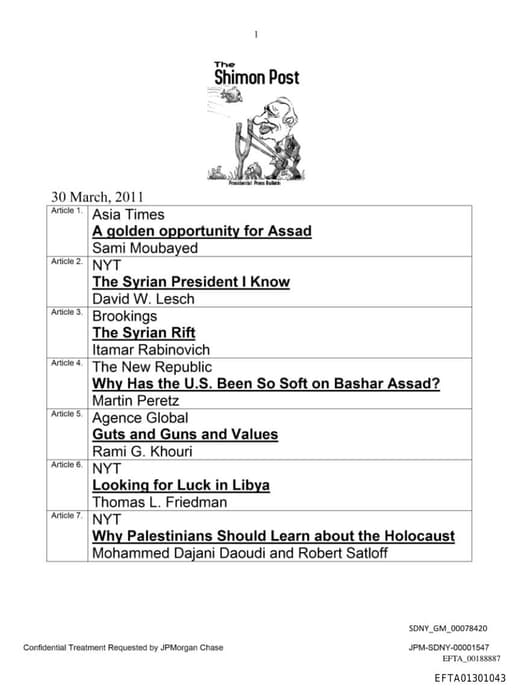
EFTA01301043.pdf
1 mentionEFTA01301043
to American interests, he firmly believes Lebanon should be within Syria's sphere of influence, and he is a member of a minority Islamic sect, the Alawites, that has had a chokehold on power in Syria for decades. SONY_GM_00078425 JPM-SDNY-00001552 EFTA_00188892 Confidential Treatment Requested by JP
Sponsored
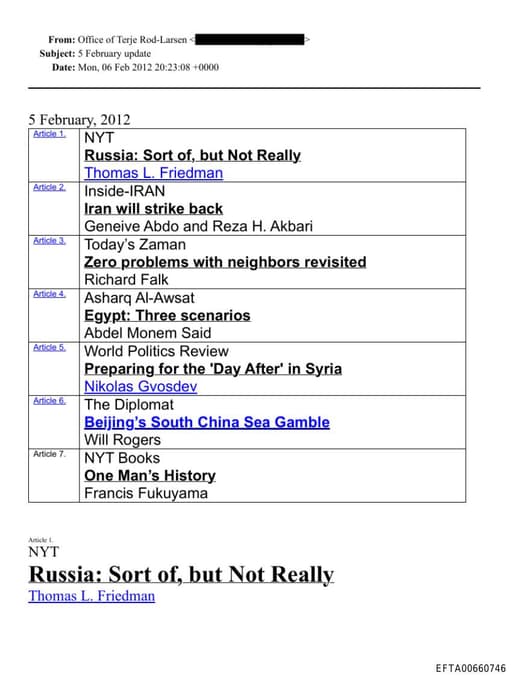
EFTA00660746.pdf
1 mentionEFTA00660746
in the 1990s, could surface here. As in Iraq, there are different geographic regions where Syria's minority groups form the local majority. For the Alawites, the coastal areas around the city of Lattakia -- where, incidentally, the last remaining Russian military base outside the former Soviet Union, th
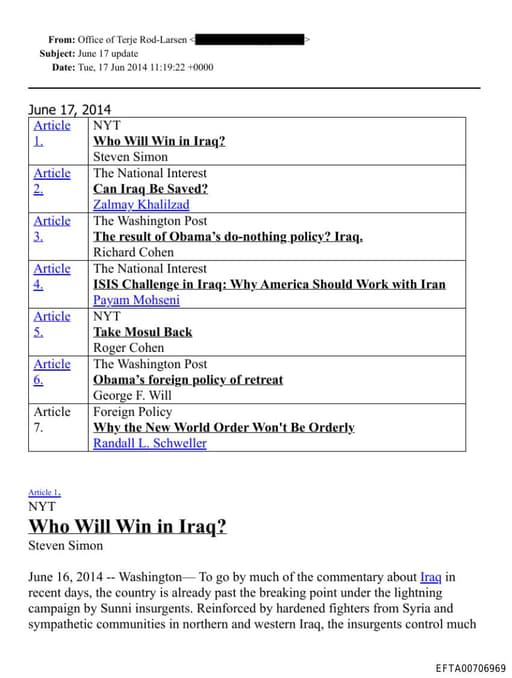
EFTA00706969.pdf
1 mentionEFTA00706969
acking at the internal lines of fracture colonial overseers chose to disregard. They were in a state of postponed decomposition. Sunnis in Iraq and Alawites in Syria, minorities both, believed (and believe) they had some irreversible right to rule. They do not. President Obama should use targeted milita
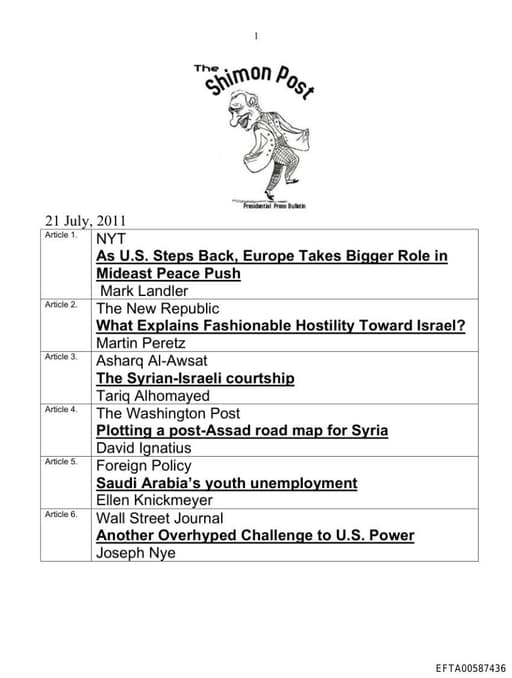
EFTA00587436.pdf
1 mentionEFTA00587436
sition." In meetings with dissidents, Ford is said to have stressed that the opposition must reach out to minorities, such as Christians, Druze and Alawites, who fear that a post-Assad regime will be dominated by the Muslim Brotherhood. With U.S. encouragement, the opposition hopes to hold a meeting in
Sponsored
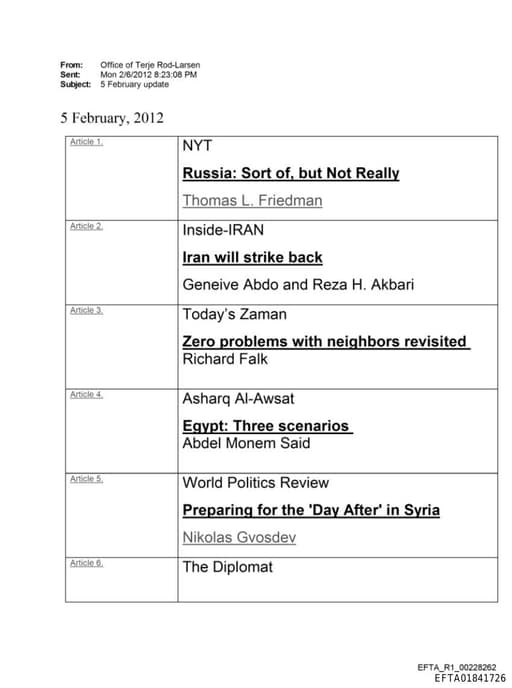
EFTA01841726.pdf
1 mentionEFTA01841726
in the 1990s, could surface here. As in Iraq, there are different geographic regions where Syria's minority groups form the local majority. For the Alawites, the coastal areas around the city of Lattakia -- where, incidentally, the last remaining Russian military base outside the former Soviet Union, t
EFTA01842271.pdf
1 mentionEFTA01842271
he rebellion stop and the sectarian aspirations — the raw desire by Syria's Sunni majority to oust the Alawite minority — begin. As a result, most Alawites are rallying to Assad, as are some Sunnis who have benefitted from his regime, particularly in Aleppo and Damascus, the capital. These pro-regime A
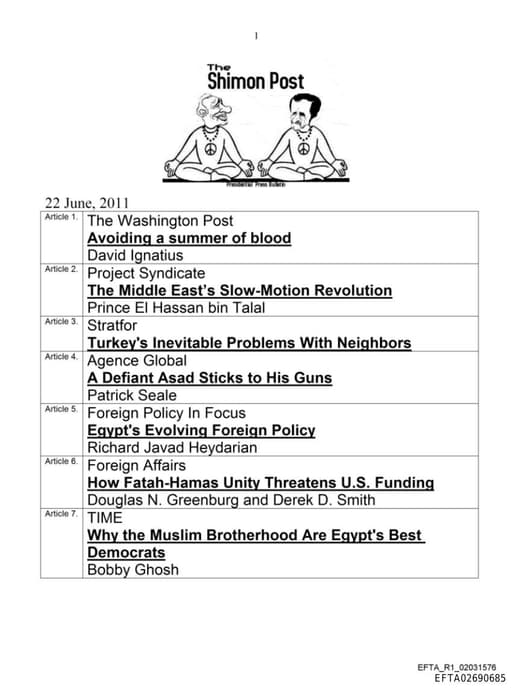
EFTA01882540.pdf
1 mentionEFTA01882540
held. Even that could be optimistic, experts say. A third of Syria's population belongs to religious or ethnic minorities, among them Christians, Alawites, Shiites and Kurds, who share concerns about the potential rise of Sunni Islamism. It is in large part a measure of the dysfunction of the rest of
Sponsored
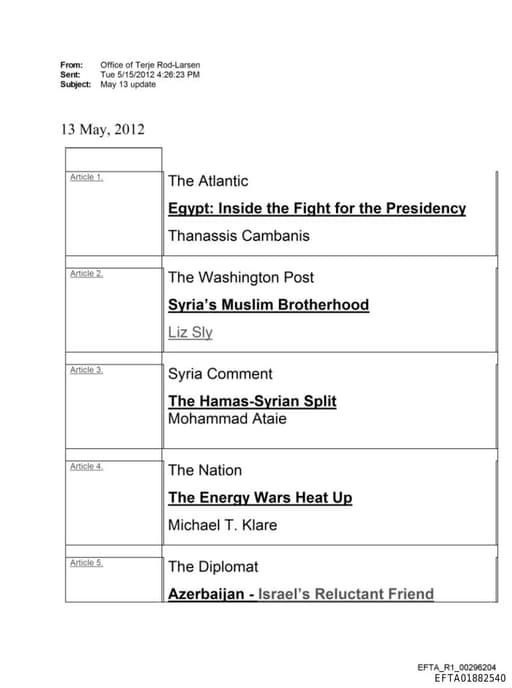
EFTA02690685.pdf
1 mentionEFTA02690685
the country's majority Sunni population. Four decades in power is not a long time, and vengeance is a powerful force in this part of the world. The Alawites understand that they face an existential crisis, and if they allow their grip over the Baath-dominated political system - and most importantly the
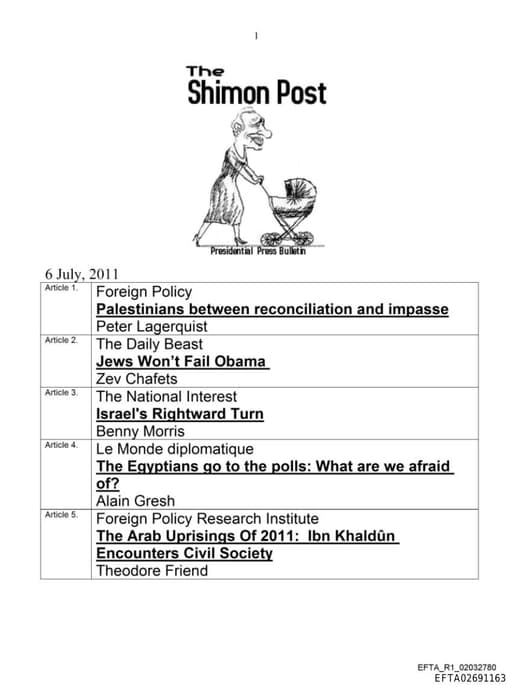
EFTA02691163.pdf
1 mentionEFTA02691163
ernizing Shah. The Syrian government has no such psychic resources. It is held together in its presidential family and its top military echelons by Alawites-a religious minority that may be characterized as Shi'ite or syncretist, depending on who is articulating its beliefs. And those Alawite leaders h
Sponsored
Connected Entities(20 of 561)
Bashar al-Assad
PersonPresident of Syria from 2000 to 2024
26 docs26 co-mentions
Barack Obama
PersonPresident of the United States from 2009 to 2017
22 docs22 co-mentions
Lebanon
LocationCountry in West Asia
21 docs21 co-mentions
Damascus
LocationCapital and largest city of Syria
20 docs20 co-mentions
Saddam Hussein
PersonIraqi president, army officer and Baathist politician (1937–2006)
20 docs20 co-mentions
Tehran
LocationCapital city of Iran
20 docs20 co-mentions
United States
LocationCountry located primarily in North America
19 docs19 co-mentions
Terje Rod-Larsen
PersonNorwegian diplomat
18 docs18 co-mentions
Bill Clinton
PersonPresident of the United States from 1993 to 2001 (born 1946)
17 docs17 co-mentions
George W. Bush
PersonPresident of the United States from 2001 to 2009
16 docs16 co-mentions
Benjamin Netanyahu
PersonPrime Minister of Israel (1996–1999; 2009–2021; since 2022)
16 docs16 co-mentions
Hosni Mubarak
PersonPresident of Egypt from 1981 to 2011
14 docs14 co-mentions
Middle East
LocationGeopolitical region encompassing Egypt and most of Western Asia, including Iran
14 docs14 co-mentions
Hillary Clinton
PersonAmerican politician and diplomat (born 1947)
14 docs14 co-mentions
Tunisia
LocationCountry in North Africa
14 docs14 co-mentions
Istanbul
LocationLargest city in Turkey
13 docs13 co-mentions
Marc Rich
PersonAmerican commodities trader (1934–2013)
13 docs13 co-mentions
Mohamed Morsi
PersonPresident of Egypt from 2012 to 2013
11 docs11 co-mentions
Jerusalem
LocationCity in the Middle East, holy to the three Abrahamic religions
11 docs11 co-mentions
the Persian Gulf
LocationBody of water between Iran and Arabian Peninsula
10 docs10 co-mentions