HOUSE_OVERSIGHT_026944 - HOUSE_OVERSIGHT_026969
Export Growth to Rebound in H2
HOUSE_OVERSIGHT_026944 is a government record from the House Oversight Committee concerning geopolitical risks, particularly those related to Iran, and their potential impact on the global oil market and investment strategies.
This 26-page document, dated May 23, 2019, outlines the risks associated with a potential US-Iran military conflict, Iranian actions, and current economic conditions, as assessed by Goldman Sachs' Investment Strategy Group. It also touches on other external exogenous shocks such as the trade war with China, Brexit, auto tariffs, Russia, Middle East, North Korea, cyberattacks and terrorism. The document includes a timeline of rising US-Iran tensions and references the Joint Comprehensive Plan of Action (JCPOA).
Key Highlights
- •The document focuses on the potential for a US-Iranian military conflict and its implications for the global oil market.
- •Goldman Sachs' Investment Management Division discussed US policy on Iran and Iranian actions.
- •The document identifies potential domestic shocks related to investigations of President Trump by state attorneys general and the House of Representatives.
Frequently Asked Questions

Document Information
Bates Range
HOUSE_OVERSIGHT_026944 - HOUSE_OVERSIGHT_026969
Pages
26
Source
House Oversight Committee
Date
May 23, 2019
Original Filename
Client Call Materials.pdf
File Size
930.23 KB
Document Content
Page 1 - HOUSE_OVERSIGHT_026944
achs Investment Management Division Risk of a US-Iran Military Conflict and Other Geopolitical Risks May 23, 2019 Investment Strategy Group HOUSE_OVERSIGHT_026944
Page 2 - HOUSE_OVERSIGHT_026945
Investment Goldman : 0 0 Management Discussion Topics Division I. US Policy on Iran II. Iranian Actions and Current Economic Conditions II. Potential for US-Iranian Military Conflict IV. Implications for the Global Oil Market 1 HOUSE_OVERSIGHT_026945
Page 3 - HOUSE_OVERSIGHT_026946
Investment . . Management Risks to Our Views (Presented in our 2019 Outlook) Division Pr = In the near term, the most likely source of a domestic shock is the fallout from one of the investigations—by multiple state attorneys general and the House of Representatives—of President Trump. = The ebb and flow of these investigations will inevitably lead to great market volatility. But there is greater likelihood that exogenous shocks will come from external sources, rather than domestic ones. = External exogenous shocks Trade War with China (S/1722019 ISG Client Call) or continued slowing growth in China Brexit Auto Tariffs Russia Middle East North Korea Cyberattacks Terrorism 2 Source: Investment Strategy Group. HOUSE_OVERSIGHT_026946
Sponsored
Page 4 - HOUSE_OVERSIGHT_026947
Investment Goldman Management a Timeline: US-Iran Tensions Rise Division Recent Key Events in US-Iran Relations 7/14/2015 10/13/2017 5/8/2018 8/6/2018 11/4/2018 4/8/2019 5/2/2019 5/3/2019 5/5/2019 5/8/2019 5/8/2019 5/9/2019 5/12/2019 5/14/2019 5/15/2019 5/19/2019 5/21/2019 JCPOA JCPOA JCPOA Sanctions Sanctions Diplomatic Action Sanctions Military Military JCPOA Sanctions Military Military Military Diplomatic Action Military Military * JCPOA: “Joint Comprehensive Plan of Action” Source: Investment Strategy Group, White House, US Treasury, New York Times, Bloomberg, Wail Street Journal. JCPOA* finalized between Iran and P5+1 President Trump de-certifies compliance of Iran with JCPOA President Trump withdraws from the nuclear agreement Reimposition of sanctions on Iran (precious metals, currency, sovereign debt) Sanctions imposed on Iranian petroleum, shipping sector, energy sector, etc. Six-month waivers issued to eight countries that purchase Iranian oil US announces it will designate the IRGC as a foreign terrorist organization Waivers for Iranian oil purchases not renewed US intelligence suggests mobilization of Iranian forces, including photos showing IRGC loading missiles onto ships Bolton announces US to deploy carrier strike group and bomber task force to the Persian Gulf, promising "any attack on US interests or on those of our allies will be met with unrelenting force” including attacks "by proxy, the Islamic Revolutionary Guard Corps, or regular Iranian forces” Iran announces it will end compliance with parts of the JCPOA, including uranium enrichment US imposes sanctions on Iranian industrial metals sector Acting Defense Secretary Shanahan presents updated military plan to send up to 120 thousand troops to the Middle East if Iran attacks US forces or accelerates work on nuclear weapons 3-4 oil tankers reportedly damaged in a "sabotage" attack off the coast of the UAE Houthi drones attack Saudi cross-country oil pipeline US withdraws embassy staff from lraq A rocket is fired into Baghdad's Green Zone near the US embassy A Houthi drone attacks an arms depot at the Najran airport in southern Saudi Arabia 3 HOUSE_OVERSIGHT_026947
Page 5 - HOUSE_OVERSIGHT_026948
Does the US Have a Clear Strategy? Investment Goldman Management Division “The United States is [sending] a message to the Iranian regime that any attack on US interests or on those of our allies will be met with unrelenting force. The US is not seeking war with the Iranian regime, but we are fully prepared to respond to any attack, whether by proxy, the Islamic Revolutionary Guard Corps, or regular Iranian forces.” — NSA John Bolton announcing the deployment of a carrier strike group to the Persian Gulf, May 5, 2019 “Our aim is not war. Our aim is a change in the behavior of the Iranian leadership.” — Secretary of State Pompeo, May 12, 2019 “President Trump has sought to put the brakes on a brewing confrontation with Iran in recent days, telling the acting defense secretary, Patrick Shanahan, that he does not want to go to war with Iran, administration officials said, while his senior diplomats began searching for ways to defuse the tensions.” — New York Times, May 16, 2019 “The Fake News Media is hurting our Country with its fraudulent and highly inaccurate coverage of Iran. It is scattershot, poorly sourced (made up), and DANGEROUS. At least Iran doesn’t know what to think, which at this point may very well be a good thing!” — President Trump, May 17, 2019 “Will the president let himself be pushed into a parlous war by John Bolton, who once buoyed the phony case on WMDs 1n Iraq?” — Maureen Dowd, New York Times, May 18, 2019 Source: Investment Strategy Group, Twitter, New York Times, Politico. 4 HOUSE_OVERSIGHT_026948
Page 6 - HOUSE_OVERSIGHT_026949
Eurasia Group: Investment Management ‘The Three Principal Players Have Different Perspectives” Division National Security Advisor John Bolton em = “Bolton wants a crisis. He hopes to use the pressure as a maximum containment strategy to cripple the Iranian economy, increasing domestic opposition to the government, and making regime change more likely. » ... ‘forcing’ the Americans to engage in military intervention for Bolton [is] a useful pretext to bombing key nuclear facilities that would set the Iranian program back years or more.” Secretary of State Mike Pompeo = “Pompeo wants the band back together. He doesn’t believe the United States can credibly induce the Iranians towards a more constructive posture by themselves, and accordingly wants a tougher, common front to force better terms from Iran from a position of strength. = Pompeo hopes the Europeans and other allies will be more supportive of broader American pressure against Iran, and a multilateral coalition can come back together.” President Trump = “President Trump wants a breakthrough on his terms. He wants to use American power to force the Iranians into direct negotiations, and pull off a better agreement than Obama did.” 5 HOUSE_OVERSIGHT_026949 Source: Investment Strategy Group, lan Bremmer, “EG Update,” Eurasia Group, May 20, 2019. Emphasis added.
Sponsored
Page 7 - HOUSE_OVERSIGHT_026950
What is the Impact of Other Countries’ Interests in Investment Management the Region? Division re TT, 6 HOUSE_OVERSIGHT_026950 Source: Investment Strategy Group.
Page 8 - HOUSE_OVERSIGHT_026951
Investment Gold man Recent Attacks Put the US on High Alert cae ere 1. Saudi Oil Tanker Al Marzoqah, Damaged in Reported Act of Sabotage 2. Saudi Arabia Major Oil and Natural Gas Infrastructure IRAN RP il ' sims S = 4 pe CY arent Ras Tanura ono MaAHRAIN Ae o—b 9 jy AL MARZogaH Red Sea ” e ai \/ East-West . Wf shorbon Pipeline Hooft ana natural gas tieta —— Oil pipeline, active + ll pipeline, closed — _ Natural gas pipeline BL oll processing complex Refinery Major port city ; eia) = May 12: 3-4 oil tankers are reportedly damaged in a “sabotage” attack off the coast of the UAE = May 14: Houthi rebels use drones to attack Saudi oil pumping stations on the East-West Pipeline = May 19: A rocket is fired into Baghdad’s Green Zone less than a mile from the US embassy = May 21: A Houthi drone attacks the Najran airport in southern Saudi Arabia 7 HOUSE_OVERSIGHT_026951 Source: Investment Strategy Group, Reuters, EIA, New York Times.
Page 9 - HOUSE_OVERSIGHT_026952
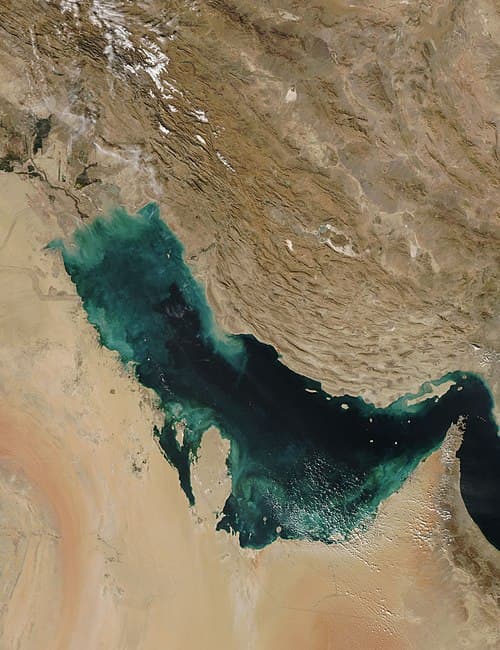
Management a Iran Threatens to Close the Strait of Hormuz Division Investment Goldman Strait of Hormuz: April 2019 Crude Oil Production Per Country and Export Flows Arabia ; (85%) (9.8) Others 15%) = A third of world’s LNG and a fifth of global oil production goes through the Strait of Hormuz. = “Tran relies on the Strait not only for its oil exports, but also for the imports of some needed food and medical products.” ! (1) Michael Ratner, “Iran’s Threats, the Strait of Hormuz, and Oil Markets: In Brief,” Congressional Research Service, August 6, 2018. 8 Source: Investment Strategy Group, Goldman Sachs Enterprise Risk Management, EIA, Bloomberg. HOUSE_OVERSIGHT_026952
Sponsored
Page 10 - HOUSE_OVERSIGHT_026953
Investment Gold man Management a Iran Set to Restart its Nuclear Program Baer lranian Enriched Uranium Stockpiles 10,000 - 5% Enriched — — 20% Enriched (Right) , 400 9,000 - | 5a 8,000 - 300 7,000 - 6,000 - ai 2 5,000 - 200 2 4,000 - “0 3,000 - 100 2,000 - 1,000 - ao 0 - -—- 7 , ; , SS = - = , 0 Sy 2 @ YH Hw DB HK OB GC KN &L gf £§ £§ SS SC SS KS KS SK = A key criterion in the development of the Joint Comprehensive Plan of Action (JCPOA) is the time Iran needs to produce enough weapon-grade uranium for a nuclear weapon, called breakout time. Iran agreed to refine uranium to no more than 3.7% enrichment and eliminated its stocks of weapons-grade 20%-enriched uranium. = On May 8", President Rouhani announced a series of steps to resume the production of nuclear centrifuges and the accumulation of nuclear material within 60 days. 9 HOUSE_OVERSIGHT_026953 Source: Investment Strategy Group, Arms Control Association, International Atomic Energy Agency, JCPOA, Bloomberg.
Page 11 - HOUSE_OVERSIGHT_026954
Investment oldman , goa anagement Iranian Economy Hit Hard by Sanctions Division 1. Iran Annualized Real GDP Growth and Inflation’ 2. Iranian Rial (Mid) to USD — Unofficial Market Rate 200,000 15 = =mReal GDP Growth CPI % YoY (Right) 60 51 180,000 - 10 - + | 40 460,000 _ IRR Weaker Sa Sa 140,000 - 5 - + 20 rs 120,000 - 3 oa ne} ¢ % 100,000 - 5/8/18 5 07 — 1 = 1 r r T +O > US announces 2 a PS JCPOA withdrawal < 80,000 - \ < 5 - + -20 60,000 - -6.0 77 40,000 - 10 r -40 20,000 - 15 - ~ -60 Nov-12 Nov-13 Nov-14 Nov-15 Nov-16 Nov-17 Nov-18 2012 2013 2014 2015 2016 2017 2018 2019E " The IMF forecasts that Iranian real GDP growth in 2019 will be the weakest since 2012 at -6%, even as annualized inflation is running at around 50%. The Iranian rial is trading near its all-time low against the US dollar, according to unofficial market rates. Since the end of 2017 the rial has depreciated by roughly -70%, compared to a -45% peak devaluation for the Turkish lira in 2018. (1) 2019 inflation as of April 2019. 10 Source: Investment Strategy Group, IMF, Statistical Center of Iran, Haver, Bonbast, Bloomberg. HOUSE_OVERSIGHT_026954
Page 12 - HOUSE_OVERSIGHT_026955
Investment Management US Military Signals Readiness to Respond Division Abraham Lincoln Carrier Strike Group and Kearsarge Amphibious Ready Group — May 17, 2019 = The US deployed the USS Abraham Lincoln Carrier Strike Group and a bomber task force to the Middle East in early May in response to intelligence regarding Iranian military activity. 11 HOUSE_OVERSIGHT_026955 Source: Investment Strategy Group, navy.mil, New York Times.
Sponsored
Page 13 - HOUSE_OVERSIGHT_026956
Cost of US Wars Investment Management Division 1. Military Cost and Casualties of Recent US Conflicts 2. Gallup Poll: “Do you think the US is spending too little, about the right amount or too much on national defense and military purposes?” 60 | Casualties (Thousand)** —Toolittle ——About right Too much : Military Years of US Non-Mortal : Corte east ($bn)* Involvement CIEE Woundings i) og +)" Vietnam 821 17.4 58 153 212 Persian Gulf 113 0.6 0 0 1 £40 Iraq 822 8.8 4 32 36 3 Afghanistan 975 17.4 2 20 22 a Syria 54 4.7 0 0 0 & 3 fo} f20- T T 1 1 to 1 I SreCorsAagseebheereeg@esNAe@seeseegerrdereeceooa OMmMM~MDADDDAADABDAADHADOOOCS eooeocrtrrrr3rrr3r3rce AMAMAMDA AMADA MAAODAMoOOOOO0O0000G0 GCCOCOOOCOCCOCOOC CSO Terr TTT TT TTT TT NNNNNNNNNNNNNN NNN NNN = Total costs of the war on terror for the US (including wars in Iraq, Afghanistan, and Syria), are estimated to be $5.9 trillion. = Over 40% of Americans think the US is spending the right amount on national defense, the highest level in 15 years, but would there be appetite for yet another costly military incursion into the Middle East? *Costs of military operations only. Iraq & Afghanistan costs based on all overseas contingency operations as of 2018; all other estimates based on 2010 CRS report scaled by US CPI through 2018. **Deaths: Battle and other in the theater. Source: Investment Strategy Group, Congressional Research Service, "Costs of Major US Wars," June 29, 2010; Department of Defense Casualty Status; Department of Veterans Affairs; 12 Watson Institute at Brown University, Gallup, New York Times. HOUSE_OVERSIGHT_026956
Page 14 - HOUSE_OVERSIGHT_026957
Investment Gold man Management a Iranian Oil Production Has Plummeted Division Iranian Oil Production and Exports (Million Barrels/Day) a 4 —Preduction — — Exports (3-Month Moving Average) 4.5 - Jan-12 May-18 EU agrees to ban US Withdraws 4.0 - Iranian oil imports 38 en JCPOA Nov-18 US sanctions—» go into effect Jul-15 JCPOA Signed 39-Jul-12 —7 s Ban imposed 2.6 = 55 _ by US andallies wr» F ‘ 2.6 2 “* | goes into effect an Comme = 20 - : = oi 1 = = oO L - oy - | Latest: 0.5 “md 0.0 T T T T T T T T 2011 2012 2013 2014 2015 2016 2017 2018 2019 = Since the US withdrew from the JCPOA in May 2018: — Iranian oil production has fallen by 1.2 million b/d — Exports have fallen from 2.6 million b/d to 0.5 million b/d month-to-date in May (0.9 million b/d on a 3-month moving average) = Tran will continue to send a few hundred thousand b/d of oil exports despite harsh US secondary sanctions. 13 HOUSE_OVERSIGHT_026957 Source: Investment Strategy Group, Bloomberg, cFlow Data (Platts Global Crude).
Page 15 - HOUSE_OVERSIGHT_026958
Investment Goldman Management oH: Spare Oil Production Capacity Looks Adequate Dikisten 4. US Crude Oil Production 2. Spare Capacity from April 2019 Production Level to 2018 Highest Production Levels 140 | 2.5 5 YY US crude production (LHS) ; 13 1.3 = US crude production (RHS) 20 + - 12 1.20 | 15 | a 1.00 - 13 1.0 + 10 2 3 z 0.80 { Ro} 2 i | a = & 95 | 89 2 = ™% = = 060 | (Sep 2016) 8 0.40 | (0.5) | 7 0.2 0.20 | (1.0) + / 6 0.1 0.1 (1.5) J Lo5 0.00 T j ; j T Jan-13 Aug-13 Mar-14 Oct-14 May-15 Dec-15 Jul-16 Feb-17 Sep-17 Apr-18 Nov-18 lrag Kuwait Saudi UAE = US oil production growth has matched or exceeded global demand growth over the past year, providing ample supplies to the market. = In fact, OPEC had to cut production in late 2018 in order to reduce oversupply and arrest a fast decline in oil prices. =" OPEC production could be increased back to 2018 highs if the market faced a shortage. Doing so would add 1.7 million b/d from main Middle Eastern OPEC members — more than Iran’s current export levels of around 0.5 million b/d. Source: Investment Strategy Group, EIA, Bloomberg, OPEC. 1A HOUSE_OVERSIGHT_026958
Sponsored
Page 16 - HOUSE_OVERSIGHT_026959
Investment Gola man Risks of an Oil Shock Look Contained eee ivilon 1. OECD Inventories — Adjusted for Days of Demand 2. World Oil Demand and Oil Demand Intensity per Unit of Global GDP 69 | 40 5 —World Oil Demand = — Oil Intensity (RHS) r 1.00 2010-2014 range —Actual 2010-19 35 67.0 67 5 1 65 | 30 - 63 61 4 60.3 J 59 ‘ 5f 4 4 65.7 10 - N a Billion Barrels N oO a Barrels per $1,000 GDP Days of OECD demand 2010 2011 2012 2013 2014 2015 2016 2017 2018 2019 1965 1970 1975 1980 1985 1990 1995 2000 2005 2010 2015 0.00 " Global oil inventories look adequate, with OECD inventories still well above historical norms. " The US could release oil from its Strategic Petroleum Reserve if needed. = Oil consumption represents a much smaller share of the economy than in the late 1970s and early 1980s. 15 HOUSE_OVERSIGHT_026959 Source: Investment Strategy Group, IEA, World Bank, BP Statistical Review.
Page 17 - HOUSE_OVERSIGHT_026960
Investment Gold man Management sel Key Takeaways Division nal The immediate threat of military engagement between the US and Iran has eased but risk of escalation or miscalculation is high. US agenda (and the impact of Saudi Arabia and Israel) is unclear, with administration officials offering contradictory views. Iran is set to resume its nuclear program with the intent of gaining leverage for future negotiations which it previously relinquished as part of the JCPOA. There is further potential downside for Iranian oil production and exports, but ample OECD inventories, growing US production, and OPEC spare capacity would help contain any short-term oil price shock. We continue to recommend that clients stay invested at their full strategic asset allocation given today’s macroeconomic backdrop and low odds of a recession, but we remain vigilant about the risks to our outlook. 16 Source: Investment Strategy Group. HOUSE_OVERSIGHT_026960
Page 18 - HOUSE_OVERSIGHT_026961
achs Investment Management Division Disclosures HOUSE_OVERSIGHT_026961
Sponsored
Page 19 - HOUSE_OVERSIGHT_026962
Investment oldman Management Stel Important Information — Investment Risks Division Risks vary by the type of investment. For example, investments that involve futures, equity swaps, and other derivatives, as well as non-investment grade securities, give rise to substantial risk and are not available to or suitable for all investors. We have described some of the risks associated with certain investments below. Additional information regarding risks may be available in the materials provided in connection with specific investments. You should not enter into a transaction or make an investment unless you understand the terms of the transaction or investment and the nature and extent of the associated risks. You should also be satisfied that the investment is appropriate for you in light of your circumstances and financial condition. Any reference to a specific company or security is not intended to form the basis for an investment decision and are included solely to provide examples or provide additional context. This information should not be construed as research or investment advice and should not be relied upon in whole or in part in making an investment decision. Goldman Sachs, or persons involved in the preparation or issuance of these materials, may from time to time have long or short positions in, buy or sell (on a principal basis or otherwise), and act as market makers in, the securities or options, or serve as a director of any companies mentioned herein. Alternative Investments. Alternative investments may involve a substantial degree of risk, including the risk of total loss of an investor’s capital and the use of leverage, and therefore may not be appropriate for all investors. Private equity, private real estate, hedge funds and other alternative investments structured as private investment funds are subject to less regulation than other types of pooled vehicles and liquidity may be limited. Investors in private investment funds should review the Offering Memorandum, the Subscription Agreement and any other applicable disclosures for risks and potential conflicts of interest. Terms and conditions governing private investments are contained in the applicable offering documents, which also include information regarding the liquidity of such investments, which may be limited. Commodities. Commodity investments may be less liquid and more volatile than other investments. The risk of loss in trading commodities can be substantial due, but not limited to, volatile political, market and economic conditions. An investor’s returns may change radically at any time since commodities are subject, by nature, to abrupt changes in price. Commodity prices are volatile because they respond to many unpredictable factors including weather, labor strikes, inflation, foreign exchange rates, etc. In an individual account, because your position is leveraged, a small move against your position may result in a large loss. Losses may be larger than your initial deposit. Investors should carefully consider the inherent risk of such an investment in light of their experience, objectives, financial resources and other circumstances. No representation is made regarding the suitability of commodity investments. 18 HOUSE_OVERSIGHT_026962
Page 20 - HOUSE_OVERSIGHT_026963
Investment oldman Management Stel Important Information — Investment Risks Division Currencies. Currency exchange rates can be extremely volatile, particularly during times of political or economic uncertainty. There is a risk of loss when an investor as exposure to foreign currency or are in foreign currency traded investments. Derivatives. Investments that involve futures, equity swaps, and other derivatives give rise to substantial risk and are not available to or suitable for all investors. Emerging Markets and Growth Markets. Investing in the securities of issuers in emerging markets and growth markets involves certain considerations, including: political and economic conditions, the potential difficulty of repatriating funds or enforcing contractual or other legal rights, and the small size of the securities markets in such countries coupled with a low volume of trading, resulting in potential lack of liquidity and in price volatility. Equity Investments. Equity investments are subject to market risk, which means that the value of the securities may go up or down in respect to the prospects of individual companies, particular industry sectors and/or general economic conditions. The securities of small and mid-capitalization companies involve greater risks than those associated with larger, more established companies and may be subject to more abrupt or erratic price movements. Fixed Income. Investments in fixed income securities are subject to the risks associated with debt securities generally, including credit/default, liquidity and interest rate risk. Any guarantee on an investment grade bond of a given country applies only if held to maturity. Futures. Security futures involve a high degree of risk and are not suitable for all investors. The possibility exists that an investor could lose a substantial amount of money ina very short period of time because security futures are highly leveraged. The amount they could lose is potentially unlimited and can exceed the amount they originally deposited with your firm. Prior to buying a security future you must receive a copy of the Risk Disclosure Statement for Security Futures Contracts. Non-US Securities. Investing in non-US securities involves the risk of loss as a result of more or less non-US government regulation, less public information, less liquidity and greater volatility in the countries of domicile of the issuers of the securities and/ or the jurisdiction in which these securities are traded. In addition, investors in securities such as ADRs/ GDRs, whose values are influenced by foreign currencies, effectively assume currency risk. Options. Options involve risk and are not suitable for all investors. Options investors may lose the entire amount of their investment in a relatively short period of time. Before entering into any options transaction, be sure to read and understand the current Options Disclosure Document entitled, The Characteristics and Risks of Standardized Options. This booklet can be obtained at http://www. theocc.com/about/publications/character-risks.jsp. 19 HOUSE_OVERSIGHT_026963
Page 21 - HOUSE_OVERSIGHT_026964
Investment Gold man Management a Important Information — Investment Risks Division Tactical Tilts. Tactical tilts may involve a high degree of risk. No assurance can be made that profits will be achieved or that substantial losses will not be incurred. Prior to investing, investors must determine whether a particular tactical tilt is suitable for them. Forecasts. Economic and market forecasts presented herein reflect our (ISG’s) judgment as of the date of this material and are subject to change without notice. Any return expectations represent forecasts as of the date of this material and are based upon our capital market assumptions. Our (ISG’s) return expectations should not be taken as an indication or projection of returns of any given investment or strategy and all are subject to change. These forecasts are estimated, based on assumptions, and are subject to significant revision and may change materially as economic and market conditions change. Goldman Sachs has no obligation to provide updates or changes to these forecasts. If shown, case studies and examples are for illustrative purposes only. 20 HOUSE_OVERSIGHT_026964
Sponsored
Page 22 - HOUSE_OVERSIGHT_026965
Investment Gold man Management Important Information Division Thank you for reviewing this presentation. Please review the important information below. Our Relationship with Clients. Depending on our relationship with you, we may act as an advisor, a broker-dealer, or both. Our role and obligations vary depending on the capacity in which we act. Where we act as an advisor, our primary role is to give you advice, help you manage your investments or, where applicable, help you hire another advisor to do so. Where we act as a broker, our primary role is to execute trades for you based on your instructions and any advice we give you is incidental to our brokerage services. How we are compensated by you (and sometimes by issuers or managers of investments who compensate us based on what you buy) and how your Private Wealth Management (“PWM”) team is compensated may change over time and will vary depending on various factors including, but not limited to, whether you are classified as a professional or retail client, have an advisory or brokerage account, and on the investments made in your account. Please ask us questions to make sure you understand your rights and our obligations to you, the difference between advisory and brokerage accounts, and / or how we are compensated based on the capacity in which we act. We are part of a full-service, integrated investment banking, investment management, and brokerage firm. Other firm businesses may implement investment strategies that are different from the strategies used or recommended for your portfolio. Entities Providing Services. Investment advisory services may be provided by Goldman Sachs & Co. LLC (“GS&Co.”), an affiliate, or an external manager under the wrap program sponsored by GS&Co. Brokerage services are provided by GS&Co., member Financial Industry Regulatory Authority (“FINRA”) / Securities Investor Protection Corporation (“SIPC”). Brokerage services, banking services (including check-writing, debit cards, direct debit, direct deposit, electronic bill pay, overdraft protection and Bank to Bank Transfers via ACH), custody, margin loans and strategic wealth advisory services are provided by GS&Co. Financial counseling services are provided by The Ayco Company, L.P. Over-The-Counter (“OTC”) derivatives, foreign exchange forwards and related financing are offered by GS&Co. Trust services are provided by The Goldman Sachs Trust Company, N.A. or The Goldman Sachs Trust Company of Delaware. All of these affiliated entities are subsidiaries of The Goldman Sachs Group, Inc. (“Firm” or “GS”). Deposit products, mortgages, and bank loans are offered by Goldman Sachs Bank USA, member Federal Deposit Insurance Corporation (“FDIC”) and an Equal Housing Lender. EQUAL HOUSING OPPORTUNITY Investment Strategy Group (“ISG”). ISG is part of the Investment Management Division of GS and is focused on asset allocation strategy formation and market analysis for PWM. Any information that references ISG, including their model portfolios, represents the views of ISG, is not research and is not a product of Global Investment Research (“GIR”). If shown, ISG Model Portfolios are provided for illustrative purposes only. Your actual asset allocation may look significantly different based on your particular circumstances and risk tolerance. If a model performance calculation is provided, it assumes that (1) each asset class was owned in accordance with the recommended weight; (2) all tactical tilts were implemented at the time the recommendation was made; and (3) the portfolio was rebalanced every time a tactical tilt change was made and at the end of every quarter (unless a tactical tilt was made within a month of quarter-end). If model performance is shown, it is calculated using the daily returns (actual or interpolated) of indices that ISG believes are representative of the asset classes included in the model. Results shown reflect the total return but generally do not take into account any investment management fees, commissions or other transaction expenses, which would reduce returns. The results shown reflect the reinvestment of dividends and other earnings. All returns are pre-tax and are not adjusted for inflation. Additional information about the model portfolio performance calculation, including asset class benchmarks used for modeling performance and a history of tactical tilts, is available upon request. Investment Risks and Information. Risks vary by the type of investment. Additional information regarding investments and risks may be available in applicable product materials. Before transacting or investing, you should review and understand the terms of a transaction/investment and the nature and extent of the associated risks, and you should be satisfied the investment is appropriate for you in light of your individual circumstances and financial condition. * Alternative Investments. Alternative investments may involve a substantial degree of risk, including the risk of total loss of an investor’s capital and the use of leverage, and may not be appropriate for all investors. Private equity, private real estate, hedge funds, and other alternative investments structured as private investment funds are subject to less regulation than other types of pooled vehicles and liquidity may be limited. You should review the Offering Memorandum, the Subscription Agreement, and any other applicable offering documents for risks, potential conflicts of interest, terms and conditions and other disclosures. * Commodities. Commodity investments may be less liquid and more volatile than other investments. The risk of loss in trading commodities can be substantial due, but not limited, to volatile political, market and economic conditions. An investor's returns may change radically at any time since commodities are subject to abrupt changes in price. Commodity prices are volatile because they respond to many unpredictable factors including weather, labor strikes, inflation, foreign exchange rates, etc. In a single account, because your position is leveraged, a small move against your position may result in a large loss. Losses may be larger than your initial deposit. No representation is made regarding the suitability of commodity investments. * Currencies. Currency exchange rates can be extremely volatile, particularly during times of political or economic uncertainty. There is a risk of loss when an investor has exposure to foreign currency or holds foreign currency traded investments. * Over-the-Counter (“OTC”) Derivatives You should carefully review the Master Agreement, including any related schedules, credit support documents, addenda and exhibits. You may be requested to post margin or collateral at levels consistent with the internal policies of GS to support written OTC derivatives. Prior to entering into an OTC derivative transaction you should be aware of the below general risks associated with OTC derivative transactions: - Liquidity Risk: There is no public market for OTC derivative transactions and, therefore, it may be difficult or impossible to liquidate an existing position on favorable terms. 21 HOUSE_OVERSIGHT_026965
Page 23 - HOUSE_OVERSIGHT_026966
Investment Gold man Management Important Information Division - Risk of Inability to Assign: OTC derivative transactions entered into with one or more affiliates of Goldman Sachs cannot be assigned or otherwise transferred without Goldman Sachs’ prior written consent and, therefore, it may be impossible for you to transfer any OTC derivative transaction to a third party. - Counterparty Credit Risk: Because Goldman Sachs may be obligated to make substantial payments to you as a condition of an OTC derivative transaction, you must evaluate the credit risk of doing business with Goldman Sachs. Depending on the type of transaction, your counterparty may be Goldman Sachs & Co. LLC, a registered U.S. broker-dealer, or other affiliate of The Goldman Sachs Group, Inc. As a broker dealer regulated by the Securities and Exchange Commission (“SEC”), Goldman Sachs & Co. LLC is subject to net capital, financial responsibility rules, and other regulatory requirements designed to protect customer assets. Other subsidiaries of The Goldman Sachs Group, Inc. may not be registered as a U.S. broker dealer and therefore are not be subject to similar SEC regulation. - Pricing and Valuation: The price of each OTC derivative transaction is individually negotiated between Goldman Sachs and each counterparty and Goldman Sachs does not represent or warrant that the prices for which it offers OTC derivative transactions are the best prices available. You may therefore have trouble establishing whether the price you have been offered for a particular OTC derivative transaction is fair. OTC derivatives may trade at a value that is different from the level inferred from interest rates, dividends and the underlyer. The difference may be due to factors including, but not limited to, expectations of future levels of interest rates and dividends, and the volatility of the underlyer prior to maturity. The market price of the OTC derivative transaction may be influenced by many unpredictable factors, including economic conditions, the creditworthiness of Goldman Sachs, the value of any underlyers, and certain actions taken by Goldman Sachs. - Early Termination Payments: The provisions of an OTC derivative transaction may allow for early termination and, in such cases, either you or Goldman Sachs may be required to make a potentially significant termination payment depending upon whether the OTC derivative transaction is in-the-money at the time of termination. - Indexes: Goldman Sachs does not warrant, and takes no responsibility for, the structure, method of computation or publication of any currency exchange rates, interest rates, indexes of such rates, or credit, equity or other indexes, unless Goldman Sachs specifically advises you otherwise. « Emerging Markets and Growth Markets. Emerging markets and growth markets investments involve certain considerations, including political and economic conditions, the potential difficulty of repatriating funds or enforcing contractual or other legal rights, and the small size of the securities markets in such countries coupled with a low volume of trading, resulting in potential lack of liquidity and price volatility. « Equity Investments. Equity investments are subject to market risk. The value of the securities may go up or down in respect to the prospects of individual companies, particular industry sectors and/or general economic conditions. The securities of small and mid-capitalization companies involve greater risks than those associated with larger, more established companies and may be subject to more abrupt or erratic price movements. « Fixed Income. Fixed income securities investments are subject to the risks associated with debt securities generally, including credit/default, liquidity and interest rate risk. Any guarantee on an investment grade bond of a given country applies only if held to maturity. ¢ Master Limited Partnerships ("MLPs"). MLPs may be generally less liquid than other publicly traded securities and as such can be more volatile and involve higher risk. MLPs may also involve substantially different tax treatment than other equity-type investments, and such tax treatment could be disadvantageous to certain types of retirement accounts or charitable entities. ¢ Money Market Funds. Money market fund investments are not insured or guaranteed by the Federal Deposit Insurance Corporation or any other government agency. Although money market funds seek to preserve the value of your investment at $1.00 per share, it is possible to lose money. * Non-US Securities. Non-US securities investments involve the risk of loss as a result of more or less non-US government regulation, less public information, less liquidity, and greater volatility in the countries of domicile of the issuers of the securities and/or the jurisdiction in which these securities are traded. In addition, investors in securities such as ADRs/GDRs, whose values are influenced by foreign currencies, effectively assume currency risk. * Options. Options involve risk and are not suitable for all investors. The purchase of options can result in the loss of an entire investment and the risk of uncovered options is potentially unlimited. You must read and understand the current Options Disclosure Document before entering into any options transactions. The booklet entitled Characteristics and Risk of Standardized Options can be obtained from your PWM team or at http://Awww.theocc.com/about/publications/character-risks.jsp. A secondary market may not be available for all options. Transaction costs may be significant in option strategies that require multiple purchases and sales of options, such as spreads. Supporting documentation for any comparisons, recommendations, statistics, technical data, or other information will be supplied upon request. ¢ Real Estate. Real estate investments involve additional risks not typically associated with other asset classes, such as sensitivities to temporary or permanent reductions in property values for the geographic region(s) represented. Real estate investments (both through public and private markets) are also subject to changes in broader macroeconomic conditions, such as interest rates. 22 HOUSE_OVERSIGHT_026966
Page 24 - HOUSE_OVERSIGHT_026967
Investment Gold man Management Important Information Division ¢ Structured Investments. Structured investments are complex, involve risk and are not suitable for all investors. Investors in structured investments assume the credit risk of the issuer or guarantor. If the issuer or guarantor defaults, you may lose your entire investment, even if you hold the product to maturity. Structured investments often perform differently from the asset(s) they reference. Credit ratings may pertain to the credit rating of the issuer and are not indicative of the market risk associated with the structured investment or the reference asset. Each structured investment is different, and for each investment you should consider 1) the possibility that at expiration you may be forced to own the reference asset at a depressed price; 2) limits on the ability to share in upside appreciation; 3) the potential for increased losses if the reference asset declines; and 4) potential inability to sell given the lack of a public trading market. * Tactical Tilts. Tactical tilts may involve a high degree of risk. No assurance can be made that profits will be achieved or that substantial losses will not be incurred. Prior to investing, you must determine whether a particular tactical tilt is suitable for them. * U.S. Registered Mutual Funds / Exchange Traded Funds (“ETFs”) or Exchange Traded Notes (“ETNs”). You should consider a fund’s investment objectives, risks, charges and expenses, and read the summary prospectus and/or the Prospectus (which may be obtained from your PWM Team) carefully before investing, as they contain this and other relevant information. You may obtain documents for ETFs or ETNs for free by 1) visiting EDGAR on the SEC website at http:/Avww.sec.gov/; 2) contacting your PWM team; or 3) calling toll-free at 1-866-471-2526. Unlike traditional mutual funds, ETFs can trade at a discount or premium to the net asset value and are not directly redeemable by the fund. Leveraged or inverse ETFs, ETNs, or commodities futures- linked ETFs may experience greater price movements than traditional ETFs and may not be appropriate for all investors. Most leveraged and inverse ETFs or ETNs seek to deliver multiples of the performance (or the inverse of the performance) of the underlying index or benchmark on a daily basis. Their performance over a longer period of time can vary significantly from the stated daily performance objectives or the underlying benchmark or index due to the effects of compounding. Performance differences may be magnified in a volatile market. ETFs are redeemable only in Creation Unit size aggregations and may not be individually redeemed; are redeemable only through Authorized Participants; and are redeemable on an "in-kind" basis. The public trading price of a redeemable lot of the ETFs may be different from its net asset value. These ETFs can trade at a discount or premium to the net asset value. There is always a fundamental risk of declining stock prices, which can cause losses to your investment. Commodities futures-linked ETFs may perform differently than the spot price for the commodity itself, including due to the entering into and liquidating of futures or swap contracts on a continuous basis to maintain exposure (i.e., “rolling”) and disparities between near term future prices and long term future prices for the underlying commodity. ETFs and ETNs linked to commodity futures do not offer direct exposure to the commodity’s spot price and may perform differently than the spot price for the commodity itself. Performance differential can be magnified if a specific condition persists in the market for a commodity that creates a disparity between near-term future prices and long-term future prices and may lead to unexpected performance results. Other factors, such as roll yield, transaction costs, management fees, and taxes may cause deviation in performance between the spot price of a commodity and commodity futures. You should not assume that a commodity-futures linked ETF will provide an effective hedge against other risks in your portfolio. Security-Specific References. Any reference to a specific company or security is not intended to form the basis for an investment decision and is included solely to provide examples or provide additional context. This information should not be construed as research or investment advice and should not be relied upon in whole or in part in making an investment decision. GS, or persons involved in the preparation or issuance of these materials, may from time to time have long or short positions in, buy or sell (on a principal basis or otherwise), and act as market makers in the securities or options, or serve as a director of any companies mentioned herein. In addition, GS may have served as manager or co-manager of a public offering of securities by any such company within the past 12 months. Further information on any securities mentioned in this material may be obtained upon request. Assets Held at a Third Party Custodian. Any information (including valuation) regarding holdings and activity in accounts held by third party custodians is for your convenience and has been supplied by third parties or by you. GS assumes no responsibility for the accuracy of such information. Information may vary from that reflected by your custodian and is as of the date of the materials provided to us. As an accommodation to you, we may also reflect certain investments unrelated to services provided by GS, for which GS does not perform any due diligence, verify the accuracy of information, or provide advice. Unless otherwise agreed in writing, we have not assessed whether those investments fit within your investment objective and the asset classification shown may not be accurate. Off-Platform Investments. To the extent you ask us for guidance in connection with investment opportunities not offered by GS, such as investments in private funds, private debt or equity, real estate or other opportunities you source away from us, any such guidance, views, or other information we may provide is on an accommodation basis only and we will not be acting as your advisor. We assume no obligation to determine whether the opportunity is suitable for you in connection with such investment decisions and will not assume any liability for such investment decisions. Please review our Form ADV for information on conflicts of interest we may have in connection with any such requests. ISG/GIR Forecasts. Economic and market forecasts presented (“forecasts”) reflect either ISG’s or GIR’s views and are subject to change without notice. Forecasts do not take into account specific investment objectives, restrictions, tax and financial situation or other needs of any specific client. Forecasts are subject to high levels of uncertainty that may affect actual performance and should be viewed as merely representative of a broad range of possible outcomes. Forecasts and any return expectations are as of the date of this material, and should not be taken as an indication or projection of returns of any given investment or strategy. Forecasts are estimated, based on capital market assumptions, and are subject to significant revision and may change materially as economic and market conditions change. Any case studies and examples are for illustrative purposes only. If applicable, a copy of the GIR Report used for GIR forecasts is available upon request. Forecasts do not reflect advisory fees, transaction costs, and other expenses a client would have paid, which would reduce return. 73 Client Specific Markets. Investments held in your name with a subcustodian in the local market where traded in order to comply with local law will be indicated on your statements. HOUSE_OVERSIGHT_026967
Sponsored
Page 25 - HOUSE_OVERSIGHT_026968
Investment Gold man Management Important Information Division Performance / Estimated Income / Estimated Cash Flow. Past performance is not a guide of future results and may include investments no longer owned in current or closed accounts. Current performance may be lower or higher than the performance data quoted. To request the most current or historical performance data, or asset classification schema information, please contact your PWM team at the number provided on your monthly statement or toll-free in the U.S. at 1-800-323-5678. Performance reports, where shown, generally present the relevant time weighted performance, which is a combination of daily returns compounded over a specified time period with the removal of the deposit and withdrawal impacts, and may show internal rate of return calculations where requested. Aggregate performance may not equal the sum of returns at an investment level. Performance for advisory accounts is currently calculated net of any management fees and might include investments for which actual market prices are not currently available, and does not include private equity positions. Performance for alternative investments is calculated using the value of the last available partnership capital statement or NAV. If included, estimated income figures and estimated private equity future cash flows are estimates of future activity, and actual results may vary substantially. GS&Co. has adjusted performance calculations for certain asset classes or strategies and may do so in the future. Performance of net cash (i.e., cash less margin debit) is generally included in the total performance calculation but not displayed separately. Option performance is included in the performance of the asset class of the underlier. Margin loans are generally excluded from advisory performance but included in brokerage performance calculations. Mutual fund and ETF investment returns and the principal value of your investment will fluctuate. As a result, your shares when redeemed may be worth more or less than their original cost. The performance data for ETFs does not reflect a deduction for commissions that would reduce the displayed performance. You are not subject to a sales charge for mutual funds purchased through PWM. If a sales charge were applicable, the sales charge would reduce the mutual fund’s performance. Information on our asset classification schema is available upon request. Generally, total returns are pre-tax and are calculated using daily time-weighted returns in which cash and securities deposits are attributed to the beginning of the day and cash and securities withdrawals are attributed to the end of the day. Indices / Benchmarks. Any references to indices, benchmarks, or other measure of relative market performance over a specified period of time are provided for your information only and is not indicative of future results. In addition to the benchmark assigned to a specific investment strategy, other benchmarks (“Comparative Benchmarks”) may be displayed, including ones displayed at your request. Managers may not review the performance of your account against the performance of Comparative Benchmarks. There is no guarantee that performance will equal or exceed any benchmark displayed. Where a benchmark for a strategy has changed, the historical benchmark(s) are available upon request. Inception to date (“ITD”) returns and benchmark / reference portfolio returns may reflect different periods. ITD returns for accounts or asset classes only reflect performance during periods in which your account(s) held assets and / or were invested in the asset class. The benchmark or reference portfolio returns shown reflect the benchmark / portfolio performance from the date of inception of your account or your initial investment in the asset class. If displayed, estimated income figures are estimates of future activity obtained from third party sources. Indices are unmanaged. The figures for the index reflect the reinvestment of all income or dividends, as applicable, but do not reflect the deduction of any fees or expenses which would reduce returns. Investors cannot invest directly in indices. Where appropriate, relevant index trademarks or index information has been licensed or sub-licensed for use. Inclusion of index information is not intended to imply that the relevant index or its affiliated entities sponsor, endorse, sell, or promote the referenced securities, or that they Period Gross Return Net Return _ Differential make any representation or warranty regarding either the advisability of investing in securities (generally or specifically) or regarding the | 0, Q, G, ability of the index to track market performance. Contact your PWM team for more information. | year al Pe “I oman The following table provides an example of the effect of management and incentive fees on returns. The magnitude of the difference 2 years 12.72% 9.43% 3.29% between gross-of fee and net-of-fee returns will depend on a variety of factors, and the example has been simplified. 0 years 81.94% 56.89% 25.05% Pricing and Valuations. Prices do not necessarily reflect realizable values and are based on information considered to be reliable but are not guaranteed for accuracy, currency, or as realizable values. Certain positions may be provided by third parties or may appear without a price if GS is unable to obtain a price and/or the security is not actively traded for a certain amount of time. Pricing sources and methods are available upon request and are subject to change. The stated price/value is as of the date indicated. It is not an offer to buy or sell and is not represent at that any transaction can be effected at this price. In the event of any discrepancy between the information contained herein and the information contained in your monthly account statements at Goldman Sachs or another institution, the latter shall govern. Please immediately notify your Private Wealth Advisor of any discrepancies. Fees and Charges. We have two pricing models for advisory relationships: a comprehensive fee model and a product based model. You should consider factors, including, but not limited to, your financial needs and circumstances, investment objectives, services provided under the model, your preferences, and the size of your account. Certain account fees and expenses may be more or less expensive depending on the model chosen. Actual fees may differ from estimated fees due to differences in strategies and amounts invested in particular strategies or overall. Charges applied to your accounts and transactions may include execution charges (including commissions, commission equivalents, mark-ups, mark-downs and dealer spreads), investment advisory fees, and custody fees. When we act as broker, we are generally compensated by an execution charge on a trade by trade basis. When we act as advisor, we generally earn a fee based on assets under management and may also be earning execution charges. More information about fees and charges is included in our account agreements, fee schedules and trade confirmations. If estimated fees are shown herein, we have included a description of our fee calculation methodology. 24 HOUSE_OVERSIGHT_026968
Page 26 - HOUSE_OVERSIGHT_026969
Investment Gold man Management Important Information Division Tax Information. GS does not provide legal, tax or accounting advice, unless explicitly agreed in writing between you and GS, and does not offer the sale of insurance products. You should obtain your own independent tax advice based on your particular circumstances. The information included in this presentation, including, if shown, in the Tax Summary section, does not constitute tax advice, has not been audited, should not be used for tax reporting, and is not a substitute for the applicable tax documents, including your Form 1099, Schedule K-1 for private investments, which we will provide to you annually, or your monthly GS account statement(s). The cost basis included in this presentation may differ from your cost basis for tax purposes. Information regarding your alternative investments and transactions for retirement accounts are not included in the Tax Summary section. Any statement contained in this presentation concerning U.S. tax matters is not intended or written to be used and cannot be used for the purpose of avoiding penalties imposed on the relevant taxpayer. Realized and unrealized gains and loss values do not include securities for which cost basis is unavailable. Losses reflected may be disallowed or deferred by the application of capital loss limitations, wash sale rules or other special tax rules. Asset Classification. We display holdings and provide market value and performance by asset class. A description of our asset classification schema is available upon request. When you have separately managed accounts, the value of all assets invested in the strategy is displayed in the asset class of the strategy. In those instances, the market value and performance displayed for each asset class may also include cash that is not separately reflected under Cash, Deposits and Money Market Funds. Other Services. Any provided financial planning services, including cash flow analyses based on information you provide, are a hypothetical illustration of mathematical principles and are not a prediction or projection of performance of an investment or investment strategy. Such services may not address every aspect of a client’s financial life; topics that were not discussed with you may still be relevant to your financial situation. In providing financial services, GS will rely on information provided by, or on behalf of, clients and is not responsible for the accuracy or completeness of any such information, nor for any consequences related to the use of any inaccurate or incomplete information. Where materials and/or analyses are provided to you, they are based on the assumptions stated therein, which are likely to vary substantially from the examples shown if they do not prove to be true. These examples are for illustrative purposes only and do not guarantee that any client will or is likely to achieve the results shown. Assumed growth rates are subject to high levels of uncertainty and do not represent actual trading and may not reflect material economic and market factors that may have an impact on actual performance. GS has no obligation to provide updates to these rates. Not a Municipal Advisor. Except in circumstances where GS expressly agrees otherwise, GS is not acting as a municipal advisor and the opinions or views contained in this presentation are not intended to be, and do not constitute, advice, including within the meaning of Section 15B of the Securities Exchange Act of 1934. Additional Information for Ayco Clients. References in this presentation to “PWM team” shall include your Ayco team. Ayco may provide tax advice, accounting advice, bill pay, and bookkeeping services to certain clients. Ayco does not provide brokerage services. As part of its financial counseling services, Ayco may provide you with certain reports where similar information contained herein is presented differently or in more or less detail. You should view each report independently and raise any questions with your Ayco team. No Distribution; No Offer or Solicitation. This material may not, without GS’ prior written consent, be (i) copied, photocopied or duplicated in any form, by any means, or (ii) distributed to any person that is not an employee, officer, director, or authorized agent of the recipient. This material is not an offer or solicitation with respect to the purchase or sale of any security in any jurisdiction in which such offer or solicitation is not authorized or to any person to whom it would be unlawful to make such offer or solicitation. @ 2019 Goldman Sachs. All rights reserved. 25 HOUSE_OVERSIGHT_026969
Entities Mentioned

Abraham Lincoln
PERSON • 2 mentions
President of the United States from 1861 to 1865 (1809–1865)
AM
Al Marzoqah
PERSON
Name reference in documents

Barack Obama
PERSON
President of the United States from 2009 to 2017
BI
Bilton
PERSON
Surname reference in documents
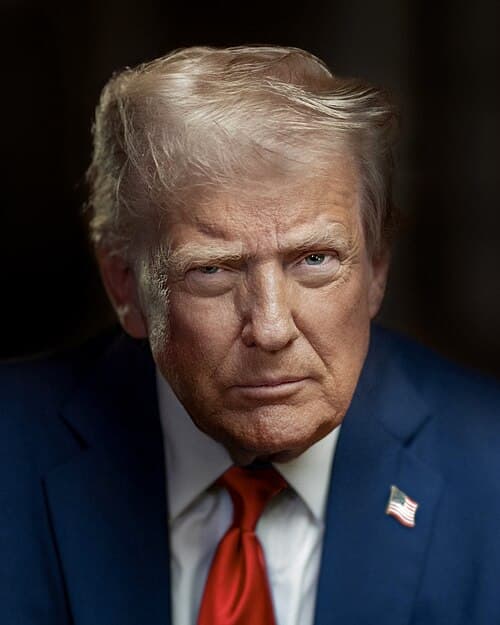
Donald Trump
PERSON • 2 mentions
President of the United States (2017–2021, 2025–present)
DB
Doug Band
PERSON
American presidential advisor
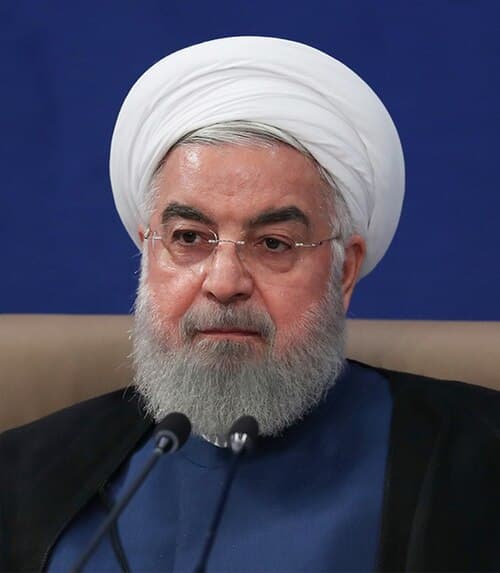
Hassan Rouhani
PERSON
President of Iran from 2013 to 2021

John Bolton
PERSON
American lawyer and diplomat (born 1948)

lan Bremmer
PERSON
Name reference in documents

Maureen Dowd
PERSON
American journalist

Michael Bloomberg
PERSON
American businessman and politician; 108th Mayor of New York City

Michael Reiter
PERSON
American security advisor and former Palm Beach, Florida, police chief

Mike Pompeo
PERSON
American politician (born 1963) and former United States Secretary of State (2018–2021)
MB
Mitchell Brater
PERSON
Name reference in documents

Patrick Shanahan
PERSON
Former United States Secretary of Defense

Pope Francis
PERSON
266th pope of the Catholic Church (2013–2025)

Shanahan
PERSON
Surname reference in documents
Abraham Lincoln Carrier Strike Group
ORGANIZATION
Organization referenced in documents
BP Statistical Review
ORGANIZATION
Organization referenced in documents

Congressional Research Service
ORGANIZATION
United States federal agency
Country
ORGANIZATION
Genre of American popular music
Department of Defense Casualty Status
ORGANIZATION
Organization referenced in documents
Entities Providing Services
ORGANIZATION
Organization referenced in documents
EQUAL HOUSING OPPORTUNITY Investment Strategy Group
ORGANIZATION
Organization referenced in documents

Eurasia Group
ORGANIZATION
Political risk consultancy

Gallup
ORGANIZATION
American analytics and advisory company
Global Investment Research
ORGANIZATION
Organization referenced in documents

Goldman Sachs
ORGANIZATION • 2 mentions
American investment bank
Goldman Sachs & Co. LLC
ORGANIZATION
Company
Goldman Sachs Bank USA
ORGANIZATION
Organization referenced in documents
Goldman Sachs Enterprise Risk Management
ORGANIZATION
Organization referenced in documents

Haver
ORGANIZATION
Organization referenced in documents

House of Representatives
ORGANIZATION
Lower house of the United States Congress

International Atomic Energy Agency
ORGANIZATION
International organization that seeks to promote the peaceful use of nuclear energy, and to inhibit its use for any military purpose, including nuclear weapons
Kearsarge Amphibious Ready Group
ORGANIZATION
Organization referenced in documents

MC2
ORGANIZATION
Organization referenced in documents
Platts Global Crude
ORGANIZATION
Organization referenced in documents
Securities Investor Protection Corporation
ORGANIZATION
Federally chartered corporation protecting investors in failed brokerages
Statistical Center of Iran
ORGANIZATION
Organization referenced in documents
the Arms Control Association
ORGANIZATION
Organization referenced in documents
The Ayco Company, L.P.
ORGANIZATION
Organization referenced in documents
the Department of Veterans Affairs
ORGANIZATION
Organization referenced in documents
The Goldman Sachs Group, Inc.
ORGANIZATION
Organization referenced in documents
The Goldman Sachs Trust Company, N.A.
ORGANIZATION
Organization referenced in documents
the Investment Management Division
ORGANIZATION
Organization referenced in documents
The Investment Strategy Group
ORGANIZATION • 2 mentions
Organization referenced in documents
the Iranian Islamic Revolutionary Guard Corps
ORGANIZATION
Organization referenced in documents
the Securities and Exchange Commission
ORGANIZATION
U.S. Securities and Exchange Commission
The Wall Street Journal
ORGANIZATION
American business-focused daily newspaper
U.S. Treasury
ORGANIZATION
United States Department of the Treasury, executive department of the federal government

Arabia
LOCATION
Country in West Asia
Baghdad
LOCATION
Capital city of Iraq
Bonbast
LOCATION
Location referenced in documents

Delaware
LOCATION
State of the United States of America
Green Zone
LOCATION
Location referenced in documents

Kuwait
LOCATION
Sovereign state in Western Asia
Najran
LOCATION
City in the southeast of Saudi Arabia
Saudi UAE
LOCATION
Location referenced in documents
the Persian Gulf
LOCATION
Body of water between Iran and Arabian Peninsula
the Strait of Hormuz
LOCATION
Strait of Hormuz, body of water in the Persian Gulf
Statistics
Pages:26
Entities:60
Avg. OCR:90.7%
Sponsored