HOUSE_OVERSIGHT_020447_sub_003 - HOUSE_OVERSIGHT_020659
Document Information
Bates Range
HOUSE_OVERSIGHT_020447_sub_003 - HOUSE_OVERSIGHT_020659
Pages
13
Source
House Oversight Committee
Original Filename
Chinese influence_american interests - Hoover - 11.29.18.pdf
Document Content
Page 201 - HOUSE_OVERSIGHT_020647
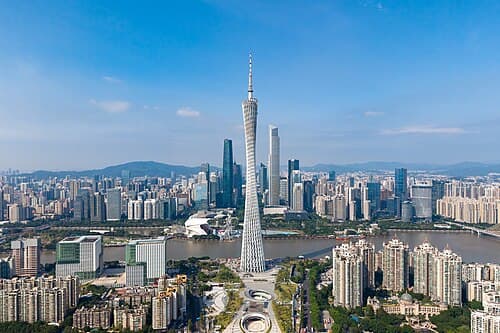
188 Chinese media social media presence (E) = English version; (C) = Chinese version Platform Official Organizations and Subscribers/Followers Quasi- official CCTV (CGTN) Xinhua People’s China Phoenix TV (fully Daily Daily controlled by Chinese government) Twitter CCTV: 532K (E+C) 11.8M(E) 4.54M(E) —1.8M (E) 7K (C) CGTN: 7.19M (E) 11.6M(C) 221K (C) Facebook CCTV: 48.04M (E); 46.92M (E) 43.15M(E) 35.17M(E) 14K(C) 3.44M (C) 171K (C) CGTN: 58.28M (E) CGTN America: 1.2M (E) YouTube 289K (C) 173K (E) 25K (E) 3K (E) 75K (C) Instagram 550K (E) 111K (E) 696K (E) 23.5K (E) N/A PRC-Funded and PRC-Controlled Media Outlets The Chinese Communist Party liaises with Chinese-language media mainly through the Overseas Chinese Affairs Office of the State Council (or Qiao Ban {*7). The Qiao Ban holds an annual conference on Chinese-language media called the World Chinese Media Forum. These media outlets are registered in the United States by US citizens or permanent residents, but they might actually be owned by Chinese state-run companies. The Overseas Chinese Affairs Office of the State Council of PRC (FRR #REBHAS) appears to directly control the Asian Culture and Media Group (HS: WicikheR SB) in America, which has three media subsidiaries: SinoVision (ZH #}X##), the China Press (Qiaobao or #4), and the Sino American Times (iN). Sky Link TV (KF) is another media outlet in the United States. Unlike SinoVision and Qiaobao, it is fully owned by Guangzhou Media American Co, Ltd. (2B Bi AiR a]), which in turn is owned by GZ Television Media (J N32 SRA al), a Chinese state-owned media outlet. SinoVision The group’s main TV outlet is SinoVision. It operates two twenty-four-hour channels (one Chinese and one English), and it is on the program lineups of cable systems Time Warner Cable-73, Verizon FiOS-26, Cablevision-73, and RCN-80, covering about thirty million people. Sinovision’s website (RE F384, http://www.sinovision.net) ranks Appendix 3 HOUSE_OVERSIGHT_020647
Page 202 - HOUSE_OVERSIGHT_020648
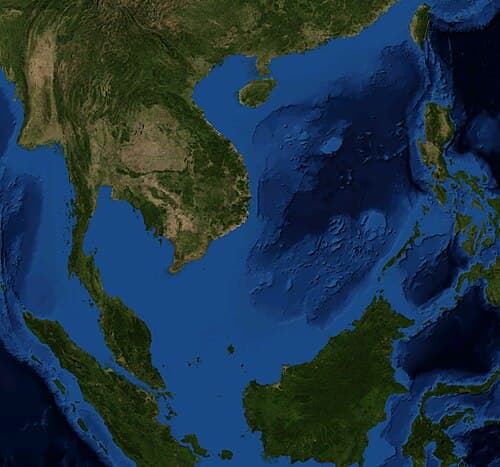
189 twelfth among all the Chinese websites in the United States. Its reporting hews closely to China’s official media: ¢ Example 1: On June 27, 2017, the US Department of State, in its annual Trafficking in Persons Report 2017, put China at Tier 3, the lowest class. In reporting this news, SinovisionNet simply reposted comments from the official website of the Ministry of Foreign Affairs of China attacking the human rights record of the United States.' e Example 2: In March 2017, the US State Department published its 2016 Human Rights Report. SinovisionNet published two stories on this topic. One reported the reaction to the story by the Ministry of Foreign Affairs. The other story came from Xinhua, which was highly critical of the US human rights situation. SinovisionNet also published two reports by the Information Office of the State Council of China on America’s human rights record. It did not publish State Department’s human rights report.’ e Example 3: On the tensions in the South China Sea, almost all the stories posted on SinovisionNet are from official Chinese media outlets and websites. They are naturally critical of US actions in that area.? Qiaobao and the Sino American Times Qiaobao, or the China Press (#%, http://www.uschinapress.com), is the flagship pro-PRC newspaper published in the United States. Its website ranks forty-first among all the Chinese websites in the United States. Qiaobao was established in 1990. It is headquartered in New York City with branches in twelve major metropolitan areas of the United States. The Sino American Times (HN) is a free paper and not a major media presence in the United States. Independent Media Over the course of the last decade, most of the independent Chinese-language media outlets in the United States have been taken over by businessmen sympathetic to the PRC. e Wenxuecheng (34%, wenxuecheng.com) is the most popular Chinese-language website in the United States. In 2003, it was purchased by a Taiwanese American Appendix3 HOUSE_OVERSIGHT_020648
Page 203 - HOUSE_OVERSIGHT_020649
190 businessman with business interests in China. There is an unsubstantiated rumor that the investment was subsidized by $1 million from the Ministry of Propaganda. e Duowei is another online source that was for years an independent Chinese- language media. It was purchased in 2009 by a pro-PRC Hong Kong businessman. ¢ Mingjing, or Mirror Media, a Chinese-language web presence based in Canada, was once considered independent of Beijing’s control but has modified its reporting in recent years. ¢ Backchina.com, (738, ranked as the fifth most popular Chinese website in the United States), was once a staunch critic of China like Duowei. But in 2017 its editors attended the ninth World Chinese Media Forum in China and its reporting became far more positive about the PRC. e Sing Tao Newspaper Group was established in Hong Kong in 1938. In 2001, it was purchased by a pro-Beijing businessman. e The World Journal (#53848) was for years the premier Chinese-language paper in the United States. It, too, has softened its stance on the PRC in recent years. e¢ Ming Pao served the Hong Kong-immigrant community. It is another formerly independent newspaper that has fallen under Beijing’s control. e Boxun is a Chinese-language news site whose servers are located in North Carolina. It was founded by an immigrant from China. Its news is highly unreliable. ¢ The Epoch Times (2270), the Hope Radio, and New Tang Dynasty TV, remain independent of PRC control. They are either owned or operated by adherents to the Falun Gong sect, which is banned in China. Their reporting on China is uneven. ¢ Vision Times (secretchina.com) was founded in 2001 as a website, secretchina .com, and began publishing a free weekly newspaper in 2005. Appendix 3 HOUSE_OVERSIGHT_020649
Sponsored
Page 204 - HOUSE_OVERSIGHT_020650
191 NOTES 1 “2RSRAaS PEAR me SR ABE.” Sinovision. June 27, 2017. news.sinovision.net/politics /201706/00411546.htm. 2 “PREM At (2016 FS EM AMC.” Sinovision. March 9, 2017. news.sinovision.net/politics/201703 /00401996.htm; “PE AMER ARRE LARS iA.” Sinovision. March 6, 2017. news.sinovision.net /politics/201703/00401682.htm. 3 Tt PSH PRAM MiRS.” Sinovision. February 19, 2018. news.sinovision.net /politics/201802/00431582. htm; “WFR SAE? SBME ERR SST Bl Mi.” Sinovision. February 13, 2018. news.sinovision.net/politics/201802/00431309.htm. Appendix3 HOUSE_OVERSIGHT_020650
Page 205 - HOUSE_OVERSIGHT_020651
192 Appendix 3 HOUSE_OVERSIGHT_020651
Page 206 - HOUSE_OVERSIGHT_020652
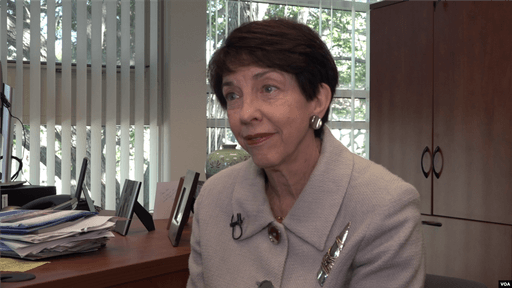
Dissenting Opinion SUSAN SHIRK Although I have no problem with the factual research that has gone into specific sections of the report, I respectfully dissent from what I see as the report’s overall inflated assessment of the current threat of Chinese influence seeking on the United States. The report discusses a very broad range of Chinese activities, only some of which constitute coercive, covert, or corrupt interference in American society and none of which actually undermines our democratic political institutions. Not distinguishing the legitimate from the illegitimate activities detracts from the credibility of the report. The cumulative effect of this expansive inventory that blurs together legitimate with illegitimate activities is to overstate the threat that China today poses to the American way of life. Especially during this moment in American political history, overstating the threat of subversion from China risks causing overreactions reminiscent of the Cold War with the Soviet Union, including an anti-Chinese version of the Red Scare that would put all ethnic Chinese under a cloud of suspicion. Right now, I believe the harm we could cause our society by our own overreactions actually is greater than that caused by Chinese influence seeking. That is why I feel I must dissent from the overall threat assessment of the report. HOUSE_OVERSIGHT_020652
Sponsored
Page 207 - HOUSE_OVERSIGHT_020653
194 Dissenting Opinion HOUSE_OVERSIGHT_020653
Page 208 - HOUSE_OVERSIGHT_020654
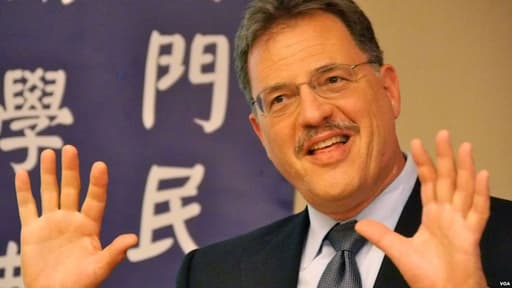
Afterword ORVILLE SCHELL AND LARRY DIAMOND What makes this report timely and important is China’s increasingly forward and aggressive posture on the global stage. Once largely a form of economic competition, China’s recent turn to military and political rivalry with the United States has changed the whole equation of the bilateral relationship. If the United States is to fare well in this increasingly adversarial competition, Americans must have a far better sense than they now do about both the nature of the system and values that underlay the People’s Republic of China and the challenges Beijing’s ambitious agenda of multi-faceted outreach is beginning to pose for our country—especially our media, universities, think tanks, and other civil society institutions that make our society so unique, vibrant, and strong. However, at the same time that we fortify ourselves against harmful outside interference, we must also be mindful to do no harm. In particular, we must guard against having this report used unfairly to cast aspersions on Chinese, whether Chinese American immigrants who have become (or are becoming) United States citizens, Chinese students, Chinese businesspeople, or other kinds of Chinese visitors, whose contributions to America’s progress over the past century have been enormous. Just because the Chinese Communist Party presumes that all ethnic Chinese (wherever they may reside) still owe some measure of loyalty “to the Chinese motherland,” zuguo (44), does not mean that they are collectively in possession of compromised loyalty to their adopted home or place of study. Our Working Group’s findings do suggest that the leadership of the PRC has stepped up a new and well funded campaign of influence seeking in the United States. However, this should not be viewed as an invitation to a McCarthy era- like reaction against Chinese in America. Rather, it is a summons to greater awareness of the challenges our country faces and greater vigilance in defending our institutions. In helping to convene this Working Group on Chinese influence seeking in the United States (and elsewhere in the world), the intention of the Task Force on US-China relations has been to limit the growing PRC challenge to American institutions and values, which is being played according to rules that are increasingly lacking in reciprocity. Developing strategies to counteract and protect our society when influence seeking becomes interference is the charge of this report, and perhaps the most effective defense is to strengthen our own democratic values and institutions. But at the same time we would be naive not to want to become more familiar with the full dimensions of Beijing’s overseas ambitions, the state organs, and the resources now dedicated to “overseas propaganda,” HOUSE_OVERSIGHT_020654
Page 209 - HOUSE_OVERSIGHT_020655
196 waixuan (48), and the less than transparent manner in which Chinese influence seeking is often carried out. We reiterate: it is absolutely crucial that whatever measures are taken to counteract harmful forms of Chinese influence seeking not end up demonizing any group of Americans, or even visitors to America, in ways that are unfair or reckless. Afterword HOUSE_OVERSIGHT_020655
Sponsored
Page 210 - HOUSE_OVERSIGHT_020656
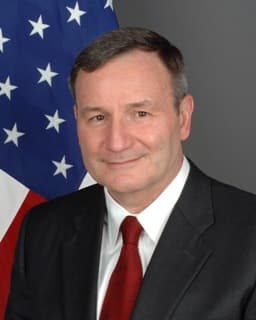
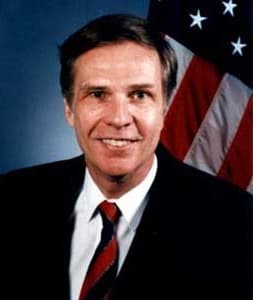
About the Participants Robert Daly is Director of the Kissinger Institute on China and the United States at the Woodrow Wilson International Center for Scholars. Larry Diamond is Senior Fellow at the Hoover Institution and at the Freeman Spogli Institute for International Studies at Stanford University. Elizabeth Economy is the C.V. Starr Senior Fellow and Director for Asia Studies at the Council on Foreign Relations. Gen. Karl Eikenberry (Ret.) is the Oksenberg-Rohlen Fellow, Director of the US-Asia Security Initiative and faculty member at Stanford University’s Shorenstein Asia-Pacific Research Center. Donald Emmerson is Director of the Southeast Asia Program and Senior Fellow Emeritus at the Freeman Spogli Institute for International Studies, Stanford University. Francis Fukuyama is the Mosbacher Director of the Center on Democracy, Development, and the Rule of Law, and Olivier Nomellini Senior Fellow at the Freeman Spogli Institute for International Studies, Stanford University. Bonnie Glaser is Senior Adviser for Asia and Director of the China Power Project at the Center for Strategic and International Studies. Kyle Hutzler is an MBA candidate at the Stanford Graduate School of Business. Markos Kounalakis is a foreign affairs columnist for the McClatchy newspapers and Visiting Fellow at the Hoover Institution. Winston Lord is a former US Ambassador to China and former Assistant Secretary of State for East Asian and Pacific Affairs. Evan Medeiros is the Penner Family Chair in Asian Studies at the Georgetown University Walsh School of Foreign Service. James Mulvenon is General Manager at SOS International. HOUSE_OVERSIGHT_020656
Page 211 - HOUSE_OVERSIGHT_020657
198 Andrew J. Nathan is the Class of 1919 Professor of Political Science at Columbia University. Minxin Pei is the Tom and Margot Pritzker ’72 Professor of Government and George R. Roberts Fellow at Claremont McKenna College. Jeffrey Phillips is the Policy Director at The Annenberg Foundation Trust at Sunnylands. John Pomfret is a Washington Post journalist and author. Orville Schell is the Arthur Ross Director of the Center on US-China Relations at Asia Society. David Shambaugh is Gaston Sigur Professor of Asian Studies, Political Science & International Affairs and Director of the China Policy Program at the Elliott School of International Affairs, George Washington University. Susan Shirk is Research Professor and Chair of the 21st Century China Center at the University of California San Diego’s School of Global Policy & Strategy. Robert Sutter is Professor of Practice of International Affairs at the George Washington University’s Elliott School of International Affairs. Glenn Tiffert is a Visiting Fellow at the Hoover Institution. Ezra Vogel is the Henry Ford II Professor of the Social Sciences Emeritus at Harvard University. Christopher Walker is Vice President for Studies and Analysis at the National Endowment for Democracy. About the Participants HOUSE_OVERSIGHT_020657
Page 212 - HOUSE_OVERSIGHT_020658
199 International Associates Anne-Marie Brady is Professor at the University of Canterbury and a Global Fellow at the Woodrow Wilson Center in Washington. Timothy Cheek is Director of the Institute of Asian Research, Louis Cha Chair in Chinese Research, and Professor of History at the University of British Columbia. John Fitzgerald is an Emeritus Professor in the Center for Social Impact at Swinburne University of Technology. John Garnaut is a political risk consultant to the Australian government and private sector and was Senior Advisor to former Prime Minister Malcolm Turnbull. Timothy Garton Ash is a Senior Fellow at the Hoover Institution and Professor of European Studies at the University of Oxford. Francois Godement is the director of the European Council on Foreign Relations’ Asia and China Program. Bilahari Kausikan is a former Permanent Secretary of the Singapore Ministry of Foreign Affairs. Richard McGregor is a Senior Fellow at the Lowy Institute and journalist. Eva Pils is a Professor of Law and Director of Doctoral Studies at the Dickson Poon School of Law, King’s College London. Volker Stanzel is Vice President of the German Council on Foreign Relations and former German Ambassador to China and Japan. About the Participants HOUSE_OVERSIGHT_020658
Sponsored
Page 213 - HOUSE_OVERSIGHT_020659
200 About the Participants HOUSE_OVERSIGHT_020659
Entities Mentioned

Andrew J. Nathan
PERSON
Name reference in documents
AR
Arthur Ross
PERSON
American philanthropist

Bilahari Kausikan
PERSON
Name reference in documents
BG
Bonnie Glaser
PERSON
Name reference in documents
CW
Christopher Walker
PERSON
Gibraltarian triathlete and cyclist
David Shambaugh
PERSON
Name reference in documents
DE
Donald Emmerson
PERSON
Name reference in documents
Donald Trump
PERSON
President of the United States (2017–2021, 2025–present)

Duowei
PERSON
Researcher

Eva Pils
PERSON
Law scholar and sinologist

Evan Medeiros
PERSON
Name reference in documents

Ezra Vogel
PERSON
Name reference in documents
Francis Fukuyama
PERSON
American political scientist, political economist, and author
FG
Francois Godement
PERSON
Name reference in documents

Gaston Sigur
PERSON
Name reference in documents
GT
Glenn Tiffert
PERSON
Name reference in documents
Henry Ford
PERSON
American business magnate (1863–1947)
Henry Kissinger
PERSON
American politician and diplomat (1923–2023)
James Mulvenon
PERSON
Name reference in documents
Jeffrey Epstein
PERSON
American sex offender and financier (1953–2019)

Jeffrey Phillips
PERSON
Name reference in documents
John Fitzgerald
PERSON
Name reference in documents
John Garnaut
PERSON
Name reference in documents
JP
John Pomfret
PERSON
American journalist
Karl Eikenberry
PERSON
Person referenced in documents
Ken Starr
PERSON
American judge and educational administrator (1946–2022)
Kyle Hutzler
PERSON
Name reference in documents
Malcolm Turnbull
PERSON
Person referenced in documents
MP
Margot Pritzker
PERSON
American board member, President and Founder of WomenOnCall
MB
Marie Brady
PERSON
Name reference in documents
Markos Kounalakis
PERSON
American journalist and Second Gentleman of California
MC
McClatchy
PERSON
Surname reference in Epstein-related documents

Minxin Pei
PERSON
Name reference in documents
Mosbacher
PERSON
Name reference in documents
ON
Olivier Nomellini
PERSON
Name reference in documents
Orville Schell
PERSON
Name reference in documents

Prince Andrew
PERSON
Third child of Queen Elizabeth II and Prince Philip, Duke of Edinburgh (born 1960)

Richard McGregor
PERSON
Name reference in documents
RD
Robert Daly
PERSON
Name reference in documents
RS
Robert Sutter
PERSON
Name reference in documents

Samantha Power
PERSON
Irish-American academic, author and diplomat
SR ABE
PERSON
Name reference in documents
SUSAN SHIRK
PERSON
American academic
TC
Timothy Cheek
PERSON
Name reference in documents
Timothy Garton Ash
PERSON
British historian and author

Tom Pritzker
PERSON
American billionaire
Volker Stanzel
PERSON
Name reference in documents
Wilbur Ross
PERSON
United States 39th Secretary of Commerce
Winston Lord
PERSON
Name reference in documents
Asian Studies
ORGANIZATION
Organization referenced in documents
Bi AiR
ORGANIZATION
Organization referenced in documents
Center for Strategic and International Studies
ORGANIZATION
Organization referenced in documents
China Program
ORGANIZATION
Organization referenced in documents

Claremont McKenna College
ORGANIZATION
Private liberal arts college in Claremont, California
Council on Foreign Relations
ORGANIZATION
Organization referenced in documents
Daily Mail
ORGANIZATION
British tabloid newspaper
Doctoral Studies
ORGANIZATION
Organization referenced in documents
Elizabeth Economy
ORGANIZATION
Organization referenced in documents

George Washington University
ORGANIZATION
Private university in Washington, D.C., USA

Georgetown University
ORGANIZATION
Private university in Washington, D.C., United States
GZ Television Media
ORGANIZATION
Organization referenced in documents
King’s College London
ORGANIZATION
Organization referenced in documents
LARRY DIAMOND
ORGANIZATION
Organization referenced in documents
Louis Cha Chair
ORGANIZATION
Organization referenced in documents
Media American Co, Ltd.
ORGANIZATION
Organization referenced in documents
Ming Pao
ORGANIZATION
Organization referenced in documents
Mingjing
ORGANIZATION
Organization referenced in documents
Mirror Media
ORGANIZATION
Organization referenced in documents
Pacific Affairs
ORGANIZATION
Organization referenced in documents
PE AMER ARRE
ORGANIZATION
Organization referenced in documents
People’s China Phoenix TV
ORGANIZATION
Organization referenced in documents
Practice of International Affairs
ORGANIZATION
Organization referenced in documents

Qiao Ban
ORGANIZATION
Organization referenced in documents
Qiaobao
ORGANIZATION • 2 mentions
Organization referenced in documents
School of Global Policy & Strategy
ORGANIZATION
Organization referenced in documents

Sing Tao Newspaper Group
ORGANIZATION
Organization referenced in documents
SinoVision
ORGANIZATION
Organization referenced in documents
SOS International
ORGANIZATION
Organization referenced in documents
SST Bl Mi
ORGANIZATION
Organization referenced in documents
The Annenberg Foundation Trust
ORGANIZATION
Organization referenced in documents
the Center on Democracy, Development
ORGANIZATION
Organization referenced in documents
the Center on US-China Relations
ORGANIZATION
Organization referenced in documents
the China Policy Program
ORGANIZATION
Organization referenced in documents
the China Power Project
ORGANIZATION
Organization referenced in documents
the Dickson Poon School
ORGANIZATION
Organization referenced in documents
The Epoch Times
ORGANIZATION
Organization referenced in documents
the European Council on Foreign Relations’
ORGANIZATION
Organization referenced in documents

the Hoover Institution
ORGANIZATION
Organization referenced in documents
the Hope Radio
ORGANIZATION
Organization referenced in documents
the Institute of Asian Research
ORGANIZATION
Organization referenced in documents
the Kissinger Institute
ORGANIZATION
Organization referenced in documents
the Lowy Institute
ORGANIZATION
Organization referenced in documents
the Oksenberg-Rohlen Fellow
ORGANIZATION
Organization referenced in documents
the Overseas Chinese Affairs Office
ORGANIZATION
Organization referenced in documents
the Red Scare
ORGANIZATION
Organization referenced in documents
the Sino American Times
ORGANIZATION
Organization referenced in documents
the Social Sciences
ORGANIZATION
Organization referenced in documents
the Southeast Asia Program
ORGANIZATION
Organization referenced in documents
the Stanford Graduate School of Business
ORGANIZATION
Organization referenced in documents

the State Council
ORGANIZATION
Organization referenced in documents
the State Council of PRC
ORGANIZATION
Organization referenced in documents

the Task Force
ORGANIZATION
Organization referenced in documents

the University of British Columbia
ORGANIZATION
Organization referenced in documents
the University of Canterbury
ORGANIZATION
Organization referenced in documents
the US Department of State
ORGANIZATION
Organization referenced in documents
The World Journal
ORGANIZATION
Organization referenced in documents
University of California San Diego’s
ORGANIZATION
Organization referenced in documents

University of Oxford
ORGANIZATION
Collegiate research university in Oxford, England
University’s Elliott School of International Affairs
ORGANIZATION
Organization referenced in documents
Verizon FiOS-26
ORGANIZATION
Organization referenced in documents
Vision Times
ORGANIZATION
Organization referenced in documents
Walsh School of Foreign Service
ORGANIZATION
Organization referenced in documents
WFR SAE
ORGANIZATION
Organization referenced in documents
WicikheR SB
ORGANIZATION
Organization referenced in documents
Working Group’s
ORGANIZATION
Organization referenced in documents
YouTube 289K
ORGANIZATION
Organization referenced in documents
China
LOCATION
Country in East Asia
Guangzhou
LOCATION
Capital city of Guangdong Province, China
pro-PRC
LOCATION
Location referenced in documents
South China Sea
LOCATION
South China Sea, body of water

Stanford University
LOCATION
Private research university in Stanford, California, USA
the Soviet Union
LOCATION
Former country, now part of Russia and other nations

United States
LOCATION
Country located primarily in North America
Statistics
Pages:13
Entities:123
Avg. OCR:91.1%
Sponsored