EFTA00285909_sub_003 - EFTA00285909_300
Document Information
Bates Range
EFTA00285909_sub_003 - EFTA00285909_300
Pages
100
Original Filename
EFTA00285909.pdf
Document Content
Page 201 - EFTA00285909_201
Cold. Stark Reality: Breaking Bad or Beautiful? 187 condensate of particles. It would again be like trying to move a truck by throwing popcorn at it. Quantum mechanically the result is similar. In this case we would say that to change the configuration of the conden- sate would require the whole condensate of particles to shift by a large fixed amount to a new quantum state that differs in energy from the state it is in. But no such energy is available from the thermal bath at low temperature. Alternatively, we might wonder if the collision could break apart two electrons from a Cooper pair in the condensate—sort of like knocking off the rearview mirror when a truck collides with a post. But at low temperatures everything is moving too slowly for that to happen. So the current flows unimpeded. The Borg would say, resistance is futile. But in this case resistance is simply nonexistent. A current, once initi- ated, will flow forever, even if the battery initially attached to the wire is removed. This was the Bardeen-Cooper-Schrieffer (BCS) theory of supercon- ductivity, a remarkable piece of work, which ultimately explained all of the experimental properties of superconductors such as mercury. These new properties signal that the ground state of the system has changed from what it had been before it became a superconductor, and like ice crystals on a window, these new properties reflect spontaneous sym- metry breaking. In superconductors the breaking of symmetry is not as visually obvious as it is in the ice crystals on a windowpane, but it is there, under the surface. Mathematically, the signature of this symmetry breaking is that sud- denly, once the condensate of Cooper pairs forms, a large minimum en- ergy is now required to change the configuration of the whole material. The condensate acts like a macroscopic object with some large mass. The generation of such a "mass gap" (as it is called—expressed as the minimum energy it takes to break the system out of its superconducting state) is a hallmark of the symmetry-breaking transition that produces a superconductor. You might be wondering what all of this, as interesting as it might be, 2P_Glealer-StoryEverTold_Atindd 187 12/16116 3:06 PIA EFTA00286109
Page 202 - EFTA00285909_202
188 THE GREATEST STORY EVER TOLD-SO FAR has to do with the story we have been focusing on, namely understand- ing the fundamental forces of nature. With the benefit of hindsight, the connection will be clear. However, in the tangled and confused world of particle physics in the 19505 and '6os the road to enlightenment was not so direct. In 1956, Yoichiro Nambu, who had recently moved to the Univer- sity of Chicago, heard a seminar by Robert Schrieffer on what would become the BCS theory of superconductivity, and it left a deep impres- sion on him. He, like most others interested in particle physics at the time, had been wrestling with how the familiar particles that make up atomic nuclei—protons and neutrons—fit within the particle zoo and the jungle of interactions associated with their production and decay. Nambu, like others, was struck by the almost identical masses of the proton and the neutron. It seemed to him, as it had to Yang and Mills, that some underlying principle in nature must produce such a result. Nambu, however, speculated that the example of superconductivity might provide a vital clue—in particular the appearance of a new char- acteristic energy scale associated with the excitation energy required to break apart the Cooper-pair condensate. For three years Nambu explored how to adapt this idea to symmetry breaking in particle physics. He proposed a model by which a similar condensate of some fields that might exist in nature and the minimum energy to create excitations out of this condensate state could be charac- teristic of the large mass/energy associated with protons and neutrons. Independently, he and the physicist Jeffrey Goldstone discovered that a hallmark of such symmetry breaking would be the existence of other massless particles, now called Nambu-Goldstone (NG) bosons, whose interactions with other matter would also reflect the nature of the sym- metry breaking. An analogy of sorts can be made here to a more familiar system such as an ice crystal. Such a system spontaneously breaks the symmetry under spatial translation because moving in one direction things look very different from when moving in another direction. But 2P_Glealer-StoryEverTold_Atincld 188 12/16116 3:06 PIA EFTA00286110
Page 203 - EFTA00285909_203
Cold. Stark Reality: Breaking Sad or Beautiful? 189 in such a crystal, tiny vibrations of individual atoms in the crystal about their resting positions are possible. These vibrational modes—called phonons, as I have mentioned—can store arbitrarily small amounts of energy. In the quantum world of particle physics, these modes would be reflected as Nambu-Goldstone massless particles, because where the equivalence between energy and mass is manifest, excitations that carry little or no energy correspond to massless particles. And, lo and behold, the pions discovered by Powell closely fit the bill. They are not exactly massless, but they are much lighter than all other strongly interacting particles. Their interactions with other particles have the characteristics one would expect of NG bosons, which might exist if some symmetry-breaking phenomenon existed in nature with a scale of excitation energy that might correspond to the mass/energy scale of protons and neutrons. But, in spite of the importance of Nambu's work, he and almost all of his colleagues in the field overlooked a related but much deeper conse- quence of the spontaneous symmetry breaking in the theory of super- conductivity that later provided the key to unlock the true mystery of the strong and weak nuclear forces. Nambu's focus on symmetry break- ing was inspired, but the analogies that he and others drew to supercon- ductivity were incomplete. It seems that we are much closer to the physicists on that ice crystal on the windowpane than we ever imagined. But just as one might imag- ine would be the case for those physicists, this myopia was not immedi- ately obvious to the physics community. 2P_Glealer-StorgverTold_Atindd 189 12/16116 3:06 PIA EFTA00286111
Sponsored
Page 204 - EFTA00285909_204
2P_GreatestSlowEverrold_AC.indd 190 12/16/16 3:06 PM EFTA00286112
Page 205 - EFTA00285909_205
Chapter 15 LIVING INSIDE A SUPERCONDUCTOR Everyone lies to their neighbor; they flatter with their lips but harbor deception in their hearts. -PSALMS 12:2 The mistakes of the past may seem obvious with the ben- efit of hindsight, but remember that objects viewed in the rearview mir- ror are often closer than they appear. It is easy to castigate our predecessors for what they missed, but what is confusing to us today may be obvious to our descendants. When working on the edge, we travel a path often shrouded in fog. The analogy to superconductivity first exploited by Nambu is use- ful, but largely for reasons very different from what Nambu and others imagined at the time. In hindsight the answer may seem almost obvi- ous, just as the little clues that reveal the murderer in Agatha Christie stories are clear after the solution. But, as in her mysteries, we also find lots of red herrings, and these blind alleys make the eventual resolution even more surprising. We can empathize with the confusion in particle physics at the time. New accelerators were coming online, and every time a new collision- 181 2P_Glealer-Storgverrold_Aairdd 191 12/16116 3:06 PIA EFTA00286113
Page 206 - EFTA00285909_206
192 THE GREATEST STORY EVER TOLD-SO FAR energy threshold was reached, new strongly interacting cousins of neu- trons and protons were produced. The process seemed as if it would be endless. This embarrassment of riches meant that both theorists and experimentalists were driven to focus on the mystery of the strong nu- clear force, which seemed to be where the biggest challenge to existing theory lay. A potentially infinite number of elementary particles with ever- higher masses seemed to characterize the microscopic world. But this was incompatible with all the ideas of quantum field theory—the suc- cessful framework that had so beautifully provided an understanding of the relativistic quantum behavior of electrons and photons. Berkeley physicist Geoffrey Chew led the development of a popu- lar, influential program to address this problem. Chew gave up the idea that any truly fundamental particles exist and also gave up on any microscopic quantum theory that involved pointlike particles and the quantum fields associated with them. Instead, he assumed that all of the observed strongly interacting particles were not pointlike, but com- plicated, bound states of other particles. In this sense, there could be no reduction to primary fundamental objects. In this Zen-like picture, appropriate to Berkeley in the 196os, all particles were thought to be made up of other particles—the so-called bootstrap model, in which no elementary particles were primary or special. So this approach was also called nuclear democracy. While this approach captivated many physicists who had given up on quantum field theory as a tool to describe any interactions other than the simple ones between electrons and photons, a few scientists were sufficiently impressed by the success of quantum electrodynam- ics to try to mimic it in a theory of the strong nuclear force—or strong interaction, as it has become known—along the lines earlier advocated by Yang and Mills. One of these physicists, J. J. Sakurai, published a paper in 1960 rather ambitiously titled "Theory of Strong Interactions." Sakurai took the 2P_GrealestSleryEverTold_AC.indd 192 12/16116 3:06 PIA EFTA00286114
Sponsored
Page 207 - EFTA00285909_207
Living inside a Superconductor 193 Yang-Mills suggestion seriously and tried to explore precisely which photonlike particles might convey a strong force between protons and neutrons and the other newly observed particles. Because the strong interaction was short-range—spanning just the size of the nucleus at best—it seemed the particles required to convey the force would be massive, which was incompatible with any exact gauge symmetry. But otherwise, they would have many properties similar to the photon's, having spin i, or a so-called vector spin. The new predicted particles were thus dubbed massive vector mesons. They would couple to vari- ous currents of strongly interacting particles similar to the way photons couple to currents of electrically charged particles. Particles with the general properties of the vector mesons predicted by Sakurai were discovered experimentally over the next two years, and the idea that they might somehow yield the secret of the strong interac- tion was exploited to try to make sense of the otherwise complex inter- actions between nucleons and other particles. In response to this notion that some kind of Yang-Mills symmetry might be behind the strong interaction, Murray Gell-Mann developed an elegant symmetry scheme he labeled in a Zen-like fashion the Eight- fold Way. It not only allowed a classification of eight different vector me- sons, but also predicted the existence of thus-far-unobserved strongly interacting particles. The idea that these newly proposed symmetries of nature might help bring order to what otherwise seemed a hopeless menagerie of elementary particles was so exciting that, when his pre- dicted particle was subsequently discovered, it led to a Nobel Prize for Gell-Mann. But Gell-Mann is remembered most often for a more fundamen- tal idea. He, and independently George Zweig, introduced what Gell- Mann called quarks—a word borrowed from James Joyce's Finnegans Wake—which would physically help explain the symmetry properties of his Eightfold Way. If quarks, which Gell-Mann viewed simply as a nice mathematical accounting tool (just as Faraday had earlier viewed 2P_Glealer-StoryEverTold_Atindd 193 12/16116 3:06 PIA EFTA00286115
Page 208 - EFTA00285909_208
194 THE GREATEST STORY EVER TOLD-SO FAR his proposal of electric and magnetic fields), were imagined to comprise all strongly interacting particles such as protons and neutrons, the sym- metry and properties of the known particles could be predicted. Once again, the smell of a grand synthesis that would unify diverse particles and forces into a coherent whole appeared to be in the air. I cannot stress how significant the quark hypothesis was. While Gell-Mann did not advocate that his quarks were real physical parti- cles inside protons and neutrons, his categorization scheme meant that symmetry considerations might ultimately determine the nature not only of the strong interaction, but of all fundamental particles in nature. However, while one sort of symmetry might govern the structure of matter, the possibility that this symmetry might be extended to some kind of Yang-Mills gauge symmetry that would govern the forces be- tween particles seemed no closer. The nagging problem of the observed masses of the vector mesons meant that they could not truly reflect any underlying gauge symmetry of the strong interaction in a way that could unambiguously determine its form and potentially ensure that it made quantum-mechanical sense. Any Yang-Mills extension of quantum elec- trodynamics required the new photonlike particles to be massless. Period. Faced with this apparent impasse, an unexpected wake-up call from superconductivity provided another, more subtle, and ultimately more profound, possibility. The first person to stir the embers was a theorist who worked di- rectly in the field of condensed matter physics associated with super- conductivity in materials. Philip Anderson, at Princeton, later a Nobel laureate for other work, suggested that one of the most fundamental, ubiquitous phenomena in superconductors might be worth exploring in the context of particle physics. One of the most dramatic demonstrations one can perform with su- perconductors, especially the new high-temperature superconductors that allow superconductivity to become manifest at liquid-nitrogen tempera- tures, is to levitate a magnet above the superconductor as shown below: 2P_GrealesiSleryEverTold_AC.indd 194 12/16016 3:06 PIA EFTA00286116
Page 209 - EFTA00285909_209
Living inside a Superconductor 195 Pnotopapn biPm This is possible for a reason discovered in an experiment in 1933 by Walther Meissner and colleagues, explained by theorists Fritz and Heinz London two years later, which goes by the name the Meissner effect. As Faraday and Maxwell discovered sixty years earlier, electric charges respond in different ways to magnetic and electric fields. In par- ticular, Faraday discovered that a changing magnetic field can cause a current to flow in a distant wire. Equally important, but which I didn't emphasize earlier, is that the resulting current will flow in a way that produces a new magnetic field in a direction that counters the changing external magnetic field. Thus, if the external field is decreasing, the cur- rent generated will produce a magnetic field that counters that decrease. If it is increasing, the current generated will be in an opposite direction, producing a magnetic field that works to counter that increase. You may have noticed that when you are talking on your cell phone and get in certain elevators, particularly ones in which the outer part of the elevator cage is encased in metal, when the door closes your call gets dropped. This is an example of something called a Faraday cage. Since the phone signal is being received as an electromagnetic wave, the metal shields you from the outside signal because currents flow in the metal in a way that counters the changing electric and magnetic fields in the signal, diminishing its strength inside the elevator. If you had a perfect conductor, with no resistance, the charges in the metal could essentially cancel any effects of the outside changing elec- 2P_Glealer-StoryEverTold_Atirdd 195 12/16116 3:06 PIA EFTA00286117
Sponsored
Page 210 - EFTA00285909_210
196 THE GREATEST STORY EVER TOLD-SO FAR tromagnetic field. No signal of these changing fields—i.e., no telephone signal—would remain to be detected inside the elevator. Moreover, a perfect conductor will also shield out the effects of any constant exter- nal electric field, since the charges can realign in the superconductor in response to any field and completely cancel it out. But the Meissner effect goes beyond this. In a superconductor, all magnetic fields—even constant magnetic fields such as those due to the magnet above—cannot penetrate into the superconductor. This is be- cause, when you slowly bring a magnet in closer from a large distance, the superconductor generates a current to counter the changing mag- netic field that increases as the magnet approaches. But since the mate- rial is superconducting, the current continues to flow and does not stop if you stop moving the magnet. Then as you bring the magnet in closer, a larger current flows to counter the new increase. And so on. Thus, because electric currents can flow without dissipation in a supercon- ductor, not only are electric fields shielded, but so are magnetic fields. This is why magnets levitate above superconductors. The currents in the superconductor expel the magnetic field due to the external magnet, and this repels the magnet just as if another magnet were at the surface of the superconductor with north pole facing north pole or south pole facing south pole. The London brothers, who first attempted to explain the Meissner effect, derived an equation describing this phenomenon inside a su- perconductor. The result was suggestive. Each different type of super- conductor would create a unique characteristic length scale below the surface of the superconductor—determined by the microscopic nature of the supercurrents that are created to compensate any external field— and any external magnetic field would be canceled on this length scale. This is called the London penetration depth. The depth is different for different superconductors and depends on their detailed microphysics in a way the brothers couldn't determine since they didn't have a micro- scopic theory of superconductivity at the time. 2P_Glealer-StoryEverrold_Atirdd 198 12/16116 3:06 PIA EFTA00286118
Page 211 - EFTA00285909_211
Living inside a Superconductor 197 Nevertheless, the presence of a penetration depth is striking because it implies that the electromagnetic field behaves differently inside a su- perconductor—it is no longer long-range. But if electromagnetic fields become short-range inside the surface, then the carrier of electromag- netic forces must behave differently. The net effect? The photon behaves as if it has mass inside the superconductor. In superconductors, virtual photons—and the electric and magnetic fields they mediate—can only propagate below the surface through a distance comparable to the London penetration depth, just as would be the case if electromagnetism inside the superconductor resulted from the exchange of massive—not massless—photons. Now imagine what it would be like to live inside a superconductor. To you, electromagnetism would be a short-range force, photons would be massive, and all the familiar physics that we associate with electro- magnetism as a long-range force would disappear. I want to emphasize how remarkable this is. No experiment you could perform within the superconductor, as long as it remained su- perconducting, would reveal that photons are massless in the outside world. If you were Plato's philosopher inside such a superconductor, you would have to intuit an incredible amount about the outside world be- fore you could infer that a mysterious and invisible phenomenon was the cause of an illusion. It might take several thousand years of thinking and experiment before you or your descendants could guess the nature of the reality underlying the shadow world in which you live, or be- fore you could build a device with enough energy to break apart Cooper pairs and melt the superconducting state, restoring electromagnetism to its normal form, and revealing the photon to be massless. In retrospect, we physicists might have expected, just on the grounds of symmetry, and without considering the Meissner effect directly, that photons should behave as massive particles inside a superconductor. The Cooper-pair condensate, being made of electron pairs, has a net electric charge. This breaks the gauge symmetry of electromagnetism because 2P_GlealerASIonEverTold_Atindd 197 12/16116 3:06 PIA EFTA00286119
Page 212 - EFTA00285909_212
198 THE GREATEST STORY EVER TOLD-SO FAR in this background any positive charges one adds to the material will behave differently from negative charges added to the material. So now there is a real distinction between positive and negative. But recall that the masslessness of photons is a sign that the electromagnetic field is long-range, and the long-range nature of the electromagnetic field re- flects that it allows local variations in the definition of electric charge in one place to not affect the physics globally throughout the material. But if gauge invariance is gone, then local variations in the definition of electric charge will have a real physical effect, so there can be no such long-range field that cancels out such variations. One way to get rid of a long-range field is to make the photon massive. Now the $64,000 question: Could something like this happen in the world in which we find ourselves living? Could the masses of heavy pho- tonlike particles arise because we are actually living in something akin to a cosmic superconductor? This was the fascinating question that An- derson raised, at least by analogy with regular superconductors. Before we can answer this question, we need to understand a techni- cal bit of wizardry that allows the generation of mass for a photon in a superconductor. Recall that in an electromagnetic wave the electric (E) and magnetic (B) fields oscillate back and forth in directions that are perpendicular to the direction of the wave, as shown: Since there are two perpendicular directions, one could draw an electromagnetic wave in two ways. The wave could look like that shown 2P_Glealer-StoryEverTold_Atindd 198 12/18/16 3:06 PIA EFTA00286120
Sponsored
Page 213 - EFTA00285909_213
Living inside a Superconductor 199 above, or one could interchange the E and B fields. This reflects that electromagnetic waves have two degrees of freedom, which are called two different polarizations. This arises from the gauge invariance of electromagnetism, or equiv- alently from the masslessness of photons. If, however, photons had a mass, then not only would gauge invariance be broken, but a third pos- sibility can arise. The electric and magnetic fields could oscillate along the direction of motion, instead of just oscillating perpendicular to this direction. (Since the photons will no longer be traveling at the speed of light, oscillations along the direction of motion of the particles become possible.) But this means that the corresponding massive photons would have three degrees of freedom, not just two. How can photons pick up this extra degree of freedom in superconductors? Anderson explored this issue in superconductors, and its resolution is intimately related to a fact that I described earlier. In the absence of electromagnetic interactions in a superconductor, it's possible to pro- duce slight spatial variations in the Cooper-pair condensate that would have arbitrarily small energy cost because Cooper pairs would not in- teract with each other. However, when electromagnetism is taken into account, those low-energy modes (which would destroy superconduc- tivity) disappear precisely because of the interactions of the charges in the condensate with the electromagnetic field. That interaction causes photons in the superconductor to behave as if they are massive. The new polarization mode of the massive photons in the superconductor comes about as the condensate oscillates in response to the passing electro- magnetic wave. In particle physics language, the massless Nambu-Goldstone modes that correspond to the particle version of the otherwise vanishingly small energy oscillations in the condensate get "eaten" by the electro- magnetic field, giving photons a mass, and a new degree of freedom, making the electromagnetic force short-range in the superconductor. 2P_GrealestSleryEverTold_AC.indd 199 12/16116 3:06 PIA EFTA00286121
Page 214 - EFTA00285909_214
200 THE GREATEST STORY EVER TOLD-SO FAR Anderson suggested that this phenomenon—whereby the other- wise massless photon disappears in superconductors and the otherwise massless Nambu-Goldstone mode also disappears, and the two combine to produce a massive photon—might be relevant for the long-standing problem of creating massive Yang-Mills photonlike particles that might be associated with strong nuclear forces. Anderson stopped short at this point and left hanging the suggestion that this mechanism, motivated by analogy to superconductors, might be applicable in particle theory. Just as when Nambu had stopped short by considering spontaneous symmetry breaking in particle physics using the analogy of superconductivity but did not exploit the phenomenon associated with superconductivity that Anderson later focused on—the Meissner effect that gives mass to photons in superconductors—the ex- plicit application of all these ideas to particle physics was yet to occur. As a result, the possible profound implications of superconductiv- ity for understanding fundamental particle physics were not immedi- ately recognized by the physics community and remained hidden in the shadows. Still, the notion that we might live in some kind of cosmic supercon- ductor stretches credulity. After all, humans are capable of generating wild stories to explain what is otherwise not understood, inventing fan- tastical and hidden causes, such as gods and demons. Was the claimed existence of some hidden condensate of fields throughout space to ex- plain the nature of what were otherwise inexplicable strong nuclear forces any more plausible? 2P_GrealestSlentEverTold_AC.indd 200 12/16116 806 PIA EFTA00286122
Page 215 - EFTA00285909_215
Chapter 16 THE BEARABLE HEAVINESS OF BEING: SYMMETRY BROKEN, PHYSICS FIXED Gather up the fragments that remain, that nothing be lost. -JOHN 6:12 There is remarkable poetry in nature, as there often is in human dramas. And in my favorite epic poems from ancient Greece, written even as Plato was writing about his cave, there emerges a com- mon theme: the discovery of a beautiful treasure previously hidden from view, unearthed by a small and fortunate band of unlikely travelers, who, after its discovery, are changed forever. Oh, to be so lucky. That possibility drove me to study physics, be- cause the romance of possibly discovering some new and beautiful hid- den corner of nature for the first time had an irresistible allure. This story is all about those moments when the poetry of nature merges with the poetry of human existence. Much poetry exists in almost every aspect of the episodes I am about to describe, but to see it clearly requires the proper perspective. Today, 201 2P_GreatestSteryEverrold_AC.indd 201 12/16/16 3:06 PM EFTA00286123
Sponsored
Page 216 - EFTA00285909_216
202 THE GREATEST STORY EVER TOLD-SO FAR in the second decade of the twenty-first century, we might easily agree about which of the great theories of the twentieth century are most beautiful. But to appreciate the real drama of the progress of science, one has to understand that, at the time they are proposed, beautiful theories often aren't as seductive as they are years later—like a fine wine, or a distant love. So it was that the ideas of Yang and Mills, and Schwinger and the rest, based on the mathematical poetry of gauge symmetry, failed at the time to inspire or compete with the idea that quantum field theory, with quantum electrodynamics as its most beautiful poster child, wasn't a productive approach to describe the other forces in nature—the weak and strong nuclear forces. For forces such as these, operating on short ranges appropriate to the scale of atomic nuclei, many felt that new rules must apply, and that the old techniques were misplaced. So too the subsequent attempts by Nambu and Anderson to apply ideas from the physics of materials—called many-body physics, or con- densed matter physics—to the subatomic realm were dismissed by many particle physicists, who deeply distrusted whether this emerg- ing field could provide any new insights for "fundamental" physics. The skepticism in the community was expressed by the delightful theorist Victor Weisskopf, who was reported to have said at a seminar at Cornell, "Particle physicists are so desperate these days that they have to bor- row from the new things coming up in many-body physics.... Perhaps something will come of it." There was some basis for the skepticism. Nambu had, after all, ar- gued that spontaneous symmetry breaking might explain the large and similar masses of protons and neutrons, and he hoped it might do so while explaining why the pion was so much lighter. But the ideas he bor- rowed had at their foundation the understanding that the hallmark of spontaneous symmetry breaking was the existence of exactly massless, not very light, particles. Anderson's work was also interesting, to be sure. But because it 2P_Glealer-StoryEverrold_Atirdd 202 12/16116 3:06 PIA EFTA00286124
Page 217 - EFTA00285909_217
The Bearable Heaviness of Being: Symmetry Broken, Physics Fixed 203 was written down in the context of a nonrelativistic condensed matter setting—combined with its violating Goldstone's theorem from particle physics, which implied that symmetry breaking and massless particles were inseparable—meant that his claim that massless states disap- peared in his example—in electromagnetism in superconductors—was largely also ignored by particle physicists. Julian Schwinger, however, had not given up the idea that a Yang- Mills gauge theory might explain nuclear forces, and he had continued to argue that the Yang-Mills versions of photons could be massive, albeit without demonstrating how this could come to pass. Schwinger's work caught the attention of a mild-mannered young British theorist, Peter Higgs, who was then a lecturer in mathemati- cal physics at the University of Edinburgh. A gentle soul, no one would imagine him to be a revolutionary. But reluctant revolutionary he was, although, due to some shortsighted journal editors, he almost didn't get the chance. In 1960 Higgs had just taken up his post and had been asked to serve on the committee that coordinated the first Scottish Universities Summer School in Physics. This became a venerable school, devoted to different areas of physics. Every four years or so, during three weeks, ad- vanced graduate students and young postdocs would attend lectures on particle physics by senior scientists amid meals lubricated by fine wine and, afterward, hearty whiskey. Among the students that year were the future Nobelists Sheldon Glashow and Martinus Veltman, and Nicola Cabibbo, who in my opinion should also have won the prize. Apparently Higgs, who had been made the wine steward, noticed that these three students never made the morning lectures. They apparently spent the evenings debating physics while drinking wine that they sneaked out of the dining room during meals. Higgs didn't have the opportunity to join the discussions then and therefore didn't learn from Glashow about his novel proposal for unifying the electromagnetic and weak forces, which he had already submitted for publication. 2P_Glealer-StoryEverTold_Atincld 203 12/1146 3:06 PIA EFTA00286125
Page 218 - EFTA00285909_218
204 THE GREATEST STORY EVER TOLD-SO FAR The Scottish summer schools have a poetry of their own. They rotate around the country and periodically return to the beautiful coastal city of St. Andrews, right next to the famous Old Course, the birthplace of golf. In 1980 at St. Andrews, Glashow, fresh from having won a Nobel Prize, and Gerardus 't Hooft, a famous former student of Veltman's, lec- tured at the school, and I was privileged to attend as a graduate student. I arrived late and got the smallest room, up in an attic overlooking the Old Course, and enjoyed not only the physics, but also the alcohol, as well as being fleeced for free drinks by one of the lecturers, Oxford physicist Graham Ross, at a miniature-golf putting range next door nicknamed the Himalayas, for good reason. Besides being a physicist of almost otherworldly ability, 't Hooft is also a remarkable artist. He won the 1980 summer school's annual T-shirt design contest, and I still have my autographed 't Hooft T-shirt. Can't bear to part with it, even as eBay beckons. (Twenty years after that program, in z000, I returned to the summer school, but this time as a lecturer. Unlike Glashow, 't Hooft, Veltman, and Higgs, I didn't return with a Nobel Prize, but I finally got to wear a kilt. Another bucket-list item ticked.) Following Higgs's stint at the summer school in 1960, he began to study the literature on symmetry and symmetry breaking, examin- ing the work of Nambu, Goldstone, Salam, Weinberg, and Anderson. Higgs became depressed by the seemingly hopeless task of reconciling Goldstone's theorem with the possibility of massive Yang-Mills vector particles that might mediate the strong force. Then in 1964, the magical year when Gell-Mann introduced quarks, Higgs read two papers that gave him hope. First was a paper by Abraham Klein and Ben Lee—who, before he died in a car crash while driving to a physics meeting, was one of the brightest upcoming particle physicists in the world. They suggested a way to avoid Goldstone's theorem and get rid of otherwise unobserved massless particles in quantum field theories. Next, Walter Gilbert, a young physicist at Harvard who would soon 2P_Glealer-StoryEverTold_Atind0 204 12/16116 3:06 PIA EFTA00286126
Sponsored
Page 219 - EFTA00285909_219
The Bearable Heaviness of Being: Symmetry Broken, Physics Fixed 206 decide to leave the confusion dominating particle physics for the greener pastures of molecular biology—where he too would win a Nobel Prize, in this case for helping to develop DNA-sequencing techniques—wrote a paper showing that the proposed solution of Klein and Lee's appeared to introduce a conflict with relativity and therefore was suspect. As we've seen, gauge theories have the interesting property that you can arbitrarily change the definition of positive versus negative charges at each point in space without changing any of the observable physical properties of the system, as long as you allow the electromagnetic field to have the interactions it has and to also change in a way that prop- erly accounts for this new local variation. As a result, you can perform mathematical calculations in any gauge—that is, using any specific local definitions of charges and fields consistent with the symmetry. A sym- metry transformation will take you from one gauge to another. Even though the theory might look quite different in these differ- ent gauges, the symmetry of the theory ensures that calculations of any physically measurable quantity are independent of the gauge choice— namely that the apparent differences are illusions that do not reflect the underlying physics that determines the measured values of all physically observable quantities. Thus one could choose whichever gauge made the calculation easier to do and expect to arrive at the same predictions for physically observable quantities by calculating in any other gauge. As Higgs read Schwinger's papers, Higgs realized that some gauge choices could appear to have the same conflict with relativity that Gil- bert had pointed out as plaguing Klein and Lee's proposal. But this ap- parent conflict was simply an artifact of that choice of gauge. In other gauges it disappeared. Therefore it didn't reflect any real conflict with relativity when it came to making physical predictions that could be tested. Maybe in a gauge theory Klein and Lee's proposal for getting rid of massless particles associated with spontaneous symmetry breaking might be workable after all. Higgs concluded that spontaneous symmetry breaking in a quantum 2P_Glealer-StoryEverrold_Atincld 205 12/16116 3:06 PIA EFTA00286127
Page 220 - EFTA00285909_220
206 THE GREATEST STORY EVER TOLD-SO FAR field theory setting involving a gauge symmetry might obviate Goldstone's theorem and produce a mass for vector bosons that might mediate the strong nuclear force without any leftover massless particles. This would correlate with Anderson's finding of electromagnetism in superconduc- tors in the nonrelativistic case. In other words, the strong force could be a short-range force because of spontaneous symmetry breaking. Higgs worked for a weekend or two to write down a model adding electromagnetism to the model Goldstone had used to explore sponta- neous symmetry breaking. Higgs found just what he had expected: the otherwise massless mode that would have been predicted by Goldstone's theorem became instead the additional polarization degree of freedom of a now massive photon. In other words, Anderson's nonrelativistic ar- gument in superconductors did carry over to relativistic quantum fields. The universe could behave like a superconductor after all. When Higgs wrote up his result and submitted it to the European journal Physics Letters, the paper was promptly rejected. The referee sim- ply didn't think it was relevant to particle physics. So, Higgs added some passages commenting on possible observable consequences of his idea and submitted it to the US journal Physical Review Letters. In particular, he added, "It is worth noting that an essential feature of this type of theory is the prediction of incomplete multiplets of scalar and vector bosons." In English this means that Higgs demonstrated that while one could remove the massless scalar particle (aka Goldstone boson) in favor of a massive vector particle (massive photon) in his model, there would also exist a leftover massive scalar (i.e., spinless) boson particle associated with the field whose condensate broke the symmetry in the first place. The Higgs boson was born. Physical Review Letters promptly accepted the paper, but the referee asked Higgs to comment on the relation of his paper to a paper by Fran- cois Englert and Robert Brout that had been received by the journal a month or so earlier. Much to Higgs's surprise, they had independently ar- rived at essentially the same conclusions. Indeed, the similarity between 2P_Glealer-StoryEverTold_Atirdd 208 12/16116 3:06 PIA EFTA00286128
Page 221 - EFTA00285909_221
The Bearable Heaviness of Being: Symmetry Broken, Physics Fixed 207 the papers is made clear by their titles. Higgs's paper was called "Broken Symmetries and the Masses of Gauge Bosons." The Englert and Brout paper was entitled "Broken Symmetry and the Mass of Gauge Vector Me- sons." It is hard to imagine a closer match without coordinating names. As if to add to the remarkable serendipity, twenty years later Higgs met Nambu at a conference and learned that Nambu had refereed both papers. How much more fitting could it be that the man who first brought the ideas of symmetry breaking and superconductivity to particle phys- ics should referee the papers of the people who would demonstrate just how prescient this idea was. And like Nambu, all of these authors were fixated on the strong interaction, and on the possibility of figuring out how protons, neutrons, and mesons could have large masses. Illustrating that the time was ripe for this discovery, within a month or so another team, Gerald Guralnik, C. R. Hagen, and Tom Kibble, also published a paper including many of the same ideas. You may wonder why we call it the Higgs boson and not the Higgs- Brout-Englert-Guralnik-Hagen-Kibble boson. Besides the obvious answer that this label doesn't trip lightly off the tongue, of all the papers the only one to explicitly predict an accompanying massive scalar boson in mas- sive gauge theories with spontaneous symmetry breaking was Higgs's paper. And, interestingly, Higgs only included the extra remark because the original version of his paper without that remark had been rejected. One last bit of poetry. A couple of years after the original paper was published, Higgs completed a longer paper and was invited (in 1966) to speak at several locations in the USA, where he was spending a sabbati- cal year. After Higgs's talk at Harvard, where Sheldon Glashow was now a professor, Glashow apparently complimented him on having invented a "nice model" and moved on. Such was the fixation on the strong in- teraction that Glashow didn't realize then that this might be the key to resolving the issues in the weak interaction theory he had published five years earlier. 2P_Glealer-StoryEverrold_Atirdd 207 12/16116 3:06 PIA EFTA00286129
Sponsored
Page 222 - EFTA00285909_222
2P_Gtealer-SfonEverTold_AC.0.00 208 12/16116 3:06 PM EFTA00286130
Page 223 - EFTA00285909_223
Part Three REVELATION EFTA00286131
Page 224 - EFTA00285909_224
2P_GreatestSlowEverrold_AC.indd 210 12/16/16 3:06 PM EFTA00286132
Sponsored
Page 225 - EFTA00285909_225
Chapter 17 THE WRONG PLACE AT THE RIGHT TIME Be not deceived: evil communications corrupt good manners. -I COR:11THiANS 15:33 Al of the six authors of the papers that describe what is most commonly called the Higgs mechanism (though after the recent Nobel Prize that Higgs shared with Englert, some are now calling it the BEH mechanism, for Brout, Englert, and Higgs) suspected and hoped that their work would help in understanding the strong force in nuclei. In their papers, any discussions of possible experimental probes of their ideas referenced the strong interaction—and in particular Sakurai's pro- posal of heavy vector mesons mediating this force. They hoped that a theory of the strong interaction that explained nuclear masses and short-range strong nuclear forces was around the corner. Besides the general fascination with the strong nuclear force in nu- clear physics, I suspect physicists tried to apply their new ideas to this theory for another reason. Given the range and strength of this force, the masses of new Yang-Mills-like particles that would be necessary to mediate the strong interaction would be comparable to the masses of 211 2P_Glealer-StoryEverrold_Atirdd 211 12/16116 3:06 PIA EFTA00286133
Page 226 - EFTA00285909_226
212 THE GREATEST STORY EVER TOLD-SO FAR protons and neutrons themselves and also of the other new particles being discovered in accelerators. Since experimental confirmation is the highest honor that theorists can achieve, it was natural to focus on un- derstanding physics at these accessible energy scales, where new ideas, and new particles, could be quickly tested and explored in existing ma- chines—with fame, if not fortune, around the corner. By contrast, as Schwinger had shown, any theory involving new particles associated with the weak force would require them to have masses several orders of magnitude larger than those available at accelerators at the time. This was clearly a problem to be considered at a later time, or so most physi- cists thought. One of the many people who were fascinated by the physics of the strong interaction was the young theorist Steven Weinberg. There is po- etry here as well. Weinberg grew up in New York City and attended the Bronx High School of Science, from which he graduated in 195o. One of his high school classmates was Sheldon Glashow, and the two of them moved together to study at Cornell University, living together in a temporary dorm there in their first semester before going their sepa- rate ways. While Glashow went to Harvard for graduate school, Wein- berg moved on to Copenhagen—where Glashow would spend time as a postdoc—before arriving at Princeton to complete his PhD. Both of them were on the faculty at Berkeley in the early 196os, leaving in the same year, 1966, for Harvard, where Glashow took up a professorship and Weinberg took a visiting position while on leave from Berkeley. Weinberg then moved to MIT in 1967, only to return to Harvard in 1973 to take the same chair and office that had been vacated by Julian Schwinger, Glashow's former supervisor. (When Weinberg moved into the office, he found in the closet a pair of shoes that Schwinger had left, clearly as a challenge to the younger scientist to try to fill them. He did.) When Weinberg left Harvard in 1982, Glashow then moved to occupy the same chair and office, but no shoes were left in the closet. The lives of these two scientists were intertwined perhaps as closely 29_Glealer-SlowEverTold_Aairdd 212 12/16116 3:06 PIA EFTA00286134
Page 227 - EFTA00285909_227
The Wrong Place al the Eight Time 213 as those of any other scientists in recent times, yet they form an inter- esting contrast. Glashow's brilliance is combined with an almost child- like enthusiasm for science. His strength lies in his creativity and his understanding of the experimental landscape and not so much in his detailed calculational abilities. By contrast, Weinberg is perhaps the most scholarly and serious (about physics) physicist I have ever known. While he has a wonderful ironic sense of humor, he never undertakes any physics project lightly, without the intent of mastering the relevant field. His physics textbooks are masterpieces, and his popular writing is lucid and full of wisdom. An avid reader of ancient history Weinberg fully communicates the historical perspective not only on what he is doing, but on the whole physics enterprise. Weinberg's approach to physics is like that of a steamroller. When I was at Harvard, we postdocs used to call Weinberg "Big Steve." When he was working on a problem, the best thing you could do was get out of the way, or you would be rolled over by the immense power of his intellect and energy.Earlier, before I moved to Harvard and was still at MIT, a friend of mine at the time, Lawrence Hall, was a graduate student at Harvard. Lawrence was ahead of me in his work, graduating before me. He told me that he was only able to complete the work that became his thesis with Weinberg because Weinberg had just won the Nobel Prize in 1979, and the ensuing hubbub forced him to slow down enough so that Lawrence could complete his calculations before Weinberg beat him to the punch. One of the great fortunes of my life was to have the opportunity to work closely with both Glashow and Weinberg during the early and for- mative years of my own career. After Glashow helped rescue me from the black hole of mathematical physics, he became my collaborator at Harvard and for years later. Weinberg taught me much of what I know about particle theory. At MIT one doesn't have to take courses, just pass exams, so I only took one or two physics courses at MIT while working toward my PhD. But one of the perks of being at MIT was that I could take classes at Harvard. I took or sat in on every graduate class that 29_Glealer-StoryEverrold_Atirdd 213 12/1006 3:06 PM EFTA00286135
Sponsored
Page 228 - EFTA00285909_228
214 THE GREATEST STORY EVER TOLD-SO FAR Weinberg taught during my graduate career, from quantum field theory onward. Glashow and Weinberg formed complementary role models for my own career. At my best I've tried to emulate aspects I learned from each of them, while recognizing that most often my "best" wasn't much in comparison. Weinberg had, and has, a broad and abiding interest in the details of quantum field theory, and like many others during the early 1960s, he tried to focus on how one might understand the nature of the strong interaction using ideas of symmetry that, in large part due to the work of Gell-Mann, so dominated the field at the time. Weinberg too was thinking about the possible application of ideas of symmetry breaking to understanding nuclear masses, based on Nambu's work, and like Higgs, Weinberg was quite disappointed by Goldstone's result that massless particles would always accompany such physics. So Weinberg decided, as he almost always did when he was interested in some physics idea, that he needed to prove it to himself. Thus his sub- sequent paper with Goldstone and Salam provided several independent proofs of the theorem in the context of strongly interacting particles and fields. Weinberg was so despondent about possible explanations of the strong interaction using spontaneous symmetry breaking that he added an epigraph to the draft of the paper that echoed Lear's response to Corde- lia: "Nothing will come of nothing: speak again? (My book A Universe from Nothing makes plain why I am not a big fan of this quote. Quantum mechanics blurs the distinction between something and nothing.) Weinberg subsequently learned about Higgs's (and others') result that one could get rid of unwanted massless Goldstone bosons that occur through symmetry breaking if the symmetry being broken was a gauge symmetry—where in this case the massless Goldstone bosons would disappear and otherwise massless gauge bosons would become massive—but Weinberg wasn't particularly impressed, viewing it as many other physicists did, as an interesting technicality. Moreover, in the early 196os the idea that the pion resembled in many 2P_Glealer-StoryEverrold_Atirdd 214 121161I6 3:06 PM EFTA00286136
Page 229 - EFTA00285909_229
The Wrong Place at the Eight Time 215 ways a Goldstone boson was useful in deriving some approximate for- mulas for certain strong interaction reaction rates. Thus, the notion of getting rid of Goldstone bosons in the strong interaction became less attractive. Weinberg spent several years during this period exploring these ideas. He worked out a theory whereby some symmetries that were thought to be associated with the strong interaction might become bro- ken spontaneously, and various strongly interacting vector gauge par- ticles that convey the strong interaction might get masses via the Higgs mechanism. The problem was he couldn't get agreement with observa- tions without spoiling the initial gauge symmetry that would protect the theory. The only way he could avoid this and preserve the initial gauge symmetry he needed was if some vector particles became massive, and others remained massless. But this disagreed with experiment. Then one day in 2967 while driving in to MIT, he saw the light, liter- ally and metaphorically. (I have driven with Steve in Boston, and while I have lived to talk about it, I have seen how when he is thinking about physics, all awareness of large masses such as other cars disappears.) Weinberg suddenly realized that maybe he, and everyone else, was ap- plying the right ideas of spontaneous symmetry breaking, but to the wrong problem! Another example in nature could involve two different vector bosons, one type massless and one type massive. The massless vector boson could be the photon, and the massive one (or ones) could be the massive mediator(s) of the weak interaction that had been specu- lated by Schwinger a decade earlier. If this was true, then the weak and electromagnetic interactions could be described by a unified set of gauge theories—one correspond- ing to the electromagnetic interaction (remaining unbroken) and one corresponding to the weak interaction, with a broken-gauge symmetry resulting in several massive mediators for that interaction. In this case the world we live in would be precisely like a superconductor. The weak interaction would be weak because of the simple accident that the ground state of fields in our current universe breaks the gauge 2P_GrealestSlontEverTald_AC.indd 215 12/15/16 3:06 PIA EFTA00286137
Page 230 - EFTA00285909_230
216 THE GREATEST STORY EVER TOLD-SO FAR symmetry that would otherwise govern the weak interaction symmetry. The photonlike gauge particles would get large masses, and as Schwinger had expected, the weak interaction would become so short-range that it would almost die off even on the length scale of protons and neutrons. This would also explain why neutron decay would happen so slowly. The massive particles mediating the weak interaction would appear to us just as photons would appear to hypothetical physicists living in- side a superconductor. So too the distinction between electromagnetism and the weak interaction would be just as illusory as the distinction that physicists on the ice crystals on that windowpane would make between forces along the direction of their icicle versus those perpendicular to that direction. It would be a simple accident that one gauge symmetry gets broken in the world of our experience, and the other doesn't. Weinberg wanted to avoid thinking about strongly interacting par- ticles since the situation there was still confused. So he decided to think about particles that interact only via the weak or electromagnetic in- teraction, namely electrons and neutrinos. Since the weak interaction turns electrons into neutrinos, he had to imagine a set of charged vector photonlike particles that would produce such a transformation. These are nothing other than the charged vector bosons that Schwinger envis- aged, conventionally called W plus and W minus bosons. Since only left-handed electrons and neutrinos get mixed together by the weak interaction, one type of gauge symmetry would have to govern just the interactions of left-handed particles with the W par- ticles. But since both left-handed electrons and right-handed electrons interact with photons, the gauge symmetry of electromagnetism would somehow have to be incorporated in this unified model in such a way that left-handed electrons could interact with both photons and the new charged W bosons—while right-handed electrons would interact only with photons and not the W particles. Mathematically, the only way to do this—as Sheldon Glashow had discovered when he was thinking about electroweak unification six 2P_Glealer-StoryEverTold_Atindd 218 12/16116 3:06 PIA EFTA00286138
Sponsored
Page 231 - EFTA00285909_231
The Wrong Place al the Eight Time 217 years earlier—was if there was one additional neutral weak boson that right- and left-handed electrons could interact with in addition to in- teracting with photons. This new boson Weinberg dubbed the Z, zero. A new field would have to exist in nature that would form a conden- sate in empty space to spontaneously break the symmetries governing the weak interaction. The elementary particle associated with this field would be the massive Higgs, while the remaining would-be Goldstone bosons would now be eaten by the W and Z bosons to make them mas- sive, by the mechanism that Higgs first proposed. This would leave only the photon left over as a massless gauge boson. But there's more. By virtue of the gauge symmetry he introduced, Weinberg's new Higgs particle would also interact with electrons, and when the condensate formed, the effect would be to give electrons a mass as well as the W and Z particles. Thus, not only would this model explain the masses of the gauge particles that mediate the weak force— and therefore determine the strength of that force—but the same Higgs field would also give electrons mass. All the ingredients necessary for the unification of the weak and electromagnetic interaction were present in this model. Moreover, by starting with a Yang-Mills gauge theory with massless gauge bosons before symmetry breaking, there was hope that the same remarkable symmetry properties of gauge theories first exploited in quantum elec- trodynamics might also allow this theory to produce finite sensible re- sults. While a fundamental theory with massive photonlike particles clearly had pathologies, the hope was that if the masses only resulted after symmetry breaking, these pathologies might not appear. But it was just a hope at the time. Clearly in a realistic model the Higgs particle would couple to other particles engaged in the weak interaction, beyond the electron. In the absence of a Higgs condensate all these particles, protons, or the par- ticles that made them up, and muons, etc., all of them would be exactly massless. Every facet that is responsible for our existence, indeed the very 2P_GrealestSlosyC-verTaleLAC.indd 217 12/16116 3:06 PIA EFTA00286139
Page 232 - EFTA00285909_232
218 THE GREATEST STORY EVER TOLD-SO FAR existence of the massive particles from which we are made, would thus arise as an accident of nature—the formation of a specific Higgs conden- sate in our universe. The particular features that make our world what it is—the galaxies, stars, planets, people, and the interactions among all of these—would be quite different if the condensate had never formed. Or if it had formed differently. Just as the world experienced by imaginary physicists on the ice crystal on that windowpane on a cold winter morning would have been com- pletely different if the crystal had lined up in a different direction, so too the features of our world that allow our existence depend crucially on the nature of the Higgs condensate. What might seem so special about the features of the particles and fields that make up the world we live in would thus be no more special, planned, or significant than would be the acci- dental orientation of the spine of that ice crystal, even if it might appear to have special significance to beings living on the crystal. And one last bit of poetry. The unique Yang-Mills model that Wein- berg was driven to in 2967, which Abdus Salam would also stumble upon a year later, was precisely the model proposed six years earlier by his old high school friend Sheldon Glashow when he responded to Schwinger's challenge to find a symmetry that might unify the weak and electromagnetic interactions. No other choice could mathemati- cally reproduce what we see in the world today. Glashow's model had been largely ignored in the interim because no mechanism was then known to give the weak bosons masses. But now such a mechanism existed, the Higgs mechanism. Weinberg and Glashow, whose lives had crisscrossed since they were children, would later share the Nobel Prize, along with Salam, for com- pletely independent discoveries of the greatest unification in physical theory since Maxwell had unified electricity and magnetism and Ein- stein had unified space and time. 29_Glealer-StoryEverTold_Atindd 218 12/18116 3:06 PIA EFTA00286140
Page 233 - EFTA00285909_233
Chapter 18 THE FOG LIFTS Their voice goes out through all the earth, and their words to the end of the world. -PSALM 19:4 You might expect that physicists around the world would have thrown parties with fireworks when Weinberg's paper came out. But for the next three years following publication of Weinberg's theory, not a single physicist, not even Weinberg himself, would find cause to reference the paper—now one of the most highly cited papers in all of particle physics. If a great discovery about nature had been made, no one had yet noticed. After all, Maxwell's unification made the beautiful prediction that light was an electromagnetic wave whose speed could be calculated from first principles, and lo and behold, the prediction was equal to the mea- sured speed of light. Einstein's unification of space and time predicted that clocks would slow for moving observers, and lo and behold, they do, and in just the way he predicted. In 2967 the Glashow-Weinberg-Salam unification of the weak and electromagnetic interactions predicted three new vector bosons that were almost one hundred times heavier than any particle that had been yet detected. It also predicted new in- 219 29_Glealer-StoryEverTold_Atincld 219 12/16116 3:06 PM EFTA00286141
Sponsored
Page 234 - EFTA00285909_234
220 THE GREATEST STORY EVER TOLD-SO FAR teractions between electrons and neutrinos and matter due to the newly predicted Z particle that had not only not been seen, but a number of experiments suggested did not exist. It also required the existence of a new and as yet unobserved massive fundamental scalar boson, the Higgs particle, when no fundamental scalar particles were yet known to exist in nature. And finally, as a quantum theory, no one knew if it made sense. Is it any wonder that the idea did not immediately catch fire? Never- theless, within a decade everything would change, resulting in the most theoretically productive period for elementary particle physics since the discovery of quantum mechanics. While a gauge theory of the weak interaction started the ball rolling, what resulted was far greater. The first crack in the dike holding back the waters of progress came, fit- tingly, with the work of Dutch graduate student Gerardus Hooft, in 1971. I always remember how to spell his name because a particularly brilliant and witty former Harvard colleague, the late Sidney Coleman, used to say that if Gerard had monogrammed cuff links, they would need an apostro- phe on them. Before 1971 many of the greatest theorists in the world had tried to figure out whether the infinities that plague most quantum field theories would disappear for spontaneously broken gauge theories as they do for their unbroken cousins. But the answer eluded them. Remarkably this young graduate student, working under the supervision of a seasoned pro—Martinus Veltman—found a proof that others had missed. Often when presented with a new result, we physicists can work through the details and imagine how we might have discovered it ourselves. But many of 't Hooft's insights, and there were many—almost all the new ideas in the inos derived in one way or another from his theoretical inventions— seemed to come from some hidden reservoir of intuition. The other remarkable thing about Gerard is how gentle, shy, and un- assuming he is. For someone who became famous in the field when he 2P_GrealesiSleryEverTold_AC.indd 12/16116 3:06 PIA EFTA00286142
Page 235 - EFTA00285909_235
The Fog Lifts 221 was a student, one might have expected some sense of privilege. But from the first time I met him—again when I was a lowly graduate stu- dent—Gerard treated me as an interesting friend, and I am pleased to say that relationship has continued. I always try to remember this atti- tude when I meet young students who may seem shy or intimidated, and I try to emulate Gerard's open generosity of spirit. His supervisor Tini Veltman, as he is often called, couldn't appear more different. Not that Tini isn't fun to talk to. He is. But he always made explicitly clear to me the moment we started a discussion that whatever I might say, I didn't understand things well enough. I always enjoyed the challenge. It is important to note that 't Hooft would never have approached the problem if Veltman had not been obsessed with it, even as most others gave up. The notion that one might ultimately extend the techniques that Feynman and others had developed to tame quantum electrody- namics to try to understand more complex theories such as spontane- ously broken Yang-Mills theory was simply viewed as naïve by many in the field. But Veltman stayed with the project, and he wisely found a graduate student who was also a genius to help him. It took a while for 't liooft's and Veltman's ideas to sink in and the new techniques 't Hooft had developed to become universally adopted, but within a year or so physicists agreed that the theory that Weinberg, and later Salam, had proposed, made sense. Citations of Weinberg's paper suddenly began to grow exponentially. But making sense and being right are two different things. Did nature actually use the specific theory that Glashow, Weinberg, and Salam had suggested? That remained the key open question, and for a while it looked as if the answer was no. The existence of the new neutral particle, the Z, required by the the- ory, was a significant addition, beyond the charged particles suggested years earlier by Schwinger and others that were required to change neutrons into protons and electrons into neutrinos. It meant that there 2P_Glealer-StoryEverTold_Atirdd 221 12/16116 3:06 PIA EFTA00286143
Page 236 - EFTA00285909_236
222 THE GREATEST STORY EVER TOLD-SO FAR would be a new kind of weak interaction, not just for electrons and neu- trinos but also for protons and neutrons, mediated by a new neutral- particle exchange. In this case, as for electromagnetism, the identity of the particles interacting would not change. Such interactions became known as neutral current interactions, and the obvious way to test the theory was to look for them. The best place to look for them was in the interactions of the only particles in nature that just feel the weak inter- action, namely neutrinos. You may recall that the prediction of such neutral currents was one of the reasons that Glashow's 1961 suggestion never caught on. But Glashow's model wasn't a full theory. Particle masses were simply put into the equations by hand, and as a result quantum corrections couldn't be controlled. However, when Weinberg and Salam proposed their model for electroweak unification, all elements that allowed for de- tailed predictions were there. The mass of the Z particle was predicted, and as 't Hooft had shown, one could calculate all quantum corrections in a reliable way, just as one did for quantum electrodynamics. This was a good thing, and a bad thing because no wiggle room was left to argue away any possible disagreements with observation. And in 1967 there appeared to be such disagreements. No such neutral currents had been observed in high-energy collisions of neutrinos with protons, with an upper limit being set of about lo percent of the rate observed for more familiar charge-changing weak interactions of neutrinos and protons, such as neutron decay. Things looked bad, and most physicists assumed weak neutral currents didn't exist. Weinberg had a vested interest in this quest, and in 1971 he reason- ably argued that there was still wiggle room. But this view was not gernerally held by others in the community. In the early 297os, new experiments at the European Organization for Nuclear Research (CERN) in Geneva were performed using the pro- ton accelerator there, which smashed high-energy protons into a long target. Most particles produced in the collision would be absorbed in 2P_Glealer-StoryEverTold_Atirdd 222 12/16116 3:06 PIA EFTA00286144
Sponsored
Page 237 - EFTA00285909_237
The Fog Lifts 223 the target, but neutrinos would emerge from the other end—as their in- teractions are so weak that they could traverse the target without being absorbed. The resulting high-energy neutrino beam would then strike a detector placed in its path that could record the few events in which neutrinos might interact with the detector material. A huge new detector was built, named Gargamelle after the giant- ess mother of Gargantua, from the work of the French writer Rabelais. This five-meter-by-two-meter "bubble chamber" vessel was filled with a superheated liquid in which trails of bubbles would form when an ener- getic charged particle traversed it, sort of like seeing the vapor trail high in the sky of a plane that is itself not visible. Interestingly, when the experimentalists who built Gargamelle met in 1968 to discuss their plans for neutrino experiments, the idea of search- ing for neutral currents wasn't even mentioned—an indication of how many physicists thought the issue was then settled. Of far more interest to them was the possibility of following up on recent exciting experi- ments at the Stanford Linear Accelerator (SLAC), where high-energy electrons had been used as probes to explore the structure of protons. Using neutrinos as probes of protons might give cleaner measurements because the neutrinos are not charged. After the results of 't Hooft and Veltman, however, in 1972., experi- mentalists began to take the gauge theory description of the weak in- teraction, and in particular the Glashow-Weinberg-Salam proposal, seriously. That meant looking for neutral currents. The Gargamelle collaboration had the capability to do this, in principle, even though it hadn't been designed for the task. Most of the high-energy neutrinos in the beam would interact with protons in the target by turning into muons, the heavier partners of electrons. The muons would exit the target, producing a long charged- particle track all the way to the edge of the detector. The protons would be converted into neutrons, which would themselves not produce a track but would collide with nuclei, producing a short shower of charged 2P_GrealestStecyC-verTald_AC.indd 223 12/16116 3:06 PIA EFTA00286145
Page 238 - EFTA00285909_238
224 THE GREATEST STORY EVER TOLD-SO FAR particles that would leave tracks. Thus, the experiment was designed to detect muon tracks, as well as accompanying charged-particle showers, both arising as separate signals of a single weak interaction. However, sometimes a neutrino would interact with material out- side the detector, producing a neutron that might recoil back into the detector and then interact there. Such events would consist of a single strongly interacting shower of particles due to the colliding neutron, with no accompanying muon track. When Gargamelle began to search for neutral current events, such isolated charged-particle showers without an accompanying muon be- came just the signal the scientists needed to focus on. In neutral current events a neutrino that interacts with a neutron or proton in the detec- tor doesn't convert into a charged muon, but simply bounces off and escapes the detector unobserved. All that would be observable would be the recoiling nuclear shower—the same signature produced by the more standard neutrino interactions outside the detector that produce neu- trons that recoil back into the detector and produce a nuclear shower. The challenge, then, if the experiment was to definitively detect neu- tral current events, was to distinguish neutrino-induced events from such neutron-induced events. (This same problem has provided the chief challenge to experimentalists looking for any weakly interacting particles, including the presumed dark matter particles that are being searched for in underground detectors around the world today.) The observation of a single recoil electron, with no other charged- particle tracks in the detector, was observed in early 1973. This could have arisen from the less frequent predicted neutral current collisions of neutrinos with electrons instead of protons or neutrons. But generally a single event is not enough to definitively claim a new discovery in par- ticle physics. However, it did give hope, and by March of 1973 a careful analysis of neutron backgrounds and observed isolated particle show- ers appeared to provide evidence that weak neutral current interactions actually exist. Nevertheless, not until July of 1973 did the researchers at 2P_Glealer-StoryEverTold_Atirdd 224 12/16116 3:06 PIA EFTA00286146
Page 239 - EFTA00285909_239
The Fog Lifts 225 CERN complete a sufficient number of checks to be confident enough to claim a detection of neutral currents, which they did at a conference in Bonn in August. The story might have ended there, but unfortunately, shortly after this, another collaboration searching for neutral currents rechecked their apparatus and found that a previous signal for neutral currents had disappeared. This produced significant confusion and skepticism in the physics community, where once again neutral currents seemed suspect. Ultimately the Gargamelle collaboration returned to the draw- ing board, tested the detector using a proton beam directly, and took a great deal more data. At a conference almost a year later, in June 2974, the Gargamelle collaboration presented overwhelming confirmation of the signal. Meanwhile the competing collaboration had found the cause of its error and confirmed the Gargamelle result. Glashow, Weinberg, and Salam were vindicated. Neutral currents had arrived, and a remarkable unification of the weak and the electromagnetic interactions appeared to be at hand. But two loose ends still remained to be cleared out. The existence of neutral currents in neutrino scattering validated the notion that the Z particle existed, but this didn't guarantee that the weak interaction was identical to that proposed by Glashow, Weinberg, and Salam, where the weak and the electromagnetic interactions were unified. To explore this required an experiment using a particle that participated in both the weak and the electromagnetic interaction. The electron was ideal for this purpose because these are the only two inter- actions it experiences. When electrons interact with other charges by their electromag- netic attraction, left-handed electrons and right-handed electrons behave identically. However, the Weinberg-Glashow-Salam theory re- quired that weak interactions occur differently for left-handed versus right-handed particles. This implied that careful measurements of the scattering of polarized electrons—electrons prepared initially in left- or 2P_GrealesiSleryfverTold_AC.indd 225 12/16116 3:06 PIA EFTA00286147
Sponsored
Page 240 - EFTA00285909_240
226 THE GREATEST STORY EVER TOLD-SO FAR right-handed states using magnetic fields—off various targets should re- veal a violation of left-right symmetry, but not as extreme an asymmetry as that observed in neutrino scattering—because the neutrino is purely left-handed. The degree of violation in electron scattering, if it existed, would then reflect the extent to which the weak interaction and electro- magnetism were mixed together in a unified theory. The idea of testing for such interference using electron scattering had actually been suggested as early as 19S8 by the remarkable Soviet physi- cist Yakov B. Zel'dovich. But it would take twenty years for sufficiently sensitive experiments to actually take place. And as for the neutral cur- rent discovery, the road to success was full of potholes and wrong turns along the way. One of the reasons it took so long to test this idea is that the weak interaction is weak. Because the dominant interaction of electrons with matter is electromagnetic, the left-right asymmetry predicted due to a possible exchange of a Z particle was small, smaller than one part in ten thousand. To test for such a small asymmetry required both an intense beam and one whose initial polarization was well determined. The best place to perform these experiments was at the Stanford Linear Accelerator, a two-mile-long electron linear accelerator built in 1962 that was the longest and straightest structure that had ever been built. In 1970 polarized beams were introduced, but not until 1978 was an experiment designed and run with the sensitivity required to look for weak-electromagnetic interference in electron scattering. While the successful observation of neutral currents in 1974 meant that the Weinberg-Glashow-Salam theory began to have wide accep- tance among theorists, what made the 1978 SLAC experiment so im- portant was that in 1977 two atomic physics experiments had reported results that, if correct, convincingly ruled out the theory. In our story thus far, light has played a crucial role, illuminating (if you will forgive the pun) our understanding not only of electricity and magnetism, but space, time, and ultimately the nature of the quantum 2P_Glealer-StoryEverrold_Atirdd 228 12/16116 3:06 PIA EFTA00286148
Page 241 - EFTA00285909_241
The Fog Lifts 227 world. So too it was realized that light could help probe for a possible electroweak unification. The first great success of quantum electrodynamics was the correct prediction of the spectrum of hydrogen, and eventually other atoms. But if electrons also feel the weak force, then this will provide a small addi- tional force between electrons and nuclei that should alter—if slightly— the characteristics of their atomic orbits. For the most part these are unobservable because electromagnetic effects swamp weak effects. But weak interactions violate parity, so the same weak-electromagnetic neutral current interference that was being explored using polarized electron beams can produce novel effects in atoms that would vanish if electromagnetism was the only force involved. In particular, for heavy atoms, the Weinberg-Salam theory predicted that if polarized light was transmitted through a gas of atoms, then the direction of the polarization of the light would be rotated by about a millionth of a degree, due to parity-violating neutral current effects in the atoms through which the light passed. In 1977 the results of two independent atomic physics experiments, in Seattle and Oxford, were published in back-to-back articles in Physi- cal Review Letters. The results were dismaying. No such optical rotation was seen at a level ten times smaller than that predicted by the elec- troweak theory. Had only one experiment reported the result, it would have been more equivocal. But the same result from two independent experiments using independent techniques made it appear definitive. The theory appeared to be ruled out. Nevertheless, the SLAC experiment, which had begun three years earlier, was well under way, and since all of the experimental prepara- tion had begun, the experiment was approved to begin to take data in early 1978. Because of the earlier null results from the atomic physics ex- periments, the Stanford collaboration added several bells and whistles to the experiment so that if they saw no effect, they could guarantee that they could have seen such an effect were it there. 2P_GrealestStecyC-verTald_AC.indd 227 12/16116 3:06 PIA EFTA00286149
Page 242 - EFTA00285909_242
228 THE GREATEST STORY EVER TOLD-SO FAR Within two months the experiment began to show clear signs of par- ity violation, and by June 1978 the scientists announced a nonzero re- sult, in agreement with the predictions of the Glashow-Weinberg-Salam model, based on measured neutrino neutral current scattering, which measured the strength of the Z interaction. Still, questions remained, especially given the apparent disagree- ment with the Seattle/Oxford results. At a talk at Caltech on the subject, Richard Feynman, characteristically, homed in on a key outstanding ex- perimental question and asked whether the SLAC experimentalists had checked that the detector responded equally well to both left-handed and right-handed electrons. They hadn't, but for theoretical reasons they had had no reason to expect the detectors to behave differently for the different polarizations. (Feynman would famously get to the heart of another complex problem eight years later after the tragic Challenger explosion, when he simply demonstrated the failure of an O-ring seal to the investigating commission and to the public watching the televised proceedings.) Over the fall the SLAC experiment refined their efforts to rule out both this concern and others that had been raised, and by the fall they reported a definitive result in agreement with the Glashow-Weinberg- Salam prediction, with an uncertainty of less than io percent. Elec- troweak unification was vindicated! To date, I don't know if anyone has a good explanation of why the original atomic physics results were wrong (later experiments agreed with the Glashow-Weinberg-Salam theory) except that the experiments, and the theoretical interpretation of the experiments, are hard. But a mere year later, in October 1979, Sheldon Glashow, Abdus Salam, and Steven Weinberg were awarded the Nobel Prize for their electroweak theory, now validated by experiment, that unified two of the four forces of nature based on a single fundamental symmetry, gauge invariance. If the gauge symmetry hadn't been broken, hidden from view, the weak and electromagnetic interactions would look iden- 2P_Glealer-StoryEverTold_Atincld 228 122/18/16 3:06 PIA EFTA00286150
Sponsored
Page 243 - EFTA00285909_243
The Fog Lifts 229 tical. But then all of the particles that make us up wouldn't have mass, and we wouldn't be here to notice.... This is not the end of our story, however. Two out of four is still only two out of four. The strong interaction, which had motivated much of the work that led to electroweak unification, had continued to stub- bornly resist all attempts at explanation even as the electroweak theory took shape. No explanation of the strong nuclear force via spontane- ously broken gauge symmetries met the test of experiment. Thus, even as scientist-philosophers of the twentieth century had stumbled—often by a convoluted and dimly lit path—outside our cave of shadows to glimpse the otherwise hidden reality beneath the surface, one more force relevant to understanding the fundamental structure of matter was conspicuously missing from the beautiful emerging tapestry of nature. 2P_Glealer-StoryEverrold_Atirdd 229 12/16116 3:06 PIA EFTA00286151
Page 244 - EFTA00285909_244
2P_Gtealer3SIonEverTold_Atird0 230 12/16116 3:06 PM EFTA00286152
Page 245 - EFTA00285909_245
Chapter 19 FREE AT LAST Let my people go. -EXODUS 9:1 The long road that led to electroweak unification was a tour de force of intellectual perseverance and ingenuity. But it was also a detour de force. Almost all of the major ideas introduced by Yang, Mills, Yukawa, Higgs, and others that led to this theory were developed in the apparently unsuccessful struggle to understand the strongest force in nature, the strong nuclear force. Recall that this force, and the strongly interacting particles that manifested it, had so bedeviled physi- cists that in the 196os many of them had given up hope of ever explain- ing it via the techniques of quantum field theory that had so successfully now described both electromagnetism and the weak interaction. There had been one success, centered on Gell-Mann and Zweig's proposal that all the strongly interacting particles that had been ob- served, including the proton and the neutron, could be understood as being made up of more fundamental objects, which, as I have described, Gell-Mann called quarks. All the known strongly interacting particles, and at the time undiscovered particles, could be classified assuming they were made of quarks. Moreover, the symmetry arguments that led 231 2P_GrealestStoiyEverTald_AC.indd 23I 12/16116 3:06 PIA EFTA00286153
Sponsored
Page 246 - EFTA00285909_246
232 THE GREATEST STORY EVER TOLD-SO FAR Gell-Mann in particular to come up with his model served as the basis for making some sense of the otherwise confusing data associated with the reactions of strongly interacting matter. Nevertheless, Gell-Mann had allowed that his scheme might merely be a mathematical construct, useful for classification, and that quarks might not represent real particles. After all, no free quarks had ever been observed in accelerators or cosmic-ray experiments. He was also probably influenced by the popular idea that quantum field theory, and hence the notion of elementary particles themselves, broke down on nuclear scales. Even as late as 1972 Gell-Mann stated, "Let us end by emphasizing our main point, that it may well be possible to construct an explicit theory of hadrons, based on quarks and some kind of glue.. . . Since the entities we start with are fictitious, there is no need for any conflict with the bootstrap ... point of view." Viewed in this context, the effort to describe the strong interaction by a Yang-Mills gauge quantum field theory, with real gauge particles medi- ating the force, would be misplaced. It also seemed impossible. The strong force appeared to operate only on nuclear scales, so if it was to be de- scribed by a gauge theory, the photonlike particles that would convey the force would have to be heavy. But there was also no evidence of a Higgs mechanism, with massive strongly interacting Higgs-like particles, which experiments could have easily detected. Compounding this, the force was simply so strong that even if it was described by a gauge theory, then all of the quantum field theory techniques developed for deriving predictions— which worked so well for the other forces—would have broken down if applied to the strong force. This is why Gell-Mann in his quote referred to the "bootstrap"—the Zen-like idea that no particles were truly fundamen- tal. The sound of no hands clapping, if you will. Whenever theory faces an impasse like this, it sure helps to have ex- periment as a guide, and that is exactly what happened, in 1968. A series of pivotal experiments, performed by Henry Kendall, Jerry Friedman, and Richard Taylor, using the newly built SLAC accelerator to scatter 2P_Glealer-StoryEverTold_Atirdd 232 12/16116 3:06 PIA EFTA00286154
Page 247 - EFTA00285909_247
Free at Last 233 high-energy electrons off protons and neutrons, revealed something re- markable. Protons and neutrons did appear to have some substructure, but it was strange. The collisions had properties no one had expected. Was the signal due to quarks? Theorists were quick to come to the rescue. lames Bjorken demon- strated that the phenomena observed by the experimentalists, called scaling, could be understood if protons and neutrons were composed of virtually noninteracting pointlike particles. Feynman then interpreted these objects as real particles, which he dubbed partons, and suggested they could be identified with Gell-Mann's quarks. This picture had a big problem, however. If all strongly interact- ing particles were composed of quarks, then quarks should surely be strongly interacting themselves. Why should they appear to be almost free inside protons and neutrons and not be interacting strongly with each other? Moreover, in 196s, Nambu, Moo-Young Han, and Oscar Greenberg had convincingly argued that, if strongly interacting particles were composed of quarks and if they were fermions, like electrons, then Gell- Mann's classification of known particles by various combinations of quarks would only be consistent if quarks possessed some new kind of internal charge, a new Yang-Mills gauge charge. This would imply that they interacted strongly via a new set of gauge bosons, which were then called gluons. But where were the gluons, and where were the quarks, and why was there no evidence of quarks interacting strongly inside protons and neutrons if they were really to be identified with Feynman's partons? In yet another problem with quarks, protons and neutrons have weak interactions, and if these particles were made up of quarks, then the quarks would also have to have weak interactions in addition to strong interactions. Gell-Mann had identified three different types of quarks as comprising all known strongly interacting particles at the time. Mesons could be comprised of quark-antiquark pairs. Protons and neutrons 2P_GrealesiSleryEverTold_AC.indd 233 1216116 3:06 PM EFTA00286155
Page 248 - EFTA00285909_248
234 THE GREATEST STORY EVER TOLD-SO FAR could be made up of three fractionally charged quarks, which Gell- Mann called up (u) and down (d) quarks. The proton would be made of two up quarks and one down quark, while the neutron would be made of two down quarks and one up quark. In addition to these two types of quarks, one additional type of quark, a heavier version of the down quark, was required to make up exotic new elementary particles. Gell- Mann called this the strange (s) quark, and particles containing s quarks were dubbed to possess "strangeness." When neutral currents were first proposed as part of the weak inter- action, this created a problem. If quarks interacted with the Z particles, then u, d, and s quarks could remain u, d, and s quarks before and after the neutral current interaction, just as electrons remained electrons be- fore and after the interaction. However, because the d and s quarks had precisely the same electric and isotopic spin charges, nothing would pre- vent an s quark from converting into a d quark when it interacted with a Z particle. This would allow particles containing s quarks to decay into particles containing d quarks. But no such "strangeness-changing decays" were observed, with high sensitivity in experiments. Something was wrong. This absence of "strangeness-changing neutral currents" was ex- plained brilliantly, at least in principle, by Sheldon Glashow, along with collaborators John Iliopoulos and Luciano Maiani, in 1970. They took the quark model seriously and suggested that if a fourth quark, dubbed a charm (c) quark, existed, which had the same charge as the u quark, then a remarkable mathematical cancellation could occur in the calcu- lated transformation rate for an s quark into a d quark, and strangeness- changing neutral currents would be suppressed, in agreement with experiments. Moreover, this scheme began to suggest a nice symmetry between quarks and particles such as electrons and muons, all of which could exist in pairs associated with the weak force. The electron would be paired with its own neutrino, as would the muon. The up and down 2P_Glealer-StorgverTold_Atincld 234 12/16116 3:06 PIA EFTA00286156
Sponsored
Page 249 - EFTA00285909_249
Free at Last 235 quarks would form one pair, and the charm and the strange quark an- other pair. W particles interacting with one particle in each pair would turn it into the other particle in the pair. None of these arguments addressed the central problems of the strong interaction between quarks, however. Why had no one ever ob- served a quark? And, if the strong interaction was described by a gauge theory with gluons as the gauge particles, how come no one had ever observed a gluon? And if the gluons were massless, how come the strong force was short-range? These problems continued to suggest to some that quantum field theory was the wrong approach for understanding the strong force. Freeman Dyson, who had played such an important role in the develop- ment of the first successful quantum field theory, quantum electrody- namics, asserted, when describing the strong interaction, "The correct theory will not be found in the next hundred years." One of those who were convinced that quantum field theory was doomed was a brilliant young theorist, David Gross. Trained under Geoffrey Chew, the inventor of the bootstrap picture of nuclear democ- racy, in which elementary particles were an illusion masking a structure in which only symmetries and not particles were real, Gross was well primed to try to kill quantum field theory for good. Recall that even as late as 196s, when Richard Feynman received his Nobel Prize, it was still felt that the procedure he and others had developed for getting rid of infinities in quantum field theory was a trick—that something was fundamentally wrong at small scales with the picture that quantum field theory presented. Russian physicist Lev Landau had shown in the 195os that the elec- tric charge on an electron depends on the scale at which you measure it. Virtual particles pop out of empty space, and electrons and all other elementary particles are surrounded by a cloud of virtual particle- antiparticle pairs. These pairs screen the charge, just as a charge in a di- electric material gets screened. Positively charged virtual particles tend 2P_GlealerASIonEverTold_Atirdd 235 122/16/16 3:06 PIA EFTA00286157
Page 250 - EFTA00285909_250
236 THE GREATEST STORY EVER TOLD-SO FAR to closely surround the negative charge, and so at a distance the physical effects of the initial negative charge are reduced. This meant, according to Landau, that the closer you get to an elec- tron, the larger its actual charge will appear. If we measure the electron charge to be some specific value at large distances, as we do, that would mean that the "bare" charge on the electron—namely the charge on the fundamental particle considered without all the infinite dressing by particle-antiparticle pairs surrounding it on ever-smaller scales—would have to be infinite. Clearly something was rotten with this picture. Gross was influenced not only by his supervisor, but also by the pre- vailing sentiments of the time, mostly arguments by Gell-Mann, who dominated theoretical particle physics in the late fifties and early sixties. Gell-Mann advocated using algebraic relations that arise from thinking about field theories, then keeping the relations and throwing away the field theory. In a particularly Gell-Mann-esque description, he stated, "We may compare this process to a method sometimes employed in French cuisine: a piece of pheasant meat is cooked between two slices of veal, which are then discarded." Thus one could abstract out properties of quarks that might be useful for predictions, but then ignore the actual possible existence of quarks. However, Gross began to be disenchanted by just using ideas associated with global symmetries and algebras and longed to explore dynamics that might actually describe the physical processes that were occurring inside strongly interacting particles. Gross and his collaborator Cur- tis Callan built upon earlier work by James Bjorken to show that the charged particle apparently located inside protons and neutrons had to have spin 1/2, identical to that of electrons. Later, with other collabora- tors, Gross showed that a similar analysis of neutrino scattering off pro- tons and neutrons as measured at CERN revealed that the components looked just like the quarks that Gell-Mann had proposed. If it quacks like a duck and walks like a duck, it is probably a duck. Thus, for Gross, and others, the reality of quarks was now convincing. 2P_Glealer-StoryEverTold_Atirdd 218 12/16116 3:06 PIA EFTA00286158
Page 251 - EFTA00285909_251
Free at Last 237 But as convinced as many such as Gross were by the reality of quarks, they were equally convinced that this implied that field theory could not possibly be the correct way to describe the strong interaction. The re- sults of the experiment required the constituents to be essentially non- interacting, not strongly interacting. In 1969 Gross's colleagues at Princeton Curtis Callan and Kurt Sy- manzik rediscovered a set of equations explored by Landau, and then Gell-Mann and Francis Low, that described how quantities in quantum field theory might evolve with scale. If the partons inferred by the SLAC experiments had any interactions at all—as quarks must have—then measurable departures from the scaling that Bjorken had derived would occur, and the results that Gross and his collaborators had also derived when comparing theory and the SLAC experiments would also have to be modified. Over the next two years, with the results of 't Hooft and Veltman, and the growing success of the predictions of the theory of the weak and electromagnetic interactions, more people began to turn their at- tention once again to quantum field theory. Gross decided to prove in great generality that no sensible quantum field theory could possibly re- produce the experimental results about the nature of protons and neu- trons observed at SLAC. Thus he hoped to kill this whole approach to attempting to understand the strong interaction. First, he would prove that the only way to explain the SLAC results was if somehow, at short distances, the strength of the quantum field interactions would have to go to zero, i.e., the fields would essentially become noninteracting at short distances. Then, after that, he would show that no quantum field theory had this property. Recall that Landau had shown that quantum electrodynamics, the prototypical consistent quantum field theory, has precisely the opposite behavior. The strength of electric charges becomes larger as the scale at which you probe particles (such as electrons) gets smaller due to the cloud of virtual particles and antiparticles surrounding them. 2P_GrealestStecyC-verTaleLAC.indd 23T 12/16116 3:06 PIA EFTA00286159
Sponsored
Page 252 - EFTA00285909_252
238 THE GREATEST STORY EVER TOLD-SO FAR Early in 1973 Gross and his collaborator Giorgio Parisi had completed the first part of the proof, namely that scaling as observed at SLAC im- plied the strong interactions of the proton's constituents must go to zero at small-distance scales if the strong nuclear force was to be described by any fundamental quantum field theory. Next, Gross attempted to show that no field theories actually had this behavior—the strength of interactions going to zero at small-distance scales—which he dubbed asymptotic freedom. With help from Har- vard's Sidney Coleman, who was visiting Princeton at the time, Gross was able to complete this proof for all sensible quantum field theories, except for Yang-Mills-type gauge theories. Gross now took on a new graduate student, twenty-one-year-old Frank Wilczek, who had come to Princeton from the University of Chi- cago planning to study mathematics, but who switched to physics after taking Gross's graduate class in field theory. Gross was either lucky or astute because he served as the graduate supervisor of probably the two most remarkable intellects among physi- cists in my generation, Wilczek and Edward Witten, who helped lead the string theory revolution in the 198os and '9os and who is the only physicist ever to win the prestigious Fields Medal, the highest award given to mathematicians. Wilczek is probably one of the few true phys- ics polymaths. Frank and I became frequent collaborators and friends in the early 1980s, and he is not only one of the most creative physicists I have ever worked with, he also has an encyclopedic knowledge of the field. He has read almost every physics text ever written, and he has assimilated the information. In the intervening years, he has made nu- merous fundamental contributions not only to particle physics, but to cosmology and also the physics of materials. Gross assigned Wilczek to explore with him the one remaining loophole in Gross's previous proof—determining how the strength of the interaction in Yang-Mills theories changed as one went to shorter- distance scales—to prove that these theories too could not exhibit 2P_Glealer-StoryEverTold_Atindd 238 12/16116 3:06 PIA EFTA00286160
Page 253 - EFTA00285909_253
Free at Last 239 asymptotic freedom. They decided to directly and explicitly calculate the behavior of the interactions in the theories at shorter and shorter- distance scales. This was a formidable task. Since that time tools have been developed for doing the calculation as a homework problem in a graduate course. Moreover, things are always easier to calculate when you know what the answer will be, as we now do. After several hectic months, with numerous false starts and numerical errors, in February of 1973 they completed their calculations and discovered, to Gross's great surprise, that in fact Yang-Mills theories are asymptotically free-the interaction strength in these theories does approach zero as interacting particles get closer together. As Gross later put it, in his Nobel address, "For me the discovery of asymptotic freedom was totally unexpected. Like an atheist who has just received a message from a burning bush, I became an immediate true believer! Sidney Coleman had assigned his own graduate student David Politzer to do a similar calculation, and his independent result agreed with Gross and Wilczek's and was obtained at about the same time. That the results agreed gave both groups greater confidence in them. Not only can Yang-Mills theories be asymptotically free, they are the only field theories that are. This led Gross and Wilczek to suggest, in the opening of their landmark paper, that because of this uniqueness, and because asymptotic freedom seemed to be required for any theory of the strong interaction given the 1968 SLAC experimental results, per- haps a Yang-Mills theory could explain the strong interaction. Which Yang-Mills theory was the right one needed to be deter- mined, and also why the massless gauge particles that are the hallmark of Yang-Mills theories had not been seen. And related to this, perhaps the most important long-standing question remained: Where were the quarks? But before I address these questions, you might be wondering why Yang-Mills theories have such a different behavior from their sim- 2P_Glealer-StoryEverTold_Atincld 239 12/16116 3:06 PIA EFTA00286161
Page 254 - EFTA00285909_254
240 THE GREATEST STORY EVER TOLD-SO FAR pier cousin quantum electrodynamics, where Landau had shown the strength of the interaction between electric charges gets larger on small-distance scales. The key is somewhat subtle and lies in the nature of the massless gauge particles in Yang-Mills theory. Unlike photons in QED, which have no electric charge, the gluons that were predicted to mediate the strong interaction possess Yang-Mills charges, and therefore gluons in- teract with each other. But because Yang-Mills theories are more com- plicated than QED, the charges on gluons are also more complicated than the simple electric charges on electrons. Each gluon not only looks like a charged particle, but also like a little charged magnet. If you bring a small magnet near some iron, the iron gets magnetized and you end up with a more powerful magnet. Something similar hap- pens with Yang-Mills theories. If I have some particle with a Yang-Mills charge, say, a quark, then quarks and antiquarks can pop out of the vac- uum around the charge and screen it, as happens in electromagnetism. But gluons can also pop out of the vacuum, and since they act like little magnets, they tend to align themselves along the direction of the field produced by the original quark. This increases the strength of the field, which in turn induces more gluons to pop out of the vacuum, which further increases the field, and so on. As a result, the deeper into the virtual gluon cloud you penetrate— i.e., the closer you get to the quark—the weaker the field will look. Ulti- mately, as you bring two quarks closer together, the interaction will get so weak that they will begin to act as if they are not interacting at all, the characteristic of asymptotic freedom. I used gluons and quarks as labels here, but the discovery of asymp- totic freedom did not point uniquely to any specific Yang-Mills theory. However, Gross and Wilczek recognized the natural candidate was the Yang-Mills theory that Greenberg and others had posited was neces- sary for Gell-Mann's quark hypothesis to explain the observed nature of elementary particles. In this theory each quark carries one of three 2P_Glealer-StoryEverTold_Atirdd 240 12/16116 3:06 PIA EFTA00286162
Sponsored
Page 255 - EFTA00285909_255
Free at Last 241 different types of charges, which are labeled, for lack of better names, by colors, say, red, green, or blue. Because of this nomenclature Gell-Mann coined a name for this Yang-Mills theory: quantum chromodynamics (QCD), the quantum theory of colored charges, in analogy to quantum electrodynamics, the quantum theory of electric charges. Gross and Wilczek posited, based on the observational arguments in favor of such a symmetry associated with quarks, that quantum chro- modynamics was the correct gauge theory of the strong interaction of quarks. The remarkable idea of asymptotic freedom got an equally remark- able experimental boost within a year or so of these theoretical develop- ments. Experiments at SLAC and at another accelerator in Brookhaven, Long Island, made the striking and unexpected discovery of a new mas- sive elementary particle that appeared as if it might be made up of a new quark—indeed, the so-called charmed quark that had been predicted by Glashow and friends four years earlier. But this new discovery was peculiar, because the new particle lived far longer than one might imagine based on the measured lifetime of unstable lighter strongly interacting particles. As the experimentalists who discovered this new particle said, observing it was like wandering in the jungle and finding a new species of humans who lived not up to one hundred, but up to ten thousand years. Had the discovery been made even five years earlier, it would have seemed inexplicable. But in this case, fortune favored the prepared mind. Tom Appelquist and David Politzer, both at Harvard at the time, quickly realized that if asymptotic freedom was indeed a property of the strong interaction, then one could show that the interactions governing more massive quarks would be less strong than the interactions govern- ing the lighter, more familiar quarks. Interactions that are less strong would mean particles decay less quickly. What would otherwise have been a mystery was in this case a verification of the new idea of asymp- totic freedom. Everything seemed to be fitting into place. 2P_GlealerASIonEverTold_Atirdd 241 12/16116 3:06 PIA EFTA00286163
Page 256 - EFTA00285909_256
242 THE GREATEST STORY EVER TOLD-SO FAR Except for one pretty bt:g. thing. If the theory of quantum chromo- dynamics was a theory of the interactions of quarks and gluons, where were the quarks and gluons? How come none had ever been seen in an experiment? Asymptotic freedom provides a key clue. If the strength of the strong interaction gets weaker the closer one gets to a quark, then conversely it should get stronger and stronger the farther one is away from the quark. Imagine, then, what happens if I have a quark and an antiquark that are bound together by the strong interaction and I try to pull them apart. As I try to pull them apart, I need more and more energy because the strength of the attraction between them grows with distance. Eventually so much energy becomes stored in the fields surrounding the quarks that it becomes energetically favorable instead for a new quark-antiquark pair to pop out of the vacuum and then for each to become bound to one of the original particles. The process is shown schematically below. quark anti-quark a 1 + 00 40-0 40-0 It would be like stretching a rubber band. Eventually the band will snap into two pieces instead of stretching forever. Each piece in this case would then represent a new bound quark-antiquark pair. What would this mean for experiments? Well, if I accelerate a par- ticle such as an electron and it collides with a quark inside a proton, it will kick the quark out of the proton. But as the quark begins to exit the 2P_Glealer-StoryEverTold_Atincld 242 12/16116 3:06 PIA EFTA00286164
Page 257 - EFTA00285909_257
Free at Last 243 proton, the interactions of the quark with the remaining quarks will in- crease, and it will eventually be energetically favored for virtual quark- antiquark pairs to pop out of the vacuum and bind to both the ejected quark and the other quarks as well. This means that one will create a shower of strongly interacting particles, such as protons or neutrons or pions or so on, moving along the direction of the original ejected quark, and similarly a shower of strongly interacting particles recoiling in the direction of motion of the original remaining quarks left over from the proton. One will never see the quarks themselves. Similarly, if a particle collides with a quark, in recoiling sometimes the quark will emit a gluon before it binds with an antiquark popping out of the vacuum. Then since gluons interact with each other as well as with quarks, the new gluon might emit more gluons. The gluons in turn will be surrounded by new quarks that pop out of the vacuum, creating new strongly interacting particles moving along the direction of each original gluon. In this case one would expect in some cases to see not a single shower moving in the direction of the original quark, but several showers, corresponding to each new gluon that is emitted along the way. Because quantum chromodynamics is a specific, well-defined the- ory, one can predict the rate at which quarks will emit gluons, and the rate at which one would see a single shower, or jet as it is called, kicked out when an electron collides with a proton or neutron, and the rate at which one would see two showers, and so on. Eventually, when ac- celerators became powerful enough to observe all these processes, the observed rates agreed well with the predictions of the theory. There is every reason to believe that this picture of free quarks and gluons quickly getting bound to new quarks and antiquarks so that one would never observe a free quark or gluon is valid. This is called Con- finement because quarks and gluons are always confined inside strongly interacting particles such as protons and neutrons and can never break free from them without getting confined in newly created strongly in- teracting particles. 2P_Glealer-StoryEverrold_Atirdd 243 12/16116 3:06 PIA EFTA00286165
Sponsored
Page 258 - EFTA00285909_258
244 THE GREATEST STORY EVER TOLD-SO FAR Since the actual process by which the quarks get confined occurs as the forces become stronger and stronger when the quark moves farther and farther away from its original companions, the standard calcula- tions of quantum field theory, which are valid when the interactions are not too strong, break down. So this picture, validated by experiment, cannot be fully confirmed by tractable calculations at the moment. Will we ever derive the necessary mathematical tools to analyti- cally demonstrate from first principles that confinement is indeed a mathematical property of quantum chromodynamics? This is the million-dollar question, literally. The Clay Mathematics Institute has announced a million-dollar prize for a rigorous mathematical proof that quantum chromodynamics does not allow free quarks or gluons to be produced. While no claimants to the prize have yet come forward, we nevertheless have strong indirect support of this idea, coming not only from experimental observations, but also from numerical simula- tions that closely approximate the complicated interactions in quantum chromodynamics. This is heartening, if not definitive. We still have to confirm that it is some property of the theory and not of the computer simulation. However, for physicists, if not mathematicians, this seems pretty convincing. One final bit of direct evidence that QCD is correct came from a realm where exact calculations can be done. Because quarks are not completely free at short distances, I earlier mentioned that there should be calculable corrections to exotic scaling phenomena observed in the high-energy collisions of electrons off protons and neutrons, as origi- nally observed at SLAC. Perfect scaling would require completely noninteracting particles. The corrections that one could calculate in quantum chromodynamics would only be observable in experiments that were far more sensitive than those originally performed at SLAC. It took the development of new, higher-energy accelerators to probe them. After thirty years or so, enough evidence was in so that comparison of theoretical predictions and experiment agreed at the i percent level, and 2P_Glealer-SlowEverrold_Atirdd 244 12/16116 3:06 PIA EFTA00286166
Page 259 - EFTA00285909_259
Free at Last 245 quantum chromodynamics as the theory of the strong interaction was finally verified in a precise and detailed way. Gross, Wilczek, and Politzer were finally awarded the Nobel Prize in 2004 for their discovery of asymptotic freedom. The experimentalists who had first discovered scaling at SLAC, which was the key observa- tion that set theorists off in the right direction, were awarded the Nobel Prize much earlier, in 1990. And the experimentalists who discovered the charmed quark in 1974 won the Nobel Prize two years later, in 1976. But the biggest prize of all, as Richard Feynman has said, is not the recognition by a medal or a cash award, or even the praise one gets from colleagues or the public, but the prize of actually learning something new about nature. • • • In this sense the 197os were perhaps the richest decade in the twentieth century, if not in the entire history of physics. In 1970 we understood only one force in nature completely as a quantum theory, namely quan- tum electrodynamics. By 1979 we had developed and experimentally verified perhaps the greatest theoretical edifice yet created by human minds, the Standard Model of particle physics, describing precisely three of the four known forces in nature. The effort spanned the entire history of modern science, from Galileo's investigations of the nature of moving bodies, through Newton's discovery of the laws of motion, through the experimental and theoretical investigations of the nature of electromagnetism, through Einstein's unification of space and time, through the discoveries of the nucleus, quantum mechanics, protons, neutrons, and the discovery of the weak and strong forces themselves. But the most remarkable characteristic of all in this long march toward the light is how different the fundamental nature of reality is from the shadows of reality that we experience every day, and in par- ticular how the fundamental quantities that appear to govern our exis- tence are not fundamental at all. 2P_Gtealer-StoryEverTold_Atirdd 245 12118/18 3:08 PIA I EFTA00286167
Page 260 - EFTA00285909_260
246 THE GREATEST STORY EVER TOLD-SO FAR Making up the heart of observed matter are particles that had never been directly observed and, if we are correct, will never be directly observable—quarks and gluons. The properties of forces that govern the interactions of these particles—and also the particles that have formed the basis of modern experimental physics for more than a century, electrons— are also, on a fundamental level, completely different from the properties we directly observe and on which we depend for our existence. The strong interaction between protons and neutrons is only a long-distance rem- nant of the underlying force between quarks, whose fundamental proper- ties are masked by the complicated interactions within the nucleus. The weak interaction and the electromagnetic interaction, which could not be more different on the surface—one is short-range, while the other is long- range, and one appears thousands of times weaker than the other—are in fact intimately related and reflect different facets of a single whole. That whole is hidden from us because of the accident of nature we call spontaneous symmetry breaking, which distinguishes the two weak and electromagnetic interactions in the world of our experience and hides their true nature. More than that, the properties of the particles that produce the characteristics of the beautiful world we observe around us are only possible because, after the accident of spontaneous symmetry breaking, just one particle in nature—the photon—remains massless. If symmetry breaking had never occurred so that underlying symme- tries of the forces governing matter were manifest—which in turn would mean that the particles conveying the weak force would also be mass- less, as would most of the particles that make us up—essentially nothing we see in the universe today, from galaxies to stars, to planets, to people, to birds and bees, to scientists and politicians, would ever have formed. Moreover, we have learned that even these particles that make us up are not all that exist in nature. The observed particles combine in simple groupings, or families. The up and down quarks make up protons and neutrons. Along with them one finds the electron, and its partner, the electron neutrino. Then, for reasons we still don't understand, there is 2P_Glealer-StoryEverTold_Atirdd 246 12/16116 3:06 PIA EFTA00286168
Sponsored
Page 261 - EFTA00285909_261
Free at Last 247 a heavier family, made up of the charm and strange quark on the one hand, and the muon and its neutrino on the other. And finally, as ex- periments have now confirmed over the past decade or two, there is a third family, made of two new types of quarks, called bottom and top, and an accompanying heavy version of the electron called the tau par- ticle, along with its neutrino. Beyond these particles, as I shall soon describe, we have every reason to expect that other elementary particles exist that have never been ob- served. While these particles, which we think make up the mysterious dark matter that dominates the mass of our galaxy and all observed gal- axies, may be invisible to our telescopes, our observations and theories nevertheless suggest that galaxies and stars could never have formed without the existence of dark matter. And at the heart of all of the forces governing the dynamical behavior of everything we can observe is a beautiful mathematical framework called gauge symmetry. All of the known forces, strong, weak, electromagnetic, and even gravity, possess this mathematical property, and for the three former examples, it is precisely this property that ensures that the theo- ries make mathematical sense and that nasty quantum infinities disappear from all calculations of quantities that can be compared to experiment. With the exception of electromagnetism, these other symmetries re- main completely hidden from view. The gauge symmetry of the strong force is hidden because confinement presumably hides the fundamental particles that manifest this symmetry. The gauge symmetry of the weak force is not manifest in the world in which we live because it is spontane- ously broken so that the W and Z particles become extremely massive. The shadows on the wall of everyday life are truly merely shadows. In this sense, the greatest story every told, so far, has been slowly playing out over the more than two thousand years since Plato first imagined it in his analogy of the cave. 2P_Glealer-StoryEverTold_Atirdd 241 12/16116 3:06 PIA EFTA00286169
Page 262 - EFTA00285909_262
248 THE GREATEST STORY EVER TOLD-SO FAR But as remarkable as this story is, two elephants remain in the room. TWo protagonists in our tale could until recently have meant that the key aspects of the story comprised a mere fairy tale invented by theo- rists with overactive imaginations. First, the W and Z particles, postulated in 1960 to explain the weak interaction, almost one hundred times more massive than protons and neutrons, were still mere theoretical postulates, even if the indirect evidence for their existence was overwhelming. More than this, an in- visible field—the Higgs field—was predicted to permeate all of space, masking the true nature of reality and making our existence possible because it spontaneously breaks the symmetry between the weak and the electromagnetic interactions. To celebrate a story that claims to describe how it is that we exist, but that also posits an invisible field permeating all of space, sounds suspiciously like a religious celebration, and not a scientific one. To truly ensure that our beliefs conform to the evidence of reality rather than how we would like reality to be, to keep science worthy of the name, we had to discover the Higgs field. Only then could we truly know if the significance of the features of our world that we hold so dear might be no greater than that of the features of one random ice crystal on a window. Or, more to the point, perhaps, no greater than the significance of the superconducting nature of wire in a laboratory versus the normal resistance of the wires in my computer. The experimental effort to carry out this task was no easier than that in developing the theory itself. In many ways it was more daunting, tak- ing more than fifty years and involving the most difficult fabrication of technology that humans have ever attempted. 2P_Glealer-StoryEverrold_Atirdd 24S 12/16116 3:06 PIA EFTA00286170
Page 263 - EFTA00285909_263
Chapter 20 SPANKING THE VACUUM If anyone slaps you on the right cheek, turn to him the other also. -MATTHEW 5:39 As the 197os ended, theorists were on top of the world, triumphant and exultant. With progress leading to the Standard Model so swift, what other new worlds were there to conquer? Dreams of a theory of everything, long dormant, began to rise again and not just in the dim recesses of the collective subconscious of theorists. Still, the W and Z gauge particles had never actually been observed, and the challenge to directly observe them was pretty daunting. Their masses were precisely predicted in the theory at about ninety times the mass of the proton. The challenge to produce these particles comes from a simple bit of physics. Einstein's fundamental equation of relativity, E = me, tells us that we can convert energy into mass by accelerating particles to energies of many times their rest mass. We can then smash them into targets to see what comes out. The problem is that the energy available to produce new particles by smashing other fast-moving particles into stationary targets is given by 249 2P_Glealer-StoryEverTold_Atincld 249 12/16116 3:06 PM EFTA00286171
Sponsored
Page 264 - EFTA00285909_264
250 THE GREATEST STORY EVER TOLD-SO FAR what is called the center-of-mass energy. For those undaunted by an- other formula, this turns out to be the square root of twice the product of the energy of the accelerated particle times the rest mass energy of the target particle. Imagine accelerating a particle to one hundred times the rest mass energy of the proton (which is about one gigaelectronvolt— GeV). In a collision with stationary protons in a target, the center-of- mass energy that is available to create new particles is then only about 14 GeV. This is just slightly greater than the center-of-mass energy avail- able in the highest-energy particle accelerator in 1972. To reach the energies required to produce massive particles such as the W or Z bosons, two opposing beams of particles must collide. In this case the total center-of-mass energy is simply twice the energy of each beam. If each colliding beams of particles has an energy of one hundred times the rest mass of a proton, this then yields zoo GeV of energy to be converted into the mass of new particles. Why, then, produce accelerators with stationary targets and not col- liders? The answer is quite simple. If I am shooting a bullet at a barn door, I am more or less guaranteed to hit something. If I shoot a bullet at another incoming bullet, however, have to be a much better shot than probably anyone else alive and have a better gun than any now made to be guaranteed to hit it. This was the challenge facing experimentalists in 1976, by which time they took the electroweak model seriously enough that they thought it worth the time, effort, and money to try to test it. But no one knew how to build a device with the appropriate energy. Accelerating individual beams of particles or antiparticles to high ener- gies had been achieved. By 1976 protons were being accelerated to Soo GeV, and electrons up to so GeV. At lower energies, collisions of elec- trons and their antiparticles had successfully been carried out, and this is how the new particle containing the charmed quark and antiquark had been discovered in 1974 Protons, having greater mass and thus more rest energy initially, 2P_Glealer-StoryEverTold_Atirdd 250 12/16116 3:06 PIA EFTA00286172
Page 265 - EFTA00285909_265
Spanking the Vacuum 251 are easier to accelerate to high energies. In 2976 a proton accelerator at the European Organization for Nuclear Research (CERN) in Geneva, the Super Proton Synchrotron (SPS), had just been commissioned as a conventional fixed-target accelerator operating with a proton beam at goo GeV. However, another accelerator at Fermilab, near Chicago, had already achieved proton beams of soo GeV by the time the SPS turned on. In June of that year, physicists Carlo Rubbia, Peter McIntyre, and David Cline made a bold suggestion at a neutrino conference: convert- ing the SPS at CERN into a machine that collided protons with their antiparticles—antiprotons—would allow CERN to potentially produce W's and Z's. Their bold idea was to use the same circular tunnel to accelerate pro- tons in one direction, and antiprotons in another. Since the two par- ticles have opposite electric charges, the same accelerating mechanism would have opposite effects on each particle. So a single accelerator could in principle produce two high-energy beams circulating in op- posite directions. The logic of such a proposal was clear, but its implementation was not. In the first place, given the strength of the weak interaction, the pro- duction of even a few W and Z particles would require the collision of hundreds of billions of protons and antiprotons. But no one had ever pro- duced and collected enough antiprotons to make an accelerator beam. Next, you might imagine that with two beams traversing the same tunnel in opposite directions, particles would be colliding all around the tunnel and not in the detectors designed to measure the products of the collisions. However, this is far from the case. The cross section of even a small tunnel compared to the size of the region over which a proton and an antiproton might collide is so huge that the problem is quite the op- posite. It seemed impossible to produce enough antiprotons and ensure that both they and the protons in the proton beam would be sufficiently compressed so that when the two beams were brought together, steered by powerful magnets, any collisions at all would be observed. 2P_GrealestSlontEverTald_AC.indd 251 12/16116 3:06 PIA EFTA00286173
Page 266 - EFTA00285909_266
252 THE GREATEST STORY EVER TOLD-SO FAR Convincing the CERN directorate to transform one of the world's most powerful accelerators, built in a circular tunnel almost eight ki- lometers around at the French-Swiss border, into a new kind of collider would have been difficult for many people, but Carlo Rubbia, a bombastic force of nature, was up to the task. Few people who got in Rubbia's way were likely to be happy about it afterward. For eighteen years he jetted every week between CERN and Harvard, where he was a professor. His office was two floors down from mine, but I knew when he was in town because I could hear him. Moreover, Rubbia's idea was good, and in pro- moting it he was really suggesting to CERN that the SPS move up from an "also-ran" machine to the most exciting accelerator in the world. As Sheldon Glashow said to the CERN directorate when encouraging them to move forward, to you want to walk, or do you want to fly?" Still, to fly one needs wings, and the creation of a new method to pro- duce, store, accelerate, and focus a beam of antiprotons fell to a brilliant accelerator physicist at CERN, Simon van der Meer. His method was so clever that many physicists who first heard about it thought it violated some fundamental principles of thermodynamics. The properties of the particles in the beam would be measured at one place in the circular tunnel, then a signal would be sent for magnets farther down the tun- nel to give many small kicks over time to the particles in the beam as they passed by, thus slightly altering the energies and momenta of any wayward particles so that they would eventually all get focused into a narrow beam. The method, called stochastic cooling, helped make sure particles that were wandering away from the center of the beam would be sent back into the middle. Together van der Meer and Rubbia pushed forward, and by 1981 the collider was working as planned, and Rubbia assembled the largest phys- ics collaboration ever created and built a large detector capable of sort- ing through billions of collisions of protons and antiprotons to search for a handful of possible W and Z particles. Rubbia's team was not the only one hunting for a W and a Z, however. Another detector collabora- 2P_GrealesiSleryEverTold_AC.indd 262 12/16116 3:06 PIA EFTA00286174
Sponsored
Page 267 - EFTA00285909_267
Spanking the Vacuum 253 tion had been assembled and was also built at CERN. Redundancy for such an important observation seemed appropriate. Unearthing a signal from the immense background in these experi- ments was not easy. Remember that protons are made of more than one quark, and in a single proton-antiproton collision a lot of things can happen. Moreover, the W's and Z's would not be observed directly, but via their decays—in the case of the W, into electrons and neutrinos. Neutrinos would not be directly observed, either. Rather the experimen- talists would tally up the total energy and momentum of each outgoing particle in a candidate event and look for large amounts of "missing en- ergy," which would signal that a neutrino had been produced. By December 1982, a W candidate event had been observed by Rub- bia and his colleagues. Rubbia was eager to publish a paper based on this single event, but his colleagues were more cautious, for good reason. Rubbia seemed to have a history of making discoveries that weren't al- ways there. In the meantime he leaked details of the event to a number of colleagues around the world. Over the next few weeks his "UM" collaboration obtained evidence for five more W candidate events, and the UAI physicists designed sev- eral far more stringent tests to ascertain with high confidence that the candidates were real. On January 2o, 1983, Rubbia presented a memora- ble and masterful seminar at CERN announcing the result. The stand- ing ovation he received made it clear that the physics community was convinced. A few days later Rubbia submitted a paper to the journal Physics Letters announcing the discovery of six W events. The W had been discovered with precisely the predicted mass. The search was not over, however. The Z remained to be seen. Its predicted mass was slightly higher than that of the W, and its signal was therefore slightly harder to obtain. Nevertheless, within a month or so of the W announcement, evidence for Z events began to come in from both experiments, and on the basis of a single clear event, on May 27 that year Rubbia announced its discovery. 2P_Glealer-StoryEverTold_Atirdd 253 12/16116 3:06 PIA EFTA00286175
Page 268 - EFTA00285909_268
254 THE GREATEST STORY EVER TOLD-SO FAR The gauge bosons of the electroweak model had been found. The sig- nificance of these discoveries for solidifying the empirical basis of the Standard Model was underscored when, just slightly over a year after making the announcement, Rubbia and his accelerator colleague van der Meer were awarded the Nobel Prize in Physics. While the teams that had built and operated both the accelerator and the detectors were huge, few could deny that without Rubbia's drive and persistence and van der Meer's ingenious invention the discovery would not have been possible. One big Holy Grail now remained: the purported Higgs particle. Un- like the W and Z bosons, the mass of the Higgs is not fixed by the the- ory. Its couplings to matter and to the gauge bosons were predicted, as these couplings allow the background Higgs field that presumably exists in nature to break the gauge symmetry and give mass not to just the W and the Z, but also to electrons, muons, and quarks—indeed to all the fundamental particles in the Standard Model save the neutrino and the photon. However, neither the Higgs particle mass nor the strength of its self-interactions was separately determined in advance by then existing measurements. Only their ratio was fixed by the theory in terms of the measured strength of the weak interaction between known particles. Given conservative estimates of the possible magnitude of the Higgs self-interaction strength, the Higgs particle mass was conservatively es- timated to lie within a range of 2 to 2,000 GeV. What set the upper limit was that, if the Higgs self-coupling is too big, then the theory becomes strongly interacting and many of the calculations performed using the simplest picture of the Higgs break down. Aside from their necessary role in breaking the electroweak sym- metry and giving other elementary particles masses, these quantitative details were therefore largely undetermined by experiments up to that time—which is probably why Sheldon Glashow in the 3.98os referred to the Higgs as the "toilet" of modern physics. Everyone was aware of its necessary existence, but no one wanted to talk about the details in public. 2P_GrealetaleryEverTold_AC.indd 254 12/16116 3:06 PIA EFTA00286176
Page 269 - EFTA00285909_269
Spanking the Vacuum 255 That the Standard Model didn't fix in advance many of the details of the Higgs sector didn't dissuade many theorists from proposing models that "predicted" the Higgs mass based on some new theoretical ideas. In the early 1980s, each time accelerators increased their energies, new physics papers would come out predicting a Higgs would be discov- ered when the machine was turned on. Then a new threshold would be reached, and nothing would be observed. To explore all the available parameter space to see if the Higgs existed, a radically new accelerator would clearly have to be built. I was convinced during all this time that the Higgs didn't exist. The spontaneous symmetry breaking of the electroweak gauge symmetry did certainly occur—the W and the Z exist and have mass—but adding a fundamental new scalar field designed by recipe specifically to per- form this task seemed contrived to me. First, no other fundamental sca- lar field had ever been observed to exist in nature's particle menagerie. Second, I felt that with all of the unknown physics yet to be discovered at small scales, nature would have developed a much more ingenious and unexpected way of breaking the gauge symmetry. Once one posits the Higgs particle, then the next obvious question is "Why that?" or more specifically "Why just the right dynamics to cause it to condense at that scale, and with that mass?" I thought that nature would find a way to break the theory in a less ad hoc fashion, and I expressed this conviction fairly strongly when I was interviewed for my eventual posi- tion at the Society of Fellows at Harvard after getting my PhD. Let's recall now what the existence of the Higgs implies. It requires not just a new particle in nature but an invisible background field that must exist throughout all of space. It also implies that all particles— not just the W and the Z particles but also electrons and quarks—are massless in the fundamental theory. These particles that interact with the Higgs background field then experience a kind of resistance to their motion that slows their travel to less than the speed of light—just as a swimmer in molasses will move more slowly than a swimmer in water. 2P_Glealer-StoryEverTold_Atirdd 255 12/16116 3:06 PIA EFTA00286177
Sponsored
Page 270 - EFTA00285909_270
256 THE GREATEST STORY EVER TOLD-SO FAR Once they are moving at sub-light-speed, the particles behave as if they are massive. Those particles that interact more strongly with this back- ground field will experience a greater resistance and will act as if they are more massive, just as a car that goes off the road into mud will be harder to push than if it were on the pavement, and to those pushing it, it will seem heavier. This is a remarkable claim about the nature of reality. Remembering that in superconductors the condensate that forms is a complicated state of bound pairs of electrons, I was skeptical that things would work out so much more simply and cleanly on fundamental scales in empty space. So how to explore such a remarkable claim? We use the central prop- erty of quantum field theory that was exploited by Higgs himself when he proposed his idea. For every new field in nature, at least one new type of elementary particle must exist with that field. How, then, to produce the particles if such a background field exists throughout space? Simple. We spank the vacuum. By this I mean that if we can focus enough energy at a single point in space, we can excite real Higgs particles to emerge and be measured. One can picture this as follows. In the language of elementary particle physics, using Feynman diagrams, we can think of a virtual Higgs par- ticle emerging from the background Higgs field, giving mass to other particles. The left diagram corresponds to particles such as quarks and electrons scattering off a virtual Higgs particle and being deflected, thus experiencing resistance to their forward motion. The right diagram rep- resents the same effect for particles such as the W and the Z. We can then simply turn this picture around: 2P_Glealer-StoryEverrold_Atirdd 258 12/16,I6 3:06 PIA EFTA00286178
Page 271 - EFTA00285909_271
Spanking the Vacuum 257 In this case energetic particles such as W's and Z's or quarks and/or antiquarks or electrons and/or positrons appear to emit virtual Higgs particles and recoil. If the energies of the incoming particles are large enough, then the emitted Higgs could be a real particle. If they aren't, the Higgs would be a virtual particle. Now remember that if the Higgs gives mass to particles, then the particles it interacts with most strongly will be the particles that get the largest masses. In turn this means that the particles most likely to spit out a Higgs are the incident particles with the heaviest masses. That means that light particles such as electrons are probably not a good bet to directly create Higgs particles in an accelerator. Instead we can imag- ine creating an accelerator with enough energy so that we can create heavy virtual particles that will spit out Higgs particles, either virtual or real. The natural candidates are then protons. Build an accelerator or a collider starting with protons and accelerate them to high enough en- ergies to produce enough virtual heavy constituents so as to produce Higgs particles. The Higgs particles, virtual or real, being heavy, will quickly decay into the lighter particles that the Higgs interacts with most strongly—once again either the top or bottom quarks or W's and Z's. These will in turn decay into other particles. The trick would be to consider events with the smallest number of outgoing particles that could be cleanly detected, then determine their energies and momenta precisely and see if one could reconstruct a se- ries of events traceable to a single massive intermediate particle with the predicted interactions of a Higgs particle. No small task! These ideas were already clear as early as 1977, even before the dis- 2P_GlealerASIonEverTold_Aairdd 251 12/16116 3:06 PIA EFTA00286179
Page 272 - EFTA00285909_272
258 THE GREATEST STORY EVER TOLD-SO FAR covery of the top quark itself (since the bottom quark had already been discovered, and all the other quarks came in weak pairs—up and down, charm and strange—clearly another quark had to exist, although it took until 199s to discover it, a whopping um times heavier than the proton). But knowing what was required and actually building a machine ca- pable of doing the job were two different things. 2P_GlealestStoryEverrold_Atirdd 258 12/16116 3:06 PIA EFTA00286180
Sponsored
Page 273 - EFTA00285909_273
Chapter 21 GOTHIC CATHEDRALS OF THE TWENTY-FIRST CENTURY The price of wisdom is above rubies. -JOB 28:18 Accelerating protons to high enough energies to explore the full range of possible Higgs masses was well beyond the capabilities of any machine in 1978—when all the other predictions of the elec- troweak theory were confirmed—or in 1983 when the W and the Z had been discovered. An accelerator at least an order of magnitude more powerful than the most powerful machine then in existence was re- quired. In short, not a collider, but a supercollider. The United States, which for the entire period since the end of the Second World War had dominated science and technology, had good reason to want to build such a machine. After all, CERN in Geneva had emerged by 1984 as the dominant particle physics laboratory in the world. American pride was so hurt when both the W and the Z particles were discovered at CERN that six days after the press conference an- nouncing the Z discovery, the New York Times published an editorial titled "Europe 3, U.S. Not Even Z-Zerol Within a week after the Z discovery, American physicists decided to 259 2P_Glealer-StoryEverTold_Atirdd 259 12/16116 3:06 PIA EFTA00286181
Page 274 - EFTA00285909_274
260 THE GREATEST STORY EVER TOLD-SO FAR cancel construction of an intermediate-scale accelerator in Long Island and go for broke. They would build a massive accelerator with a center- of-mass energy almost one hundred times greater than the CERN SPS machine. To do so they would need new superconducting magnets, and so their brainchild was named the Superconducting Super Col- lider (SSC). After the project was proposed by the US particle physics commu- nity in 2983, the traditional scramble proceeded among many different states to get a piece of the enormous fiscal pie for its construction and management. After much political and scientific wrangling a site just south of Dallas, Texas, in Waxahachie, was chosen. Whatever the moti- vation, Texas seemed particularly appropriate, as everything about the project, which was approved in 1987 by President Reagan, was supersize. The huge underground tunnel would have been eighty-seven kilo- meters around, the largest tunnel ever constructed. The project would be twenty times bigger than any other physics project ever attempted. The proposed energy of collisions, with two beams each having an en- ergy twenty thousand times the mass of the proton, would be about one hundred times larger than the collision energy of the machine at CERN that had discovered the W and the Z. Ten thousand superconducting magnets, each of unprecedented strength, would have been required. Cost overruns, lack of international cooperation, a poor US economy, and political machinations eventually led to SSC's demise in October 1993. I remember the time well. I had recently moved from Yale to be- come chair of the Physics Department at Case Western Reserve Uni- versity, with a mandate to rebuild the department and hire twelve new faculty members over five years. The first year we advertised, in 1993-94, we received more than two hundred applications from senior scientists who had been employed at the SSC and who were now without a job or any prospects. Many of them were very senior, having left full professor- ships at distinguished universities to spearhead the effort. It was sad, and more than half of those people had to leave the field altogether. 2P_Glealer-StoryEverTold_Atincld 280 12/18118 308 PIA EFTA00286182
Page 275 - EFTA00285909_275
Gothic Cathedrals of the Twenty-first Century 281 The anticipated cost of the project when it was canceled had risen from 54.4 billion at its inception in 2987 to about $12 billion in 1993. While this was, and still is, a large amount of money, one can debate the merits of killing the project. Two billion dollars had already been spent on it, and twenty-four kilometers of tunnel had been completed. The decision to kill the project was not black-and-white, but a num- ber of things could have played a bigger role in considerations—from the opportunity costs of losing a fair fraction of the talented accelera- tor physicists and particle physics experimentalists in the country to the many new breakthroughs that might have resulted from the expen- ditures on high-tech development that would have contributed to our economy. Moreover, had the SSC been built and functioned as planned, we may have had answers more than a decade ago to experimental ques- tions we are still addressing. Would knowing the answers have changed anything we might have done in the meantime? We'll probably never know. The $12 billion would have been spent over some ten to fifteen years during construction and the commencement of operations, which makes the cost in the range of Si billion per year. In the federal budget this is not a large amount. My own political views are well known, so it may not be surprising for me to suggest, for example, that the United States would have been just as secure had it cut the bloated US defense budget by this amount, far less than 2 percent of its total each year. More- over, the entire cost of the SSC would have probably been comparable to the air-conditioning and transportation costs of the disastrous 2003 Iraq invasion, which decreased our net security and well-being. I can't help referring once again to Robert Wilson's testimony before Congress regarding the Fermilab accelerator: "It has nothing to do directly with defending our country except to help make it worth defending! These are political questions, however, not scientific ones, and in a democracy, Congress, representing the public, has the right and respon- sibility to oversee priorities for expenditures on large public projects. 2P_GlealerASIonEverTold_Atindd 261 12/16116 3:06 PIA EFTA00286183
Sponsored
Page 276 - EFTA00285909_276
282 THE GREATEST STORY EVER TOLD-SO FAR The particle physics community, perhaps too used to a secure inflow of money during the Cold War, did not do an adequate job of inform- ing the public and Congress what the project was all about. It is not surprising that in hard economic times the first thing to be cut would be something that seemed so esoteric. I wondered at the time why it was necessary to kill the project, rather than suspend funding until the economy improved or until technological developments might have re- duced its cost. Neither the tunnel (now filling with water) nor the lab- oratory buildings (now occupied by a chemical company) were going anywhere. Despite these developments in the United States, CERN was moving forward with a new machine, the Large Electron-Positron (LEP) Col- lider, designed to explore in detail the physics of the W and the Z par- ticles, at the urging of its newest Nobel laureate, the indomitable Carlo Rubbia. He became the laboratory's director in 1989, the same year the new machine came online. A twenty-seven-kilometer-long circular tunnel was dug about a hundred meters underground around the old SPS machine, which was now used to inject electrons and positrons into the bigger ring, where they were further accelerated to huge energies. Located on the outskirts of Geneva, the new machine was large enough to cross under the Jura Mountains into France. European nations are more familiar with build- ing tunnels than the United States is, and when the tunnel was com- pleted, the two ends met up to within one centimeter. Moreover CERN, as an international collaboration of many countries, did not significantly eat into the GDP of any one country. The new machine ran successfully for more than a decade, and after the demise of the SSC in the United States, the huge LEP tunnel was considered for the creation of a miniversion of the SSC—not quite as powerful but still energetic enough to explore much of the parameter space where the long-sought Higgs particle might exist. Some competi- tion came from a machine at Fermilab, called the Tevatron, which had 2P_Glealer-StoryEverTold_Atincld 282 12/16116 3:06 PIA EFTA00286184
Page 277 - EFTA00285909_277
Gothic Cathedrals of the Twenty-first Century 263 been running since 1976 and in 1984 came online as the world's most energetic proton-antiproton machine. By 1986, the collision energy of protons and antiprotons circulating around the 6.s-kilometer ring of superconducting magnets at Fermilab was almost two thousand times the equivalent rest mass energy of the proton. As significant as this was, it was not sufficient to probe most of the available parameter space for the Higgs, and a discovery at the Tevatron would have required nature to have been kind. The Tevatron did garner one great success, the long-anticipated discovery, in 1995, of the mam- moth top quark, 175 times the mass of the proton, and the most massive particle yet discovered in nature. With no clear competition therefore, within fourteen months of the demise of the SSC the CERN council approved the construction of a new machine, the Large Hadron Collider, in the LEP tunnel. Design and development of the machine and detectors would take some time to complete, so the LEP machine would continue to operate in the tunnel for almost another six years before having to close down for reconstruc- tion. It would then take almost another decade to complete construc- tion of the machine and the particle detectors to be used in the search for the Higgs and/or other new physics. That is, if a working machine and viable detectors could be con- structed. This would be the most complicated engineering task humans had ever undertaken. The design specifications for superconducting magnets, computing facilities, and many other aspects of the machine and detectors called for technology far exceeding anything then avail- able. Conceptual design of the machine took a full year, and another year later two of the main experimental detector collaboration pro- posals were approved. The United States, with no horses in this race, was admitted as an "observer" state to CERN, allowing US physicists to become key players in detector development and design. In 1998 con- struction of the cavern to hold one of the two major detectors, the CMS 2P_GlealerASIonEverTold_Atincld 263 12/16116 3:06 PIA EFTA00286185
Page 278 - EFTA00285909_278
284 THE GREATEST STORY EVER TOLD-SO FAR detector, was delayed for six months as workers discovered fourth- century Gallo-Roman ruins, including a villa and surrounding fields, on the site. Four and a half years later, the huge caverns that would house both main detectors underground were completed. Over the next two years, 1,232 huge magnets, each fifteen meters long and weighing thirty-five tons, were lowered fifty meters below the surface in a special shaft and delivered to their final destinations using a specially designed vehicle that could travel in the tunnel. A year after that, the final pieces of each of the two large detectors were lowered into place, and at 10:28 M., September 10, 2008, the machine officially turned on for the first time. Two weeks later, disaster struck. A short occurred in one of the mag- net connectors, causing the associated superconducting magnet to go normal, releasing a huge amount of energy and resulting in mechanical damage and release of some of the liquid helium cooling the machine. The damage was extensive enough that a redesign and examination of every weld and connection in the LHC was required, taking more than a year to complete. In November of 2009 the LHC was finally turned back on, but because of design concerns, it was set to run at seven thou- sand times the center-of-mass energy of the proton, instead of fourteen thousand. On March 19, 2010, the machine finally began running with colliding beams at the lower energy, and both sets of detectors began to record collisions with this total energy within two weeks. These simple timelines belie the incredible challenges of the techni- cal feats achieved at CERN during the fifteen years since the machine was first proposed. If you land at Geneva airport and look outside, you will see gentle farmland, with mountains in the distance. Without being told, no one would guess that underneath that farmland lies the most complicated machine humans have ever constructed. Consider some of the characteristics of the machine, which lies at some points in meters below this calm and pastoral scene: 2P_Glealer-StoryEverTold_Atind6 264 12/16116 3:06 PIA EFTA00286186
Sponsored
Page 279 - EFTA00285909_279
Gothic Cathedrals of the hventrfirst Century 285 1. In the 3.8-meter-wide tunnel, traversing twenty-seven kilome- ters, are two parallel beamline circles, intersecting at four points around the ring. Distributed around the ring are more than six- teen hundred superconducting magnets, most weighing more than twenty-seven tons. The tunnel is so long that, looking down it, one almost cannot see its curvature: 2. Ninety-six tons of superfluid 4I-le are used to keep the magnets operating at a temperature of less than two degrees above absolute zero, colder than the temperature of the radiation background in the depths of interstellar space. In total, 120 tons of liquid helium are utilized, cooled first by using about ten thousand tons of liquid nitrogen. Some forty thousand leak-tight pipe connections had to be made. The volume of He used makes the LHC the largest cryogenic facility in the world. 3. The vacuum in the beamlines is required to be sparser than the vacuum in outer space experienced by the astronauts performing space walks outside the ISS, and ten times lower than the atmo- spheric pressure on the Moon. The largest volume at the LHC pumped down to this vacuum level is nine thousand cubic me- ters, comparable to the volume of a large cathedral. 4. The protons accelerated around the tunnel in either direction move at a speed of 0.999999991 times the speed of light, or only 2P_GreafestSionfEverrold_Atirsid 265 12/16116 106 PIA EFTA00286187
Page 280 - EFTA00285909_280
286 THE GREATEST STORY EVER TOLD-SO FAR about three meters per second less than light speed. The energy possessed by each proton in the collision is equivalent to the en- ergy of a flying mosquito, but compressed into a radial dimension one million million times smaller than a mosquito's length. 5. Each beam of protons is bunched into 2,808 separate bunches, squeezed at collision points to about one-quarter the width of a human hair, around the ring, with 115 billion protons in each bunch, yielding bunch collisions every twenty-five-billionths of a second, with more than 600 million particle collisions per second. 6. The computer grid designed to handle data from the LHC is the largest in the world. Every second the raw data generated by the LHC are enough to fill more than a thousand one-terabyte hard drives. This must be reduced considerably to be analyzed. From the 6 million billion proton-proton collisions analyzed in 2012 alone, more than twenty-five thousand terabytes of data were processed—more than the amount of information in all the books ever written and corresponding to a stack of CDs about twenty kilometers tall. To do this, a worldwide computer grid was cre- ated with 170 computer centers in thirty-six countries. When the machine is running, about seven hundred megabytes per second of data are produced. 7. The requirements for the sixteen hundred magnets to produce beams intense enough to collide is equivalent to firing two nee- dles from a distance of ten kilometers with such precision that they collide exactly halfway between the two firing positions. 8. The alignment of the beams is so precise that account must be taken for the tidal variations on the ring from the gravity of the Moon as its position over Geneva changes, causing a variation of one millimeter in the circumference of the LHC each day. 9. To produce the incredibly intense magnetic fields needed to steer the proton beams, a current of almost twelve thousand amps flows through each of the superconducting magnets, about 120 2P_Glealer-StoryEverTold_Atincld 288 12/16116 3:06 PIA EFTA00286188
Page 281 - EFTA00285909_281
Gothic Cathedrals of the Twenty-first Century 267 times the current flowing through an average family house. 10. The strands of cable needed to make up the magnetic coils in the LHC span about 270,000 kilometers, or about six times the circum- ference of the Earth. If all the filaments in the strands were unrav- eled, they would stretch to the Sun and back more than five times. 11. The total energy in each beam is about the same as that of a four- hundred-ton train traveling at 150 km/hr. This is enough energy to melt five hundred kilograms of copper. The energy stored in the superconducting magnets is thirty times higher than this. 12. Even with the superconducting magnets—which make power consumption in the machine manageable—when the machine is running, it uses about the same power as the total consumption of all of the households in Geneva. So much for the machine itself. To analyze the collisions at the LHC, a variety of large detectors have been built. Each of the four currently operating detectors has the size of a significant office building and the complexity of a major laboratory. To have the opportunity to go under- ground and see the detectors is to feel like Gulliver in Brobdingnag. The scale of absolutely every component is immense. Here is a photo of the CMS detector, the smaller of the two largest detectors at the LHC: 2P_GreafestSionfEverrold_Atincld 287 12/18118 3:08 PM EFTA00286189
Sponsored
Page 282 - EFTA00285909_282
288 THE GREATEST STORY EVER TOLD-SO FAR If you are actually at the detector, it is hard to even grasp the full picture, as can be seen in the more up-close-and-personal view: The complexity of the machines is almost unfathomable. For a theo- rist such as me, it is hard to imagine how any single group of physicists can keep track of the device, much less design and build it to the exact- ing specifications required. Each of the two largest detectors, ATLAS and CMS, was built by a collaboration of over two thousand scientists. More than ten thousand scientists and engineers from over a hundred countries participated in building the machine and detectors. Consider the smaller of the two detectors, CMS. It is more than twenty meters long, fifteen meters high, and fifteen meters wide. Some 32,soo tons of iron are in the detector, more than in the Eiffel Tower. The two halves of the detector are sepa- rated by a few meters when it is being worked on. Even though they are not on wheels, if the two halves were apart when the large magnetic field of the detector was turned on, they would be dragged together. Each detector is separated into millions of components, with trackers that can measure particle trajectories to an accuracy of ten-millionths of a meter, with calorimeters, which detect to a high accuracy energy 2P_Gtealer-StoryEverrold_Atindd 288 12/16116 3:06 PM EFTA00286190
Page 283 - EFTA00285909_283
Gothic Cathedrals of the Twenty-first Century 269 deposited in the detectors, and with devices for measuring the speed of particles by measuring the radiation they emit as they traverse the detector. In each collision hundreds or thousands of individual particles may be produced, and the detector must keep track of almost all of them to reconstruct each event. Physicist Victor Weisskopf was the fourth director general of CERN, between 1961 and 1966, and he likened the great accelerators of that time to the Gothic cathedrals of medieval Europe. In thinking of CERN and the LHC, the comparison is particularly interesting. The Gothic cathedrals stretched the technology of the time, requir- ing new building techniques and new tools to be created. Hundreds or thousands of master craftsmen from dozens of countries built them over many decades. Their scale dwarfed that of any buildings that had previously been created. And they were built for no more practical rea- son than to celebrate the glory of God. The LHC is the most complicated machine ever built, requiring new building techniques and new tools to be created. Thousands of PhD sci- entists and engineers from hundreds of countries speaking dozens of lan- guages, and hailing from a background of at least an equal number of religions, were required to build the accelerator and the detectors that monitor it—taking almost two decades to complete the task. Its scale dwarfs that of all machines constructed before it. And it was built for no more practical reason than to celebrate and explore the beauty of nature. Seen in this perspective, the cathedrals and the collider are both monuments to what may be best about human civilization—the ability and the will to imagine and construct objects of a scale and complexity that requires the cooperation of countless individuals, from around the globe if necessary, for the purpose of turning our awe and wonder at the workings of the cosmos into something concrete that may improve the human condition. Colliders and cathedrals are both works of in- comparable grandeur that celebrate the human experience in different realms. Nevertheless, I think the LHC wins, and its successful construc- 2P_Glealer-StoryEverTold_Atindd 289 12/18118 3:08 PIA EFTA00286191
Page 284 - EFTA00285909_284
270 THE GREATEST STORY EVER TOLD-SO FAR tion over two decades demonstrates that the twenty-first century is not yet devoid of culture and imagination. Which brings me finally to the road to July 4, zon. By 2011 the LHC was cruising along, as one of the CERN officials put it. The amount of data taken by October of that year was already 4 million times higher than during the first run in zoio, and thirty times higher than had been obtained by the beginning of 2O11. At this point in the collection of data that physicists had been wait- ing forty years for, rumors began to fly in the community. Many of these came from the experimenters themselves. I have a part-time position at Australian National University in Canberra, and the International Con- ference on High Energy Physics was going to be in held in Melbourne in July of 2012. Melbourne has a big LHC contingent, and when visiting, I kept hearing how a greater and greater possible mass range for the Higgs particle had been ruled out by the experiments already. Many experimentalists relish being able to prove theorists wrong. So it was in this case. One experimentalist had excitedly told me less than six months before the meeting that the entire Higgs mass region had been ruled out except for a narrow range between no and 130 times the mass of the proton. She expected that by July they would be able to rule out that region too. As one who was skeptical of the Higgs, I wasn't unhappy to hear this. In fact, I was getting a paper ready to explain why the Higgs might not exist. On April s, the situation got more interesting as the LHC center-of- mass beam energy was increased slightly, to eight thousand times the rest energy of the proton. This translated into an increased potential for new particle discovery. By mid-June it was announced that the leaders of the two main experiments, along with the director general of CERN, would not be traveling to Melbourne for the meeting, but would be pre- senting results remotely from a televised conference on the morning of July 4 in the main colloquium room at CERN—the same room where Rubbia had announced the discovery of the W particles. 2P_Glealer-StoryEverTold_Atirdd 270 12/16116 3:06 PIA EFTA00286192
Sponsored
Page 285 - EFTA00285909_285
Gothic Cathedrals of the Twenty-first Century 271 On July 4 I was at a physics meeting in Aspen, Colorado. Because of the significance of the impending announcement, the physics com- munity there had set up a live remote presentation screen—so that at 1:00 ■ we could all sit and watch history unfold. About fifteen of us showed up in the dark at the Aspen Center for Physics, mostly physi- cists, but also a few journalists, including Dennis Overbye from the New York Times, who knew he was going to have a late night writing. As it turned out, so would I. The Times had asked me for an essay for the fol- lowing week's Science Times section if things worked out as expected. Then the show began, and in the next forty-five minutes or so spokes- people presented data from both of the two large detectors that compel- lingly demonstrated the existence of a new elementary particle with mass of about 126 times the mass of the proton. After the initial catastrophe in 2009, the LHC had functioned impeccably—as had both the detectors. I and many of my colleagues were amazed during the early months by the immaculately dean results the detectors displayed regarding known background processes. So we were not surprised that when something new appeared, these detectors could find it, in spite of the unbelievably complicated environment that the detectors were functioning in. But more than this, the particle was discovered by looking precisely at the decay channels that had been predicted for a Standard Model Higgs particle. The relative decays into photons (via intermediate top quarks or W's) versus particles such as electrons (via intermediate Z bosons) agreed more or less with what was predicted, as did the pro- duction rate of the new particle in the proton-proton collisions. Of the billions and billions of collisions analyzed by the two detector collabo- rations up to that point, about fifty potential Higgs candidates had been discovered. Many tests needed to be performed to get a more definitive identification, but if it walked like a Higgs and quacked like a Higgs, it probably was a Higgs. The evidence was good enough that Francois Englert and Peter Higgs were awarded the Nobel Prize in October of 2013, the first year possible after the claimed discovery. 2P_GrealosiStoiyEverTald_ACindd 271 12/16116 3:06 PIA EFTA00286193
Page 286 - EFTA00285909_286
272 THE GREATEST STORY EVER TOLD-SO FAR In February 2O13, the LHC shut down so the machine could be up- graded so that it could finally run at its originally designed energy and luminosity. By the final weeks before turnoff, the CERN mass-storage systems had stored more than one hundred petabytes of data, more info than in ioo million CDs. New results continued to roll in from data that had not yet been analyzed before the first announcement (includ- ing tantalizing hints of a possible new and unexpected heavy particle, six times heavier than the Higgs, hints that disappeared just as this book was being sent off to press). For a real discovery, the more data you have, the better it looks, whereas anomalous results tend to disappear over time. This time things looked good, almost embarrassingly so. If one compared five dif- ferent predicted decay channels into photons, Z particles, W particles, tau particles (the heaviest known cousin of the electron), and particles containing b quarks, to observation, the predictions of the Standard Model Higgs, with no extra accessories, agreed strikingly well. From the angular distribution and energies of the decay products, with a new larger sample of Higgs candidates, the LHC detectors were able to explore whether the particle was indeed a scalar particle, which would make it the first fundamental scalar ever observed in nature. On March 26, 2ois, the ATLAS detector at CERN released results that showed with greater than 99 percent confidence that the new particle was a spin o particle, with precisely the proper parity assignment to be a Higgs scalar. Nature had shown that it does not abhor scalar fields like the Higgs, as I for one had thought. The existence of such a fundamental scalar changes a great deal about what may be possible in nature, and people, including me, began to consider scenarios we would never be- fore have considered. In September 2015, about a month before the first draft of this book was written, the two large detectors ATLAS and CMS combined their data from 2011 and 2012 and presented for the first time a unified com- parison of theory and experiment. The result—involving a mammoth 2P_GrealesiSleryfverTold_AC.indd 272 12/16116 3:06 PIA EFTA00286194
Page 287 - EFTA00285909_287
Gothic Cathedrals of the Twenty-first Century 273 computational effort to take into account separate systematic effects in each experiment, involving a total of forty-two hundred parameters— showed with a residual uncertainty of about 10 percent that the new particle had all the properties predicted for the Standard Model Higgs. This simple conclusion may seem almost anticlimactic, following as it does a half century of directed effort by thousands of individuals— the theorists who developed the Standard Model and the others who performed the incredibly complex calculations needed to compare pre- dictions with experiments, to determine background rates, and so on, and the thousands of experimental physicists who had built and tested and operated the most complex machine ever constructed. Their story was marked by incredible heights of intellectual bravery, years of confu- sion, bad luck and serendipity, rivalries and passion, and above all the persistence of a community focused on a single goal—to understand nature at her most fundamental scales. Like any human drama, it also included its share of envy, stubbornness, and vanity, but more impor- tant, it involved a unique community built completely independent of ethnicity, language, religion, or gender. It is a story that carries with it all the drama of the best epic tales and reflects the best of what science can offer to modern civilization. That nature would be so kind as to actually use the ideas that a small collection of individuals wrote down on paper, inspired by abstract ideas of symmetry and using the complex mathematics of quantum field theory, will always seem to me nothing short of remarkable. It is hard to express the mixture of exhilaration and terror that comes from the realization that nature might actually work the way you are proposing it does when putting the final touches on a paper, possibly late at night, alone in your study. I suppose it may resemble the reaction Plato de- scribed that his poor philosophers might have as they are dragged out into the sunlight away from the cave for the first time. To have discovered that nature really follows the simple and elegant rules intuited by the twentieth- and twenty-first-century versions of Pla- 2P_GrealestSleryfverTold_AC.indd 273 12/16116 3:06 PIA EFTA00286195
Sponsored
Page 288 - EFTA00285909_288
274 THE GREATEST STORY EVER TOLD-SO FAR to's philosophers is both shocking and reassuring. It hints that the will- ingness of scientists to build an intellectual house of cards that could come tumbling down at the slightest experimental tremor was not mis- placed. It gives us courage to continue to suppose, as Einstein had once expressed his amazement about, that the universe on its grandest scale is fathomable after all. After witnessing the announcement of the Higgs discovery on July 4, 2012, I wrote the following: The apparent discovery of the Higgs may not result in a better toaster or a faster car. But it provides a remarkable celebration of the hu- man mind's capacity to uncover nature's secrets, and of the technol- ogy we have built to control them. Hidden in what seems like empty space—indeed, like nothing which is getting more interesting all the time—are the very elements that allow for our existence. By demonstrating this, last week's discovery will change our view of ourselves and our place in the universe. Surely that is the hall- mark of great music, great literature, great art... and great science. It is too early yet to judge or even fully anticipate what changes in our picture of reality will result from the Higgs discovery at the LHC, or the discoveries that may follow. Yet fortune does favor the prepared mind, and it is at once the responsibility and the joy of theorists such as me to ponder just that. While nature may have appeared to be kind to us this time, perhaps it was too kind. The epic saga I have described here may yet provide a dramatic new challenge for physics and for physicists, and an explicit re- minder that nature doesn't exist to make us comfortable. Because while we may have found what we expected, no one really expected to find just that and nothing else.... 2P_Glealer-StoryEverTold_Atirdd 274 12/16116 3:06 PIA EFTA00286196
Page 289 - EFTA00285909_289
Chapter 22 MORE QUESTIONS THAN ANSWERS A fool takes no pleasure in understanding, but only in expressing his opinion. -PROVERBS 18:2 I n one sense, our story might end here, because we have come to the limits of our direct empirical knowledge about the universe at its fundamental scales. But no one says we have to stop dreaming, even if the dreams are not always pleasant. Before July 2012 particle physicists had two nightmares. The first was that the LHC would see precisely nothing. For if it did, it would likely be the last large accelerator ever built to probe the fundamental makeup of the cosmos. The second was that the LHC would discover the Higgs ... period. Each time we peel back one layer of reality, other layers beckon. So each important new development in science generally leaves us with more questions than answers. But it also usually leaves us with at least the out- line of a road map to help us begin to seek answers to those questions. The discovery of the Higgs particle, and with it the validation of the existence of an invisible background Higgs field throughout space, was a profound validation of the bold scientific developments of the twentieth century. 275 2P_Glealer-StoryEverrold_Atirdd 275 12/16116 3:06 PIA EFTA00286197
Page 290 - EFTA00285909_290
276 THE GREATEST STORY EVER TOLD-SO FAR However, the words of Sheldon Glashow continue to ring true: The Higgs is like a toilet. It hides all the messy details we would rather not speak of. The Higgs field, as elegant as it might be, is within the Stan- dard Model essentially an ad hoc addition. It is added to the theory to do what is required to accurately model the world of our experience. But it is not required by the theory. The universe could have happily existed with a long-range weak force and massless particles. We would just not be here to ask about them. Moreover, the detailed physics of the Higgs is, as we have seen, undetermined within the Standard Model alone. The Higgs could have been twenty times heavier, or a hundred times lighter. Why, then, does the Higgs exist at all? And why does it have the mass it does? (Recognizing once again that whenever scientists ask "Why?," we really mean "How?") If the Higgs did not exist, the world we see would not exist, but surely that is not an explanation. Or is it? Ulti- mately to understand the underlying physics behind the Higgs is to un- derstand how we came to exist. When we ask, "Why are we here?," at a fundamental level we may as well be asking, "Why is the Higgs here?" And the Standard Model gives no answer to this question. Some hints do exist, however, coming from a combination of theory and experiment. Shortly after the fundamental structure of the Stan- dard Model became firmly established, in 1974, and well before the details were experimentally verified over the next decade, two differ- ent groups of physicists at Harvard, where both Glashow and Wein- berg were working, noticed something interesting. Glashow, along with Howard Georgi, did what Glashow did best: they looked for patterns among the existing particles and forces and sought out new possibilities using the mathematics of group theory. Remember that in the Standard Model the weak and electromagnetic forces are unified at a high-energy scale, but when the symmetry is spon- taneously broken by the Higgs field condensate, this leaves, at observ- able scales, two separate and distinct forces—with the weak force being short-range and electromagnetism remaining long-range. Georgi and 2P_Glealer-StoryEverTold_Atirdd 276 12/16116 3:06 PIA EFTA00286198
Sponsored
Page 291 - EFTA00285909_291
More Questions Man Answers 277 Glashow tried to extend this idea to include the strong force and discov- ered that all of the known particles and the three nongravitational forces could naturally fit within a single fundamental larger-gauge symmetry structure. They then speculated that this fundamental symmetry could spontaneously break at some ultrahigh energy and short-distance scale far beyond the range of current experiments, leaving two separate and distinct unbroken gauge symmetries left over—resulting in the separate strong and electroweak forces. Subsequently, at a lower energy and larger distance scale, the electroweak symmetry would break, separating that into the short-range weak and the long-range electromagnetic force. They called such a theory, modestly, a Grand Unified Theory (GUT). At around the same time, Weinberg and Georgi along with Helen Quinn noticed something interesting—following the work of Wilczek, Gross, and Politzer. While the strong interaction got weaker as one probed it at smaller-distance scales, the electromagnetic and weak in- teractions got stronger. It didn't take a rocket scientist to wonder whether the strength of the three different interactions might become identical at some small- distance scale. When they did the calculations, they found (with the accuracy with which the interactions were then measured) that such a unification looked possible, but only if the scale of unification was about fifteen orders of magnitude in scale smaller than the size of the proton. This was good news if the unified theory was the one proposed by Georgi and Glashow—because if all the particles we observe in nature got unified in this new large-gauge group, then new gauge bosons would exist that produce transitions between quarks (which make up protons and neu- trons), and electrons and neutrinos. That would mean protons could decay into other lighter particles. As Glashow put it, "Diamonds aren't forever." Even then it was known that protons must have an incredibly long lifetime. Not just because we still exist almost 14 billion years after the Big Bang, but because we all don't die of cancer as children. If protons decayed with an average lifetime smaller than about a billion billion 2P_Glealer-StoryEverTold_Atincld 277 12/16116 3:06 PIA EFTA00286199
Page 292 - EFTA00285909_292
278 THE GREATEST STORY EVER TOLD-SO FAR years, then enough protons would still decay in our bodies during our childhood to produce enough radiation to kill us. Remember that in quantum mechanics, processes are probabilistic. If an average proton lives a billion billion years, then if one has a billion billion protons, on average one will decay each year. A lot more than a billion billion pro- tons are in our bodies. However, with the incredibly small proposed distance scale and therefore the incredibly large mass scale associated with spontaneous symmetry breaking in Grand Unification, the new gauge bosons would get large masses. That would make the interactions they mediate be so short-range that they would be unbelievably weak on the scale of pro- tons and neutrons today. As a result, while protons could decay, they might live, in this scenario, perhaps a million billion billion billion years before decaying. No problem. • • • With the results of Glashow and Georgi, and Georgi, Quinn, and Wein- berg, the smell of grand synthesis was in the air. After the success of the electroweak theory, particle physicists were feeling ambitious and ready for further unification. How would one know if these ideas were correct, however? There was no way to build an accelerator to probe an energy scale a million billion times greater than the rest mass energy of protons. Such a ma- chine would have to have a circumference of the Moon's orbit. Even if it was possible, considering the earlier debacle over the SSC, no govern- ment would ever foot the bill. Happily, there was another way, using the kind of probability argu- ments I just presented that give limits to the proton lifetime. If the new Grand Unified Theory predicted a proton lifetime of, say, a thousand billion billion billion years, then if one could put a thousand billion bil- lion billion protons in a single detector, on average one of them would decay each year. 2P_Gtealer-StoryEverTold_Atirdd VS 12/16116 3:06 PIA EFTA00286200
Page 293 - EFTA00285909_293
More Questions Man Answers 279 Where could one find so many protons? Simple: in about three thou- sand tons of water. So all that was required was to get a tank of, say, three thousand tons of water, put it in the dark, make sure there were no radioactiv- ity backgrounds, surround it with sensitive phototubes that can detect flashes of light in the detector, and then wait for a year to see a burst of light when a proton decayed. As daunting as this may seem, at least two large experiments were commissioned and built to do just this, one deep underground next to Lake Erie in a salt mine, and one in a mine near Kamioka, Japan. The mines were necessary to screen out incom- ing cosmic rays that would otherwise produce a background that would swamp any proton decay signal. Both experiments began taking data around 1982-83. Grand Uni- fication seemed so compelling that the physics community was confi- dent a signal would soon appear and Grand Unification would mean the culmination of a decade of amazing change and discovery in particle physics—not to mention another Nobel Prize for Glashow and maybe some others. Unfortunately, nature was not so kind in this instance. No signals were seen in the first year, the second, or the third. The simplest elegant model proposed by Glashow and Georgi was soon ruled out. But once the Grand Unification bug had caught on, it was not easy to let it go. Other proposals were made for unified theories that might cause proton decay to be suppressed beyond the limits of the ongoing experiments. On February 23, 1987, however, another event occurred that demon- strates a maxim I have found is almost universal: every time we open a new window on the universe, we are surprised. On that day a group of astronomers observed, in photographic plates obtained during the night, the closest exploding star (a supernova) seen in almost four hun- dred years. The star, about i6o,000 light-years away, was in the Large Magellanic Cloud—a small satellite galaxy of the Milky Way observable in the southern hemisphere. 2P_GrealesiSleryEverTold_AC.indd 279 12/16116 3:06 PIA EFTA00286201
Sponsored
Page 294 - EFTA00285909_294
280 THE GREATEST STORY EVER TOLD-SO FAR If our ideas about exploding stars are correct, most of the energy re- leased should be in the form of neutrinos, despite that the visible light re- leased is so great that supernovas are the brightest cosmic fireworks in the sky when they explode (at a rate of about one explosion per hundred years per galaxy). Rough estimates then suggested that the huge IMB (Irvine- Michigan-Brookhaven) and Kamiokande water detectors should see about twenty neutrino events. When the IMB and Kamiokande experimental- ists went back and reviewed their data for that day, lo and behold IMB displayed eight candidate events in a ten-second interval, and Kamiokande displayed eleven such events. In the world of neutrino physics, this was a flood of data. The field of neutrino astrophysics had suddenly reached maturity. These nineteen events produced perhaps nineteen hundred pa- pers by physicists, such as me, who realized that they provided an unprec- edented window into the core of an exploding star, and a laboratory not just for astrophysics but also for the physics of neutrinos themselves. Spurred on by the realization that large proton-decay detectors might serve a dual purpose as new astrophysical neutrino detectors, several groups began to build a new generation of such dual-purpose detectors. The largest one in the world was again built in the Kamioka mine and was called Super-Kamiokande, and with good reason. This mammoth fifty-thousand-ton tank of water, surrounded by ir.,800 phototubes, was operated in a working mine, yet the experiment was maintained with the purity of a laboratory clean room. This was absolutely necessary because in a detector of this size one had to worry not only about exter- nal cosmic rays, but also about internal radioactive contaminants in the water that could swamp any signals being searched for. Meanwhile, interest in a related astrophysical neutrino signature also reached a new high during this period. The Sun produces neutrinos due to the nuclear reactions in its core that power it, and over twenty years, using a huge underground detector, Ray Davis had detected solar neutri- nos, but had consistently found an event rate about a factor of three below what was predicted using the best models of the Sun. A new type of solar 2P_GlealerASIonEverTold_Atirdd 280 12/16116 3:06 PIA EFTA00286202
Page 295 - EFTA00285909_295
More Questions Man Answers 281 neutrino detector was built inside a deep mine in Sudbury, Canada, which became known as the Sudbury Neutrino Observatory (5/4O). Super-Kamiokande has now been operating almost continuously, through various upgrades, for more than twenty years. No proton-de- cay signals have been seen, and no new supernovas observed. However, the precision observations of neutrinos at this huge detector, combined with complementary observations at SNO, definitely established that the solar neutrino deficit observed by Ray Davis is real, and moreover that it is not due to astrophysical effects in the Sun but rather due to the properties of neutrinos. At least one of the three known types of neutrinos is not massless—although it has a small mass indeed, perhaps a hundred million times smaller than the mass of the next-lightest par- ticle in nature, the electron. Since the Standard Model does not accom- modate neutrinos' masses, this was the first definitive observation that some new physics, beyond the Standard Model and beyond the Higgs, must be operating in nature. Soon after this, observations of higher-energy neutrinos that reg- ularly bombard Earth as high-energy cosmic-ray protons hit the at- mosphere and produce a downward shower of particles, including neutrinos, demonstrated that yet a second neutrino has mass. This mass is somewhat larger, but still far smaller than the mass of the electron. For these results team leaders at 5140 and Kamiokande were awarded the 2015 Nobel Prize in Physics—a week before I wrote the first draft of these words. To date these tantalizing hints of new physics are not explained by current theories. The absence of proton decay, while disappointing, turned out to be not totally unexpected. Since Grand Unification was first proposed, the physics landscape had shifted slightly. More precise measurements of the actual strengths of the three nongravitational interactions— combined with more sophisticated calculations of the change in the strength of these interactions with distance—demonstrated that if the particles of the Standard Model are the only ones existing in nature, 2P_Glealer-StoryEverTold_Atirdd 281 12/16116 3:06 PIA EFTA00286203
Page 296 - EFTA00285909_296
282 THE GREATEST STORY EVER TOLD-SO FAR the strength of the three forces will not unify at a single scale. In order for Grand Unification to take place, some new physics at energy scales beyond those that have been observed thus far must exist. The pres- ence of new particles would not only change the rate at which the three known interactions change with scale so that they might unify at a sin- gle scale of energy, it would also tend to drive up the Grand Unification scale and thus suppress the rate of proton decay—leading to predicted lifetimes in excess of a million billion billion billion years. As these developments were taking place, theorists were driven by new mathematical tools to explore a possible new type of symmetry in nature, which became known as supersymmetry. This fundamental symmetry is different from any previous known symmetry, in that it connects the two different types of particles in nature, fermions (particles with half-integer spins) and bosons (particles with integer spins). The upshot of this (many other books, including some by me, explore this idea in detail) is that if this symmetry exists in nature, then for every known particle in the Standard Model at least one corresponding new elementary particle must exist. For every known boson there must exist a new fermion. For every known fermion there must exist a new boson. Since we haven't seen these particles, this symmetry cannot be mani- fest in the world at the level we experience it, and it must be broken, meaning the new particles will all get masses that could be heavy enough so that they haven't been seen in any accelerator constructed thus far. What could be so attractive about a symmetry that suddenly doubles all the particles in nature without any evidence of any of the new par- ticles? In large part the seduction lay in the very fact of Grand Unifica- tion. Because if a Grand Unified Theory exists at a mass scale of fifteen to sixteen orders of magnitude higher energy than the rest mass of the proton, this is also about thirteen orders of magnitude higher than the scale of electroweak symmetry breaking. The big question is why and how such a huge difference in scales can exist for the fundamental laws of nature. In particular, if the Standard Model Higgs is the true last 2P_Glealer-StoryEverTold_Atirdd 282 12/18/18 808 PIA EFTA00286204
Sponsored
Page 297 - EFTA00285909_297
More Questions Than Answers 283 remnant of the Standard Model, then the question arises, Why is the energy scale of Higgs symmetry breaking thirteen orders of magni- tude smaller-scale than the scale of symmetry breaking associated with whatever new field must be introduced to break the GUT symmetry into its separate component forces? The problem is a little more severe than it appears. Scalar particles such as the Higgs have several new quantum mechanical properties that are unlike those of fermions or spin i particles such as gauge particles. When one considers the effects of virtual particles, including particles of arbitrarily large mass, such as the gauge particles of a presumed Grand Unified Theory, these tend to drive up the mass and symmetry-breaking scale of the Higgs so that it essentially becomes close to, or identical to, the heavy GUT scale. This generates a problem that has become known as the naturalness problem. It is technically unnatural to have a huge hierarchy between the scale at which the electroweak symmetry is bro- ken by the Higgs particle and the scale at which the GUT symmetry is broken by whatever new heavy field scalar breaks that symmetry. The brilliant mathematical physicist Edward Witten argued in an in- fluential paper in 1981 that supersymmetry had a special property. It could tame the effect that virtual particles of arbitrarily high mass and energy have on the properties of the world at the scales we can currently probe. Because virtual fermions and virtual bosons of the same mass produce quantum corrections that are identical except for a sign, if every boson is accompanied by a fermion of equal mass, then the quantum effects of the virtual particles will cancel out. This means that the effects of virtual par- ticles of arbitrarily high mass and energy on the physical properties of the universe on scales we can measure would now be completely removed. If, however, supersymmetry is itself broken, then the quantum cor- rections will not quite cancel out. Instead they would yield contribu- tions to masses that are the same order as the supersymmetry-breaking scale. If it was comparable to the scale of the electroweak symmetry breaking, then it would explain why the Higgs mass scale is what it is. 2P_Glealer-StoryEverTold_Atirdd 283 12/16116 3:06 PIA EFTA00286205
Page 298 - EFTA00285909_298
284 THE GREATEST STORY EVER TOLD-SO FAR And it also means we should expect to begin to observe a lot of new par- ticles—the supersymmetric partners of ordinary matter—at the scale currently being probed at the LHC. This would solve the naturalness problem because it would protect the Higgs boson masses from possible quantum corrections that could drive them up to be as large as the energy scale associated with Grand Unifica- tion. Supersymmetry could allow a "natural" large hierarchy in energy (and mass) separating the electroweak scale from the Grand Unified scale. That supersymmetry could in principle solve the hierarchy problem, as it has become known, greatly increased its stock with physicists. It caused theorists to begin to explore realistic models that incorporated supersymmetry breaking and to explore the other physical consequences of this idea. When they did so, the stock price of supersymmetry went through the roof. For if one included the possibility of spontaneously broken supersymmetry into calculations of how the three nongravita- tional forces change with distance, then suddenly the strength of the three forces would naturally converge at a single, very small-distance scale. Grand Unification became viable again! Models in which supersymmetry is broken have another attractive feature. It was pointed out, well before the top quark was discovered, that if the top quark was heavy, then through its interactions with other supersymmetric partners, it could produce quantum corrections to the Higgs particle properties that would cause the Higgs field to condense at its currently measured energy scale if Grand Unification occurred at a much higher, superheavy scale. In short, the energy scale of electroweak symmetry breaking could be generated naturally within a theory in which Grand Unification occurs at a much higher energy scale. When the top quark was discovered and indeed was heavy, this added to the attractiveness of the possibility that supersymmetry breaking might be responsible for the observed energy scale of the weak interaction. All of this comes at a cost, however. For the theory to work, there must be two Higgs bosons, not just one. Moreover, one would expect to 2P_Glealer-StoryEverTold_Atirdd 284 12/16116 3:06 PIA EFTA00286206
Page 299 - EFTA00285909_299
More Questions than Answers 285 begin to see the new supersymmetric particles if one built an accelera- tor such as the LHC, which could probe for new physics near the elec- troweak scale. Finally, in what looked for a while like a rather damning constraint, the lightest Higgs in the theory could not be too heavy or the mechanism wouldn't work. As searches for the Higgs continued without yielding any results, ac- celerators began to push closer and closer to the theoretical upper limit on the mass of the lightest Higgs boson in supersymmetric theories. The value was something like 135 times the mass of the proton, with details to some extent depending on the model. If the Higgs could have been ruled out up to that scale, it would have suggested all the hype about supersymmetry was just that. Well, things turned out differently. The Higgs that was observed at the LHC has a mass about izs times the mass of the proton. Perhaps a grand synthesis was within reach. The answer at present is ... not so clear. The signatures of new super- symmetric partners of ordinary particles should be so striking at the LHC, if they exist, that many of us thought that the LHC had a much greater chance of discovering supersymmetry than it did of discovering the Higgs. It didn't turn out that way. Following three years of LHC runs, there are no signs whatsoever. The situation is already beginning to look uncomfortable. The lower limits that can now be placed on the masses of supersymmetric partners of ordinary matter are getting higher. If they get too high, then the supersymmetry-breaking scale would no longer be close to the electroweak scale, and many of the attractive features of supersymmetry breaking for resolving the hierarchy problem would go away. But the situation is not yet hopeless, and the LHC has been turned on again, this time at higher energy. It could be that, in the year between the time I write these words and the book going into its tenth printing, supersymmetric particles will be discovered. If they are, this will have another important consequence. One of the bigger mysteries in cosmology is the nature of the dark matter that ap- 2P_Glealer-StoryEverTold_Atirdd 285 12/16116 3:06 PIA EFTA00286207
Sponsored
Page 300 - EFTA00285909_300
286 THE GREATEST STORY EVER TOLD-SO FAR pears to dominate the mass of all galaxies we can see. As I have briefly alluded to earlier, there is so much of it that it cannot be made of the same particles as normal matter. If it were, for example, the predictions of the abundance of light elements such as helium produced in the Big Bang would no longer agree with observation. Thus physicists are rea- sonably certain that the dark matter is made of a new type of elementary particle. But what type? Well, the lightest supersymmetric partner of ordinary matter is, in most models, absolutely stable and has many of the properties of neu- trinos. It would be weakly interacting and electrically neutral, so that it wouldn't absorb or emit light. Moreover, calculations that I and others performed more than thirty years ago showed that the remnant abun- dance today of the lightest supersymmetric particle left over after the Big Bang would naturally be in the range so that it could be the dark matter dominating the mass of galaxies. In that case our galaxy would have a halo of dark matter particles whizzing throughout it, including through the room in which you are reading this. As a number of us also realized some time ago, this means that if one designs sensitive detectors and puts them underground, not unlike, at least in spirit, the neutrino detectors that already exist under- ground, one might directly detect these dark matter particles. Around the world a half dozen beautiful experiments are now going on to do just that. So far nothing has been seen, however. So, we are in potentially the best of times or the worst of times. A race is going on between the detectors at the LHC and the underground direct dark matter detectors to see who might discover the nature of dark mat- ter first. If either group reports a detection, it will herald the opening up of a whole new world of discovery, leading potentially to an understand- ing of Grand Unification itself. And if no discovery is made in the coming years, we might rule out the notion of a simple supersymmetric origin of dark matter—and in turn rule out the whole notion of supersymmetry as a solution of the hierarchy problem. In that case we would have to go 2P_GlealerASIonEverTold_Atirdd 288 12/16116 3:06 PIA EFTA00286208
Entities Mentioned
AB
Abdus
PERSON
Name reference in documents
AS
Abdus Salam
PERSON
Name reference in documents
AK
Abraham Klein
PERSON
Name reference in documents
AG
Ace Greenberg
PERSON
American executive, former CEO and Chairman of Bear Stearns, who hired Jeffrey Epstein in 1976 (1927-2014)

Adriana Ross
PERSON
Polish former model and Epstein associate, named as unindicted co-conspirator in 2007 plea deal, invoked Fifth Amendment in depositions
Agatha Christie
PERSON
Name reference in documents

Anderson
PERSON
Surname reference in Epstein documents
BL
Ben Lee
PERSON
Name reference in documents
BJ
Bjorken
PERSON
Name reference in documents
Bradley Cooper
PERSON
American actor
BR
Brout
PERSON
Name reference in documents
CH
C. R. Hagen
PERSON
Name reference in documents

Chris Christie
PERSON
55th Governor of New Jersey and former U.S. Attorney for the District of New Jersey
CW
Courtney Wild
PERSON
American victim/survivor of Jeffrey Epstein who led legal battle for victims' rights
DC
David Cline
PERSON
Name reference in documents
David Gross
PERSON
American particle physicist and string theorist
DO
Dennis Overbye
PERSON
Person referenced in documents
DB
Doug Band
PERSON
American presidential advisor
Edward Witten
PERSON
American theoretical physicist
ET
Emmy Taylor
PERSON
Former assistant to Ghislaine Maxwell, appeared in Epstein flight logs and court documents
Feynman
PERSON
Surname reference in Epstein-related documents
FL
Francis Low
PERSON
Name reference in documents
Frank Wilczek
PERSON • 2 mentions
American theoretical physicist
Freeman Dyson
PERSON
Theoretical physicist and mathematician (1923–2020)
FR
Fritz
PERSON
Chess software
GA
Gallo-Roman
PERSON
Name reference in documents
GA
Gargantua
PERSON
Name reference in documents
GE
Gell-Mann's
PERSON • 2 mentions
Surname or name fragment in documents
GC
Geoffrey Chew
PERSON
Name reference in documents

George W. Bush
PERSON
President of the United States from 2001 to 2009
GZ
George Zweig
PERSON
Name reference in documents
GE
Georgi
PERSON
Name reference in documents
GG
Gerald Guralnik
PERSON
Name reference in documents
GE
Gerardus
PERSON
Name reference in documents
GH
Gerardus Hooft
PERSON
Name reference in documents

Ghislaine Maxwell
PERSON
British socialite and sex trafficker, daughter of Robert Maxwell, accomplice of Jeffrey Epstein
GP
Giorgio Parisi
PERSON
Name reference in documents
Glashow
PERSON
American theoretical physicist, winner of the Nobel Prize in Physics (1979)
GL
Glashow-Weinberg-Salam
PERSON
Name reference in documents
GO
Goldstone
PERSON • 2 mentions
Surname reference in documents
GR
Graham Ross
PERSON
Name reference in documents
Gulliver
PERSON
Surname reference in documents
Harvey Weinstein
PERSON • 2 mentions
American film producer and sex offender (born 1952)
HE
Heinz
PERSON
Surname reference in documents
HK
Henry Kendall
PERSON
Name reference in documents
HI
Higgs
PERSON • 2 mentions
Surname reference in documents
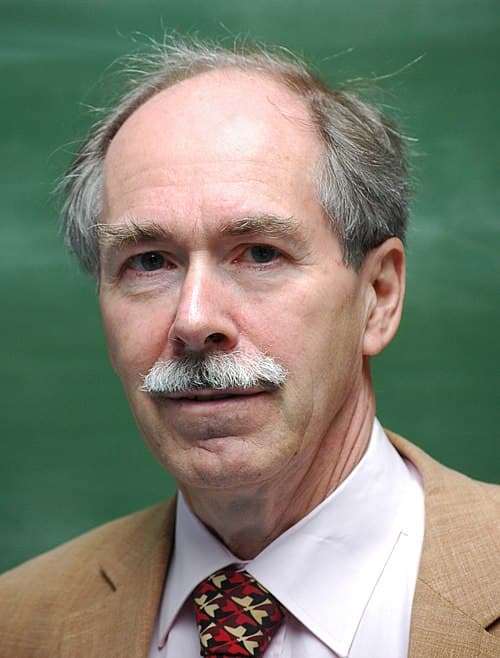
Hooft
PERSON
Surname reference in documents
HG
Howard Georgi
PERSON
Name reference in documents
JS
J. J. Sakurai
PERSON
Name reference in documents
JB
James Bjorken
PERSON
Name reference in documents
JJ
James Joyce's
PERSON
Person referenced in documents

Jeffrey Epstein
PERSON
American sex offender and financier (1953–2019)
JG
Jeffrey Goldstone
PERSON
Name reference in documents
JF
Jerry Friedman
PERSON
Name reference in documents
JI
John Iliopoulos
PERSON
Name reference in documents
KA
Kamioka
PERSON • 2 mentions
Name reference in documents
KA
Kamiokande
PERSON
Name reference in documents
LA
Landau
PERSON
Surname reference in documents
LH
Lawrence Hall
PERSON
Name reference in documents
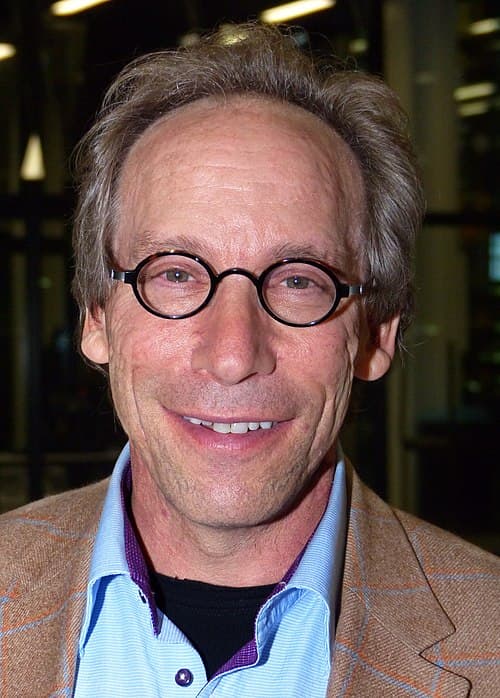
Lawrence Krauss
PERSON
American particle physicist and cosmologist
LL
Lev Landau
PERSON
Name reference in documents
LM
Luciano Maiani
PERSON
Name reference in documents
MW
Martin Weinberg
PERSON
American attorney (born 1946)
MV
Martinus Veltman
PERSON
Name reference in documents
ME
Meissner
PERSON
Surname reference in documents
MO
Moo-Young
PERSON
Name reference in documents
Murray Gell-Mann
PERSON
American physicist (1929–2019)
NA
Nambu-Goldstone
PERSON • 2 mentions
Name reference in documents
NG
Nobelists Sheldon Glashow
PERSON
Name reference in documents
OG
Oscar Greenberg
PERSON
Name reference in documents
PH
Peter Higgs
PERSON
Name reference in documents
PM
Peter McIntyre
PERSON
Name reference in documents
Philip Anderson
PERSON
American physicist (1923-2020)
Plato
PERSON
4th-century BCE Greek philosopher
QU
Quinn
PERSON
Ambiguous first name - refers to multiple people in Epstein documents
RA
Rabelais
PERSON
Name reference in documents
RD
Ray Davis
PERSON
Name reference in documents
Richard Feynman
PERSON
American theoretical physicist (1918–1988)
RT
Richard Taylor
PERSON
Name reference in documents
RB
Robert Brout
PERSON
Name reference in documents
RS
Robert Schrieffer
PERSON
Name reference in documents
RW
Robert Wilson's
PERSON
Name reference in documents

Ronald Reagan
PERSON • 2 mentions
President of the United States from 1981 to 1989 and actor (1911–2004)
SA
Sakurai
PERSON
Name reference in documents
SA
Salam
PERSON
Surname reference in Epstein-related documents
SC
Schwinger
PERSON • 3 mentions
Surname or name fragment in documents
Sheldon Glashow
PERSON
Person referenced in documents
SC
Sidney Coleman
PERSON
Person referenced in documents
SM
Simon van der Meer
PERSON
Name reference in documents
SA
St. Andrews
PERSON • 2 mentions
Person referenced in documents
SW
Steven Weinberg
PERSON
Nobel Prize-winning physicist, referenced in Epstein science funding network
TV
Tini Veltman
PERSON
Name reference in documents
TA
Tom Appelquist
PERSON
Name reference in documents
TK
Tom Kibble
PERSON
Name reference in documents
VE
Veltman
PERSON
Surname or name fragment in documents
VW
Victor Weisskopf
PERSON
Name reference in documents
WG
Walter Gilbert
PERSON
Name reference in documents
WM
Walther Meissner
PERSON
Name reference in documents
YB
Yakov B.
PERSON
Name reference in documents
YN
Yoichiro Nambu
PERSON
Name reference in documents
YU
Yukawa
PERSON
Name reference in documents
Australian National University
ORGANIZATION
Organization referenced in documents
Brout-Englert-Guralnik-Hagen-Kibble
ORGANIZATION
Organization referenced in documents
Caltech
ORGANIZATION
California Institute of Technology

Case Western Reserve
ORGANIZATION
Private university in Ohio, United States
CERN SPS
ORGANIZATION
Organization referenced in documents
dard Model
ORGANIZATION
Organization referenced in documents
Englert
ORGANIZATION • 2 mentions
Organization referenced in documents
Faraday
ORGANIZATION
Organization referenced in documents
Fermilab
ORGANIZATION
Organization referenced in documents
Gargamelle
ORGANIZATION • 3 mentions
Organization referenced in documents
Gothic Cathedrals
ORGANIZATION
Organization referenced in documents
Grand Unification
ORGANIZATION
Organization referenced in documents
High Energy Physics
ORGANIZATION
Organization referenced in documents
I. The Times
ORGANIZATION
Organization referenced in documents
Linear Accelerator
ORGANIZATION
Organization referenced in documents
Nambu
ORGANIZATION • 3 mentions
Organization referenced in documents
Pnotopapn
ORGANIZATION
Organization referenced in documents
Politzer
ORGANIZATION
Organization referenced in documents
Princeton Curtis Callan
ORGANIZATION
Organization referenced in documents
Quantum
ORGANIZATION
Quantum Fund or entity referenced in documents
Rubbia
ORGANIZATION
Organization referenced in documents
Science Times
ORGANIZATION
Organization referenced in documents
Spanking the Vacuum
ORGANIZATION
Organization referenced in documents
Super-Kamiokande
ORGANIZATION
Organization referenced in documents
Superconducting Super
ORGANIZATION
Organization referenced in documents
Tevatron
ORGANIZATION
Organization referenced in documents
the Bronx High School of Science
ORGANIZATION
Organization referenced in documents
The Clay Mathematics Institute
ORGANIZATION
Organization referenced in documents
the European Organization
ORGANIZATION
Organization referenced in documents
the European Organization for Nuclear Research (CERN
ORGANIZATION
Organization referenced in documents
the Large Electron-Positron
ORGANIZATION
Organization referenced in documents
the Large Hadron Collider
ORGANIZATION
Organization referenced in documents
the Masses of Gauge
ORGANIZATION
Organization referenced in documents
the Physics Department
ORGANIZATION
Organization referenced in documents
the Society of Fellows
ORGANIZATION
Organization referenced in documents
the Standard Model
ORGANIZATION
Organization referenced in documents
the Sudbury Neutrino Observatory
ORGANIZATION
Organization referenced in documents
the University of Edinburgh
ORGANIZATION
Organization referenced in documents
the Weinberg-Glashow-Salam
ORGANIZATION
Organization referenced in documents
the Yang-Mills
ORGANIZATION
Organization referenced in documents
Yang-Mills
ORGANIZATION • 2 mentions
Organization referenced in documents
Zweig
ORGANIZATION
Organization referenced in documents

Aspen
LOCATION
City in and county seat of Pitkin County, Colorado, United States
Berkeley
LOCATION • 2 mentions
City in Alameda County, California, United States
Brobdingnag
LOCATION
Location referenced in documents
Brookhaven
LOCATION
Location referenced in documents
Canberra
LOCATION
Capital city of Australia

Colorado
LOCATION
State of the United States of America
Copenhagen
LOCATION
Capital and largest city of Denmark
Dallas
LOCATION
City in the state of Texas, United States
Earth
LOCATION
Third planet from the Sun in the Solar System

Europe
LOCATION
Continent in the Northern Hemisphere
Geneva
LOCATION
City in Switzerland and capital of its canton
Grand Unifica-
LOCATION
Location referenced in documents
Grand Unified
LOCATION
Location referenced in documents
Himalayas
LOCATION
Mountain range in Asia
Lake Erie
LOCATION
Location referenced in documents

Long Island
LOCATION
Island in New York, United States of America

Melbourne
LOCATION
Capital city of Victoria, Australia

Michigan
LOCATION
State of the United States of America
Seattle
LOCATION
City in and county seat of King County, State of Washington, United States
Sudbury
LOCATION
Location referenced in documents
the Eiffel Tower
LOCATION
Location referenced in documents

United States
LOCATION
Country located primarily in North America
Waxahachie
LOCATION
Location referenced in documents
Statistics
Pages:100
Entities:166
Sponsored