HOUSE_OVERSIGHT_017088_sub_003 - HOUSE_OVERSIGHT_017387
Document Information
Bates Range
HOUSE_OVERSIGHT_017088_sub_003 - HOUSE_OVERSIGHT_017387
Pages
100
Source
House Oversight Committee
Original Filename
CURREN DRAFT 04.02.12.docx
Document Content
Page 201 - HOUSE_OVERSIGHT_017288
4.2.12 WC: 191694 involuntary. Again the state sought review by the Supreme Court. This time their petition was denied, and Doody’s conviction was finally and definitively reversed. The state of Arizona is now planning to retry him without using his false confession. Bail has been set at $5million, which his, of course, impossible for the Doody family, which has no money, to raise. If justice delayed is justice denied, then Jonathan Doody has surely been denied justice. The thorough decisions of the United States Court of Appeals have all been in his favor, but he remains in jail for a crime of which he is now presumed innocent and which he may not have committed. 201 HOUSE_OVERSIGHT_017288
Page 202 - HOUSE_OVERSIGHT_017289
4.2.12 WC: 191694 Make believe murder: the case of the falling helicopter Another case that we won on the basis of science grew out of the making a major motion picture directed by Steven Spielberg and John Landis. The film was The Twilight Zone, based on the television series by that name. There were three segments to the film, each directed by a different person. John Landis, already famous for directing Animal House, and other mega-hits, was directing a segment involving the Vietnam War. The star of that segment was the veteran actor Vic Morrow. The scene at issue called for Morrow’s character to be running through a rice patty, in pitch darkness, carrying two children as helicopters fired at them. Landis wanted to make the scene as realistic as possible, so he filmed it at night, with extensive pyrotechnics and a real helicopter flying low to the ground. Tragically, the helicopter crashed into Morrow and the children, killing them instantly. Landis was charged with involuntary manslaughter, and he retained me to consult with his trial lawyer and to prepare an appeal, if necessary. He was the first film director in history to be criminally charged with causing the death of an actor. The major issue at the trial was whether the accident should have been foreseeable. If it was foreseeable to a reasonably prudent director that a helicopter, placed in the circumstances in which this one had been placed, might crash, then the directorial decision to have the helicopter fly close to the pyrotechnics could satisfy the legal criteria for involuntary manslaughter. But if the crash could not reasonably have been anticipated, then it would have to be regarded as an accident, giving rise, perhaps, to civil liability, but not to a criminal charge carrying the prospect of imprisonment. The prosecutor called 71 witnesses, many of whom offered scientific testimony about the cause of the crash and why it should have been anticipated. The defense summoned scientific witnesses who testified that an accident of this kind—the heat from pyrotechnics causing the tail rotor of the helicopter to become delaminated—had never before occurred and could not therefore have been anticipated. In fact, when the helicopter crashed it came very close to killing Landis. The jury deliberated for nine days before finding Landis (and his co-defendants) not guilty. Several years later, it appeared as if another director might be in trouble for the death of an actor while filming a motion picture called “The Crow”. The actor was Brandon Lee, the son of Bruce Lee, the famous Kung Fu actor, who himself died while filming “The Game of Death.” Brandon Lee was killed by a metal projectile that was accidentally shot from a gun firing blanks during the filming. A criminal investigation was opened and I was asked to consult with the lawyers for the production team. Eventually, the lawyers persuaded the authorities not to indict anyone for the tragic accident. The end result in both the Landis and Lee cases was that greater care is now being exercised during filming of sequences that pose significant risks to participants. Sometimes it takes tragedies to improve safety. 202 HOUSE_OVERSIGHT_017289
Page 203 - HOUSE_OVERSIGHT_017290
4.2.12 WC: 191694 Attempted Murders: Killing a Corpse and the “Abraham Defense” A case that involved both science and logic arose in the context of the attempted murder prosecution of a young man who had shot a corpse, believing that it was still alive. The case presented a series of perplexing scientific and logical riddles: When is a person who has been mortally wounded actually dead? Can you kill a man who is already dead? If not, can you attempt to kill a man who is already dead if you believe he is still alive. My client had watched one acquaintance, who was having a disagreement with another acquaintance, shoot him in the heart. The shooter then asked my client to shoot the victim in the head, which he did. On the first appeal, which I argued in Brooklyn, the court reversed the murder conviction on the basis of scientific evidence that it was impossible to know whether the victim was alive or dead at the moment my client shot him in the head, since someone else had shot him in the heart just moments earlier. It ruled that the prosecution had not satisfied its burden of proving he was still alive when my client’s bullet shattered his brain. The court also ruled that my client could not be convicted of attempted murder, on the ground that since it is factually impossible to murder a corpse; it is also legally impossible to attempt to do that which it is factually impossible to do. On the second appeal, which I argued in Albany, the court agreed that my client could not be convicted of murder because “man dies but once,” but it concluded that he should be convicted of attempted murder. I then brought a federal Habeus Corpus petition, and the federal court threw out the attempted murder conviction as well. My client went free. This intriguing case, which I wrote about in more detail Zhe Best Defense, is taught today in many law schools as part of the standard course on criminal law. The issue of whether it is legally possible to attempt to do what is factually impossible—namely to kill a dead person—continues to confound new generations of law students. Another attempted murder case presented a problem right out of the Bible. My client was accused of attempting to kill his sister’s former boyfriend. The boyfriend was suspected of burning down the sister’s house and burning her severely. She ultimately died of her painful burns, but while she was still alive, my client went to her former boyfriend’s home, held a knife over his chest and said he would kill him unless he admitted his role in the fire. The police burst into the apartment and disarmed my client before he could stab the former boyfriend. My client was convicted of attempting to kill the former boyfriend, and I was retained to argue the appeal. I analogized the situation to the one described in the Book of Genesis when God told Abraham to sacrifice Isaac, and Abraham stood, knife in hand, ready to inflict the fatal wound when God’s angel came down and stopped him. I argued that we can never really know whether my client would actually have killed the boyfriend had the police not intervened, just as we can never know for sure whether Abraham would actually have complied with God’s command. There were other issues in the case as well and we won the appeal. The state declined to re-prosecute and this client too went free. 203 HOUSE_OVERSIGHT_017290
Sponsored
Page 204 - HOUSE_OVERSIGHT_017291
4.2.12 WC: 191694 Anatoly Sharansky: Death For Spying For the United States Other potential death cases raised issues not of science, but of politics, diplomacy and economics. The case that combined these elements also involved the client with whom I most closely identified personally. He was a Soviet Jew who I never even met during the years I was fighting to save his life. His name (at the time) was Anatoly Sharansky (now Natan Sharansky). Sharansky was a prominent and vocal defender of human rights, not only of his fellow Soviet Jews but of all victims of Soviet oppression. He worked closely with Andrei Saklarov, the father of the Soviet nuclear weapons program who had become the leading voice for human rights in the Soviet Union. Sharansky was arrested by the Soviet KGB in 2003 [check] on charges of spying for the United States—a charge that carried the death penalty. I had previously represented two Jewish Refusenicks who had tried to steal a small airplane in which to escape to Israel, via Sweden. They had been sentenced to death, so I knew that the threat of capital punishment against Sharansky was real. Their death sentences against were later reversed and they were eventually allowed to emigrate to Israel. But there was no assurance that similar efforts would help Sharansky, who faced the more serious charge of spying for an enemy. I had been asked, along with Canadian law professor Irwin Cotler, to represent Sharanksy. The request came from his wife, who was in Israel, and his mother, who lived in Moscow. They had no money to pay for a lawyer. We agreed to do what we could to save his life and, hopefully, secure his freedom. Our first job was to try to get the espionage charge dropped, since that was the one that carried the death sentence. Because Sharanksy was accused of spying for the United States, I decided to go directly to the White House to try to persuade President Carter to issue a statement expressly denying the Soviet charge that Sharansky had been a CIA operative. We faced great pressure from the CIA to continue the longstanding American policy of never affirming or denying anyone’s alleged association with the agency. But after several requests, President Carter did issue the following statement: I have inquired deeply within the State Department and within the CIA, as to whether or not Mr. Sharanksy has ever had any known relationship in a subversive way, or otherwise, with the CIA. The answer is “no.” We have double-checked this, and I have been hesitant to make that public announcement, but now I am completely convinced. Shortly after President Carter made his unprecedented statement, the Soviet prosecutors dropped the espionage charge and took the death penalty off the table. But they were still determined to see Sharansky die in prison. The Soviets called it “special regime” imprisonment, consisting of a diet that no one could long survive. The prisoners called it “death on the installment plan.” Sharansky’s wife pleaded with me to get him out of prison before he starved to death and before she was too old to have children. We had saved him from execution; now we had to save him from starvation. We had our work cut out for us. 204 HOUSE_OVERSIGHT_017291
Page 205 - HOUSE_OVERSIGHT_017292
4.2.12 WC: 191694 We decided that the best way to keep him alive was to personalize him to the world. If the world got to know Anatoly as a human being, rather than merely as another prisoner of conscience, it would become more costly, in terms of international reactions, to the Soviet Union if he were to die in the Gulag. With this in mind, we set out to plaster his smiling face on every possible magazine cover, newspaper front page and television show. We enlisted his very beautiful, very photogenic, but very shy wife (Natasha, now Avital) in our campaign. Before long, his name became a household word and his image became familiar around the world. His wife’s pleas to release him in time to father their children fell on receptive ears—at least outside of the Soviet Union. At the same time, we filed legal briefs, lobbied for legislative action and convened academic conferences. Ultimately, after 9 years of unremitting efforts, we were able to arrange a prisoner exchange that resulted in the release of an East German spy, who I had been asked to represent in Boston, and Sharansky. Because Sharansky was not a spy, but a human rights activist, he refused to participate in a “spy swap.” The compromise we reached resulted in Sharanksy walking alone, and not as part of any exchange, across the Glienicke Bridge in Berlin, his book of Psalms in his hand. Sharanksy did get out in time to father two beautiful daughters, who I enjoy meeting every time I visit Natan and his wife in their home in Jerusalem. There, but for Grace of God and the luck of having grandparents and great grandparents with the foresight to leave Eastern Europe, go I. If Sharanksy’s grandparents had come to America and mine had remained in Europe, our roles could easily have been reversed. That’s why helping to save Sharansky’s life was the case with which I had the closest personal identification. It was also the case that required the widest array of weapons—law, politics, diplomacy, media, economics, persistence and luck—to win. Several years later, I was asked by a television talk show host, “In which case did you earn your biggest fee?” Without a moment’s hesitation, I replied, “Sharanksy.” The host was surprised. “I didn’t know Sharansky had any money,” he exclaimed. “He didn’t,” I replied. “I worked on his case without any fee or expenses for 9 years, but when I saw him walk across the Glienicke Bridge, my eyes filled with tears of joy, and when he whispered in my ear the Hebrew words “Baruch matir assumrim” (“Blessed are those who free the imprisoned”’), that was the biggest fee I will ever earn.” 205 HOUSE_OVERSIGHT_017292
Page 206 - HOUSE_OVERSIGHT_017293
4.2.12 WC: 191694 My most ungrateful homicide client: Angela Davis Clients whose cases I have helped to win generally respond in one of two ways: some express great, sometimes excessive, gratitude. They offer to do anything in exchange for you having saved their lives. Others behave as if the case had never happened and you don’t exist. I have seen former clients purposely cross the street to avoid even “seeing” me. They don’t want to be reminded of the dark period in their lives during which they required a criminal lawyer. In only one case did a former client show absolute ungratefulness for my role in helping her avoid a murder conviction. During the year that I was a visiting scholar at the Center For Advanced Studies and Behavioral Science at Stanford, I was asked to consult on several aspects of the Angela Davis murder case. Davis, who was one of the leaders of the American Communist Party, was accused of murder in connection with a shootout that had occurred at the Marran County Courthouse as part of an attempted escape of radical prisoners. Davis was accused of purchasing and providing the shotgun that was used in the crime. She was also suspected of having engineered the attempt to take hostages is order to barter them for the release of a prisoner she loved. I worked on jury selection as well as on some constitutional issues. Davis was claiming that she could not get a fair trial in any American court because she was black, female and a Communist. Part of the reason I took the case was to help assure that she did get a fair trial. After several grueling months, she was acquitted and set free. I don’t know whether she now believes she received a fair trial. I do know that shortly thereafter I read that she was hired to become a professor at the University of California in Santa Cruz. Shortly thereafter, I read that she was going to Moscow to receive the Lenin human rights prize from the Soviet Union. She said that she was pleased to receive the prize and that she would spend the rest of her life helping to free political prisoners around the world. I called her office and gave them a list of prisoners of conscience in the Soviet Union—mostly Jews who had been imprisoned because they wanted to emigrate to Israel or to learn about their heritage. (Sharansky was not yet among these prisoners, but he would soon join them.) I asked if she would be willing to speak up on behalf of these political prisoners. Several days later, I received a call back from Ms. Davis’s secretary informing me that Davis had looked into the people on my list and none of them were political prisoners. “They are all Zionist fascists opponents of socialism.” Davis refused to speak up on behalf of the Soviet dissidents. Recently, I ran into an older and somewhat more reserved Angela Davis on the porch of the Chilmark Store on Martha’s Vineyard. She was wearing a bicycle outfit and was cycling around the island with some mutual friends, including her trial lawyer in the murder case. It was a strange scene in this bastion of bourgeois affluence to see these former radicals enjoying the comforts of capitalism in so relaxed a way. I reminded Davis of my participation in her case and she expressed appreciation. I also reminded her of her refusal to speak up on behalf of Soviet dissidents. In her mellow response, she said, “well so many other people were speaking up for them, that I didn’t think it was necessary for me to add my voice.” It’s interesting how time changes people’s memories. I did not press her as to whether she would today speak up on behalf 206 HOUSE_OVERSIGHT_017293
Sponsored
Page 207 - HOUSE_OVERSIGHT_017294
4.2.12 WC: 191694 of Cuban dissidents, Chinese dissidents or other heroic people who stand up against what remains of Communist oppression. Angela Davis remains the best proof that in America, as distinguished from the countries she so admires, it is possible for a Black, Communist woman to receive a fair trial. The key, of course, is for the trial to have the kind of high visibility and media attention hers received. There are still far too many obscure defendants, of all races, who do not receive fair trials or fair sentences. The struggle to achieve universal fairness and equal treatment is an ongoing one. 207 HOUSE_OVERSIGHT_017294
Page 208 - HOUSE_OVERSIGHT_017295
4.2.12 WC: 191694 Hare Krishna Murder The most bizarre murder case I ever litigated involved a Hare Krishna leader in West Virginia, who was charged with a wide assortment of crimes, ranging from murder—to copyright infringement! My clients real name was Keith Gordon Ham, but he called himself Kirtanananda Swami, or just Swami, when he founded a Hare Krishna community in West Virginia, which he called New Vrindaban. He became the absolute ruler of this cultish community, whose members testified that he exercised total control over all aspects of community life. Vrindaban became a magnet for people who wanted to lose their identity beneath the saffron robes and changed names, including several members with criminal records and violent backgrounds. The community expanded to 3,000 acres with 500 “devotees” and profits from solicitations that reached $10-12 million. Much of this money was allegedly obtained by selling counterfeit copywrited images of sports teams and popular cartoon characters. Hence the copyright charge. The events that precipitated the murder prosecution were described by the court as follows: The. ..incident involved the murder of devotee and community member Charles St. Denis on June 10, 1983. When community member Daniel Reid learned that St. Denis had raped Reid's wife, Reid decided to kill St. Denis. Before attempting to murder St. Denis, Reid consulted Swami. Swami instructed Reid that the killing was acceptable under Krishna scriptures, but that such action violated secular laws and that Reid might be caught and punished. Swami then directed Reid to talk to Thomas A. Drescher, a fellow devotee. When Reid approached Drescher and told him what Swami had said, Drescher testified he felt duty bound to help Reid kill St. Denis. The two then enticed St. Denis to Reid's house one night, shot and stabbed him several times, and then buried him in a pre-dug grave before he was dead. [Another] incident likewise involved the murder of a devotee. In 1985, Steven Bryant, a former New Vrindaban devotee, began publishing statements accusing Swami of engaging in homosexual activity and permitting sexual molestation of children in the community. Around April of 1986, members of the Krishna community in Los Angeles notified Drescher that Bryant was in Los Angeles. Drescher received $2,500 from the New Vrindaban community, authorized by Swami, and flew to Los Angeles. He located Bryant and shot him twice in the head. Swami and several of his lieutenants were convicted and sentenced to long terms of imprisonment. I was asked to appeal Swami’s conviction. I read the transcript of the trial and found it to be filled with prejudicial evidence that was irrelevant to whether Swami was responsible for the crimes of his followers. I took this case not because I approved of anything about Swami, but because I believe that if the most reviled defendants are not afforded a fair trial, there is grave risk to all defendants. Greta Van Susteren, then a lawyer now a TV commentator, was retained by one of the lutenants. 208 HOUSE_OVERSIGHT_017295
Page 209 - HOUSE_OVERSIGHT_017296
4.2.12 WC: 191694 I argued that the prosecutors had deliberately “thrown a skunk into the jury box” when they introduced irrelevant evidence that Swami had engaged in a homosexual relationship with a follower. To a West Virginia jury back then, this could be massively prejudicial. In addition, the prosecution introduced evidence that teachers at the community school had molested children and that Swami was aware of this but did nothing. Finally, they introduced: “a videotape segment from the television program West 57th Street (a "news" exposé program). The videotape showed a child of the New Vrindaban community stating that he prayed "to" Swami, a statement generally offensive to the religious sensitivities of typical jurors. More inflammatory was a statement by Swami comparing women to dogs and condoning lightly slapping one's wife for disciplinary reasons.” I argued the appeal before a panel of the U.S. Court of Appeals for the Fourth Circuit consisting of three elderly conservative judges in Charleston, South Carolina. I could not imagine a group that would be less sympathetic to a Hare Krishna guru accused of the horrendous crimes of which my client stood convicted. But my wife’s older cousin, Morris Rosen, an experienced lawyer from Charleston, cautioned me not to give up. “These old-line Southerners care about justice, and they don’t have ambitions beyond their current job. They’ll give your client a fair shake as long as you don’t overstate your case. Be straight with them and they’ll be straight with you.” My cousin, who was himself “a good ol’ boy,” was absolutely on target. I argued in a low key manner, focusing on precedents from the court, and especially from the three judges. In their decision, they followed the law, concluding as follows: “We accept without need of extensive argument that implications of child molestation, homosexuality, and abuse of women unfairly prejudice a defendant. Indeed, no evidence could be more inflammatory or more prejudicial than allegations of child molestation. When evidence of a defendant's involvement in several of these activities is presented to the jury, the risk of unfair prejudice is compounded. In such a case, we fear that jurors will convict a defendant based on the jurors' disdain or their belief that the defendant's prior bad acts make guilt more likely. Furthermore, we are especially sensitive to prejudice in a trial where defendants are members of an unpopular religion.” The court in a 2-1 decision reversed the convictions. The rule of law prevailed over the prejudices of men and women. 209 HOUSE_OVERSIGHT_017296
Sponsored
Page 210 - HOUSE_OVERSIGHT_017297
4.2.12 WC: 191694 The Case I still can’t talk about: Chappaquiddick There is one homicide case that I still can’t say very much about, even though all the principles are dead and the case is more than 40 years old. I was one of the lawyers involved in the Chappaquiddick case—the investigation of Senator Edward Kennedy for driving his car off a bridge on the Island (or peninsula of) Chappaquiddick, resulting in the drowning death of Mary Jo Kopechne. 1969 was an eventful summer. My family and I were on Fire Island anticipating watching a man walk on the moon. I had no idea how much more exciting the summer would become. I received a call from one of Senator Kennedy’s aides, telling me that the Senator had been involved in a fatal automobile accident and asking me to make my way to Martha’s Vineyard—a place I had never visited. I was asked to become part of the legal team being assembled in anticipation of the upcoming criminal investigation. My job was to prepare a brief concerning the rights of the young women (they were referred to as the “boiler room girls”, because they had worked on Kennedy campaigns from an office that had once served as a boiler room) who had been vacationing on Chappaquiddick along with Senator Kennedy and several of his friends. The women who had shared a house with Mary Jo Kopeche were being subpoenaed to testify at an “inquest” regarding the tragedy. There was very little law on the rights of witnesses or potential defendants at this sort of hybrid hearing which is neither a trial nor a grand jury proceeding. One important issue was whether or when their testimony, which might require them to divulge personal matters, would be made available to the media, which was seeking every possible tidbit of information—or gossip—about the events surrounding the tragedy. I worked with my colleague, Professor Charles Fried, and we produced a brief that succeeded in keeping the testimony of the women confidential during the course of the criminal investigation. I also consulted with the lawyers responsible for trying to prevent Senator Kennedy from being charged with vehicular homicide or some other serious crime. We succeeded, and the Senator ultimately pleaded guilty to a relatively minor offense. I remained close to Senator Kennedy until his death, consulting with him on numerous projects involving criminal law, constitutional law, judicial appointments, and human rights. Ken Feinberg, who served as his chief-of-staff and in many other capacities, recently told me that before anything involving these issues left his office, Senator Kennedy would tell his staff members, “check it with Alan.” It was high honor and privilege to assist so great a senator on so many occasions. The last time I was him was just months before his death when he invited me to sit next to him for several innings during the opening game of the Red Sox season at Fenway Park on April _, 2010. 210 HOUSE_OVERSIGHT_017297
Page 211 - HOUSE_OVERSIGHT_017298
4.2.12 WC: 191694 Defending Soldiers I have a policy of representing, without fee, soldiers who risk their lives for our liberties and are charged with killings growing out of their military service. I have helped to defend several soldiers, most prominently Colonel Michael Steele, the real life hero of the tragic events in Mogadishu that gave rise to the film “Blackhawk Down.” I have also helped to defend ordinary enlisted men accused of unlawful killings of non-combatants. Several of Colonel Steele’s enlisted men had killed Iraqi civilians following a deadly attack by Iraqi militants against U.S. soldiers. Colonel Steele was being investigated for instructions regarding the rules of engagement that he had given to his men prior to the killings. Some higher- ups believed that his speech had incited the killings, or at the very least had created an atmosphere in which such killings would be seen as acceptable. Colonel Steele adamantly denied any such responsibility and asked me to help his military lawyers prepare a defense to any such charge. The rules of engagement for terrorist groups are confusing at best. The directive Colonel Steele had received granted him the authority to target “groups, cells and facilities belonging to terrorist groups.” How to distinguish such groups from non-combatants in the fog of asymmetric warfare, in which terrorists blend into the civilian population, is one of the most daunting challenges of modern combat. After conducting extensive research on the applicable law and on what Colonel Steele had actually told his men, I was convinced that he had complied both with the letter and spirit of the laws of war, and that the soldiers who had killed civilians were not following his lawful directives. We prepared a brief arguing against any charges been brought against the Colonel. In the end Colonel Steele was not charged with any crime but his career was harmed by the allegation. In appreciation for my work on his case, the Colonel sent me an American flag that had been “flown for 9 minutes and 11 seconds over the 3 Brigade Combat Team Head Quarters, Tikrit, Iraq” near a flag that was “hanging inside of Building #7 on the morning of 11 September 2011.” In his letter accompanying the flag, Colonel Steel explained that a policeman, ran into Building Seven right after the attack to help get everyone out. On his way out, he saw the flag in the atrium and took it down. “The building came down about ten minutes later.” The policeman gave the Colonel the flag to take with him into combat. Colonel Steel ended his letter with the following words: “My sincerest thanks, Alan, for all you have done for me and for the men of the Rakkasans.” The flag stands in a place of honor in my home office, as a reminder of those who have given their lives to defend our liberties. The complex issues surrounding the war against terrorists plays out not only on the battlefields of Iraq and Afghanistan, but in Israel and Gaza as well. I stand ready to defend Israeli soldiers and commanders who have been falsely accused of killing Palestinian civilians in their efforts to protect Israeli civilians from terrorist rocket attacks. In 2011, I traveled to the Hague in an effort to persuade the prosecutor of the International Criminal Court not to bring charges based on the deeply flawed “Goldstone Report,” whose conclusions Richard Goldstone himself subsequently repudiated. I have represented the Mossad in its efforts to prevent prosecution of its agents by 211 HOUSE_OVERSIGHT_017298
Page 212 - HOUSE_OVERSIGHT_017299
4.2.12 WC: 191694 foreign governments. In 1999, I received a letter of thanks from the head of that shadowy organization, which included the following: “T remember the energy you showed when we came to you seeking both advice and action. You threw yourself into the fray and showed every possible willingness to give us both your time and renowned counsel. > As you know, there is no greater “Mitzva” in Judaism than “Pidyon Shevuyim”—prisoner release. And nevertheless, not every person would be prepared to be associated with “one of us.” So be it you, for your part, acted in the best and nobles of our traditions. We wish you well; we thank you for what you did and what you were willing to do. May we all live to see the day when a profession such as mine gives way to more pleasant occupations. There is still some way to go before this comes about.” Tragically, the world is still far from a time when those brave men and women who serve in the United States and Israeli armed forces and intelligence services can pursue “more pleasant occupations.” Until that day arrives, I will always remain available to lend my time and counsel in support of their noble efforts to combat evil. 212 HOUSE_OVERSIGHT_017299
Sponsored
Page 213 - HOUSE_OVERSIGHT_017300
4.2.12 WC: 191694 Helping the prosecution keep an FBI murderer in prison I’m a defense lawyer. Unlike many current defense lawyers, I never served as a prosecutor (though I advise my students who want to become defense attorneys to work in a good prosecutor’s office for a few years.) Also unlike some defense attorneys, I admire good prosecutors, who do their jobs ethically and professionally. The adversarial system of justice requires zealous prosecution as well as zealous defense. Good prosecutors are the “gatekeepers” of justice: they decide which of the many cases that come before them to prosecute, which not to prosecute, what charges to seek, when to plea bargain and how high a sentence to recommend. Bad prosecutors—those who base such critical decisions on political, personal, financial or other corrupt considerations—can do enormous harm to our system of justice. I’ve been privileged over my career to know some extraordinary prosecutors. I’ve also been privileged to help expose some corrupt prosecutors, policemen and FBI agents. The case of John Connolly was an example of both. In that highly-charged case, which was the subject of the semi-functional, but mostly fact-based, film “The Departed,” I helped an excellent prosecutor keep a corrupt FBI agent in prison. The prosecutor who asked for my help is the State Attorney of Dade County Florida, which covers the City of Miami and several smaller cities. Katherine Fernandez Rundle replaced Janet Reno in 19 _, when President Clinton appointed Reno to serve as Attorney General of the United States. She has been repeatedly reelected and served with distinction since. John Connolly was a high ranking FBI agent in Boston, who had grown up in the “Southie” neighborhood of Boston along with the notorious “Whitey” Bulger, who was responsible for dozens, perhaps hundreds, of cold-blooded murders, and his corrupt younger brother William “Billy” Bulger who served as President of the Massachusetts Senate and then President of the University of Massachusetts, before he was forced out of office by Governor Mitt Romney. During the reign of the Bulger brothers, Billy served as the Godfather and Whitey as the enforcer of a systematically corrupt political, economic and legal system. Nothing got done—no large buildings were constructed, no important jobs secured, no political appointments made—without “tribute” being paid to the Godfather. If anyone crossed Billy, he had to worry about being literally killed by Whitey. If anyone crossed Whitey, he had to worry about suffering political or economic death at the hands of Billy. For example, when a state trooper stopped and searched Whitey at Logan Airport, finding a large bag filled with cash, the trooper found himself demoted, disgraced and ultimately driven to suicide. And when Whitey was about to be indicted, Billy’s protégé, John Connolly, tipped the gangster off, allowing him to escape and become a fugitive for __ years. Connolly also tipped off Billy to the details of an investigation that targeted him for extorting a half-million dollar bribe from a Boston builder. But these were not the only tip-offs John Connolly provided the Bulgers. He also gave Whitey the names of “stool pigeons” who were about to inform or testify against htm—in other words who had to be “silenced” to protect Whitey and his colleagues. Several murders were plainly attributable to this leaking of information from the FBI to gangland killers and hit men. One such murder was committed in the Miami area and John Connolly was 213 HOUSE_OVERSIGHT_017300
Page 214 - HOUSE_OVERSIGHT_017301
4.2.12 WC: 191694 successfully prosecuted for it by the State Attorney’s Office. The problem was that several years had passed between the murder and the prosecution and Connolly had a plausible statute of limitations argument on appeal. I was asked by State Attorney Rundle to consult with her appellate lawyers and to prepare them for what they expected would be a grueling oral argument. I agreed and worked with them, and with federal prosecutors in Boston, on the appellate brief. I also conducted a “moot court” in which I played judge and asked the hardest questions I could come up with. The “moot court,” as it turned out, was more grueling than the actual argument, and the prosecution won the appeal. It was the first time I recall cheering when I heard that the prosecution had won an appeal. There is nothing more corrosive to the administration of justice than corrupt law enforcement officials (except, perhaps, corrupt judges, several of whom Billy Bulger had appointed to “his” bench). The Bulger gang is now history. Whitey and Connolly are in prison, probably for the rest of their lives. Billy is “retired” from politics, but still widely admired by some in Boston, who ought to know better. 214 HOUSE_OVERSIGHT_017301
Page 215 - HOUSE_OVERSIGHT_017302
4.2.12 WC: 191694 Defending a man who admitted his guilt The myth that guilty clients, even those who have committed murder will confide their guilt to their trusted lawyer, is widespread in literature and reflected in legal rules that encourage a relationship of trust between lawyer and client. The reality is that guilty (as well as some innocent clients) don’t trust their lawyers with their deep, dark secrets. Most believe that their lawyer will work harder for innocent defendants than for guilty ones, so they lie through their teeth. They claim, especially at the beginning of their relationship with their lawyer, that they are the totally innocent victims of a horrible injustice. They admit nothing. In order to get some sense of what actually happened, I ask them the following question: “If your worst enemy, the person behind this horrible injustice, were to testify against you, what lies would he testify to? What would he say you did?” The answer they give often comes close to what really happened. In this way, I obtain a working knowledge—always subject to reevaluation based on new evidence—of what may have occurred, without directly accusing my new client of being a liar. Only one client who was accused of a killing has admitted to me that he was guilty. He really had no choice, since the very fact of his guilt was an essential element of his defense. The case was a strange one from beginning to end. Not only was my client guilty of having participated in a crime that resulted in the death of a young woman, he also—it turned out—was a government informant who was providing information to the police as to what he and his group were doing. I have related this story in detail in Zhe Best Defense and will not repeat it here, except to describe how it feels to win a case on behalf of an admittedly guilty defendant. Not only did he go free as the result of our legal arguments, but all of his co-conspirators—the ones who actually planted the smoke bomb that suffocated the woman—went free as well. (My client, who was an engineer, had constructed the smoke bomb, knowing that it was going to be placed in a crowded area.) When I first undertook the pro bono representation of Sheldon Siegel, he faced a possible death sentence. I had no idea that he was informing against his colleagues in the Jewish Defense League at the same time that he was making bombs for them. Informers are a peculiar lot, often undecided about which side they are on—other than their own side. Siegel was committed to the ideology of the JDL, including their sometime use of violence to make their point. But he was also desirous of protecting his own head and he knew he was vulnerable to prosecution for the bombs he had constructed that had been used against Soviet targets in the United States. He hoped to avoid prosecution by providing the government with selective information about his JDL colleagues and their plans. He also hoped the JDL would never find out that he was playing both sides against the middle. One of their plans—to plant a smoke bomb in the office of Sol Hurok, a Jewish impresario who brought musicians to the United States from the Soviet Union—went awry and a young Jewish woman named Iris Kones died from inhaling smoke from a bomb that was intended to disrupt but 215 HOUSE_OVERSIGHT_017302
Sponsored
Page 216 - HOUSE_OVERSIGHT_017303
4.2.12 WC: 191694 not to kill. Because the bomb was inherently dangerous and caused death, the perpetrators were indicted for capital murder. In the end, I was able to capitalize on Siegel’s status as an informer, the fact that he was first discovered by the use of an unlawful wiretap, and the promises that were made to him in order to secure his cooperation. We obtained a legal ruling from the United States Court of Appeals that ordered the trial judge to set all the defendants free. As the trial judge implemented that decision, my client and his co-defendants started to leave the courtroom, congratulating each other and laughing. The judge turned to them in anger and said, “Do you know who isn’t in court today? Iris Kones.” As my thoughts turned to the innocent victim of the Hurok bombing, I heard the judge’s voice grow louder and angrier: “Someone has committed a dastardly, vicious, unforgettable crime; someone is frustrating the administration of justice in a case that, in my mind, involves murder. People who deliberately do so will learn the power of the law even if there are those who have literally gotten away with murder.” While enunciating these final words, the judge averted his eyes from the young defendants and focused them directly at me, almost as if to say, “And you are responsible.” His words went through me like a knife. Never had I been so uncomfortable as I was then, with the case over and my client entirely victorious. He was right. In one sense I was responsible: I had devised the novel legal strategy that resulted in the release of guilty defendants whose crime had caused the death of an innocent young woman. I sat in court for a full hour after everyone else had left. I wanted no part of the victory celebration. I could not forget Iris Kones. I’ve thought of her often and of other victims of my clients who have gone free because of my legal arguments and my investigative work. I think especially of Iris Kones because she is the only homicide victim who I know was killed by defendants who I know were guilty and went free. I suspect there were others as well, but I can’t be absolutely sure of any but Iris Kones, because my client in that case told me, and the world, that he was guilty. I also think of Iris Kones because her family—who are active in both Jewish causes and Harvard University—constantly remind me, and all of our mutual friends and associates, of my role in freeing the murderers of their relative. Although I don’t believe in divine justice, it is true that Sheldon Seigel died at a very young age after an unsuccessful heart transplant. His premature death didn’t make me feel any less responsible for the unjust, but legally proper, result I helped produce on his case. 216 HOUSE_OVERSIGHT_017303
Page 217 - HOUSE_OVERSIGHT_017304
4.2.12 WC: 191694 The killing of John Lennon Another death for which I have long felt some responsibility was the murder of John Lennon by Mark Chapman in 1980. Lennon was in the United States on that fateful day because I helped him avoid deportation back to England in 197 _. Had our legal team not been successful in stopping the Nixon Admuinistration’s efforts to deport Lennon on trumped up allegations relating to his use of marijuana in England, Lennon would have been deported and banned from the United States. It is highly unlikely (though not impossible) that Chapman would have stalked and shot him on the streets of London or Liverpool, as he did on Central Park West in New York. I was retained by an excellent deportation lawyer named Len Wildes to write a legal memorandum on the impropriety of the deportation request. (My fee was to be a record album signed by John Lennon: Lennon signed it; Wildes lost it; and my children nearly killed me!) We won the case and Lennon continued to live in Dakoda for the ____ years before he was killed. His killer, Mark Chapman, had no money to hire a lawyer and so the court appointed a former student of mine and friend Jonathan Marks, to represent him. Marks 1s a brilliant and innovative lawyer who wanted to raise a defense based on Chapman’s mental state. He asked me to consult with him on the case, but I didn’t feel comfortable helping a defendant who had killed my former client. So I declined. Several years after Chapman was convicted, I happened to run into Yoko Ono at an art auction. I told her how sad I was that we had won the deportation case, because if we had lost, John would still be alive. She became angry at what I had said: “Don’t ever think that,” she admonished. “Those __ years were the happiest in his life and mine. He gave me John Ono. You did a good thing.” She reached over, kissed me and thanked me. I still feel somewhat responsible for what happened on that awful day in front of the Dakoda. 217 HOUSE_OVERSIGHT_017304
Page 218 - HOUSE_OVERSIGHT_017305
4.2.12 WC: 191694 Dealing with the family of homicide victims—then experiencing it Whenever I defend an accused killer, I’m asked how it feels to be up against the family of the victim. It’s a hard question, even when asked in the abstract. In one case I was confronted directly by the mother of the victim, who thrust a photograph of her murdered son in my face. My client was a woman who had admittedly shot and killed her husband. She claimed that she had killed him in self defense after he tried to kill her. The problem was that the evidence showed that after she emptied her gun into his head, she reloaded and emptied it again into his body. She was found guilty of premeditated murder and asked me to try to get the conviction reversed or reduced to manslaughter. I argued the appeal in the Maryland Court of Appeals. I was satisfied that I had done the best I could with a difficult fact pattern. As I was leaving the courtroom feeling pretty good about myself, an elderly woman approached me. “You did a fine job, sir,” she began. I thanked her and started to walk away. “The man she murdered was my son,” she politely continued, “and I want you to know that my son never tried to kill her.” She looked me straight in the eye and persisted: “He would never do such a thing. He was a fine young man. She was just trying to get rid of him. I want you to know the truth regardless of how the court decides the case.” She showed me his picture: “Look at him. Look at his eyes and tell me whether you think he could try to kill her.” I looked at the picture and simply said “I’m sorry for your loss.” The woman began to cry as she walked away. I couldn’t sleep for several days as the picture of the sobbing mother holding her dead son’s photograph kept popping into my head. Maybe he hadn’t tried to kill her. Maybe my client made up the story to justify a cold-blooded murder. Maybe not. Nice looking people often do unnice things. You can’t tell a killer by his eyes—or by his mother. I could never know. All I could go on was the evidence that had been presented at the trial. I will never forget this encounter with the victim’s mother. It still haunts me, as do all the other possible victims of what my clients may have done. Nobody ever said it would be easy to be a criminal defense lawyer, and it hasn’t been. Any defense lawyer who says he doesn’t lose sleep over the moral ambiguity and complexity of his role is either lying or is unworthy of the responsibility of representing the possibly guilty in order to prevent the conviction of the possibly imnocent. The Rubin case itself was convoluted in the extreme. It actually involved several cases. Rubin claimed to have evidence that her estranged husband, who she admittedly shot, had tried to poison her previous lover who had tried to beat her up. She then developed a personal relationship with one of her investigators and an unusual relationship with several of her lawyers. Eventually, after years and years of litigation, her conviction was reversed on the ground that several of her trial lawyers were guilty of a conflict of interest that denied her the effective 218 HOUSE_OVERSIGHT_017305
Sponsored
Page 219 - HOUSE_OVERSIGHT_017306
4.2.12 WC: 191694 assistance of counsel under the Sixth Amendment. I still have no idea whether the victim’s mother was correct in her assessment of her dead son. The situation seems a bit more complex, but that’s often the case when you drill down to the real story behind the killing. In July of 2011, my own family learned what it felt like to become the victim of a possible homicide. My brother’s beloved wife, Marilyn, was killed while riding her bicycle on a New York City street. Marilyn was a brilliant lawyer who had just retired from being a judicial referee in the New York Matrimonial Court. Her sudden death was devastating to my brother, their children and our entire family. She had been run down by a United States postal truck and rushed to the hospital where a team of doctors worked feverishly to cut off her bike helmet and try to save her life. They couldn’t help her and she died. Because New York City, like many large urban areas, has security cameras on nearly every block, my nephew (who is an engineer) and I were able to view video footage of the event from several different angles. What we saw was a mail truck and an unidentified van barreling down a narrow street in what appeared to be a game of “chicken.” Neither would give the right of way to the other, so they both decided to drive down the narrow street in tandem. The mail truck struck my sister-in-law. It then stopped, appeared to look back, and proceeded to drive away. It stopped again and then made a sharp left turn into the basement of the mail building. Upon viewing the video and talking to witnesses, we came to believe that Marilyn had been the victim of two crimes: negligent vehicular homicide and leaving the scene of an accident. Suddenly our family became the victims seeking justice from a reluctant prosecutor. It was a painful shifting of roles, as my brother demanded a thorough investigation and prosecution of the offending driver or drivers (the driver of the van was never identified or caught). We were now using technology and engineering science to try to prove criminal guilt on the part of the mail truck driver. In the end, the prosecutor charged the mail truck driver with leaving the scene of an accident, but not with causing Marilyn’s death. This horrible tragedy made me better understand what it feels like to be the family of a homicide victim. 219 HOUSE_OVERSIGHT_017306
Page 220 - HOUSE_OVERSIGHT_017307
4.2.12 WC: 191694 Defending the Former President of the Ukraine Against Murder Charges In T.S. Eliot’s famous play Murder In The Cathedral—which is loosely based on historical events—King Henry II is anxious to be rid of Thomas Becket, the Archbishop of Canterbury. Unwilling to bloody his own hands, the King hints of his wishes to several loyal knights by issuing a rhetorical challenge: “Will no one rid me of this turbulent priest?” The knights, believing they are following the King’s command, then murder the Archbishop in the Cathedral. Lawyers and historians have long debated whether the King was legally, morally or historically guilty of Becket’s murder. In 2011, I was asked to become involved in what prosecutors believed was a modern-day, real-life variation on murder in the Cathedral. My client was the former President of the Ukraine, Leonid Kuchma. Ukrainian prosecutors were investigating him for ordering the murder of a journalist who was critical of the government. The journalist was murdered during President Kuchma’s term in office, and the resulting scandal contributed to the ending of Kuchma’s political career. Over the next several years, there were investigations but they all exculpated the former president. But now, a decade later, the prosecutors claimed they had a smoking gun: a surreptitiously recorded conversation involving President Kuchma in his “oval office” making statements about the murdered journalist akin to those made by King Henry II about the Archbishop. The conversations were allegedly recorded on a small Toshiba digital recorder that had been secreted beneath a couch in the president’s office. The voice on the recording was unmistakably that of President Kuchma and the words—f he had indeed uttered them—were damning and incriminating. My brother and I were retained by a former student of mine, Doug Schoen, a brilliant political strategist who was counseling the President’s family. Our job was to advise the Ukrainian lawyers with regard to the recording and other legal and factual issues. I flew to Kiev to meet my client. It was an emotionally wrenching trip for me, since my family—including many who were murdered during the Holocaust—came from areas not too far from Kiev. I wanted to visit Babi Yar, the site of one of the worst mass slaughters of Jewish residents of the area. I had been told that some members of my mother’s family were almost certainly among the tens of thousands of victims of the Babi Yar massacres. I asked to visit the memorial as soon as I got to Kiev. I was shocked to see that there was hardly any memorial to the murdered Jews. A current resident of Kiev who visited the area, which is just outside the center of town, wouldn’t even know that the Jewish residents of Kiev were gathered in the area and systematically shot and thrown into pits. The tiny memorial has a faded plaque that is extremely vague about what had happened. I knew that under the Soviet regime, there had been denial and silence. I knew that from the famous poem by the Soviet dissent poet Yevgeny Yevtushenko, 220 HOUSE_OVERSIGHT_017307
Page 221 - HOUSE_OVERSIGHT_017308
4.2.12 WC: 191694 which begins: “No monument stands over Babi Yar A steep cliff only, like the rudist headstone lam afraid.” Now there is a monument, but it is unworthy of that term, and it is not as if the city of Kiev doesn’t know how to build giant monuments, if it chooses to. In the center of Kiev stands a monumental statue to Bohdan Khmelnitsky, who had conducted pogroms in the 17" Century that had slaughtered tens of thousands of Ukrainian Jews. To this day, Khmelnitsky’s picture adorns Ukrainian currency. It was not an easy visit either for me, for my wife or for my brother (who made a separate visit with his wife). It was especially difficult for his late wife Marilyn, whose father’s entire family had lived in the Ukraine, where almost all of them were murdered during the Holocaust. The difficulty was exacerbated when one of the Ukrainian lawyers with whom I was working was found dead in his bed just hours after we completed an evening work session and hours before we were to resume our work in the morning. The official cause of death was ruled a heart attack, but the KGB—whose role in the case we were investigating—is an expert on giving enemies “heart attacks.” We were there to save the life and liberty of a Ukrainian political leader and we got down to work. President Kuchma immediately told me that although it was his voice on the smoking gun recording, it was not his words, as least not in the sequence that appeared in the transcript. I listened to the recording but could not tell very much because the words were Russian and they were difficult to hear. I told my client that I too had been the victim of a doctored recording in which my voice and words had been edited and re-sequenced to make it sound as if I had said the exact opposite of what I had actually said.” This fake recording had been made by a man named David Marriot, who had offered to be a witness in the Claus Von Bulow case. He had asked me for money and I told him it would be improper to pay him for his testimony and we wouldn’t do it. He surreptitiously recorded our conversation on a tape and then simply cut and spliced the tape to make my refusal to pay him sound like a willingness to pay him. His splicing job was so amateur—he used scotch tape—that our expert was able to demonstrate it without any question. But times had changed, and the recording at issue in the Kuchma case had been digital. Changes on a digital recording are much more difficult to detect than on a tape recording. It was our job to demonstrate that the Kuchma recording, like mine, had been tampered with to change the meaning of his words. It would be a challenging scientific task in this new age of recording technology, but my team was up for it. We retained the most sophisticated audio-scientists in the world, who were able to demonstrate that words could be digitally re-sequenced to alter the meaning of a conversation without the change being detectable. ” Tn another situation, a television ad by the organization J Street showed a video of my lips moving and a voice—not mine—saying words that I didn’t say. 221 HOUSE_OVERSIGHT_017308
Sponsored
Page 222 - HOUSE_OVERSIGHT_017309
4.2.12 WC: 191694 We also established that the recording device and the recording had been repeatedly removed from the chain of custody, thereby enabling the tampering to be accomplished. Finally, we proved that under Ukrainian law, the recordings had been made and handled unlawfully. The end result was that the court ruled that the recordings could not be used against President Kuchma in any criminal case and the prosecution was dropped. Zod HOUSE_OVERSIGHT_017309
Page 223 - HOUSE_OVERSIGHT_017310
4.2.12 WC: 191694 Murder Cases I Didn’t Take For every client whose case I agree to take, I must, regretfully, turn down many. Every week, I receive dozens, sometimes hundreds, of calls, emails and letters asking me to review cases. Many of them involve homicides, because some of my most highly publicized cases have involved clients accused of murder. Because I am a full time professor, my time for litigation is limited. So I must choose only a handful each year among the many worthy cases. I have several criteria for choosing which cases I will accept. I rarely turn down cases in which defendants face the prospect of the death penalty by an American court, and when I do, I try to get another lawyer, often a former student, to take the case. (The same is true for cases involving freedom of speech or other First Amendment protections.) I never turn down a homicide case because it is too hard or because I am too unlikely to win. When I took the Von Bulow case, nearly everyone thought we had no chance of winning. New York Magazine, in an article about my involvement in the case, quoted “one of the country’s leading criminal lawyers” predicting that I would lose the appeal: “He’ll add something useful and do a brilliant analysis of the record. He isn’t going to make it. Of some guys you can say “That’s a patient he isn’t going to save. He can only make him more comfortable.” Esquire magazine had commented that the Von Bulow appeal “looked like another ritualistic exercise in civil libertarian dogma” that “would churn through the courts simply because there was money available and a set of arguments that could be made, rather than because [I] had any real sense that justice in some way had gone astray.” And one commentator snidely observed that Von Bulow’s “recruitment of Harvard Law Professor Alan Dershowitz shortly after his conviction would tend to reinforce” the view that Claus Von Bulow “was no longer protecting his innocence, merely the methods used to catch him...Dershowitz enjoys a wide reputation as a last resort for convicted criminals, being especially keep at finding legal loopholes that render his clients’ convictions unconstitutional.” Similar predictions were made about the O.J. Simpson case and others that I subsequently won. I actually prefer difficult and challenging cases which the pundits claim are unwinnable. I also never decline clients because they are too unpopular, too controversial or too guilty. Why do I defend people who I know are guilty? Because that’s the job of a criminal defense lawyer and I have chosen that noble profession. But why did I choose a profession in which my job would be to defend guilty, as well as innocent, defendants? Because unless the guilty are vigorously defended, the innocent will be at greater risk of being prosecuted, convicted and executed. The reality is that the vast majority of people who are charged with serious crimes are factually guilty—that is, they did it! Thank goodness for that. Would anyone want to live in a country where the majority of people charged with crime were innocent? That may be true in Iran, China and Belarus, but it is not true of the United States, England, Israel and other countries with a zealous defense bar. And in order to keep it that way, everyone accused of crime, whether innocent or guilty, must be vigorously defended within the rules of law and ethics. I’m proud to 223 HOUSE_OVERSIGHT_017310
Page 224 - HOUSE_OVERSIGHT_017311
4.2.12 WC: 191694 be a leader of the criminal defense bar and to have successfully defended many accused criminals, some innocent, some guilty. There are, however, certain categories of clients I will almost never accept. These include professional criminals who are in the business of doing illegal things and will almost certainly go back to that business if I get them off: drug dealers, Mafioso, terrorists, gang leaders. These professional criminals are entitled to counsel, but I do not want to become a “consiglieri” to a crime family (remember Tom Hagen in the Godfather) or an advisor to those who are in the business of committing crimes. I also do not generally represent fugitives from justice while they are still “on the lam.” A lawyer’s job does not include helping a client illegally evade or escape from justice. I try to take interesting cases that will have an impact on law, cases in which an injustice has been done or seems likely to be done, and cases involving my personal areas of expertise (science, constitutional law, psychology). I take about half of my cases on a pro bono basis and the other half on a fee basis. I use the fees to support the expenses of my pro bono cases. Among the most interesting cases I declined have been accusations of murder committed outside the United States and involving foreign leaders. As an American lawyer, I have less of an obligation to take foreign cases than I do to take American ones. Perhaps the most difficult case for me to have turned down involved the Israeli student, Igal Amir, who was accused of assassinating the late Yitchaz Rabin, the then Prime Minister of Israel. Several days after the crime that rocked the world, the family of the man accused of committing it asked me to become his lawyer. I met with them and they told me that he had in fact pulled the trigger, but that he was legally innocent, because the killing was justified under the Jewish law of “rodef’—a concept akin to preventive or anticipatory self-defense, or defense of others. This concept, which derives from a Biblical passage, as interpreted by Jewish sages including Maimondes, authorizes the killing of a person who is about to do great harm to an individual or to the community as a whole. The man who killed Rabin apparently believed that Rabin was about to make a peace with the Palestinians that involved giving back “sacred” land that had been captured by Israel during the Six Day War. He also believed that such a peace would endanger the lives of Israelis, and so he set out to stop it by killing the “rodef’ who had endangered it.” The trial of Rabin’s killer promised to be among the most interesting of my career and among the most important in the history of the Jewish state. Although the crime did not carry the death penalty (Israel has abolished the death penalty except for the Nazi genocide against the Jewish people, under which Adolph Eichman was hanged), the case fit many of the criteria I generally consider in taking a case. But I decided not to take it. The reason was that it involved the kind of political defense that I abhorred. If every citizen had the right to decide who was a “rodef” deserving of death, there would be anarchy. The “rule of personal politics” would replace the rule of law. The defense of “rodef” was not, in my view, a legitimate legal defense, and I, as a lawyer, was not obligated to present it. 3 T am comfortable describing this “defense,” since it was made public by him and his family. 224 HOUSE_OVERSIGHT_017311
Sponsored
Page 225 - HOUSE_OVERSIGHT_017312
4.2.12 WC: 191694 I had a more personal reason as well. I deeply admired Rabin and I supported his efforts to make peace. We knew each other, though not well, and he had consulted with me regarding several issues, including the one that may have led to his death. Eight days before Rabin was killed, Israel’s Ambassador to the United States had asked me to meet with Prime Minister Rabin, when he was scheduled to speak in Boston later that month. I asked the Ambassador what the subject of the meeting would be, and he told me that the Prime Minister was deeply concerned about the increasingly virulent level of rhetoric in Israel and the fact that certain fringe religious and political figures were advocating violence against government officials. He wanted to discuss whether there were ways of constraining the level of vitriol without infringing on the right of free speech. I agreed to meet with Rabin and wrote the appointment in my calendar. The meeting was not to be. Rabin was murdered a week before his scheduled trip to Boston. I could never erase the scheduled meeting from my appointment book. I declined the offer to represent Amir, and watched with interest as his lawyers tried to present the “rodef’ defense to an appropriately unsympathetic judge. Amir was convicted and sentenced to life in prison. He was married while in prison and allowed conjugal visits, during which he fathered a child. Other murder clients I rejected included Radovin Karadic, the head of Bosnian Serbs during the terrible ethnic wars in the former Yugoslavia. Karadic first called me while he was still a fugitive and while the killings were still ongoing and asked me to represent him. I told him of my policy of not representing fugitives or people involved in ongoing crimes. He asked if he could call me again if the circumstances changed. I did not say no. Shortly after receiving this call, I had occasion to be at a dinner with then President Clinton and First Lady Hillary Clinton. My decision to turn down Karadic had been reported in the press (he or someone close to him disclosed it) and it became the subject of discussion. Mrs. Clinton was adamantly against my representation of this “butcher,” but President Clinton said that if I could persuade him to turn himself into the international tribunal in the Hague as a condition of my representing him, it would be a worthwhile tradeoff. Karadic did not turn himself in, and when he was finally caught many years later, he asked me to meet with him in his prison cell in the Hague. I met with him just days after his capture and we discussed his case, as well as the cases of several of his former colleagues (one of which I was involved in). In the end, I did not represent him. He is still on trial in the Hague. During the “Arab Spring” of 2011, I received calls from individuals representing both deposed President Hosni Mubarak of Egypt and then fugitive leader of Lybia, Muammar Gaddafi, both of whom were being accused of killing innocent civilians. A Norweigan human rights activist who was close to Mubarak asked me if I would be willing to go to Cairo as part of the Mubarak legal team. I raised the question of whether it would be wise for Mubarek to be represented by a Zionist Jew. He said that I would be part of a team of three 229 HOUSE_OVERSIGHT_017312
Page 226 - HOUSE_OVERSIGHT_017313
4.2.12 WC: 191694 lawyers, the other two to be selected by the Arab League. I doubted that the Arab League would agree to have me participate in such a team, but he assured me that he would try to obtain their consent. That was the last I heard. I don’t know whether, in the end, I would have been willing to go to Cairo as part of such a defense team, but I certainly was tempted. I was less tempted by the offer made by Gaddafi’s Lybian lawyer. The Gaddafi offer was firm, accompanied by a signed formal retainer letter and contract. I have the contract in front of me as I write these words. It begins “In the Name of G-d, the most gracious, the most merciful. In G-d we trust.” In the end, I couldn’t agree to what they wanted me to do, and the issue became moot with the fall of the Gaddafi government and the assassination of Gaddafi. I was later asked whether I would consider representing his son in the International Criminal Court, but that issue too became moot when the rebels decided to try him in Libya. My final offer came from a deposed African head of state, accused of mass murder, who offered to pay me with gold bricks he had stolen from his country. Needless to say, I declined his offer, since the gold was not his to give. One American case I turned down grew out of a request from the author Norman Mailer that I represent Jack Henry Abbot. Mailer told me that he had urged the authorities to release Abbot, who was serving time for murder, because he had become a great writer while in prison. Abbot had written a memoir called “In The Belly of the Beast” that had become a best seller and had elicited excellent reviews. Mailer told me that he had succeeded in his efforts to have Abbot released, but that shortly after being set free, Abbot stabbed a waiter to death. Now he was facing a murder charge, and if convicted he would never again experience freedom, regardless of his writing skills. I agreed to visit Abbot on Rikers Island, where he was being held pending trial. I was allowed to meet with him in a private lawyer’s conference room, with guards standing outside. We began to talk and I became increasingly skeptical of the media story that Mailer had secured his release. I had his prison record in front of me and as I perused it, the thought occurred to me that perhaps Abbot had earned his freedom by informing on other prisoners. I made the mistake of asking Abbot whether he was a “snitch.” Upon hearing that word, he leaped over the table and grabbed me around the neck. The guards quickly rescued me from his clutches. The last words he heard me say as I left the room were “No way I’m becoming your lawyer.” 226 HOUSE_OVERSIGHT_017313
Page 227 - HOUSE_OVERSIGHT_017314
4.2.12 WC: 191694 Conclusion: How homicide cases have changed over the past half century There are two clearly discernable trends in regard to homicide cases—and they point in totally opposite directions. Science is helping to solve homicide cases that previously remained unsolved (cold cases) or that produced erroneous results. Many innocent people who were wrongly convicted of murder have been exonerated by the new science, and some guilty murderers who had never even been suspected have been successfully prosecuted. There have even been some cases in which the DNA of the killer has been found and analyzed but could not be matched—at least not yet—with a specific person. In at least one case, an indictment has been issued against the unnamed person who may someday be matched with the “guilty” DNA. Such is the progress of science, and it will get even better (and scarier!) in the future. At the same time that science is progressing, the law is regressing. It is becoming increasingly difficult to reopen “closed cases,” even homicide cases that carry long prison sentences or the possibility of execution. Over the past several decades, an increasingly conservative Supreme Court, and a Congress that couldn’t care less about wrongly accused defendants, have shut the courtroom door to new evidence, including new scientific evidence. It may seem hard to believe but many judges and justices believe that it is not unconstitutional for an innocent person to be executed or to remain in prison if his conviction was “otherwise” constitutional. The idea that a process resulting in the conviction of an innocent defendant could be “otherwise” constitutional reminds me of the apocryphal question put to Abraham Lincoln’s widow after the assassination in Ford Theater: “Other than that, Mrs. Lincoln, did you enjoy the play?” Ifa defendant is factually innocent, there is no “other than that.” Listen to Justice Scalia on this subject: “This court has never held that the Constitution forbids the execution of a convicted defendant who has had a full and fair trial but is later able to convince a habeas court that he is ‘actually’ innocent. Quite to the contrary, we have repeatedly left that question unresolved, while expressing considerable doubt that any claim based on alleged ‘actual innocence’ is constitutionally cognizable.” Let us be clear precisely what this means. If a defendant were convicted, after a constitutionally unflawed trial, of murdering his wife whose body was never found, and then came to the Supreme Court with his very much alive wife at his side, and sought a new trial based on newly discovered evidence (namely that his wife was alive), Justice Scalia along with several other justices, would tell him, in effect: “Look, your wife may be alive as a matter of science, but as a matter of constitutional law, she’s dead, and as for you, Mr. Innocent Defendant, you’re dead, too, since there is no constitutional right not to be executed merely because you’re innocent.” The same would be true if DNA evidence proved another person guilty of a murder for which an innocent person was about to be executed. According to the Scalia view of the Constitution, there would be nothing unconstitutional about executing the innocent man—and then trying, convicting and executing the guilty man. Such is the regress of law, and it may get worse if more justices with 227 HOUSE_OVERSIGHT_017314
Sponsored
Page 228 - HOUSE_OVERSIGHT_017315
4.2.12 WC: 191694 Scalia’s anachronistic views are appointed to the court.” This is not to suggest that plainly innocent people are being routinely executed in the United States. There are other checks and balances, such as gubernatorial commutation. (Though in some states they are rarely, if ever, granted.) Moreover, the courts, even the Supreme Court, sometimes find other ways to free the obviously innocent in most cases. The real problem is how to prove one’s innocence when the courts deny possibly innocent defendants the tools necessary to prove the certainty of their innocence. The Jeffrey MacDonald case discussed previously, is a prime example of this problem.” The courts have repeatedly shut the door on his serious claims that he can establish his innocence if he were to be given an opportunity to subpoena evidence and witnesses. In his case several crucial witnesses have died. These include Helena Stoeckley and her boyfriend, who may have been the actual killers, and Jim Britt, the Deputy Marshall who would have testified that the prosecutor improperly pressured Stoeckley to “forget” what she had seen—that is, to lie about her memory. ™ Tn 2009, I challenged Justice Scalia, who has written that he would have to leave the Supreme Court if his constitutional views conflicted with his obligation to the Catholic Church, to debate this issue: I hereby challenge Justice Scalia to a debate on whether Catholic doctrine permits the execution of a factually innocent person who has been tried, without constitutional flaw, but whose innocence is clearly established by new and indisputable evidence. Justice Scalia is always willing to debate issues involving religious teachings. He has done so, for example, with the great Rabbi Adin Steinsaltz, and with others as well. He also has debated me at the Harvard Law School. Although I am neither a rabbi nor a priest, I am confident that I am right and he is wrong under Catholic Doctrine. Perhaps it takes chutzpah to challenge a practicing Catholic on the teachings of his own faith, but that is a quality we share. I invite him to participate in the debate at Harvard Law School, at Georgetown Law School, or anywhere else of his choosing. The stakes are high, because if he loses—if it is clear that his constitutional views permitting the execution of factually innocent defendants are inconsistent with the teachings of the Catholic Church—then, pursuant to his own published writings, he would have no choice but to conform his constitutional views to the teachings of the Catholic Church or to resign from the Supreme Court. Scalia did not take up my challenge. @ This is what the Court of Appeals had said in the Jeffrey MacDonald case: [W]e acknowledge that MacDonald has a daunting burden ahead in seeking to establish that he is eligible for habeas corpus relief solely because of his "actual innocence." The Supreme Court has only "assume[d], for the sake of argument . . ., that in a capital case a truly persuasive demonstration of ‘actual innocence' made after trial would render the execution of a defendant unconstitutional." Herrera v. Collins, 506 U.S. 390, 417, 113 S. Ct. 853, 122 L. Ed. 2d 203 (1993). The Court has yet to come across any prisoner who could make the "extraordinarily high" threshold showing for such an assumed right. /d.; see Dist. Attorney's Office v. Osborne, 129 S. Ct. 2308, 2321, 174 L. Ed. 2d 38 (2009) ("Whether [a federal constitutional right to be released upon proof of ‘actual innocence'] exists is an open question. We have struggled with it over the years, in some cases assuming, arguendo, that it exists while also noting the difficult questions such a right would pose and the high standard any claimant would have to meet."). 228 HOUSE_OVERSIGHT_017315
Page 229 - HOUSE_OVERSIGHT_017316
4.2.12 WC: 191694 In the MacDonald case, justice delayed by the courts may actually result in justice being denied to an innocent man. Nor is MacDonald alone in having the courthouse door shut on new scientific evidence that could acquit the innocent and convict the guilty. It is even possible that several innocent people may have been executed because the courts have refused to consider the scientific evidence that could have proved that others committed the murders. One such case came to my attention too late for me to try to do anything to prevent a possible miscarriage of justice. A letter arrived at my office on a Monday. I opened it and read a poignant request from a condemned man to review his case. I recetve many such requests but this one was different. It began by informing me that by the time I read this letter, the writer may already have been executed. I checked and sure enough, he had been executed a few days earlier. Nevertheless, he asked me to help clear his name posthumously, so that his family would know he was innocent. He had asked to have the blood on a towel tested for DNA, but his request had been denied. He believed that the DNA test would show that the killer was someone else. I immediately sought to have the blood tested at my own expense, but the authorities told me that the evidence has been destroyed when the defendant was executed. It is entirely possible therefore that an innocent man was executed while the guilty man remains at liberty, because the courtroom doors were shut to new scientific evidence that could prove both innocence and guilt. The prime lesson of the important scientific developments over the past half century is that the courthouse must always remain open to new evidence, even if such openness denies legal finality in criminal cases in which there is no scientific finality. 229 HOUSE_OVERSIGHT_017316
Page 230 - HOUSE_OVERSIGHT_017317
4.2.12 WC: 191694 Chapter 14: The changing politics of rape: From “no” means “maybe,” to “maybe” means “no.” No legal concept has undergone a more dramatic change over the course of my legal career than the crime of rape. When I started to practice, there were enormous barriers to the successful prosecution of rapists. The testimony of the alleged victim had to be corroborated by external evidence, unlike other crimes where the testimony of the victim is sufficient. The alleged victim could be cross-examined about her entire sexual history, thus discouraging rape victims from coming forward. A husband could not be convicted of raping his wife, no matter how much force he used, because by law, “the husband and wife are one,” and “he is the one.” Under this bizarre sexist metaphysic, a husband was deemed “incapable of raping himself.” Juries were reluctant to convict “upstanding” young men who were accused of raping "loose" women (often defined as unmarried non virgins). Moreover, being “dressed for sex” was considered a form of consent by some courts, and prostitutes could not be raped since they were in the “business” of consenting. In some states, lack of consent alone wasn’t enough to establish rape; the victim had to "resist" to the “utmost” even in the face of deadly threats.” Some commentators even suggested that it was physically impossible for a non-consenting woman to be raped. Most importantly, date rape wasn't even considered a crime. Instead it was deemed a manifestation of macho entitlement among certain groups, such as some college fraternities, soldiers, gangs and athletic teams. Within some such groups if one “brother” was accused of raping a woman, all the other brothers would say that they too had sex with the complainant. The upshot was that many predatory males got away with rape either because victims were unlikely to complain, prosecutors were reluctant to bring charges, jurors were eager to acquit or appellate courts were quick to throw out convictions. This male-centered attitude toward rape, and the special rules reflected by that attitude, go back millennia in time. The Bible, which includes a prohibition against coveting one’s neighbor’s wife in the Ten Commandments, does not explicitly prohibit rape. In the Bible, there are permissible and impermissible sexual encounters, depending on the status of the man and woman. A married woman is prohibited from having sex with anyone but her husband, while a married man is permitted to have sex with any unmarried or unspoken for woman. If sex is permitted, it may be accomplished by force. If it is prohibited, it may not be engaged in even if both parties consent. If a man rapes an unmarried girl who is still in her father’s care, his “punishment” is to pay the father a specified amount for damaging his “property,” and he must marry her and may not ever divorce her. Who is punished more under this regime, the perpetrator or the victim? And who is the “victim,” the girl or her father? Similar rules prevailed in other religions and other cultures during Biblical times and for centuries thereafter. The common law attitude, which governed American courts from the beginning of our history, was summarized by British Lord Chief Justice Matthew Hale, who cautioned that rape was a charge “easily to be made and hard to be proved, and harder to be defended by the party accused, tho’ never so innocent.” 7° One court put it this way: “if the carnal knowledge was with the consent of the woman, no matter how tardily given, or how much force had therefore been employed, it is no rape.” Reynolds v. Nebraska, 27 Neb. 90 (1889). 230 HOUSE_OVERSIGHT_017317
Sponsored
Page 231 - HOUSE_OVERSIGHT_017318
4.2.12 WC: 191694 Even as recently as the early 20" Century, the influential legal commentator, John Wigmore, proposed that women who accuse men of rape should be subjected to a psychiatric examination because: “Modern psychiatrists have amply studied the behavior of errant young girls and women coming before the court in all sorts of cases. Their psychic complexes are multifarious, distorted partly by inherent defects, partly by diseased derangements, partly by bad social environment, partly by temporary psychological or emotional conditions. One form taken by these complexes is that of contriving false charges of sexual offenses by men. The unchaste (let us call it) mentality finds incidental but direct expression in the narration of imaginary sex incidents of which the narrator is the heroine or the victim. On the surface the narration is straightforward and convincing. The real victims, however, too often in such cases is the innocent man...” Even as late as the 1960s, the Supreme Court of Georgia, in rejecting Justice Goldberg’s view that the death penalty might be unconstitutional for rape, provided the following male-centered justification for why rapists must be executed: “We reject this [attempt to reduce the protection of] mothers of mankind, the cornerstone of civilized society, and the zenith of God’s creation, against a crime more horrible than death, which is the forcible sexual invasion of her body, the temple of her soul, thereby soiling for life her purity, the most precious attribute of all mankind [sic!].” During the last quarter of the 20" Century, political and academic feminism began to focus attention on the gender inequalities implicit, and often explicit, in rape laws. Within a short period of time, thousands of years of anachronistic rules governing the prosecution of rape cases were changed. The testimony of rape victims no longer had to be corroborated. Rape shield laws prohibited defense attorneys from questioning alleged rape victims about their prior sexual history. Husbands could be prosecuted for forcing their wives to have sex. The force and resistance elements of rape were amended in most jurisdictions to require only a lack of consent. Date rape was punished as seriously as stranger rape. Most importantly, attitudes changed, at least among some groups which no longer treated predatory males as macho heroes and women who dressed provocatively as automatically consenting sex partners. Nearly all of the rules that had made it difficult to prosecute rapists were amended within the course of little more than a decade, as the pendulum swung quite dramatically from a male- centered view of rape to a female-centered view. As with many wide swings of a pendulum, there was little effort to strike a carefully calibrated balance that represented our general approach to all crimes: namely that there must be a heavy burden of proof on the prosecution and that it is better for 10 guilty rapists to go free than for even one innocent accused rapist to be wrongly convicted. Indeed even that salutary rule was challenged by some feminists in the context of rape.” One influential scholar went so far as to suggest that all sexual intercourse is essentially rape” and that 7 [get sources] 8 [Andrew Dworkin] 231 HOUSE_OVERSIGHT_017318
Page 232 - HOUSE_OVERSIGHT_017319
4.2.12 WC: 191694 all men should be presumed of being guilty of this crime. This led one of my colleagues to quip that “some feminists regard rape as so heinous a crime that even innocence should not be recognized as a defense.” Mostly the changes in the laws governing rape prosecutions were for the better: Many more guilty rapists were successfully prosecuted and the number of rapes went down perceptibly.” But these radical changes were not cost free: more innocent defendants, or those against whom the evidence was doubtful, were also convicted. When it comes to changing the rules of governing prosecution of serious crimes, there is no free lunch. Virtually every change that makes it easier to convict the guilty also makes it somewhat more likely that some innocents will be convicted as well. The difficult question is whether, as to any particular crime or rule, the trade off is worth it. I have experienced and participated in the changing approaches to the prosecution and defense of rape cases. At the beginning of my career, when the rules were heavily skewed against women, I was reluctant to defend accused rapists because I didn’t want to cross examine alleged victims about their sexual history. I regarded it as an unfair tactic designed not to probe their credibility as witnesses, but rather to discourage rape victims from bringing charges. Were I to have defended an accused rapist in those days, I would have no choice other than to use every legally permissible tactic. As the rules changed, I began to defend accused rapists—and to teach and write about rape—in order to help assure that an appropriate balance was maintained in the inevitable trade-off between the rights of the alleged victim and those of the accused defendant. A revealing example of how this trade off works in practice is provided by the controversial rape prosecution of Mike Tyson, in which I served as his appellate lawyer. Tyson was convicted of raping Desiree Washington, a young woman who he met when she was a contestant in the Miss Black America pageant in Indianapolis, and he was an invited celebrity. He called her at 1:45 in the morning and invited her to his hotel room, where they engaged in sexual intercourse. She subsequently claimed that he had forced her. He said it was entirely consensual. The jury believed her and convicted him. Following his conviction, Don King asked if I would represent the former heavyweight champ on his appeal. ” The dramatic reduction in rapes coincided with an equally dramatic increase in the easy availability of pornography, thus disproving the causation claim made by some radical feminists: that pornography causes rape. 2a2 HOUSE_OVERSIGHT_017319
Page 233 - HOUSE_OVERSIGHT_017320
4.2.12 WC: 191694 Was Mike Tyson the victim of the changing politics of rape? The first time I met Mike Tyson was the night before he was to be sentenced and sent to prison. Mike was deciding whether to accept Don King’s recommendation that he hire me as his appellate lawyer. He was in a hotel room in Indianapolis, Indiana, with his large entourage. After briefly discussing the case and the appeal, he turned to me and asked point blank, “So professor, I have two questions. Do you believe I’m innocent and what do you think of me as a person?” I replied to the first question that I had no basis at that time to form a judgment about his guilt or innocence since I had not yet read the transcripts. He replied, “ok that’s the lawyers’ talk. I understand. Now, man to man, what do you think of me?” I looked him straight in the eye and said: “If you’re innocent, you’re a real schmuck.” He looked back at me and said, “You calling me a schmuck?” I said, “Yes, if you’re innocent then you’re a schmuck for going up to a hotel room at three o’clock in the morning with a woman who you didn’t know, without any witnesses, thereby putting yourself in a position where she could accuse you of so serious a crime.” He turned to several members of his entourage and said, “This man’s calling me a schmuck. He’s right. I want to know why you guys didn’t call me a schmuck. He’s hired. I need somebody who’s willing to call me a schmuck when I am a schmuck.” That was Mike Tyson - - direct and to the point. While preparing his appeal I went to visit him in prison several times. The prison rules required that we sit side-by-side facing a camera. Whenever I would say something he agreed with, he would give me a gentle love tap on my arm or on my thigh. A love tap to him! When I got back to my hotel I was black and blue. One day I saw a guard taunt him mercilessly and watched him strain to control himself. He did hard time in prison. I sent him books to read—about subjects that interested him such as ancient Egypt, the “roaring 20s” in the United States, and the history of boxing. When I would come to visit him, he asked me to test him about what he had read. He passed with flying colors. Mostly we talked by phone about his appeal. Mike would have to wait in the phone line for hours to call me. Once, as I picked up the phone, he heard my baby daughter crying in the background. He told me to “take care of your kid” and he would call back later. He was always considerate. Some people find it hard to believe, but Mike was a wonderful client, always polite, always honest, always honorable, and always thinking of others. He ran out of money during the appeal and I continued to represent him without pay. I never thought I would see a penny of what he owed me, but several days after he fought his first fight upon being released, he sent checks to every one of his lawyers for the full amount that he owed. Tyson’s trial had been a disaster. His prominent white collar trial lawyer had little experience in rape cases and didn’t seem to like Tyson. He made mistake after mistake, both tactical and legal. The legal expert who reported on the trial for USA Today described the trial as “filled with mistakes, omissions and elementary errors” by Tyson’s trial lawyers. I had followed the trial in the media, but I didn’t realize what a terrible job his chief trial counsel had done until I reviewed 233 HOUSE_OVERSIGHT_017320
Sponsored
Page 234 - HOUSE_OVERSIGHT_017321
4.2.12 WC: 191694 the transcript. After agreeing to do the appeal, I decided to start from scratch with a new investigation. My goal was to secure a new trial for the ex heavyweight champ. I assembled a superb team, which included my brother Nathan, my son Jamin, who had just completed a two year stint with the New York Legal Aid Society following his graduation from Yale Law School and a clerkship with the Chief Judge of the Federal District Court in Massachusetts. It also included my co-clerk for Justice Goldberg, who was a leading Indiana lawyer. On the basis of our investigation and the new evidence we uncovered, I was convinced that Mike Tyson did not intend to rape Desiree Washington, and that he got a bum rap. Several of the jurors agreed with me after learning of some of the new evidence. One of them said: "We [the jurors] felt that a man raped a woman... In hindsight, it [now] looks like a woman raped a man." Another juror told the media that Desiree Washington, the pageant contestant who accused Tyson of raping her, "has committed a crime." In order to understand why these jurors had such dramatic second thoughts about their verdict, we must go back to the trial itself and see how Desiree Washington, the alleged victim, was portrayed to the jury. During the trial she did not even allow her name or face to be revealed. She was presented as a shy, young, inexperienced, religious schoolgirl, who wanted nothing more than to put this whole unpleasant tragedy behind her. Her family said they had hired a lawyer for the express purpose of helping to "ward off the media," because she did not want any publicity. She said she had no plans to sue Tyson and she had certainly not hired a lawyer for that purpose. When she and her family were asked whether they had a "contingency" fee agreement with any lawyer -- the kind of agreement traditionally made with lawyers who are contemplating a money suit for damages -- they all claimed not even to know what that term meant. When Desiree's mother was asked whether there had ever been any "discussions" with lawyers about fees, she said no, and she swore under oath that there were no "written documents relating to the relationship between you and [the lawyer who was supposed to ward off the media]." Thus, as one of the jurors later put it: "When she [Washington] said she wasn't looking to get any money," I believed her and "thought then that we made the right decision." Another juror agreed, saying that at the trial, "she was very, very credible," because she had no motive to lie, since she was not intending to collect any money, or to benefit in any way from Tyson's conviction. Desiree Washington also pretended -- with the complicity of the prosecutor -- that she was an inexperienced virgin before she met Tyson. She testified that she was "a good Christian girl," and the prosecutor told the jury that she expected to go home after her date with Tyson "the same girl" that she was before her date, namely a virgin. She was an "innocent, almost naive" girl, according to the prosecutor. She knew 234 HOUSE_OVERSIGHT_017321
Page 235 - HOUSE_OVERSIGHT_017322
4.2.12 WC: 191694 how to "handle the hometown boys" if they even dared to try to cop a "quick feel," thus suggesting that she did not even neck or pet. As a waitress in Washington's hometown put it: "America thought this girl was a blushing, virginal type." (Under the rape shield law, Tyson’s lawyer could not counter this portrayal. The prosecution thus used the rape shield law as a sword to present a one-sidedly false picture of the alleged victim.) The prosecutor also argued to the jurors a variation on the "dressed-for-sex" theory, telling them that Washington went to meet Tyson wearing "little pink polka dot panties," rather than "Fredericks of Hollywood underwear," thus showing that she did not put on the kind of sexy underwear that women wear when they are out to have sex. (He neglected to tell the jury that Desiree's sexy underwear was all still wet from having been washed, and that her only dry pair—when she went to meet Tyson at 2 o'clock in the morning—was the one with polka dots.) Finally, Desiree Washington solidified her image as a totally non-sexual platonic date who only wanted to go sightseeing with Tyson at two o'clock in the morning, by describing to the jury how she responded when Mike tried to kiss her as she entered his limousine for the ride to his hotel: "he went to kiss me and I just kind of jumped back." Thus, the jurors were presented with the picture of a zealously religious, young, naive "virginal type" girl, who does not kiss, neck or wear sexy underwear, and for whom a lawsuit or media attention were the furthest thing from her mind. No wonder the jurors believed her testimony, in what was a classic "she said" -- "he said" credibility contest. We discovered during our investigation that virtually everything “she said,” and her family corroborated, was highly questionable if not outright false. The Washington family did not hire a lawyer to "ward off the media" as they claimed, but rather to do precisely the opposite—namely to sell Desiree's story for huge sums of money. After the trial, Donald Washington, Desiree's father, publicly acknowledged that he discussed movie rights with the very lawyer whom he falsely told the jury he had hired solely to "ward off the media." In an interview he gave after the trial he admitted that he: "I expected to get money from movie rights, that's where the money is." It also now turns out that the trial testimony denying any "contingency" fee agreement and any "written document" between the Washingtons and the lawyer concerning a planned money damage suit against Tyson was categorically false. Immediately after Desiree Washington's sexual encounter with Mike Tyson, the Washington family went to see a high-powered lawyer in their home state of Rhode Island. The discussion turned instantly to how the Washington family could parlay Desiree's date with Tyson into big bucks. They talked about movie rights, book deals and multimillion-dollar lawsuits. The lawyer carefully explained what a contingency fee agreement was and the family agreed with this arrangement. Desiree signed a contingency fee agreement, which her father and mother officially witnessed. The family was given a copy of this document. The prosecutor was fully aware of the contingency fee arrangement. Indeed, during the Pp y dake Eeney g g prosecutors' "rehearsal" cross examination of Desiree Washington, in preparation for her actual in 239 HOUSE_OVERSIGHT_017322
Page 236 - HOUSE_OVERSIGHT_017323
4.2.12 WC: 191694 court cross examination by Tyson's trial lawyer, the issue of the contingency fee agreement was explicitly raised. Yet, the prosecutor did everything in his power to keep the truth from coming out. He arranged for the Washington family to take the courtroom pass away from their lawyer, so that he could not attend the trial and feel ethically compelled to stand up and correct the Washingtons' testimony when they falsely denied any contingency fee or written agreement with him. (The prosecutor also had an ethical obligation to correct the false testimony given by his witness. Indeed he had an even greater obligation because he was the one who put on the testimony that he knew was false.) The ploy worked—at least for a while. But the Rhode Island lawyer soon learned that his clients were not being straight with the jury. He began to worry that he might have an ethical obligation to blow the whistle on his clients, as lawyers do when their clients or witnesses are committing perjury. So the lawyer went to the Rhode Island Disciplinary Counsel—the attorney in charge of enforcing the ethical rules that govern lawyers—to obtain guidance. She referred the matter to the Rhode Island Supreme Court which issued an unprecedented opinion concluding that “the attorney had an obligation to disclose the existence of his contingent fee agreement to the [Indiana] criminal trial court.” The state’s highest court found that the agreement’s “existence might well have had a bearing upon the jury’s determination.” The Rhode Island court then directed the attorney to disclose to the Indiana court the information that the Washingtons had withheld. He did so but the Indiana courts ignored this new information, despite the conclusion of the Rhode Island Supreme Court that it might well have affected the jury’s verdict. Indeed, what could be more important than the fact—unbeknownst to the jury—that Desiree Washington had millions of dollars riding on whether Mike Tyson was convicted or acquitted, since without a conviction, it would have been difficult for her to collect monetary damages or sell her story to the media. The only thing that might have been more important is that she had been untruthful about her financial motive for accusing Tyson of rape. It also turns out that Desiree was hardly the naive virgin she pretended to be. Once her name was disclosed following the trial, numerous witnesses confirmed that Desiree Washington was a sexually active young woman who hung out in nightclubs. Indeed, her lawyer implied to the media that Washington had been examined for venereal disease a month before she had sex with Tyson and that she was "not sexually active" during that brief period. Not only was the jury misinformed about Desiree Washington's general sexual proclivities, they were also denied the most crucial eyewitness testimony of what she was doing just minutes before she went to Tyson's hotel room. She denied necking with Tyson in the limo on the way to the hotel. Indeed, she testified that she rebuffed his attempt to kiss her and "jumped back." Tyson's testimony was precisely the opposite. He swore that when he kissed her, "she kissed me," and that on the drive to his hotel, he and Washington were "kissing, touching." The jury obviously believed Desiree's testimony because Tyson's was uncorroborated and self-serving. But it turns out that there were three eyewitnesses -- disinterested outsiders who happened to be in front of the hotel when the limo pulled up -- who saw what was going on inside and outside the limo just before Tyson and Washington left it to go to his hotel room. They saw them necking -- "they were all over each other" -- and holding hands on the way to the hotel (Desiree denied both necking and holding hands). 236 HOUSE_OVERSIGHT_017323
Sponsored
Page 237 - HOUSE_OVERSIGHT_017324
4.2.12 WC: 191694 Of course, the fact that they were necking and holding hands doesn't preclude the possibility that Desiree may have said no when it came to intercourse. Nor does it mean that a woman who engages in sexual foreplay may not refuse further sex at any point. Of course she may, and if the man then forces her to have sex without her consent, it is rape. But the testimony of these eyewitnesses shows three important facts: the first is that Washington was lying when she denied necking with Tyson; the second is that Tyson was telling the truth when he testified that they were necking; and third, that just moments before the hotel door closed behind them, Washington was involved in sexual foreplay with Tyson. Despite the importance of this eyewitness testimony by three disinterested witnesses in an otherwise uncorroborated "she-said, he said" credibility contest, the trial judge adamantly refused to allow the jury to hear the evidence of the three eyewitnesses. She ruled that the prosecution—which admitted that the testimony was "pivotal" --would have been “prejudiced” by its late disclosure. This was absurd because the three witnesses had come forward before the close of the prosecutor's case—after learning that Desiree Washington had denied necking with Tyson—and well before the defense case even began. There was plenty of time for the large team of prosecutors to prepare to cross examine them, and if they needed more time, the judge could have briefly recessed the trial. In any event, surprise defense witnesses are common in criminal trials, and the Bill of Rights explicitly guarantees a criminal defendant the right to call “witnesses in his favor.” Despite this the judge denied Tyson the right to call these three pivotal witnesses. So much for the “search for truth.” In all my years of practice and teaching criminal law, I had never heard of a case in which a judge had refused to allow a criminal defendant the right to call eye witnesses who could help establish his innocence. The law, including the law of Indiana, clearly supported Tyson’s right to do so. It should come as no surprise, however, that this particular trial judge made such a bizarre and unprecedented ruling to exclude such relevant and exculpatory evidence. The trial judge, Patricia Gifford, who used to be a full time professional rape prosecutor, had prosecuted more than 50 rape cases. She expressed extremely strong feeling about rape, especially what has come to be called “date rape.” Indeed, she lectured the lawyers against even using the term date rape in her courtroom and refused to give the traditional date rape instruction, which requires acquittal if the jury concludes that the defendant reasonably believed the woman consented, even if she did not intend to consent. After reading the transcript, it became clear to me that Patricia Gifford did not see her role in rape cases as being a neutral judge, but rather as another prosecutor, with a stake in the outcome. She wanted to see the most famous “rapist” in Indiana history convicted and put away. Judge Gifford made virtually every important ruling in the prosecutor’s favor, including the exclusion of those three “pivotal” witnesses who would have won the case for Tyson. She also excluded evidence—under the rape shield law—that, would have proved that Desiree Washington had a strong motive to frame Mike Tyson for rape. (More on this soon.) 237 HOUSE_OVERSIGHT_017324
Page 238 - HOUSE_OVERSIGHT_017325
4.2.12 WC: 191694 In light of Judge Gifford’s attitudes and professional background in regard to rape, it might be wondered how the prosecution got so lucky as to have her as the judge in the Tyson case. Luck, however, played no part in the selection. Using Indianapolis law and practice, the prosecutor was able to pick the judge who will try a criminal case. I am aware of no other place in the free world where a prosecutor has this ability, other than in Indiana. And the prosecutor picked wisely, if not fairly. Several distinguished commentators—including Indiana’s leading authority on criminal procedure—concluded that the trial judge committed a serious legal error by excluding the three crucial witnesses. Articles in Zhe American Lawyer and the New York Law Journal—teached the same conclusion, as did most of the lawyers and law professors with whom I conferred. Despite the strong issues that she knew could be presented on appeal, Judge Gifford denied Tyson bail pending appeal, apparently accepting the prosecutor’s silly argument that this celebrity defendant would somehow sneak away and flee to a country with no extradition treaty with the United States. She also ruled that all the appellate issues would be “frivolous.” Finally, as if to prove she was an advocate rather than a judge, she actively lobbied in the media against any reversal of the conviction, convening a press conference and, according to news accounts, “express[ing| some worries about having her ruling overturned, especially in an internationally publicized case in which prosecution costs alone reached $150,000.” She commented on “the enormousness of the reversal of the a case that would have to be tried again like this.” We were advised by several local lawyers that she also personally lobbied the appellate judges against reversing the conviction. These actions were completely unethical, and in direct violation of the Code of Judicial Conduct, but apparently acceptable in Indiana. The case was a close one at trial. Judge Gifford’s one-sided rulings shifted the balance against Tyson in what was otherwise a difficult prosecution. Even without all this exculpatory evidence, the initial jury vote was six to six. Eventually, the six who voted for conviction were able to persuade the six who voted for acquittal that there was no reason to disbelieve Desiree Washington’s account. But that account, especially when reviewed against the background of the information that is now known, is extremely unconvincing. What then was Desiree Washington’s account of what happened that night? Although Desiree Washington insisted she had no interest in having sex with Tyson, she acknowledged that she led him on and that she acted like a groupie would behave. The director of the Miss Black America Pageant, in which Desiree was a contestant, even criticized her for behaving like a “groupie.” She sat in his lap and hugged him during the pageant rehearsal when they first met. She showed him a picture of herself in a bathing suit, gave him her hotel room number and agreed to go out with him. She took his call at 1:45 in the morning and agreed to come down to meet him in his limo. She then went into her bathroom and put on a panty liner to keep her expensive borrowed dress from becoming stained by the beginning of her menstrual flow during the partying and sightseeing she said she expected to do over the next several hours. She willingly accompanied Tyson to his hotel room at 2:30 in the morning, sat with him on his bed, and she then went into his bathroom and removed her panty liner without replacing it. How did she expect to prevent her borrowed $300 outfit from becoming stained over the next several 238 HOUSE_OVERSIGHT_017325
Page 239 - HOUSE_OVERSIGHT_017326
4.2.12 WC: 191694 hours of anticipated partying and sightseeing? The most plausible explanation for the removal and non-replacement of the panty liner was that it was done in anticipation of consensual sex. Moreover, if she did not want to have sex, she could easily have locked herself in the bathroom and called for help from the bathroom phone. The bathroom had a working lock and a phone. Instead, she willingly came out of the bathroom, passed a door leading to the outside corridor and went back to Tyson's bedroom, where they had sex on the bed. According to Washington's own testimony, Tyson asked her, during their sexual encounter, whether she wanted to "get on top" and she responded "yeah,” and proceeded to get on top—not the usual position for a rape victim! Mike Tyson had every reason to believe that Desiree was just another groupie looking for sex with a celebrity athlete. The "rules" of groupie sex are well known to both groupies and athletes. The groupies want sex with superstars in exchange for bragging rights that they slept with the "high-scorer," the "champ" or the "star." Some, like Washington, hope that the star will fall for her and make her rich and famous. Indeed, several other contestants - - friends of Desiree - - testified that after meeting Mike Tyson, Desiree bragged to her friend that she was going out with him because "this is Mike Tyson. He's got a lot of money. He's dumb. You see what Robin Givens got out of him." She told another friend that "Robin Givens had him. I can have him too ... He's dumb anyway." To her roommate, she said: "Mike doesn't have to know how to speak well. He'll make all the money and I'll do the talking." Tyson testified that he was blunt, direct and unambiguous about what he wanted from Washington. When he asked her out—in front of a witness—she suggested a movie or dinner. But he said no: "That's not what I [have] in mind... I want you. I want to fuck you." The witness—Johnny Gill, a singer—testified that Tyson said, "I want to fuck." Gill later asked Tyson how he could be so straightforward with women, and Tyson explained that he is used to saying what is on his mind. Desiree Washington knew full well that Mike wanted to have sex with her when she went to his hotel room after two o'clock in the morning. Yet she testified that she had no idea that Tyson had any interest in having sex. How any rational person could believe that, especially in light of what is now known about Washington, is mind-boggling. She may have been disappointed and hurt when he treated her like a groupie—a one-night stand—rather than as a continuing romantic interest. She realized that she could not exploit his sexual interest in her the way Robin Givens had done, and she was afraid of the reaction of her friends and family when it became known that she had indulged in a one-night stand with Tyson. A friend of hers told the press that Desiree "only cried rape" after her furious father found out she'd had sex with Tyson. Our investigation revealed that she had had previously engaged in consensual sex with an athlete—the high school football hero—and when her father found out about it and threatened to beat her, she lied to her father and told him she had been raped, thus falsely accusing the football player. 239 HOUSE_OVERSIGHT_017326
Sponsored
Page 240 - HOUSE_OVERSIGHT_017327
4.2.12 WC: 191694 Our investigation also uncovered that Desiree’s father had a history of violence toward her. According to a news report, Desiree’s mother had her father arrested and charged with assault and battery against Desiree. “In her account,” reported in the media, “Desiree alleged to the police that her father ‘hit me and pushed my head under the sink...He continued slamming my head into the wall and the floor. I freed myself and reached for a knife to protect myself.’” A sworn statement by the mother reportedly said that her husband “flew off the handle” when Desiree told him “she had lost her virginity.” In order to avoid his fury once again, this time for having consensual sex with Tyson, she apparently decided to cry rape once again. At first, she said that he had "tried" to rape her. She initially denied having sex with Tyson. Then she said they had sex "on the floor." She told the female chaplain at the hospital that there had been some "participation" and consensual physical involvement on her part, before he forced her. Finally, she settled on the account she gave at trial: that he had raped her on the bed with no prior consensual involvement on her part. No one except Tyson and Washington knows exactly what went on behind the closed doors of his hotel room. There was no videotape. Nor was there any physical evidence to corroborate Washington’s unlikely story. Indeed, the available physical evidence completely undercuts her story. She was wearing a sequin-studded outfit, which she claims Tyson “yanked” off her as he “slammed [her] down on the bed.” If that had happened, there would have been sequins all over the hotel room. Indeed, at the trial, when the dress was gingerly introduced into evidence, sequins fell off in the courtroom. But only one sequin was found in Tyson’s hotel room after the allegedly forcible rape. Nor were there any bruises—external or internal—found on Ms. Washington that were consistent with her account of how Tyson had “forced” her to have sex. She testified that Tyson “slammed [her] down on the bed,” got on top of her, held her down with his forearm across the chest, and forced himself inside her. Had the 230-pound, muscular Tyson done that to the 105-pound, slight Washington, there would have been bruises, welts, contusions, and even broken ribs. Yet there was not even the slightest bruise on Washington’s body when she went to the hospital just hours after the sexual encounter. The doctors found only two tiny microscopic abrasions, which, according to leading experts, are perfectly consistent with consensual sex—especially if the man has a larger-than-average penis or the woman a smaller-than-average vagina. Such tiny abrasions are also more likely when two people have consensual sex with each other for the first time and are not used to one another’s sexual movements and desires. Mike Tyson’s account of what occurred, on the other hand, was entirely consistent with the physical evidence. And it would have been corroborated had the judge not excluded the three objective eye witnesses who saw them necking and kissing just moments before they went to his hotel room. Despite the absence of physical evidence to corroborate Desiree Washington's story, the jury eventually believed her because there was no compelling reason to disbelieve the testimony of a young, religious, sexually inexperienced "girl" who had no possible motive to put herself through the agony of a rape trial. But it turns out that there were very good reasons for not believing her. 240 HOUSE_OVERSIGHT_017327
Page 241 - HOUSE_OVERSIGHT_017328
4.2.12 WC: 191694 As one juror subsequently put it: "She was very, very credible [at the trial], but now she's not credible at all. Right now, I wouldn't believe anything she said. I would sign an affidavit that if we had known about the money, I couldn't have voted to convict him. Mike Tyson deserves a new trial." In light of the numerous errors made by Judge Gifford at the trial, this should have been the easiest appeal I ever argued. The law, the new evidence and the judicial and prosecutorial errors made at trial, clearly required a reversal of the conviction and a new trial. Legal experts who read our brief and heard the oral argument concluded that we should win the appeal. The law was on our side. The facts were on our side. And our briefs and arguments were much stronger than those of our opponents. As the legal expert who reported on the trial and appeal for USA Today put it after watching the appellate argument: “Ex-heavyweight boxing champion Mike Tyson had his best day in court Monday. As Tyson completed day 328 of his six-year prison term for rape, famed appellate lawyer Alan Dershowitz vigorously attacked: Tyson’s accuser, Desiree Washington; trial judge Patricia Gifford; and the Marion County (Ind.) prosecutor’s office. In spite of a trial record filled with mistakes, omissions and elementary errors by the fighter’s ex-defense team, Dershowitz and colleagues argued that Tyson’s conviction must be set aside... The major arguments cited by Mike Tyson’s attorneys Monday in appeal of his rape conviction [were the following]: -Trial judge Patricia J. Gifford erred by blocking testimony from witnesses who might’ve challenged the credibility of accuser Desiree Washington -Gifford’s refusal to allow the jury to hear an instruction regarding “mistake of fact, or “reasonable belief’ concerning whether Tyson believed Washington wanted to have sex with him. -Gifford should have prevented jurors from listening to Washington’s call to 911 reporting the alleged attack. Defense claims Washington invited the attack to sue Tyson, and that the call might have been part of the scheme. -The prosecution committed misconduct by concealing from the defense an attorney-fee agreement for book and film rights to Washington’s story. -Prosecutors manipulated court selection procedure to pick a supposedly sympathetic judge. -The judge should have stopped prosecutors from arguing before the jury that the defense is not obligated to tell the truth. “Tyson got his money’s worth Monday...Reversal of a criminal conviction by a jury is rare, but Tyson’s attorneys might have successfully pinpointed the crucial issues that will free him.” 241 HOUSE_OVERSIGHT_017328
Page 242 - HOUSE_OVERSIGHT_017329
4.2.12 WC: 191694 I am convinced—and I think most observers were convinced—that if Tyson had gotten a second trial with all the new evidence before the jury, he would have quickly been acquitted. But this was Indiana. They had a trophy in Tyson. And they had a trial judge determined to prevent a new trial that would have embarrassed her and freed Tyson. The conviction was eventually affirmed on a two to two tie vote by the Indiana Supreme Court, with the chief justice disqualifying himself from participation in the decision on a phony pretext. He sent his wife to speak to me during a Yale Law School event. She said, “your New York style won’t work in Indiana.” I asked who she was, and when she identified herself as the wife of the chief justice, I quickly moved away saying, “We can’t talk.” He used this contrived encounter as an excuse to disqualify himself. I believe that the real reason he got out of the case was because his own previous decisions would have required him to vote for reversal, and if he did, the public would be reminded that he himself had been accused of sexual impropriety with a law clerk by a fellow judge. In my half century of practicing law throughout the world, I have never encountered a more thoroughly corrupt legal system than I did in 1992 in Indiana and a less fair trial and appeal than those accorded Mike Tyson. If hard cases make bad law, then the Tyson case proves that unpopular celebrity defendants often receive bad justice. If Mike Tyson had not been a celebrity, with a reputation for toughness, and if he had a zealous lawyer experienced in rape cases and a fair judge, he never would have been convicted of a rape he didn’t commit. If he had been convicted in a different state, or at a different time, his conviction would have been reversed. The deck was stacked against Tyson and he paid a heavy price—loss of his career, and several years of hard prison time—for a consensual one night stand with a young woman who apparently regretted her decision and then decided to exploit it for money. Different perceptions on Rape My decision to represent Mike Tyson on appeal generated considerable controversy and some outright animosity. Rape is a highly emotional issue, like abortion. Extremists on both sides of such issue tend to see things in black and white terms. It used to be thought that there were some lines that were crystal clear. Remember the old quip about not being a “little bit pregnant” or a “little bit dead”? But today it may matter greatly whether a woman is a little bit pregnant or a lot pregnant. The right to have an abortion may turn on the trimester of the pregnancy. Even the issue of what constitutes “death,” that absolute of absolutes, may now be hotly disputed in close cases. Polemicists and absolutist on all sides of these and other gray-area issues refuse to recognize matters of degree. To an absolute right-to-lifer, life begins at the moment of conception and is as sacred then as it is at the moment before birth. To an absolute pro-choicer, a woman’s right to terminate pregnancy is as compelling in the last trimester as in the first. Some radical feminists, such as Judge Gifford, regard acquaintance rape in which the man honestly but mistakenly believes his friend has consented as indistinguishable from a stranger rape at knife point. A letter to the editor critical of columns I wrote on date rape made the point as follows: Dershowitz further endears himself by explaining that date rape and acquaintance rape is an area in which differing perceptions may produce inadvertently false testimony about 242 HOUSE_OVERSIGHT_017329
Sponsored
Page 243 - HOUSE_OVERSIGHT_017330
4.2.12 WC: 191694 actions that fall into a gray area. Let me explain something: No means no. There is no gray area. But in many date rape situations, the alleged victim didn’t say no. Nor did she say yes. There are grey areas. I received countless letters, phone calls, and personal attacks denouncing me for agreeing to represent Tyson on his appeal. Here are some excerpts from the letters: It’s too bad that a punk like Tyson can afford to pay for the top legal representation... but since you had the right to refuse to represent him, I fault you! It saddens me that you yourself continue to worship at the altar of the great god of violence and fear of women. Mr. Tyson is a convicted rapist with obvious psychological problems who needs a psychiatrist not an attorney who will argue excuses for his behavior! If, through your efforts, Mike Tyson is not held accountable for his behavior, then you do a disservice to all women and we become victims of a pandemic legal system gone awry! Mike Tyson? He doesn’t deserve the best—it’s a shanda!! (“Shanda” is the Yiddish for “shame.”) When you choose to represent someone like Mike Tyson, you attach the Jewish community to your action...I now find it hard to understand how you can mount a passionate defense for a convicted rapist. Shame on you, Alan Dershowitz, if you handle this appeal. The most surprising response came from some Harvard Law School students, who should understand that our adversary system of justice requires that all convicted defendants be accorded a zealous appeal. I don’t know what actually took place in Mike Tyson’s hotel room on that fateful night, but it may well have fallen into the category of gray area. He believed that she wanted to sleep with him. She may have been ambivalent or sending mixed signals (though I doubt it). It was a close case and Tyson was entitled to have his defense presented vigorously, both at trial and on appeal. Yet several of my students strongly objected to their teacher representing “a convicted rapist.” A couple of them even threatened to file “sexual harassment” charged against me because my representation of Tyson created a “hostile environment” for students who believed he was guilty. The protest then broadened to the way I discussed the crime of rape in class. In my criminal law class, I teach the law of rape as an example of a cutting-edge subject that poses a sharp conflict between the rights of defendants and their accusers. As usual, I take a “devil’s advocate” position on politically correct issues. For example, although I personally oppose capital punishment, I 243 HOUSE_OVERSIGHT_017330
Page 244 - HOUSE_OVERSIGHT_017331
4.2.12 WC: 191694 argue in favor of the death penalty and ask the students to come up with better arguments. Unless they can, they will never be able to persuade the majority of Americans, including judges, who favor the death penalty. Similarly, in the area of rape I present positions that students are reluctant to defend but which many Americans believe. I point out that according to FBI statistics, rape is both the most underreported and the most overreported crime of violence: For every reported rape there are an estimated ten than are not reported; but at the same time, a significant percentage of all reported rapes turn out to be unfounded, and this rate of false reports is higher than for other violent crimes. All in all, my classes on rape tend to be controversial and emotionally charged. The majority of students seem to love the exchanges. Some even change the opinions they brought to class. But my “devil’s advocate” views on rape are “politically incorrect.” Indeed that is precisely why I insist that they be expressed. The education of my students would be incomplete if they heard only the comfortably “correct” views. I tell my students that my job is not to make them feel good about their opinions but rather to challenge every view. That is what the “Socratic method” of law teaching is all about. That is also what the real-life practice of law demands. A small group of students complained about my teaching rape “from a civil liberties perspective.” I responded that it was important for the students to hear a variety of perspectives about rape, just as they hear, without objection, about other crimes. I also reminded them that the majority of students who speak in class present the “politically correct” views. I told them that the answer to an offensive argument is not to censor but rather to come up with a better argument. One of the students then told me that several radical feminist students had met and decided on a course of action: they would use the student evaluations at the end of the semester to send a message to professors who don’t follow the “party line” in teaching rape. She warned that I should expect to be “savaged” in this semester’s evaluations. When the evaluations arrived, I realized how dangerous it would be for an untenured professor to incur the wrath of the political-correctness patrol. Most of the students appreciated the diversity of viewpoints (“willingness to broach sensitive subjects and take unpopular viewpoints,” “very good at presenting alternative views, “helped me get a less dogmatic view of the law,” “open to criticism,” “the most engaging class on campus,” “the most intellectually honest professor I’ve had,” “eagerness to present views with which he disagrees is a tremendous asset,” “as far left as you can get [but] he’ll be assailed by the politically correct for challenging their knee jerk reactions,” “fair in presenting sides that usually aren’t raised.”) But this time, a small group of students used the power of their evaluations in an attempt to exact their political revenge for my politically incorrect teaching. One student said that I do “not deserve to teach at Harvard” because of my “convoluted rape examples.” Another argued that women be allowed an “option” not to take my class because I “spent two days talking about false reports of rape.” Another demanded that my “teaching privileges” be suspended. One woman purported to speak for others: “Every woman I know in the class including myself found his treatment of rape offensive and disturbing.” 99 ¢. 244 HOUSE_OVERSIGHT_017331
Page 245 - HOUSE_OVERSIGHT_017332
4.2.12 WC: 191694 Although I always try to learn from my evaluations, I refused to be bullied into abandoning a teaching style that I believe is best designed to stimulate thinking. It takes no courage for me to exercise my academic freedom, since I have tenure. But if I were an untenured assistant professor, would I have the courage to risk the wrath of the P.C. cops? Are other, less established, teachers being coerced into changing their teaching by the fear of negative evaluations, which can be fatal to tenure? You bet they are, and it poses a real danger to academic freedom and good education. One criminal law professor told me that he searches for casebooks that don’t cover rape: “If it’s covered in the book and I skip it, I get criticized. And if I discuss it, I get criticized. This way I can blame it on the book.” Talk about lack of courage! I told the students who threatened to charge me with sexual harassment to go ahead and make my day. I would love to defend against such a charge, by demonstrating their misuse of the serious moral crime of real sexual harassment. I have represented women who have experienced real sexual harassment—including a graduate student who was explicitly told by her faculty advisor that the quality of her recommendation would depend on whether she slept with him—and I understand the enormous pain it can cause. In that case of quid pro quo sexual harassment, there was no grey area. The professor was as clear as could be. The student told me that she had really thought the professor liked her because of the excellent work she had done for him. Now she wasn’t sure. She was devastated. Her self confidence was shattered. She wanted justice. She also wanted to make sure that her career as an academic would not be hurt by her refusal to “go along” with the offer of a good recommendation. That was real sexual harassment! Listening to views about rape that are different from your own isn’t sexual harassment. It’s called education. I advised the sexually harassed student to file a complaint and bring a lawsuit. She agreed. I explained to her what a complaint would entail. She said she understood and was prepared to endure depositions, cross examinations, and other attacks on her. The next day she came to my office and told me she couldn’t go through with it. She was terrified that it would destroy her prospects for an academic appointment to take on so influential and powerful an academic. She was also afraid that if she did nothing, he would carry out his threat to write her a bad recommendation. I suggested that she talk to the professor and tell him that she had consulted me but had decided not to fill a complaint or lawsuit and that she hoped that he would give her the recommendation she deserved. She did that and eventually received a superb recommendation. She is now teaching at a fine university. So is he. The students in my class never followed through on their threat. Some women do lie I continue to challenge the students by teaching both about cases in which guilty rapist are wrongly acquitted, and cases in which innocent people have been falsely accused of rape. I teach that when it comes to the serious crime of rape, it appears that both men and women lie, exaggerate, or misremember more often than with other, less emotionally charged, crimes. Here are some examples: 245 HOUSE_OVERSIGHT_017332
Sponsored
Page 246 - HOUSE_OVERSIGHT_017333
4.2.12 WC: 191694 A Dedham, Massachusetts, woman accused four men of rape. Several days later the charges were dropped because the accuser recanted when approached by the district attorney with inconsistent forensic evidence along with information that she had falsely accused other men. The names of the falsely accused men were published in the press, but the false accuser’s name was withheld. St. Paul, Minnesota, police determined that within one week, two reported rapes were false. In the first case, a woman reported being abducted and raped by a man who hid in her car as she gave a talk to a chemical dependency treatment group at a local high school. When police checked the story, they found that the treatment group had never heard of her and that she didn’t own acar. In the second case, a sixteen-year-old girl claimed to have been abducted at a downtown bus stop, imprisoned in a closet, and sexually assaulted by a man and his son over a thirty-three-hour period. In reality, the woman had been seen with her boyfriend several times over that thirty-three-hour period and had apparently been bruised by him. In both cases the women gave police detailed descriptions of their attackers and in both case the alleged assailants were black. A seventeen-year-old girl from Washington State accused three twenty-year-old men of holding her down and raping her. Several days after the men were arrested, the woman recanted saying she had the whole thing up out of spite. In a statement to police, the woman admitted, “When I was leaving [he] called me a whore and a slut...and I became very angry and decided over the weekend that I would get back.” In Rhode Island, a college student reported that her former boyfriend raped her at gun point. She admitted that she made up the entire story after learning that the man she accused was 1,500 miles away at the time. In New York, a woman who claimed she was raped at gun point in Central Park was arrested after it was discovered that she had filed eleven false reports of rape. In Nebraska, a woman was required to broadcast an apology to a man she had falsely accused of raping her in order to “get the attention of her husband.” In Great Britain, a number of highly publicized rape accusations turned out to be false. A nineteen-year-old girl woman from Lincolnshire accused her former boyfriend of raping her after she spent the night with a different man. A jilted nurse falsely accused her former lover of beating her and also falsely accused his best friend of raping her. After analyzing several such cases, Angela Lambert, a British journalist, concluded that there are “plenty of reasons why a woman might falsely accuse a man of rape.” She went on to argue that “the belief that all women are truthful and all men are rapists does not prove us good feminists; quite the contrary. It reveals us as prejudiced, narrow-minded, and as bigoted as any racist.”*° %° In recent years numerous inmates serving time for rape based on eye witness identification have been exonerated by DNA. In these cases, the rapes occurred but the victim misidentified the rapist. Many of these cases involved black defendants misidentified by white victims. 246 HOUSE_OVERSIGHT_017333
Page 247 - HOUSE_OVERSIGHT_017334
4.2.12 WC: 191694 The reality that rape is the most falsely reported of crimes must not blind us to the equally important reality that rape is also the most underreported of crimes. Many rapists still go free and repeat their predatory crimes. Moreover, “acquaintance” or “date” rape is an area which differing perceptions may produce inadvertently false testimony about actions that may well fall into the gray area between aggressive seduction and criminal sexual assault. When it comes to sexual encounters, both men and women often “remember” differently from what a videotape would show. The truth-testing mechanisms of our criminal justice system must not be compromised in the service of some “politically correct” notion that when it comes to rape only women always tell the truth. This bias is an wrongheaded as the anachronistic bias, reflected in the writings of Wigmore and others, that men are more likely to tell the truth than women. A highly publicized case in 2011 may well illustrate the reality that both men and women may lie, even when a rape has occurred. A cleaning woman in a fancy New York hotel accused Dominic Strauss-Kahn—then the head of the World Bank—of forcing her to have oral sex with him. His lawyers first denied that there had been any encounter, claiming that he had an alibi. He was having lunch with his daughter at the time. When his DNA evidence was found on her underwear and in the area of the room where she said he ejaculated, his lawyers changed their tune, admitting the oral sex but insisting it was entirely consensual. DSK, as he was known throughout the world, was indicted for sexual assault. Within days, the credibility of the alleged victim began to fall apart. She had made false statements on her application for asylum, including a claim that she had been gang-raped back in Guinea, where she grew up. A recorded phone conversation between her and a friend in prison also suggested, though her words (translated from a local African jargon) were ambiguous, that she may have had a financial interest in suing the wealthy man who she said assaulted her. Eventually, the Manhattan District Attorney decided to drop the charges. I thought that this was a perfect teaching vehicle and I invited the alleged victim’s lawyer to join in the class in which I assigned the D.A.’s memorandum seeking dismissal. It was a spirited class, after which several students told me they had changed their minds—both ways. One student described it as “Rashamon—first, I thought he was guilty, then not guilty, then guilty and finally ‘I’m not sure.’” I pressed the students on what the appropriate standard should be for a D.A. to drop a rape prosecution when he had doubts about the alleged victim’s credibility. Some argued that as long as he believed the crime had occurred, he should let the jury decide, based on all the evidence, including the DNA and other circumstantial proof. Others argued that he should never bring a prosecution unless he has complete faith that the alleged victim is being truthful. In order to put some flesh on the bones of these abstract arguments, I decided to role-play the prosecutor’s closing argument. Here is what I said: 247 HOUSE_OVERSIGHT_017334
Page 248 - HOUSE_OVERSIGHT_017335
4.2.12 WC: 191694 “The alleged victim in this case says she was forced by DSK to give him oral sex. His defense counsel have argued in the press, and in their briefs and in their opining statements that the oral sex was entirely consensual. In deciding which version is true and which false, I want you to accept the fact that the alleged victim has told many lies in the past and can’t be completely trusted. In other words, if there were no other evidence or arguments beyond the uncorroborated word of the victim, there would be a reasonable doubt of DSK’s guilt. But the totality of the evidence and arguments in this case establish that it is far more likely that the oral sex in this case was forced rather than consensual. First, I want you to look at the participants. She is an attractive young woman who was wearing two pair of pantyhose and an additional undergarment. The defendant’s DNA was found on the elastic of her undergarments, strongly suggesting that he was trying to pull them off. You have seen the naked photograph taken of the defendant following his arrest, when he was examined by doctors for bruises. Look at that photograph and imagine what the alleged victim in this case saw, when DSK walked out of the shower and into the bedroom naked, as his lawyers acknowledge he did. In order to accept the defense theory of consensual oral sex, this is what you have to believe. The alleged victim looked at this overweight, out of shape, 6 __ year old man and decided, without any words spoken, that she was so sexually attracted to him, that she simply had to give him seven minutes of oral gratification in the corner of the bedroom. What was in it for her? According to the defense theory, only the sexual pleasure of giving a short, fat, old man oral sex. That, in essence, is the defense lawyers’ version of what took place. Now, we all know that the burden of proof is on the prosecution to prove our case beyond a reasonable doubt, and that the defendant need not take the witness stand nor offer any proof of innocence. But in this case, the defendant, because he is a public figure, has put forward a defense—actually two defenses—though his lawyers in the courtroom and in the court of public opinion. The first—that he wasn’t even there at the time because he was lunching with his daughter—has been withdrawn. His current defense—his theory of innocence—is that she wanted to give him oral sex, that it was entirely consensual. If you believe that—or even if you have a reasonable believe that she might have offered him oral sex because she was so attracted to him—you should acquit. But if you believe, beyond a reasonable doubt, that the defense theory of consensual oral sex is utterly implausible, then you should look at the totality of the evidence corroborating the alleged victim’s account—that he forced her to give him oral sex—and decide whether it establishes beyond a reasonable doubt that her account is true. 248 HOUSE_OVERSIGHT_017335
Sponsored
Page 249 - HOUSE_OVERSIGHT_017336
4.2.12 WC: 191694 This corroborative evidence includes the location of the DNA in the room and on her undergarments; the shoulder pain she reported to the doctors; the time sequence; the absence of evidence that she knew who DSK was at the time of the encounter; and a comparison between the two participants, in terms of their ages, appearances, status and what each had to gain or lose by a consensual sexual encounter in that room. When you consider the totality of the evidence and arguments offered in this case, I am confident that you will have no reasonable doubt that the oral sex in this case was not consensual. After hearing this “mock” argument, many of the students concluded that the D.A. acted harshly in dismissing the case. Most believed that this was a case in which both the woman and the man had lied, but that the man’s lies were far more relevant than the woman’s on the issue of consent. By any objective standard, the case against DSK was far stronger than the case against Mike Tyson, since there was far more corroborative evidence in the former than in the latter. Moreover, Tyson’s alleged victim was caught in a series of lies that directly related to her account of the alleged rape and her motive for bringing the charge. Yet Tyson was convicted and the case against DSK was dropped. Such are the vagaries of rape prosecutions in which objective truth can rarely be established because when it comes to sex both men and women often distort reality. Male “Victims” Lie Too Early in my career, I learned that men also lie, both as defendants and as alleged victims in rape cases. One such case took place in Provincetown, Massachusetts. A young woman who was related to an associate of one of my legal colleagues was engaged to a man and they were vacationing together in Provincetown. The man went out for a stroll and came back several hours later upset and disheveled. His fiancé asked him what happened and he told her that he was invited to go on a boat ride with a group of guys and one of them proceeded to rape him while the others did nothing to stop him. He described the rapist as a black man wearing a shark tooth around his neck. He reported the alleged rape to the police who immediately issued an all points bulletin describing the alleged rapist. The police interrogated the alleged victim, who persisted in his description of the sexual encounter as rape. His fiancé called my colleague and asked her to advise him. She sought my assistance. We went to the police station where we observed the police interrogation of the young man. As experienced defense attorneys, we soon became suspicious of his story, but we couldn’t be sure. My colleague asked to be alone with her client and questioned him about the circumstances of the encounter. Eventually the young man broke down and admitted that he had consented to the sexual encounter. He confided in her that he was uncertain about his sexuality, that he was about to be married, and that he wanted to test his attraction to men. He was ashamed of what he had done and didn’t want his fiancé to find out, because he was afraid it would end their engagement. 249 HOUSE_OVERSIGHT_017336
Page 250 - HOUSE_OVERSIGHT_017337
4.2.12 WC: 191694 My colleague insisted that the young man had a moral obligation to his fiancé and a legal obligation to the police to be truthful. At first, the young man refused, but my colleague, after conferring with me, told him he really had no choice, because she would be obligated to report his continuing crime of making a false report—a crime that endangered the life and liberty of anyone fitting the made-up description of the black man with the shark’s tooth. (The young man didn’t want to get the man with whom he had consensual sex in trouble, so he invoked the stereotype of the “black man” rapist.) My colleague told him that she would try to make a deal with the police under which he wouldn’t be charged with a crime in exchange for telling the truth. The young man then told the police and his fiancé the truth. The police called off the all points bulletin, and my colleague persuaded the police not to press charges against the young man. I do not know how the engagement worked out, but I do know that I learned a great deal from this experience about the complexities of sexual encounters and the need to subject claims of rape to the usual probing of the adversarial process. 250 HOUSE_OVERSIGHT_017337
Page 251 - HOUSE_OVERSIGHT_017338
4.2.12 WC: 191694 Rape by cocaine? Is it possible for a man to rape a woman even if he uses no force, she offers no resistance and appears to consent? The answer is yes. Under the law, her consent must be freely given and not the product of drugs, alcohol or other factors that may negate voluntary consent. This is especially so, if the drug was administered to her by the alleged rapist without her knowledge. This is a serious problem not only when “date rape drugs” are slipped into an unsuspecting woman’s drink, but when men deliberately get their dates drunk in order to lower their resistance. In the former situation the law is clear: It is not only rape; it is also a separate crime to drug a person against their will. In the later case, the law is less clear: A woman is generally deemed responsible for her own decisions—to drink, to get drunk, to agree to sex—but if a man takes unfair advantage of a woman’s drunkenness, he may cross the line into rape. It’s very much a matter of degree. Several years ago, I worked on a case raising these difficult issues. My client was an accountant in a Western state, who had a reputation for seducing female secretaries who worked for him. Seduction, of course, is not a crime, although it may constitute sexual harassment if the seduce works for the seducer. In this case, the accountant’s office was set more for up for seduction than for work. It was light on books and heavy on thick, plush rugs, couches, pillows and a fully stocked bar. On the evening at issue, a young secretary stayed late after work and had dinner and several drinks with her boss and a few of his friends. When the other guests left, they remained behind. He walked her into his office. She laid down on the rug. He undressed her, performed oral sex on her and then engaged in sexual intercourse. She did not object, and she appeared to be consenting—as others had apparently done in that office. During the sexual encounter he asked her if she was using birth control. She said no, and as a result, he did not ejaculate in her. Afterwards, she dressed herself, he walked her to the parking lot, kissed her, and she then drove home. The problem was that she was engaged to another man and when she got home, he sensed that something was amiss. After pressing her, she acknowledged having sex with her boss and said she must have been “drugged.” They went to the police, claiming that her boss had given her a “mickey” which had denied her the ability to object or protest. She told the police that she couldn’t say “no” even though she didn’t want to have sex. She did, however, say “no” when her alleged rapist asked her if she was on birth control. She also told the police, and subsequently testified before the Grand Jury, that she had ingested no cocaine prior to the night at issue. So, when a test of her urine turned up positive for cocaine (though a test of her blood was negative), the police believed that the drug she had been given on the night at issue was cocaine. The police decided to wire the woman and have her try to get her boss to admit that he had used cocaine to seduce her—that is, to rape her. The wired conversation consists mostly of the accountant bantering and joking with the secretary while trying to persuade her to continue to have a relationship with him. She repeatedly asked him whether he had given her cocaine, and he said no. At one point he jokingly said yes, but then immediately said he was “bullshitting her.” When she asked him directly were you telling the truth or were you bullshitting, he responded, “I was bullshitting.” 251 HOUSE_OVERSIGHT_017338
Sponsored
Page 252 - HOUSE_OVERSIGHT_017339
4.2.12 WC: 191694 The accountant was prosecuted for rape. The case was essentially was essentially a “he said’”—she “suspected” contest, and there was some forensic evidence—the cocaine in her urine—to corroborate her suspicions. But the value of the forensic evidence depended entirely on whether she was telling truth about not having used cocaine prior to the alleged rape. If she had recently used cocaine, then the urine test would not establish that he had given her the drug, but would be equally consistent with her having ingested the drug on her own in the days or weeks prior to the sexual encounter. We came up with the idea of testing her hair for traces of cocaine residue. In my research and teaching, I had come across scientific information that established that the past use of cocaine could be determined by a test of the hair. Indeed, the location of the cocaine residue in the hair could even establish the approximate timeframe of the cocaine use, if the hair was long enough, since hair grows at a fairly consistent rate. She had long hair. Accordingly, we subpoenaed hair samples from the alleged victim. We learned that immediately upon receiving the subpoena, she rushed to the nearest barber shop—an establishment that cuts men’s hair—and had a very short haircut, leaving an insufficient amount of hair to be tested. We tried unsuccessfully to find the barbershop and collect her hair. But her efforts to destroy the evidence upon receiving the subpoena certainly suggested that she had not been truthful about her cocaine use. In the end, the jury, after hearing all of the evidence, concluded that there was a reasonable doubt about whether the accountant had placed cocaine in her drink, or whether she alone was responsible for her decision to drink alcohol and then engage in relatively consensual sex with her boss. The acquittal certainly did not signify approval of the accountant’s behavior. It was a correct application of the principle that proof of rape, like proof of every other serious crime, must be beyond a reasonable doubt, and that all doubts must be resolved even in favor of all defendants, regardless of what the jurors might think of their sexual morality. 252 HOUSE_OVERSIGHT_017339
Page 253 - HOUSE_OVERSIGHT_017340
4.2.12 WC: 191694 Too Young To Consent? Under the law, can a rape occur even when both parties consent and even when the alleged victim is eager to engage in the sexual activity? The answer to this question is also yes. This is so because every state has a statutory age of consent, and anyone below that age (girl or boy) is irrefutably deemed incapable of consenting even if she initiated the encounter and was sexually experienced. The age of consent varies from state to state and from country to country. In some places, it is as low as fourteen; in other places, it is as high as eighteen. In some states, the age of the alleged rapist is also relevant. Under these “Romeo and Juliet” statutes, consensual sex between people of approximately the same age is not rape even if one of them is below the age of consent. May contemporary commentators believe that the age of consent statutes in states that place it as high as 17 or 18 are unrealistic, since a large percentage of teenagers become sexually active at lower ages. Setting the age of consent higher than the norm accords prosecutors enormous discretion to pick and choose whom to prosecute among the many violators. I worked on such a case recently My client in this case lived in a state in which the age of consent was seventeen, had a home in a country where the age of consent was fourteen, and also had a home in a state where the age of consent was eighteen. Unfortunately for him the sexual encounter for which he was charged took place in the state where the age of consent was 18. It was also a state in which the age when most teenagers became sexually active was far lower than 18. My client was a wealthy businessman and philanthropist, who was single, middle-aged, and had many young girlfriends. He loved receiving massages, and his preference was to be massaged by young women in their late teen years. (He was not a pedophile, and had absolutely no interest in prepubescent girls). My client had a large home with a swimming pool at which he liked to entertain willing young women who often sunbathed and swam topless. No crime there. His assistant arranged for the young women who would come and give him massages, which sometimes ended happily. The young women were paid for the services they rendered, which sometimes included some touching, but nothing beyond that. The assistant was instructed to ask for ID for each of the masseuses and to be certain they were all over eighteen. Because he paid handsomely for services — $200 for half an hour — young women were eager to provide them, and a few of them presented false IDs to conceal the fact that they were not quite 18. Some of them already worked as masseuses in what were euphemistically called “jack shacks,” where they were paid to provide happy endings to massage customers. Others worked as strippers. And several were prostitutes who paid for their drug habits by selling their bodies for sex. None was sexually inexperienced. One day, the wife of a policeman overheard their seventeen-year-old daughter talking on the phone about giving a massage to a middle-aged man. The policeman reported the incident to his chief, who then began a full-scale investigation. 253 HOUSE_OVERSIGHT_017340
Page 254 - HOUSE_OVERSIGHT_017341
4.2.12 WC: 191694 I was called by the man, whom I had known for several years, to help represent him in the matter. I conducted extensive research on the policy of the local prosecutor with regard to such cases, and learned that no one had ever gone to prison under similar circumstances. I then met with the prosecutor on several occasions and we worked out a plea bargain, in which my client would plead guilty to contributing to the delinquency of a minor but would get no jail time. We thought the case was over, until we learned that the local police were not satisfied with this resolution and were bringing the matter to the attention of the United States Attorney’s Office, thus turning it into a federal case. The federal statutes governing sexual contact with underage girls are draconian. Had my client been convicted under them, he could have received a sentence of 25 years for each separate massage. This could have resulted in life imprisonment. We probably could have won the case had we decided to litigate, because there was no interstate aspect to the alleged crimes: all the girls were local and everything happened within that state. Moreover, the alleged “victims” were anything but victims—they sought out my client and repeatedly called his house asking for more business. But the risks were simply too high, in light of the possible sentence if he were to be convicted. For that reason, we entered into an unusual plea bargain, under which the federal government would not prosecute him if he agreed to plead guilty to a state crime that resulted in 18 months imprisonment and the need to register as a sex offender (which he really isn’t). He served only a few months in jail and the rest under house arrest. A group that brings lawsuits on behalf of the victims of sex crimes then sued the federal government for being “too lenient” and tried to get the plea bargain rescinded. I doubt they will succeed. 254 HOUSE_OVERSIGHT_017341
Sponsored
Page 255 - HOUSE_OVERSIGHT_017342
4.2.12 WC: 191694 Rashomon Rape Cases In the great Japanese film, Rashomon, a horrible crime is presented through the very different perspectives of several participants. In some rape cases, a similar Rashomon perspective is sometimes at work. In the Mike Tyson case, for example, it is possible (though unlikely in my view) that Desiree Washington did not intend to consent to sex but that Mike Tyson reasonably believed—based on her “groupie-like” actions and statements—that she did. What should the law be in such situations? Under American law, if a person makes a reasonable mistake of fact which leads to the commission of a crime, he is generally not guilty. For example, if a person walking down the street sees another person coming at him with a gun about to pull the trigger, and he shoots first and kills his assailant, he is not guilty, even if the “assailant” turns out to be an actor in a movie holding a gun that shot blanks. Since the defendant reasonably, though mistakenly believed, that his life was in danger, his reasonable mistake of fact constituted a complete defense to a murder charge. A crime requires both a criminal act and a criminal intent, and if the defendant reasonably believes that facts, as he saw them, made what he was doing permissible under the law, then he does not have a guilty mind. A mistake about law, on the other hand, is not a defense, since everybody is presumed to know the law. (This latter point led an English wag to comment that “all Englishmen are presumed to know the law, except Her Majesty’s judges, who have a court of appeals above them to set them right.”’) In recent years, however, there has been a movement to deny defendants in rape cases the right to raise the defense of reasonable mistake of fact, especially when it comes to whether the woman consented. No means no, and no man should be allowed to believe that no might mean yes or even maybe. (There is the anachronistic joke about the difference between a diplomat and a lady: When the diplomat means maybe, he says yes. When he means no, he says maybe. A diplomat never says no, for to say no would mean he was not a diplomat. When a lady says no, she means maybe. When she says maybe, she means yes. A lady never says yes, for to say yes would mean she was not a lady.) The law is correct in demanding that a man understand no to mean no. He may subjectively believe that no means maybe when it comes to him, but such a belief is unreasonable as a matter of law. In some situations, however, the woman does not say no. Nor does she say yes. Nor does she even say maybe. (There was a song made famous by Ella Fitzgerald entitled “She didn’t say yes. She didn’t say no.” The lyrics continued: “She didn’t say stay, she didn’t say go...clearly she took one sly little look and something awoke and smiled inside. Her heart began beating wild inside. So what did she do? I leave it to you. She did what you’d do too...she didn’t say yes. She didn’t say no. She wanted to stay but knew she should go. She wasn’t so sure that he’d be good. She wasn’t even sure that she’d be good...above her, sweet love was beckoning and yet she knew there’d be a reckoning....”) In real life, women often convey their intentions via ambiguous verbal and physical cues. In such situations, it is morally wrong, in my view, for a man to assume consent, but it may also be legally wrong for the law to punish such immoral behavior 255 HOUSE_OVERSIGHT_017342
Page 256 - HOUSE_OVERSIGHT_017343
4.2.12 WC: 191694 as rape. There are clearly gray areas in which the man ought to resolve doubts in favor of not acting and where the law ought to resolve doubts in favor of not convicting. I have represented several clients who fit this situation. One such case was a highly publicized prosecution of three prominent doctors and a nurse at one of Boston’s leading hospitals. One of the doctors had a party at his house for some of the hospital staff. During the party, the nurse danced with several of the doctors and two of them “fooled around” with her in the bathroom. As the party was ending, the three doctors invited the nurse to join them for a drive to Rockport where one of the doctors had a vacation home. She went along with them because in her words, she thought they were just “horsing around.” When they arrived at the Rockport home, two of the doctors smoked marijuana and all of three of them began to disrobe. She said she protested and told them to stop when the three of them began to undress her. Each of the defendants then had sex with the nurse in the bedroom. She testified that she felt physically numbed and could not resist. Sometime later, they drove back to Boston and stopped to view the beach, to have breakfast and fill the car up with gasoline. One of the doctors gave her his card and said he would be interested in hooking up with her again. The defendants each testified that the sexual intercourse was entirely consensual, that it was she who took her dress off and that she appeared at all times to be a willing participant. The issue in the case was what the jury should do if they believe both the nurse and the doctors—that is, if they thought that the nurse did not want to have sex with the three doctors, but if the doctors believed that she was a willing participant. The jury convicted the defendants and the judge sentenced them to six months imprisonment obviously suggesting that he had some doubts about the sufficiency of the case. I was asked to consult on the appeal. I accepted the assignment because I wanted to preserve the mistake of fact defense in the face of efforts to abolish it in rape cases. Unfortunately for these defendants their trial lawyers had not appropriately raised the issue of reasonable mistake of fact. They asked for an instruction that might have invited the jury to acquit even if the mistake had been unreasonable—that is, even if the doctors believed that “no” meant “yes.” The appellate court ruled, therefore, “We need not reach the issue whether a reasonable and honest mistake to the fact of consent would be a defense, for even if we assume it to be so, the defendants did not request a jury instruction based on a reasonable mistake of fact. We are aware of no American court of last resort that recognizes mistake of fact, without consideration of its reasonableness.” In a subsequent case, in which I was not involved, a Massachusetts Appellate Court ruled that even a reasonable mistake of fact is not a defense when it comes to consent or lack of consent in the context of a rape prosecution. 256 HOUSE_OVERSIGHT_017343
Page 257 - HOUSE_OVERSIGHT_017344
4.2.12 WC: 191694 This decision, disallowing even the most reasonable mistakes of fact in rape cases, opens up the possibility of some very unjust results. To illustrate this, let’s go back to the filming of the movie, Deep Throat, discussed in an earlier chapter. Harry Reems had sex on camera with Linda Lovelace. Anyone watching the film*' can see that she is consenting, both verbally and by her unambiguous actions. But it now turns out, at least according to a book she wrote, that her apparent consent wasn’t real, that she was compelled to pretend she was consenting by her husband’s threats to kill her unless she went forward with her starring role in the movie Deep Throat. Under the extreme view expressed by some radical feminists and accepted by the Massachusetts Appellate Court, Reems could be guilty of rape even though his mistake of fact about her consent was entirely reasonable. Or consider the following case I discuss in class. Among the group of American citizens in California who come from the Hmong tribes in the mountains of Cambodia, there is a traditional wedding ceremony for arranged marriages. The groom is supposed to go to the home of the bride, where the father of the bride greets him at the door. The groom pushes the father aside, finds the bride, and carries her, screaming and yelling, from her parents’ abode. He is supposed to act like a young warrior, and she like a young virgin who wants to retain her status. It’s all playacting, and part of the traditional wedding ceremony. In the case I teach, the young woman didn’t actually want to go through with the marriage, and her resistance was not playacting; it was real. But there is no reason that the groom would know this, so he took the bride home to his house, and over her “resistance”, which he believed was feigned, he consummated the arranged marriage. She then ran away and reported the rape to the police, who arrested the young man. I asked my students how a case like this should be decided. The class is generally divided, some argue that no always means no, even in the context ofa traditional marriage ritual in which no is supposed to mean yes. Others argue that it would be unfair to impose our values on a minority that has its own culture and traditions. Another case that raised similar issues arose in the context of a college friendship that turned ugly. 5! T have never seen the entire film (see pages __ supra), but during the preview of a documentary about the film, I saw excerpts from it. 257 HOUSE_OVERSIGHT_017344
Sponsored
Page 258 - HOUSE_OVERSIGHT_017345
4.2.12 WC: 191694 The 99-pound rapist The great violinist Itzhak Perlman called me one day and asked if I would look into a disturbing case involving a young violinist he knew who attended college in the Boston area. The young violinist—who was 5 feet tall and weighed 99 pounds, and whose only exercise was lifting a bow—had been accused by a 5 foot 4, 140-pound lacrosse player of raping her. Itzhak did not believe that the allegation could be true. The circumstances of the case certainly didn’t lend credence to the charge. The young man and woman had been close platonic friends. She had a steady boyfriend back home, with whom she regularly had sex. One night she invited the violinist to her dorm room where they had sexual relations. Several weeks later, she invited him to spend the weekend with her family, where he said they again had sexual relations. But soon thereafter she began to experience psychological problems and someone at the college left an anonymous message with her parents that she may have been the victim of an unwelcome sexual encounter. After being confronted by her father, who was adamantly opposed to any premarital sex, she told him that the violinist had raped her in the her dorm room. She then filed a complaint with the police. The young man was immediately suspended from college and subsequently indicted for rape. I referred the case to a small law firm in town that specialized in criminal matters, and the case was assigned by the senior partner to a well-known woman lawyer active in feminist causes. She found the story implausible — so much so that the lawyers decided to waive a jury trial and have the case decided by a judge, whom they believed would be less susceptible to political correctness. They were wrong and they were right. The judge found the young man guilty, but gave him a prison sentence of only 95 days thus suggesting that he didn’t find him shar guilty. I followed the appeal closely, reviewing the briefs and offering suggestions. The argument was made by the feminist lawyer. The opposing lawyer was also a feminist. Although the court found that there was sufficient evidence to sustain the conviction, it considered the evidence quite weak. This is what it said: “Tn this case the defense was consent. The evidence is many ways was contradictory, and, even looking only at the complainant’s testimony, in some respects was inconsistent with allegation of rape.” The court then ruled that the defense should have had access to certain treatment records that the defendant generated when she was hospitalized following the alleged rape. Accordingly it reversed the conviction and remanded the case for a new trial. In the end the prosecution dropped the case and the defendant went free, but not before his college career was seriously disrupted. The court’s decision was roundly criticized by many feminists, on the ground that allowing the defense to have access to the complainant’s psychiatric records would discourage complainants from coming forward. The court was sensitive to this concern and said the following: 258 HOUSE_OVERSIGHT_017345
Page 259 - HOUSE_OVERSIGHT_017346
4.2.12 WC: 191694 “Because victims of sexual crimes are likely to suffer a ‘depth and range of emotion and psychological disturbance. ..not felt by the victims felt by most other crimes’ we remind lawyers and judges that the mere fact that such victims sought counseling may not be used for impeachment purposes.” Notwithstanding this warning, it seems quite likely that at least some rape victims would decline to press charges if they knew that their treatment records could be rummaged through by defense lawyers eager to discredit them. The feminist lawyer, who successfully argued the appeal, had mixed feelings about the results, acknowledging that she “had hurt the cause,” and that her victory for her client was “a step back for women.” But she understood that her responsibility in this case was to this defendant, rather than to future rape victims who she cared deeply about but who were not her clients. She did her job, and she did it well. This is another example of the “no free lunch” doctrine, in which doubts were resolved in favor of defendants and against the victims of rape. 259 HOUSE_OVERSIGHT_017346
Page 260 - HOUSE_OVERSIGHT_017347
4.2.12 WC: 191694 Chapter 15: The changing impact of the media on the law Criminal trials involving life and death, such as the O.J. Simpson case, or rape, such as the Mike Tyson cases, always generate massive media coverage, especially when famous people are in the dock. Some civil trials, especially those with allegations of sexual misconduct, are also widely covered. In this chapter, I focus on two such cases—both quasi-criminal in nature, both involving allegations of improper sexual relations—that reflect the changing impact of the media on our legal process. I also relate my involvement in other high profile cases in which celebrities and public figures have become the focus of media attention. Based on these and other cases, I draw conclusions about the nature of celebrity justice and the impact of the media on high visibility cases. In the days before radio and television, trials were covered primarily by the print media. Newspapers wrote articles about notorious cases. Pamphlets were issued containing excerpts from the transcripts. Some lawyers became famous even without the benefit of the electronic media. Daniel Webster, Abraham Lincoln, William Jennings Bryant, Clarence Darrow were all household names. So were some of their famous and infamous clients. The advent of gavel to gavel television coverage has changed the way in which the public views the law and the way in which the law operates. It has turned lawyers into celebrities and clients into household names. Today, everyone has an opinion on the high profile cases of the day, and these opinions have impact not only in the court of public opinion but in the courthouse as well. No lawyer, especially those who practice criminal or constitutional law, can afford to ignore the impact of this phenomenon on tactics and strategy. Cases can be won or lost as easily on the courthouse steps as in the courtroom itself. I have played a role in the ongoing debate regarding the manner by which trials are covered, most particularly whether they should be televised. (I think they should and have strongly advocated that view in debates, on television and in articles.) Several of my cases were among the first and most widely televised trials, in our history. In others, I have served as a real-time commentator for trials covered by network television and Court TV. Throughout my career, I have tried to use the media to the advantage of my clients, and the media has tried to use me and my clients in an effort to sell soap and other commercial products. Sometimes the relationship is symbiotic. More often it is antagonistic. It is rarely neutral. This is especially the case involving the many celebrities I have represented. Although the vast majority of my clients over the years have been obscure and often penurious—about half of my cases have been without any fee—the media often portrays me as a “celebrity” or “high profile” lawyer. I don’t like those characterizations of my life-work, but there is some truth in it, because many of my cases have been extensively covered by the media. That is in the nature of criminal or constitutional lawyer, since cases involving my specialties tend to raise issues of public interest. It is also true that because I have become relatively well known as a result of these cases, I receive calls from famous people seeking my advice or my representation. I don’t like the term “celebrity lawyer” because it suggests that I select my cases on the basis of the status of the client, rather than the nature of the case or cause. Nothing could be further from 260 HOUSE_OVERSIGHT_017347
Sponsored
Page 261 - HOUSE_OVERSIGHT_017348
4.2.12 WC: 191694 the truth. I turn down most celebrity requests, and cases involving celebrity clients form a tiny fraction of my practice over the years, but the few that I do take garner far more publicity than do the many cases involving unknown clients. Is there anything special about famous clients—celebrities? Should “high profile” cases be handled differently from less visible controversies? These are questions I have pondered during my career as a lawyer. Most people see celebrities at a distance — on the screen, stage, television, athletic field, or auditorium. They see them at their best — acting, posing, playing, speaking, being interviewed or participating in charitable causes. I see celebrities close up and at their worst. They come to me when they are in trouble, often deep trouble. Their celebrity is no longer a shield protecting them from the ordinary tribulations that befall most people on a daily basis. When they come to me, their celebrity has been turned into a sword being wielded against them. Celebrities generally live by publicity. When they come to me, they are dying from the publicity and want privacy and anonymity. But they can’t have it, because the very celebrity that brought them fame and fortune now threatens to magnify their problems. I have represented, advised and consulted with dozens of celebrities, ranging from Presidents and Prime Ministers to world famous athletes, actors, writers and financiers. Most have gotten into trouble for one overarching reason: because they were willing to risk what they have limited amounts of in order to obtain more of what they have unlimited amounts of. This may sound self-defeating, if not bizarre—so let me explain. Celebrities share several common characteristics. They have more of something than ordinary people have: great athletes have extraordinary physical skills; good actors have unusual thespian skills; successful politicians have a special charisma; financiers have money and the ability to make more. These special characteristics generally give celebrities access to certain desiderata of life: lots of money and the things money and fame buy, and the benefits that come with these commodities, such as access to numerous sexual partners — if they choose to use their celebrity to obtain such access (and excess!) Many of my celebrity clients, who have unlimited amounts of money or access to sex, have sacrificed what they have limited amounts of — freedom, career, time with loved ones, health — in order to obtain even more money or sex. Let me provide a few examples of such bizarre risk- taking in cases that are a matter of public record. (I could provide many more examples if I were free — which I am not — to disclose confidential information given to me by celebrity clients)*’. Leona Hemsley, the celebrity hotel “queen”, had more than a billion dollars in the bank when, according to the government, she whited out the words “stereo system” on a bill for services and changed them to “security system” in order to have her accountant deduct its cost from her taxes. @ See Larry David’s “Buckner” episode on Curb Your Enthusiasm, where a psychiatrist tells Larry about his celebrity patients, without disclosing the names, while identifying them by unique characteristics: e.g., a well known film director who directed Star Wars. 261 HOUSE_OVERSIGHT_017348
Page 262 - HOUSE_OVERSIGHT_017349
4.2.12 WC: 191694 She also, according to the government, evaded sales taxes on expensive jewelry in New York (which has a sales tax) by having the jeweler send empty boxes to Florida (which has no sales tax). Asa result, she may have saved several thousand dollars, but she spent more than a year in prison, when she had only a few years left to live and even less time to spend with her dying husband. By any rational calculus, this is crazy behavior. Mike Tyson, as the world’s greatest boxer, had a limited career ahead of him but virtually unlimited access to sex. As with many famous athletes, women were falling all over him, sending him “audition” tapes, waiting for him wherever he appeared and begging him to have sex with him. Yet, he agreed to be alone in a hotel room with a young woman he had just met and to risk being falsely accused of rape — which, in my view, he was — in order to get even more sex. The result was that he was sentenced to several years in prison near the end of his short career, and lost almost everything he had worked so hard to acquire. Even he later acknowledged to me that he was a “schmuck” for risking so much for so little. In both of these cases, celebrities risked what they had limited amounts of — in Helmsley’s situation the few remaining years of her life and her time with her husband; in Tyson’s situation the few remaining years of his career — in order to obtain more of what they had unlimited amounts of: money and sex. Of course, neither one expected to be convicted for what they did, but they both engaged in behavior that carried the risk of being deprived of what they had only limited amounts of. No rationally calculating person, weighing the costs and benefits of taking such risky actions, would do so. But these celebrities — and many others who have consulted me — have done just that. Some of my celebrity clients have also gotten into trouble because they need, or feel entitled to, immediate gratification without sufficiently considering the longer term implications of their conduct, not only to themselves and their careers but to their loved ones, friend and associates. They believe that when the future finally arrives, there will be new quick fixes. And often they are right. Someone generally manages to clean up the mess they left behind. It requires a combination of unlikely factors and some bad luck to produce disaster, since most successful people are good at making problems go away. But even celebrities are subject to the law of probabilities and eventually — if they persist in their reckless behavior — the statistics will likely catch up with them. Why do so many celebrities act so recklessly? Is there something special about being a celebrity that makes one feel invulnerable to ordinary risks? Are they so accustomed to “getting away with it” that they weigh costs and benefits differently from ordinary people? Is there a sense of entitlement? Are there expectations that the rules don’t apply to them? Do they feel guilty about their “undeserved” success and want to be caught? Do they surround themselves with groupies who encourage bad behavior and refuse to be truthful with them about the risks? Are temptations placed so readily before them that they become difficult to resist? One answer may well be that some of them have been doing it all their lives, starting well before they were rich and famous. People often have a hard time changing old habits. I know that no matter how much money I now have, I cannot throw away a tea bag after using it only once. It drives my family crazy to see soggy tea bags in a cup waiting to be reused, but I simply can’t 262 HOUSE_OVERSIGHT_017349
Page 263 - HOUSE_OVERSIGHT_017350
4.2.12 WC: 191694 “waste” a good tea bag that has at least one more good cup init. I’m not suggesting that reusing tea bags is in any way analogous cheating on one’s taxes or committing other financial or sexual crimes, but I am suggesting that people who have earned their money or fame by illegally cutting corners will sometimes continue to do so, even though there is no longer a financial or other rational need to do so. Old habits die hard, but they can also kill or at least wound those who can’t break the illegal ones. This is not in any way to justify such continuing misconduct. Indeed, quite the opposite, it is to condemn it—because celebrities have few excuses for their misconduct—while at the same time trying to explain why it persists among some celebrities. I have thought a great deal about what motivates famous and powerful people to act so self- destructively. The celebrities who I represented and advised have faced a wide array of problems, ranging from criminal charges, to loss of careers, to public humiliation, to custody fights, to defamations and to physical threats. Some of the most fascinating stories I can never tell because I learned them in confidence and helped resolve them without their ever becoming public. Most have become matters of public record, and I am free to write about those and to offer my insights about the famous people I have advised over the years and the problems they faced. The question I am asked most frequently is: does being famous help a celebrity who gets in trouble with the law? Or does it hurt? My answer is “yes.” Sometimes it helps. Sometimes it hurts. Always it matters. One of the most important jobs a lawyer who represents famous people has is to figure out how to turn his or her celebrity into an advantage rather than a disadvantage, or at the very least to neutralize it (which is a near impossibility in our celebrity-driven world.) I recall Claus Von Bulow once telling me that in England it’s all about “class and breeding,” while in America it’s all about “fame and celebrity.” Before he became famous for being accused of trying to kill his wife, Von Bulow couldn’t get a good table at certain posh restaurants despite his wealth and social status, but when his name and face began to appear in every newspaper, he got the best table in every restaurant.*? 8 This conversation suggests an important distinction between different types of celebrities and their relationship to the legal process. The first type consists of individuals who were already very famous before they got into trouble or before they needed my legal advice. Among my clients who fit this category are OJ Simpson, who was among the most famous football players in the country before he was accused of murdering his wife and her friend; Mike Tyson, who was even more famous around the world, because boxing is an international sport; Mia Farrow, the actress who had been married to Frank Sinatra and Andre Previn, and was involved in a bitter custody dispute with her long time lover Woody Allen; Marlon Brando, Robert Downey, Jr.; Ben and Casey Affleck, Brook Shields; Martha Sterwart; David Merrick, Frank Sinatra, David Crosby, John Lennon and several other actors, athletes and entertainers. Also included in this category would be President Bill Clinton, Israeli Prime Minister Benjamin Netanyahu, Israeli President Katzav, Senator Mike Gravell of Alaska, and Senator Alan Cranston of California. A second category of celebrities that I have represented are those who were not well known to the public but whose alleged crimes made them famous. Claus Von Bulow is a prime example of this phenomenon, as he made clear in his conversation with me. Also included in that category, at least to some degree, are Michael Milken, the financier; Conrad Black, the newspaper mogul; and Julian Assange of Wikileaks. A third category would include people who were somewhat well known, but whose trial brought them considerably more fame and/or infamy. Included in this category are Leona Helmsley, Abby Hoffman, Doctor Benjamin Spock, William Kuntsler and F. Lee Bailey. 263 HOUSE_OVERSIGHT_017350
Sponsored
Page 264 - HOUSE_OVERSIGHT_017351
4.2.12 WC: 191694 The most frequent misconception about celebrities is that they must be “so fascinating.” The opposite is often the case. Most of my famous clients, with some important exceptions, have been uninteresting. Some have been outright boring. We tend to confuse their public persona and surroundings, which fascinate us, with their private personalities, which are often banal, mundane and self-centered. Many of them have no ideas, no insights and little to say about matters outside the narrow spheres of their professional lives. Yet we listen to their often uninformed opinion on important issues of the day affecting the world, just because they have a handsome face, strong muscles or other talents or attributes that are irrelevant to their presumed credibility on matters about which they are opining. Celebrities may seem fascinating from a distance, but reality, viewed close up, it is often very different. Their cases and controversies may be fascinating, in part because of who they are, in part because of what they are accused of doing, and in part because the public obsesses over celebrity. The two cases on which I will now discuss received enormous media coverage. Both, not surprisingly, involve sex. Both involve world famous people who are accused of having inappropriate sexual contact with inappropriate young women. Unlike most celebrities, both of these were fascinating people. The paradigm of a famous person being tried under the Klieg lights of worldwide media coverage was, of course, the impeachment of President William Jefferson Clinton, in which I played several roles: witness, advocate, television commentator, book author and friend. A final category includes very famous celebrities who have hired me to keep their name and alleged wrongs out of the media. I have had several such cases, and for obvious reasons, I cannot disclose the names of these celebrity clients. Nor can I disclose the names of clients who have successfully used their celebrity to avoid the consequences of their actions. 264 HOUSE_OVERSIGHT_017351
Page 265 - HOUSE_OVERSIGHT_017352
4.2.12 WC: 191694 President Bill Clinton I first met President and Mrs. Clinton, both of whom who are indeed fascinating, on Rosh Hashanah in 1993. We shared many mutual friends and teachers from Yale Law School, but we had never actually met before I invited the President and First Lady, who were vacationing on Martha’s Vineyard, to join my family at the M.V. synagogue for Rosh Hashanah services. When I learned that the Clintons were living near us on the Vineyard, I had the following letter hand delivered to the President by a mutual friend: Dear Mr. President: It is my great honor to invite you on behalf of the Martha’s Vineyard Hebrew Center (the only Jewish house of prayer on the Island) to attend one of our Rosh Hashanah (Jewish New Year) services. It is a part of the Jewish tradition for the congregation to bless the President of the United States and the great nation that has given us the freedom to practice our religion without prejudice or discrimination. Our congregation would love to extend that blessing personally to you and to invite you to respond with your own New Year’s greeting or to accept our good wishes silently. In years gone by, Jews in different countries lived in fear that government officials would enter their religious sanctuaries. Such visits were often prelude to crusades, inquisitions, pogrom, and—eventually—the Holocaust. The lyrics of the Broadway hit “Fiddler on the Roof” include the following mock prayer for the Russian Czar. “May the good Lord bless and keep the Czar—far away from us.” In contemporary America, the attitude of the Jewish community is quite different: We welcome our president with open arms. The services will be held in the Whaling Church in Edgartown—a wonderful building used for year as a place of Christian prayer for whaling captains and their crews. The use of this church for Jewish services symbolizes the ecumenical nature of our wonderful Island...We hope you and your family and staff members (Jewish or non-Jewish) can join us as we pray for a year of peace, health and productivity. The president immediately accepted, thus becoming, we are told by the eminent Jewish historian Jacob Marcus, the first sitting American president ever to attend a Jewish High Holiday service. I sat next to him during the service and shared a mahzor (Holiday prayer book) with him for most of the davening, pointing out the prayers and whispering explanations of such concepts as the “talit” (prayer shawl) and “mitzvot” (good deeds). We used a prayer book in which the Hebrew was transliterated for the parts that are chanted, and the president and Mrs. Clinton sang along in Hebrew. Then the president spoke briefly from the lectern, declaring his role in the Mideast peace process “one of the most rewarding things I’ve done,” and wishing the Jewish people a “Shana Tova.” He wore a white Kipah my wife and I gave him from our wedding. He and Hillary signed it and gave it back after the service. We have kept it as a treasured reminder of that historic night. 265 HOUSE_OVERSIGHT_017352
Page 266 - HOUSE_OVERSIGHT_017353
4.2.12 WC: 191694 As I watched the president, “davening” in his yamulka, I thought of Jules Farber’s quip: “The time is at hand when the wearing of prayer shawl and skullcap will not bar a man from the White House—unless, of course, the man is Jewish!” Following the service, the Clintons invited us to join them for dinner at the Savoir Faire Restaurant in Edgartown. We had already eaten before the service, but we readily accepted. My wife, Carolyn, my son Elon and I dined with the Clintons. We were later joined for dessert by Vernon Jordan and his wife, Anne. The dinner was relaxed. The President discussed movies with my producer son, while my wife and I discussed health care policy with Hillary. The President told a joke that wasn’t particularly funny. My family has very high standards of humor, so we didn’t laugh. The president, apparently thinking we didn’t hear or get the punch line, repeated it. This time, we laughed—a bit. When the dessert was brought, the waiter put a large chocolate bombe in front of the president. My son thought it was large enough to be shared by the table and so he raised his spoon to take a piece. The president stared him down, saying with his eyes, “that’s all mine!” Elon dropped the spoon and the president consumed the entire bombe. (Today, Bill Clinton is a vegan—no more bombes for him!) At the end of the evening, over dinner, the president lifted a glass of champagne to toast the Jewish New Year. As I touched my glass to his, I gave the traditional Jewish toast, “L’Chaim’—to life. President Clinton responded, “This has been a really great evening.” A few days later, I wrote the following about President Clinton’s historic visit to the Martha’s Vineyard synagogue: Skeptical as most American Jews are about any lowering of the wall of separation between Church and State, we still want the President of the United States to be the President of all the people. We are the most diverse, heterogeneous, multiethnic-nation in history, in which more than 150 religious groups practice a wide array of rituals and express an even wider array of beliefs. Our president, unlike the Queen of England, is not the Defender of the Faith. He is the defender of the Constitution, which prohibits the establishment of religion, guarantees its free exercise and forbids any religious test for office. President Clinton frequently attends church services of his own Baptist denomination, as well as of other Christian denominations. He lights the national Christmas tree and this year also lit Hanukkah candles in the White House. I then contrasted President Clinton’s warm actions with the response I received from former President Gorbachev several years earlier. I had been invited to speak at an international conference in the Kremlin, during the week of the Jewish New Year. I invited the then-president to join the Jewish invitees at the conference to services in Moscow. He refused, suggesting to me that an appearance at a synagogue would not help his prospects for holding on to the office he would soon be losing. 266 HOUSE_OVERSIGHT_017353
Sponsored
Page 267 - HOUSE_OVERSIGHT_017354
4.2.12 WC: 191694 I concluded my article with the following words: President Clinton’s visit was entirely in keeping with President George Washington’s letter to the Jews of Newport, Rhode Island, in which he wrote that mere “toleration” is not good enough in America. Here, Jews as well as others, must be treated as equals. The attendance of our president and first lady at a Jewish service made many Jews feel like first-class citizens, rather than tolerated guests. I sent the President a copy of my article. He sent back a handwritten note expressing his appreciation for being invited to the services and for the article, and included a signed photograph of the dinner. During the subsequent summers, the Clintons vacationed in Martha’s Vineyard and lived right near us. We frequently dined, partied and even square danced with them and became their friends. We were invited to the White House on several occasions and the President sought my advice from time to time. Sometimes, I offered unsolicited advice, such as when I repeatedly urged him to commute the life sentence of Jonathan Pollard to time served. I pestered him so much about Pollard that he finally told me he didn’t want to hear anything more about it. I replied, “You can choose not to listen, but I’m not going to stay quiet.” In the end, he wanted to commute the sentence, but he got push- back not only from the intelligence community but also from several Jewish senators. He told me that if I can’t even get the Jewish senators to support commutation, how could he justify it to the intelligence community, which was adamantly opposed to it. Another issue on which I initially offered my unsolicited advice involved the Monica Lewinsky matter. As I watched the Lewinsky drama unfold, I saw a familiar pattern that had had gotten many other celebrities into trouble: opting for short term gratification without considering the longer term consequences. At every decision point, the President and his advisors opted for a political tactic that helped them get good headlines and poll results in the short term, rather than focusing on the longer term strategy that might have prevented an entirely lawful sexual indiscretion from turning into a possible crime. The first — and most important — point was the President’s foolhardy decision to engage in a surreptitious sexual relationship with a White House intern at a time when he knew he was under intense investigation by Kenneth Starr, a somewhat puritanical prosecutor and was subject to a lawsuit for sexual harassment by a vindictive woman who was represented by politically motivated lawyers. If there was indeed a “right wing conspiracy” out there waiting to “get” the President, as Hillary Clinton had alleged in a television interview, it is difficult to imagine any action more reckless than oval office sex with a young blabbermouth whose goal was probably as much to brag about 267 HOUSE_OVERSIGHT_017354
Page 268 - HOUSE_OVERSIGHT_017355
4.2.12 WC: 191694 her conquest of the President as to engage in an intimate relationship. She really did want oral sex: she wanted to talk about it. And she did —to more than a dozen people. The President achieved immediate gratification while risking long term consequences to his marriage, his daughter, his presidency and above all the nation’s stability. At the time he began his sexual encounter with Lewinsky, Clinton knew that he might possibly have to testify under oath about his sex life. He knew that two sets of enemies had the powerful legal weapon of subpoena power aimed directly at his presidency. That is probably why he was reluctant to engage in sexual intercourse. He wanted sex with deniability. What he got was unsatisfying sex with unconvincing deniability. Or, as Maureen Dowd put it: “Mr. Clinton’s habit, with language and behavior, has been to try to incorporate his alibi into his sin. The result is more twisted than titillating.”*™ This was surely not the first time Bill Clinton put his future at risk for immediate sexual gratification. But in every other instance he was able to avoid the long term consequences. I am certain that he believed that this pattern of short term risk-taking and subsequent avoidance of long term consequences would be repeated. I doubt he believed, at the moment that he first allowed Lewinsky to touch him in a sexual manner, that this action would eventually lead to possible removal from office and damage to his family life. He surely would not have consciously taken such a knowing risk. But when people have succeeded so often in the past in achieving both immediate gratification and long term avoidance of consequences, they miscalculate the odds and act as if they can have their cake and eat it too. The history of many of my own celebrity clients is largely a history of defendants who for years — sometimes decades — have risked their careers, family lives, fortunes and freedom for some form of immediate gratification. Finally when they were caught, everyone asked the same question: “How could they have risked so much for so little?” What that question fails to understand is that the “little” thing for which they were eventually caught was usually only the tip of a very large iceberg of sin or crime which they had gotten away with for years. In their minds therefore, they were risking very little (the extreme unlikelihood that this time they would get caught) for a great deal (a lifetime of small, short term gratifications, which add up to something for which it is worth taking small risks.) In retrospect, we consider such actions reckless because we are running the video backwards: we know he was caught. But at the time Clinton made the decision, he probably did not regard it as any more reckless than the many similar decisions he had previously made, without destroying his career and his family. He had probably played the same sexual-verbal game before: limiting his sexual contact so that he could plausibly deny that he engaged in “sexual relationships” outside of his marriage,*° but he never before had to testify under oath about these relationships. What he failed to comprehend was how much the risks had increased as the result of the legal proceedings ** See Maureen Dowd, Maladroit Du Siegneur, N.Y.Times, 9/30/98, p.A23. (“He would be laughed out of any locker room in the country.”) 85 Prior to the Lewinsky matter becoming public, there were widespread reports that the President limited his extra- marital sex to oral gratification since he believed that it did not constitute Biblical adultery and it gave him verbal deniability regarding sexual relations. This history actually strengthens his legal claim that he did not commit perjury when he denied having what he regarded as sexual relations with Lewinsky. A 28 year old waitress was 268 HOUSE_OVERSIGHT_017355
Page 269 - HOUSE_OVERSIGHT_017356
4.2.12 WC: 191694 then in place — the Jones lawsuit and the Kenneth Starr investigation. These legal proceedings escalated the stakes by turning a private sexual encounter into the subject of sworn testimony and investigation by an independent counsel. It is unlikely that Bill Clinton confided the truth of his relationship with Monica Lewinsky to any of his lawyers. He couldn’t, because his principle lawyer was representing both him and his wife. Thus if he didn’t want his wife to find out about Lewinsky, he could not tell his lawyer about her. It is likely that his lawyers suspected the possibility that there was some truth to the rumors that something untoward had occurred between Bill Clinton and Monica Lewinsky. After all, Clinton did tell his lawyers — and did testify -- that he engaged in adulterous sex with Gennifer Flowers, despite his previous public denial. Moreover his reputation was well known. Any lawyer worth his salt should have based decisions regarding the president’s testimony on the assumption that he may well have engaged in a sexual relationship with Monica Lewinsky. A good lawyer should also have assumed that a twenty two year old intern who had engaged in a sexual relationship with the President would talk about it. His lawyer in the Paula Jones case, Robert Bennett, was on notice that the president was going to be asked about Lewinsky. If he had conducted any kind of investigation to determine the nature of their relationship he would surely have uncovered the widespread concern around the White House over Monica Lewinsky’s unusual access to the President. He would also have learned of the dozens of logged meetings between the President and a young government employee. This should have put Bennett on notice to probe more deeply. At the very least he should have interviewed Lewinsky, confronted her with the concerns, and asked her direct questions. He should also have interviewed those White House officials who had expressed concern. Yet on the basis of little more than an assurance from the President, he allowed an affidavit to be submitted by Lewinsky denying any sexual relationship. Putting aside the ethical issues arising from relying on an affidavit that he was on notice might well be false, and having his client testify to facts that he had to suspect might be false, it is difficult to understand the tactical considerations that led the president’s lawyers to allow him to testify about his sex life. It is not as if Bennett had not been cautioned about the risks of having the President testify about his sex life at the Jones deposition. On May 27, 1997, six months before President Clinton testified at a deposition in the Paula Jones lawsuit, I was a guest expert on “The Geraldo Rivera Show.” I made the following observation and offered the following advice: This case never should have gotten this far. It should have been settled early when he could have settled it easily. He must settle the case. . . Remember, depositions are very broad in latitude. He could be asked questions about adultery. He could be asked questions about his prior sexual life. There are no relevancy objections that are generally sustained to depositions. . . . quoted by Newsweek as saying that as Clinton continuing to define sex more and more narrowly, she begins to think of herself as a virgin! 269 HOUSE_OVERSIGHT_017356
Sponsored
Page 270 - HOUSE_OVERSIGHT_017357
4.2.12 WC: 191694 I think the President could win if it actually went to trial, but it won’t go to trial. What I would do if I were his lawyer is to say, “Look, the dignity of the office precludes the [President from answering any of these questions. We realize that as a result of not answering these questions, we will reluctantly, without admitting anything, have to be sanctioned by having the verdict directed against us on the merits. We accept that because we can’t answer the questions and preserve the dignity. And now let’s move on to the damages, where the focus is not on the [P]resident but on Paula Jones.” And in that way, he can, in effect, settle the case, even if the other side doesn’t settle because the damages will be very low, there won’t be an apology. There’ll be a judgment against him, but the judgment will be explained on the basis of the dignity of the presidency. So if the settlement talks fail, that’s what I would recommend that his lawyers think about. . . . And the [P]resident has to start asking himself: Is he well advised here? The President had three options, but he was aware of only two of them. He knew that he could litigate and try to win — as he ended up doing. He also knew that he could try to settle the case, which would have avoided the necessity of testifying at the deposition or trial. A settlement requires both sides to agree. In the Jones case, the president reportedly offered to pay Jones $700,000, in order to settle the case. Jones insisted on an apology@ and the settlement talks eventually broke down. The third option, of which the president was unaware, was to default the Jones case. Every litigant in a civil case has the right to default — which means, essentially, to settle the case unilaterally by simply refusing to contest the allegations in the complaint. Consider, for example, the following hypothetical case: a fired employee of a high tech business sues for $10,000 in back pay. The business realizes that in order to defend its actions, it would have to reveal commercial secrets valued at $1,000,000 and take the time of executives which it estimates at being worth $200,000. It offers to settle the case for the $10,000 that the employee is demanding, but the angry employee prefers a trial at which he will be publicly vindicated. The company has the right simply to default, have the judgment entered against it, and have the court order it to the pay the damages sought by the employee. No stigma is attached to defaulting a case. It does not even necessarily entail an admission of liability. It represents a practical assessment of the costs and benefits of litigating and not litigating — just as a settlement does. Robert Bennett never told President Clinton that he could have defaulted and paid Jones without making any apology. Perhaps the Lewinsky story would have leaked, but the President would not have had to dignify a rumor with a response. It was the entirely avoidable decision to have him %° Paula Jones’ lawyer have subsequently revealed that the Jones lawsuit could have been settled at one point for no money with just a simple apology from President Clinton which made it clear that Paula Jones did not do anything wrong in the hotel room. 270 HOUSE_OVERSIGHT_017357
Page 271 - HOUSE_OVERSIGHT_017358
4.2.12 WC: 191694 testify under oath — not once, but twice — that turned a sex rumor into a possibly impeachable offense. How do I know that Robert Bennett never told President Clinton of the default option? Because both men personally told me. Here is the story. On January 17, 1997, President Clinton was deposed in the Paula Jones lawsuit and was asked questions about his relationship with Monica Lewinsky. Among the questions were the following: “Did you have an extramarital sexual affair with Monica Lewinsky?” “Tf she told someone that she had a sexual affair with you beginning in November of 1995, would that be a lie?” “T think I used the term “sexual affair.” And so the record is completely clear, have you ever had sexual relations with Monica Lewinsky, as that term is defined in Deposition Exhibit 1, as modified by the Court?” Clinton answered as follows: “T have never had sexual relations with Monica Lewinsky. I’ve never had an affair with her.” His answer was based on the following definition of sexual relations accepted by the judge: For the purpose of this deposition, a person engages in “sexual relations” when the person knowingly engages in or causes 1. contact with the genitalia, anus, groin, breast, inner thigh, or buttocks of any person with an intent to arouse or gratify the sexual desire of any person; “Contact means intentional touching, either directly or through clothing. Under that definition, oral sex does constitute sexual relations. After the Jones lawyers completed their questioning, the President’s own lawyer, Robert Bennett, asked the following question: “Tn paragraph eight of her affidavit, [Monica Lewinsky] says this, ‘I have never had a sexual relationship with the president, he did not propose that we have a sexual relationship, he did not offer employment or other benefits in exchange for a sexual relationship, he did not deny me employment or other benefits for reflecting a sexual relationship.’ 271 HOUSE_OVERSIGHT_017358
Page 272 - HOUSE_OVERSIGHT_017359
4.2.12 WC: 191694 Is that a true and accurate statement” The president responded: “That is absolutely true.” Shortly thereafter, reports began to appear of tape recorded conversations between Linda Tripp and Monica Lewinsky suggesting that there had been a sexual relationship of some kind between the President and Monica Lewinsky. On January 23, 1998 I appeared on the MSNBC program “Internight” and criticized Bennett for allowing the President to walk into a perjury trap and a swearing contest. I recommended that the President “get out in front of this story. He has to tell the truth, and if the truth is inculpatory he has to tell it.” I recommended that the president “get a new lawyer, tell him the truth, sit down with your new lawyer ... and [have him give you] the straight poop.” The lawyer has to be someone “who doesn’t care what the president thinks of him. His obligation is to tell the president what he doesn’t want to hear.” On January 27, 1998, Robert Bennett called me to complain about what I said on television. Bennett kept me on the phone for nearly half an hour telling me that I did not understand his “strategy” in the case and accusing me of “Monday morning quarterbacking” his decisions. I asked Bennett a direct question: “Did you ever advise the President that in addition to the option of settling the Jones case, he could simply default on the liability phase of the case?” Bennett replied that defaulting would have been “ridiculous” and “a stupid idea” and that he would never recommend it. I asked Bennett what kind of an investigation he had conducted of the Lewinsky matter before he allowed the President to be deposed, and he acknowledged that he simply accepted the President’s word, since it was supported by Lewinsky’s affidavit. I asked him whether he had ever questioned Lewinsky and gave a vague response. He did say that he was surprised about the questions asked concerning Lewinsky at the deposition. I told Bennett that I strongly believed he had made a mistake by walking his client into a perjury trap and allowing him to get into a swearing contest about his sex life. He assured me that he knew what he was doing and that it would all work to the advantage of his client. I told him I hoped he was right, but that I still thought he had made a mistake. A lawyer owes his client the duty to explain all available legal options, even if he believes that the client will probably reject a given option. Bennett failed in this duty. He now argues, in his own defense, that if Clinton had defaulted the Jones case, many more litigants would “come out of the woodwork” and sued Clinton in the hope that he would default. This is a fallacious argument for several reasons. First, the statute of limitations would have passed on virtually all allegations arising — as the Jones case did — before Clinton became President. Even more importantly, the moment it became public — which it quickly did — that the President previously had offered a $700,000 settlement to Jones, there was more than enough incentive for gold-diggers to come 212 HOUSE_OVERSIGHT_017359
Sponsored
Page 273 - HOUSE_OVERSIGHT_017360
4.2.12 WC: 191694 forward and sue. If Clinton was prepared to pay $700,000 to settle a suit he regarded as utterly frivolous and untrue, no greater incentive would have been added if he defaulted and paid. The sad reality is that Robert Bennett, perhaps in his zeal to chalk up a high visibility win, failed or neglected to tell the president that this was one case that was better for the client to lose and avoid testifying rather than to win and risk testifying falsely. Defaulting the Jones case would have resulted in bad headlines the next day—and perhaps for an additional week. But testifying about his sex life resulted in a dangerous threat to the Clinton presidency — a threat which would not materialize for several months. Thus we see another instance of the President making a decision which helped him in the short run — by avoiding the negative headlines of a settlement or default — but hurt him greatly in the long run. It was a pattern that would persist. On January 26, 1998, President Clinton, with the assistance of Hollywood producer Harry Thomason , decided to make a public statement denying a sexual relationship with Monica Lewinsky. Pointing his finger at the TV camera for emphasis, he said: “T want you to listen to me. I’m going to say this again. I did not have sexual relations with that woman, Miss Lewinsky. I never told anybody to lie, not a single time — never. These allegations are false. And I need to go back to work for the American People.” This statement, made directly to the American public and not under oath, has come back to haunt Clinton. Why did he make it? He was under no legal obligation to make any statement. He could easily have said, as so many others have said, “Since the matter is now the subject of a legal proceeding, my lawyers have advised me to make no public comment about it. I’m sure you understand.” But instead, he issued a firm denial of what he would later have to admit was essentially true: namely that he did, in fact, have some kind of a sexual encounter with “that woman.” Once again, the President and his advisors opted for the quick fix. They felt that it was necessary to put out the political brushfire that was burning around them. By issuing a firm denial, the President could postpone — perhaps forever — the longer term consequences of his improper sex and his misleading testimony. At the time he made the statement, the President may not have been aware that Lewinsky had saved the semen-stained dress that would eventually force him to change his story. Without the dress, it would always be a “she-said, he-said” conflict between the President of the United States and a woman who acknowledges on the Tripp tapes that she frequently lies, and whose own lawyer said is an impressionable woman who sometimes fantasizes. On July 28, 1998, Monica Lewinsky’s lawyers struck a deal with Starr under which she was given total immunity in exchange for her cooperation and testimony. On July 29, 1998, the President’s lawyer announced that an agreement had been reached with the Independent Counsel regarding the President’s subpoenaed grand jury testimony. The subpoena would be withdrawn, the President would submit voluntarily to four hours of questioning in the White House, in the 213 HOUSE_OVERSIGHT_017360
Page 274 - HOUSE_OVERSIGHT_017361
4.2.12 WC: 191694 presence of his own lawyers. In reaching this agreement, the President withdrew his constitutional challenge to the power of a grand jury to compel his testimony. This was a serious constitutional issue, especially since Starr had given Lewinsky total immunity from prosecution. This left Clinton as the primary target of the grand jury. But there is grave doubt whether a sitting President can be indicted or prosecuted. If he cannot, then there is even graver doubt whether it is proper to use a grand jury to gather information for an impeachment. In my view, the President could have leveled a serious challenge, on this and other grounds, against the grand jury subpoena. Such a challenge would have taken at least a year to resolve. In the meantime, he would not have had to testify. But the President decided to waive this challenge and to testify “voluntarily.” What I don’t know is whether at the time the President made the decision to testify he knew of the existence of the semen-stained dress. There had, of course, been rumors of such a dress over the prior months, but they had been denied by Lewinsky’s lawyer. The news of the uncleaned dress with a telltale stain became public only after the President made his decision to testify. It is fair to ask whether the President’s decision would have been different if he knew about the existence of the dress. It is also fair to ask whether the President’s testimony in front of the grand jury would have been different had there been no dress. We don’t know. What we do know is that the President’s decision to testify before the Starr grand jury gave the prosecutor an opportunity to trap the President once again into committing perjury — this time not in a live deposition in a dismissed case where the testimony was only marginally relevant, but in a grand jury proceeding where the testimony was central. It also gave the prosecutor an unprecedented opportunity to videotape the interrogation so that it could be seen by Congress and the public. Again short term considerations prevailed. First, the President’s political advisors urged him to avoid that day’s image of the President walking into the courthouse — the so-called “perp walk.” The White House agreed therefore, to the making of a videotape which would later show the President being evasive and perhaps even dishonest. Although the President’s videotaped testimony was not as bad as many thought it would be — at least in the short run -- it was more damaging in the long run than a walk to the courtroom might have been. Ultimately, after the disclosure of the semen-stained dress made it undeniable that there had been sexual activity between them, President Clinton had to appear on television and acknowledge that he had behaved “inappropriately” with Monica Lewinsky. It was a low point both in his presidency and in his personal life. The day after President Clinton publicly acknowledged that he had behaved “inappropriately”, he flew to the Vineyard. The next day, we were both at a party. The President gathered a small group—including several lawyers—around him and began to discuss the case. He said that following the unanimous Supreme Court decision refusing to postpone the lawsuit brought against him by Paula Jones, he had no choice but to submit to a deposition about his sex life, because Jones refused to settle the case. I told him he did have an alternative: he could have ended the law suit by simply defaulting and paying Paula Jones’ damages. If he paid the damages 274 HOUSE_OVERSIGHT_017361
Page 275 - HOUSE_OVERSIGHT_017362
4.2.12 WC: 191694 she sought to the court, the case would be dismissed, regardless of whether or not Paula Jones agreed. Ifthe lawsuit were dismissed, there would be no depositions. I told the president that he could have justified his decision to pay off the suit by explaining that the American presidency is more than a full time job and that he had no time for depositions—the preparation for which are extremely time consuming—even if the Supreme Court justices (who work relatively short hours) thought he did. The President looked surprised: “Nobody ever told me I could have had the case dismissed if I had paid the money. [My lawyer] told me I had to be deposed.” Shortly thereafter, Bob Bennett was no longer representing President Clinton, and Clinton was seeking my legal advice, as his problems—all of which derived from the deposition he didn’t have to give—multiplied. He came close to being indicted. He was impeached (and eventually acquitted by an evenly divided Senate vote), and disbarred. During the course of these proceedings I conferred with the President, provided legal memoranda to him and his lawyers, and discussed his case in the court of public opinion. I also testified on the President’s behalf as an expert witness on the law of perjury before the congressional committee that was considering whether to impeach Clinton for the “high crime” of perjury. The chairman of the committee was Republican Congressman Henry Hyde, with whom I repeatedly clashed. The front page of the Washington Post featured a large photograph the next morning of the two of us angrily pointing accusatory fingers at each other. [get this photo] The source of our conflict was over the selective outrage directed by Congressman Hyde and other Republican lawmakers at President Clinton’s alleged perjury. I began my testimony by putting President Clinton’s false statements into a broader historian context: For nearly a quarter of a century I have been teaching, lecturing and writing about the corrosive influences of perjury on our legal system -- especially when committed by those whose job it is to enforce the law, and ignored or even legitimated by those whose responsibility it is to check those who enforce the law. On the basis of my academic and professional experience, I believe that no felony is committed more frequently in this country than perjury and false statement crimes. Perjury during civil depositions and trials is so endemic that a respected appellate judge once observed that, quote, "experienced lawyers say that in large cities scarcely a trial occurs in which some witness does not lie." Police perjury in criminal cases, particularly in the context of searches and other Exclusionary Rule issues, is so pervasive that the former police chief of San Jose and Kansas City has estimated that hundreds of thousands of law enforcement officials commit felony perjury every year testifying about drug arrests alone. But in comparison with their frequency, perjury crimes are among the most underprosecuted in this country. I then distinguished among various types of perjury. 215 HOUSE_OVERSIGHT_017362
Sponsored
Page 276 - HOUSE_OVERSIGHT_017363
4.2.12 WC: 191694 Historically I think we can all agree that false statements have considerable variation and degree. The core concept of perjury grows out of the Ten Commandments, "bearing false witness," a term that consisted in accusing another falsely of a crime. Clearly the most heinous brand of lying is the giving of false testimony that results in the imprisonment of somebody who is innocent. Less egregious, but still quite serious, is false testimony that results in the conviction of a person who may be guilty, but whose rights were violated in a manner that would preclude conviction if the police testified truthfully. ...The least culpable genre of false testimony are those that deny embarrassing personal conduct of marginal relevance to the matter at issue in the legal proceeding. I then tried to place Clinton’s false statements in their proper place along this continuum. I think it is clear that the false statements of which President Clinton is accused fall at the most marginal end of the least culpable genre of this continuum of offenses, and would never even be considered for prosecution in the routine cases involving an ordinary defendant. I then blasted the Committee for having never conducted hearings on the corrosive problems never conducted hearings on the corrosive problem of police perjury—‘testilying.” If we really want to reduce the corrosive effect of perjury on our legal system, the place to begin is at or near the top of the perjury hierarchy. If instead we continue deliberately to blind ourselves to pervasive police perjury and other equally dangerous forms of lying under oath, and focus on a politically charged tangential lie in the lowest category of possible perjury, hiding embarrassing facts by evasive answers to poorly framed question, which were marginally relevant to a dismissible case, we will be reaffirming the dangerous and hypocritical message that perjury will continue to be selectively prosecuted, as a crime reserved for political or other agenda-driven purposes. I then warned that: [H]istory will not be kind to this committee. History will not be kind to this Congress. I think this committee and this Congress will go down in history along with the Congress that improperly impeached Andrew Johnson for political reasons. Following my testimony, Chief Judge Gerald B. Tjoflat, of the United States Court of Appeals for the 11" Circuit, was asked to comment about the different types of perjury I had discussed. He replied that “perjury is the same, regardless of the circumstances.” I then responded to Judge Tjoflat’s view: I think this committee is doing a terrible disservice to the rule of law and to the sanctity of the oath by trivializing the differences, as Judge Tjoflat said in one of the most 276 HOUSE_OVERSIGHT_017363
Page 277 - HOUSE_OVERSIGHT_017364
4.2.12 WC: 191694 unbelievably wrong-headed statements I have ever heard from a judge, that there is no difference between types of perjury. I challenge anybody to say that there is no difference between a police officer who deliberately frames an innocent man or woman who he knows is [innocent] and subjects that person to false imprisonment or the electric chair, and someone who lies to cover up a private, embarrassing sex act. Congressmen Hyde and Conyers replied: REP. HYDE: I thank you, Professor Dershowitz. I don't thank you for criticizing the motives, saying that we're out to get the president. You haven't the slightest idea of the agony that many of us go through over this question. [W]e are concerned about the double standard. That may mean nothing to you -- MR. DERSHOWITZ: It means a great deal to me. REP. HYDE: -- but it means something to us. REP. CONYERS: Mr. Chairman? MR. DERSHOWITZ: It means a great deal to me. (Applause.) [W]hen is the last time this committee has expressed concern about the rights of criminal defendants -- (a chorus of "regular order" from committee members)... It's a sham. REP. CONYERS: Mr. Chairman? REP. HYDE: Yes, Mr. Conyers. REP. CONYERS: And I thank you for this interchange. [W]e are split totally down the middle in the most partisan fashion that has ever happened. The result is fairly obvious of what's going to happen to anybody with the least understanding of this matter. So for you to be offended by the Dershowitz evaluation strikes me as a little disingenuous. You know what we're going to do here because it's been said repeatedly by every Republican member of the committee! So let's not get offended by the truth at this point in our proceedings. Congressman Hyde then angrily began to lecture me about the rule of law: Does the rule of law -- have you been to Auschwitz? Do you see what happens when the tule of law doesn't prevail? ZIT HOUSE_OVERSIGHT_017364
Page 278 - HOUSE_OVERSIGHT_017365
4.2.12 WC: 191694 Now, I don't leap from the Oval Office on a Saturday afternoon to Auschwitz, but there are similarities when the rule of law doesn't obtain, or where you have one law for the powerful and one for the nonaristocratic. He did not give me an opportunity to respond to his absurd invocation of Auschwitz. But I did insist on responding when Congressman Barr contrasted me with the “real America” and how “the real America views these matters.” The following heated exchange then took place: MR. DERSHOWITZ: Can I respond, 30 seconds, to what I perceive to have been a personal attack? First of all, whenever I hear the word "real Americans," that sounds to me like a codeword for racism -- a code word for bigotry, a codeword -- REP. BARR: That's absurd, professor, you ought to be ashamed. That is the silliest thing I have ever heard -- MR. DERSHOWITZ: When I hear you describe me as something other than a real American -- shame on you. We may have a disagreement about the merits of these issues, but I would no more impugn your Americanism than you should impugn mine, sir. REP. BARR: You're being silly, professor. You are being absolutely silly. MR. HIGGINBOTHAM: May I respond, Mr. Chairman? REP. HYDE: Yes, indeed -- far be it from me to not have anyone respond. Go right ahead. MR. HIGGINBOTHAM: I take profound disagreement with Congressman Barr's categorization of the "real America," which he apparently understands with such fine discernment, and those of us who teach at universities are oblivious. You know we have students, and they teach us something. And my father was a laborer. My mother was a domestic. And I climbed up the ladder, and I did not come to where I am through some magical wand. So t hat I am willing to match you any hour any day in terms of the perception of the "real American." Not all the Congressmen were angered by my aggressive testimony. This is how Congressman Rogan summarized his views: I guess, in fairness, Professor Dershowitz, I have to single you out just for one moment, because I want to assure you that you and I have no hard feelings between ourselves. I know that you raised a few hackles here with some of my colleagues with controversial comments, but I want you to know I personally found them to be very therapeutic, because up till now the only excuse I had for not having attended Harvard Law School was my grade-point average. (Laughter.) So you've given me a little different perspective. Following my testimony, I worked closely with the president’s legal team both on the impeachment and on the Starr investigation. One summer day, during the impeachment crisis, the 278 HOUSE_OVERSIGHT_017365
Sponsored
Page 279 - HOUSE_OVERSIGHT_017366
4.2.12 WC: 191694 White House switchboard tried unsuccessfully to reach me. (The White House has an unparalleled capacity to reach people. Once when flying on a commercial flight, the pilot came out and whispered in my ear, “the President is on the radio-phone. I took the call in the cockpit.) I was on a beach, which had no cell phone service. When I got back to my house, there were seven frantic messages that the President needed to see me right away. He was staying a couple of miles away from our house, at the home of Dick Friedman in Edgartown. I jumped into my old Volvo and drove straight to Friedman’s house. The Secret Service man at the end of the road waved me through, telling me that the President was expecting me. But I was then stopped by another Secret Service man, telling me that the rules required that they search under the hood, so I would have to lift it up. I started looking for the mechanism to open the hood. After a few minutes, the Secret Service man smiled and said, “Professor you don’t know how to open up the hood on your own car, do you?” I responded sheepishly, “I’m not sure.” I then asked him if he had heard of the comedian Jackie Mason? He said yes. I said, “Jackie Mason tells a joke about how when a non-Jew hears knocking under the hood of his car, it makes his day. He gets in there and he fixes and fixes. But when a Jew hears knocking under the hood of his car, he immediately trades it in for a new one.” He laughed, and showed me where the lever was. I then drove down the road a short distance where the President was waiting for me in his jogging shorts. He had already heard that I didn’t know how to open up the hood of my own car and laughingly wondered whether he should be seeking advice from such a klutz. During the height of the Lewinsky affair, I found myself sitting right next to the President at a large dinner party. He asked me what I was working on and I told him I was finishing a book called the Genesis of Justice about the first book of the Bible. Clinton is incredibly knowledgeable about the Bible and we spent much of the dinner in intense conversation about the various Biblical stories in the Book of Genesis. The next day I received a call from Gail Sheehy [check this] of Vanity Fair saying that she had heard from somebody at another table at this party that the President spent the entire dinner grilling me about whether oral sex constituted adultery within the Biblical meaning of that term. I told her, truthfully, that the subject of adultery and oral sex had simply never come up during our discussion. We had talked about Abraham and Jacob and Joseph. I gave her the names of other people at our table—including Anthony Lewis of The New York Times—and suggested she check with them if she didn’t believe me. She said, “Damn, that was such a good story but I guess I can’t use it.” I said, “Of course you can’t use it, it didn’t happen.” When the article appeared in Vanity Fair, she included the story, knowing that it was false. I wrote a letter to the editor telling what happened and she replied that although I had denied the truth of the story, somebody at another table confirmed that it was true. Of course the person at the other table couldn’t possibly hear our conversation but he probably heard some words suggesting that we were talking about the Bible, and simply assumed that it must have been about adultery. So much for journalistic integrity. Shortly after the Clinton case was resolved, John Kennedy, Jr.—the late son of the former President—called and asked me if I would contribute an article to his magazine, George. He asked me if I would describe the ten greatest legal blunders of the 20" Century. Here is what I described as the number | and 2 greatest blunders: 279 HOUSE_OVERSIGHT_017366
Page 280 - HOUSE_OVERSIGHT_017367
4.2.12 WC: 191694 By far the greatest legal blunder of the 20" Century was committed by President Clinton’s lawyer in the Paula Jones case, Robert Bennett. Bennett allowed his client to be questioned under oath in a deposition about the details of his sex life and to deny that he had sexual relations with Monica Lewinsky. This sworn denial became the basis for an impeachment investigation and opened the way for the President to have to testify in front of a grand jury. The Paula Jones case should have been settled immediately after the President’s reelection in 1996. If Paula Jones’ lawyers refused to settle the case, Bennett could have advised the President simply to default — that is to pay the money and refuse to contest the charges. Bennett never even told Clinton about this option. The second greatest blunder, believe it or not, was also committed by Bennett. After walking his client into the perjury trap, Bennett himself helped to spring it. Not content to let the President answer the opposing lawyers’ questions, Bennett did the unthinkable: he asked the President to affirm, under oath, the truth of Monica Lewinsky’s affidavit without having asked Lewinsky what she meant when she said she had not engaged in sexual relations with Clinton. Then, Bennett mischaracterized the affidavit by saying that the affidavit indicated that “there is absolutely no sex of any kind in any manner, shape or form.” Finally, in a “cover your ass” letter to the court, Bennett implicitly blamed his client for misleading the court, instead of forthrightly acknowledging his own failure to find out what Lewinsky meant by sexual relations. These blunders give Bennett almost unique bragging rights as the only lawyer in American history who has helped his client get impeached. At the very beginning of the Lewinsky matter, I had received a call from someone close to the White House giving me the phone number where Monica was staying and urging me to call her. I 280 HOUSE_OVERSIGHT_017367
Page 281 - HOUSE_OVERSIGHT_017368
4.2.12 WC: 191694 perceived a possible conflict of interest, and didn’t make the call. Several years later, I was approached by Monica’s mother at a Jewish event. She said, “I wish you had called Monica.” I have often wondered whether the case would have turned out differently if I had called and agreed to represent her. Although I helped defend Clinton before Congress and in the court of public opinion, I was critical of his sexual misconduct while in office. In my book Sexual McCarthyism, I argue: “At bottom this is a story of how two men who are obsessed about forbidden sex—Clinton about engaging in it and Starr about exposing it—managed to turn a tawdry series of Oval Office sexual encounters into a constitutional crisis. Clinton and his advisers made mistake after mistake in a futile effort to keep his embarrassing little secret from becoming public. Starr and his staff overreached, overreacted, exaggerated and pressed every issue to the limits of its logic to expose the secret and embarrass the President. The result was a highly unlikely combination of factors that led the nation to where almost no one wanted to go—to the brink of a constitutional crisis with international implications. Some critics believe that Bill Clinton and Kenneth Starr deserve each other. But we the people do not deserve to see our delicate system of checks and balances endangered by the reckless actions of two obsessed men.” Remarkably, I have remained on friendly terms with both Clinton and Starr after writing these harsh words. Most celebrities I have encountered have extremely thin skins. They never forgive even small slights because they are accustomed to being universally adored. Both Clinton and Starr have thick skin. They accept criticism, especially when they know it is well intentioned. The same cannot be said about the next celebrity (and his lawyers) in whose case I played a major role. 281 HOUSE_OVERSIGHT_017368
Sponsored
Page 282 - HOUSE_OVERSIGHT_017369
4.2.12 WC: 191694 Woody Allen vs. Mia Farrow In my article on the 10 greatest legal blunders of the 20" Century, I included on my list, the decision by Woody Allen’s lawyers to sue Mia Farrow for custody of several of her adopted children as well as the one child they conceived together. I played an unusual role in that lawsuit, in which both sides were focused heavily on the media: Woody was concerned that negative coverage, particularly of allegations involving sexual improprieties with a young girl, might ruin his career; and Mia’s concern that any coverage might hurt her children. Every legal maneuver in the case was made with an eye (sometimes two) on the media. I first met Woody Allen when he was filming Manhattan. He was given to me as a birthday present by a group of friends, one of whom knew Woody from his earlier film “The Front.” [check dates] He agreed to meet me for lunch. He didn’t know he was my birthday present. When I told him, he immediately began to speculate as to who he would want as a present: “Louis Armstrong,” he said would be his first choice. “He’s dead,” I reminded him. “Exactly,” he replied. “Jimmy Hoffa would be my second choice.” “He’s missing,” I said. “Exactly,” he repeated. He then asked me which dead person I would have wanted to represent as a criminal lawyer. I immediately replied “Jesus.” “Do you think you could have won?” he asked. “In front of a Jewish jury, maybe.” “Those biblical Jews were tough. They didn’t tolerate troublemakers like Jesus. They probably wouldn’t have liked Jews like us from Brooklyn,” Woody mused. “Yeah, but imagine how different history would be if a Jewish lawyer saved Jesus. They couldn’t accuse us of killing their Lord.” “But he wouldn’t have been their Lord, if you had won. He wouldn’t have been crucified. And without crucifixion, there’s no Christianity, so if you had won they’d be blaming the Jews for destroying Christianity.” Woody reminded me of the riff that got Lenny Bruce into so much trouble. Bruce quipped that if the Roman’s electrocuted rather than crucified their enemies, millions of Christians would be walking around wearing tiny electric chairs around their necks. 282 HOUSE_OVERSIGHT_017369
Page 283 - HOUSE_OVERSIGHT_017370
4.2.12 WC: 191694 We then discussed “The Front” and I told him that my father knew Zero Mosel—the star of the film—whose relative had a store on the lower east side near my father’s. We discussed “blacklisting,” “McCarthyism” and other subjects in which we shared a common interest. It was a great birthday present. Several years later Woody and his then girlfriend, Mia Farrow, came to hear me speak in New York about the Rosenberg trial. I had written a positive book review for The New York Times about a book which had concluded that Julius Rosenberg had indeed been a Soviet spy. This is how I began my review: WERE Julius and Ethel Rosenberg guilty of transmitting American atomic secrets to the Soviet Union in the 1940's, or were they scapegoats of the cold war whose execution was a grave miscarriage of justice? That both are true is the intriguing argument of [the new book.] Woody and Mia both insisted that the Rosenberg’s were innocent and I promised to send them the evidence that Julius was a spy and Ethel a collaborator if not a conspirator. Over the next several years I saw Woody and Mia on a few occasions. Mia called me a few times to discuss political issues and Woody and I wrote to each other. Then everything changed. Early one morning, Mia called. We exchanged pleasantries and I asked her how Woody was. “He’s abusing my children,” she said. I replied, “Don’t even joke about that, it’s not funny.” She said, “no, really. He’s been sleeping with one of my daughters and acting inappropriately with another one.” I again asked her if she was serious, since the allegations seemed so out of character. She told me she was dead serious and asked if I could drive down to her house in Connecticut and meet with her. I told her I would, and that I would bring my wife, who is a PhD psychologist with extensive experience in such matters. We drove to Connecticut and Mia greeted us. She was fixing a leaky roof while trying to take care of her numerous children, including a blind girl and a crack baby, who she had adopted. She told me that Woody had started an affair with her adopted Korean daughter, Soon-Yi. I asked her how old Soon-Yi was and she told me nobody knew for sure because she was adopted when she was a baby and she could be anywhere from 17 to 19. She then told me that Woody had been seen by one of the nannies touching her year old daughter, Dylan, in an inappropriate way. She also told me that Dylan had told her that Woody had taken her up to an attic crawl space where he had also touched her inappropriately. She showed me the crawl space. She also showed me naked Polaroids that Woody had taken of Soon Yi, that she had found in Woody’s apartment, along I with a naked photo of Dylan. My wife Carolyn then had a conversation with Dylan about her relationship with Woody. I was shocked beyond belief and asked how I could help. Here was yet another example of a celebrity putting his own desire for immediate gratification above the needs of his long time lover and her family. Even if only the allegations regarding Mia’s adopted daughter, Soon Yi, were 283 HOUSE_OVERSIGHT_017370
Page 284 - HOUSE_OVERSIGHT_017371
4.2.12 WC: 191694 true, Woody’s actions would demonstrate extreme insensitivity to Mia Farrow’s family. Here is how the appellate court ultimately characterized Woody’s behavior. “In January of 1992, Mr. Allen took the photographs of Ms. Previn [Soon Yi] which were discovered on the mantelpiece in his apartment by Ms. Farrow and were introduced into evidence...Mr. Allen in his trial testimony stated that he took the photos at Ms. Previn's suggestion and that he considered them erotic and not pornographic. We have viewed the photographs and do not share Mr. Allen's characterization of them. We find the fact that Mr. Allen took them at a time when he was formally assuming a legal responsibility for two of Ms. Previn's siblings to be totally unacceptable. The distinction Mr. Allen makes between Ms. Farrow's other children and Dylan, Satchel and Moses is lost on this Court. The children themselves do not draw the same distinction that Mr. Allen does. This is sadly demonstrated by the profound effect his relationship with Ms. Previn has had on the entire family. Allen's testimony that the photographs of Ms. Previn “... were taken, as I said before, between two consenting adults wanting to do this ...” demonstrates a chosen ignorance of his and Ms. Previn's relationships to Ms. Farrow, his three children and Ms. Previn's other siblings. His continuation of the relationship, viewed in the best possible light, shows a distinct absence of judgment. It demonstrates to this Court Mr. Allen's tendency to place inappropriate emphasis on his own wants and needs and to minimize and even ignore those of his children. At the very minimum, it demonstrates an absence of any parenting skills.” Mia asked me to call Woody and tell him to stop doing what he was doing. She told me that Woody admired me and that he kept a copy of my book Chutzpah on his bed table. I asked Mia to have Woody call me but he apparently refused so I decided to write him a letter, which I asked his lawyer to give him. In the letter, I urged Woody to try to resolve the matter privately: “T still believe that matter can be resolved without even more escalation and damage to all parties. As you and Mia both know, I am a great admirer of your work, and I do not want to see your career and your life destroyed. Right now you are on that road and something must be done to head it off, not only for your sake, but for the sake of the children and for Mia.” I don’t know whether he ever got the letter. I received no reply. Mia then asked me to contact his lawyers and see if the matter could be resolved without any public disclosure. I said I would try. I called his lawyers and they agreed to a meeting in New York. I brought with me to the meeting a law school classmate, David Levett, who was a leading lawyer in Connecticut and was knowledgeable about the Connecticut law relating to such issues. Our goal, and Mia’s, was to bring about some resolution of this troubling matter without any publicity, which she felt would be harmful to her children. 284 HOUSE_OVERSIGHT_017371
Sponsored
Page 285 - HOUSE_OVERSIGHT_017372
4.2.12 WC: 191694 In the middle of the meeting, we received notice that Woody’s lawyers, the very ones we were discreetly negotiating with, had publicly filed a lawsuit against Mia, and that Woody was about to hold a press conference in which he was going to accuse Mia of making up stories about him. I was shocked at this duplicity. I’m not used to dealing with lawyers who mislead their opponents in this way. Woody Allen’s suit was seeking custody of several of the children Mia had originally adopted, as well as the one biological child they had conceived together. IT was an extraordinarily stupid move on the part of Allen’s lawyers, because at the time he filed the custody suit, Woody Allen barely knew the children and their siblings, had no idea who their friends were, did not know the names of their pediatricians and had virtually nothing to do with their upbringing. Mia Farrow, on the other hand, was a hands-on mother who was deeply involved in every aspect of her children’s lives. At the trial, Woody’s lawyers pulled off an even more bone-headed maneuver. They claimed that Levett and I, by seeking to resolve the matter quietly, were “blackmailing” Woody into settling the case favorably to Mia. This was a ridiculous claim, as the judge found. Courtroom observers could not believe that Woody’s lawyers would force me to appear as a witness, knowing that I would surely side with Mia in her efforts to maintain custody over her children. But having been falsely accused of trying to blackmail Woody, I had no choice but to testify as to precisely what had transpired. No one could understand why Woody’s lawyers had decided on a tactic that would make me a witness. But I knew something they didn’t know, which led me to conclude that they put me in this position not out of a desire to help Woody, since there was no way my testimony could in any way support his claim. They accused me of blackmail in an effort to hurt me. That, at least, was my assessment, based on what I knew. Why would they want to hurt me rather than help their own client? Because the senior partner of the law firm representing Woody, a former prosecutor named Robert Morvillo, was seeking revenge against me for my having prevented him from becoming the United States Attorney for the Eastern District of New York. That was his dream job and he was about to get it when I exposed his prosecutorial misconduct in a case I was litigating. He had essentially bribed a key government witness with money that was owed to the creditors of a bankrupt corporation. He had arranged for the witness to obtain the bankrupt funds which he knew had been secreted in a Caribbean account. In doing so, Morvillo had committed two serious crimes: bribing a witness and facilitating the stealing bankrupt funds. The federal district judge who presided over the case wrote a scathing opinion condemning Morvillo’s actions. That opinion appeared as a front page story in the Village Voice, thus scuttling any chance Morvillo had of receiving a federal appointment. Morvillo was so angry that he told the Village Voice that if he ever saw me again, he would “deck” me. He never had a chance to throw a punch at me, and so he decided, in my opinion, to use this lawsuit as a way to deck me. I'll bet that he never told Woody Allen of his hidden agenda. As any decent lawyer would expect, the ploy backfired. My letter to Woody, coupled with the testimony of other lawyers who were involved in the negotiations, proved that my interest was in protecting the children not in blackmailing Woody. I testified that I was seeking: 285 HOUSE_OVERSIGHT_017372
Page 286 - HOUSE_OVERSIGHT_017373
4.2.12 WC: 191694 “to have a preliminary discussion which might eventuate in saving the children from the kind of atmosphere that they have tragically been placed in as a result of Woody Allen’s lawyers. Q: A: Q: A: And not as a result of Miss Farrow’s lawyers. Absolutely not. In any respect? If Mr. Allen had listened to Miss Farrow’s lawyers, we would not be in court today and the children’s best interest would have been served. I was then asked about my efforts to have Woody call me or respond to my letter: Q: Now lastly, Mr. Dershowitz, did you ever instruct—prior to August 13, did you ever instruct Miss Farrow to tell Mr. Allen that he should talk to you because this is a criminal act and I needed a criminal lawyer’... A: Was I trying to get hired by Woody Allen to be his criminal lawyer? No...My recollection is that Miss Farrow called me and asked me if I would speak to Woody Allen. I said I felt uncomfortable calling Woody Allen. I have to tell you I wish I had. I wish I had a chance to talk to him directly. I wish I had had a chance to do something to stop this steamroller that occurred, and I wanted very much to talk to him. I thought he was getting terrible advice from his lawyers. I tried to write him a letter. I don’t know if he ever read the letter. I think that bad advice has contributed to this and now the lawyers are trying to figure out a scapegoat for this and they are pointing a finger in the wrong direction. You think you are the scapegoat for this? I think the reason you’ve had me on the witness stand for as long as you’ve had me on the witness stand as a result of 15 or 20 minutes direct testimony for a meeting that I played a facilitative role shows that there is an agenda here a little bit different than the agenda that you’re presenting in the court, yes, I do. The court would not permit me to expand on the nature of this hidden agenda, but the damage to Woody’s case had been done. My testimony, in sum, was very supportive of Mia’s efforts to 286 HOUSE_OVERSIGHT_017373
Page 287 - HOUSE_OVERSIGHT_017374
4.2.12 WC: 191694 retain custody of her children and highly critical of Woody’s attempt to portray her in a negative light. The judge credited my testimony and ruled against Woody Allen in every respect, denying him not only the custody of the children, but even the right to see his own biological son without severe restrictions. As far as I know, Woody Allen never did see his biological son, who has grown into quite an adult, having won a Rhodes Scholarship for his extraordinary work on human rights. To this day, I doubt that Woody Allen knows how Robert Morvillo tried to use his case to settle a score with me. Shortly after it was publicly announced that I would be helping to defend Mia Farro against the lawsuit brought by Woody Allen, my phone rang. The voice on the other end said, “Hey Alan, this is Frank.” I asked, “Frank who?” The voice on the other end sounded surprised by the question and immediately responded, “Frank Sinatra.” Sinatra had previously called me when Kitty Kelly’s notorious biography was about to be published. He asked if I was interested in representing him in a lawsuit against Kelly for defamation. I described to him what effect the lawsuit would have on the quality of his life and told him that I thought it would be a bad idea to bring one and that I would not be willing to represent him in such a matter. He apparently agreed and didn’t bring the suit. [check] “Nice to talk to you Mr. Sinatra,” I responded to his latest call. He immediately got down to business. “I love Mia. We were married, you know. She’s a great girl. Woody’s trying to bully her. He can’t be allowed to get away with that. What can I do to help?” I told Mr. Sinatra that I appreciated the call but that the legal case was under control. He quickly responded, “Well beyond the legal case, what can I do to call Woody off?” Aware of Sinatra’s reputation as a tough guy, I nervously told him to leave it to the lawyers and that any approach to Woody Allen would be used against Mia and would backfire. Several months later, during the summer, Andre Previn—another of Mia’s former husbands—was performing in the Whaling Church on Martha’s Vineyard. My wife and I attended his concert and then went to a reception that followed. Previn, like Sinatra, told me how much he loved Mia and that she was a great person. He continued, “I feel like marching up to his apartment, knocking on the door, and punching him in the face, telling him to leave Mia alone.” Recalling the Sinatra call, I let out an uncontrollable laugh. Previn asked, “what’s so funny?” 287 HOUSE_OVERSIGHT_017374
Sponsored
Page 288 - HOUSE_OVERSIGHT_017375
4.2.12 WC: 191694 I responded, “If I wanted any of Mia’s former husbands to put the fear of God in Woody Allen, I'd pick Sinatra over you Mr. Previn.” He laughed in agreement. I have maintained a good relationship with Mia. Woody Allen eventually married Soon-Yi, and they have adopted children. Their marriage seems to be working. Both the Clinton-Lewinsky impeachment and Woody Allen-Mia Farrow cases involved sordid accusation of improper sexual conduct by famous and powerful men. These kinds of accusation directed against these kinds of men are grist for the media mill. Every legal and political move is covered in detail. Everyone has an opinion. Litigating in such an environment is perilous. Every mistake is magnified. You don’t learn how to manage such cases in law school. There are no tule books. Experience is the only teacher. After years of experience in dozens of high profile cases, I now try to teach my students how to avoid, really minimize, inevitable mistakes. Here are some of my everchanging rules: 1. Never take a case just because the client is a celebrity or because the case is “high profile.” Make sure the issues in the case are within your area of expertise. 2. Ifyou do take the case, don’t “hang out,” “chill” or socialize with the celebrity. (It is ok to get an autograph for your kid, but that’s all.) Never assume the celebrity, or high profile client, is your friend. You have an entirely professional relationship. Charge your usual fee. No discount, no gauging. 3. Never say anything about the client or the case to anyone unless you are prepared to see it in The New York Times or The National Enquirer. 4. Every time you meet the client, be prepared to be fired for telling him or her what they don’t want to hear. Famous people often get bad medical treatment and bad legal service for the same reason: the doctor and lawyer don’t want to offend or upset them and care more about keeping the patient or client than telling them the painful truth. 5. Don’t pretend your celebrity or high profile case is just like an ordinary case. The media is watching your every move, and every move should take into account the anticipated media coverage. This doesn’t mean you should make or refrain from making the right move because of the anticipated coverage, but rather you should consider (and perhaps reject, but at least consider) what is the right move. 6. Remember that judges, jurors and prosecutors, their family members, their friends and colleagues all watch television and read the papers. The media environment may have an impact on their decisions. 7. Remember that high profile and celebrity cases tend to distort the legal system, because the law treats famous people differently. Sometimes better. Sometimes worse. Never the same. It has been said that hard cases make bad law. So, often, do high profile cases. 288 HOUSE_OVERSIGHT_017375
Page 289 - HOUSE_OVERSIGHT_017376
4.2.12 WC: 191694 8. Celebrities will almost always disappoint you. Most are boring, banal and self-centered. High profile cases are a decidedly mixed bag. If you never have a celebrity case during your career, you haven’t missed anything. 9. Clients whether civil or criminal, are increasingly brought to trial not only before a judge in robes and a jury of peers, but also in the “court of public opinion,” where every citizen gets to “cast a vote” on the legal and moral aspects of the case. For some clients in the public eye—political figures, entertainers, business moguls, even ordinary citizens—the “verdict” rendered by the court of public opinion may be as important as the verdict of the jury or court. But being aware of the importance of winning in the media is not enough. A good lawyer must be prepared to face the media, where the usual rules of evidence do not prevail. A good “all purpose” lawyer must learn the very different “rules” of the court of public opinion and must develop the skills with which to win in that important forum as well. 10. Despite the often distorting effect of the media on the administration of justice, the press serves as an important check and balance on judges, prosecutors, and defense lawyers. The First Amendment, which guarantees freedom of the press, may sometimes be in conflict with other amendments designed to guarantee a fair trial. An appropriate balance, difficult as it is to achieve, is essential to democratic governance. 289 HOUSE_OVERSIGHT_017376
Page 290 - HOUSE_OVERSIGHT_017377
4.2.12 WC: 191694 PART IV: THE NEVERENDING QUEST FOR EQUALITY AND JUSTICE Chapter 16: The Changing Face of Race: From Color Blindness to Race-Specific Remedies When I was growing in the pre-Brown versus Board of Education era of legally mandated segregation, the goal of all decent people is the same: color blindness. As Martin Luther King was to put it so eloquently several years later: “T have a dream that my four little children will one day live in a nation where they will not be judged by the color of their skin but by the content of their character.” We all shared that dream of a color blind America, where success would be based on merit, not race, religion, gender, national origin, ethnicity, class, sexual orientation (this came a bit later) or any other irrelevant or invidious characteristic. Our idol was Jackie Robinson, who by his skill, speed, grace and character broke down the color barrier and became the best player on our beloved Brooklyn Dodgers, leading his team to several pennants and its sole World Series championship (only to be unceremoniously traded to the hated Giants at the end of his career, a trade Robinson rejected by retiring with dignity). At college my hero was Professor John Hope Franklin, the first African American to chair an academic department at a college that had not been historically Black. At law school, two of my classmates were African-American twins, one of whom went on to become a judge on New York’s highest court, the other of whom became a professor. All that these heroes needed in order to achieve great success was the elimination of racial barriers — color-blindness. That had also been the case for Jews: as soon as religious barriers were dropped, Jews raced to the top of the legal, medical and academic professions. I believed that the same would be true of all victims of racial and other forms of discrimination. I really believed that all men and women were created equal. All they needed was equal opportunity and equal access to achieve equal outcomes. I believed it because I saw it with my own eyes—at least with regard to my heroes. I participated in the civil rights movement in order to help to bring about racial equality — to make Martin Luther King’s dream a reality. During the 1950s and 1960s, there was little talk of race-specific affirmative action — of having positive, rather than negative, decisions based on the race of the person. It was enough, we believed, to eliminate race from decision making. The result, we believed, would be equal opportunity and success, as it had been for Jackie Robinson, John Hope Franklin, and my law school classmates. 290 HOUSE_OVERSIGHT_017377
Sponsored
Page 291 - HOUSE_OVERSIGHT_017378
4.2.12 WC: 191694 We were unaware of the pervasive poverty and deprivations — educational, economic, medical, nutritional — that would make real equality impossible, at least in the near term, for so many black people, even if legal inequalities were eliminated. I should have known better even back then, especially after I twice travelled to the Deep South occasions during the turbulent years of the civil rights movement. My first trip was in the early 1960s as part of a student group that was trained at the Howard Law School to be “observers.” During that short visit I had little direct contact with local Black residents of the South. I did meet several Black lawyers and civil rights workers, but they were generally from similar backgrounds to my own. My second trip was by myself in the early summer of 1965, when the Harvard Law School sent me to several historically black colleges in an effort to recruit students for a special program we had instituted to help prepare minority students for law school. I traveled to several Southern states and lived on the campuses of predominantly Black colleges for several days. There too I met college students and professors, many of whom came from middle class homes. I almost certainly met some students from deprived backgrounds, but they appeared, in the context of a campus setting, no different from students with middle class upbringings. I also spent time at several southwestern colleges with Native American and Hispanic students. I had insisted that our recruitment efforts not be limited to African American students and that they should include other minorities and disadvantaged groups that sent few if any students to elite law schools. Even back then, I felt uncomfortable having any decisions, even affirmative ones, based on race alone. I believed then, and I believe now, that the ideal goal of affirmative action is to level the playing field by providing a current advantage to individuals who were subject to past disadvantages, in order to assure future equal opportunities to compete on the merits with advantaged individuals. That is the theoretical ideal — individual justice to assure that each person is judged by the quality of their character and other meritocratic criteria — but I soon learned that in practice group factors inevitably come into play. The real issue is how to strike the appropriate balance between the theoretical ideal and the practical necessities. This issue came to the fore in a series of controversial Supreme Court decisions, in which I played different roles. The first was the case of DeFunis in 1974.*’ The second was the case of Bakke in 1997, The DeFunis case was brought by a white applicant to the law school of the University of Washington, a state school, who had been rejected. He claimed that if he had been Black, he would have been admitted under the school’s affirmative action program. The school did not dispute this claim, but argued that it had the right to try to achieve “a reasonably representation” of minority students. The lower court ruled in favor of Marco DeFunis and ordered his admission. By the time the case reached the Supreme Court, he had nearly graduated and the school told the justices that he would be allowed to graduate even if the Supreme Court ruled against him. For that reason, the High Court dismissed the case as moot, thus postponing the decision as to whether it would uphold race-specific affirmative action programs. But Justice William O. Douglas, probably the 57 DeFunis v. Odegaard, 416 U.S. 312 (1974). 291 HOUSE_OVERSIGHT_017378
Page 292 - HOUSE_OVERSIGHT_017379
4.2.12 WC: 191694 court’s most liberal member at the time, and a man who had grown up in Washington State, wanted to decide the issue. He wrote a dissenting opinion that represented the conventional liberal view with which I, and many in my generation, had been brought up. He argued that the equal protection clause does not: prohibit law schools from evaluating an applicant's prior achievements in light of the barriers that he had to overcome. A black applicant who pulled himself out of the ghetto into a junior college may thereby demonstrate a level of motivation, perseverance, and ability that would lead a fairminded admissions committee to conclude that he shows more promise for law study than the son of a rich alumnus who achieved better grades at Harvard. That applicant would be offered admission not because he is black, but because as an individual he has shown he has the potential, while the Harvard man may have taken less advantage of the vastly superior opportunities offered him. Because of the weight of the prior handicaps, that black applicant may not realize his full potential in the first year of law school, or even in the full three years, but in the long pull of a legal career his achievements may far outstrip those of his classmates whose earlier records appeared superior by conventional criteria. Such a policy would not be limited to blacks, or Chicanos or Filipinos, or American Indians, although undoubtedly groups such as these may in practice be the principal beneficiaries of it. But a poor Appalachian white, or a second generation Chinese in San Francisco, or some other American whose lineage is so diverse as to defy ethnic labels, may demonstrate similar potential and thus be accorded favorable consideration by the Committee. Justice Douglas was, in fact, describing his own background in Washington State. His autobiography was informing his constitutional ideology, as is often the case. He then went on to distinguish the approach he described from the one employed by the University of Washington law school: The difference between such a policy and the one presented by this case is that the Committee would be making decisions on the basis of individual attributes, rather than according a preference solely on the basis of race. He concluded therefore that since the “clear and central purpose” of the equal protection clause was to “eliminate all official sources of racial discrimination in the states,” it follows that each applicant must be evaluated in “a racially neutral way:” There is no superior person by constitutional standards. A DeFunis who is white is entitled to no advantage by reason of that fact; nor is he subject to any disability, no matter what his race or color. Whatever his race, he had a constitutional right to have his application considered on its individual merits in a racially neutral manner. Douglas thus rejected the schools efforts to achieve “representation” of minorities: 292 HOUSE_OVERSIGHT_017379
Page 293 - HOUSE_OVERSIGHT_017380
4.2.12 WC: 191694 The State...may not proceed by racial classification to force strict population equivalencies for every group in every occupation, overriding individual preferences. The Equal Protection Clause commands the elimination of racial barriers, not their creation in order to satisfy our theory as to how society ought to be organized. The purpose of the University of Washington cannot be to produce black lawyers for blacks, Polish lawyers for Poles, Jewish lawyers for Jews, Irish lawyers for Irish. It should be to produce good lawyers for Americans... Justice Douglas’ dissenting views quickly became the standard approach of old fashioned liberals committed to Martin Luther King’s dream of a color blind America where every student was judged “not by the color of their skin” but rather by their individual achievements in light of the barriers they have had to overcome. I became an active advocate for an aggressive affirmative action program at Harvard based on non-racial criteria. I participated in numerous campus and faculty meeting debates, and believed that I was on the side of the angels, favoring a system that would produce real diversity without violating the racial equality mandate of the constitution. And I had Justice Douglas on my side! But not every liberal accepted Justice Douglas’ race-neutral approach. Many Black leaders saw the issue not as one of individual rights, but rather as one of group aspirations. Blacks had a collective right, under thus view, to “reasonable representation” in the student bodies of universities and other institutions, both public and private. Some went so far as to argue for “proportional representation.” This raised the spectre of “quotas,” which might limit the number of those accepted or hired to their proportion of the population. The fear of quotas or proportional representation increased as schools throughout the country adopted affirmative action programs with many different elements. Some contained “targets” for the number of admitted Blacks. Other had “floors.” Non black students who were denied admissions to schools with such programs began to file lawsuits. As these cases made their ways through the courts, a conflict arose between some leaders of the African American and Jewish communities. Most African American leaders were deeply committed to race-specific affirmative action programs that gave advantages to all Black applicants, regardless of their individual backgrounds. Most colleges preferred this group approach as well, since I was simpler and they preferred to admit wealthy, well educated, and privileged Black candidates over poorer, less well educated and more “difficult” inner-city Blacks. Derek Bok, first the Dean of Harvard Law School and then the president of Harvard University, candidly acknowledged that it was far easier to integrate African American graduates of Groten, Fieldston, and St. Paul’s into Harvard than it would be to integrate inner city public school graduates. (GET BOK QUOTE) Many Jewish leaders were worried that the hard-earned access of Jews to elite schools would be endangered by what they regarded as “racial quotas”. They recalled, with bitterness, the “quotas” that had limited Jewish applicants to single digit “Jewish places” in college and university admissions. There is, of course, a difference between “floor quotas” and “ceiling quotas”. Blacks were seeking a floor on the number of affirmative action admittees: no less than 10 or 15 percent. 293 HOUSE_OVERSIGHT_017380
Sponsored
Page 294 - HOUSE_OVERSIGHT_017381
4.2.12 WC: 191694 Jews had been subjected to “ceilings: no more than 7 to 8 percent. (When I started Yale Law School in 1959, I noticed that the university’s motto was written in Hebrew—the biblical words “Urim V’Tomim.” When I asked a friend who has graduated Yale College why Yale’s motto was in Hebrew, he replied: “It’s a test—if you can read it, you can’t go here!”) But in a zero sum game — which admissions surely are — floors can impose ceilings, especially if the Black percentage is taken from the Jewish percentage, as Jewish leaders feared was happening. This reality led to the famous “bagel” exchange: Dr. Chase N. Peterson, dean of admissions at Harvard, recently addressed a group of Jewish faculty members suspicious that Harvard had decided to reduce the number of Jews it would admit. Peterson averred that there is no particular “docket” or area of the country whose quota of admissions has been reduced. Rather, he said, it is “the doughnuts around the big cities,” which are not as successful with the Harvard Admissions Committee as they used to be...” But now we have to be terribly hard on people with good grades from the good suburban high schools, good, sold clean-nosed kids who really don’t have enough else going for them.” The doughnuts, said Peterson, included such areas as Westchester County and Long Island, New York, suburban New Jersey, and Shaker Heights, Ohio. When he described these areas to the Jewish faculty members, the Crimson reports, one stood up and said, “Dr. Peterson, those aren’t doughnuts, they’re bagels.” After the account of this exchange appeared, I received dozens of letters and calls from indignant alumni and parents of applicants concerned that Harvard was returning to a quota system. These concerns increased when the Bakke case came to the Supreme Court and Harvard took the lead in defending race-specific affirmative action programs, such as the one it has adopted. My brother, Nathan, was then working as the top lawyer for the American Jewish Congress, a generally progressive social action organization. He asked me to help draft an Amicus in the Bakke brief that presented the views of Jews who supported civil rights but who were concerned about the impact of race-specific affirmative action programs on Jewish applicants. It was a daunting task, requiring an exquisite balance. The Bakke case involved a white applicant to the medical school at the University of California at Davis (also a state school). Allan Bakke had been denied admission, he claimed, based on his race. The California Supreme Court agreed with Bakke, ruling that the medical school’s admission policy violated equal protection. The medical school sought and obtained review by the Supreme Court. This time there could be no claim of mootness, since Bakke was not completing his medical school education. The court would have to confront directly the divisive issue of race-specific affirmative action. Our brief strongly supported affirmative action as a mechanism for remedying past “educational handicaps” and for assuring diversity among the student body, but we opposed the concept that every racial, religious or other group was entitled to proportional representation—or quotas: A society permeated by racial, ethnic, religious and sexual proportional representation 294 HOUSE_OVERSIGHT_017381
Page 295 - HOUSE_OVERSIGHT_017382
4.2.12 WC: 191694 would be something quite different from the America we have known. Far from being abhorrent, invidious and irrelevant, racial and ethnic classifications would be officially sanctioned and recognized in all walks of life; each professional or office holder would be regarded, and would regard himself, as a representative of the group from whose quota he comes; and individual aspiration would be limited by the proportionate size of the group to which the individual belongs. We argued in favor of individualized preferences based on actual experiences: If individual blacks applying to Davis Medical School have suffered economic hardship because they encountered discrimination, attended segregated schools or lived in segregated neighborhoods, these facts could be brought to the attention of the Admission Committee and their records evaluated accordingly. Any other system of preferences based on mere membership in a group which, because of its color or physiognomy, has suffered discrimination can only result in a society in which race consciousness and partisanship become the significant operative forces and race prejudice, rather than being minimized, is legitimated. We quoted several Black leaders, such as Roy Wilkins, who opposed proportional representation: ... It is ridiculous for Negroes to claim that because they are 40 percent of the population, they should have 40 percent of the jobs, 40 percent of the elected offices, etc. This is self-defeating nonsense, for no person of ability wants to be limited in his horizons by an arbitrary quota or wants to endure unqualified people in positions that they fill only because of a numerical racial quota. ... Such practices and, in fact, the whole black-tilted system are doing no favors to Negro applicants. God knows it is true that the cards have been deliberately stacked against blacks. Every feasible step, even those costing extra money, should be taken to correct this racialism. But there must not be a lowering of standards. Negroes need to insist on being among the best, not on being the best of the second- or third-raters. . . . We urged the Court to require the medical school to develop an affirmative action program that was compatible with the dream of a color blind America: Schools may and, we think, should evaluate both grades and test scores in the light of a candidate's background; whether he came from a culturally impoverished home; the nature and quality of the schools he attended; whether family circumstances required him to work while attending school; whether he chose to participate in athletics, the orchestra, school newspaper, literary magazine, campus government; whether he had demonstrated a 295 HOUSE_OVERSIGHT_017382
Page 296 - HOUSE_OVERSIGHT_017383
4.2.12 WC: 191694 concern and interest in the broader community by political activity or volunteer work among the sick or underprivileged; and whether he had manifested leadership, industry, perseverance, self-discipline and intense motivation. Moreover, if petitioner were to conclude that the medical profession as presently composed fails to serve the disadvantaged elements in society, then it could also consider whether applicants for admission, irrespective of race or ethnicity, manifest a genuine commitment to serve those groups currently lacking adequate service. Indeed, it could expressly offer special consideration in the admissions process to those who enter into a binding commitment to serve for a specified period in an urban ghetto, barrio or Indian reservation. All of these procedures would result in greater educational opportunities for members of our society's historically deprived minorities, as well as other applicants who are economically and culturally deprived; none of them would offend the Constitution. But what the school may not do, we submit, is to classify applicants for admission on the basis of race or ethnicity and so structure its selection process as to admit an essentially predetermined proportion of members of certain groups. The Supreme Court’s decision in Bakke accepted our argument against the sort of racial quotas employed by the medical school at issue, but it approved affirmative action programs, such as the one used by Harvard College, that vested enormous discretion in the Admissions Committee. A five person majority ruled that the type of admissions program used by Davis Medical School did not pass constitutional muster, while the type used by Harvard College does. Justice Powell, whose opinion contained the judgment of the Court, expressly singled out Harvard College for approval. He quoted extensively from the description of the Harvard program contained in the amicus curiae brief submitted by Harvard, Columbia, Stanford and Pennsylvania universities. Powell apparently found it easier to point to an existing system than to define the factors that would satisfy the constitutional and statutory standard (This reminded me of Justice Steward’s “I know it when I see it” quip about hard core pornography.) Powell’s selection of Harvard College as a model for Davis Medical School was inapt, both because medical school admission is vastly different from college admission and because Harvard, with its vast applicant pool, is vastly different from Davis. But Powell had a good reason for pointing to the Harvard undergraduate admissions program: it is so vague and discretionary as to defy description. It reposes all decision making with a group of Platonic guardians whose task is to shape an entering class so as to maximize its diversity in certain unspecified ways. A Harvard admissions officer may be unable to define the factors that make a good candidate for admission, but is supposed to know a Harvard man or woman when he sees one. The Bakke decision was thus a triumph of ambiguity and discretion over clarity and candor. Powell condemned Davis Medical School for reserving a discrete number of places in each class for disadvantaged members of specified minority groups, but he applauded Harvard College for employing a process that eschews “target-quotas for the number of blacks” but allows “the race 296 HOUSE_OVERSIGHT_017383
Sponsored
Page 297 - HOUSE_OVERSIGHT_017384
4.2.12 WC: 191694 of an applicant [to] tip the balance in his favor just as geographic origin or a life spent on a farm tip the balance in other candidates’ cases.” At bottom, Powell’s opinion really said little about affirmative action as such. It simply delegated to universities the discretionary power to decide on the degree and definition of the diversity—including or excluding racial factors—that they feel enhance the educational experiences of their students. The Harvard College description, as quoted in the Powell opinion, tells far from the whole story of Harvard’s quest for diversity. It fails to disclose the enormous efforts that Harvard Colleges undertakes simultaneously to assure a certain kind of uniformity in its student body over time. Harvard (like many other Ivy League colleges) always has given great weight to genealogy—whether the applicant’s parents or other family members attended or taught at Harvard. Since Harvard’s past student and faculty bodies were anything but diverse, this “grandfather policy” guarantees a good deal of homogeneity over the generations of Harvard College classes, as well as homogeneity in a large part of any given class. Mr. Justice Blackmun doubted whether there was much difference between the Davis and Harvard programs, commenting that the “cynical” may say that “under a program such as Harvard’s one may accomplish covertly what Davis concedes it does openly.” Justice Powell nowhere disputed this. His answer seems to be that even if both programs produce the same result, the Davis program—because of its explicit acknowledgment of racial quotas—“will be viewed as inherently unfair by the public generally as well as by applicants for admission. ..,” whereas the Harvard program—with its vague consideration of many unquantified factors—will not be as grating to the public or to its unsuccessful applicants. But there is one way in which the Harvard system is ultimately less fair than the Davis one. In order to receive special consideration under the discredited Davis program, an applicant had to be both individually disadvantaged and a member of a specified racial minority. Under the approved Harvard program, the applicant’s race alone “may tip the balance” in his favor even if he is the scion of a wealthy and powerful family who attended the best schools and personally experienced almost none of the trauma of racial discrimination. (Indeed, today some applicants seek a double preference: as a disadvantaged black and as an advantaged offspring of a Harvard alumnus.) Harvard’s program has the effect of preferring the wealthy and black applicant, for example, over the poor and disadvantaged black or white applicant. In practice, Harvard probably makes more turn on race alone than did Davis. But it does it with typical Harvard class: low-keyed, muted, and without displaying too much exposed skin. Moreover, the history of Harvard’s use of “geographic distribution” as a subterfuge for religious quotas leaves lingering doubts about the bona fides of its alleged quest for diversity.*@ It will be interesting to see whether the courts, in looking to the Harvard model for constitutional and statutory guidance, will limit themselves to the Harvard College admissions program as described by Justice Powell, or whether they will go beneath the placid surface and probe the 88 The current dean of admissions at Harvard College genuinely seeks diversity and has worked hard to recruit inner city Blacks. But at the time of the Bakke decision this was not nearly as true. 297 HOUSE_OVERSIGHT_017384
Page 298 - HOUSE_OVERSIGHT_017385
4.2.12 WC: 191694 more complex and troubling realities of the Harvard College program as it surely must operate in practice. (I have no inside knowledge of how the Harvard College admissions process actually works; my speculations derive from reading the newspapers and from having publicly debated several Harvard officials on the Bakke issue.) For example, Justice Powell was anything but clear about the degree to which an applicant’s race may be considered in university admissions decisions. At different points in his opinion, he articulates different formulations of the limits on explicit consideration of race in attempts to produce a diverse student body. He says that race must be “simply one element—to be weighed fairly against other elements—in the selection process”; that a school must place “all pertinent elements of diversity...on the same footing, for consideration, although not necessarily according them the same weight”; and that a school must “adhere to a policy of individual comparisons.” Let us assume that Blank University seeks diversity by trying to include musicians, farm boys, Oklahomans among its entering class, but that it does not instruct its admissions officers to aim for a specified minimum number of musicians, farm boys and Oklahomans in each entering class. May Blank University direct its admissions officers—either explicitly or implicitly—to make certain that the number of blacks or Chicanos should not go beneath a certain approximate percentage in the class? Would that put race on a different “footing” than the other elements of diversity? The answer to that question may well turn on whether one looks for legal guidance to the description of the Harvard program as quoted in Mr. Justice Powell’s opinion, or to the real world operation of the Harvard program as it probably works in practice. The following description certainly implies that race is not treated differently from other elements of diversity: “In Harvard College admissions the Committee has not set target-quotas for the number of blacks, or of musicians, football players, physicists or Californians to be admitted in a given year. At the same time the Committee is aware that if Harvard College is to provide a truly heterogeneous environment that reflects the rich diversity of the United States, it cannot be provided without some attention to numbers. It would not make sense, for example, to have 10 or 20 students out of 1,100 whose homes are west of the Mississippi. Comparably, 10 or 20 black students could not begin to bring to their classmates and to each other the variety of points of view, backgrounds and experiences of blacks in the United States. Their small numbers might also create a sense of isolation among the black students themselves and thus make it more difficult for them to develop and achieve their potential. Consequently, when making its decisions, the Committee on Admissions is aware that there is some relationship between numbers and achieving the benefits to be derived from a diverse student body, and between numbers and providing a reasonable environment for those students admitted. A closer look at the admissions program in practice might well reveal that the Harvard admissions officers, though interested in assuring geographic, occupational and musical diversity, really pay little or no attention to numbers: it would be no great crisis if one particular entering class at Harvard College had few or even no violinists, Oklahomans, or farm boys. (Football quarterbacks or basketball centers might be another thing altogether.) But these very same admissions officers may well be under instructions—explicit or implicit—to pay close attention to the number of blacks so as to assure that the proportion does not fall below a certain approximate floor. 298 HOUSE_OVERSIGHT_017385
Page 299 - HOUSE_OVERSIGHT_017386
4.2.12 WC: 191694 The issues raised by the Delphic decision in Bakke continue to challenge the courts and the constitution. As I write these words, the Supreme Court has agreed to review yet another affirmative action program. The issues may be similar to that raised in Bakke and subsequent cases, but the personnel on the court has changed. Stay tuned. My principled opposition to race-based decision making has been softened somewhat by experience. I have seen it work in practice. First and foremost, it has helped produce a new generation of remarkable Black leaders, many of whom were my students and remain my friends and colleagues. This has changed the face of America — and the world. Second, it did not have the feared negative impact on the admission of Jewish students. Jewish leaders were appropriately concerned that the “Black places” would be taken from the hard-earned “Jewish places,” because colleges like Harvard and Yale would never reduce the number of White Anglo Saxon Protestants, who were the “backbone” and the “heritage” of these schools. Well, that turned out to be wrong. There has been a significant decrease in the number of “WASPs” admitted to elite schools. The “donuts”, it turns out, have not only been “bagels;” they have included white bread. Put another way, Jews have become WASPs, when it comes to admissions. Many Jewish applicants are now “legacies” who are given an advantage in admission. It may still be a bit more difficult, all things being equal, for a Jewish non-legacy applicant to be admitted, because all colleges seek “diversity”, but the number of Jewish admittees remains high. So it has been a win-win, rather than a zero sum game, at least as far as Blacks and Jews are concerned. There may still be implicit ceilings for some Asian applicants to some schools, but that may be because there are so many qualified Asian-American applicants as well as applicants from many Asian countries. The donuts therefore include “nan” and dim sum. My philosophy of life has always been that experience is the primary source of our morality — that rights come from wrongs. Rights also come from a recognition that they may not produce the wrongs that are feared. It should not be surprising therefore that based on experience I have changed my views somewhat on the propriety of race-based decisions. It would also not be surprising if, in the future, I changed my views again, as many African-Americans secure greater power, influence, and privilege in America. It may become necessary at that point — a point we may not have reached— to base affirmative action programs more on class and other relevant factors than on race alone. In sum, therefore, my views regarding equality have not changed over the years, since equality is a principle and in my view an enduring and never changing goal. The means by which we seek to achieve the goal of equality will vary over time and place with experience. The ongoing experiment with various types of affirmative action programs will never provide a perfect solution to an extraordinary complex problem, but I believe we are moving in the right direction. 299 HOUSE_OVERSIGHT_017386
Sponsored
Page 300 - HOUSE_OVERSIGHT_017387
4.2.12 WC: 191694 Chapter 17 The crumbling wall between church and state: from separation to christianization The “equal protection clause” of our Constitution is not the sole mechanism for security equality. The clauses that require separation of church and state were designed, at least in part, to assure religious equality. My first memory of being aware of the separation of church and state goes back to the 1950s, when the words “under God” were being added to the pledge of allegiance. The Yeshivas I went to as a kid were very patriotic. We recited the pledge at assemblies, and some teachers made us say it every day in class. Most kids hate change, so when the two words were added, there was some grumbling, not because of the content of the words, but just because it was different from the way we always had done it. I remember thinking about the meaning of the two new words. Under which God? Under whose God? Is there only one God that all American can pledge allegiance to or are there different gods that different religions worship? What about the Trinity? Is Jesus God? And what is that thing the Catholic kids call “the Holy Ghost?” Scary! But is it God too? Are Jews even supposed to say the word God (we were always taught to spell it, G-d)? Is Allah the same god as Elohim? What about Jehovah—the name we were absolutely prohibited from pronouncing? These were precisely the sort of theological questions we were not supposed to be thinking about. We were supposed to do and not do—go to shul, don’t eat shrimp—and to ask our Rabbi what to think about such esoteric issues. They know the religiously correct answer. Yet the addition of the two words to the pledge forced me not only to think about them but to try to place them in the context of my own role as a young Orthodox Jewish skeptic in a largely Christian America. Our school taught us that even though America was a majority Christian country, George Washington, in his famous letter to the congregants of the Truro Synagogue in Newport, had assured Jewish Americans that in this New Republic “It is now no more that toleration is spoken of, as if it was by the indulgence of one class of people that another enjoyed the exercise of their inherent natural rights.” Here, all Americans “possess alike liberty of conscience and immunity of citizenship” because our government “gives to bigotry no sanction [and] to persecution no assistance.” These powerful words written by the father of our country were displayed on the bulletin board of our Yeshiva as if they constituted the Magna Carta for American Jews.* Yet we saw bigotry all around us. We knew that no Jew had ever been elected president. No Jew had ever been the head of a major corporation or university. We knew that there were quotas limiting the number of Jews at most Ivy League colleges. Still, we believed that this was a land of opportunity and that we could do anything, within certain limits, and that even these limits were narrowing, though not yet disappearing. °° Most of the words were borrowed by Washington from the letter written to him by the Rabbi of the Truro Synagogue. 300 HOUSE_OVERSIGHT_017387
Entities Mentioned

Abbie Hoffman
PERSON
American activist (1936–1989)

Abbot
PERSON
Surname reference in documents
Abraham
PERSON
Hebrew patriarch according to the Hebrew Bible
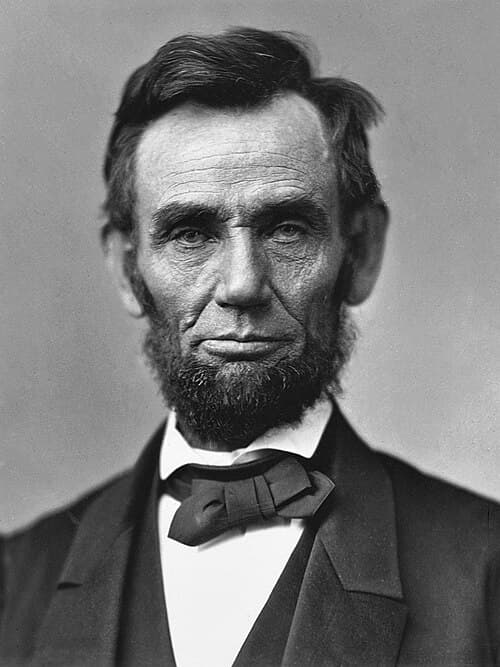
Abraham Lincoln
PERSON • 2 mentions
President of the United States from 1861 to 1865 (1809–1865)
Adin Steinsaltz
PERSON
Israeli rabbi and educator (1937–2020)
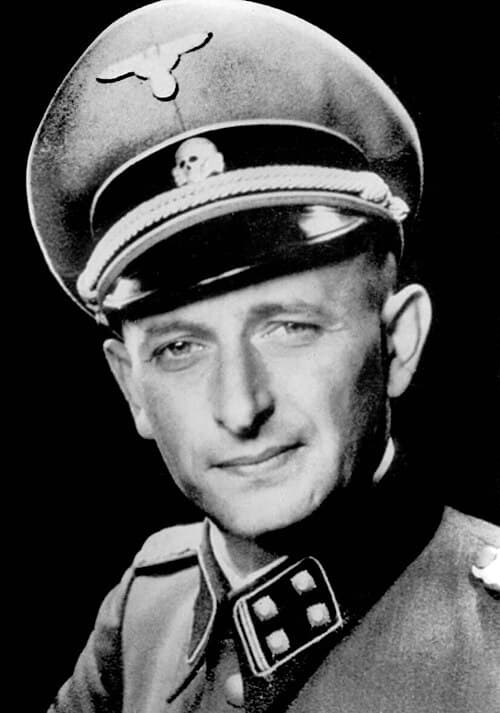
Adolf Eichmann
PERSON
German-Austrian SS officer and one of the major organizers of the Holocaust (1906–1962)
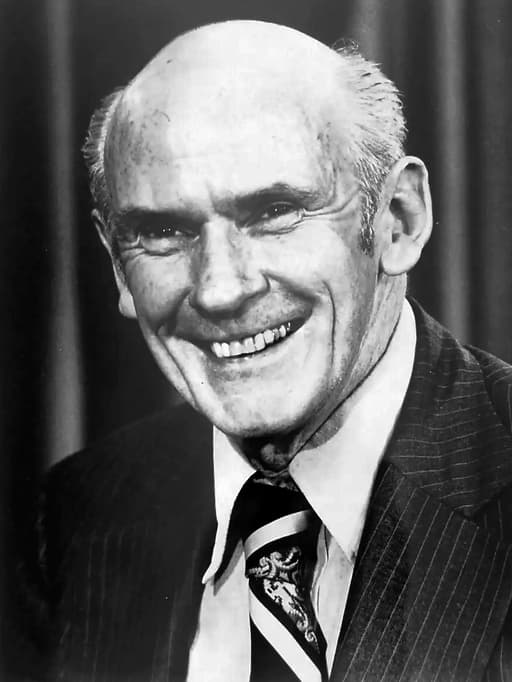
Alan Cranston
PERSON
American politician
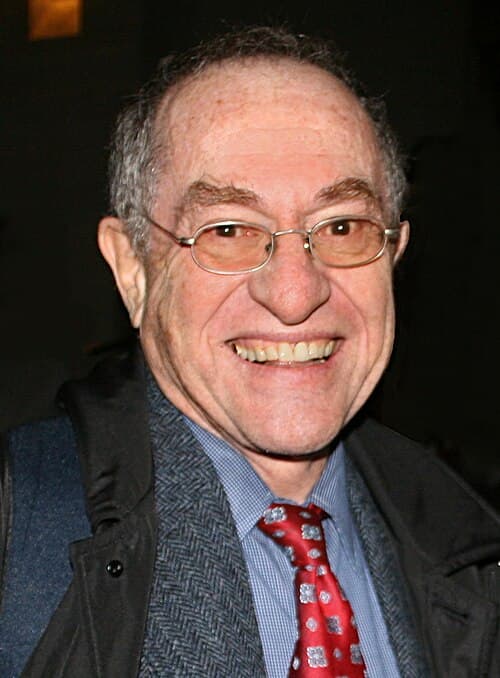
Alan Dershowitz
PERSON • 4 mentions
American lawyer, author, and art collector (born 1938)

Allan Bakke
PERSON
Brazilian association football player
AN
Anatoly
PERSON
Name reference in documents
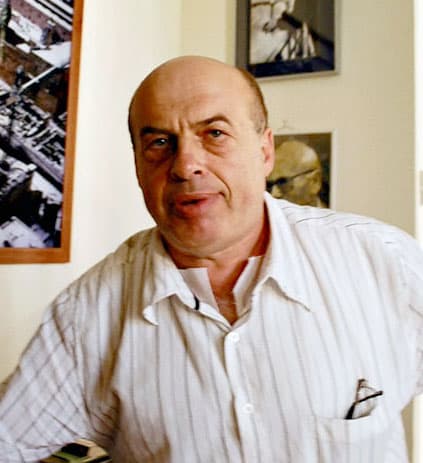
Anatoly Sharansky
PERSON
Israeli politician (born 1948)
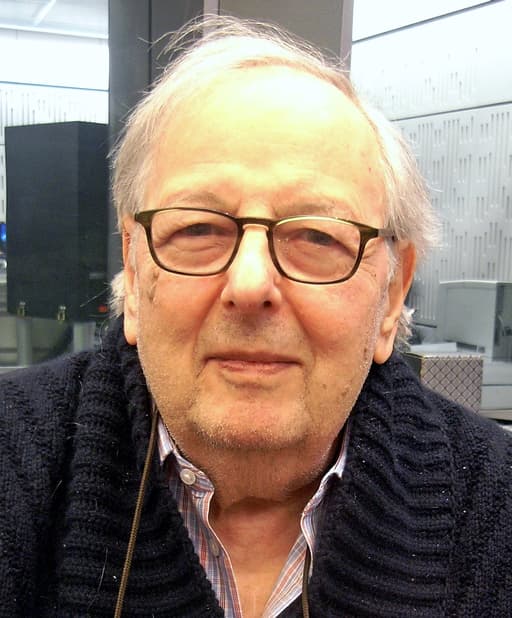
Andre Previn
PERSON
German-American conductor, pianist, and composer (1929–2019)
AS
Andrei Saklarov
PERSON
Name reference in documents
Andrew Johnson
PERSON
Person referenced in documents
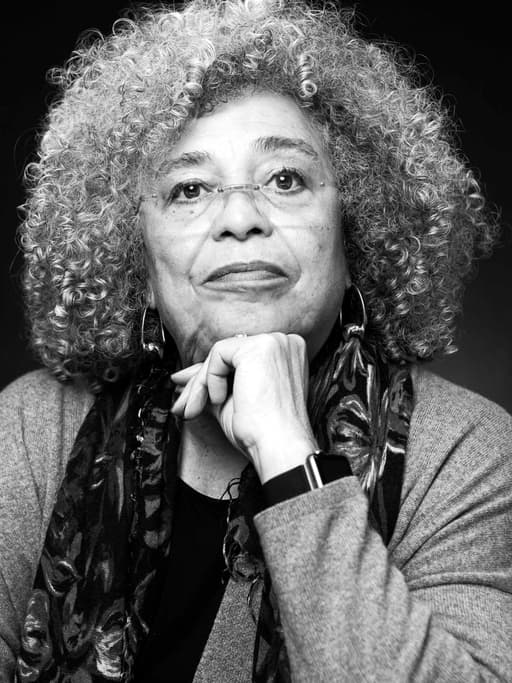
Angela Davis
PERSON
American political activist, scholar, and author
AL
Angela Lambert
PERSON
Author, journalist (1940-2007)
Anthony Lewis
PERSON
American journalist (1927–2013)

Avital
PERSON
Name reference in documents
BA
Baruch
PERSON
Surname reference in documents

Becket
PERSON
Surname or name fragment in documents

Benjamin Netanyahu
PERSON
Prime Minister of Israel (1996–1999; 2009–2021; since 2022)
Benjamin Spock
PERSON
American pediatrician and author of Baby and Child Care (1903-1998)

Bennett
PERSON
Historically black liberal arts college for women in North Carolina, USA
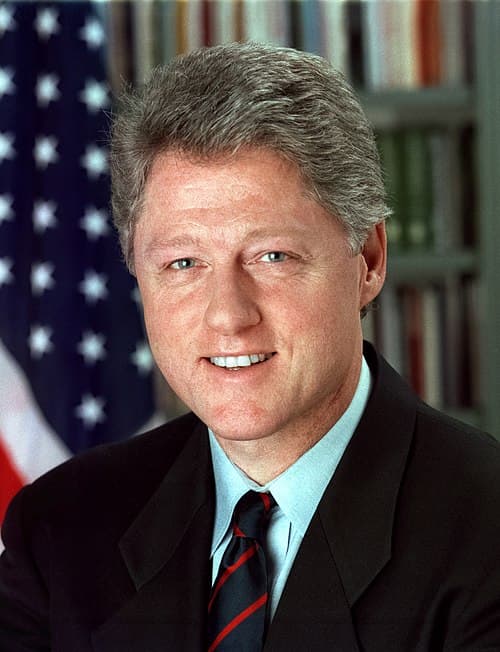
Bill Clinton
PERSON • 4 mentions
President of the United States from 1993 to 2001 (born 1946)
BI
Billy
PERSON
Ambiguous first name - refers to multiple people in Epstein documents
Billy Bulger
PERSON
Politician in Massachusetts, US
Blackmun
PERSON
US Supreme Court justice from 1970 to 1994 (1908–1999)
BL
Blessed
PERSON
Surname reference in documents
Bob Bennett
PERSON
American politician (1933–2016)

Bob Dylan
PERSON
American singer-songwriter (born 1941)
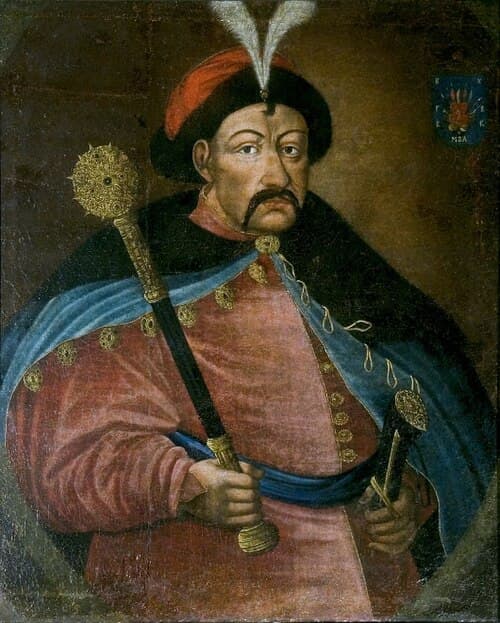
Bohdan Khmelnitsky
PERSON
Name reference in documents
BS
Brook Shields
PERSON
Name reference in documents
Bryant
PERSON • 2 mentions
Surname reference in Epstein-related documents
BU
Buckner
PERSON
Name reference in documents
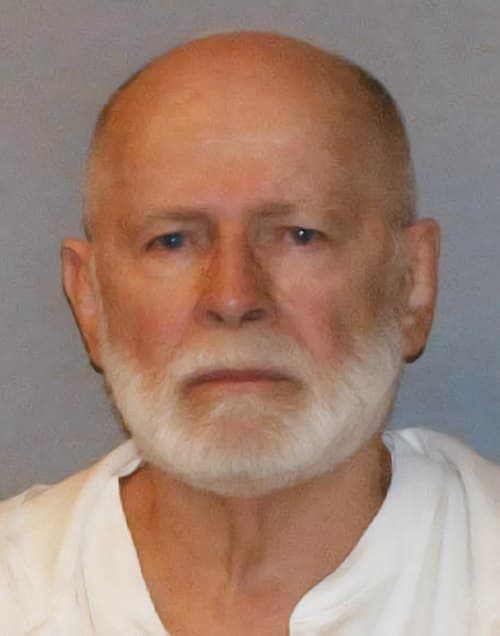
Bulger
PERSON
Surname reference in documents
CA
Carolyn
PERSON
First name reference to multiple individuals in Epstein documents
Casey Affleck
PERSON
American actor
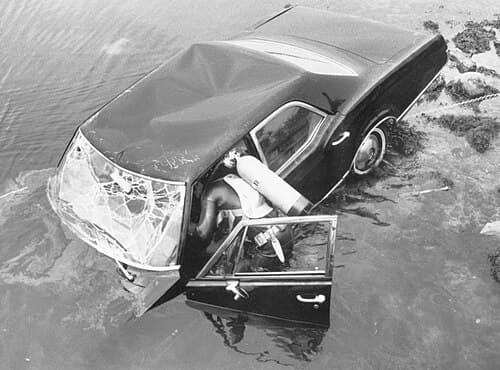
Chappaquiddick
PERSON • 2 mentions
Surname or name fragment in documents
Charles Fried
PERSON
American judge (1935–2024)

Charles St. Denis
PERSON
Name reference in documents
CP
Chase N. Peterson
PERSON
President of the University of Utah
CS
Christopher Steele
PERSON
Former British intelligence officer
Clarence Darrow
PERSON
Person referenced in documents
Claus Von Bulow
PERSON
Person referenced in documents

Condoleezza Rice
PERSON
American diplomat and political scientist (born 1954)
Conrad Black
PERSON
Canadian and British newspaper publisher (born 1944)

Conyers
PERSON • 2 mentions
Surname or name fragment in documents
CW
Courtney Wild
PERSON
American victim/survivor of Jeffrey Epstein who led legal battle for victims' rights
CE
Curb Your Enthusiasm
PERSON
Name reference in documents

Cynthia Nixon
PERSON
American actress and politician
DG
dake Eeney g g
PERSON
Name reference in documents
Daniel Reid
PERSON
Politician from Trinidad and Tobago
Daniel Webster
PERSON
Name reference in documents
David Crosby
PERSON
American singer, guitarist and songwriter (1941–2023)

David Levett
PERSON
Name reference in documents
DM
David Marriot
PERSON
American philosopher
David Merrick
PERSON
American theatre producer (1911-2000)
Deep Throat
PERSON
Alias of Mark Felt, the whistleblower who exposed the Watergate scandal
Delphic
PERSON
Name reference in documents
DB
Derek Bok
PERSON
Person referenced in documents
DE
Desiree
PERSON
American pornographic actress
D-
Desiree - -
PERSON
Name reference in documents
Desiree Washington's
PERSON
Name reference in documents
DF
Dick Friedman
PERSON
Name reference in documents
Don King
PERSON
Name reference in documents
Donald Trump
PERSON
President of the United States (2017–2021, 2025–present)
Donald Washington
PERSON
American football player

Doody
PERSON
Name reference in documents
DS
Doug Schoen
PERSON
Person referenced in documents

Drescher
PERSON
Surname reference in Epstein-related documents

Dylan, Satchel
PERSON
Name reference in documents

Edward Kennedy
PERSON
American lawyer
Ella Fitzgerald
PERSON
American jazz singer (1917–1996)

Elon Musk
PERSON
Businessman and entrepreneur (born 1971)
Ethel
PERSON
First name reference to multiple individuals in the documents
Ethel Rosenberg
PERSON
American woman executed for spying for the Soviet Union (1915-1953)
F. Lee Bailey
PERSON
American criminal defense attorney (1933–2021)
Frank Sinatra
PERSON
American singer and actor (1915–1998)

Gail Sheehy
PERSON
American journalist and writer
GE
Gennifer
PERSON
Name reference in documents
George H.W. Bush
PERSON
President of the United States from 1989 to 1993 (1924–2018)
George Washington
PERSON
American literary and historical figure, referenced in Epstein documents

Georgina Chapman
PERSON
English fashion designer and actress
Gerald B. Tjoflat
PERSON
American judge
Geraldo Rivera
PERSON
American attorney, journalist and talk show host

Gifford
PERSON
Surname or name fragment in documents
Gorbachev
PERSON
Leader of the Soviet Union from 1985 to 1991 (1931–2022)

Greta Van Susteren
PERSON
Name reference in documents
HC
Habeus Corpus
PERSON
Name reference in documents
HR
Haley Robson
PERSON
Identified as recruiter of underage girls for Jeffrey Epstein in Palm Beach
HK
Hare Krishna
PERSON • 2 mentions
Ph.D. Harcourt Butler Technological Institute, Kanpur 2002
Harry Reems
PERSON
American pornographic actor (1947–2013)

Harry Reid
PERSON
American politician (1939–2021)
HS
Helena Stoeckley
PERSON
Name reference in documents

Helmsley
PERSON
Surname reference in documents
Henry Hyde
PERSON
American member of the United States House of Representatives (1924–2007)
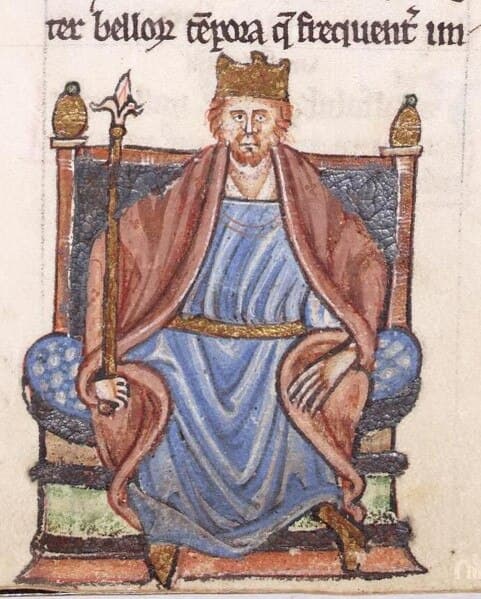
Henry II
PERSON
Name reference in documents
HC
Herrera v. Collins
PERSON
Name reference in documents
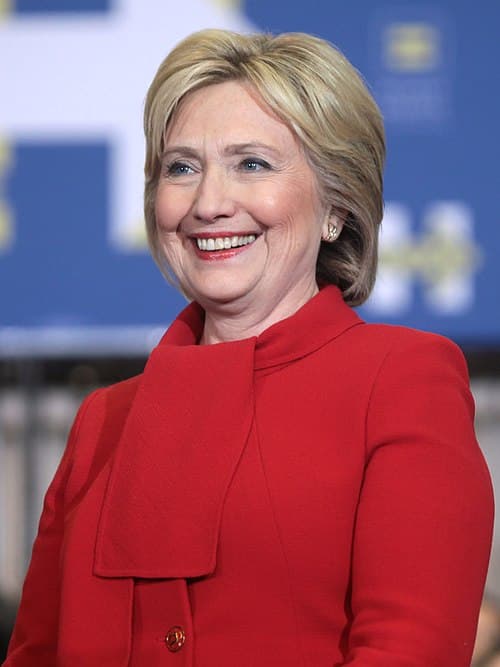
Hillary Clinton
PERSON • 3 mentions
American politician and diplomat (born 1947)
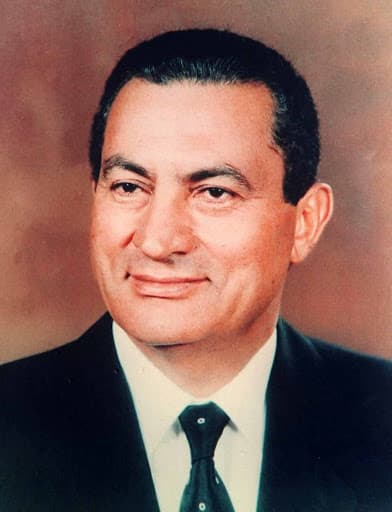
Hosni Mubarak
PERSON • 2 mentions
President of Egypt from 1981 to 2011

Iris Kones
PERSON • 2 mentions
Name reference in documents
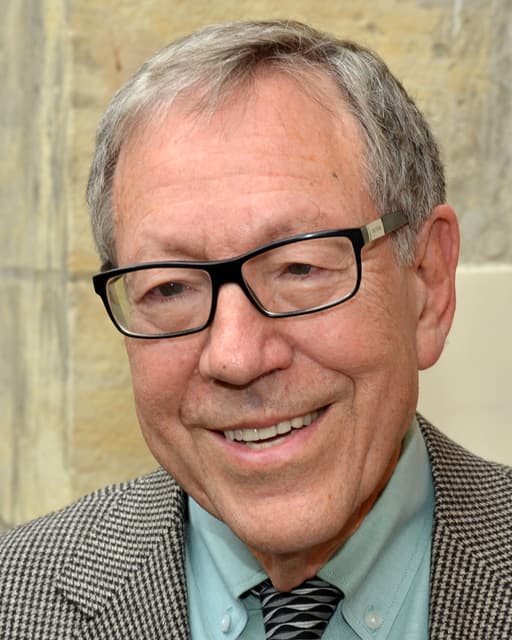
Irwin Cotler
PERSON
Canadian politician
IT
Itzhak
PERSON
Surname reference in documents
Itzhak Perlman
PERSON
Israeli-American violinist and conductor (born 1945)
JG
Jack Goldberger
PERSON
American criminal defense attorney who represented Jeffrey Epstein, partner at Goldberger Weiss P.A. in West Palm Beach, Florida
JA
Jack Henry Abbot
PERSON
American author and criminal (1944–2002)

Jackie Mason
PERSON
American comedian (1928-2021)
Jackie Robinson
PERSON
Name reference in documents
JA
Jacob
PERSON
First name reference to multiple individuals in Epstein documents
Jacob Marcus
PERSON
Holocaust victim (born 1934)
JA
Jamin
PERSON
Surname or name fragment in documents
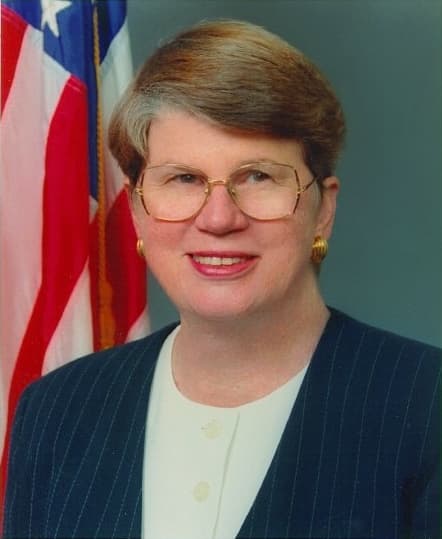
Janet Reno
PERSON
Former Attorney General of the United States (1938-2016)
Jeffrey Epstein
PERSON
American sex offender and financier (1953–2019)
JM
Jeffrey MacDonald
PERSON
Name reference in documents
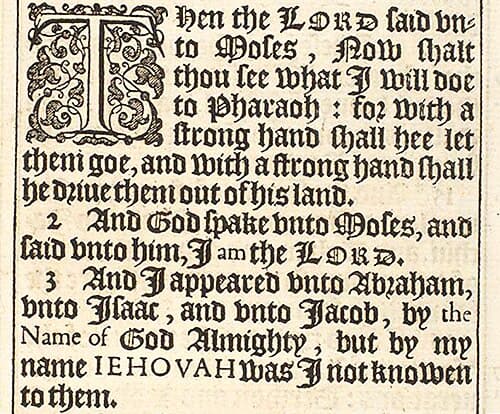
Jehovah
PERSON
Surname or name fragment in documents

Jesus Christ
PERSON
Central figure of Christianity (6 or 4 BC – AD 30 or 33)
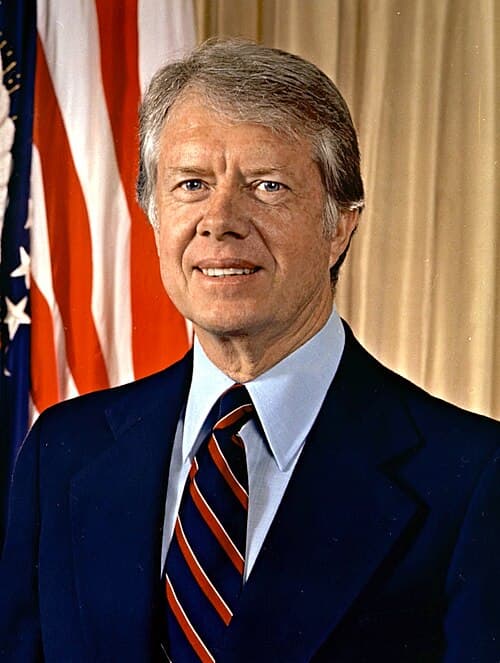
Jimmy Carter
PERSON
President of the United States from 1977 to 1981 (1924–2024)
Jimmy Hoffa
PERSON
American labor union leader (1913 – disappeared 1975)
John Connolly
PERSON • 2 mentions
American FBI agent and convicted criminal
John F. Kennedy
PERSON • 2 mentions
President of the United States from 1961 to 1963 (1917–1963)
John Hope
PERSON
Name reference in documents
John Hope Franklin
PERSON
African-American historian
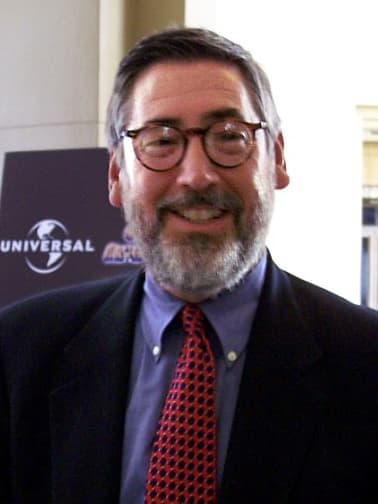
John Landis
PERSON
American film director, screenwriter and producer
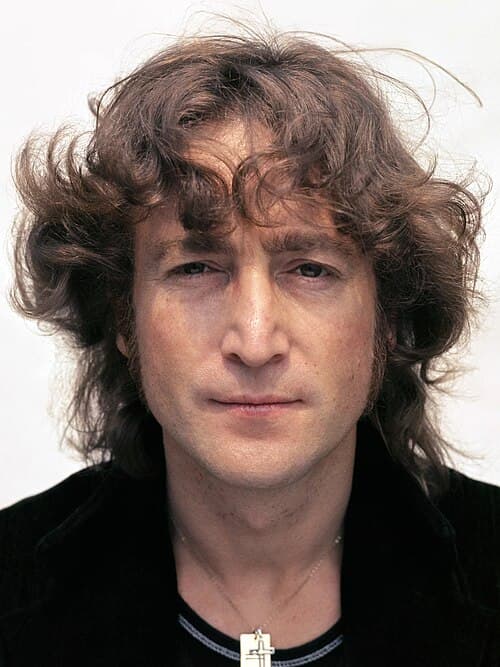
John Lennon
PERSON • 2 mentions
British musician (1940–1980)
John Ono
PERSON
British musician (1940–1980)
John Wigmore
PERSON
Name reference in documents
Johnny Gill
PERSON
American R&B singer-songwriter and actor (born 1966)
JD
Jonathan Doody
PERSON
Name reference in documents
JM
Jonathan Marks
PERSON
Name reference in documents
Jonathan Pollard
PERSON
U.S. civilian intelligence analyst turned Israeli spy
Jules Farber’s
PERSON
Name reference in documents

Julian Assange
PERSON
Australian editor, publisher, and activist (born 1971)

Julie K. Brown
PERSON
American journalist
Juliet
PERSON
First name reference to multiple individuals in Epstein-related documents
Julius
PERSON
Head of the Catholic Church from 337 to 352
Julius Rosenberg
PERSON
Name reference in documents
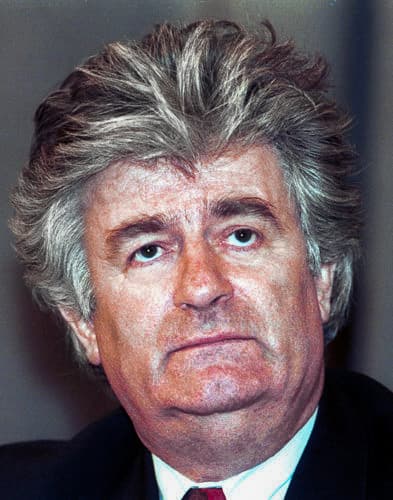
Karadic
PERSON
Name reference in documents

Katherine Fernandez Rundle
PERSON
American politician
Katzav
PERSON
Name reference in documents

Keith Gordon Ham
PERSON
Name reference in documents
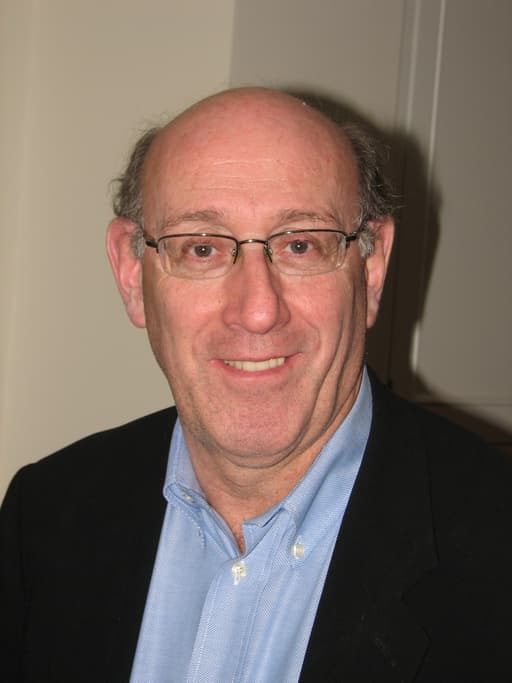
Ken Feinberg
PERSON
American lawyer
Ken Starr
PERSON • 2 mentions
American judge and educational administrator (1946–2022)

Khmelnitsky
PERSON
Name reference in documents

Kipah
PERSON
Name reference in documents
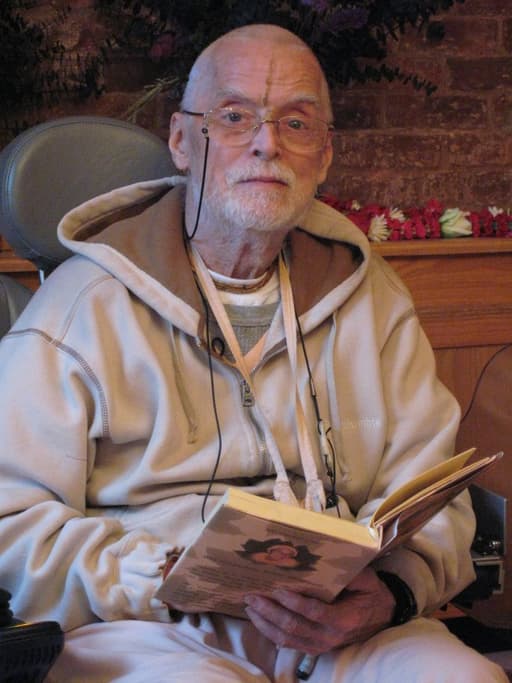
Kirtanananda Swami
PERSON
American religious leader (1937-2011)
Kitty Kelly
PERSON
Name reference in documents
KL
Klieg
PERSON
Name reference in documents
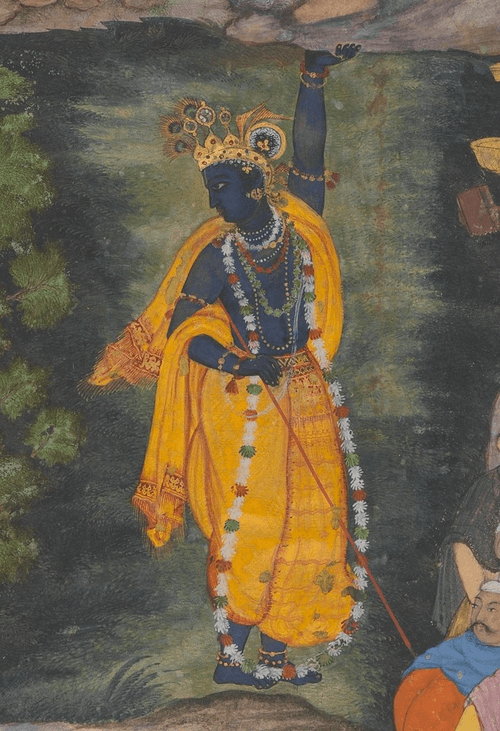
Krishna
PERSON
Major deity in Hinduism, worshipped as the eighth avatar of Vishnu and also as the Supreme god in his own right

Kuchma
PERSON
Researcher

Landis
PERSON
Surname reference in documents
Larry David’s
PERSON
Name reference in documents
Len Wildes
PERSON
Name reference in documents
Lenny Bruce
PERSON
American comedian and social critic (1925–1966)
LB
Leon Black
PERSON
American billionaire businessman (born 1951)
Leona Helmsley
PERSON
American hotel owner (1920–2007)

Leonid Kuchma
PERSON
The second president of Ukraine

Levett
PERSON
Name reference in documents
Linda Lovelace
PERSON
American pornographic actress, later anti-porn activist (1949–2002)

Linda Tripp
PERSON
American civil servant (1949-2020)
Louis Armstrong
PERSON
American jazz musician, trumpeter and singer (1901–1971)
MA
Mailer
PERSON • 2 mentions
Individual employed to handle newspapers from the press to the truck
MA
Maimondes
PERSON
Name reference in documents
Marc Rich
PERSON
American commodities trader (1934–2013)
MD
Marco DeFunis
PERSON
Name reference in documents
Marilyn
PERSON
First name reference to multiple individuals in Epstein documents

Mark Chapman
PERSON
British television presenter

Marks
PERSON
Ambiguous surname - refers to multiple people in Epstein documents
Marlon Brando
PERSON
American actor (1924–2004)

Martha
PERSON
Czech vocalist

Martha Stewart
PERSON
American businesswoman, writer, TV personality (born 1941)
MV
Martha’s Vineyard
PERSON
Person referenced in documents
Martin Luther
PERSON
Name reference in Epstein documents, likely referring to Martin Luther King Jr.
Martin Luther King
PERSON
American Baptist minister and civil rights leader (1929–1968)
MH
Matthew Hale
PERSON
White separatist religious leader; (born 1971)
Maureen Dowd
PERSON
American journalist
MM
Megan MacDonald
PERSON
Person referenced in documents

Mia Farrow
PERSON • 2 mentions
American actress

Michael Douglas
PERSON
American retired actor, producer and activist (born 1944)
Michael Milken
PERSON • 2 mentions
American investor

Michael Steele
PERSON
American rock musician
Mike Gravell
PERSON
Name reference in documents
Mike Tyson
PERSON
American boxer and media personality
MD
Mike Tyson - - direct
PERSON
Name reference in documents

Miss Farrow’s
PERSON
Name reference in documents
Mitt Romney
PERSON • 2 mentions
American politician and businessman (born 1947)

Mitzva
PERSON
Name reference in documents

Monica
PERSON
First name reference to multiple individuals in Epstein documents

Monica Lewinsky
PERSON • 2 mentions
American activist and writer (born 1973)
Morris Rosen
PERSON
Jewish survivor, Death March to Buchenwald Concentration Camp, liberated from the Theresienstadt ghetto by Soviet troops
MO
Morrow
PERSON
American surgeon
MO
Morvillo
PERSON
Name reference in documents

Moses
PERSON
Abrahamic prophet said to have led the Israelites out of Egypt
Muammar Gaddafi
PERSON • 2 mentions
Leader of Libya from 1969 to 2011
NM
Natalia Molotkova
PERSON
American Express Centurion Relationship Manager who handled travel arrangements for Jeffrey Epstein

Natan Sharansky
PERSON
Israeli politician (born 1948)
Norman Mailer
PERSON
American writer (1923–2007)
O.J. Simpson
PERSON • 2 mentions
Former American football player acquitted of murder, referenced in Epstein-related documents and media coverage
OS
Osborne
PERSON
Surname reference in Epstein-related documents

Patricia J. Gifford
PERSON
Name reference in documents

Paula Jones
PERSON
American Civil Servant
PE
Peterson
PERSON
Surname reference in Epstein documents
PO
Pollard
PERSON
Surname reference in Epstein-related documents

Prince Andrew
PERSON
Third child of Queen Elizabeth II and Prince Philip, Duke of Edinburgh (born 1960)
Prince Charles
PERSON
King of the United Kingdom and other Commonwealth realms since 2022 (born 1948)
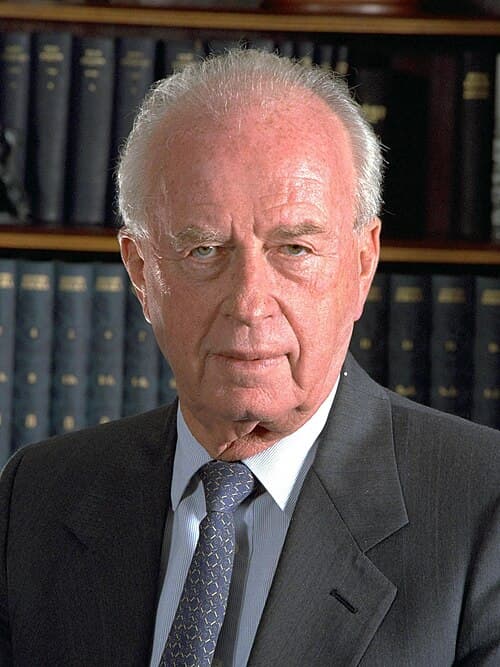
Rabin
PERSON
Surname reference in Epstein-related documents

Radovin Karadic
PERSON
Name reference in documents
Rashamon
PERSON
Name reference in documents
Rashomon
PERSON
Name reference in documents
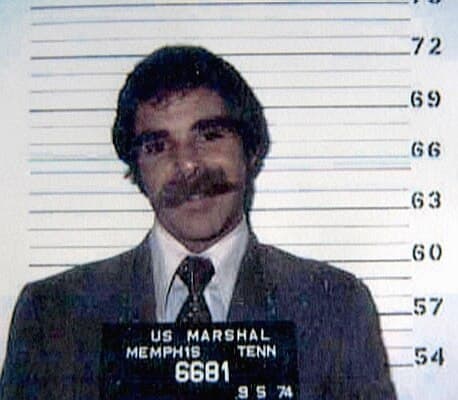
Reems
PERSON
Name reference in documents
RH
Reinaldo Herrera
PERSON
Venezuelan journalist (1930s–2025)
RN
Reynolds v. Nebraska
PERSON
Name reference in documents
Richard Goldstone
PERSON
South African former judge
Richard Kahn
PERSON
Jeffrey Epstein's accountant and estate co-executor (2005-present)
RB
Robert Barnett
PERSON
American lawyer

Robert Downey
PERSON
American actor (born 1965)
Robert Morvillo
PERSON
Prominent New York trial lawyer who pioneered the practice of white-collar criminal defense and whose client list included colorful celebrities, powerful politicians, and billionaire businessmen

Robin Givens
PERSON
Name reference in documents
Rogan
PERSON
Surname reference in Epstein-related documents
RO
Roman
PERSON
Ambiguous first name - Roman Chukov, Roman Polanski, also Times New Roman font references
Romeo
PERSON
First name reference to multiple individuals in Epstein-related documents
Ronan Farrow
PERSON
American journalist

Rosenberg
PERSON
Ambiguous surname - refers to multiple people in Epstein documents
Roy Wilkins
PERSON
African-American NAACP leader
RU
Rubin
PERSON
Surname reference in Epstein documents
RU
Rundle
PERSON
Surname reference in documents
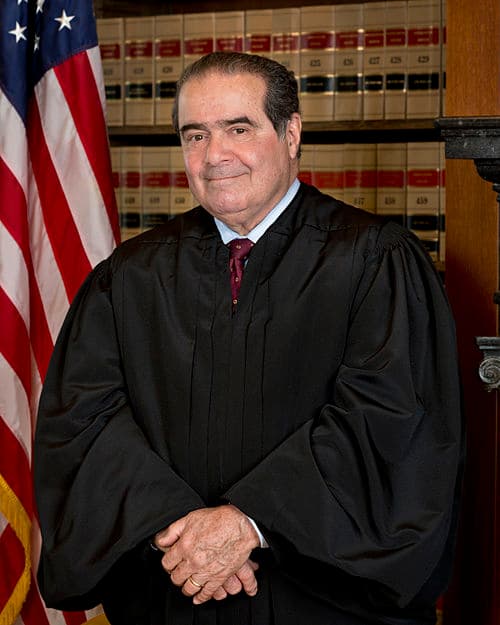
Scalia
PERSON
Surname reference in Epstein-related documents
Sexual McCarthyism
PERSON
Name reference in documents
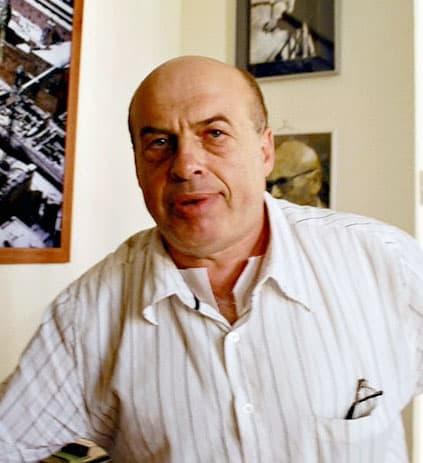
Sharansky
PERSON
Israeli politician (born 1948)
SS
Sheldon Siegel
PERSON
Name reference in documents
Sinatra
PERSON
Surname reference in Epstein-related documents
Sol Hurok
PERSON
Name reference in documents
Soon-Yi Previn
PERSON • 2 mentions
Wife of Woody Allen
St. Denis
PERSON • 2 mentions
Name reference in documents
St. Paul’s
PERSON
Name reference in documents
SB
Steven Bryant
PERSON
American conductor
Steven Spielberg
PERSON
American filmmaker (born 1946)
ST
Stoeckley
PERSON
Surname or name fragment in documents
Swami
PERSON
Surname reference in documents
T.S. Eliot’s
PERSON
Name reference in documents
TF
the Defender of the Faith
PERSON
Name reference in documents

Thomas A. Drescher
PERSON
Name reference in documents

Thomas Becket
PERSON
Name reference in documents
Thomas Jefferson
PERSON
President of the United States from 1801 to 1809
Tjoflat
PERSON
Surname reference in documents
TH
Tom Hagen
PERSON
Name reference in documents
TR
Tripp
PERSON
Surname reference in documents
Tyson
PERSON
Surname reference in Epstein-related documents
Vernon Jordan
PERSON
American lawyer and civil rights activist (1935–2021)
Vic Morrow
PERSON
American actor (1929–1982)

Vicky Ward
PERSON
British investigative journalist

Virginia Giuffre
PERSON
Advocate for sex trafficking victims (1983–2025)
Vladimir Lenin
PERSON
Founding leader of the Soviet Union from 1922 to 1924 (1870–1924)
Von Bulow
PERSON
Name reference in documents
WH
Whitey
PERSON
Surname reference in documents

Wigmore
PERSON
Surname or name fragment in documents
WI
Wildes
PERSON
Name reference in documents
William Barr
PERSON
77th & 85th United States Attorney General (born 1950)
William Jennings Bryant
PERSON
American academic (1944-2020)
WK
William Kuntsler
PERSON
Name reference in documents
William O. Douglas
PERSON
Name reference in documents

Woody Allen
PERSON • 3 mentions
American filmmaker, actor and comedian (born 1935)

Woody Allen-Mia Farrow
PERSON
Name reference in documents

Yeshiva
PERSON
Surname reference in documents
Yigal Amir
PERSON
Israeli extremist and murder convict
YR
Yitchaz Rabin
PERSON
Name reference in documents

Yoko Ono
PERSON
Japanese artist and activist based in the United States (born 1933)
ZM
Zero Mosel
PERSON
Name reference in documents
-Gifford
ORGANIZATION
Organization referenced in documents
Amicus
ORGANIZATION
Organization referenced in documents
Animal House
ORGANIZATION
Organization referenced in documents
Auschwitz
ORGANIZATION • 2 mentions
Nazi concentration and extermination camp
Bakke
ORGANIZATION
Organization referenced in documents
Blank University
ORGANIZATION
Organization referenced in documents
Board of Education
ORGANIZATION
Organization referenced in documents
Brooklyn Dodgers
ORGANIZATION
Organization referenced in documents
Bulgers
ORGANIZATION
Organization referenced in documents

Cathedral
ORGANIZATION
Organization referenced in documents
Chilmark Store
ORGANIZATION
Organization referenced in documents
Church and State
ORGANIZATION
Organization referenced in documents
Chutzpah
ORGANIZATION
Quality of audacity, of Yiddish origin into English
Colonel Steel
ORGANIZATION
Organization referenced in documents
D.A.
ORGANIZATION
Organization referenced in documents
Davis Medical School
ORGANIZATION
Tertiary educational institution, or part of such an institution, that teaches medicine and awards a professional degree for physicians and surgeons
Department of Justice
ORGANIZATION
United States Department of Justice, federal executive department responsible for law enforcement
Fieldston
ORGANIZATION
Neighborhood of The Bronx in New York City
Ford Theater
ORGANIZATION
Organization referenced in documents
Fourth Circuit
ORGANIZATION
Organization referenced in documents
Georgetown Law School
ORGANIZATION
Institution specializing in legal education
Grace of God
ORGANIZATION
Organization referenced in documents
Groten
ORGANIZATION
Organization referenced in documents
Gulag
ORGANIZATION
Organization referenced in documents

Harvard Colleges
ORGANIZATION
Organization referenced in documents
Harvard Law School
ORGANIZATION
Law school of Harvard University in Cambridge, Massachusetts
High Court
ORGANIZATION
Organization referenced in documents
Independent Counsel
ORGANIZATION
Organization referenced in documents
Internight
ORGANIZATION
Organization referenced in documents
Judicial Conduct
ORGANIZATION
Organization referenced in documents
Kremlin
ORGANIZATION
Fortified complex in Moscow, Russia
Maladroit Du Siegneur
ORGANIZATION
Organization referenced in documents

Mossad
ORGANIZATION
National intelligence agency of Israel

New York Magazine
ORGANIZATION
American magazine on life, culture, politics, and style, focusing on New York City
New York Matrimonial Court
ORGANIZATION
Organization referenced in documents

Oval Office
ORGANIZATION
Office of the President of the United States in the White House

Princeton University
ORGANIZATION
Private Ivy League research university in Princeton, New Jersey
Saxon Protestants
ORGANIZATION
Organization referenced in documents

Secret Service
ORGANIZATION
U.S. Secret Service
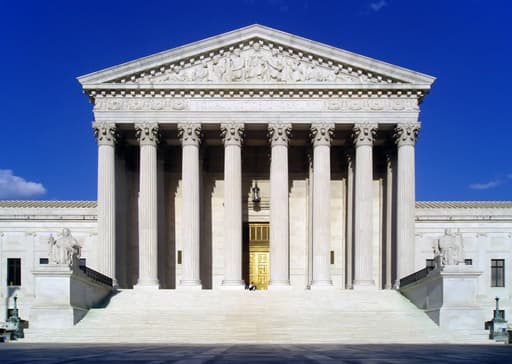
Supreme Court
ORGANIZATION
Highest court of jurisdiction in the US
the “Abraham Defense
ORGANIZATION
Organization referenced in documents
the Admissions Committee
ORGANIZATION
Organization referenced in documents
the American Communist Party
ORGANIZATION
Organization referenced in documents
the American Jewish Congress
ORGANIZATION
Organization referenced in documents
the Arab League
ORGANIZATION
League of Arab states
The California Supreme Court
ORGANIZATION
Organization referenced in documents
the Catholic Church
ORGANIZATION
Catholic Church
the Center For Advanced Studies
ORGANIZATION
Organization referenced in documents
the Committee on Admissions
ORGANIZATION
Organization referenced in documents
the Indiana Supreme Court
ORGANIZATION
Organization referenced in documents
the International Criminal Court
ORGANIZATION
International court in The Hague for war crimes and crimes against humanity
the Maryland Court of Appeals
ORGANIZATION
Organization referenced in documents
the Massachusetts Appellate Court
ORGANIZATION
Organization referenced in documents
the Massachusetts Senate
ORGANIZATION
Organization referenced in documents
the Miss Black America Pageant
ORGANIZATION
Organization referenced in documents
The National Enquirer
ORGANIZATION
Organization referenced in documents
the New York Law Journal
ORGANIZATION
Organization referenced in documents
the New York Legal Aid Society
ORGANIZATION
Organization referenced in documents
The New York Times
ORGANIZATION
American daily newspaper (founded 1851)
the Red Sox
ORGANIZATION
Organization referenced in documents
the Rhode Island Disciplinary Counsel
ORGANIZATION
Organization referenced in documents
the Rhode Island Supreme Court
ORGANIZATION
Organization referenced in documents
the Supreme Court of Georgia
ORGANIZATION
Organization referenced in documents
the Truro Synagogue
ORGANIZATION
Organization referenced in documents
the U.S. Court of Appeals
ORGANIZATION
Government agency
the Ukraine Against Murder Charges
ORGANIZATION
Organization referenced in documents
the United States Court of Appeals
ORGANIZATION
U.S. federal appeals court
the University of California
ORGANIZATION
University

the University of Washington
ORGANIZATION
Organization referenced in documents
the Village Voice
ORGANIZATION
Organization referenced in documents
the Whaling Church
ORGANIZATION
Organization referenced in documents
this New Republic
ORGANIZATION
Fictional state in the "Star Wars" universe

Toshiba
ORGANIZATION
Japanese multinational conglomerate corporation

Trinity
ORGANIZATION
Church or educational institution

USA Today
ORGANIZATION
American national daily newspaper
Volvo
ORGANIZATION
Automobile manufacturer

Vrindaban
ORGANIZATION
City in Mathura district, Uttar Pradesh, India
White Anglo
ORGANIZATION
Organization referenced in documents

White House
ORGANIZATION
Official residence and office of the President of the United States
Yale College
ORGANIZATION
Organization referenced in documents

Yale Law School
ORGANIZATION
Law school of Yale University
Zhe American Lawyer
ORGANIZATION
Organization referenced in documents
Zhe Best Defense
ORGANIZATION
Organization referenced in documents

Alaska
LOCATION
State of the United States of America
Albany
LOCATION
Capital city of the State of New York, United States, and seat of Albany County
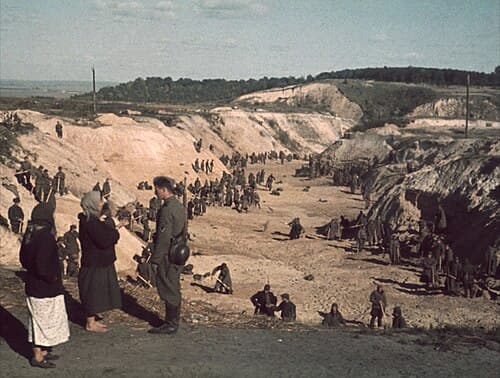
Babi Yar
LOCATION
Ravine in the Ukrainian capital Kyiv and site of Nazi massacres

Belarus
LOCATION
Country in Eastern Europe
Black America
LOCATION
Location referenced in documents

Cairo
LOCATION
Capital city of Egypt

Cambodia
LOCATION
Country in Southeast Asia

Canterbury
LOCATION
Cathedral city in Kent, England

Central Park
LOCATION
Public park at the center of Manhattan in New York City, New York, United States
Central Park West
LOCATION
Street in Manhattan, New York City

Charleston
LOCATION
Largest city in the U.S. state of South Carolina
Christian America
LOCATION
Location referenced in documents
Dade County
LOCATION
County in Florida, United States
Dedham
LOCATION
Town in Massachusetts, United States
Deep South
LOCATION
Location referenced in documents

Eastern Europe
LOCATION
Eastern part of Europe
Edgartown
LOCATION • 2 mentions
Town in Dukes County, Massachusetts, United States
Fire Island
LOCATION
Island in Suffolk County, New York, United States

Guinea
LOCATION
Sovereign state in West Africa
Hague
LOCATION
City in the Hague, Netherlands
Hurok
LOCATION
Location referenced in documents

India
LOCATION
State of the United States of America

Indianapolis
LOCATION
Capital city of the U.S. state of Indiana and the seat of Marion County

Jerusalem
LOCATION
City in the Middle East, holy to the three Abrahamic religions

Kansas City
LOCATION
City in Missouri, United States, that is one of two county seats of Jackson County and the largest city in Missouri

Lincolnshire
LOCATION
Ceremonial county in the east of England

Long Island
LOCATION
Island in New York, United States of America

Lybia
LOCATION
Genus of small crabs
M.V.
LOCATION
Location referenced in documents
Marion County
LOCATION
County in Indiana, United States
Marran County Courthouse
LOCATION
Location referenced in documents

Minnesota
LOCATION
State of the United States of America
Mogadishu
LOCATION
Capital and the largest city of Somalia

New York City
LOCATION
Most populous city in the United States

Newport
LOCATION
City in south east Wales, United Kingdom
Pidyon Shevuyim”—prisoner
LOCATION
Location referenced in documents
Rikers Island
LOCATION
Island in New York City
Rockport
LOCATION
Manufacturer of shoes

San Jose
LOCATION
City and county seat of Santa Clara County, California, United States

Santa Cruz
LOCATION
City in eastern Bolivia

South
LOCATION
Directional region of the United States

South Carolina
LOCATION
State of the United States of America
the City of Miami
LOCATION
Location referenced in documents
the Eastern District
LOCATION
Federal judicial district
the Hague
LOCATION
Location referenced in documents
the Island
LOCATION
Location referenced in documents
Tikrit
LOCATION
City in Saladin, Iraq

Truro
LOCATION
City in Cornwall, United Kingdom

United States
LOCATION
Country located primarily in North America

Vineyard
LOCATION
City in Utah County, Utah, United States

Washington State
LOCATION
State of the United States of America

Washington, D.C.
LOCATION
Capital city of the United States of America

Westchester County
LOCATION
County in New York, United States

Yugoslavia
LOCATION
1918–1992 country in Southeastern Europe
Statistics
Pages:100
Entities:404
Avg. OCR:95.5%
Sponsored