EFTA00054963_sub_005 - EFTA00054963_500
Document Information
Bates Range
EFTA00054963_sub_005 - EFTA00054963_500
Pages
100
Original Filename
EFTA00054963.pdf
Document Content
Page 401 - EFTA00054963_401
METROPOLITAN CORRECTIONAL CENTER NEW YORK, NEW YORK GENERAL POST ORDERS SPECIAL HOUSING UNIT THIS IS NOT AN ARMED POST Non-Contact Visits: If the Warden deems it necessary to give an inmate a non-contact visit, the Warden will instruct the SHU Lieutenant to do so. The visit will be conducted in the 10 South Annex visiting room. This visit will be directly supervised to ensure all established visiting procedures are followed. Clothing: Appropriate dress is required and must be in good taste. Excessively provocative, immodest or revealing attire is reason to deny a visit. Visitors over the age of 12 will not be allowed into the institution in skirts, shorts, or dresses exceeding three inches above the kneecap in length. Bathing suits or any type of swim wear will not be permitted in the institution. See-through clothing, revealing sleeveless garments, halter tops, tube tops, tank tops and any kind of top that reveals the midriff area, low-cut shirts or blouses, revealing front and backless clothing, skin-tight clothing, spandex clothing, leotards, and sweat pants are NOT permitted. Any pants with holes in the knee or buttocks area are also prohibited. Additionally, hooded shirts of any kind, hats, caps, and head scarfs (except for religious reasons) are also prohibited. All visitors are required to wear footwear (no shower shoes of any kind) and undergarments (including bras for females). In accordance with OSHA guidelines, Visitors shoes are to be "closed toed" and have a strap around the heal of the foot. The front lobby officer will not permit visitors to wear jackets or blazers up to the visiting room. Inmates are responsible for advising their visitors of the dress requirements for visitation. Only a Correctional Supervisor and Institution Duty Officer may deny visits for noncompliance. Inmates' attire for visiting includes jumpsuit and bus shoes for pre-trial males; females must wear the blue uniform and bus shoes; cadres must wear khaki uniforms with institutional shoes. A random selection of visitors will be tested with the Ion Spectrometry Special Visit Requirements: At times, Clergymen, former or prospective employers, sponsors and parole advisors may request special visits. They must make these requests in writing with sufficient advance notice (72 hours). The request will be reviewed by the Unit Manager for approval. December 7, 2018 Sensitive But Unclassified Page 14 of 29 EFTA00055363
Page 402 - EFTA00054963_402
METROPOLITAN CORRECTIONAL CENTER NEW YORK, NEW YORK GENERAL POST ORDERS SPECIAL HOUSING UNIT THIS IS NOT AN ARMED POST • Business Visitor. The Warden has the final authority on the admittance of business visitors and should be notified through the chain of command. Except for pretrial inmates, an inmate is not permitted to engage actively in business or profession. All questions regarding a business visitor should be addressed to the duty Lieutenant and Institution Duty Officer. • Consular Visitors. When it has been determined that an inmate is a citizen of a foreign country, the Warden must permit the consular representative of that country to visit on matters of the legitimate business. After a request has been submitted from the inmate or consulate, a memorandum should be generated from the inmate's Unit Team for the Warden's approval. Once approved, a copy should be maintained in the Lieutenant's Office and the Front Lobby. • Representatives of Community Groups. The Warden is the approving authority on visits from representative of Community based Groups. A memorandum should be generated and sent through the Chief Correctional Supervisor, Associate Warden, to the Warden for approval. Once approved, a copy should be maintained in the Lieutenant's Office and the Front Lobby. • Minister of Record/Clergy. An existence of an established relationship prior to confinement for visitors does not apply to visitors in this category. These visitors ordinarily provide assistance in release planning, counseling, and discussion of family problems. • Minister of Record An inmate must submit in writing their request to be approved for a visit from his Minister of Record. They must submit their request to the Chaplin. An inmate may only have one minister of record on his/her visiting list at a time. The Minister of Record does NOT count against the total number of authorized regular visitors/ social visitors. Clergy An inmate must submit in writing their request to be approved for a visit from clergy. Visits from clergy (other than the Minister of Record) will be in accordance with the general visitor procedures, and WILL count against the total number of regular visits allowed. On both visits, an approved memorandum will be forwarded through the Chief Correctional Officer and posted in the Lieutenant's Office and the Front Lobby December 7, 2018 Sensitive But Unclassified Page 15 of 29 EFTA00055364
Page 403 - EFTA00054963_403
METROPOLITAN CORRECTIONAL CENTER NEW YORK, NEW YORK GENERAL POST ORDERS SPECIAL HOUSING UNIT THIS IS NOT AN ARMED POST Children under the age of sixteen (16) who are placed on the visiting list must be accompanied by an adult who is also an approved visitor. A brief embrace and kiss is permitted when an inmate greets their visitor/child. The same applies upon termination of the visit. During the visit, any physical contact other than hand holding will be considered improper and is prohibited. Children are not permitted to be seated on inmates lap during the course of their visit. Visits with children are to take place only between the inmate identified on the official visiting form and the child listed on the official visiting form with the child's parent or guardian present. TOOL CONTROL • PURPOSE OF TOOL CONTROL: It is the policy of the Bureau of Prisons to maintain strict control and accountability of tools used and in storage at all institutions. Tool Control procedures are imperative for the following reasons: to provide a tool in good repair for the job at hand, to improve the general appearance of the shop or working area, and to prevent tools from being used to effect escape or assault. • CLASSIFICATION OF TOOLS: All tools are classified as Class AA; Class A; or Class B. The Class AA group includes tools considered too dangerous to leave inside the institution. The Class A group includes tools most likely used in escape, or to do bodily harm to personnel or other inmates. The Class B group includes those of a less hazardous nature. All tools, where possible, shall be stored on a shadow board as follows: • All class "AA" tool shadow boards will have a white background with a bright (curb) yellow silhouette of each tool. • All Class "A" tool shadow boards will have a white background with a red silhouette of each tool. • All Class "B" tool shadow boards will have a white background with a black silhouette of each tool. December 7, 2018 Sensitive But Unclassified Page 16 of 29 EFTA00055365
Sponsored
Page 404 - EFTA00054963_404
METROPOLITAN CORRECTIONAL CENTER NEW YORK, NEW YORK GENERAL POST ORDERS SPECIAL HOUSING UNIT THIS IS NOT AN ARMED POST STORAGE AND SUPERVISION OF CLASS "AA" TOOLS: Class "AA" Tools must be removed from the institution at the end of each work day, stored in a combination locked safe in a Class "A" Tool Room, stored in the armory, or turned into the control center. Class "A" Tools must be stored in a metal cage or a class #1 concrete walled room physically separated from Class "B" Tools behind two (2) locked doors. When the Class "A" Tool Room is inside the Class "B" Tool Room, the lock on the Class "B" Tool Room serves as one (1) of the two (2) required locks for the Class "A" Tool Room. Supervision of Class "AA" Tools will be under constant visual supervision. STORAGE AND SUPERVISION OF CLASS "A" TOOLS: Class A tools will be kept on a shadow board in a locked room or cabinet. This storage area will be separate and secure from the Class B tools storage area. Only employees are authorized to issue and draw Class A tools from the Tool Room or places of storage. Class A tools will be under the supervision of an employee at all times. Inmates are not permitted to carry them about the institution without an employee escort nor use them without supervision. A complete inventory of Class A tools will be made at the beginning of the workday, before the detail is released for dinner and at the end of the workday. When a Class A tool is lost or misplaced, the Chief Correctional Supervisor will be notified immediately. All inmates who may have had access to the tool will be held at the work location until a thorough search has been made. STORAGE AND SUPERVISION OF CLASS "B" TOOLS: All tools not in the Class A or Class AA categories will be considered to be Class B tools. All Class B tools are under the supervision of the employees and must be accounted for at the end of the work day. These tools must be issued to inmates, in the presence of their supervisor. All Class B tools must be gathered from the work area and moved to the storage area at the end of the work day. When a Class B tools is lost or misplaced, a search for it will be initiated and a written report will be made to the Chief Correctional Supervisor and the department head covering the details of the loss at the end of the day. December 7, 2018 Sensitive But Unclassified Page 17 of 29 EFTA00055366
Page 405 - EFTA00054963_405
METROPOLITAN CORRECTIONAL CENTER NEW YORK, NEW YORK GENERAL POST ORDERS SPECIAL HOUSING UNIT THIS IS NOT AN ARMED POST TOOL INVENTORIES: Up-to-date inventories will be kept by all shops, industries, school and any other person having tools issued to them or stored under their supervision Unit Officers having items such as scissors, etc., on the unit should be particularly careful as to the whereabouts and the accountability of these items. The Tool Room Officer will maintain a record of all tools in possession of the institution. BROKEN OR WORN-OUT TOOLS: Broken or worn-out tools will be removed from the shadow board and returned to the Central Tool Room for replacement. If it is determined that they cannot be surveyed and replaced, Class A tools such a saw blades, etc., requiring replacement, will be returned to the Central Tool Room for disposal. FOOD SERVICE TOOLS: A knife and tool equipment cage with a shadow board and adequate locking device shall be located in the Food Service Department. All hazardous knives and tools will be marked with an identification symbol. All knives will be chitted out of the knife cage and attached to the cutting table by the responsible employee. The accountability of the knives will be checked at frequent intervals during the shift and at the end of the day. CONTROLLED FOOD ITEMS: Special attention must be given to food items such as yeast, nutmeg, fruits, and fruit juices. Of this group, yeast shall be locked in a secure box in a refrigerated area. An inventory shall be kept, indicating the date and quantity of issue, receipts, the balance on hand, and the initials of the responsible employee. Yeast shall be dispensed only by the Food Service employee and kept under strict supervision. CONTROL OF HAZARDOUS AND POISONOUS CHEMICALS: Inventories will be maintained of all poisonous and toxic fluids used in the institution, such as narcotics, wood alcohols, methyl- alcohol, ditto fluids, acids, gases etc. These items will be stored in a locked cabinet and will be drawn by an employee only, when authorized by the department supervisors. The issuing office will record the date, time, amount, and who received the item. December 7, 2018 Sensitive But Unclassified Page 18 of 29 EFTA00055367
Page 406 - EFTA00054963_406
METROPOLITAN CORRECTIONAL CENTER NEW YORK, NEW YORK GENERAL POST ORDERS SPECIAL HOUSING UNIT THIS IS NOT AN ARMED POST KEY AND LOCK CONTROL POLICY: It is the policy of the Bureau of Prisons to maintain proper control of keys and locks at all times. The purpose of this is to establish procedures for control and inventory of institution keys and locks. Further detailed information can be obtained by referring to BOP Program Statements. All keys authorized for daily use will_be stored on the Control Center key board when not in use. Sets of keys are identified by letter and number with the number of keys in that set indicated. Two listings of key locations identifying active and emergency keys can be found in the Control Center and in the office of the Security Officer. RESTRICTED AND EMERGENCY KEYS: Restricted keys have blue/black tags on the keyboard in the Control Center. The Watch Supervisor will be notified when it becomes necessary to draw keys for a department or post other than his/her assigned are, or to a restricted area, such as the commissary, storeroom, etc. The officer will prepare a Restricted Key Form indicating the purpose for entering such area. Emergency keys or red-lined keys will be issued only at the direction of the Warden, Chief of Correctional Services, Associate Warden, Watch Supervisor or the Institution Duty Officer. Acting positions may delegate the drawing of keys for a specific time period via memo through the Captain. HANDLING OF KEYS: Keys will be carried on a ring which is securely fastened to a chain affixed to the belt of the officer. Discussion of key numbers and reference to their use will be avoided in the presence of inmates. Keys should never be carelessly thrown around, dropped, or left unattended, etc. Always personally hand the keys to your relief so they remain in the personal possession of the officer at all times. Each officer has the responsibility to count the number of keys on each set to ensure that all keys are present. Inmates will never be permitted to handle keys designated for employee use at any time, or under any circumstances. Should an employee take keys home, the keys must be brought back to the institution immediately. December 7, 2018 Sensitive But Unclassified Page 19 of 29 EFTA00055368
Sponsored
Page 407 - EFTA00054963_407
METROPOLITAN CORRECTIONAL CENTER NEW YORK, NEW YORK GENERAL POST ORDERS SPECIAL HOUSING UNIT THIS IS NOT AN ARMED POST LOST OR MISPLACED. KEYS: If a key or a set of keys is lost or misplaced, the officer will immediately report it to the Watch Supervisor by telephone or in person so that adequate safeguards may be placed in effect. The area the keys were last in will be immediately secured and all inmates in the area will be searched. This will be followed by a written report to the Chief of Correctional Services as soon as circumstances permit. REPLACEMENT OF BROKEN OR DAMAGED KEYS: Whenever a key is broken or damaged, the employee concerned will submit a request for replacement to the Security Officer. All parts of the broken key will be retrieved from the key way immediately to prevent inmates from gaining access to them. A replacement key will be issued by the Security Officer in accordance with established procedures. If the key is broken or damaged and immediate replacement is needed, the Watch Supervisor will be notified and will take appropriate action. If it is not possible to retrieve the broken portion from the lock, the employee will remain at the lock until the broken portion can be retrieved. REQUEST FOR REMOVAL AND ADDITION OF KEYS: When it becomes necessary for a new key to be added to your key ring, submit a Security Work Request to the Chief Correctional Supervisor for approval and signature, stating the reason the key is needed, your key ring number and the institution key number if possible. If a key is no longer needed, submit a Security Work Request to the Security Officer. INMATE URINALYSIS PROGRAM: Urine Surveillance and Narcotic Identification, inmate urine samples will be taken at different hours (early morning, noon, late evening). Therefore in order to accomplish this a weekly urinalysis test roster has been established for all inmates that fall under the random testing roster. It is critical that when inmates are notified for UA testing that they are not left unsupervised. They must be watched from the time of notification until they report for testing at the Lieutenants Office. It is also imperative that when conducting a UA test of an inmate that the subject is also tested for alcohol by using the Alco-Sensor III. December 7, 2018 Sensitive But Unclassified Page 20 of 29 EFTA00055369
Page 408 - EFTA00054963_408
METROPOLITAN CORRECTIONAL CENTER NEW YORK, NEW YORK GENERAL POST ORDERS SPECIAL HOUSING UNIT THIS IS NOT AN ARMED POST CALL-OUTS: Sufficient copies of the master call-out sheet for distribution to all units will be copied and forwarded to the Control Center Officer so that the Morning Watch Control Center Officer can place one in each detail pouch. Extra copies of the call-outs will be placed at the detail pouch cabinet. Unit officers will post the call-out in the housing units. The employee who places an inmate on call-out must ensure the requested inmate arrives at the specified time. If the inmate does not arrive as scheduled, the requesting staff member shall contact the staff member responsible for the inmate's accountability. If the inmate(s) is/are found to be in an area other than the assigned callout area, it is the responsibility of the staff member(s) or department that has placed the inmate(s) on call-out to prepare an incident report for the inmate's failure to report to call-out. If efforts to locate the inmate fail, the inmate shall be immediately reported to the shift lieutenant as missing and appropriate action initiated to locate the inmate. CELL ASSIGNMENT - SEXUAL OFFENDER/PROTECTIVE CUSTODY Cell assignments will be determined in an methodical manner. This involves the SHU Lieutenant and OIC, Psychology staff, Unit Team as well as Investigative staff, in determining suitability of cellmates for inmates in protective custody and/or sexual offenders. Most inmates do not like to be housed with sexual offenders or protective custody inmates. Housing the wrong inmates with sexual offenders or protective custody inmates, can lead to serious assaults and/or homicide. Inmates cannot be allowed to choose their roommates, but it is understood that some inmates may be better housed with inmates of like backgrounds/affiliations, than arbitrarily housing the inmates without considering all variables. As noted earlier, protective custody and sexual offenders will be screened thoroughly. If there are no single cells available, this review will be crucial in minimizing the potential for assault. HIGH RISK LIST During the weekly SHU meeting, the Warden will be provided a list of those inmates who are considered high risk from a psychological and management stand point. The Captain and Chief Psychologist should be responsible for generating this list. This list will be provided to the Lieutenants' office and the Duty Officers so they are informed should a high risk inmate act out and be in need of medical or psychological attention. December 7, 2018 Sensitive But Unclassified Page 21 of 29 EFTA00055370
Page 409 - EFTA00054963_409
METROPOLITAN CORRECTIONAL CENTER NEW YORK, NEW YORK GENERAL POST ORDERS SPECIAL HOUSING UNIT THIS IS NOT AN ARMED POST Additionally, the Captain should inform the Warden of any camera malfunctions, plumbing problems, or issues that may cause problems, as well as the corrective actions taken/attempted to rectify these issues. Inoperable security equipment, during serious incidents, prevents staff from being able to record and or/view the incident for possible prosecution or administrative action. SUICIDE PREVENTION INFORMATION BOP HIGH RISK GROUPS • New Inmates - The first few hours and days after admission can be critical. Newly incarcerated inmates may experience feelings such as shame, guilt, fear, sadness, anger, agitation, depression, relationship problems, legal concerns, hopelessness, and helplessness, which can contribute to increased suicide risk. • Protective Custody - Inmates who volunteer to enter protective custody are at high risk for suicide, especially during the first 72 hours in SHU. These inmates should be referred to psychology services immediately. • Long-term Protective Custody Inmates - These inmates are particularly vulnerable to depression that can lead to a suicide attempt, and should be monitored closely while they are in SHU. • Inmates Taking Medication for Mental Health Reasons - These inmates are vulnerable to developing suicidal thoughts and attempting suicide by overdosing on their medication. Inmates on medication should be monitored to make sure they are not hoarding medication. Any signs of distress, deterioration in hygiene, or sudden changes in behavior should be reported to psychology. FACTORS THAT CAN INCREASE THE PROBABILITY THAT AN INMATE MAY BECOME SUICIDAL: Mental Health Factors History of mental illness 1. Is the inmate depressed, actively psychotic? 2. Has the inmate been compliant with psychotropic medication? 3. Have there been changes in eating, sleeping, hygiene, weight, recreation, activity level? Prior suicide attempt 1. How lethal was the attempt? 2. How many attempts have been made? December 7, 2018 Sensitive But Unclassified Page 22 of 29 EFTA00055371
Sponsored
Page 410 - EFTA00054963_410
METROPOLITAN CORRECTIONAL CENTER NEW YORK, NEW YORK GENERAL POST ORDERS SPECIAL HOUSING UNIT THIS IS NOT AN ARMED POST Inmate's current mood, affect, and behavior 1. Is the inmate emotionally upset, angry, and easily agitated? 2. Are the inmate's thoughts clear and goal directed (vs. delusional or psychotic in nature)? 3. Is the inmate depressed, has there been a recent loss? 4. Has hopelessness persisted even after the depression has lifted? 5. Has the inmate given away property, revised a will, or requested a phone call to say his goodbyes? Medical Condition(s)/Chronic Pain 1. Does the inmate have a chronic life threatening medical illness? 2. Has the inmate's overall health diminished recently? 3. Is the inmate experiencing pain or other negative symptoms? Relationship Difficulties 1. Has the inmate received a Dear John letter? 2. Have communications and or visits decreased? 3. Has there been a change in the relationship? Situational Factors 1. Legal issues - pending indictment; loss of appeal to reduce sentence. 2. Difficulties with staff or other inmates. 3. Gambling debts, drugs. 4. Ending of a close relationship with another inmate. 5. Possible victim of a sexual assault. REPORTING AND DOCUMENTING INMATE BEHAVIOR Report Your Concerns: Any inmate behavior(s) that is questionable and may reflect a change in mental health status should be reported to the Shift Lieutenant immediately. During non-working hours: Inform the Shift Lieutenant of any questionable inmate behavior. He/she will determine if the on-call psychologist needs to be contacted. Segregation Log Book: Any changes in inmate behaviors should be noted in the TRUSCOPE program. A detailed note regarding the observed behavior is advisable. Documenting in the TRUSCOPE program serves two purposes. First, the entry serves as a means of communication for other staff members. Second, it provides an accurate account of activity during your shift. Documentation should be neat, legible, and professional. December 7, 2018 Sensitive But Unclassified Page 23 of 29 EFTA00055372
Page 411 - EFTA00054963_411
METROPOLITAN CORRECTIONAL CENTER NEW YORK, NEW YORK GENERAL POST ORDERS SPECIAL HOUSING UNIT THIS IS NOT AN ARMED POST RESPONDING TO A SUICIDE EMERGENCY A Segregation Officer observing an inmate in the act of committing suicide, causing other self-injurious behavior, or who appears to have committed suicide will call for back-up before entering the cell. The officer will notify the Control Center and the Lieutenant's Office by radio of the situation and request immediate back-up. BACK-UP MUST BE PRESENT IN ORDER TO ENTER A CELL. The "cut- down" tool is located in the storage closet on a shadow board. It is the #1 officer's responsibility to locate this item at the start of the shift. This tool is only authorized to be used in emergency situations. Miscellaneous use of this tool is not permitted and will result in dulling the blade of the tool. In the event an inmate commits suicide, the scene of the suicide will be treated in a manner consistent with the investigation of an inmate death. All measures necessary to preserve and document the evidence needed to support subsequent investigations will be maintained or otherwise adequately recorded. SEXUAL ASSAULT PROTOCOL Reporting In all cases of reported sexually abusive behaviors (e.g., from alleged victim, staff, and/or "third party") the following will occur: The Operations Lieutenant will be notified immediately and he/she will: • Immediately safeguard the inmate (which will vary depending on the severity of the alleged sexually abusive behavior and could range from monitoring the situation, changing housing assignments, changing work assignment, placing alleged victim and perpetrator in Special Housing, etc.); • Promptly refer all inmates reported or suspected of being the victim of sexually abusive behavior to Psychology Services for assessment of vulnerability and treatment needs; • During business hours, ensure that the SIS, Chief of Correctional Services, Program Coordinator, and Warden are notified; and During non-business hours, ensure that the SIS, Chief of Correctional Services, Program Coordinator, Duty Officer, and the on-call Psychologist are notified. • The Program Coordinator will review the psychological assessment and other relevant factors and make a determination as to whether or not to proceed with the full activation of the Response Protocol. December 7, 2018 Sensitive But Unclassified Page 24 of 29 EFTA00055373
Page 412 - EFTA00054963_412
METROPOLITAN CORRECTIONAL CENTER NEW YORK, NEW YORK GENERAL POST ORDERS SPECIAL HOUSING UNIT THIS IS NOT AN ARMED POST Responding Not all allegations of sexually abusive behavior will require full activation of the Response Protocol. In some cases, the Program Coordinator will determine that there is not sufficient reason to proceed (e.g., the alleged victim credibly recanted; the alleged perpetrator was not in the institution on the date of the allegation, the inmates involved independently report a non-coercive sexual encounter, etc.) and the Response Protocol may be terminated. In cases where more information is needed, or in cases where there is a credible and serious allegation or instance of sexually abusive behavior, the full Response Protocol will be implemented. Once the Program Coordinator determines that the intervention should continue, a sensitive and coordinated response is necessary. Services will be provided in an environment that meets both security and therapeutic needs. The full Response Protocol, monitored by the Program Coordinator, involves the following components: Protection All appropriate staff will consult and determine the actions to be taken to prevent further sexually abusive behavior both to the alleged victim (e.g. change in work assignments, change in housing assignment, closer supervision, protective custody, transfer, etc.) and/or by the alleged perpetrator (e.g., remove from compound, change housing assignment, etc.). The Captain will ensure that a STG category of "V SA UNV" is entered into SENTRY, and in instances where an inmate perpetrator is alleged, will enter the STG category of "P SA UNV" for that inmate (See Section 13.b. for further details). PSYCHOLOGICAL: Psychology staff are responsible for crisis intervention, assessment of treatment needs, documentation of the evaluation results, treatment, psychiatric referral, and/or other treatment options related to the alleged victim. In addition, Psychology staff provide guidance to Unit Management and Community Corrections staff regarding an inmate's post-release mental health needs. Inmate perpetrators (or alleged perpetrators) of sexually abusive behaviors will be referred by the Operations Lieutenant to Psychology Services. Inmates considered high-risk for sexual re-offending may be referred to specialty treatment and/or management programs, individual or group counseling, or may be managed through standard correctional techniques. December 7, 2018 Sensitive But Unclassified Page 25 of 29 EFTA00055374
Sponsored
Page 413 - EFTA00054963_413
METROPOLITAN CORRECTIONAL CENTER NEW YORK, NEW YORK GENERAL POST ORDERS SPECIAL HOUSING UNIT THIS IS NOT AN ARMED POST If an inmate perpetrator is determined in need of treatment services and refuses treatment, Psychology Services staff will document the refusal and place it in the medical section of the Inmate Central File and notify the referring staff of the refusal. Documentation of treatment compliance or refusal ensures continuity of care within, between, and outside the Bureau. Examination Medical staff are responsible for examination, documentation, and treatment of inmate injuries arising from sexually abusive behaviors, including testing when appropriate for pregnancy, HIV and other sexually transmitted diseases (STDs). Where indicated, medical staff, trained in the collection of sexual assault evidence (i.e., "rape kit") should conduct an examination for physical evidence which may be used later in formal investigations. At institutions where Health Services staff are neither trained nor certified in sexual assault evidence gathering, the inmate will be examined at the institution by trained health care professionals from the local community or at the local community facility equipped (in accordance with local laws) to evaluate and treat sexual assault victims. Prophylactic treatment and follow-up for sexually transmitted diseases will be offered to all inmate victims, as appropriate. Whenever an inmate is referred to Health Services for examination and treatment of injuries related to sexually abusive behavior, staff will encourage the inmate victim to complete an Inmate Injury Assessment and Follow-up form (BP-5362) as required by the Program Statement on Patient Care. Investigation In cases where the full Response Protocol is activated, staff are trained to investigate allegations of sexually abusive behavior thoroughly. The information concerning the identity of the alleged inmate victim and the specific facts of the case are limited to those staff who need-to-know because of their involvement with the victim's welfare and the investigation of the incident. This is important not only to preserve the victim's privacy but also to preserve maximum flexibility to investigate the allegations. Initial Notifications: Upon activating the full Response Protocol, the investigation phase is initiated and the following notification(s) will be made: Inmate Perpetrator on Inmate Victim: In the event that an inmate is alleged to have perpetrated sexually abusive behavior against another inmate, the Special Investigative Agent (or SIS) will be notified immediately. December 7, 2018 Sensitive But Unclassified Page 26 of 29 EFTA00055375
Page 414 - EFTA00054963_414
METROPOLITAN CORRECTIONAL CENTER NEW YORK, NEW YORK GENERAL POST ORDERS SPECIAL HOUSING UNIT THIS IS NOT AN ARMED POST Staff Perpetrator on Inmate Victim: In the event that a staff member is alleged to have perpetrated sexually abusive behavior against an inmate, the Warden will be notified immediately. The Warden will notify the Regional Director and the Office of Internal Affairs (OIA), who will in turn notify the Office of the Inspector General (OIG), and when appropriate, will notify the Federal Bureau of Investigation (FBI). Inmate Perpetrator on Staff Victim: In the event that an inmate is alleged to have perpetrated sexually abusive behavior against a staff member, the SIA/SIS will be contacted immediately with follow-up notification to the Warden. Crime Scene Preservation: The staff first responder will preserve the crime scene. SIS staff will be responsible for collecting information/evidence. The investigation, in coordination with the agency to which the case may be referred, will follow the guidance given in the Special Investigative Supervisor's Manual that outlines gathering and processing procedures. Physical Evidence Collection: When there is a report of a recent Rape or Sexual Assault with an Object, or there is a strong suspicion that a recent, serious assault may have been sexual in nature, a thorough physical examination of the alleged victim - to include a "rape kit" will be completed immediately. Physical evidence collection may also include an examination of, and collection of physical evidence from the suspected perpetrator(s). After Action Reviews of Violent Sexual Assaults: Following any incident of Rape or Sexual Assault with an Object, the Warden, Program Coordinator, Chief of Correctional Services, Health Services Administrator, and Chief Psychologist will meet and review the incident. This review is to assess the reasonableness of the actions of staff following the incident, to ensure the security and treatment needs of the inmate victim have been addressed adequately and the management and investigation of the inmate or staff perpetrator is progressing appropriately. Within two working days after the initial reporting of the Rape or Sexual Assault with an Object, a written report highlighting the relevant facts should be produced and the Warden or designee will personally attest by his or her signature that the review has taken place and that the steps taken by staff were either appropriate or inappropriate. A copy of this report will be forwarded to the Regional Director. December 7, 2018 Sensitive But Unclassified Page 27 of 29 EFTA00055376
Page 415 - EFTA00054963_415
METROPOLITAN CORRECTIONAL CENTER NEW YORK, NEW YORK GENERAL POST ORDERS SPECIAL HOUSING UNIT THIS IS NOT AN ARMED POST Consideration for staff impacted by the incident is necessary. Arrangements for debriefing affected staff and referral to appropriate services to mitigate the stress associated with these events should be offered. Administrative Disciplinary Process and Prosecution: In keeping with this "zero tolerance" policy, perpetrators of sexually abusive behavior will be disciplined and/or referred for prosecution. Tracking Sexually Abusive Behavior: Tracking and analyzing the incidents of sexually abusive behavior are critical to the safety and management of inmates and the security of all Bureau facilities. Monitoring these incidents allows the Bureau to assess the effectiveness of current policy and procedures in regard to the extent of sexual victimization. To ensure full and accurate reporting and analysis, the SIS will maintain secure investigative files which include data on: • The victim(s) and perpetrator(s) of sexually abusive behavior; • Crime characteristics; • Formal and/or informal action(s) taken; • All collateral reports, supporting memoranda, and videotapes; • Medical forms; and • Any other evidentiary materials pertaining to the allegation. The Office of Internal Affairs will report the cumulated data on the inmate victims of staff and inmate sexually abusive behavior to all Chief Executive Officers and the Psychology Services Administrator at the end of each quarter and at the end of each fiscal year. SUICIDAL SITUATION IN SHU OR THE HOUSING UNITS: If you are the first person to notice an inmate hanging, you should call for staff assistance (Operations Lieutenant & Control Center)and remain calm and wait until sufficient staff and Lieutenant arrive prior to handcuffing the inmate=s cell mate(s) (if applicable) and unlocking the cell door. If feasible, obtain protective equipment from the above mentioned areas. Cut the inmate down, protecting the head and neck area. Always administer life- saving procedures. December 7, 2018 Sensitive But Unclassified Page 28 of 29 EFTA00055377
Sponsored
Page 416 - EFTA00054963_416
METROPOLITAN CORRECTIONAL CENTER NEW YORK, NEW YORK GENERAL POST ORDERS SPECIAL HOUSING UNIT THIS IS NOT AN ARMED POST Post Orders, the TRUSCOPE program and log books are confidential documents and should never be left unattended or in an area accessible to inmates. Post Orders must be secured at all times when not in use by staff. It is the responsibility of the employee to inform the employer of the fact they have not been able or afforded the opportunity to read such orders. The employer will then advise the employee of the general requirements of the post, and answer any questions. Employees assuming posts under these circumstances still have the responsibility of exercising sound correctional judgment based upon their training and experience and will make reasonable efforts before assuming your post. After reading the post orders, the employee must sign and date the Post Order Review Sheet which is located in Section 5 of this document. These post orders are not intended to describe in detail all the officers' responsibilities. Good judgment and common sense are expected in all situations not covered in these post orders. NOTE: IT IS POLICY OF THE BUREAU OF PRISONS THAT IF AN INMATE(S) SHOULD APPROACH YOU OR YOUR POST WITH A STAFF MEMBER HOSTAGE, YOUR FIRST CONSIDERATION IS THE SECURITY OF THE INSTITUTION AND UNDER NO CIRCUMSTANCES WILL INMATES BE PERMITTED TO ESCAPE. ANY EMPLOYEE TAKEN HOSTA RANK, HAS NO AUTHORITY. Captain / 2 / 7 /W Date December 7, 2018 Sensitive But Unclassified P,it3Y 29 0: 29 EFTA00055378
Page 417 - EFTA00054963_417
INSTITUTIONAL SUPPLEMENTS/PROGRAM STATEMENTS FIREARMS AND BADGES INMATE ACCOUNTABILITY INMATE PERSONAL PROPERTY SECURITY INSPECTIONS TOOL CONTROL MAIL MANAGEMENT VISITING PROCEDURES INMATE CORRESPONDENCE ALCOHOL SURVEILLANCE/TESTING ENTRANCE PROCEDURES INMATE TELEPHONES _ON SCREENING SEARCHING/DETAINING PERSONS SEXUAL ABUSE PREVENTION/INTERVENTION INMATE DISCIPLINE SPECIAL HOUSING SUICIDE PREVENTION SEARCHES OF HOUSING UNITS/INMATES AND WORK AREAS ESCORTED TRIPS USE OF FORCE/APPLICATION OF RESTRAINTS POSTED PICTURE FILE HUNGER STRIKES ESCAPES DEATH NOTIFICATIONS P.S. 500.13 I.S. NYM 5511.06 I.S. NYM 5580.07 I.S. NYM 5500.13 Z.S. NYM 5500.13 P.S. 5800.16 I.S. NYM 5267.08 I.S. NYM 5265.14 I.S. NYM 6590.07 I.S. NYM 5500.13 P.S. 5264.08 P.S. 5522.02 P.S. 5510.15 P.S. 5324.12 P.S. 5270.09 P.S. 5270.10 P.S. 5324.08 P.S. 5521.06 P.S. 5538.07 Z.S. NYM 5566.06 P.S. 5510.13 P.S. 5562.05 P.S. 5553.07 EFTA00055379
Page 418 - EFTA00054963_418
PS 5500.14 10/19/2012 Chapter 7, Page 1 CHAPTER 7 FIREARMS AND BADGES 700. DEFINITIONS. Probable cause, reasonable determination, or reasonable belief means facts and circumstances known to the employee at the time of the use of firearms that would cause a reasonable employee to conclude that the action is appropriate. 701. CARRYING OF FIREARMS. Title 18 U.S.C. § 3050, authorizes the Attorney General to prescribe rules and regulations relating to the carrying of firearms by Bureau officers and employees. This authority is delegated to the Director in 28 CFR 0.96(o). When approved by the Warden, institution staff are permitted to carry firearms when: • transporting inmates. • assigned to escape posts, and • assigned to security posts which require firearms as standard issued equipment. Carrying or the use of personal or privately owned firearms while on duty is prohibited. Post orders, riot plans, and escape plans will include instructions for carrying firearms. a. Duty Assignment. Employees must not be assigned to duties that require the carrying of firearms prior to successfully completing the firearms familiarization training course. b. Staff Qualification. New employees must not be assigned to posts requiring the carrying of firearms before completing the Introduction to Correctional Techniques Training at the Federal Law Enforcement Training Center. In extraordinary circumstances, an exception may be made for an employee who has completed the local firearms familiarization training with written approval of the Warden and Regional Director. c. Re-qualification. Staff must complete satisfactorily the Bureau's approved firearms training course each year. Allowances will be made in accordance with applicable laws, rules, and regulations. EFTA00055380
Sponsored
Page 419 - EFTA00054963_419
PS 5500.14 10/19/2012 Chapter 7, Page 2 Chaplains, dentists, physicians, and other positions which the Director specifically exempts from carrying firearms are not required to complete the firearms familiarization training conducted at the institution and Staff Training Academy. d. Other Use of Firearms. Only the Director or Director's designee may authorize, in writing, Bureau staff to carry Government-issued firearms for purposes not expressed in this Program Statement. 702. USE OF FIREARMS. Firearms must be used only when deemed necessary for the following Law Enforcement purposes: • Prevent escapes; • Prevent loss of life or serious physical injury; cav‘c 1/4.‘ yvvcssamcnb eLvp<Luy, upysi the damage or loss of property would contribute directly to an escape, loss of life, or serious physical injury; and • Maintain or restore control of a correctional institution. tliat The use of firearms is prohibited if force other than firearms appear reasonably sufficient to accomplish law enforcement purposes. Examples are, but not limited to: • Prevention of escape; • Prevention serious physical injury; and • Restoration of control in a correctional institution. The necessity to use firearms arises when all available means of ,achieving the law enforcement purpose have failed or are likely 'to fail. An employee is not required to jeopardize personal safety or the safety of others before using firearms to prevent serious injuries/bodily harm or death. If use of firearms is deemed necessary, staff must shoot the subject with every intention of hitting "center mass" to ensure the subject is stopped. re. EFTA00055381
Page 420 - EFTA00054963_420
PS 5500.14 10/19/2012 Chapter 7, Page 3 Staff will not attempt to shoot a limb which creates a lesser chance of stopping the subject and may pose a danger to staff, other inmates, or persons in the community. Firearms must not be used solely to disable moving vehicles or aircraft. Firearms will only be used against the driver or other occupants of a moving vehicle when the: • Employee has a reasonable belief that the subject poses an imminent danger of death or serious physical injury to the employee or others. • Public safety benefits of using such force outweigh the risks to the safety of the employee or others. As soon as practicable, medical attention must be provided to any persons injured during an incident involving use of firearms. Firearmo wiii nnr he %mar; i F rho emninwee rorncinivs...4 A a A escapee as an inmate sentenced under the Juvenile Justice and Delinquency Prevention Act. a. Escape Prevention. The use of firearms is authorized when deemed necessary to prevent an escape in the following situations. K (1) Perimeter Walls. At institutions secured with perimeter walls, prior to using firearms, staff must reasonably believe that an inmate has the capability to escape. For example, the inmate may be carrying items that could be used to perpetrate an escape, such as, but not limited to, a ladder, grappling hook, or rope, suggesting an intent to escape. An employee who determines an escape is in progress must issue a verbal warning, then fire a warning shot prior to shooting the subject. (2) Multiple Perimeter Fences. At institutions secured with multiple perimeter fences, prior to using firearms, staff must reasonably believe that an inmate has the capability to escape. For example, the inmate may be carrying items such as, but not limited to, a ladder, blankets, grappling hooks, ropes, broom handles, or sticks, that will perpetrate an escape. EFTA00055382
Page 421 - EFTA00054963_421
PS 5500.14 10/19/2012 Chapter 7, Page 4 An employee who determines an escape is in progress must issue a verbal warning, then fire a warning shot prior to shooting the subject. Verbal warnings and warning shots are not required when the employee reasonably believes there is imminent threat danger of death or serious physical injury to self or others. When authorized, throughout this policy, warning shots should be used only if there is no apparent danger to self, other staff and inmates, or the community. Warning shots will be fired into the ground and never into the air or in an indiscriminate direction. The inmate is not required to be on the first/inner perimeter fence before the employee issues the warning. When the initIoLe aLLualiv Lunt-acts UIC iiisLiinner pet imciAlt itint.e in an attempt to climb or demonstrates an attempt to get on or over the first/inner perimeter fence, and the employee reasonably determines an escape is being attempted, the employee may shoot the subject. The employee is not required to wait until the inmate is between the perimeter fences or over the first/inner fences. (3) Metropolitan Correctional Centers (MCCs) and Metropolitan Detention Centers (MDCs). When an employee reasonably determines that an escape is being attempted from a MCC or MDC, the employee should give a verbal warning. If the inmate continues, the employee may shoot the subject. Warning shots are prohibited due to the possibility of injury to innocent bystanders. (4) Minimum Security Institutions. Ordinarily, firearms are not used to prevent escapes from minimum security level institution's. However, weapons are authorized when the escaping inmate has used or threatened to use force which is likely to cause serious physical injury or has manifested an imminent threat of death or serious physical injury to the employee, other staff and inmates, or the community. Verbal warnings and warning shots should be used when feasible. (5) Escapes with Outside Assistance. Firearms may be used against persons who are not inmates, if they are facilitating an escape and have used or threatened to use force which is likely EFTA00055383
Sponsored
Page 422 - EFTA00054963_422
PS 5500.14 10/19/2012 Chapter 7, Page 5 to cause death or serious physical injury against the employee, other staff and inmates, or the community. Verbal warnings and warning shots must be used when feasible. (6) Escape from Escorted Trip or Prisoner Transport. When an employee reasonably determines an escape is being attempted from an escorted trip or prisoner transport, the employee must issue a verbal warning. If the inmate continues and the escape is occurring within the immediate environs of a correctional institution, the employee will fire a warning shot, if feasible, prior to shooting the subject. Outside the immediate environs of a correctional institution, the employee should not fire a warning shot prior to shooting the subject due to the possibility of injury to innocent hwOranMarc Absent the use or threat of force which would likely cause serious physical injury or a manifested imminent threat of death or serious physical injury to the employee, other staff and inmates, or the community, it is not permissible to use firearms to prevent an escape of an inmate in transit to or from a minimum security level institution. The exception to the rule is when the escorting employees are transporting inmates at the same time to a minimum and non-minimum security level institutions. (7) Once An Escape Has Occurred. After an escape from a transport vehicle or an institution, and the immediate environs has been successful, employees attempting to apprehend the escaped prisoner may not use firearms unless there is probable cause to believe: (a) The subject has committed a felony involving the infliction or threatened infliction of serious physical injury or death. • (b) The subject's escape would pose an imminent danger of death or serious physical injury to the employee or others. Note: The phrase "after an escape from a transport vehicle or an institution and the immediate environs has been effectuated" should be interpreted in the following manner: EFTA00055384
Page 423 - EFTA00054963_423
PS 5500.14 10/19/2012 Chapter 7, Page 6 • As long as a staff member is in continuous pursuit of an escaping inmate, whether the escape takes place from an institution, transport vehicle, or outside facility (such as a hospital), the escape has not yet been effectuated. The use of firearms is permissible under the escaping inmate standard. • The immediate environs of an institution is defined as the property lines of the correctional facility. This boundary may be expanded by the Warden with the Regional Director's concurrence and should be defined as explicitly as possible. A verbal warning should be given if it would not pose a risk of death or serious bodily injury to the officer or others. Warning shots are prohibited due to the possibility of injury r.o innocent i.nisiAnder.4 b. Prevent the Loss of Life or Serious Physical Injury. Staff may use firearms when reasonable belief exists that the subject poses a threat of death or serious physical injury to staff, inmates, or others. Firearms will be used in the same manner as for escapes; verbal warnings and warning shots should be given, when feasible, prior to shooting the subject. When authorized, warning shots should be used only if there is no apparent danger to other staff and inmates, or the community. Verbal warnings and warning shots are not required when the employee reasonably believes there is imminent danger of death or serious physical injury to self or others. In a hostage situation, once it has been contained and attempts to negotiate have beguno only the Warden may order the use of firearms to resolve the' hostage situation. Warning shots will not be fired as in an attempt to resolve a hostage situation, nor used to create a diversion. c. Protect Government Property. Firearms may be used to prevent damage to or destruction of Government property when the loss of that property could contribute directly to an escape or attempted escape, serious physical injury, or loss of life. For example, the use of firearms may be necessary when persons are attempting to damage or disable a fire truck during a fire within the institution. If individuals attempt to break into a S. 1 EFTA00055385
Page 424 - EFTA00054963_424
PS 5500.14 10/19/2012 Chapter 7, Page 7 building where weapons, gas, or other security risk items are stored, firearms may also be used. Firearms must be used in the same manner as for escapes; verbal warnings and warning shots should be given, when feasible, prior to shooting the subject. When authorized, warning shots should be used only if there is no apparent danger to other staff, other inmates, or the community. Verbal warnings and warning shots are not required when the employee reasonably believes there is imminent danger of death or serious physical injury to self or others. d. Maintain or Restore Control of a Correctional Institution. Firearms may be used to maintain or restore control of a correctional institution when the employee reasonably believes the intended subject of the use of firearms is participating in a di LULUdill.:V ill a IUUIIIICI LhaL LiltraLtinr. ;Air morr; v .r inmates, or the community. Firearms must be used in the same manner as for escapes; verbal warnings and warning shots should be given, when feasible, prior to shooting the subject. When authorized, warning shots should be used only if there is no apparent danger to staff, other inmates, or the community. Verbal warnings and warning shots are not required when the employee reasonably believes there is imminent danger of death or serious physical injury to self or others. 703. ARMED ESCORT BY COMMERCIAL AVIATION. The Warden may authorize staff to carry firearms when transporting an inmate by commercial air carrier. Title 14 CFR Part 108.11, Carriage of Weapons, and Part 108.21, Carriage of Passengers Under he Control of Armed Law Enforcement Escorts (1995), allows law enforcement officals, while performing their duties, to travel while armed. Staff must notify the air carrier prior to departing the institution of the intent to carry firearms. Staff must complete all required forms and provide required information to the carrier. Staff must follow the procedures detailed in the above referenced regulations. EFTA00055386
Sponsored
Page 425 - EFTA00054963_425
PS 5500.14 10/19/2012 Chapter 7, Page 8 When not transporting inmates, Bureau staff, carrying firearms aboard commercial aircraft, must declare this to the carrier and have the weapon placed in checked baggage. The above referenced regulations should be referred to for additional requirements concerning the placement of firearms in checked baggage. 704. REPORTING REQUIREMENTS. A written report must be submitted to the Warden upon the discharge of any firearm, privately owned or issued by the Bureau. This rule applies when the employees is on duty and off duty, except for training or recreational purposes. For an incident while on duty, the report must be submitted prior to the end of the employee's duty shift. Fut on ineideuL while u11 duLy, Lhe iepuiL musi. be J illimiLLtd prior to the end of the employee's next duty shift. The discharge of any firearm, once reported, will be investigated and reviewed through the After-Action Reporting and Review processes. 705. IDENTIFICATION BADGES. Upon request, the Correctional Services Administrator, Central Office, will issue Bureau identification badges in leather carrying cases to each institution. The Captain will maintain strict accountability of Bureau badges. Lost or stolen badges must be reported immediately in writing to the Correctional Services Branch, Central Office. Except for tower and perimeter patrols and established stationary check points, staff assigned to duties which require the carrying of firearms will be issued a Bureau,identification badge. The badge must be displayed when necessary to establish the staff member's authorization to carry a firearm. Appropriate badge holders will be provided so as to allow the employee the ability to securely attach the badge to his or her outerwear. Badges may not be used as methods of routine identification. Employee procurement or possession of unauthorized badges, either official or duplicated, is prohibited (see the Program Statement on Standards of Employee Conduct). EFTA00055387
Page 426 - EFTA00054963_426
PS 5500.14 10/19/2012 Chapter 7, Page 9 ( ( 706. NON-DISCLOSURE OF BUREAU STAFF NAMES IN SHOOTING INCIDENTS. Disclosure of an employee's name following a shooting incident will follow the guidelines as prescribed in the Program Statement on News Media Contacts. EFTA00055388
Page 427 - EFTA00054963_427
METROPOLITAN CORRECTIONAL CENTER NEW YORK, NEW YORK SPECIFIC POST ORDERS SHU #4 THIS IS NOT AN ARMED POST POST: SPECIAL HOUSING UNIT OFFICER #4 EQUIPMENT: Key Ring(s) C-27, C-28,C-30,C-31, C-32, C-33,B-32, B-33 Radio/BA, Metal Detector All equipment assigned to this post and will be accountable on the shift to shift inventory form. All 24 hour equipment and key rings will be logged into the TRUSCOPE program with type of equipment and key ring numbers SHIFT: DAY WATCH HOURS OF DUTY: 7:45 A.M. to 4:15 P.M. LUNCH RELIEF: See Current Lunch relief Schedule NORMAL ROUTINE: All Correctional Officers will report to the institution according to their assigned work schedule. You are required to utilize the "Staff Chit Board" whenever you enter and/or depart from the secured perimeter of the institution SECURITY PROCEDURES TO BE FOLLOWED WHEN OPERATING THE BELOW LISTED SHU DOORS: Door 27 and Inner Door: Both doors must always remain secured when not being used. They are to be opened as needed for traffic and secured immediately. These doors are to be considered a sally port only one door will be open at a time unless there is an emergency. CONTROLLED MOVES: A Lieutenant will call a controlled move to halt all general population movement. The controlled move is conducted to guarantee that the inmate is closely monitored and kept separate from other inmates. 7:45 A.M. Report directly to the Special Housing Unit wearing the prescribed uniform and relieve the Morning Watch Officer. After you have relieved the Morning Watch Officer, as the equipment is issued on a 24-hour basis, you are required to indicate the key ring number and type of equipment accounted for in the TRUSCOPE program and sign the location inventory. Count the keys to ensure the number of keys corresponds with the total number on the key ring chit. December 7, 2018 Sensitive But Unclassified Page 1 of 11 EFTA00055389
Sponsored
Page 428 - EFTA00054963_428
METROPOLITAN CORRECTIONAL CENTER NEW YORK, NEW YORK SPECIFIC POST ORDERS HOUSING UNITS THIS IS NOT AN ARMED POST THESE POSTS ARE OLEORESIN CAPSICUM(OC) CARRY POSTS WITH THE EXCEPTION OF THE 5-SOUTH CADRE INMATES POST: THESE POST ORDERS WILL COVER THE FOLLOWING HOUSING UNITS EQUIPMENT: UNIT 2(BA): BODY ALARM #601 KEYS Cl W/8, MK-4 OC DISPENSER UNIT 3(CA): BODY ALARM #602 KEYS C2 W/8, MK-4 OC DISPENSER UNIT 5N(EN): BODY ALARM #603 KEYS C5 W/8, MK-4 OC DISPENSER UNIT 5S(ES): BODY ALARM #604 KEYS C8 W/7, MK-4 OC DISPENSER UNIT 7N(GN): BODY ALARM #605 KEYS C11W/9, MK-4 OC DISPENSER UNIT 7S(GS): BODY ALARM #606 KEYS C14W/9, MK-4 OC DISPENSER UNIT 9N(IN): BODY ALARM #607 KEYS C17W/10, MK-4 OC DISPENSER UNIT 11N(KN): BODY ALARM #619 KEYS C2OW/8, MK-4 OC DISPENSER UNIT 11S(KS): BODY ALARM #616 KEYS C23W/6 All equipment and key rings will be logged into TRUSCOPE program with type of equipment and key ring numbers. SHIFT: MORNING WATCH / DAY WATCH / EVENING WATCH HOURS OF DUTY: 12:00 A.M. - 8:00 A.M. (M/W SHIFT) 7:45 A.M. - 4:15 P.M. (D/W SHIFT)(Weekdays) 8:00 A.M. - 4:00 P.M. Weekends and Holidays 4:00 P.M. - 12:00 A.M. (E/W SHIFT) LUNCH RELIEF: See Current Lunch relief Schedule NORMAL ROUTINE: All correctional officers will report to the institution in a timely manner. You are required to utilize the "Staff Chit Board" whenever you enter and/or depart from the secured perimeter of the institution. **Remember inmates do not have authority over other inmates. Staff are responsible for supervising inmates at all times*** MORNING WATCH 12:00 A.M. Report directly to the Unit wearing the prescribed uniform and relieve the Evening Watch Officer. After you relieve the Evening Watch Officer and receive all pertinent information, as the equipment is issued on a 24-hour basis, you are required to indicate the key ring number and type of equipment accounted for into TRUSCOPE and sign the location inventory. Count the keys to ensure the number of keys corresponds with the total number on the key ring chit. Key rings must be secured to a belt by clips and a metal chain. December 7, 2018 Sensitive But Unclassified Page 1 of 15 EFTA00055390
Page 429 - EFTA00054963_429
METROPOLITAN CORRECTIONAL CENTER NEW YORK, NEW YORK SPECIFIC POST ORDERS SHU #4 THIS IS NOT AN ARMED POST Key rings must be secured to a belt by clips and a metal chain. Contact the Control Center and test your Radio/Body Alarm. Unit officers must maintain a log of pertinent information regarding inmate activity, detailing time, persons involved (if pertinent) and the event. These entries must be written legibly, while maintaining your professionalism. Report for duty by telephone with the Operations Lieutenant and receive any additional information. Prepare inmates for Daily Call-outs. Begin making 30 minute rounds ensuring you document the findings in the TRUSCOPE program. Staff will observed all inmates in continued lock down status once in the first 30 minute period of the hour ex: (12:00 -12:30AM) followed by another round in the second 30 minute period of the same hour (12:30-1:00 AM).This will ensure an inmate is observed at least twice per hour. These rounds are to be conducted on an irregular schedule and no more than 40 minutes apart. All observations must be documented. 8:30 A.M. Assist the #1 officer Conduct a security and fire inspection of the unit. Any discrepancies found will be noted on the Fire and Security Inspection Form. Serious breaches of security will be immediately reported to the SHU Lieutenant and Operations Lieutenant. Discrepancies found not of a serious nature will also be reported and the appropriate work order submitted. Initiate the unit Confidential Log Report which will be used to record important information which should be passed on to other staff, in conjunction with the information contained in the TRUSCOPE program. Conduct a bed book audit and make any changes pertaining to your bed book/inmate picture card files. Check the TRUSCOPE program for information and initiate daily paperwork (Confidential Log form, etc.). As time permits throughout the shift, you are to conduct searches of inmate cells. Results will be recorded in the TRUSCOPE program. Discoveries of hard contraband will be reported to the SHU Lieutenant and Operations Lieutenant and documented in the unit Confidential Log report and the TRUSCOPE program. Began to conduct showers and all other daily activities according to schedule The SHU #1 Officer is responsible for notifying the Control Center of inmates being admitted or released from the Special Housing Unit. At no time will you be in possession of the cell door key without the presence of another staff member. December 7, 2018 Sensitive But Unclassified Page 2 of 11 EFTA00055391
Page 430 - EFTA00054963_430
METROPOLITAN CORRECTIONAL CENTER NEW YORK, NEW YORK SPECIFIC POST ORDERS SHU #4 THIS IS NOT AN ARMED POST 9:00 A.M. Verify all release orders signed by the Captain, and other designated staff. Once releases orders are signed assist the SHU #1 Officer with processing inmates out of the unit, ensure all documentation, i.e., property form and the TRUSCOPE program, is completed prior to the inmate being released from the unit. Ensure the property forms are filed out accordingly and the inmate receives a copy. The SHU Lieutenant will be immediately notified of any discrepancies with the inmate's personal property. 10:00 A.M.(Weekends and Holidays) COUNT TIME (Stand-Up Count): The 10:00 a.m. count is an official stand up count will be conducted at this time. The count will be conducted as a bed book count when directed by the Operations Lieutenant. Ensure all areas are clear of inmates, i.e., showers, bathrooms, laundry rooms etc... The Internal Security Officer or any available staff member will assist with backing the count. Upon completing the count, call the count into the C&A Officer by telephone at extension 6468. Always ensure the correct date, time, and Officer's printed name and signature conducting the count is noted on the count slip. All count slips will be written in blue or black ink and should be clear and legible. Count slips which appear to be altered will not be accepted. The Internal Officer will pick up the count slips and take them to the Control Center. Once the Control Center announces a clear institutional count, record this information in the TRUSCOPE program. BED BOOK COUNTS: The Bed Books will be utilized for emergency counts, bad institutional counts and random Bed Book counts requested by the Shift Lieutenant. When a unit has two consecutive bad counts, a bed book count must be conducted. In conjunction with the Bed Book the unit roster will be used to conduct these counts. Upon receiving a new inmate on the unit, the unit officer will receive two 3 x 5 cards, one to be utilized for the bed book, and the other to use for inmate movement. The bed book card is not to be removed from the bed book Between 10:15 A.M. 12:15 P.M. (Weekdays) LUNCH RELIEF Contact the department on the current lunch relief schedule to arrange for staff to relieve you for a 30 minute duty free lunch. When being relieved, ensure staff have signed the log book designated for lunch reliefs. December 7, 2018 Sensitive But Unclassified Page 3 of 11 EFTA00055392
Sponsored
Page 431 - EFTA00054963_431
METROPOLITAN CORRECTIONAL CENTER NEW YORK, NEW YORK SPECIFIC POST ORDERS SHU #4 THIS IS NOT AN ARMED POST 11:00 A.M. Mainline Feeding: The food carts will be thoroughly searched by SHU staff prior to entering the Special Housing Unit. Report problems with the meal to the SHU/ Shift Lieutenant and Food Service staff and ensure corrective measures are taken before serving commences. Ensure that all wickets are secured only one (1) wicket will be opened at a time for the feeding of the meal. Officers will not pass or allow anything to be passed from cell to cell. Each inmate will receive only those items which are on the daily menu or prescribed dietary menu. All staff handling food must wear plastic gloves and ensure the food is served at the proper temperature. Upon completion of the meal, all trays will be accounted for and placed on the food cart. Supervise the removal of all food trays from the cells. Only Officers will pick up all trays and trash from cells. Inmate orderlies will not be utilized to collect food trays. 12:00 P.M. On Mondays social visiting will begin at this time. Place all trash in the sally port for pick-up at this time for preparation of trash call. 12:30 P.M. PM CENSUS COUNT: A Unit Census Count will be conducted at this time. Record the results in the TRUSCOPE program and notify the Lieutenant of any discrepancies. An incident report will be written on any inmate found in an unauthorized area. ROUNDS: Ensure assigned staff continue to make frequent, random rounds of the range in the unit. At a minimum, each inmate must be checked, at least one time every thirty minutes. During these security checks, ensure staff pay particular attention to those inmates who demonstrate suspicious or unusual behavior. MEDICAL VISITS: During medical visits by the Physician's Assistant, you are responsible for providing an escort during their rounds on the unit. Ensure the SHU Officers announce the PA's presence on the range and inmate concerns are addressed. December 7, 2018 Sensitive But Unclassified Page 4 of 11 EFTA00055393
Page 432 - EFTA00054963_432
METROPOLITAN CORRECTIONAL CENTER NEW YORK, NEW YORK SPECIFIC POST ORDERS SHU #4 THIS IS NOT AN ARMED POST 1:00 P.M. Conduct bar taps in at least five inmate cells. Ensure the TRUSCOPE program is up to date, 292s are filled out and ensure any pertinent information is documented one the Confidential Report. 3:00 P.M. All inmate social visiting concludes at this time. 4:00 P.M. Count Time Assist the Evening Watch with the 4:00 pm Count. 4:15 P.M. End of Tour **DO NOT LEAVE YOUR POST UNTIL THE PROPER RELIEF HAS BEEN PROVIDED** Officers assigned to this post will not vacate the post unless properly relieved or instructed to do so by the Operations or Activities Lieutenants. These post orders are not intended to describe in detail all the officer's responsibilities. Good judgment and common sense are expected in all situations not covered in these post orders. NOTE: In addition to Post Orders, the Special instructions must be read in conjunction with post orders. (Section 2) Staff assigned to this post must thoroughly familiarize themselves with the Program Statement and Institution Supplement on Entrance Procedures and Inmate Visiting Procedures. This is one of the most critical areas of the institution due to the potential for escape. IT IS POLICY OF THE BUREAU OF PRISONS THAT IF AN INMATE(S) SHOULD APPROACH YOU OR YOUR POST WITH A STAFF MEMBER HOSTAGE, YOUR FIRST CONSIDERATION IS THE SECURITY OF THE INSTITUTION AND UNDER NO CIRCUMSTANCES WILL INMATES BE PERMITTED TO ESCAPE. ANY EMPLOYEE TAKEN HOSTAGE, REGARDLESS OF RANK, HAS NO AUTHORITY. December 7, 2018 Sensitive But Unclassified .)! 11 EFTA00055394
Page 433 - EFTA00054963_433
METROPOLITAN CORRECTIONAL CENTER NEW YORK, NEW YORK SPECIFIC POST ORDERS SHU #4 THIS IS NOT AN ARMED POST POST: SPECIAL HOUSING UNIT OFFICER #4 EQUIPMENT: Key Ring(s)C-27, C-28,C-30,C-31, C-32, C-33,B-32, B-33, Radio/BA, Metal Detector All equipment assigned to this post and will be accountable on the shift to shift inventory form. All 24 hour equipment and key rings will be logged into the TRUSCOPE program with type of equipment and key ring numbers. SHIFT: EVENING WATCH HOURS OF DUTY: 4:00 P.M. to 12:00 A.M. NORMAL ROUTINE: All Correctional Officers will report to the institution according to their assigned work schedule. You are required to utilize the "Staff Chit Board" whenever you enter and/or depart from the secured perimeter of the institution SECURITY PROCEDURES TO BE FOLLOWED WHEN OPERATING THE BELOW LISTED SHU DOORS: Door 27 and inner Door: Both doors must always remain secured when not being used. They are to be opened as needed for traffic and secured immediately. These doors are to be considered a sally port only, one door will be open at a time unless there is an emergency. CONTROLLED MOVES: A Lieutenant will call a controlled move to halt all general population movement. The controlled move is conducted to guarantee that the inmate is closely monitored and kept separate from other inmates. 4:00 P.M. Report directly to the Special Housing Unit wearing the prescribed uniform and relieve the Evening Watch Officer. After you have relieved the Evening Watch Office r, as the equipment is issued on a 24-hour basis, you are required to indicate the key ring number and type of equipment accounted for in the TRUSCOPE program and sign the location inventory. Count the keys to ensure the number of keys corresponds with the total number on the key ring chit. Key rings must be secured to a belt by clips and a metal chain. December 7, 2018 Sensitive But Unclassified Page 6 of 11 EFTA00055395
Sponsored
Page 434 - EFTA00054963_434
METROPOLITAN CORRECTIONAL CENTER NEW YORK, NEW YORK SPECIFIC POST ORDERS SHU #4 THIS IS NOT AN ARMED POST Contact the Control Center on #333 and test your Radio/Body Alarm. Begin making watch calls at this time. Watch calls will be made every 30 minutes from the hours of 6:00 PM to 6:00 AM. Unit officers must maintain a log of pertinent information regarding inmate activity, detailing time, persons involved (if pertinent) and the event. These entries must be written legibly, while maintaining your professionalism. Begin making 30 minute rounds ensuring you document the findings in the TRUSCOPE program. Staff will observed all inmates in continued lock down status once in the first 30 minute period of the hour ex: (12:00 -12:30AM) followed by another round in the second 30 minute period of the same hour (12:30-1:00 AM).This will ensure an inmate is observed at least twice per hour. These rounds are to be conducted on an irregular schedule and no more than 40 minutes apart. All observations must be documented. It should be clearly understood that none of these activities are to take place until the Day Watch officer is relieved. It should be noted that it is understood that not all of the above will be accomplished by or before the count. COUNT TIME: The official count will be announced at this time. The Internal Security Officer or available staff will assist with backing the count. The same count procedures will be used now as with all other counts. Upon completing the count, call the count into the C&A Officer by telephone at extension 6468. Always ensure the correct date, time, and Officer's printed name and signature conducting the count is noted on the count slip. All count slips will be written in blue or black ink and should be clear and legible. Count slips which appear to be altered will not be accepted. The Internal Officer will pick up the count slips and take them to the Control Center. Once the Control Center announces a clear institutional count, record this information in the TRUSCOPE program. BED BOOK COUNTS: The Bed Books will be utilized for emergency counts, bad institutional counts and random Bed Book counts requested by the Shift Lieutenant. When a unit has two consecutive bad counts, a bed book count must be conducted. In conjunction with the Bed Book the unit roster will be used to conduct these counts. December 7, 2018 Sensitive But Unclassified Page 7 of 11 EFTA00055396
Page 435 - EFTA00054963_435
METROPOLITAN CORRECTIONAL CENTER NEW YORK, NEW YORK SPECIFIC POST ORDERS SHU #4 THIS IS NOT AN ARMED POST Upon receiving a new inmate on the unit, the unit officer will receive two 3 x 5 cards, one to be utilized for the bed book, and the other to use for inmate movement. The bed book card is not to be removed from the bed book 4:30 P.M. Conduct a security and fire inspection of the units. Any discrepancies found will be noted on the Fire and Security Inspection Form. Serious breaches of security will be immediately reported to the Operations Lieutenant. Discrepancies found not of a serious nature will also be reported and the appropriate work order submitted. Initiate the unit Confidential Log Report which will be used to record important information which should be passed on to other staff, in conjunction with the information contained in the TRUSCOPE program. Conduct a bed book audit and make any changes pertaining to your bed book/inmate picture card files. Check the TRUSCOPE program for information and initiate daily paperwork. Dinner Meal: All food trays, utensils, cups, containers, etc must be removed from the cells at the end of the meals. Inmates are not permitted to retain any food trays, utensils, or other items provided during the meal. The SHU Officers will ensure that all meals are properly heated and distributed. All staff handling food must wear plastic gloves and ensure the food is served at proper temperature utilizing the microwave. Inmate orderlies will not assist with the feeding process. The SHU Officers will conduct the feeding of the inmates and the retrieval of the food trays. All inmate food trays will be issued and retrieved by staff only. Ensure that all wickets are secured. Only one (1) wicket will be opened at a time for the feeding of the meal. Officers will not pass nor allow anything to be passed from cell to cell. Each inmate will receive only those items which are on the daily menu or prescribed dietary menu. At no time will meat items with bones be served to inmates. 5:00 P.M. The total tray count entering and departing the unit will be annotated in the TRUSCOPE program by the SHU #1 Officer. Social Vising Begins (Mondays only) December 7, 2018 Sensitive But Unclassified Page 8 of 11 EFTA00055397
Page 436 - EFTA00054963_436
METROPOLITAN CORRECTIONAL CENTER NEW YORK, NEW YORK SPECIFIC POST ORDERS SHU #4 THIS IS NOT AN ARMED POST 6:00 P.M. Begin to conduct inmate mail call. Never give an inmate mail unless it belongs to him/her. If an inmate has moved to another unit, contact the Internal Officer to deliver it to the appropriate unit. Mail for inmates who have been transferred to another institution will be placed back in the mail bag and returned to the Mail Room. Inmate mail will not be left in the unit. All undelivered mail will be returned to the Mail Room. During your shift, you are responsible for ensuring a comprehensive security inspection of the unit is completed and properly documented on the Security Inspection form. Cell sanitation on the unit and telephone calls will be conducted on the assigned days. As time permits throughout the shift, you are to conduct searches of inmate cells. Discoveries of hard contraband will be reported to the Operations Lieutenant and documented in the unit confidential log report and the TRUSCOPE program. After completing at least five shake downs in your unit, reflect the correct information in the Shake Down portion of the TRUSCOPE program. The Shake-Down Log will reflect the room number; inmates name; register number; date; time; remarks (to indicate whether contraband was found; type of contraband; and disposition of contraband); and the searching officer's name. Discoveries of hard contraband will be reported to the Operations Lieutenant and documented in the TRUSCOPE program and Confidential Log Report. Begin making watch calls to the Control Center by calling extension 333 or via radio every half hour. These calls are mandatory and are designed for your safety as well as the security of the institution. 8:00 P.M. Continue conducting the necessary paper work for the unit and ensure that all tasks have been accomplished through-out the shift. Begin conducting bar taps at this time. Social visiting concludes. 10:00 P.M. The official (Stand-up) count will commence at this time. The use of the flashlight for this count may be necessary. Upon completing the count, call the count into the C&A Officer at extension "6468". December 7, 2018 Sensitive But Unclassified Page 9 of 11 EFTA00055398
Sponsored
Page 437 - EFTA00054963_437
METROPOLITAN CORRECTIONAL CENTER NEW YORK, NEW YORK SPECIFIC POST ORDERS SHU #4 THIS IS NOT AN ARMED POST Always ensure the correct time, date,, and Officers printed name and signature conducting the count are noted on the count slip. Upon completion of the count continue to conduct checks of the unit. Trash call will be announced when there is a clear count. Place all trash in the sally port for pick-up. 11:40 P.M. Ensure all pertinent information is annotated in the TRUSCOPE program. 12:00 A.M. END OF TOUR **DO NOT LEAVE YOUR POST UNTIL THE PROPER RELIEF HAS BEEN PROVIDED** NOTE: In addition to Post Orders, the Special instructions must be read in conjunction with post orders. (Section 2) Staff assigned to this post must thoroughly familiarize themselves with the Program Statement and Institution Supplement on Entrance Procedures and Inmate Visiting Procedures. This is one of the most critical areas of the institution due to the potential for escape. IT IS POLICY OF THE BUREAU OF PRISONS THAT IF AN INMATE(S) SHOULD APPROACH YOU OR YOUR POST WITH A STAFF MEMBER HOSTAGE, YOUR FIRST CONSIDERATION IS THE SECURITY OF THE INSTITUTION AND UNDER NO CIRCUMSTANCES WILL INMATES BE PERMITTED TO ESCAPE. ANY EMPLOYEE TAKEN HOSTAGE, REGARDLESS OF RANK, HAS NO AUTHORITY. Post Orders and the TRUSCOPE program are confidential documents and should never be left unattended or in an area accessible to inmates. Post Orders must be secured at all times when not in use by staff. It is the responsibility of the employee to inform the employer of the fact they have not been able or afforded the opportunity to read such orders. The employer will then advise the employee of the general requirements of the post, and answer any questions. December 7, 2018 Sensitive But Unclassified Page 10 of 11 EFTA00055399
Page 438 - EFTA00054963_438
METROPOLITAN CORRECTIONAL CENTER NEW YORK, NEW YORK SPECIFIC POST ORDERS SHU #4 THIS IS NOT AN ARMED POST Employees assuming posts under these circumstances still have the responsibility of exercising sound correctional judgment based upon their training and experience and will make reasonable efforts to read the post orders as soon as practicable. After reading the post orders, the employee must sign and date the Post Order Review Sheet which is located in Section 5 of this document NOTE: IT IS POLICY OF THE BUREAU OF PRISONS THAT IF AN INMATE(S) SHOULD APPROACH YOU OR YOUR POST WITH A STAFF MEMBER HOSTAGE, YOUR FIRST CONSIDERATION IS THE SECURITY OF THE INSTITUTION AND UNDER NO CIRCUMSTANCES WILL INMATES BE PERMITTED TO ESCAPE. ANY EMPLOYEE TAKEN HOSTAGE, REGARDLESS OF RANK, HAS NO AUTHORITY. These Post Orders are guidelines, not orders to work before or after regularly scheduled shifts. There will be no additions or deletions to these post orders without the writte aptain. aptain /2/ 7/ /k Date December 7, 2018 Sensitive But Unclassified Page 11 of 11 EFTA00055400
Page 439 - EFTA00054963_439
METROPOLITAN CORRECTIONAL CENTER NEW YORK, NEW YORK SPECIAL POST ORDERS SPECIAL HOUSING UNIT THIS IS NOT AN ARMED POST THIS IS AN OLEORESIN CAPSICUM (OC) AEROSOL SPRAY POST. IF YOU ARE ASSIGNED A POST THAT REQUIRES YOU TO CARRY THE MK-4 PEPPER SPRAY AND YOU ARE NOT TRAINED OR QUARTERLY RE-CERTIFIED IT IS YOUR RESPONSIBILITY TO NOTIFTY THE OPERATIONS LIEUTENANT PRIOR TO ASSUMING THE POST. STAFF TRAINING AND ACCOUNTABILITY: All staff (including sick and annual reliefs) assigned to an OC aerosol dispenser post will receive the required training, and go through quarterly re-familiarization training prior to assuming their post each quarter. Training will include, but is not limited to, proper carry and security of an OC aerosol dispenser, use of force policy and the definition between immediate and calculated use of force. These post orders will be read prior to working designated posts or when this cannot be accomplished, the shift Lieutenant must be notified immediately. The Operations Lieutenant will ensure staff have read, understand and signed the post orders. Staff will be held responsible for guidance outlined in national and local policies, post orders, position descriptions, and general guidance issued related to posts designated with an OC aerosol dispenser. Officers and Lieutenants who have not received OC specialty training are not authorized to carry an OC aerosol dispenser. If you believe you need additional training or unfamiliar with the OC aerosol dispenser, notify the Operations Lieutenant immediately. USE OF FORCE/EMERGENCY RESPONSE PLANS A post assigned with an OC aerosol dispenser is in addition to emergency response plans already in place. Local written procedures will continue to be in effect and the OC aerosol dispenser is an enhancement in staff and inmate safety, included in these post orders. These procedures will outline steps to be taken in case immediate force is required as a result of a serious assault, recreation yard incidents, or other serious incidents during all shifts. Trained officers can use immediate force without the presents of a supervisor. December 7, 2018 Sensitive But Unclassified Page 1 of 14 EFTA00055401
Sponsored
Page 440 - EFTA00054963_440
METROPOLITAN CORRECTIONAL CENTER NEW YORK, NEW YORK SPECIAL POST ORDERS SPECIAL HOUSING UNIT THIS IS NOT AN ARMED POST Once you have assumed your position/post, check the OC aerosol dispenser, along with the other equipment assigned to the post, for any defects. In the event there are defects or leakage to the OC aerosol dispenser, notify the Operations Lieutenant and/or the Security Officer, and document in TRUSCOPE program any defects noted. In the event of an accidental discharge, decontaminate yourself and notify the Operations Lieutenant. Once you have decontaminated yourself with soap and water and notified the Operations Lieutenant, decontaminate the affected area with soap and water, and ventilation if possible. The usage of an OC aerosol dispenser must be limited to the performance of official duties only. Staff are again reminded that use of the OC aerosol dispenser outside established policies and procedures will result in staff disciplinary action. The preferred method of resolution is through verbal intervention. However, the safety of staff and inmates in any dangerous encounter is paramount and may require the use of an OC aerosol dispenser. Staff may use the necessary amount of force only as a last alternative after all other reasonable efforts to resolve the situation have failed. Staff may use the necessary amount of force to gain control of the inmate, to protect and ensure the safety of inmates, staff and others, to prevent serious property damage, and to ensure institution security and good order. The OC aerosol dispenser must be carried in an approved holder, leather/nylon belt loop holster, specifically designed to hold an OC aerosol dispenser. No other method of carrying the OC aerosol dispenser is authorized, i.e., cargo pocket. The full cone spray has an effective range of 10 to 12 feet but should not be used closer than 4 feet. In the event the OC aerosol dispenser is required the following steps should be used: 1. Fingers of the drawing hand should be extended and firmly gripping the aerosol dispenser. 2. Staff should assume an appropriate defensive stance and continue with verbal commands. 3. Place thumb on the actuator. December 7, 2018 Sensitive But Unclassified Page 2 of 14 EFTA00055402
Page 441 - EFTA00054963_441
METROPOLITAN CORRECTIONAL CENTER NEW YORK, NEW YORK SPECIAL POST ORDERS SPECIAL HOUSING UNIT THIS IS NOT AN ARMED POST 4. Spray the facial area, specifically the eyes, delivering one two-second burst. Once the OC aerosol spray has been dispensed, staff should step back to avoid being contaminated by the spray and maintain direct supervision of the inmate(s). Continue with verbal commands. 5. Allow the OC aerosol spray to work while providing verbal commands to the inmate (e.g., lay face down with arms spread). 6. Evaluate the response of the inmate(s). If the inmate(s) does not submit to restraints and/or comply with staff orders within 15 seconds, a second two-second burst is authorized. After a second assessment, or if the inmate(s) has not complied with staff commands, alternative methods to control the situation may be pursued. 7. Decontamination procedures include fresh air and the use of soap and water within 15 minutes, or as soon as possible, after OC aerosol spray has been applied. Normally, this is done before the medical assessment. 8. Once the OC aerosol spray is used and the inmate(s) is in restraints, Health Services staff will be notified immediately. A medical assessment will be performed to determine if the inmate(s) sustained any injuries. 9. When an immediate use of force is necessary (e.g., involving serious bodily harm, etc.), staff are obligated to obtain a camera and begin recording the event as soon as it is feasible. As soon as control of the situation has been obtained staff must record information on: circumstances that required the need for immediate use of force; identification of the inmate(s); injuries; and staff, and others involved. (See PS 5566.06, Use of Force and Application of Restraints). A reasonable correctional workers perception of the events would govern the use of the OC aerosol dispenser in situations which require an immediate response to an emergency situation. The Warden should be notified as soon as possible after any such use. Documentation is to be submitted in accordance with the Program Statement Use of Force and Application of Restraints. December 7, 2018 Sensitive But Unclassified Page 3 of 14 EFTA00055403
Page 442 - EFTA00054963_442
METROPOLITAN CORRECTIONAL CENTER NEW YORK, NEW YORK SPECIAL POST ORDERS SPECIAL HOUSING UNIT THIS IS NOT AN ARMED POST Oleoresin Capsicum delivery systems are authorized to be used for immediate response to situations in which an inmate cannot be approached without danger to self or others; and it is determined that a delay in bringing the situation under control would constitute a serious danger to the inmate or others. RETENTION AWARENESS: Ensure the OC aerosol dispenser is properly fastened to your duty belt and firmly secured inside the holster. When confronting an inmate position your body so the OC aerosol dispenser faces away from the inmate, maintain a safe distance, and continue with verbal commands. INTRODUCTION: Staff will report for duty in the proper uniform. The primary responsibilities of the SHU OIC are security, supervision, safety, and accountability of inmates. Each inmate will be checked a minimum of once every thirty minute period at irregular intervals. The checks will be entered in the 30 Minute portion of the TRUSCOPE program. The officers are responsible for ensuring security inspection discrepancies are appropriately documented and routed. Sanitation of the unit is critical for the operation and will be maintained at the highest level. All emergencies will be reported to the Operations Lieutenant immediately. Every officer must read and sign the Post Orders prior to assuming the duties of this position. As a SHU Officer you will be working under the direction of the SHU Lieutenant and/or the Operations Lieutenant. You are required to advise the Operations Lieutenant of your presence when you arrive for duty. You will maintain the TRUSCOPE program throughout your shift. The TRUSCOPE program will accurately reflect all pertinent information concerning the housing unit, equipment accountability, inmate population, unit count, and inmate activity as well as other specific information pertaining to your tour of duty. All Correctional Services staff will review and sign the Inmate Posted Picture File on a monthly basis ENTRANCE PROCEDURES: The SHU #1 controls entrance to the Special Housing Unit. Only the SHU #1 will approve the opening of the entrance by the Control Center. The SHU #1 will ensure the inner door to the unit is secured prior to approving the opening of the outer door by the Control Center. The inner and outer doors will never be open at the same time. December 7, 2018 Sensitive But Unclassified Page 4 of 14 EFTA00055404
Sponsored
Page 443 - EFTA00054963_443
METROPOLITAN CORRECTIONAL CENTER NEW YORK, NEW YORK SPECIAL POST ORDERS SPECIAL HOUSING UNIT THIS IS NOT AN ARMED POST No one will enter the Special Housing Unit without showing proper identification when requested by the SHU #1. All visitors whom are unknown will be challenged for proper identification. All inmates entering and exiting the Special Housing Unit will be visually searched and screened with a hand-held metal detector prior to entering the unit. The SHU #1 will ensure this procedure is completed. ENTRANCE LOGS: The Visitors Log will be maintained at the entrance of SHU. All persons visiting this unit will utilize this log to document their visit to the Special Housing Unit. The log is organized by discipline. On Saturday, the evening watch SHU #1 will collect the logs, and prepare the new logs for the new week. VISUAL SEARCHES: Any inmate who enters into, and/or departs from the Special Housing Unit will be visually searched, to include the hand-held metal detector, no exception. This includes inmates entering the unit for work details, UDC/DHO hearings, and the Unit Barber. CELL INSPECTION FORMS: The SHU OIC will ensure a Cell Inspection Report is completed; to include the inmates and the inspecting officer's name/signature. This report will be maintained in the inmates SHU File. The inmate must verify the condition of his cell on this form. If anything is broken, missing, cracked, etc., the inmate is responsible for advising staff upon admission to the cell. The inmate is responsible for the contents of his assigned cell. If the inmate refuses to sign the form, the officer will note on the form the inmate refused to sign. CELL ROTATION AND CELL SEARCHES: All SHU staff are expected to conduct searches of the Special Housing Unit. The morning watch officer(s) will conduct searches of the common areas and document their findings in the Search section of the TRUSCOPE program. The day watch officer(s) will conduct a search of every inmate's cell who attends recreation. The evening watch officer(s) will conduct a minimum of five (5) cell searches during their shift. The entire Special Housing Unit will be searched each and every week. Officers will pay particular attention to the sink/commodes, showers, and vents. Staff will inspect under the beds and desks. Inmates will be rotated to a new cell assignment, at a maximum of every 21 days. This will be performed by the SHU Officer(s) on the Day Watch. December 7, 2018 Sensitive But Unclassified Page 5 of 14 EFTA00055405
Page 444 - EFTA00054963_444
METROPOLITAN CORRECTIONAL CENTER NEW YORK, NEW YORK SPECIAL POST ORDERS SPECIAL HOUSING UNIT THIS IS NOT AN ARMED POST The SHU #1 will document the rotations in sentry and the SHU report. Note: If an inmate refuses a cell rotation, an incident report must be written and the SHU Lieutenant must be noticed. CELL SANITATION: The evening watch SHU Officers will provide inmates with the necessary cleaning supplies o to properly sanitize their assigned cells. The cleaning supplies will be issued to the inmates through the food slot. The SHU Officers will be responsible for delivery of the cleaning supplies to the inmates through the food slot. Under no circumstances will cleaning equipment be allowed to remain in a cell after cleaning. LAUNDRY: When clean laundry is brought to the Special Housing Unit, the SHU #1 MUST ensure the clothing is thoroughly searched, to include use of a metal detector, prior to inmates receiving the clothing. Although this procedure is time consuming and tedious, it is very important to control the introduction of contraband. LAN PASSWORD: Staff working in SHU should have a computer LAN system password to access WORD documents and GroupWise. Additionally, staff should have a password to access sentry and the SHU Program. DISPOSABLE RAZORS: Inmates are permitted to use disposable razors to perform personal hygiene necessities. The razors will be issued, collected, and accounted for by the D/W SHU Range Officers. The SHU Range Officers will conduct an audit of the disposable razors as soon as they report for duty. The SHU Range Officers will offer and issue disposable razors to inmates on Monday, Wednesday, and Friday. Note: Inmates assigned to the Special Housing Unit who are on trial, or who are scheduled to report to court, will be given the opportunity to shave, on any day, if they request to use the razor. Always direct the inmate to leave the razor on the food slot when he/she returns it to you. Never allow the inmate to hand you the razor to reduce the chance of an assault. December 7, 2018 Sensitive But Unclassified Page 6 of 14 EFTA00055406
Page 445 - EFTA00054963_445
METROPOLITAN CORRECTIONAL CENTER NEW YORK, NEW YORK SPECIAL POST ORDERS SPECIAL HOUSING UNIT THIS IS NOT AN ARMED POST SHOWERS: The SHU #1 will ensure the appropriate entries are completed on the inmates BP-292 when inmates are afforded the opportunity to shower. Special Housing unit inmates will be escorted by the range officers to the showers on Mondays, Wednesdays and Fridays. At this time the inmates will receive hygiene supplies (toilet paper, soap, toothbrush etc. All toothbrushes will be no longer than three (3) inches in length. COMMISSARY: The approved Commissary List will be used for inmates housed in A/D and D/S status. All Commissary slips will be forwarded to the SHU Lieutenant for review prior to being sent to the Commissary. LAW LIBRARY: The SHU law library is available for the inmates. The inmate must submit an Inmate Request to Staff Member requesting use of the law library. The SHU #1 will place the inmate on a waiting list in the appropriate log book upon receipt of the request. The SHU #1 will record in the law library logbook when an inmate uses the library. Legal material not available in the SHU Law Library can be requested by the inmate from the Education Department. This is accomplished by the inmate submitting an Inmate Request to Staff to the Education Department. SOCIAL TELEPHONE CALLS: Inmates are permitted to use the telephone in the Special Housing Unit once every thirty (30) days while housed in the Special Housing Unit. An inmate will submit an Inmate Request to Staff prior to the day he/she requests to use the phone. Additionally, inmates will be authorized to utilize the telephone within the first 7 days of arrival to the special housing unit. The SHU#1 will record in the proper logbook each time an inmate is authorized to use the telephone. LEGAL TELEPHONE CALLS: Inmates must be permitted access to their attorneys. The inmate will submit an Inmate Request to Staff Member to their respective unit team. There is a Legal Telephone Log Book in the Special Housing Unit. All Legal calls will be recorded in this log book. Legal phone calls will be recorded by the Unit Team member affording the inmate the call. December 7, 2018 Sensitive But Unclassified Page 7 of 14 EFTA00055407
Sponsored
Page 446 - EFTA00054963_446
METROPOLITAN CORRECTIONAL CENTER NEW YORK, NEW YORK SPECIAL POST ORDERS SPECIAL HOUSING UNIT THIS IS NOT AN ARMED POST RECREATION: While assigned to the Special Housing Unit, inmates have the opportunity to recreate for five hours per week. The five hours will be broken down into one-hour increments throughout the week. Inmate files, BP-292's, and any other pertinent information must be reviewed prior to scheduling the inmates for recreation. Staff must ensure all precautions are taken to prevent inmates with SEPARATION status, REC/CELL ALONE, or Protective Custody from recreation with other inmates. The Recreation Officers will place the inmates in handcuffs, and then escort them from their assigned cells to the recreation area. The inmates will be pat searched and metal detected prior to entering the recreation cell. The recreation cell will be secured then the inmate's restraints will be removed. Staff will ensure the recreation cages are searched before and after inmates receive recreation. **NOTE** In the event of inclement weather, e.g. cold weather, inmates will be issued jackets or other available inclement weather clothing for use on the recreation decks.*** COUNTS: The following procedures will be strictly adhered to and will be enforced by all staff. There will be no inmate movement during Official Counts. All inmates assigned as Orderlies will be secured in their cell during all counts. All counts will be conducted by two staff members. All count slips will be signed in blue or black ink by both staff members. All inmates in the unit will stand for the 4:00 P.M. and 10:00 A.M. count. The 10:00 A.M. count will be conducted on weekends and holidays. All official counts will be called into the C&A Officer at ext. 6468. The SHU#1 will log the count in the Unit Log Book. HAIRCUTS: Haircuts will be approved for once a month. The barber shop will be operational on the day watch shift, on Saturdays. The inmate will have to request a haircut via the "Request to Staff Member Form" (cop-out). The assigned Barber will be escorted to the Special Housing Unit. The inmate will be visually searched with the results documented in the search portion of the TRUSCOPE program. December 7, 2018 Sensitive But Unclassified Page 8 of 14 EFTA00055408
Page 447 - EFTA00054963_447
METROPOLITAN CORRECTIONAL CENTER NEW YORK, NEW YORK SPECIAL POST ORDERS SPECIAL HOUSING UNIT THIS IS NOT AN ARMED POST INMATE ORDERLIES: Any inmate assigned as the orderly in the Special Housing Unit must be approved by the Captain. The SHU Lieutenant will route a memorandum seeking the Captains approval for all orderlies. It is the SHU Officers responsibility to ensure the SHU Orderlies are properly supervised and accounted for at all times. All staff are responsible for ensuring restrained and un-restrained inmates do not have the opportunity to come into contact with each other. The SHU Orderlies must be secured behind a locked door before any inmate can be safely moved into or within the housing unit. INMATE PROPERTY: The SHU PROP Officer is responsible for the inmate's property while assigned to the Special Housing Unit. The SHU PROP Officer will ensure the property of inmates placed in SHU is reviewed, properly stored, and accounted for in the SHU Property Room. The SHU#1 Officer will secure all new commits to the unit property in the property cage when no property officer is available. MAIL: All outgoing general Correspondence must be left unsealed with the exception of legal mail, which will be sealed by the inmate. The SHU Officers must review and inspect the outgoing correspondence prior to sealing the envelopes. The staff members are searching for intelligence, and contraband. All outgoing legal mail will be bundled separately for the Mail Room Staff. All S.A.M.S. inmates, also inmates on the mail monitoring list mail will be forwarded to S.I.S. Mail will be passed out immediately following the official 4:00 P.M. count. MEALS: The SHU OIC will ensure all food carts are locked upon delivery to the Special Housing Unit. Food Carts will be searched inside and out, to prevent the introduction of contraband into the Special Housing Unit. All meals will be counted to verify the required meals have been delivered. Any discrepancies will be reported to the Food Service Foreman immediately. The meals will be properly heated and distributed by the SHU staff. The inmate orderlies will not assist in the feeding of the unit population in any way. December 7, 2018 Sensitive But Unclassified Page 9 of 14 EFTA00055409
Page 448 - EFTA00054963_448
METROPOLITAN CORRECTIONAL CENTER NEW YORK, NEW YORK SPECIAL POST ORDERS SPECIAL HOUSING UNIT THIS IS NOT AN ARMED POST The SHU Officers issue the meals in the unit. The cell door food slot will be opened, food trays placed on the slot, and then secured. Food slots will not remain open during the meal. No more than one food slot is to be open at a time. Staff will inspect and count all food trays and lids given to inmates for the meal. Any food service items which goes into the cell for the meal MUST come out of the cell after the meal. Ensure the food trays and lids are in the same condition as when they were delivered. MEDICAL: A Physician's Assistant will make daily rounds in the SHU to attend to the inmate's medical needs. Medical requests will be telephoned to the medical staff by the SHU #1 on an as needed basis. Medical appointments outside the unit will be coordinated by the medical staff through the SHU Lieutenant. The SHU #1 will ensure the Duty PA signs the BP-292's in the appropriate section each day. RELEASE FROM ADMINISTRATIVE DETENTION (AD) .5 DISCIPLINARY SEGREGATION (DS) status: The Disciplinary Hearing Officer (DHO) and the Unit Disciplinary Committee (UDC) have the authority to release an inmate from SHU. The Release Form must be completed and signed by the Captain or designee prior to an inmate being released. This is to ensure there are no separation issues or other security concerns which would preclude the inmate's release. The Control Center and the C&A Officer will be notified of all releases. SECURITY PROCEDURES: All inmates will be cuffed from behind prior to being moved. If there are two inmates assigned to a cell, both inmates must be cuffed before the cell door is opened. When preparing to move an inmate, the escorting staff must maintain constant visual supervision of the inmate. All offices and supply storage areas will be secured prior to any inmate movement. If there are two inmates in a cell then two staff will be present before opening the cell door. Both inmates must be restrained. For those inmates deemed as Three or Four-Man Hold, the Operations Lieutenant will be notified for additional staff assistance prior to opening the cell. A Lieutenant must be present when an inmate on this status is to be moved. At no time will the number of inmates being transported from one secure location in the unit to another exceed the number of staff present in the unit. December 7, 2018 Sensitive But Unclassified Page 10 of 14 EFTA00055410
Sponsored
Page 449 - EFTA00054963_449
METROPOLITAN CORRECTIONAL CENTER NEW YORK, NEW YORK SPECIAL POST ORDERS SPECIAL HOUSING UNIT THIS IS NOT AN ARMED POST The unit food slots will not be left unsecured. Any time a food slot is opened, a SHU Officer will be present at the food slot. If a staff member needs to speak to an inmate, the voice box, located on the cell door, will be utilized. If a staff member needs to provide the inmate with documents or any approved items, the SHU Officer will open the slot, allow the item(s) to be passed, and secure the .slot immediately. The food slots are security devices and leaving the slot unsecured defeats the security. During main line feeding, one slot will be opened, the food items will be passed, and then the slot will be secured. No more than one slot will be opened at any time on the range. INMATE FILES: Upon the inmate's admission to the Special Housing Unit, the SHU #1 will create a SHU file. All forms will be typed, and completed in their entirety. Any discrepancies will be reported to the SHU Lieutenant immediately. NOTE: The SHU #1, on the morning watch shift, is responsible for conducting an audit of the inmate SHU files each and every night. The SHU #1 will ensure all of the required forms are contained within each inmates SHU file. Any missing forms will be reported to the SHU LT in the morning. Any forms the SHU #1 is able to initiate, he/she will complete the forms to ensure the forms are maintained in the inmates SHU file. SPECIAL HOUSING UNIT RECORDS FORM: (BP-292) The Special Housing Record Form shall be used to record meals, recreation periods, and other pertinent information concerning the inmate's confinement in SHU. FIRE AND SECURITY CHECKS: Officers assigned to the special housing unit are required to conduct daily fire and security checks throughout the unit daily. The checks will be frequent but irregular so that a pattern does not develop. The security checks will be documented on the 30 Minute Log Book. EMERGENCY SITUATIONS: USE OF FORCE/USE OF RESTRAINTS: P.S. 5566.06 states: The Bureau of Prisons authorizes staff to use force only as a last alternative after all other reasonable efforts to resolve a situation has failed. When authorized, staff shall use only the amount of necessary force to gain control of the inmate. This program statement must be read for a clear understanding of all required procedures. December 7, 2018 Sensitive But Unclassified Page 11 of 14 EFTA00055411
Page 450 - EFTA00054963_450
METROPOLITAN CORRECTIONAL CENTER NEW YORK, NEW YORK SPECIAL POST ORDERS SPECIAL HOUSING UNIT THIS IS NOT AN ARMED POST For inmates who are contained in a cell and present no immediate danger to themselves or others, but are exhibiting aggression or threatening behavior, the SHU Lieutenant or Operations Lieutenant will be notified immediately. At no time will a cell be opened until sufficient staff is present to control the situation. For situations which present immediate, danger to staff or inmates, again, only the amount of necessary force to contain the inmate(s) may be used, however, immediate request for assistance, i.e., body alarm, triple deuces alarm, or radio will be made. Staff are authorized to begin the videotaping of an incident without the authorization of the SHU Lieutenant and/or the Operations Lieutenant. Videotaping is the first step in confrontation avoidance techniques. Many inmates calm down, and become compliant, once the videotaping begins. When the use of force team technique is applied, and an inmate is secured in restraints in a cell, the SHU #1 must ensure 15 minute checks are conducted by the SHU staff and documented on the back of the BP-292, and the 15 Minute Check form. The inmate must be checked by a Lieutenant, afforded the opportunity to use the restroom, and/or turned over every two hours if he/she is restrained to the bed (four-pointed). The checks must be documented on the BP-292 and restraint check form. The inmate must be checked by the Duty PA twice in an eight-hour period. The SHU #1 will ensure this occurs and will document this occurrence on the BP-292 and restraint check form. Any staff member participating in an immediate use of calculated use of force, or is a victim of an assault, a supporting memorandum regarding the incident to the Lieutenant. force, a must submit Operations FIRST RESPONDER INSTRUCTIONS: If a body alarm, deuces alarm or other institution emergency is sounded Special Housing Unit staff will not normally respond unless directed to by the Operations Lieutenant Staff in the Special Housing Unit must ensure enough staff are present before attempting to resolve any emergency in the Special Housing Unit. It will be the responsibility of the SHU #1 Officer on every shift to ensure the fire alarm panel is tested and is in working order. Any discrepancies will immediately be reported to the SHU or Operations Lieutenant. December 7, 2018 Sensitive But Unclassified Page 12 of 14 EFTA00055412
Page 451 - EFTA00054963_451
METROPOLITAN CORRECTIONAL CENTER NEW YORK, NEW YORK SPECIAL POST ORDERS SPECIAL HOUSING UNIT THIS IS NOT AN ARMED POST If a fire alarm is sounded in the unit, staff are responsible for checking each individual cell before clearing an alarm. If an inmate breaks a sprinkler head in his cell, staff will turn the water to the sprinkler head off pending repair. Duress alarms in the unit are designated for use by inmates during medical or other emergency situations. Staff will be required to respond quickly to the activation of duress alarms to determine the nature of the emergency. Any inmate who activates the duress alarm for a nonemergency situation will be warned of the improper use of the duress alarm system. A second false activation will subject the inmate to disciplinary action specifically; an incident report will be issued for code 317, failure to follow safety regulations. VISITING PROCEDURES: Social visits will be conducted in the 9-South visiting room. Inmates housed in SHU, will visit on Mondays. All other inmates will conduct their legal and social visits in the visiting rooms located on the floor they are housed. Legal visits in SHU will beheld in the attorney conference visiting rooms located on the third floor. High Security inmates will visit in Special Housing unless authorization is approved by the Captain to visit on the third floor WORK DETAILS: Any inmates entering the Special Housing Unit will be visually searched upon entry into the unit. The visual search will be documented in the TRUSCOPE program. All tools will be accounted for and inventoried on the SHU Tool Inventory forms. The Detail Foreman is responsible for the direct and constant supervision of their detail inmates while working in the Special Housing Unit. At no time will an inmate on a work detail have any contact with an inmate housed in SHU. The arrival/departure of the inmate details will be documented in the SHU logbook. BAR TAPS: The SHU #1 will ensure all bar taps are conducted on all bars and window frames throughout the unit once a week. Bar taps will take place on every shift. The result of the bar taps will be documented in the TRUSCOPE program. Hostages Situation: IT IS POLICY OF THE BUREAU OF PRISONS THAT IF AN INMATE(S) SHOULD APPROACH YOU OR YOUR POST WITH A STAFF MEMBER HOSTAGE, YOUR FIRST CONSIDERATION IS THE SECURITY OF THE INSTITUTION AND UNDER NO CIRCUMSTANCES WILL INMATES BE PERMITTED TO ESCAPE. ANY EMPLOYEE, REGARDLESS OF RANK, IF TAKEN HOSTAGE HAS NO AUTHORITY. December 7, 2018 Sensitive But Unclassified 13 14 EFTA00055413
Sponsored
Page 452 - EFTA00054963_452
METROPOLITAN CORRECTIONAL CENTER NEW YORK, NEW YORK SPECIAL POST ORDERS SPECIAL HOUSING UNIT THIS IS NOT AN ARMED POST These Post Orders are issued as guidelines for Officers and are not intended to completely describe all aspects of this post. Additional assignments and duties may be assigned by the shift supervisor after assuming your post. Each officer is expected to exercise good judgment and initiative during situations not specifically covered by these Post Orders. All Officers are expected to execute their duties in a competent and professional manner. Date / 2/ 7/kr December 7, 2018 Sensitive But Unclassified Page 14 of 14 EFTA00055414
Page 453 - EFTA00054963_453
METROPOLITAN CORRECTIONAL CENTER NEW YORK, NEW YORK GENERAL POST ORDERS SPECIAL HOUSING UNIT THIS IS NOT AN ARMED POST INTRODUCTION: The General Post Orders are designed to aid each Correctional Officer in understanding the correctional philosophy of the Bureau of Prisons, and as a basic guide to the policy and operations within your facility. It should be emphasized that these post orders are not intended to be a substitute for Bureau of Prisons policy, and should not be interpreted as such. The primary purpose is to provide the Correctional Officer with a general review of correctional procedures and serve as a resource to locate more detailed and specific information. Although the information in the General Post Orders is not classified, it will be treated as "Restricted". Caution should be exercised to assure that this material is not disseminated to unauthorized persons. PERSONAL APPEARANCE: All necessary articles of Officer's clothing are issued without cost. (Uniform allowance) It is the officer's responsibility to present a neat, professional appearance at all times. Only authorized Bureau of Prisons clothing is approved for wear while on duty of any post. if you wear a blazer, or a long sleeve shirt, you are required to wear a tie. Shoes should be shined at all times. All staff are required to wear the stab resistant vest which is supplied by the Bureau. POSTED PICTURE FILE: The posted is picture file is reserved for inmates considered as serious escape risks, sexually deviant, or who have a record of extreme assaultive behavior, etc. Inmates will be placed on this status by the SIS Department. Officers are required to review and sign this file on a monthly basis in order to be familiar with these inmates; especially those assigned to their work details or housing units. The Electronic Posted Picture Files are located on the sally port BOPWare Program for MCC New York. POST ORDERS: Post Orders are general instructions designed to aid the Correctional Officer in the daily operation of each custodial post. Each officer should review the Post Orders, prior to assuming the post for the first time, during a quarter. The master file of the Post Orders are maintained in the Lieutenants' Offices. A copy of the Post Orders shall also be kept on site, if adequate facilities are available to prohibit offenders from having access to them. Post Orders are to be treated as "Confidential" and kept secured and away from inmates at all times. No changes will be made to the post orders without authorization from the Captain. December 7, 2018 Sensitive But Unclassified Page 1 of 29 EFTA00055415
Page 454 - EFTA00054963_454
METROPOLITAN CORRECTIONAL CENTER NEW YORK, NEW YORK GENERAL POST ORDERS SPECIAL HOUSING UNIT THIS IS NOT AN ARMED POST EMERGENCY PROCEDURES EMERGENCY PLAN IMPLEMENTATION: Each officer is required to review the fifteen basic emergency plans which are located in the Command Center. Each staff member is required to sign indicating they have reviewed the contingency plans for the year. During emergency situations, officers assigned to a specific area are responsible for the accountability of all inmates and staff in their areas unless otherwise directed. EMERGENCY WARNING SYSTEMS: The Control Center serves as the central receiving area for emergency warnings. The Control Center Officer will immediately notify the correctional supervisor and other authorized officials in order to summon help to the designated areas. *Any person held hostage shall be considered under duress, and any orders issued by such person, regardless of rank, and including the Warden, shall be disregarded. TELEPHONE "222": This number is a system for reporting emergencies at the institution. Whenever possible, remain on the line to relay necessary information to the Control Center. If a situation occurs that makes it impractical to remain on the line, be sure the telephone is ringing the Control Center before leaving the immediate area. This number also rings into the Correctional Supervisor's Office. The "222" telephone system will be tested weekly. BODY ALARMS: "Body Alarms" should be considered only as an auxiliary to the emergency alarm system telephone number 222, and do not supersede the dial alarm if a telephone is convenient or appropriate to use. Only the "general area," e.g., specific unit, can be determined by the Control Center when this alarm is used. Officers will not tamper with or attempt to repair the transmitter units. The body alarm tests will be conducted in the following manner. The Control Center Officer will contact the staff member with the body alarm advising them that a body alarm test is being conducted. The Control Room Officer will verify the body alarm number and direct the staff member to activate the body alarm by depressing the red button located at the top of the unit. Once the test has been successful the Control Room Officer will advise the staff member that the test was a good test, and advise them to clear the alarm and conduct a radio test. After performing this procedure the unit is now ready to receive radio transmissions and send an alarm to summon staff assistance if needed. WATCH CALLS: December 7, 2018 Sensitive But Unclassified Page 2 of 29 EFTA00055416
Sponsored
Page 455 - EFTA00054963_455
METROPOLITAN CORRECTIONAL CENTER NEW YORK, NEW YORK GENERAL POST ORDERS SPECIAL HOUSING UNIT THIS IS NOT AN ARMED POST The watch call is an official report that everything on an officer's post is secure and in good order. Watch calls are made every thirty (30) minutes from 6:00 p.m. to 6:00 a.m. All officers should identify the watch call, and state his/her name and post. Watch calls will be made between the hours of 6:00PM and 6:00AM by dialing "333" using the telephone. EQUIPMENT: Equipment needed varies with each assignment and is outlined in the individual Post Orders. Generally, equipment issued will be a combination of keys, portable radio, and detail pouch. A flashlight is required during the evening and morning watch shifts. • Flashlight: Flashlights and batteries are issued as needed from the Control Center and are receipted by key chits. All morning watch and evening watch officers are required to have a flashlight as part of the equipment for the post. Flashlights remaining on the unit need not be receipted for with key chits. Replacement batteries are available from the Security Officers, on an exchange basis. • Radios: Radios are for employee use only. Employee using portable units normally identify themselves by stating their name and/or location/job assignment. Radios are issued by the Control Center and are receipted for with a key chit. Officers will have a radio only when specific assignments require its use. For emergencies, portable radios provide a direct contact with the Control Center. • Keys: Keys issued to employees will be receipted by metal key chits. Only the necessary keys to work a specific job or assignment will be issued. Officers carrying keys away from the institution will be instructed to return them immediately. Employees are responsible for the number of keys included in any set issued to them and will never remove keys from the set. Upon receipt of keys, each employee has the responsibility to count the number of keys on each set. December 7, 2018 Sensitive But Unclassified Page 3 of 29 EFTA00055417
Page 456 - EFTA00054963_456
METROPOLITAN CORRECTIONAL CENTER NEW YORK, NEW YORK GENERAL POST ORDERS SPECIAL HOUSING UNIT THIS IS NOT AN ARMED POST • Detail Pouches: Each employee in charge of a detail assumes responsibility for the custody, control and conduct of all inmates assigned to his/her detail. Both Unit Officers and those staff members having details will pick up their detail pouches prior to reporting to their assignment, and are responsible for turning them in at the end of the working day. • Body Alarm: Unit Officers assigned to posts with body alarms are required to carry the body alarm on their person on every shift. If an individual is relieved from a post that is assigned a body alarm, the relieving officer will be given the body alarm to carry. Normally, body alarms will not be removed or carried from the post to which assigned but should it become necessary, the Control Center MUST be contacted and the staff member given authorization to move with the body alarm. The purpose of this is to allow the unit Officer to be in constant communication with the Control Center. A check of all issued units for proper functioning will be made at the beginning of every shift. Further instructions in the utilization of these transmitters will be explained in the Chapter entitled Emergency Procedures. KEY CHITS: Metal key chits are used as receipts for obtaining most equipment that you will be using. Replacement chits are available through the Security Officer. Key chits will not be left in the Control Center at the end of the work day, or upon return of the equipment. Paper tags/Paper chits utilized as key chits are not authorized. Use of any item other that a metal key chit will be subject to the approval of the OPS LT. Temporary Chits can be obtained from the Lieutenants' Office SECURITY AND ACCOUNTABILITY: Conduct daily security inspections of your entire area, paying particular attention to any defective locks or the tampering of locks, windows, doors, etc., and report the findings to the Operations Lieutenant in a timely manner. Daily security inspections of your entire area are required and are vital to the security of the institution. Minor repairs will require a work order to the department concerned through the Captain's Office. Defective locks will be brought to the attention of the Operations Lieutenant immediately. Security inspections shall be supplemented with periodic searches by regular search teams. The searches will be initiated by the Operations Lieutenant, under the direction of the Captain. As a Unit Officer, you are responsible for the accountability of your details, authorized lay-ins, and unassigned December 7, 2018 Sensitive But Unclassified Page 4 of 29 EFTA00055418
Page 457 - EFTA00054963_457
METROPOLITAN CORRECTIONAL CENTER NEW YORK, NEW YORK GENERAL POST ORDERS SPECIAL HOUSING UNIT THIS IS NOT AN ARMED POST inmates. Report all absences to the Operations Lieutenant immediately and follow through to determine the location of the inmate(s). If the inmate should return, notify the Operations Lieutenant. Detail supervisors will screen carefully all individual inmate requests to leave their assigned area. This would include requests to go to the hospital and other areas and departments at times other than regularly scheduled for the department activity. Ensure that inmates in your area are authorized to be there and require those under your supervision to remain in their area. Allow inmates on scheduled call-outs ample time (Approx. 10 minutes) so they may arrive at the calling department at the time specified. INMATE DISCIPLINARY PROCEDURES INCIDENT REPORT: Informal resolution of incidents involving violations of institutional rules or regulations is encouraged. However, when an officer witnesses or has a reason to believe that a violation of institutional rules has been committed by an inmate, the officer will prepare an incident report and forward it to the appropriate correctional supervisor. The correctional supervisor may informally resolve of the incident report or forward the incident report to the Unit Disciplinary Committee for further disposition if indicated. As these reports can be subpoenaed into court as legal evidence, all reports must be printed in ink or typed. • INVESTIGATION: The investigations should be conducted within 24 hours from the time the violation is detected, unless circumstances beyond the control of the investigator intervene. The investigating officer will usually be a Lieutenant. The inmate will be given a copy of the incident report by the investigating officer at the beginning of the investigation. The investigator should also read the charges to the inmate and obtain the inmate's statement concerning the incident. After thoroughly investigating the incident, the inmate does not receive a copy of the investigation. However, should the case be forwarded to the Unit Disciplinary Committee, ultimately, the investigation may be given to the inmate's staff representative for use in the presentation on the inmate's behalf. • UNIT DISCIPLINARY COMMITTEE: The authority to impose minor disposition and sanction shall be delegated to staff members of an inmate's unit. The Unit Manager will be responsible for the membership and supervision of thee Unit Disciplinary Committee (UDC) as set forth in the Unit Plan. The UDC can function with December 7, 2018 Sensitive But Unclassified Page 5 of 29 EFTA00055419
Sponsored
Page 458 - EFTA00054963_458
METROPOLITAN CORRECTIONAL CENTER NEW YORK, NEW YORK GENERAL POST ORDERS SPECIAL HOUSING UNIT THIS IS NOT AN ARMED POST less than two(2) members. Where an alleged violation of institution rules or regulations warrants consideration for other than a minor sanction, the charge may be referred to the Disciplinary Hearing Officer for hearing and disposition. • DISCIPLINARY HEARING OFFICER (DHO): The DHO shall conduct hearings and make findings, and may impose appropriate sanctions on incidents of inmate misconduct referred to him/her for disposition. • OFFICER RESPONSIBILITY: All Correctional Officers should make a concentrated effort to ensure that incident reports contain the precise details of action(s) being reported. All facts about the incident which are known by the officer should be recorded. If there is anything unusual about the inmate's behavior, this should be noted. Completed incident reports should be forwarded to the Lieutenants' Office as soon as practical for disposition. Further information can be found in Program Statement 5270.07 ADMINISTRATIVE REMEDIES: Administrative Remedies are formal complaints submitted by inmates concerning problems they were unable to resolve through normal channels. The inmate is to request the Remedy Form (BP-8, BP-9, and BP-10) from the Unit Team. It is normally returned to the Unit Team for processing, although the inmate may mail directly to the Region or Central offices for sensitive matters. ENFORCEMENT OF RULES AND REGULATIONS: All staff members must be familiar with the Inmate Discipline Program Statement. The rules and regulations must be adhered to, with firm but fair tactics used. You may at times be able to correct an inmate without writing an incident report. However, if the inmate's violation of the institution's rules and regulations is of a serious nature, an incident report must be written. December 7, 2018 Sensitive But Unclassified Page 6 of 29 EFTA00055420
Page 459 - EFTA00054963_459
METROPOLITAN CORRECTIONAL CENTER NEW YORK, NEW YORK GENERAL POST ORDERS SPECIAL HOUSING UNIT THIS IS NOT AN ARMED POST SECURITY INSPECTIONS PURPOSE OF INSPECTIONS: Security inspections are necessary to control the introduction of contraband and prevent escapes. One of the chief duties of the Chief Correctional Supervisor is to establish a formalized plan of inspections that will cover every part of the institution at least once a week. In general, these inspections include doors, locking devices, fire extinguishers, grills, windows, building walls, perimeter walls, etc. Inspections are required even if no discrepancies are found the day prior. All staff will conduct inspections within their area of responsibility for contraband and security violations. The staff will report any discrepancies to the OPS LT, and prepare a Minor Work Request to correct the concern. Staff responsible for their department will initial the security inspection form located by the control centers indicating they have checked their area of responsibility. SEARCHING INMATES: The human body can serve as a potential hiding place for contraband. For that reason, it may become necessary to strip and search an inmate at various times. Further information regarding the proper techniques for searching an individual can be found in institution policy and the Correctional Services Manual. In order to prevent the introduction of contraband, routine and unscheduled searches of inmate's person, housing units, work areas, or other facilities used or frequented by inmates must be conducted. This will include thorough searches of inmate's clothing, personal property at the time of admission; searches of inmate's person and quarters when it is suspected he/she is concealing contraband; his/her place of work, recreation areas on a routine or unscheduled basis as directed by supervising personnel. Such searches may be initiated on an individual inmate basis, or mass searches may be ordered when contraband is suspected of being in the possession of unknown individuals. Pat Searches: Pat searches will be conducted on a routine basis solely as a means to control contraband. Before a pat search is conducted, the inmate will be asked to remove any head gear and the contents out of his/her pockets. The head gear and personal effects will be inspected after removal and placed out of reach from the inmate. Male and female inmates will be pat searched in the same manner, with the exception of the chest area. A staff member will search the female inmate's chest area using the back of the hand. Pat searches of the male inmate and the rest of the female inmate will be done with the inside, (palm and fingers), of the hand. The pat search will be conducted according to the procedure described on the approved Bureau pat search video tape. December 7, 2018 Sensitive But Unclassified Page 7 of 29 EFTA00055421
Page 460 - EFTA00054963_460
METROPOLITAN CORRECTIONAL CENTER NEW YORK, NEW YORK GENERAL POST ORDERS SPECIAL HOUSING UNIT THIS IS NOT AN ARMED POST 115.15 Limits to cross-gender viewing and searches. As of August 20, 2015, or August 21, 2017 for a facility whose rated capacity does not exceed 50 inmates, the facility shall not permit cross-gender pat-down searches of female inmates, absent exigent circumstances. Facilities shall not restrict female inmates' access to regularly available programming or other out-of-cell opportunities in order to comply with this provision. See the Program Statement Searches of Housing Units, Inmates, and Inmate Work Areas, or current version of this policy. Post assignments may not be restricted on the basis of gender. Institutions will evaluate operational concerns consistent with collective bargaining obligations, the Master Agreement, and other laws, rules, and regulations. The agency will continue to comply with Title VII and other Equal Employment Opportunity Commission authorities in implementing this policy. (c) The facility shall document all cross-gender strip searches and cross-gender visual body cavity searches, and shall document all cross-gender pat-down searches of female inmates. Visual Search(Strip Search): All inmates entering the institution from court, transfers or trips out in the community, will be visually searched (strip searched), and screened with the hand held metal detector. Inmates will also be visually searched when leaving the institution for any reason, including release. A thorough search of the inmate's clothing will be completed. Except in emergency situations, all strip searches will be conducted by a staff member of the same sex as the inmate. At least one male and one female staff will be available 24 hours a day to conduct visual searches. December 7, 2018 Sensitive But Unclassified Page 8 of 29 EFTA00055422
Sponsored
Page 461 - EFTA00054963_461
METROPOLITAN CORRECTIONAL CENTER NEW YORK, NEW YORK GENERAL POST ORDERS SPECIAL HOUSING UNIT THIS IS NOT AN ARMED POST CONTROL OF CONTRABAND: Each officer should make a concentrated effort to make frequent searches of living quarters, utility corridors, and other areas in order to eliminate contraband, giving special attention to items which might be used in an escape attempt. Contraband may be best defined as any item or article inside the institution that was not issued by the institution, purchased in the commissary, purchased through approved channels, or approved by an appropriate staff member. All contraband seized must be placed in the log book in the Lieutenants' Office listing item, date and inmate. When money is confiscated, the appropriate receipt, available from the control center and/or ISM must be utilized. All coin and any currency is to be confiscated and duly recorded. During regular duty hours, contraband funds along with the confiscation forms are taken to the Cashiers Office. During non-duty hours, the confiscated funds and accompanying form will be placed in the night depository, located in the control center, until the next regular working day. Contraband, other than money, should be recorded on the Confiscation and Disposition of Contraband form and should accompany the confiscated articles. SEARCHING INMATE LIVING QUARTERS: When making a search of an inmate's living quarters, each officer should make sure that nothing is destroyed in the process. Officers should make every effort to return all articles to their place, excepting things which are determined to be contraband and are removed. COMBINATION LOCKS: Inmates are authorized to purchase combination locks from the commissary for individual use. The key ways are not to be plugged; any lock having a plugged key way will be considered contraband and will be seized as contraband CIM (SEPARATIONS) All inmate movement in MCC New York is supervised by staff members. There are serious security and safety concerns regarding the inmates housed in MCC New York and their CIMS status. An inmate's CIMS status is confidential and will not be shared with any inmate(s). The unit separations roster is a sensitive, confidential item which must be safeguarded at all times. The various inmate programs at MCC New York are scheduled by floors. This has been arranged to provide the inmates with a safe and secure environment during the appropriate program. This also alleviates the CIMS concerns for each program. The institution has determined separatees will not be December 7, 2018 Sensitive But Unclassified Page 9 of 29 EFTA00055423
Page 462 - EFTA00054963_462
METROPOLITAN CORRECTIONAL CENTER NEW YORK, NEW YORK GENERAL POST ORDERS SPECIAL HOUSING UNIT THIS IS NOT AN ARMED POST housed on the same unit, therefore the programs should be clear of all separatees. It is the Unit Officer's responsibility to ensure all inmates are checked for CIMS concerns prior to any escort off of the unit. The Unit Officer will check the Unit separations roster to ascertain if the inmate's name appears on the roster. Ensure all inmates are checked for CIMS concerns prior to any escort off of the unit. The Unit Officer will check the unit separations roster to ascertain if the inmate's name appears on the roster. If the inmate's name does not appear on the roster, the inmate is cleared to be escorted off of the unit. If the inmate's name does appear on the separations roster, the Unit Officer must clear the inmate prior to allowing the inmate to be escorted off of the unit. Inmates must be properly cleared by the Unit Officer and requesting staff member prior to any escort. The requesting staff member must clear all inmate movement to their area with the C&A Officer at extension 5123. The C&A Officer must clear the inmate prior to the inmate departing from his/her assigned housing unit. The Unit Officer must also clear the inmate with the C&A Officer prior to allowing any inmate to depart from the unit. Even though, the Hospital Officer or the Visiting Room may be clearing the inmate(s), it is the Unit Officer's ultimate responsibility to ensure the inmate has been properly cleared. The Unit Officer must review the Unit Separations roster and check for the inmate's name and register number on the roster. If the inmate's name does not appear, the inmate is cleared for movement, and you do not need to contact the C&A Officer. If the inmate's name does appear on the Separations roster, the Unit Officer must contact the C&A Officer at extension 6468 and clear the inmate prior to allowing the inmate to depart from the unit. Inmates must be properly identified and pat searched prior to departing from the housing unit. Every inmate must carry on their person the institution identification card. This is the means staff utilize to properly identify the inmate. It is the Unit Officer's responsibility to ensure the inmate has his/her identification card on his/her person prior to departing from the unit. The number of inmates escorted at one time on the elevator is directly related to the number of staff available to conduct the escort. One staff member can escort ten (10) inmates in the elevator at one time. Anything more than ten(10), inmates in the elevator causes security and safety concerns. During Inmate Visiting, the Intern Officers and the Activities Officers will assist the Visiting Officers in escorting inmates to and from the Visiting Rooms. The number of December 7, 2018 Sensitive But Unclassified Page 10 of 29 EFTA00055424
Page 463 - EFTA00054963_463
METROPOLITAN CORRECTIONAL CENTER NEW YORK, NEW YORK GENERAL POST ORDERS SPECIAL HOUSING UNIT THIS IS NOT AN ARMED POST inmates escorted through the connecting link is directly related to the number of staff available to conduct the escort. Anytime In-Custody inmates are escorted through the connecting link, two staff members must be present for the escort. One staff member positioned at the front of the escort, and the second staff member positioned to the rear of the escort. When an inmate is being escorted to or from the Special Housing Unit, two staff members must be present for the escort. A ratio of 2:1 will always be maintained when escorting inmates to or from the Special Housing Unit. ENTRANCE PROCEDURES: COVERAGE AND METHODS: Entrance procedures include the control of inmates, employees, visitors or commercial traffic entering the institution. Because of the need for a broad knowledge of the institution and its function, along with a thorough understanding of security requirements, only those officers with such knowledge will normally be staffing these posts. Constant contact with the public requires that these officers display a neatness of appearance, ability to handle people, tactfulness in enforcing regulations and alertness in recognizing security hazards. OUTSIDE INMATE DETAILS: During normal duty hours, all outside inmate details, (Warehouse, Building 4, Admin Orderlies, etc.,), will depart from the institution through the Rear Gate. The inmates must be escorted from the unit by the detail supervisor, using the inmate elevator. The inmates must be properly identified, one detail at a time, by the Internal Officer, in the elevator sally port, utilizing the approved gate passes. Once the inmates have been positively identified, the Rear Gate Officer will request for the door leading through the 1st floor sally port to the rear dock. The detail will be further processed by the Rear Gate Officer. All required information will be recorded in the TRUSCOPE program. Any work performed in the Rear Gate is considered outside of the secured perimeter. This means any area on the rear dock to include, Warehouse, and Trash Compactor. The Rear Gate Officer will positively identify and properly process the inmate detail into Rear Sally Port to perform their assigned work. If needed after normal duty hours, weekends and federal holidays, the inmate details will be processed through the Control Center the Operations Lieutenant will designate a staff member to positively identify the detail, in the elevator sally port, utilizing the approved gate passes. December 7, 2018 Sensitive But Unclassified Page 11 of 29 EFTA00055425
Sponsored
Page 464 - EFTA00054963_464
METROPOLITAN CORRECTIONAL CENTER NEW YORK, NEW YORK GENERAL POST ORDERS SPECIAL HOUSING UNIT THIS IS NOT AN ARMED POST VISITING It is the policy of MCC New York to maintain visiting facilities for the purpose of maintaining family ties. Because of the nature of this facility, visits must be conducted under appropriate supervision so that security is maintained and the visiting privileges extended to inmates and their families are clearly communicated. For the purpose of this policy, the term pre-trial inmate refers to any inmate who is non-cadre, including holdovers, treaty transfers, BICE detainees, state inmates, and any designated inmate other than those assigned to the MCC New York Work Cadre Unit. Staff must be able to verify the identity of visitors before their admission into the institution. Acceptable means of identification are, government-issued identification, passport, state-issued photo identification (with a date of issue and expiration) and valid drivers' license. In cases where visitors do not have photo identification, they will be required to have three types of identification with signatures. These need not be the sole means of identification. However, identification cards from quick photo places, and check cashing establishments are not acceptable forms of identification. Tactful questioning may clear up doubtful cases. Visitors sixteen (16) and under do not have to show identification unless of course they appear to be older. In such cases, if a visitor under the age of sixteen cannot provide documentation, i.e., a birth certificate (when requested) to prove relationship and age, the visitor will not be allowed into the institution. The following procedures will be in effect regarding authorized visiting lists. Each inmate will complete a visiting list. The visiting list will not exceed ten (10) approved visitors for pre- trial inmates and (12) for cadre inmates. Immediate family members and two (2) person of "meaning" will be placed on the visiting list absent strong circumstances that preclude visiting. Immediate family is defined as mother, father, step-parents, step-children, foster parents, grand-children, brothers, sisters, spouse and children. As the situation presents itself, other non-immediate family members will be allowed to visit at the approval of the Associate Warden of Programs (AWP). December 7, 2018 Sensitive But Unclassified Page 12 of 29 EFTA00055426
Page 465 - EFTA00054963_465
METROPOLITAN CORRECTIONAL CENTER NEW YORK, NEW YORK GENERAL POST ORDERS SPECIAL HOUSING UNIT THIS IS NOT AN ARMED POST Further, in circumstances, when an inmate requests more than ten visitors to be placed on their visiting list, the Unit Manager will approve / deny any visitor exceeding the limit. Attorney visiting can occur 24 hours a day. Attorneys may visit with their clients (one at a time) in the 3rd Floor Attorney Conference Room from 6:00 A.M. to 8:00 P.M. daily. They require no advance notice. Official visitors including attorneys, interpreters, law enforcement personnel, probation officers, volunteers, etc. are to be searched at the Front Entrance using the "reasonable assurance standard." All visitors are subjected to random testing by utilizing the ION Spectrometry Device Programk, Random selection for testing visitors must be conducted in an impartial and non-discriminatory method. Visitors may be tested out of random order when reasonable suspicion exists, suggesting they've had possible involvement with illegal substances. Visits for Persons Not in General Population: Inmates Hospitalized: Visitors requesting to see a designated or pretrial/ holdover inmate who is hospitalized will be reviewed by all pertinent staff, and the United States Marshals Service - if the inmate is a pretrial inmate. More specifically, the Health Services Administrator (HSA), Chief Correctional Supervisor and Unit Manager will determine whether they should permit the visit. When the HSA recommends against the visit, if the inmate is suffering from an infectious disease, is in a psychotic or emotional state, not in a condition to see visitors, or there are other compelling health regulations that will prohibit the visit, the Health Services Administrator or designee must explain the situation(s) to the visiting party. Special Housing Unit Inmates: Ordinarily, an inmate retains visiting privileges while in the Special Housing Unit. Visiting may be restricted via a UDC/DHO sanction. If the restriction is not a UDC/DHO sanction, such restriction must be approved by the Warden. Unit 10-South social and legal visits shall be non-contact unless otherwise determined by the Warden to allow contact visits. December 7, 2016 Sensitive But Unclassified Page 13 of 29 EFTA00055427
Page 466 - EFTA00054963_466
METROPOLITAN CORRECTIONAL CENTER NEW YORK, NEW YORK GENERAL POST ORDERS SPECIAL HOUSING UNIT THIS IS NOT AN ARMED POST Non-Contact Visits: If the Warden deems it necessary to give an inmate a non-contact visit, the Warden will instruct the SHU Lieutenant to do so. The visit will be conducted in the 10 South Annex visiting room. This visit will be directly supervised to ensure all established visiting procedures are followed. Clothing: Appropriate dress is required and must be in good taste. Excessively provocative, immodest or revealing attire is reason to deny a visit. Visitors over the age of 12 will not be allowed into the institution in skirts, shorts, or dresses exceeding three inches above the kneecap in length. Bathing suits or any type of swim wear will not be permitted in the institution. See-through clothing, revealing sleeveless garments, halter tops, tube tops, tank tops and any kind of top that reveals the midriff area, low-cut shirts or blouses, revealing front and backless clothing, skin-tight clothing, spandex clothing, leotards, and sweat pants are NOT permitted. Any pants with holes in the knee or buttocks area are also prohibited. Additionally, hooded shirts of any kind, hats, caps, and head scarfs (except for religious reasons) are also prohibited. All visitors are required to wear footwear (no shower shoes of any kind) and undergarments (including bras for females). In accordance with OSHA guidelines, Visitors shoes are to be "closed toed" and have a strap around the heal of the foot. The front lobby officer will not permit visitors to wear jackets or blazers up to the visiting room. Inmates are responsible for advising their visitors of the dress requirements for visitation. Only a Correctional Supervisor and Institution Duty Officer may deny visits for noncompliance. Inmates' attire for visiting includes jumpsuit and bus shoes for pre-trial males; females must wear the blue uniform and bus shoes; cadres must wear khaki uniforms with institutional shoes. A random selection of visitors will be tested with the Ion Spectrometry Special Visit Requirements: At times, Clergymen, former or prospective employers, sponsors and parole advisors may request special visits. They must make these requests in writing with sufficient advance notice (72 hours). The request will be reviewed by the Unit Manager for approval. December 7, 2018 Sensitive But Unclassified Page 14 of 29 EFTA00055428
Sponsored
Page 467 - EFTA00054963_467
METROPOLITAN CORRECTIONAL CENTER NEW YORK, NEW YORK GENERAL POST ORDERS SPECIAL HOUSING UNIT THIS IS NOT AN ARMED POST • Business Visitor. The Warden has the final authority on the admittance of business visitors and should be notified through the chain of command. Except for pretrial inmates, an inmate is not permitted to engage actively in business or profession. All questions regarding a business visitor should be addressed to the duty Lieutenant and Institution Duty Officer. • Consular Visitors. When it has been determined that an inmate is a citizen of a foreign country, the Warden must permit the consular representative of that country to visit on matters of the legitimate business. After a request has been submitted from the inmate or consulate, a memorandum should be generated from the inmate's Unit Team for the Warden's approval. Once approved, a copy should be maintained in the Lieutenant's Office and the Front Lobby. • Representatives of Community Groups. The Warden is the approving authority on visits from representative of Community based Groups. A memorandum should be generated and sent through the Chief Correctional Supervisor, Associate Warden, to the Warden for approval. .Once approved, a copy should be maintained in the Lieutenant's Office and the Front Lobby. • Minister of Record/Clergy. An existence of an established relationship prior to confinement for visitors does not apply to visitors in this category. These visitors ordinarily provide assistance in release planning, counseling, and discussion of family problems. • Minister of Record An inmate must submit in writing their request to be approved for a visit from his Minister of Record. They must submit their request to the Chaplin. An inmate may only have one minister of record on his/her visiting list at a time. The Minister of Record does NOT count against the total number of authorized regular visitors/ social visitors. Clergy An inmate must submit in writing their request to be approved for a visit from clergy. Visits from clergy (other than the Minister of Record) will be in accordance with the general visitor procedures, and WILL count against the total number of regular visits allowed. On both visits, an approved memorandum will be forwarded through the Chief Correctional Officer and posted in the Lieutenant's Office and the Front Lobby December 7, 2018 Sensitive But Unclassified Page 15 of 29 EFTA00055429
Page 468 - EFTA00054963_468
METROPOLITAN CORRECTIONAL CENTER NEW YORK, NEW YORK GENERAL POST ORDERS SPECIAL HOUSING UNIT THIS IS NOT AN ARMED POST Children under the age of sixteen (16) who are placed on the visiting list must be accompanied by an adult who is also an approved visitor. A brief embrace and kiss is permitted when an inmate greets their visitor/child. The same applies upon termination of the visit. During the visit, any physical contact other than hand holding will be considered improper and is prohibited. Children are not permitted to be seated on inmates lap during the course of their visit. Visits with children are to take place only between the inmate identified on the official visiting form and the child listed on the official visiting form with the child's parent or guardian present. TOOL CONTROL • PURPOSE OF TOOL CONTROL: It is the policy of the Bureau of Prisons to maintain strict control and accountability of tools used and in storage at all institutions. Tool Control procedures are imperative for the following reasons: to provide a tool in good repair for the job at hand, to improve the general appearance of the shop or working area, and to prevent tools from being used to effect escape or assault. • CLASSIFICATION OF TOOLS: All tools are classified as Class AA; Class A; or Class B. The Class AA group includes tools considered too dangerous to leave inside the institution. The Class A group includes tools most likely used in escape, or to do bodily harm to personnel or other inmates. The Class B group includes those of a less hazardous nature. All tools, where possible, shall be stored on a shadow board as follows: • All class "AA" tool shadow boards will have a white background with a bright (curb) yellow silhouette of each tool. • All Class "A" tool shadow boards will have a white background with a red silhouette of each tool. • All Class "B" tool shadow boards will have a white background with a black silhouette of each tool. December 7, 2018 Sensitive But Unclassified Page 16 of 29 EFTA00055430
Page 469 - EFTA00054963_469
METROPOLITAN CORRECTIONAL CENTER NEW YORK, NEW YORK GENERAL POST ORDERS SPECIAL HOUSING UNIT THIS IS NOT AN ARMED POST STORAGE AND SUPERVISION OF CLASS "AA" TOOLS: Class "AA" Tools must be removed from the institution at the end of each work day, stored in a combination locked safe in a Class "A" Tool Room, stored in the armory, or turned into the control center. Class "A" Tools must be stored in a metal cage or a class #1 concrete walled room physically separated from Class "B" Tools behind two (2) locked doors. When the Class "A" Tool Room is inside the Class "B" Tool Room, the lock on the Class "B" Tool Room serves as one (1) of the two (2) required locks for the Class "A" Tool Room. Supervision of Class "AA" Tools will be under constant visual supervision. STORAGE AND SUPERVISION OF CLASS "A" TOOLS: Class A tools will be kept on a shadow board in a locked room or cabinet. This storage area will be separate and secure from the Class B tools storage area. Only employees are authorized to issue and draw Class A tools from the Tool Room or places of storage. Class A tools will be under the supervision of an employee at all times. Inmates are not permitted to carry them about the institution without an employee escort nor use them without supervision. A complete inventory of Class A tools will be made at the beginning of the workday, before the detail is released for dinner and at the end of the workday. When a Class A tool is lost or misplaced, the Chief Correctional Supervisor will be notified immediately. All inmates who may have had access to the tool will be held at the work location until a thorough search has been made. STORAGE AND SUPERVISION OF CLASS "B" TOOLS: All tools not in the Class A or Class AA categories will be considered to be Class B tools. All Class B tools are under the supervision of the employees and must be accounted for at the end of the work day. These tools must be issued to inmates, in the presence of their supervisor. All Class B tools must be gathered from the work area and moved to the storage area at the end of the work day. When a Class B tools is lost or misplaced, a search for it will be initiated and a written report will be made to the Chief Correctional Supervisor and the department head covering the details of the loss at the end of the day. December 7, 2018 Sensitive But Unclassified Page 17 of 29 EFTA00055431
Sponsored
Page 470 - EFTA00054963_470
METROPOLITAN CORRECTIONAL CENTER NEW YORK, NEW YORK GENERAL POST ORDERS SPECIAL HOUSING UNIT THIS IS NOT AN ARMED POST TOOL INVENTORIES: Up-to-date inventories will be kept by all shops, industries, school and any other person having tools issued to them or stored under their supervision Unit Officers having items such as scissors, etc., on the unit should be particularly careful as to the whereabouts and the accountability of these items. The Tool Room Officer will maintain a record of all tools in possession of the institution. BROKEN OR WORN-OUT TOOLS: Broken or worn-out tools will be removed from the shadow board and returned to the Central Tool Room for replacement. If it is determined that they cannot be surveyed and replaced, Class A tools such a saw blades, etc., requiring replacement, will be returned to the Central Tool Room for disposal. FOOD SERVICE TOOLS: A knife and tool equipment cage with a shadow board and adequate locking device shall be located in the Food Service Department. All hazardous knives and tools will be marked with an identification symbol. All knives will be chitted out of the knife cage and attached to the cutting table by the responsible employee. The accountability of the knives will be checked at frequent intervals during the shift and at the end of the day. CONTROLLED FOOD ITEMS: Special attention must be given to food items such as yeast, nutmeg, fruits, and fruit juices. Of this group, yeast shall be locked in a secure box in a refrigerated area. An inventory shall be kept, indicating the date and quantity of issue, receipts, the balance on hand, and the initials of the responsible employee. Yeast shall be dispensed only by the Food Service employee and kept under strict supervision. CONTROL OF HAZARDOUS AND POISONOUS CHEMICALS: Inventories will be maintained of all poisonous and toxic fluids used in the institution, such as narcotics, wood alcohols, methyl- alcohol, ditto fluids, acids, gases etc. These items will be stored in a locked cabinet and will be drawn by an employee only, when authorized by the department supervisors. The issuing office will record the date, time, amount, and who received the item. December 7, 2018 Sensitive But Unclassified Page 18 of 29 EFTA00055432
Page 471 - EFTA00054963_471
METROPOLITAN CORRECTIONAL CENTER NEW YORK, NEW YORK GENERAL POST ORDERS SPECIAL HOUSING UNIT THIS IS NOT AN ARMED POST KEY AND LOCK CONTROL POLICY: It is the policy of the Bureau of Prisons to maintain proper control of keys and locks at all times. The purpose of this is to establish procedures for control and inventory of institution keys and locks. Further detailed information can be obtained by referring to BOP Program Statements. All keys authorized for daily use will be stored on the Control Center key board when not in use. Sets of keys are identified by letter and number with the number of keys in that set indicated. Two listings of key locations identifying active and emergency keys can be found in the Control Center and in the office of the Security Officer. RESTRICTED AND EMERGENCY KEYS: Restricted keys have blue/black tags on the keyboard in the Control Center. The Watch Supervisor will be notified when it becomes necessary to draw keys for a department or post other than his/her assigned are, or to a restricted area, such as the commissary, storeroom, etc: The officer will prepare a Restricted Key Form indicating the purpose for entering such area. Emergency keys or red-lined keys will be issued only at the direction of the Warden, Chief of Correctional Services, Associate Warden, Watch Supervisor or the Institution Duty Officer. Acting positions may delegate the drawing of keys for a specific time period via memo through the Captain. HANDLING OF KEYS: Keys will be carried on a ring which is securely fastened to a chain affixed to the belt of the officer. Discussion of key numbers and reference to their use will be avoided in the presence of inmates. Keys should never be carelessly thrown around, dropped, or left unattended, etc. Always personally hand the keys to your relief so they remain in the personal possession of the officer at all times. Each officer has the responsibility to count the number of keys on each set to ensure that all keys are present. Inmates will never be permitted to handle keys designated for employee use at any time, or under any circumstances. Should an employee take keys home, the keys must be brought back to the institution immediately. December 7, 2018 Sensitive But Unclassified Page 19 of 29 EFTA00055433
Page 472 - EFTA00054963_472
METROPOLITAN CORRECTIONAL CENTER NEW YORK, NEW YORK GENERAL POST ORDERS SPECIAL HOUSING UNIT THIS IS NOT AN ARMED POST LOST OR MISPLACED•KEYS: If a key or a set of keys is lost or misplaced, the officer will immediately report it to the Watch Supervisor by telephone or in person so that adequate safeguards may be placed in effect. The area the keys were last in will be immediately secured and all inmates in the area will be searched. This will be followed by a written report to the Chief of Correctional Services as soon as circumstances permit. REPLACEMENT OF BROKEN OR DAMAGED KEYS: Whenever a key is broken or damaged, the employee concerned will submit a request for replacement to the Security Officer. All parts of the broken key will be retrieved from the key way immediately to prevent inmates from gaining access to them. A replacement key will be issued by the Security Officer in accordance with established procedures. If the key is broken or damaged and immediate replacement is needed, the Watch Supervisor will be notified and will take appropriate action. If it is not possible to retrieve the broken portion from the lock, the employee will remain at the lock until the broken portion can be retrieved. REQUEST FOR REMOVAL AND ADDITION OF KEYS: When it becomes necessary for a new key to be added to your key ring, submit a Security Work Request to the Chief Correctional Supervisor for approval and signature, stating the reason the key is needed, your key ring number and the institution key number if possible. If a key is no longer needed, submit a Security Work Request to the Security Officer. INMATE URINALYSIS PROGRAM: Urine Surveillance and Narcotic Identification, inmate urine samples will be taken at different hours (early morning, noon, late evening). Therefore in order to accomplish this a weekly urinalysis test roster has been established for all inmates that fall under the random testing roster. It is critical that when inmates are notified for UA testing that they are not left unsupervised. They must be watched from the time of notification until they report for testing at the Lieutenants Office. It is also imperative that when conducting a UA test of an inmate that the subject is also tested for alcohol by using the Alco-Sensor III. December 7, 2018 Sensitive But Unclassified Page 20 of 29 EFTA00055434
Sponsored
Page 473 - EFTA00054963_473
METROPOLITAN CORRECTIONAL CENTER NEW YORK, NEW YORK GENERAL POST ORDERS SPECIAL HOUSING UNIT THIS IS NOT AN ARMED POST CALL-OUTS: Sufficient copies of the master call-out sheet for distribution to all units will be copied and forwarded to the Control Center Officer so that the Morning Watch Control Center Officer can place one in each detail pouch. Extra copies of the call-outs will be placed at the detail pouch cabinet. Unit officers will post the call-out in the housing units. The employee who places an inmate on call-out must ensure the requested inmate arrives at the specified time. If the inmate does not arrive as scheduled, the requesting staff member shall contact the staff member responsible for the inmate's accountability. If the inmate(s) is/are found to be in an area other than the assigned callout area, it is the responsibility of the staff member(s) or department that has placed the inmate(s) on call-out to prepare an incident report for the inmate's failure to report to call-out. If efforts to locate the inmate fail, the inmate shall be immediately reported to the shift lieutenant as missing and appropriate action initiated to locate the inmate. CELL ASSIGNMENT - SEXUAL OFFENDER/PROTECTIVE CUSTODY Cell assignments will be determined in an methodical manner. This involves the SHU Lieutenant and OIC, Psychology staff, Unit Team as well as Investigative staff, in determining suitability of cellmates for inmates in protective custody and/or sexual offenders. Most inmates do not like to be housed with sexual offenders or protective custody inmates. Housing the wrong inmates with sexual offenders or protective custody inmates, can lead to serious assaults and/or homicide. Inmates cannot be allowed to choose their roommates, but it is understood that some inmates may be better housed with inmates of like backgrounds/affiliations, than arbitrarily housing the inmates without considering all variables. As noted earlier, protective custody and sexual offenders will be screened thoroughly. If there are no single cells available, this review will be crucial in minimizing the potential for assault. HIGH RISK LIST During the weekly SHU meeting, the Warden will be provided a list of those inmates who are considered high risk from a psychological and management stand point. The Captain and Chief Psychologist should be responsible for generating this list. This list will be provided to the Lieutenants' office and the Duty Officers so they are informed should a high risk inmate act out and be in need of medical or psychological attention. December 7, 2018 Sensitive But Unclassified Page 21 of 29 EFTA00055435
Page 474 - EFTA00054963_474
METROPOLITAN CORRECTIONAL CENTER NEW YORK, NEW YORK GENERAL POST ORDERS SPECIAL HOUSING UNIT THIS IS NOT AN ARMED POST Additionally, the Captain should inform the Warden of any camera malfunctions, plumbing problems, or issues that may cause problems, as well as the corrective actions taken/attempted to rectify these issues. Inoperable security equipment, during serious incidents, prevents staff from being able to record and or/view the incident for possible prosecution or administrative action. SUICIDE PREVENTION INFORMATION BOP HIGH RISK GROUPS • New inmates - The first few hours and days after admission can be critical. Newly incarcerated inmates may experience feelings such as shame, guilt, fear, sadness, anger, agitation, depression, relationship problems, legal concerns, hopelessness, and helplessness, which can contribute to increased suicide risk. • Protective Custody - Inmates who volunteer to enter protective custody are at high risk for suicide, especially during the first 72 hours in SHU. These inmates should be referred to psychology services immediately. • Long-term Protective Custody Inmates - These inmates are particularly vulnerable to depression that can lead to a suicide attempt, and should be monitored closely while they are in SHU. • Inmates Taking Medication for Mental Health Reasons - These inmates are vulnerable to developing suicidal thoughts and attempting suicide by overdosing on their medication. Inmates on medication should be monitored to make sure they are not hoarding medication. Any signs of distress, deterioration in hygiene, or sudden changes in behavior should be reported to psychology. FACTORS THAT CAN INCREASE THE PROBABILITY THAT AN INMATE MAY BECOME SUICIDAL: Mental Health Factors History of mental illness 1. Is the inmate depressed, actively psychotic? 2. Has the inmate been compliant with psychotropic medication? 3. Have there been changes in eating, sleeping, hygiene, weight, recreation, activity level? Prior suicide attempt 1. How lethal was the attempt? 2. How many attempts have been made? December 7, 2018 Sensitive But Unclassified Page 22 of 29 EFTA00055436
Page 475 - EFTA00054963_475
METROPOLITAN CORRECTIONAL CENTER NEW YORK, NEW YORK GENERAL POST ORDERS SPECIAL HOUSING UNIT THIS IS NOT AN ARMED POST Inmate's current mood, affect, and behavior 1. Is the inmate emotionally upset, angry, and easily agitated? 2. Are the inmate's thoughts clear and goal directed (vs. delusional or psychotic in nature)? 3. Is the inmate depressed, has there been a recent loss? 4. Has hopelessness persisted even after the depression has lifted? S. Has the inmate given away property, revised a will, or requested a phone call to say his goodbyes? Medical Condition(s)/Chronic Pain 1. Does the inmate have a chronic life threatening medical illness? 2. Has the inmate's overall health diminished recently? 3. Is the inmate experiencing pain or other negative symptoms? Relationship Difficulties 1. Has the inmate received a Dear John letter? 2. Have communications and or visits decreased? 3. Has there been a change in the relationship? Situational Factors 1. Legal issues - pending indictment; loss of appeal to reduce sentence. 2. Difficulties with staff or other inmates. 3. Gambling debts, drugs. 4. Ending of a close relationship with another inmate. 5. Possible victim of a sexual assault. REPORTING AND DOCUMENTING INMATE BEHAVIOR Report Your Concerns: Any inmate behavior(s) that is questionable and may reflect a change in mental health status should be reported to the Shift Lieutenant immediately. During non-working hours: Inform the Shift Lieutenant of any questionable inmate behavior. He/she will determine if the on-call psychologist needs to be contacted. Segregation Log Book: Any changes in inmate behaviors should be noted in the TRUSCOPE program. A detailed note regarding the observed behavior is advisable. Documenting in the TRUSCOPE program serves two purposes. First, the entry serves as a means of communication for other staff members. Second, it provides an accurate account of activity during your shift. Documentation should be neat, legible, and professional. December 7, 2018 Sensitive But Unclassified Page 23 of 29 EFTA00055437
Sponsored
Page 476 - EFTA00054963_476
METROPOLITAN CORRECTIONAL CENTER NEW YORK, NEW YORK GENERAL POST ORDERS SPECIAL HOUSING UNIT THIS IS NOT AN ARMED POST RESPONDING TO A SUICIDE EMERGENCY A Segregation Officer observing an inmate in the act of committing suicide, causing other self-injurious behavior, or who appears to have committed suicide will call for back-up before entering the cell. The officer will notify the Control Center and the Lieutenant's Office by radio of the situation and request immediate back-up. BACK-UP MUST BE PRESENT IN ORDER TO ENTER A CELL. The "cut- down" tool is located in the storage closet on a shadow board. It is the #1 officer's responsibility to locate this item at the start of the shift. This tool is only authorized to be used in emergency situations. Miscellaneous use of this tool is not permitted and will result in dulling the blade of the tool. In the event an inmate commits suicide, the scene of the suicide will be treated in a manner consistent with the investigation of an inmate death. All measures necessary to preserve and document the evidence needed to support subsequent investigations will be maintained or otherwise adequately recorded. SEXUAL ASSAULT PROTOCOL Reporting In all cases of reported sexually abusive behaviors (e.g., from alleged victim, staff, and/or "third party") the following will occur: The Operations Lieutenant will be notified immediately and he/she will: • Immediately safeguard the inmate (which will vary depending on the severity of the alleged sexually abusive behavior and could range from monitoring the situation, changing housing assignments, changing work assignment, placing alleged victim and perpetrator in Special Housing, etc.); • Promptly refer all inmates reported or suspected of being the victim of sexually abusive behavior to Psychology Services for assessment of vulnerability and treatment needs; • During business hours, ensure that the SIS, Chief of Correctional Services, Program Coordinator, and Warden are notified; and During non-business hours, ensure that the SIS, Chief of Correctional Services, Program Coordinator, Duty Officer, and the on-call Psychologist are notified. • The Program Coordinator will review the psychological assessment and other relevant factors and make a determination as to whether or not to proceed with the full activation of the Response Protocol. December 7, 2018 Sensitive But Unclassified Page 24 of 29 EFTA00055438
Page 477 - EFTA00054963_477
METROPOLITAN CORRECTIONAL CENTER NEW YORK, NEW YORK GENERAL POST ORDERS SPECIAL HOUSING UNIT THIS IS NOT AN ARMED POST Responding Not all allegations of sexually abusive behavior will require full activation of the Response Protocol. In some cases, the Program Coordinator will determine that there is not sufficient reason to proceed (e.g., the alleged victim credibly recanted; the alleged perpetrator was not in the institution on the date of the allegation, the inmates involved independently report a non-coercive sexual encounter, etc.) and the Response Protocol may be terminated. In cases where more information is needed, or in cases where there is a credible and serious allegation or instance of sexually abusive behavior, the full Response Protocol will be implemented. Once the Program Coordinator determines that the intervention should continue, a sensitive and coordinated response is necessary. Services will be provided in an environment that meets both security and therapeutic needs. The full Response Protocol, monitored by the Program Coordinator, involves the following components: Protection All appropriate staff will consult and determine the actions to be taken to prevent further sexually abusive behavior both to the alleged victim (e.g. change in work assignments, change in housing assignment, closer supervision, protective custody, transfer, etc.) and/or by the alleged perpetrator (e.g., remove from compound, change housing assignment, etc.). The Captain will ensure that a STG category of "V SA UNV" is entered into SENTRY, and in instances where an inmate perpetrator is alleged, will enter the STG category of "P SA UNV" for that inmate (See Section 13.b. for further details). PSYCHOLOGICAL: Psychology staff are responsible for crisis intervention, assessment of treatment needs, documentation of the evaluation results, treatment, psychiatric referral, and/or other treatment options related to the alleged victim. In addition, Psychology staff provide guidance to Unit Management and Community Corrections staff regarding an inmate's post-release mental health needs. Inmate perpetrators (or alleged perpetrators) of sexually abusive behaviors will be referred by the Operations Lieutenant to Psychology Services. Inmates considered high-risk for sexual re-offending may be referred to specialty treatment and/or management programs, individual or group counseling, or may be managed through standard correctional techniques. December 7, 2018 Sensitive But Unclassified Page 25 of 29 EFTA00055439
Page 478 - EFTA00054963_478
METROPOLITAN CORRECTIONAL CENTER NEW YORK, NEW YORK GENERAL POST ORDERS SPECIAL HOUSING UNIT THIS IS NOT AN ARMED POST If an inmate perpetrator is determined in need of treatment services and refuses treatment, Psychology Services staff will document the refusal and place it in the medical section of the Inmate Central File and notify the referring staff of the refusal. Documentation of treatment compliance or refusal ensures continuity of care within, between, and outside the Bureau. Examination Medical staff are responsible for examination, documentation, and treatment of inmate injuries arising from sexually abusive behaviors, including testing when appropriate for pregnancy, HIV and other sexually transmitted diseases (STDs). Where indicated, medical staff, trained in the collection of sexual assault evidence (i.e., "rape kit") should conduct an examination for physical evidence which may be used later in formal investigations. At institutions where Health Services staff are neither trained nor certified in sexual assault evidence gathering, the inmate will be examined at the institution by trained health care professionals from the local community or at the local community facility equipped (in accordance with local laws) to evaluate and treat sexual assault victims. Prophylactic treatment and follow-up for sexually transmitted diseases will be offered to all inmate victims, as appropriate. Whenever an inmate is referred to Health Services for examination and treatment of injuries related to sexually abusive behavior, staff will encourage the inmate victim to complete an Inmate Injury Assessment and Follow-up form (BP-S362) as required by the Program Statement on Patient Care. Investigation In cases where the full Response Protocol is activated, staff are trained to investigate allegations of sexually abusive behavior thoroughly. The information concerning the identity of the alleged inmate victim and the specific facts of the case are limited to those staff who need-to-know because of their involvement with the victim's welfare and the investigation of the incident. This is important not only to preserve the victim's privacy but also to preserve maximum flexibility to investigate the allegations. Initial Notifications: Upon activating the full Response Protocol, the investigation phase is initiated and the following notification(s) will be made: Inmate Perpetrator on Inmate Victim: In the event that an inmate is alleged to have perpetrated sexually abusive behavior against another inmate, the Special Investigative Agent (or SIS) will be notified immediately. December 7, 2018 Sensitive But Unclassified Page 26 of 29 EFTA00055440
Sponsored
Page 479 - EFTA00054963_479
METROPOLITAN CORRECTIONAL CENTER NEW YORK, NEW YORK GENERAL POST ORDERS SPECIAL HOUSING UNIT THIS IS NOT AN ARMED POST Staff Perpetrator on Inmate Victim: In the event that a staff member is alleged to have perpetrated sexually abusive behavior against an inmate, the Warden will be notified immediately. The Warden will notify the Regional Director and the Office of Internal Affairs (OIA), who will in turn notify the Office of the Inspector General (OIG), and when appropriate, will notify the Federal Bureau of Investigation (FBI). Inmate Perpetrator on Staff Victim: In the event that an inmate is alleged to have perpetrated sexually abusive behavior against a staff member, the SIA/SIS will be contacted immediately with follow-up notification to the Warden. Crime Scene Preservation: The staff first responder will preserve the crime scene. SIS staff will be responsible for collecting information/evidence. The investigation, in coordination with the agency to which the case may be referred, will follow the guidance given in the Special Investigative Supervisor's Manual that outlines gathering and processing procedures. Physical Evidence Collection: When there is a report of a recent Rape or Sexual Assault with an Object, or there is a strong suspicion that a recent, serious assault may have been sexual in nature, a thorough physical examination of the alleged victim - to include a "rape kit" will be completed immediately. Physical evidence collection may also include an examination of, and collection of physical evidence from the suspected perpetrator(s). After Action Reviews of Violent Sexual Assaults: Following any incident of Rape or Sexual Assault with an Object, the Warden, Program Coordinator, Chief of Correctional Services, Health Services Administrator, and Chief Psychologist will meet and review the incident. This review is to assess the reasonableness of the actions of staff following the incident, to ensure the security and treatment needs of the inmate victim have been addressed adequately and the management and investigation of the inmate or staff perpetrator is progressing appropriately. Within two working days after the initial reporting of the Rape or Sexual Assault with an Object, a written report highlighting the relevant facts should be produced and the Warden or designee will personally attest by his or her signature that the review has taken place and that the steps taken by staff were either appropriate or inappropriate. A copy of this report will be forwarded to the Regional Director. December 7, 2018 Sensitive But Unclassified Page 27 of 29 EFTA00055441
Page 480 - EFTA00054963_480
METROPOLITAN CORRECTIONAL CENTER NEW YORK, NEW YORK GENERAL POST ORDERS SPECIAL HOUSING UNIT THIS IS NOT AN ARMED POST Consideration for staff impacted by the incident is necessary. Arrangements for debriefing affected staff and referral to appropriate services to mitigate the stress associated with these events should be offered. Administrative Disciplinary Process and Prosecution: In keeping with this "zero tolerance" policy, perpetrators of sexually abusive behavior will be disciplined and/or referred for prosecution. Tracking Sexually Abusive Behavior: Tracking and analyzing the incidents of sexually abusive behavior are critical to the safety and management of inmates and the security of all Bureau facilities. Monitoring these incidents allows the Bureau to assess the effectiveness of current policy and procedures in regard to the extent of sexual victimization. To ensure full and accurate reporting and analysis, the SIS will maintain secure investigative files which include data on: • The victim(s) and perpetrator(s) of sexually abusive behavior; • Crime characteristics; • Formal and/or informal action(s) taken; • All collateral reports, supporting memoranda, and videotapes; • Medical forms; and • Any other evidentiary materials pertaining to the allegation. The Office of Internal Affairs will report the cumulated data on the inmate victims of staff and inmate sexually abusive behavior to all Chief Executive Officers and the Psychology Services Administrator at the end of each quarter and at the end of each fiscal year. SUICIDAL SITUATION IN SHU OR THE HOUSING UNITS: If you are the first person to notice an inmate hanging, you should call for staff assistance (Operations Lieutenant & Control Center)and remain calm and wait until sufficient staff and Lieutenant arrive prior to handcuffing the inmate=s cell mate(s) (if applicable) and unlocking the cell door. If feasible, obtain protective equipment from the above mentioned areas. Cut the inmate down, protecting the head and neck area. Always administer life- saving procedures. December 7, 2018 Sensitive But Unclassified Page 28 of 29 EFTA00055442
Page 481 - EFTA00054963_481
METROPOLITAN CORRECTIONAL CENTER NEW YORK, NEW YORK GENERAL POST ORDERS SPECIAL HOUSING UNIT THIS IS NOT AN ARMED POST Post Orders, the TRUSCOPE program and log books are confidential documents and should never be left unattended or in an area accessible to inmates. Post Orders must be secured at all times when not in use by staff. It is the responsibility of the employee to inform the employer of the fact they have not been able or afforded the opportunity to read such orders. The employer will then advise the employee of the general requirements of the post, and answer any questions. Employees assuming posts under these circumstances still have the responsibility of exercising sound correctional judgment based upon their training and experience and will make reasonable efforts before assuming your post. After reading the post orders, the employee must sign and date the Post Order Review Sheet which is located in Section 5 of this document. These post orders are not intended to describe in detail all the officers' responsibilities. Good judgment and common sense are expected in all situations not covered in these post orders. NOTE: IT IS POLICY OF THE BUREAU OF PRISONS THAT IF AN INMATE(S) SHOULD APPROACH YOU OR YOUR POST WITH A STAFF MEMBER HOSTAGE, YOUR FIRST CONSIDERATION IS THE SECURITY OF THE INSTITUTION AND UNDER NO CIRCUMSTANCES WILL INMATES BE PERMITTED TO ESCAPE. ANY EMPLOYEE TAKEN HOSTA RANK, HAS NO AUTHORITY. Captain Date /2/7//k' December 7, 2018 Sensitive But Unclassified P:im. 29 I 29 EFTA00055443
Sponsored
Page 482 - EFTA00054963_482
INSTITUTIONAL SUPPLEMENTS/PROGRAM STATEMENTS FIREARMS AND BADGES INMATE ACCOUNTABILITY INMATE PERSONAL PROPERTY SECURITY INSPECTIONS TOOL CONTROL MAIL MANAGEMENT VISITING PROCEDURES INMATE CORRESPONDENCE ALCOHOL SURVEILLANCE/TESTING ENTRANCE PROCEDURES INMATE TELEPHONES ,ON SCREENING SEARCHING/DETAINING PERSONS SEXUAL ABUSE PREVENTION/INTERVENTION INMATE DISCIPLINE SPECIAL HOUSING SUICIDE PREVENTION SEARCHES OF HOUSING UNITS/INMATES AND WORK AREAS ESCORTED TRIPS USE OF FORCE/APPLICATION OF RESTRAINTS POSTED PICTURE FILE HUNGER STRIKES ESCAPES DEATH NOTIFICATIONS P.S. 500.13 I.S. NYM 5511.06 I.S. NYM 5580.07 I.S. NYM 5500.13 Z.S. NYM 5500.13 P.S. 5800.16 I.S. NYM 5267.08 I.S. NYM 5265.14 I.S. NYM 6590.07 Z.S. NYM 5500.13 P.S. 5264.08 P.S. 5522.02 P.S. 5510.15 P.S. 5324.12 P.S. 5270.09 P.S. 5270.10 P.S. 5324.08 P.S. 5521.06 P.S. 5538.07 I.S. NYM 5566.06 P.S. 5510.13 P.S. 5562.05 P.S. 5553.07 EFTA00055444
Page 483 - EFTA00054963_483
PS 5500.14 10/19/2012 Chapter 7, Page 1 CHAPTER 7 FIREARMS AND BADGES 700. DEFINITIONS. Probable cause, reasonable determination, or reasonable belief means facts and circumstances known to the employee at the time of the use of firearms that would cause a reasonable employee to conclude that the action is appropriate. 701. CARRYING OF FIREARMS. Title 18 U.S.C. § 3050, authorizes the Attorney General to prescribe rules and regulations relating to the carrying of firearms by Bureau officers and employees. This authority is delegated to the Director in 28 CFR 0.96(o). When approved by the Warden, institution staff are permitted to carry firearms when: • transporting inmates, • assigned to escape posts, and • assigned to security posts which require firearms as standard issued equipment. Carrying or the use of personal or privately owned firearms while on duty is prohibited. Post orders, riot plans, and escape plans will include instructions for carrying firearms. a. Duty Assignment. Employees must not be assigned to duties that require the carrying of firearms prior to successfully completing the firearms familiarization training course. b. Staff Qualification. New employees must not be assigned to posts requiring the carrying of firearms before completing the Introduction to Correctional Techniques Training at the Federal Law Enforcement Training Center. In extraordinary circumstances, an exception may be made for an employee who has completed the local firearms familiarization training with written approval of the Warden and Regional Director. c. Re-qualification. Staff must complete satisfactorily the Bureau's approved firearms training course each year. Allowances will be made in accordance with applicable laws, rules, and regulations. EFTA00055445
Page 484 - EFTA00054963_484
PS 5500.14 10/19/2012 Chapter 7, Page 2 Chaplains, dentists, physicians, and other positions which the Director specifically exempts from carrying firearms are not required to complete the firearms familiarization training conducted at the institution and Staff Training Academy. d. Other Use of Firearms. Only the Director or Director's designee may authorize, in writing, Bureau staff to carry Government-issued firearms for purposes not expressed in this Program Statement. 702. USE OF FIREARMS. Firearms must be used only when deemed necessary for the following Law Enforcement purposes: • Prevent escapes; • Prevent loss of life or serious physical injury; • Dr.... ernnarnme.nl- nrnnarl-I, ,,nnn Natarmla,t1^n rnn♦ • j the damage or loss of property would contribute directly to an escape, loss of life, or serious physical injury; and • Maintain or restore control of a correctional institution. The use of firearms is prohibited if force other than firearms appear reasonably sufficient to accomplish law enforcement purposes. Examples are, but not limited to: • Prevention of escape; • Prevention serious physical injury; and • Restoration of control in a correctional institution. The necessity to use firearms arises when all available means of achieving the law enforcement purpose have failed or are likely to fail. An employee is not required to jeopardize personal safety or the safety of others before using firearms to prevent serious injuries/bodily harm or death. If use of firearms is deemed necessary, staff must shoot the subject with every intention of hitting "center mass" to ensure the subject is stopped. EFTA00055446
Sponsored
Page 485 - EFTA00054963_485
PS 5500.14 10/19/2012 Chapter 7, Page 3 Staff will not attempt to shoot a limb which creates a lesser chance of stopping the subject and may pose a danger to staff, other inmates, or persons in the community. Firearms must not be used solely to disable moving vehicles or aircraft. Firearms will only be used against the driver or other occupants of a moving vehicle when the: • Employee has a reasonable belief that the subject poses an imminent danger of death or serious physical injury to the employee or others. • Public safety benefits of using such force outweigh the risks to the safety of the employee or others. As soon as practicable, medical attention must be provided to any persons injured during an incident involving use of firearms. Fireezms will not te used if the employee recognizes a potential escapee as an inmate sentenced under the Juvenile Justice and Delinquency Prevention Act. a. Escape Prevention. The use of firearms is authorized when deemed necessary to prevent an escape in the following situations. (1) Perimeter Walls. At institutions secured with perimeter walls, prior to using firearms, staff must reasonably believe that an inmate has the capability to escape. For example, the inmate may be carrying items that could be used to perpetrate an escape, such as, but not limited to, a ladder, grappling hook, or rope, suggesting an intent to escape. An employee who determines an escape is in progress must issue a verbal warning, then fire a warning shot prior to shooting the subject. (2) Multiple Perimeter Fences. At institutions secured with multiple perimeter fences, prior to using firearms, staff must reasonably believe that an inmate has the capability to escape. For example, the inmate may be carrying items such as, but not limited to, a ladder, blankets, grappling hooks, ropes, broom handles, or sticks, that will perpetrate an escape. EFTA00055447
Page 486 - EFTA00054963_486
PS 5500.14 10/19/2012 Chapter 7, Page 4 An employee who determines an escape is in progress must issue a verbal warning, then fire a warning shot prior to shooting the subject. Verbal warnings and warning shots are not required when the employee reasonably believes there is imminent threat danger of death or serious physical injury to self or others. When authorized, throughout this policy, warning shots should be used only if there is no apparent danger to self, other staff and inmates, or the community. Warning shots will be fired into the ground and never into the air or in an indiscriminate direction. The inmate is not required to be on the first/inner perimeter fence before the employee issues the warning. When the 1lllli0 LC aLLuallv i_onLa‘ta the fiistilithei: i:gezimetez fence in an attempt to climb or demonstrates an attempt to get on or over the first/inner perimeter fence, and the employee reasonably determines an escape is being attempted, the employee may shoot the subject. The employee is not required to wait until the inmate is between the perimeter fences or over the first/inner fences. (3) Metropolitan Correctional Centers (MCCs) and Metropolitan Detention Centers (MDCs). When an employee reasonably determines that an escape is being attempted from a MCC or MDC, the employee should give a verbal warning. If the inmate continues, the employee may shoot the subject. Warning shots are prohibited due to the possibility of injury to innocent bystanders. (4) Minimum Security Institutions. Ordinarily, firearms are not used to, prevent escapes from minimum security level institutions. However, weapons are authorized when the escaping inmate has used or threatened to use force which is likely to cause serious physical injury or has manifested an imminent threat of death or serious physical injury to the employee, other staff and inmates, or the community. Verbal warnings and warning shots should be used when feasible. (5) Escapes with Outside Assistance. Firearms may be used against persons who are not inmates, if they are facilitating an escape and have used or threatened to use force which is likely EFTA00055448
Page 487 - EFTA00054963_487
PS 5500.14 10/19/2012 Chapter 7, Page 5 to cause death or serious physical injury against the employee, other staff and inmates, or the community. Verbal warnings and warning shots must be used when feasible. (6) Escape from Escorted Trip or Prisoner Transport. When an employee reasonably determines an escape is being attempted from an escorted trip or prisoner transport, the employee must issue a verbal warning. If the inmate continues and the escape is occurring within the immediate environs of a correctional institution, the employee will fire a warning shot, if feasible, prior to shooting the subject. Outside the immediate environs of a correctional institution, the employee should not fire a warning shot prior to shooting the subject due to the possibility of injury to innocent Absent the use or threat of force which would likely cause serious physical injury or a manifested imminent threat of death or serious physical injury to the employee, other staff and inmates, or the community, it is not permissible to use firearms to prevent an escape of an inmate in transit to or from a minimum security level institution. The exception to the rule is when the escorting employees are transporting inmates at the same time to a minimum and non-minimum security level institutions. (7) Once An Escape Has Occurred. After an escape from a transport vehicle or an institution, and the immediate environs has been successful, employees attempting to apprehend the escaped prisoner may not use firearms unless there is probable cause to believe: (a) The subject has committed a felony involving the infliction or threatened infliction of serious physical injury or death. (b) The subject's escape would pose an imminent danger of death or serious physical injury to the employee or others. Note: The phrase "after an escape from a transport vehicle or an institution and the immediate environs has been effectuated" should be interpreted in the following manner: EFTA00055449
Sponsored
Page 488 - EFTA00054963_488
PS 5500.14 10/19/2012 Chapter 7, Page 6 • As long as a staff member is in continuous pursuit of an escaping inmate, whether the escape takes place from an institution, transport vehicle, or outside facility (such as a hospital), the escape has not yet been effectuated. The use of firearms is permissible under the escaping inmate standard. • The immediate environs of an institution is defined as the property lines of the correctional facility. This boundary may be expanded by the Warden with the Regional Director's concurrence and should be defined as explicitly as possible. A verbal warning should be given if it would not pose a risk of death or serious bodily injury to the officer or others. Warning shots are prohibited due to the possibility of iniury to inr.c.t tvstanders. b. Prevent the Loss of Life or Serious Physical Injury. Staff may use firearms when reasonable belief exists that the subject poses a threat of death or serious physical injury to staff, inmates, or others. Firearms will be used in the same manner as for escapes; verbal warnings and warning shots should be given, when feasible, prior to shooting the subject. When authorized, warning shots should be used only if there is no apparent danger to other staff and inmates, or the community. Verbal warnings and warning shots are not required when the employee reasonably believes there is imminent danger of death or serious physical injury to self or others. In a hostage situation, once it has been contained and attempts to negotiate have begun, only the Warden may order the use of firearms to resolve the hostage situation. Warning shots will not be fired as in an attempt to resolve a hostage situation, nor used to create a diversion. c. Protect Government Property. Firearms may be used to prevent damage to or destruction of Government property when the loss of that property could contribute directly to an escape or attempted escape, serious physical injury, or loss of life. For example, the use of firearms may be necessary when persons are attempting to damage or disable a fire truck during a fire within the institution. If individuals attempt to break into a • 44 '4 EFTA00055450
Page 489 - EFTA00054963_489
PS 5500.14 10/19/2012 Chapter 7, Page 7 building where weapons, gas, or other security risk items are stored, firearms may also be used. Firearms must be used in the same manner as for escapes; verbal warnings and warning shots should be given, when feasible, prior to shooting the subject. When authorized, warning shots should be used only if there is no apparent danger to other staff, other inmates, or the community. Verbal warnings and warning shots are not required when the employee reasonably believes there is imminent danger of death or serious physical injury to self or others. d. Maintain or Restore Control of a Correctional Institution. Firearms may be used to maintain or restore control of a correctional institution when the employee reasonably believes the intended subject of the use of firearms is participating in a uarturuu"v... „ u „--- th 4..414 0 Uf 5C5 %.5 V of uLa 5. L• lt 1.5 SVC .55 inmates, or the community. Firearms must be used in the same manner as for escapes; verbal warnings and warning shots should be given, when feasible, prior to shooting the subject. When authorized, warning shots should be used only if there is no apparent danger to staff, other inmates, or the community. Verbal warnings and warning shots are not required when the employee reasonably believes there is imminent danger of death or serious physical injury to self or others. 703. ARMED ESCORT BY COMMERCIAL AVIATION. The Warden may authorize staff to carry firearms when transporting an inmate by commercial air carrier. Title 14 CFR Part 108.11, Carriage of Weapons, and Part 108.21, Carriage of Passengers Under the Control of Armed Law Enforcement Escorts (1995), allows law enforcement officials, while performing their duties, to travel while armed. Staff must notify the air carrier prior to departing the institution of the intent to carry firearms. Staff must complete all required forms and provide required information to the carrier. Staff must follow the procedures detailed in the above referenced regulations. EFTA00055451
Page 490 - EFTA00054963_490
PS 5500.14 10/19/2012 Chapter 7, Page 8 When not transporting inmates, Bureau staff, carrying firearms aboard commercial aircraft, must declare this to the carrier and have the weapon placed in checked baggage. The above referenced regulations should be referred to for additional requirements concerning the placement of firearms in checked baggage. 704. REPORTING REQUIREMENTS. A written report must be submitted to the Warden upon the discharge of any firearm, privately owned or issued by the Bureau. This rule applies when the employees is on duty and off duty, except for training or recreational purposes. • For an incident while on duty, the report must be submitted prior to the end of the employee's duty shift. I. an incident while off duty. LL renc,rt must be submitted prior to the end of the employee's next duty shift. The discharge of any firearm, once reported, will be investigated and reviewed through the After-Action Reporting and Review processes. 705. IDENTIFICATION BADGES. Upon request, the Correctional Services Administrator, Central Office, will issue Bureau identification badges in leather carrying cases to each institution. The Captain will maintain strict accountability of Bureau badges. Lost or stolen badges must be reported immediately in writing to the Correctional Services Branch, Central Office. Except for tower and perimeter patrols and established stationary check points, staff assigned to duties which require the carrying of firearms will be issued a Bureau identification badge. The badge must be displayed when necessary to establish the staff member's authorization to carry a firearm. Appropriate badge holders will be provided so as to allow the employee the ability to securely attach the badge to his or her outerwear. Badges may not be used as methods of routine identification. Employee procurement or possession of unauthorized badges, either official or duplicated, is prohibited (see the Program Statement on Standards of Employee Conduct). EFTA00055452
Sponsored
Page 491 - EFTA00054963_491
PS 5500.14 10/19/2012 Chapter 7, Page 9 706. NON-DISCLOSURE OF BUREAU STAFF NAMES IN SHOOTING INCIDENTS. Disclosure of an employee's name following a shooting incident will follow the guidelines as prescribed in the Program Statement on News Media Contacts. EFTA00055453
Page 492 - EFTA00054963_492
Post Split Shift 2 00:00 - 06:00 CAPTAIN CAPTAIN SEC OPS lT ATTY CONF 5 NORTH 5 SOUTH 7 NORTH 8 NORTH SHU 01 SFiU 92 SHU*4 10 SOUTH 92 MCC NEW YORK NEW YORK, NY Daily Assignment Roster 3 06:00 • 14:00 6 07:00 - 15:00 WOO • 16:00 9 12:00 - 20:00 10 14:00 - 22:00 Tuesday July 23, 2019 Page 1 12 16:00 - 00:00 '22/2019 11:42:36 PM EFTA00055454
Page 493 - EFTA00054963_493
Tuesday July 23, 2019 Page 2 REC OFFICER #1 REC OFFICER 02 11 NORTH 11 SOUTH 11 SOUTH SR REAR GATE OSP #1 SANITATION OFF VISIT VISIT #2 VISIT #3 "•"Special Assignments"' EPO OFFICE ESCORT OFF #1 ESCORT OFF #2 LOBBY #2 PHONE RIR TOWN DRIVER "'"Back Page Categories."" DAY OFF -AVF EFTA00055455
Sponsored
Page 494 - EFTA00054963_494
Post Split Shift 2 00:00 - 08:00 CAPTAIN CAPTAIN SEC OPS LT ACT LT ADMIN LT SHU LT SIS LT SIS LT 02 SLA SIS TECH $1 SIS TECH *2 PHONE MONITOR SEC OFFICER Al SEC OFFICER M2 TOOL ROOM SEARCH OFFICER 2 SALLY OFF 3 SALLY OFF LOBBY CONTROL All CONTROL 02 INTERNAL INTERNAL #2 ATTY CONF UNIT 2 UNIT 3 5 NORTH 5 SOUTH 7 NORTH 7 SOUTH 9 NORTH SIIU si SHU #2 SHU #3 SHU #4 10 SOUTH #1 MCC NEW YORK NEW YORK, NY Daily Assignment Roster 3 06:00 - 14:00 6 07:00 - 15:00 8 08:00 - 16:00 9 12:00 - 20:00 10 14'.00 - 22'00 Wednesday July 24, 2019 Page 1 12 16:00 - 00.00 23/201911:4309 PM EFTA00055456
Page 495 - EFTA00054963_495
Wednesday July 24, 2019 Page 2 10 SOUTH 12 REC OFFICER #1 REC OFFICER #2 11 NORTH 11 SOUTH 11 SOUTH N2 REAR GATE OSP #1 SANITATION OFF VISIT VISIT #2 VISIT #3 ""Special Assignments"" EPO OFFICE ESCORT OFF #1 ESCORT OFF #2 LOBBY #2 PHONE RIA TOWN DRIVER PHONE RM 2 .... Sack Page Categorise*" DAY OFF girlie I raltIF EFTA00055457
Page 496 - EFTA00054963_496
Post Split Shift 2 00:00 - 08:00 MCC NEW YORK NEW YORK, NY Daily Assignment Roster 3 06:00 - 14:00 6 07:00 15:00 5 08:00 - 16:00 9 12:00 - 20:00 10 14:00 - 22:00 Saturday July 27, 2019 Page 1 12 16:00 - 00:00 OPS LT ACT LT SHU LT SIS TECH #1 PHONE MONITOR SEARCH OFFICER CONTROL 01 CONTROL 02 INTERNAL INTERNAL 02 ATTY CONF UNIT 2 UNIT 3 S NORTH S SOUTH 7 NORTH 7 SOUTH 9 NORTH SHU 51 SHU 02 SHU 03 10 SOUTH 01 10 SOUTH #2 11 NORTH 11 SOUTH 11 SOUTH #2 OSP #1 SANITATION OFF VISIT 01 VISIT #2 VISIT 03 ••••Special Assignments•'• LOBBY It2 26201911:58:18 PM EFTA00055458
Sponsored
Page 497 - EFTA00054963_497
Saturday July 27, 2019 Page 2 PHONE RM STAFF SEARCH MELEN0EZ 1 MELEN0EZ 2 —"Back Page Categories**** DAY OFF SICK LEAVE EFTA00055459
Page 498 - EFTA00054963_498
Post Split Shift 2 00:00 - 08:00 CAPTAIN CAPTAIN SEC OPS LT ACT LT AMAIN LT SHU LT SIS LT SIS LT #2 SIA SIS TECH #1 SIS TECH #2 PHONE MONITOR SEC OFFICER #1 SEC OFFICER #2 TOOL ROOM SEARCH OFFICER 2 SALLY OFF 3 SALLY OFF LOBBY CONTROL #1 CONTROL #2 INTERNAL INTERNAL #2 ATTY CONF UNIT 2 UNIT 3 5 NORTH 5 SOUTH 7 NORTH 7 SOUTH 9 NORTH SHU #1 SHU #2 SHU #3 SNU #4 10 SOUTH #1 10 SOUTH #2 REC OFFICER #1 MCC NEW YORK NEW YORK, NY Daily Assignment Roster 3 06'00 - 14:00 6 07:00 15:00 8 08:00 - 16:00 ILles:day July 30, 7019 Page 1 9 12:00 - 20:00 10 14:00 - 22:00 12 16:00 - 00:00 29/2019 11:45:45 PM EFTA00055460
Page 499 - EFTA00054963_499
Tuesday July 30. 2019 Page 2 REC OFFICER #2 11 NORTH 11 SOUTH 11 REAR GATE OSP #1 SANITATION OFF VISIT VISIT VISIT #3 •"•Special Assignments."" PHONE RM PHONE RM 2 PHONE RM 3 TOWN DRIVER LOBBY #2 EPO OFFICE ESCORT OFF #1 ESCORT OFF #2 WITSEC LT WITSEC #1 WITSEC WITSEC #3 JOB FAIR #1 JOB FAIR #2 JOB FAIR #3 ••"Back Page Categories"... DAY OFF dry I c 'VP EFTA00055461
Sponsored
Page 500 - EFTA00054963_500
Post Split Shift 2 00:00 - 08:00 MCC NEW YORK NEW YORK, NY Daily Assignment Roster 3 06.00 - 14:00 6 07:00 - 15:00 8 08:00 • 16:00 9 12:00 - 20:00 10 14:00 - 22:00 Wednesday July 31, 2019 Page 1 12 16:00 - 00:00 CAPTAIN CAPTAIN OPS LT ACT LT ADMIN LT SHU LT SIS SIS LT #2 SEC OFFICER /2 TOOL SEARCH OFFICER 2 SALLY OFF 3 SALLY OFF LOBBY CONTROL #1 CONTROL #2 INTERNAL INTERNAL 02 ATTY CONF UNIT 2 UNIT 3 5 NORTH 5 SOUTH 7 NORTH 7 SOUTH 9 NORTH SHU #1 SHU #2 SHU #3 SHU #4 10 SOUTH #1 10 SOUTH #2 REC OFFICER #1 REC OFFICER #2 30/201911:59:50 PM EFTA00055462
Entities Mentioned

Barber
PERSON
Surname reference in Epstein-related documents
CH
Chaplin
PERSON
Surname reference in documents
NA
Natarmla
PERSON
Name reference in documents
PS
Pat Searches
PERSON
Person referenced in documents
PR
Programk
PERSON
Name reference in documents
SC
Sack Page Categorise
PERSON
Name reference in documents
TL
The Shake-Down Log
PERSON
Name reference in documents
TB
Tracking Sexually Abusive Behavior
PERSON
Person referenced in documents
•"•Special Assignments
ORGANIZATION
Organization referenced in documents
Action Reviews of Violent
ORGANIZATION
Organization referenced in documents
Activities Lieutenants
ORGANIZATION
Organization referenced in documents
Air morr
ORGANIZATION
Organization referenced in documents
All Correctional Officers
ORGANIZATION
Organization referenced in documents
AMAIN
ORGANIZATION
Organization referenced in documents
Application of Restraints
ORGANIZATION
Organization referenced in documents
BOPWare Program
ORGANIZATION
Organization referenced in documents
Carriage of Weapons
ORGANIZATION
Organization referenced in documents
Cashiers Office
ORGANIZATION
Organization referenced in documents
Central Office
ORGANIZATION
Central administrative office
CFR 0.96(o
ORGANIZATION
Organization referenced in documents
Commissary
ORGANIZATION
Organization referenced in documents

Community
ORGANIZATION
Organization referenced in documents
Confidential Log Report
ORGANIZATION
Organization referenced in documents
Control Center
ORGANIZATION
Organization referenced in documents
Correctional Services
ORGANIZATION
Organization referenced in documents
D/W SHIFT)(Weekdays
ORGANIZATION
Organization referenced in documents
Department of Justice
ORGANIZATION
United States Department of Justice, federal executive department responsible for law enforcement
Equal Employment Opportunity Commission
ORGANIZATION
American government agency
FBI
ORGANIZATION
Federal Bureau of Investigation, domestic intelligence and security service of the United States
Food Carts
ORGANIZATION
Organization referenced in documents
Health Services
ORGANIZATION
Health services division
IUUIIIICI
ORGANIZATION
Organization referenced in documents
Legal Telephone Log Book
ORGANIZATION
Organization referenced in documents
LiltraLtinr
ORGANIZATION
Organization referenced in documents
M/W SHIFT
ORGANIZATION
Organization referenced in documents
Metal Detector
ORGANIZATION
Organization referenced in documents
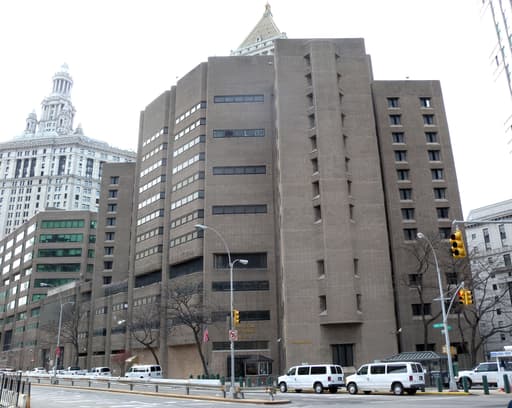
Metropolitan Correctional Center
ORGANIZATION
Metropolitan Correctional Center, New York, federal detention facility where Jeffrey Epstein died on August 10, 2019
Metropolitan Detention Centers
ORGANIZATION
Organization referenced in documents
News Media Contacts
ORGANIZATION
Organization referenced in documents
NO AUTHORITY
ORGANIZATION
Organization referenced in documents
Non-Contact
ORGANIZATION
Organization referenced in documents
NOTIFTY
ORGANIZATION
Organization referenced in documents
Object
ORGANIZATION
Organization referenced in documents
Operations Lieutenant & Control
ORGANIZATION
Organization referenced in documents
Orderlies
ORGANIZATION
Organization referenced in documents
Post Orders
ORGANIZATION
Organization referenced in documents
Prisons
ORGANIZATION
Organization referenced in documents
Radio/BA
ORGANIZATION
Organization referenced in documents
Radio/Body Alarm
ORGANIZATION
Organization referenced in documents
REC/CELL ALONE
ORGANIZATION
Organization referenced in documents
Restore Control of a Correctional Institution
ORGANIZATION
Organization referenced in documents
S.I.S. Mail
ORGANIZATION
Organization referenced in documents
See the Program Statement Searches
ORGANIZATION
Organization referenced in documents
SHU File
ORGANIZATION
Organization referenced in documents
SHU LT
ORGANIZATION
Organization referenced in documents
SHU meeting
ORGANIZATION
Organization referenced in documents
SHU Officers
ORGANIZATION
Organization referenced in documents
Special Housing Unit
ORGANIZATION
Restricted housing unit within the federal prison system
Special Investigative
ORGANIZATION
Organization referenced in documents
Staff Training Academy
ORGANIZATION
Organization referenced in documents
the Activities Officers
ORGANIZATION
Organization referenced in documents
the After-Action Reporting and Review
ORGANIZATION
Organization referenced in documents
the Captain's Office
ORGANIZATION
Organization referenced in documents
the Central Tool Room
ORGANIZATION
Organization referenced in documents
the Control Center the Operations
ORGANIZATION
Organization referenced in documents
the Correctional Services Branch
ORGANIZATION
Organization referenced in documents
The Disciplinary Hearing Officer
ORGANIZATION
Organization referenced in documents
the Duty Officers
ORGANIZATION
Organization referenced in documents
the Evening Watch Office r
ORGANIZATION
Organization referenced in documents
the Food Service
ORGANIZATION
Organization referenced in documents
the Food Service Department
ORGANIZATION
Organization referenced in documents
The General Post Orders
ORGANIZATION
Organization referenced in documents
The Internal Security
ORGANIZATION
Organization referenced in documents
the Juvenile Justice
ORGANIZATION
Organization referenced in documents
the Lieutenants' Offices
ORGANIZATION
Organization referenced in documents
the Mail Room Staff
ORGANIZATION
Organization referenced in documents
the Office of Internal Affairs
ORGANIZATION
Organization referenced in documents

the Office of the Inspector General
ORGANIZATION
Organization referenced in documents
the Psychology Services
ORGANIZATION
Organization referenced in documents
the Rear Gate Officer
ORGANIZATION
Organization referenced in documents
the SHU Law Library
ORGANIZATION
Organization referenced in documents
the SHU Program
ORGANIZATION
Organization referenced in documents
The SHU Range Officers
ORGANIZATION • 2 mentions
Organization referenced in documents
the SHU Tool Inventory
ORGANIZATION
Organization referenced in documents
The Special Housing Record
ORGANIZATION
Organization referenced in documents
the United States Marshals Service
ORGANIZATION
Government agency
the Visiting Officers
ORGANIZATION
Organization referenced in documents
the Visiting Rooms
ORGANIZATION
Organization referenced in documents
The Visitors Log
ORGANIZATION
Organization referenced in documents
The Watch Supervisor
ORGANIZATION
Organization referenced in documents
Unit Management and Community
ORGANIZATION
Organization referenced in documents
S NORTH
LOCATION
Location referenced in documents

South
LOCATION
Directional region of the United States
South Annex
LOCATION
Location referenced in documents
SOUTH N2
LOCATION
Location referenced in documents
SOUTH SR
LOCATION
Location referenced in documents
the Front Lobby
LOCATION
Location referenced in documents
Statistics
Pages:100
Entities:97
Sponsored