EFTA00230786_sub_008 - EFTA00230786_800
Document Information
Bates Range
EFTA00230786_sub_008 - EFTA00230786_800
Pages
100
Original Filename
EFTA00230786.pdf
Document Content
Page 701 - EFTA00230786_701
A40 04/26/2010 14:51 3553625 control of, or under the mpordsion of, the persimmons of Corrections, or Is not In the custody of a private correctional facility. Any change In the sexual offender's permanent or temporary reside/err, name, any eiectronic mail address and any instant message name required to be provided pursuant to paragraph (4)(d), after the snood offender reports In person at the sheriffs office, shall ho accomplished in the manner provided In subsections 141, 17), and (8). ID) Provide his or he name, data of birth, social security nurnber, race, sax, height, weight, heir and aya color, tattoos or other Identifying marks, occupation and place of employment, address of permanent or legal residence or address of any current temporary residence, within the state and nut of state, irwfuding a oral route. address and a pest office box, any oierctrocric mail address and any instant massage name raguirod to be provided pursuant to paragraph (4)(d), data and place of each conviction, and a brief description of the crime or trifffill committed by the offender. A post office boa shall mt be provided In lieu of a physical residential address 1. If the sexual offender's place of residence is a motor rotrirlo, trailer, mobile home, or (manufactured borne, as defined in chapter 120, the sexual offender shall sire provide to the department through the sheriffs office written notice of the vehicle klantification number; tho linear-a tag number; the registration roanhar: and a description, Including color schen*, of the motor vehicle, trait IAA tooling home, or manufactured home If the sexual offender\ place of ras:lance is a vend, live aboard vest, or houseboat, as refined in chapter 127, the sexual offender shall also provide to the department written notice of the hull identification nuniber; the manufacturer's serial !lumbar; the name of the vessel. -aboard vecteil, or houseboat; the naghtnitIon number; and a description, Including color scheme, of the vessel, 11w-aboard vessel, or hearsaberrt. 7. tf the sexual offender is enrolled, employed, or carrying on a vocation at an institution of higher education in this state, the onus/ offersder shall also provide to the department ftrough the sheriff e ofFre the name, address, and county of each institution, including each campus attended, and the rental offender's onrofiroont or employment states. Each change in enrollment or employment status shell be reported in parson at the sheriffs office, within 48 hours ',tor any chantin stabn. The sheriff shall promptly notify each Institution of the sexual offender's proms. e any change In the sexual offender's enrollment or employment status. When a sexual offender reports at the sheriffs office, the sheriff shall take a photograph and a set of fingerprirrts of the offorder and forward the pictographs and fingerprints to the department, along with the information provided by the sense offender. The sheriff shall promptly provide to the department the Information received from the sexual offender. (3) Within a hours after the report rewind under subsection (2), asexual offender shall report in person at a driver's license office of the Department of IMgtiway Safety and Motor Vehicles, unless a drive's Deere or idemtlfication card that complies with the requirements of s. 322.141(3) was previously secured or updated under s. 944.607. At the driver's license office the sexual offender fa) If ntharwisa qualified, secure a Florida drives license, ranee a Florida driver's license, or agate an Identification card. Thu Anted offender shall identify himself or herself as a sax LIZ: OM/Mier who Is required to comply with this section and shall provide proof that the sexual offewier reported in rrnoirtad in subsection en The rem& offender shalt provide any of tho information specified in stAr,etion (2), If requested. That sexual offender shall submit to tho taking of a photograph for use In haring a drivels (inane, renewed license, or Identification card, and for use by the department In maintaining current records of sexual offenders. PAGE 14/20 . EFTA00231486
Page 702 - EFTA00230786_702
A41 04/16!2910 14:51 355362E CIRCUIT CRIMINAL PAGE 15/20 I (b) Pay the costs assessed by the 0opartmare of Highway Safety and Motor Vehicles for issuing or renewing a driver's license or idontificatIon card as required by this section. The drive's license or identification card Issued rant be In compliance with s. 122.141(3). Provide, upon request, any additional information necessary to confirm the Identity of the sexual offender, Including a sot of Rn0trprints. 14)41 Each time a sexual offenders drissoes licenser or ideretificatfon nerd is subject to renewal, and, without regard to the status of the offender's driver% license or Identification card, within 411 hours after any change in the offenders permanent or temporary residence or change fn the offender's name by reason of marriage, or other legal proton, the offers-dor shell report In parson to a drivers license office, and shall be subject, the requirements specified fn subsection (3). The Department of tlighvery Safety and Motor Voidctos shall forward to the department ad photographs and information provided by sexual offerideo. Notwithstanding the restrictions sat forth In s. 322.142,, the Department of Highway Safety and Motor Vehicles is authorized to release a reproduction of a color-photagraph or digital-Image If cone to tic Department of law Enforcement for purposes of public nodfication of sexual offenders as prodded in this section and n. 943.043 and 944.606. Asexual offender who mentos a permanent residence and falls to establish or maintain another permanent or temporary residence shell, within 48 hoses after vacating the permanent reddens.; report In person to the sheriffs office of the malty in which he or she Is located rho sexual *Horde dell specify the date upon which he or the intends to or did vacate such resfidence The se suit offender mud prowid• or update all of the nagistraition Information required trodw paragraph (2)(b). Tho sexual offender must provide an address for the rostdonco or other location that he or she is or will be occupying during the time In which he or she falls to estabesh or maintain a pannorsont or temporary residence. (c) A ,,anal offordor who nenalm et a permanent nrsitiverre after reporting his or her intent to vacate inch residence dial, within 48 horn after the date upon whi offender m indfeated he or she would or did ante such residence, report In person I the agency I which he or she mooned pinata to panzgraph (b) for the purpcno of 'tangling his or her address at such reddonce. Wien the :hair tore/errs the repent, tie dioriff than promptly Cony the it bthe department_ An offender who makes a report an required under paragraph (h) het falls make a report as required under this paragraph commits a felony of the second degree, la as prearead In s. 77S.C112, s. 775.003 or s. 775.034. Id) awned offender must rocas:ter any dertrorric mall orfdross or Instant massage name with the deportment prior to using such oloctronic mall addnasa or Instant massage name on or alter October I, 20177. That departmorrt shalt establish an online system through which sexual offenders may securely otos% and update all electronic mall address and instant massage name information. (5) This section does not apply to a sexual offordrw who is also a sexual pmdator, as dofirind in s. 275.21. A sexual predator mint rnsettw m required under s. 775.21. fiS1 County astipcallmar onfercernewit agendas, in conjunetten with the department, shah weeny do se of sexual offenders who we net under the can, custody, control, or iwarefsion of the Department of Corrections In a manner that is consistent with the provision of the faire! Adam Walsh Chfld Protection and Safety Act of 2036 end any nthor Federal standards npplicnel• to such verification or required m bo met as a c on fax the receipt of federal funds by the state. local law enforcement agendas shall report tho department nary failure by a lasted offender to comply with registration roquiromontS. ace EFTA00231487
Page 703 - EFTA00230786_703
A42 04/26/2010 14:51 3553626 • CIRCUIT CRIMINAL PAGE 16/20 (7) Asexual offender who intends to ostablIslt oxidant* in soothe state or jurisdiction otter than the State of Florida shall roport in person to die sheriff of the county of current residence within 48 hours before the data ho or she intends to leave this state to establish residence in another state or jurisdiction. The notification most include the addron, municipality, county, and state of intended residents. The sheriff shall promptly provide to the dopertrnont the Information rocdvod from the sexual offender- The doparunont shell notify the statewide Ore onforcernent agency, or a comparable agency, in the intended state or Jurisdiction of residorice of the soxtred offender's intended reside ace. The failure of a sexual offender to provide his or her Intl:portal place of rasidenco is punishable as provided In subsection (9). (S) A tutsl offender who Indicates his or bar intent to reside in another state or jurisdiction other than the State of Florida and later decides to remain in this state shall, within 48 hours after the date upon which the sexual offender indicated ho or sho would loan/ this state, report in person to the sheriff to which the sexual offender reported the 'Melded change of resistant°, and his or her Intent to remain in this state. The sheriff shall promptly report this informatIonro deportment_ A toxinl attendee who reports his or her intont to nrcicki in another stow or Jurisdiction but who remains in this state without reporting to the sheriff In the manna- roquirod by this subsactIon ratrnits n felony of the socond degree, punistvildo as provided ins. 775.no, s, 775_081, me s. 775)184. 19ga) A sons! offender who dues not romp!), with the requirement, of this sartion commits a fobany of this third rfogroe, punishahte as provided ins 775.082, s 775.083 or s. 775.084, (b) A sexual offondor who commits any act or remission fn violation of this suction may bo prosecuted for tin act or omission In the county In which the act or omission was committod, the county of the last noginored address of the sexual offender, or the county in wirch the conviction oscierrod for tier offsets. or &fawn that moot the criteria for designating a parson as a sexual offender. IC) An arrest on charges of failure to register when the offender has boon provided and advitod of his or her statutory elongations to register under subset-Hon (7), the service of an information or a complaint for a violation of this section, or an arraignment on charges for n dolletion of this section constituters actual notice of the duty to rogistor. A sexual offorideis failura to immediately register as required by this section following such arrest, service, or arningnment constitutes grounds for a Subsequent charge of failure to register. A sexual offender charred with the crime of failure us regent who assorts, or Intends to meat, a lack of notice of the duty to register as a deforno to a charge of failure to register deli immediately registrar as required by this section. A sexual offender who fs charged with a subsequent falba° to reefstor may not assert the defense of e lac* of notice of the duty to register. Id) Roitistratfoin following such arrest, service, or arraignment Is not a defense and does not 'elite the soineil offender of criminal liability for the failure to register. (10) The department, the Oopartmerrt of Highway Safety and Motor Vehicles, the Department of Corrections, the DePartmord of Juvonilo Justice, any law arrforcornore agency fn this stale, and this parsonriol of those dopartmontr an alerted or appointed official, public employe*, or ichoof ridministrator: or an ofriployoe, agency, or any individual or entity acting at the request or upon the direction of any lair enforcornont agency is immure from civil liability for damages for good faith rem/Mance with the requfrornents of this :action or for the 'Satre of information under et section, and shall be presumed to have retort in good faith in compiling, recording, rapornng, or releasing the information. Tin prersurnption of good faith is not overcome If a technical or clerical curer Is rondo by the department, the Department of Ifilililway Safety and 4,trw eohichrs, the Dopartroont of Corrections, the Dopartrnent of Juverio EFTA00231488
Sponsored
Page 704 - EFTA00230786_704
A43 04/26/2010 14:51 3553626 CIRCUIT CRIMINAL PAGE 17/20 Justice, the pantheist of those departments, or any Individual or entity acting at the request or upon the direction of any of those departments in compiling or providing information, or it information Is Incomplete or incorrect because a sexual offender has to report o falsely reports his or Ina current place of permanent or temporary residence. (II) Except as presided in s. 943.043S4, a sexual offender must maintain registration with the department for the duration of Ms or her life, uMess the sexual offender has received a full pardon or has had a conviction set aside in a prnacerwiction proceeding for airy efforts that meets tile criteria for dorsi fry the person as a sexual offender for purposes of registration. Howes, a sexual offsmdari (all. Who hes been lawfully released from confinement, supervision, or sanction, whichever is later, for at toast a peen and his not boat arrested for any felony or misdemeanor offense since release, provided that the fasted offenders requirement to register was net based upon an adult conviction: a. fora violation of s. 767.01 or s. 717.02; b. For a violation of s. 794.011 Including s. 791.011(1th; t. Fora violation of S. 500.O1(01fb) where the court finds the offense Involsod a victim under 12 roars of age or metal activity by the use of force or coercion; d. For a violation of I. 603.01(5)(b); o. For a violation of s. 500.O4(5)c7. whore the court finds the offense Involved unclothed genitals or genital area; f. For any attempt a conspiracy to commit any such offense; or g. For a violation of limiter law of another Jurisdiction, may petition the criminal rlMsfon of On circuit cant of the circuit In which the unmet offender rankles for the purpose of removing the requirement for registration as ai/XS offender. Z. The court m■y grant or deny relief If the offender demonstrators to the court that ho or she has not been arrested for any crime since release; the requested relief compiles with the thevitioni of the Wand Moat Walsh Child Protection and Safety Act of 2006 and any other Wend standards applicable to the removal of registration requirements for a sexual offender or required to be met as a condition for the receipt ef federal funds by the state; and the court it otherwise whited that the offender is not a current or potential threat to public safety rho state attorney in the circuit In which the petition is filed must be given notice of the petition at hied 3 weeks before the hearing on the matter. The state attorney may present oWdonca in opposition to the requested relief or may otherwise demonstrate the reasons why the petition should be denied. If the court denies the petition, the court may seta futuro date at which the vacua offender may again petition the court for relief. subject to the standards for relief provided in this subsection. 1 The department shall remove an offender from clarification as a sexual offender for purposes of registration If the offender provides to the department a cortiflod copy of the touts written findings or order that indicates that the offender is no longer required to comply with the requirements for registration es a sainted offender. EFTA00231489
Page 705 - EFTA00230786_705
A44 04/26/2018 14:51 3553626 CIRCUIT CRIMINAL PAGE 18/22 (b) A. defined in sub subparagraph (1)(a)t.b. must maintain registration with the department for the duration af his or her life until the meson provides thee daporuourt with an order issued by the court that dotignertad the person es a sexual predator, as et soruatly violent piedatot, or by another waned offoricior dadirsation In the state or jurisdiction in which the order( wet issued which staters that such doslorestion has boon removed or domonstrates to the clepartmont that such dedonation, if not imposed by a court, has boon removed by operation of law or court ordve in the state or jurisdiction in which the designation was matlo, and provided such perton no loofa, masts the criteria he registration as a sextal offuntior undo, the laws of this stabs. (121 The Legislature fin* that sexual offondars, especially those who have committod offenses against minors, ofton poso a high risk of ongeging in Sekel offomos own after being rotated from incarceration or commitment and that protection of the public from Untied offandors is in futtornourd ~rind interest. Sexual offenders have • reduced exportation of privacy became of the public's Internist In public safot-y and In the offoctivo oporotion of goverrenont. itotatising information ooncorrfrwj sexual offordors to law rerforcomont agoncios and to porsnns who melon* such Information, ard the release of such Information to oho public by a tow onforcomard regency or public agency, will further the ganartmontal interests of public %minty. rho designation of a person as a sexual offender Is note sentence nr e punIshmont but is amply the status of the °fielder which is nos rasarit of a conviction for having tommittod contain trimos. (13) Any parson who has rental to bolinvo that a sexual offender is not complying, rw has lot cortlottod, with the roquirernents of this section and who, with the Intent to assist the :astral offerflor in eliding a law onforcornant neonry that is sou:king to find the sexual offender to quentlen the sowed offerdl oboe*, or to arrest the sexual offender for, his or bar noncompliance with the rallartirrbaIna of this suction: In) Withirstris information from, or does not notify, the law ent n anent agency shoot the sent& offender's noncompliance with the requiromonts of this section, and, if known, thy ~suborns of the sexual offends; (b) Harbor; or attempts to harbor, or assists another parson its harboring or attempting to harbor, the sexual off:ender; or IC) Concoals or attempts to concad, or assists another person In conr.oaling or attempting to rancor:I, the sauna/ offends; or (ef) Provides information to the law anforcornwit twenty regarding the sexual offender that the parson knows to be tilso Information, commlb a felony of the third ~roe, pun:Feb(0 as provided In s 775.få2. S. 775.01q, 77S.Ø. (141(e) X sexual offender must report in person each year during the month of the sexual offervireis birthday and during the sixth month following the sexual often-for': birth month ro the shat!(, offIci In the county In which ho or she resides or Is otherwise located to near star • Ihl 114)~4W, el sexual offender who Is unwired to register as a result of a conviction for: 1. Suction 717.01 on. 217.02 whom the victim Is a minor and the offondor is not the victim s parent or gtsardtatl; EFTA00231490
Page 706 - EFTA00230786_706
A45 04/26/2010 14:51 3553626 2. Section 79.4.011_, cutcludIrq t. 794.011(101i CIRCUIT CRIMTNAL RAGE 19/20 3. Secticriii00.04(4)(b) vetoro the court fint the orlon» ineolted a victfm under 12 »am of ager or =tutl activity by the uno of force or ~ion; 4. Sortien 800.O4(51(b); 5. Sort-ion 200,0415)6r11. rettere the court finds molostation 1nwlvfnp unclothod genitalt m genital ara; 6. Soct3on 800.O4(Sk.2. whoro ~court finds molintstfon imolving unclothod genitalt or ~tat eire; 7. SØL-Urin 1100,0/(51(d) ildne' the court finfis the uro of forco or coorcion and unclothed ~tols ce ga nital erma; 8. Any istternpt or compirecy to cernmft such oRonto; or 9. A videt:lon of • Tit lier lave of amt,» Jurildlction, must reraghter sefir year during the month of the »etsel oftare:bfr% birthday and ovary (hird month thereafts. (c) The sheriff, °Rica mey detormin• the appropnate times and days fer roporting hy the »mal °Reder, eitt 'hall bo tomtstam with tho roporting requinansents of this subsoctf on. Sarogistration Matt include any degos to tho folioar:ni information: 1. Nome; social socuritynumber; ago; race; an; dato of birth; helg»; weight; hair and sto talort addrems of any permanent roddonts and tecichedt of eny curront tomporary rositioncri, within the state or out of state, IncludIng • rural tout* addrou and a post office bot; arry olectronic mad address and any fr/stant messet* nome niquIrod to ba provided ptesuent to peragraph (4)(d1; date and piece of am ompleyrnent; ~ici. make, modal, «4«, and Iktane tall humle»; fingormintig and photograph. A port office box tall not bm providad in tf ou of a phydcal roddarstlat addraa. 2. M tf» strata t offertaler is onrolluid, eamployed, ar canyIng anser atten at an Inst:nation of bitar ocluctition In tidt *sto, the sexual Difonder shell als* provide to the departrriant the name, addnaa, and county of °sch inst:hutla% Including lunch campus attandod, and the eintal ofIendor's nollmont or amplayrnont statut. 3. ti the ~tal ollonder's piece of rusidancer isa motor veit», trailer, mobil. home, or manufacturod horr», as delire» in chaptsr 320, the sexual offside sirat' else provide the »ihfclo fdontifkation nurnber; tho licens. tag numbar; tho nagling/don nurober; and a det-ript/on, Including cola schame, of the motor volt», trener, mobil* homo, ror manufactur4» hon». If the »smal offendor's plata of resident* It • nø«, linaboard vond, or househoitt, ert &dim» in chapter 327, tho losna, offerder gein abo provida tir hutt (drntifiratfori number; Ula inanufacturoit turist nu=lim; the name of the anal, live-aboai d »stel, or housaboat; the registration nurober; and e dowriptIon, Irctuding cola schema, of tho sn», tiviwaboard sl or tau soboat 4. My samd offonder who falls ta ropert in parton as tamil-od et the sheriffs office, or who feilt to 'mani to any addron wirificatIon corrosnondento from ti» department within ~okt of the date of ti» corrersponcienco or who født to rotta« oloctranic mail addrasws or EFTA00231491
Sponsored
Page 707 - EFTA00230786_707
A46 04/26/2018 14:51 3553626 CIRCUIT CRIMINAL PAGE 20/2e 11 IØ ~Ps names, commits a felony of the third darer, punishable es provided In s. 775.082 t. 775.081, at t. 775.084. (d) Thu sheriffs office shall, within 2 ~Aloe days, sibictrenladly submit and update all inforinatfon provided by the segued offender to the department in a manna proscribed by the ~ant. EFTA00231492
Page 708 - EFTA00230786_708
A47 Palm Beach Sheriffs Office Booking Card for Jeffrey Epstein, dated June 30, 2008 04/26/2010 14:51 3553626 NAME: EPSTEIN, JEFFREY ALMS NAMES: OVER 8 NANCE EPSTE7. JEFFREY - EPSTEIN. JEFFREY EDWARD- MORday. Aim 30. 2008 I I:33:10 AM iNCARcEFLATiON DATE/TIME 06/30/2008 11:12 PRISONER /WE: LOCAL CHARGES 000 01/204953 AGE: 55 8514 ADORES& 358a BRIU.0 WY JACKET P CIRCUIT CRIMINAL 0338617* tiP 2008039316 PALM BEACH SHERIFFS OFFICE BOOKING CARO Ws: WAS HEIGMT: 6 II 0 In WEIGNT: 200 OTT: PALM BEACH elcosoc: MOBILE BOOKING 'MID,: 8540 NAM COLOR: PRY EYE COLOR: °to STATE FL RP 33480 CITIZEN COUNTRY: us* PAGE 04/20 20080030001 SID 06587245 AUEN► FBOr 7870751(6 POUCH 3050 M/S: 2006038144 U.S. MARSOL It COTS It ARREST ADDRESS:205 N DIXIE HWY (MAIN CT HOUSE) am WPB ARREST DATE: 06/30/2008 am DATE: 06/30/2008 viARRANT7CASEA: ARREST OFFICER, DM DEPLATO TRANS. OFFICER: 01S MCINTOSH ARREST 14815 14(c. Win. 11:12 COURT CfYISION: ARREST AGENCY: 01-PESO TRANS. AGENCY: 01 PeSO CASE TYPE RECOMMIT-FELONY NOTE STATUTE; CT: DESCRIPTION. CASERAG: MO 13000 9999.0004 (141) 1 -RECOMMT :121:440 I -50.00 II 0 PROCURE PERSON UNDER AGE CO IS FOR PAOSTIRITIONNCASE 2OO8CFOO9381~.~ NCIC: DOC I: WEENY 0: STATE: FL nP, CURRENT BOND 10.00 HOLDS: 14010 DATEMME MOLD ST: 1 3 ALE. DESCRIPTION; 31 3 OVER- TOW/ KEEP SEPARATE PROM NONE Mil' 5 iiktifiT NssmiNteo HOUSING: ICIC 'wince - ALMS REL.: TEO. CLEAR REL: ELEASE a.remme CURT OATENIME: CLERK -3 HOLD OPT: HOW RE7ACIATE/11ME • <—> • O CORtöt40: . • : • -5 • 1 1,4 NO REN. SY: MOLD REM.` EEPT: - sterrtaniumut DNA NOT ON FILE/FELONY CONVICTION —•-- NTA 0AlfiRME: reac RELEASE: P1CTO 10: RELEASE MOVE: • • ••• RELEASE trocomanan COURT LOCATION: WARRANTS • 4. . • • • • tv CJ . " 7-- -- FA. ENTERED CLASSMCATION STATE AM' CLASS i" CENTRAL RCDS NTA LOCI • •. • • F.P. CLEAR: MED.CLEINI IN: Ix, JUL: .1 NOB EFTA00231493
Page 709 - EFTA00230786_709
A48 Order granting Jeffrey E. Epstein's Motion for Travel, dated December 18, 2009 tf IN THE CIRCUIT COURT OF THE FIFTEENTH JUDICIAL CIRCUIT IN AND FOR PALM BEACH COUNTY, FLORIDA - CRIMINAL DIVISION CASE NO: STATE OF FLORIDA V5. TeCafte) Deiendant. ?-04 qv cs1 Mc tti .02 O? nts „ DER ON MOTION 0 FILED chtuit Criminal Department Ott: 1 8 2009 SHARON R. BOCK Clerk & Comptroller Palm Beach County THIS MATTER comes before the COurl upon AV on - The Court, having been made aware that both counsel haVe agreed to said motion. . Accordingly, It is hereby: ORDERED and ADJUDGED that Ct nitsAton 1.) Jh-r - l) ./ \PC/ DONE and ORDERED in Chambers, esl Palm Beach, Palm Beach County, Florida, this day of rcuit Court JixIge AAA SI EFTA00231494
Sponsored
Page 710 - EFTA00230786_710
2601 Blair Stone Road Tallahassee. FL 32399-2500 Date 7/21/201Q MthalaS 358 El Byillio Way palm Beach. FL 33480 A', Siegel OpportemRp Ertiployer A49 Letter from Florida Department of Corrections Regarding Termination of Supervision, dated July 21, 2010 DEPARTMENTo FLORIDA CORRECTIONS f pesA2tte fiFeei:gta. rif, Etld relfb5 Ft CitibiltiAL. Governor CRARLIE CRIST Secretary JAMES R McDONOUGIL httpirrwvnyricstaterrus RE: TERMINATION OF SUPERVISION Das W35755 DOCKET/UC NO(S)122441anatna Dear mr, Eostrag Yotare hereby notified that, you hive completed your term(s) of supervision, as referenced above, and are no longer under the supervision of the Department of Corrections. If you were adjudicated guilty of a felony offense, your name will be submitted to the Florida Parole Commission for consideration for restoration of the civil rights that you lost as * result of your felony conviction (right to vote, right to hold public office, and the right to serve on a jury). If your rights are restored, a certificate of restoration of civil rights will be mailed by the Office of Executive Clemency to your last malting address of record usually within one year following the termination of supervision. If your rights are not restored through this initial referral, you will be notified by the Florida Parole Commission and furnished an additional application for submission for restoration of civil rights with a hearing. If you have any questions about your civil rights, you may contact the Office of Executive Clemency for further information by calling (850) 488-2952 or by writing to that office at Florida Parole Commission, 2601 Blair Stone Road, Building C, Tallahassee, Florida 32399-2450. Information and application forms may be accessed through the following web site: wwwatitty.firigfordexclem.html. After eight (8) years from termination of your supervision, you may apply to regain your right to own firearms. Applications can be obtained from the Office of Executive Clemency or be accessed by the web site noted above. If adjudication was withheld, you did not lose your civil rights, however, the Florida Department of Law Enforcement (FDLE) may refuse the right for you to purchase a firearm following successful completion of supervision, pursuant to Section 790.065 Florida Statutes. Contact your local FDLE office if you have questions regarding this law. I would IiIn t en to youl Sincerely, V lit Candice Elkins wishes for a very successful future. th--) El If you were on supervision for a sexual offense, attached Is a copy of the Notice of Responsibilities, which outlines your continued responsibilities in accordance with Florida Statutes. 0 If you were sentenced as a eaten offender, attached is a copy of the Career Offender Notice of Responsibilities, which outlines your continued responsibilities in accordance with Florida Statutes. Original: Offender Copy. Offender File Florida Parole Commission (if applicable) Clerk of Court (if required) (Revised 03/03) EFTA00231495
Page 711 - EFTA00230786_711
A50 Letter from Palm Beach Sheriff's Office Regarding Jeffrey Epstein's Participation in the Work Release Program, dated August 12. 2010 esSitE —. 1 RWP OEO S .1"%r e r RiC L. BRADSHAW. SIIERIIT FAX: August 12th 2010 To Whom It May Concern: DEPUTY 3656 ALTERNATIVE ST D UNIT PHONE: Jeffery Epstein DOB 01/20/53 was a participant of the Palm Beach County Sheriff's Office work release program. Epstein was a participant of the work release program starting 10/10/08 and ending 07/22/09. If you have any questions or concerns please contact me. Deputy 3228 Gum Club Road • West Patin Beach, Florida 33406-3001 • • http://vesettpbso.org - - WM014 donne* EFTA00231496
Page 712 - EFTA00230786_712
A51 Letter from Jack A. Goldberger to NYS Sex Offender Registry Regarding Florida Registration Level applicable to Jeffrey E. Epstein, dated August 12, 2010 A51-A52 ACTERBURY GO i DBERGER WE SS, R AT TERBURY ' I JACK A. GOLDBERGER ' JASON S.WEISS ' Board Certified Crimwai TrialAttorney I Member cd New Jersey a Florida Bars August 12, 2010 New York State Division of Criminal Justice Services Sex Offender Registry 4 Tower Place Albany, N.Y. 12203 RE: Jeffrey E. Epstein To Whom It May Concern: The undersigned represented Jeffrey E. Epstein in the investigation that lead to his entry of a guilty plea on June 30, 2008 to a felony charge in the State of Florida that required sex offender registration. The purpose of this letter is to clarify the level of registration that was applicable to Mr. Epstein's case Under Florida's registration scheme there are two levels of registration available based on a risk assessment. Florida characterizes these two levels as sexual predator and sexual offender. The sexual predator designation is obviously the more serious classification. Mr. Epstein, based on the offense on which his guilty plea was entered, was classified as a sexual offender, Florida's lowest level of sexual registration. In fact, within the sexual offender designation there are two sub-levels of reporting requirements. One classification requires reporting to the local Sheriffs Office twice a year and one requires reporting four times a year. In Mr. Epstein's case he is required to report at the lowest level, two times per year. Accordingly, under the Florida registration scheme, Mr. Epstein's registration requirements are at the lowest level for a person for whom registration is required. During the incarcerative portion of Mr. Epstein's sentence, he was allowed to participate in the Sheriffs Office work release program, an option thatwould not have been available to him had he been at a higher registration level. Additionally, while Mr. Epstein was in probationary status, he was allowed to travel on a limited basis for business purposes. This would not have been available to him had he been classified as a sexual predator. One Clearlake Centre. Suite 1400 250 Australian Avenue South West Palm Beach. H. 33401 P www.agwpa.com EFTA00231497
Sponsored
Page 713 - EFTA00230786_713
A52 hope this information assists your department in determining the registration requirements for Mr. Epstein. Should you desire to speak to me or need any further information, please feel free to contact me. V JAG/slm s, Jack A. Goldberger EFTA00231498
Page 714 - EFTA00230786_714
A53 Letter from Martin G. Weinberg to NYS Board of Examiners of Se: Offenders Regarding Risk Level and Designation Determination for Jeffrey Epstein, dated August 16, 2010 [pp. A53-A57] MARTIN G. WEINBERG, P.C. ATTORNEY AT LAW 20 PARK PLAZA. SUITE 1000 EMAIL ADDRESSES: BOSTON, MASSACHUSETTS 02116 FAX NIGHT EMERGENCY. August 16, 2010 New York State Board of Examiners of Sex Offenders 4 Tower Place Albany, New York 12203-3764 Re: Jeffrey Epstein NYSID N OS1909 Dear Sir or Madam: MIS This letter and the accompanying materials are submitted to the Board pursuant to its notice of August 2, 2010, concerning the risk level and designation determination to be made with respect to Jeffrey Epstein. Their purpose is to demonstrate to the Board that, based upon Mr. Epstein's history and personal characteristics, the circumstances of the offense which triggered the registration requirement, his acceptance of responsibility, his successful completion of his sentence and subsequent supervision, and the extraordinary unlikelihood of his ever again reoffending, the appropriate risk level designation is level 1. Overview Mr. Epstein, who is presently 58 years old, is a successful and respected financial advisor who also founded and heads a philanthropic organization, the C.O.U.Q. Foundation, Inc. which funds medical, educational, and advanced scientific research. The offense which led to the requirement that he register as a sex offender in Florida, which in turn triggered this state's reporting requirement, ended almost five years ago and involved an exchange of money and consensual conduct with a young woman who, for all but a few months of the prostitution offense charged, was over the age of 17. Notably, as addressed in greater detail, infra, the conduct which occurred after A.D. reached the age of 17 would not even have been a misdemeanor under the cognate New York statute at the time the offense was committed. Mr. Epstein pled guilty to that offense in the Circuit Court for Palm Beach County, Florida, and has fully and sincerely accepted responsibility for his conduct. There have been no subsequent incidents of criminal misconduct of any description. EFTA00231499
Page 715 - EFTA00230786_715
A54 Florida has classified Mr. Epstein as its lowest level sex offender, with the lowest level of reporting requirement, as verified by the attorney who represented Mr. Epstein in the Florida proceedings: Under Florida's registration scheme there are two levels of registration available based on a risk assessment. Florida characterizes these two levels as sexual predator and sexual offender. The sexual predator designation is obviously the more serious classification. Mr. Epstein, based on the offense on which his guilty plea was entered was classified as a sexual offender, Florida's lowest level of sexual registration. In fact, within the sexual offender designation there are two-sub-levels of reporting requirements. One classification requires reporting to the local Sheriff's Office twice a year and one requires reporting four times a year. In Mr. Epstein's case, he is required to report at the lowest level, two times per year. Accordingly, under the Florida registration scheme, Mr. Epstein's registration requirements are at the lowest level for a person for whom registration is required. Letter of Jack A. Goldberger, Esq., Ex. A. That Florida authorities did not — and do not — believe that Mr. Epstein presented a risk of reoffense is evidenced not just by Mr. Epstein's lowest-level reporting designation but also by the fact that he was permitted, while serving his sentence in the West Palm Beach County Jail, to leave the jail on a daily basis on work release for most of the period of his 13-month incarceration and that during his subsequent year of community control supervision (a probationary-typesentence), both the court and his probation officer agreed to permit him to travel outside Florida for business purposes on a significant number of occasions. He has now completed his year of community control supervision, having fully complied with all the requirements and obligations imposed on him. In addition, Mr. Epstein has participated in therapy with a clinical psychologist, Stephen R. Alexander, Psy. D., who, based on his evaluation of, and therapy sessions with, Mr. Epstein and his long experience as a forensic psychologist, attests that Mr. Epstein presents no threat to the community and that the risk of his reoffending is "negligible": Since my initial assessment of Mr. Epstein he has been extremely cooperative with all of the services provided to him. He has spent a great deal of time and energy focusing on his behavior and the attitudes, beliefs and expectations that undergird his approach to life. He has examined his priorities and undergone a comprehensive self-exploration on more than one occasion, primarily because of the vast changes that have occurred in his life and the upheaval these events have caused. Throughout it all Mr. Epstein has remained willing to focus on himself and how to turn even the most dire personal circumstances into productive experiences to the fullest extent possible. In my opinion Mr. Epstein has been highly cooperative with and benefited from the treatment provided. Relying upon my 25 years of experience as a forensic psychologist and the plethora of data gathered by me, 1 state with confidence that Mr. Epstein poses no threat to himself or the community. It is abundantly clear that he has learned his lesson and the probability of his reoffending is negligible. Mr. 2 EFTA00231500
Sponsored
Page 716 - EFTA00230786_716
A55 Epstein poses no threat to either himself or the general community, and he requires no additional intervention or treatment for his no-risk/low-risk status to be maintained into the future. Letter of Stephen R. Alexander, Psy. D., submitted herewith as Ex. B. All of these circumstances — Mr. Epstein's low-risk classification in Florida, the state where the offense was committed, the low-risk assessment inherent in the decisions of Florida authorities responsible for the protection of the community, who knew him first-hand, to admit him to work release during his period of incarceration and to permit him to travel outside of Florida during his period of community control supervision, Dr. Alexander's well-supported judgment that Mr. Epstein presents little or no risk of reoffense, the fact that the offense ended almost five years ago, and there has been no subsequent criminal misconduct of any kind, and the fact that Mr. Epstein is a mature, responsible, professional adult who uses neither alcohol nor drugs all support the conclusion that the supervision which accompanies a level I designation will more than suffice to serve the purposes of SORA. That conclusion is supported by the calculation of Mr. Epstein's risk assessment guidelines score. The Conduct Underlying the Offense Trigeerine the Florida Registration Requirement Would For the Most Part Not Even Have Been a Registerable Offense in New York. Had the Conduct Occurred in New York The offense which required Mr. Epstein to register as a sex offender in the state of Florida was a violation of Fla. Stat. §796.03, which criminalizes procuring a person under the age of 18 (the age of consent in Florida) for prostitution, specifically, here, one "A.D." The nearest New York cognate among the registerable offenses listed in N.Y. Correction Law §168-a is N.Y. Penal Law §230.04 (patronizing a prostitute). The information to which Mr. Epstein pled guilty charged that the offense occurred between August 1, 2004, and October 9, 2005, see Information, Ex. C, that latter date being the day before A.D.'s 18th birthday: Thus, for almost all of the duration of the charged offense, A.D. was over the age of 17, and the wholly consensual conduct in exchange for money which occurred between the two would not even have been a registerable offense in New York. See §168-a(2XaX0(§230 .04 a registerable offense only if "person patronized" is in fact under 17 years old). Indeed, at the time of the offense at issue, the conduct which occurred after A.D. turned 17 years of age would not even have been a crime under that statute if the conduct had taken place in New York.2 Mr. Epstein's offense ranks among the least serious of those which trigger the requirement of SORA registration. The single Florida offense which required registration involved ' Dr. Alexander's CV is included in Ex. B. VMS 8171 e o ex e i coverage to prostitution offenses involving individuals of any age, not just those under the age of 17, as the statute was written when Mr. Epstein's offense was committed in 2004-05. Under §230.04 as written in 2004-05, the offense, to the extent that A.D. was in the last three months of her 16th year, would only have been a misdemeanor had it been committed in New York. 3 EFTA00231501
Page 717 - EFTA00230786_717
A56 only one woman, and there was no force or violence involved at any time, nor did A.D. suffer from any mental disability, mental incapacity, or physical helplessness. The points attributable to the Current Offense factors (factors 1-7) total less than 70. Criminal History Prior to the offense at issue, Mr. Epstein had no prior criminal history whatsoever. Mr. Epstein's date of birth is January 20, 1953, and he was, accordingly, more than twenty years of age when the offense at issue was committed. Mr. Epstein does not use alcohol or illegal drugs and has no history of either drug or alcohol abuse. Accordingly, Mr. Epstein should be scored at zero for the Criminal History factors (factors 8-11). Post-Offense Behavior On June 30, 2008, Mr. Epstein pled guilty to the offense which subjected him to the requirement that he register as a sex offender in Florida and has fully accepted responsibility for his conduct. Mr. Epstein served approximately 13 months in a West Palm Beach County jail (rather than in a state correctional facility). During most of his period of confinement, from October 10, 2008, through July 22, 2009, the date of his release, Mr. Epstein participated in the jail's work release program, see Letter of Deputy MI, Ex. D, which permitted him to leave the jail in the morning six days a week for his place of employment, the Florida Science Foundation, and return in the evening. That Mr. Epstein satisfactorily complied with the requirements of the program is evidenced by the fact that he remained in the work release program up to the time of his release from custody. After his release on July 22, 2009, Mr. Epstein was subject to a one-year period of community control, which required, among other conditions, that he maintain contact with the probation office as required, that he be confined to his residence during the hours when he was not working or performing public service, that he not leave his county of residence without the consent of bis probation officer, that he commit no further violations of the law, and that he maintain employment. During Mr. Epstein's period of community control from July 22, 2009, through July 21, 2010, he was permitted by the court, with the assent of his probation officer and without opposition by the state's attorney, to travel (including overnight stays) to New York and to the Virgin Islands for business purposes on a number of occasions, thus demonstrating a substantial level of trust by both the court and his supervising probation officer in Mr. Epstein's ability to refrain from unlawful conduct of any kind and to conform his conduct to the terms of his community control order and to the orders authorizing his travel, which he did on every such occasion.' Mr. Epstein successfully completed his term of community control on July, 21, 2010, see Florida Department of Corrections Termination of Supervision notice, Ex. F, having at all times fully complied with all obligations and restrictions imposed upon him. Mr. Epstein has never refused or been expelled from any treatment since the time of his sentencing (factor 12(2)); See pages 2-3, supra. Based on his professional expertise and the 3 One such travel order is attached as Ex. E. 4 EFTA00231502
Page 718 - EFTA00230786_718
A57 substantial time he has spent with Mr. Epstein, Dr. Alexander is able to state unequivocally that Mr. Epstein has learned his lesson, that he presents no threat to the community, and that there is negligible risk that he will ever reoffend. Accordingly, Mr. Epstein should be scored at zero for the Post-Offense Behavior factors (factors 12-13). Release Environment Factor 14 contemplates that the risk level assessment will be made, as required under New York law, prior to the offender's release from incarceration. Here, as the preceding section shows, Mr. Epstein was released from jail more than a year ago and was subject to close supervision for a period of one year afterwards. During the same time, he continued to meet with Dr. Alexander. The score for factor 14. should, accordingly, be zero. Mr. Epstein maintains a vacation residence in Manhattan, which he owns, as well as residences in Florida and the Virgin Islands. Mr. Epstein's interactions in connection with both his employment and philanthropic work are with adult business professionals, scientists, and educators. There is nothing in either Mr. Epstein's living or employment situations which could even remotely be considered "inappropriate." The score on factor 15 too should be zero. Overrides None of the listed factors are of any relevance or applicability to Mr. Epstein's risk level designation. Conclusion Based on all the relevant factors, Mr. Epstein should be classified as a level 1 sex offender. Even should the Board somehow conclude that Mr. Epstein's risk assessment guidelines score exceeds 70, the circumstances addressed in this letter differentiate this case, markedly from the norm of level 2 sex offenders that the Board should recommend a level I classification, as it is empowered to do under the Sex Offender Guidelines. The ultimate issue is the risk that the offender will reoffend, and the information provided to the Board with this letter persuasively demonstrates that such a risk is virtually nonexistent in this case. itt ruly yourk einberg tr 5 EFTA00231503
Sponsored
Page 719 - EFTA00230786_719
A58 Letter from Stephen R. Alexander, Psy.D. to Jack Goldberger Regarding Opinion of Jeffrey E. Epstein, dated August 16, 2010 1pp. A58-A611 Stephen R. Alexander, Psy.D. Clinical Psychologist 1825 Forest Hill Boulevard, Suite 204 West Palm Beach, Florida 33406 561 -433-2355 August 16, 2010 Jack Goldberger, Esq. Atterbury, Goldberger and Weiss, P.A. 250 South Australian Avenue, Suite 1400 West Palm Beach, Florida 33401 Re.: Jeffrey Epstein Dear Mr. Goldberger: Since my initial assessment of Mr. Epstein he has been extremely cooperative with all of the services provided to him. He has spent a great deal of time and energy focusing on his behavior and the attitudes, beliefs and expectations that undergird his approach to life. He has examined his priorities and undergone a comprehensive self-exploration on more than one occasion, primarily because of the vast changes that have occurred in his life and the upheaval these events have caused. Throughout it all Mr. Epstein has remained willing to focus on himself and how to turn even the most dire personal circumstances into productive experiences to the fullest extent possible. In my opinion Mr. Epstein has been highly cooperative with and benefited from the treatment provided. Relying upon my 25 years of experience as a forensic psychologist and the plethora of data gathered by me, I state with confidence that Mr. Epstein poses no threat to himself or the community. his abundantly clear that he has learned his lesson and the probability of his reoffending is negligible. Mr. Epstein poses no threat to either himself or the general community, and he requires no additional intervention or treatment for his no-risk/low-risk status to be maintained into the future. If any questions remain or I can be of additional assistance, please contact my office. Sincerely, Stephen R. Alexander, Psy.D. Clinical Psychologist SRA/b1 Epst 66.060174 lA EFTA00231504
Page 720 - EFTA00230786_720
A59 Stephen It Alexander, Psy.D. Clinical Psychologist 1825 Forest Hill Boulevard, Suite 204 West Palm B ludda 33406 F EDUCATION Psy.D. Florida Institute of Technology; Clinical Psychology, 1985 M.S. Eastern Kentucky University; Clinical Psychology, 1980 B.A. University of North Carolina at Chapel Hill; 1977 LICENSURE Florida Board of Psychological Examiners: Psychologist, PY0003713 CERTIFICATIONS Supreme Court of Florida: Family Court Mediator 19355 CF Supreme Court of Florida: County Court Mediator 19355 CF PROFESSIONAL EXPERIENCE Clinical Psychologist: Private practice providing services to children, adolescents, adults and families. Specialization in psychodiagnostic evaluations (personality, forensic, psychoeducational), forensic psychology, and psychotherapy. July 1989 to present. Chief Psychologist: Juvenile and Family Divisions of the Fifteenth Judicial Circuit and Division of Youth Affairs, Palm Beach County, Florida. September 1987 to July 1989. Duties: Supervise Psychological Services provided to Juvenile and Family Court including psychological evaluations of children, adolescents and adults in delinquency, dependency, custody, and sex abuse cases; testimony as Expert Witness. Program Supervision of Sable Palm Youth Service Center, a 48 bed residential treatment program for emotionally and behaviorally disturbed adolescents; family therapy approach to treatment. Program Supervision of the Youth ServiceSureau, a community based family counseling/delinquency prevention program. Directing program evaluation and basic research within the Division of Youth Affairs. Directing APA Approved continuing education office for professional staff under the Chief Psychologist (5 Psy.D./Ph.D. psychologists, and 20 M.A./M.S.W. counselors). EFTA00231505
Page 721 - EFTA00230786_721
A60 Court Psychologist: Juvenile and Family Divisions of the Fifteenth Judicial Circuit and the Division of Youth Affairs, Palm Beach County, Florida. October 1985 to September 1987. Duties: Psychodiagnostic evaluations of children, adolescents and adults for the court in delinquency, dependency, custody and sex abuse cases. Clinical Supervisor of the Sable Palm Youth Service Center. Staff Psychologist: Scotland County Mental Health Center, Laurinberg, North Carolina February to August 1982. Duties: Individual and family psychotherapy (60% child services, 40% adult outpatient). Consultant to Scotland County School system. Competency evaluations for courts. Staff Psychologist: Robeson County Mental Health Center, Lumberton, North Carolina. August 1980 to July 1981. Duties: Outpatient Individual and family psychotherapy (60% child services, 40% adult outpatient). Psychodiagnostic evaluations for Center patients, local courts, and the Division of Vocational Rehabilitation. Pro evaluation of 15 Head Start Centers in a four county area for Consultant to Red Springs City School system, Southeastern Sheltered Workshop, and Robeson County Group Homes. INTERNSHIP Louisiana State University Medical School (APA Approved): New Orleans, Louisiana. September 1984 to August 1985. Training consisted of equal time spent in three rotations: Adult, Child and Neuropsychology. Year long training in outpatient psychotherapy and community mental health services at West Jefferson Mental Health Center (1 day per week), psychoanalytic treatment of adults at LSU Medical Center, weekly psychoanalytic psychotherapy seminars and weekly psychodiagnostics seminars. PRACTICUM PLACEMENTS Neuropsychiatry Unit: Wuesthoff Memorial Hospital, Rockledge, Florida. 20 hours per week (200 total hours); January to March, 1984. EFTA00231506
Sponsored
Page 722 - EFTA00230786_722
A61 Center for Student Development Florida Institute of Technology, Melbourne, Florida 10 hours per week (200 total hours); June to December 1983. Melbourne Head Start Center: Melbourne, Florida. 10 hours per week (100 total hours); September to December 1983. Robeson County Mental Health Center: Lumberton, North Carolina. 40 hours per week (1040 total hours); January to June 1980. University of Kentucky Medical Center (Outpatient Psychiatry): Lexington, Kentucky. 20 hours pa week (640 total hours); January to December 1979. PUBLICATIONS & RESEARCH PAPERS Alexander, S. & Wiatrowski, M. (1989). Delinquency prevention in a Youth Service Bureau. Unpublished manuscript. Alexander, S. (1992). Choosing and using experts. In, Child Custody and Visitation in Florida. Eau Claire, WI: National Business Institute, Inc. AWARDS 1993 Special Service Award presented by the Legal Aid Society and the Palm Beach County Bar Association for pro bono services to the community. PROFESSIONAL POSITIONS Education Chair of the Palm Chapter of the Florida Psychological Association, 1994. President of the Palm Chapter of the Florida Psychological Association, 1995. COMMUNITY SERVICE POSITIONS Board of Directors Fern House, West Palm Beach, Florida. Fern House is a residential rehabilitation center for male alcoholics and drug addicts. 2004 to present. EFTA00231507
Page 723 - EFTA00230786_723
Offender Name: JEFFREY E EPSTEIN NYSID #: O51909 1ST Reviewer Initials: -SOW The following is the Board of Examiners of Sex Offenders' recommendation pursuant to Section 168.1 of Article 6-C of the NYS Correction Law as to whether the offender shall be designated a Sexually Violent Offender, Predicate Sex Offender, or Sexual Predator as defined in subdivision seven of Section 168-a or whether the offender does not fit any of those categories due to his conviction. Please check all that apply: 1. O Sexually Violent Offender - 11 sex offender who has been convicted of a sexually violent offense defined la Correction Law section 168-a Please check which conviction(s) apply, also please indicate whether the conviction was for an attempt at an offense: Atamut Altittnni 130.35 - Rape 1st degree 130.50 - Sodomy 1st degree/Criminal Sexual Act 1st degree 130. 65 - Sexual Abuse 1st degree 130.66 - Aggravated sexual abuse 3rd degree 130.67- Aggravated sexual abuse 2nd degree 130.70 - Aggravated sexual abuse 1st degree 130.75 - Course of sexual conduct against a child 1st degree 130.80 - Course of sexual conduct against a child 2nd degree 130.53 - Persistent sexual abuse 130.65-a - Aggravated sexual abuse 4th degree 130.90 - Facilitating a sex offense with a controlled substance a conviction of or a conviction for an attempt to commit any provisions of the — foregoing sections committed or attempted as a hate crime defined in sectiose485.05 of the penal law or as a crime of terrorism defined in section 490.25 of such law. a conviction of an offense in any other jurisdiction which includes all of the — essential elements of any such felony provided for above or conviction of a felony in any other jurisdiction for which the offender is requited to register as a sex offender in the jurisdiction which the conviction occurred. 2. O Predicate Sex Offender - a sex offender who has been convicted of an offense set forth in subdivision 2 or 3 of Correction Law Section 168-a when the offender has bean previously convicted of an offense set forth in subdivision 2 or 3 of Section 168-a, regardless of the date of the prior conviction and regardless of whether the offender was required to register for the previous conviction. Please identity below the offenders previous qualifying conviction(s) as well as the offender's current qualifying conviction, also please indicate whether the conviction was for an attempt at an offense: Current ebth981 Attenmt 130.20 - Sexual Misconduct 130.25 - Rape 3rd degree 130.30 - Rape 2nd degree 130.40 - Sodomy 3rd degree/ — Criminal Sexual Act 3rd 130.45 - Sodomy 2nd degree/ — Criminal Sexual Act 2nd Current previous Aim! 130.60 - Sexual Abuse 2nd degree 255.25 - Incest Article 263 offense - Sexual Performance by a Child 135.05 - Unlawful Imprisonment 2nd degree 135.10 - Unlawful Imprisonment 1st degree Current Previous to 2 O O. se O Attempt IR el, 0 <0 <g) 135.20 - Kidnapping 2nd deg: et, 2 n o co, 135.25 - Kidnapping 1st degree (•Note: 135.05. 135.10. 135.20. 135.25 - the victim must be less than I I years old and the offender must not be the parent of the victim) Continued on the next page. n EFTA00231508
Page 724 - EFTA00230786_724
2. (Cont'd) Current Previous Attempt Current Previous Attempt 130.35 - Rape 1st degree 130.50 - Sodomy 1st degree/Criminal Sexual Act 1st degree 130. 65 - Sexual Abuse 1st degree 130.66 - Aggravated sexual abuse 3rd degree 130.67- Aggravated sexual abuse 2nd degree 230.04 Patronizing a prostitute 3rd degree (victim <17 years old) 230.05 Patronizing a prostitute 2nd degree 230.06 Patronizing a prostitute 1st degree 230.30 )- Promoting prostitution 2nd degree 230.32 Promoting prostitution 1st degree 235.22 -Disseminating indecent material to minors 1st degree 130.70 - Aggravated sexual abuse 1st degree a conviction of or a conviction for an attempt to commit any provisions of a 130.75 - Course of sexual conduct against a child 1st degree — listed see offense committed or attempted as a hate crime defined in section 485.05 of of such the penal law or as a crime of terrorism defined in section 490.25 130.80 • Course of sexual conduct against a child 2nd degree aw. J 130.53 - Persistent sexual abuse 130.52 Forcible touching (victim<I8 old) years 130.55 Sexual abuse 3rd degree (victim<18 130.65-a - Aggravated sexual abuse 4th degree tT years old) W 130.90 - Facilitating a sex offense with a controlled substance Conviction/Attempt — penal to commit any of 130.52 or 130.55 of the provision regardless of age of victim and the offender has previously been a conviction of or a conviction for an attempt to commit any law convictec provisions of a sexually violent offense as set forth in Correction of: (i) a sex offense listed in Correction Law Section 168-a (2), or (ii) a sexually violent offense listed in Correction Law Section 168-a (3), or Law Section 168-a (3) committed or attempted as a hate crime (Iii) any of the provisions of section 130.52 or 130.55 of the penal law or an defined in section 485.05 of the penal law or as a crime of attempt thereof. terrorism defined in section 490.25 of such law. A conviction of (i) an offense in any other jurisdiction which includes all of the — essential elements of any such crime provided for in Correction Law Section 168-a (2) 'a), or (ii) a felony in any other jurisdiction for which the offender is required to register as a sex offender in the jurisdiction in which the conviction occurred, Or (iii) any of the provisions of 18 U.S.C. 2251, 18 U.S.C. 2251A. IS U.S.C. 2252, 18 U.S.C. 2252A, or IS U.S.C. 2260 provided the elements of such crime of conviction are substantially the same as those which are part of such offense as of March 11, 2002. a conviction of an offense in any other jurisdiction which includes — all of the essential elements of any such felony provided for above or conviction of a felony in any other jurisdiction for which the offender is required to register as a sex offender in the jurisdiction which the conviction occurred. 250.45(2),(3)and(4) - Unlawful surveillance 2nd degree 250.50 - Unlawful surveillance 1st degree 3. O Sexual Predator - a sex offender who has been convicted of a sexually violent offense defined in Correction Law Section 168-a (3) and who suffers from a mental abnormality or personality disorder that makes him or her likely to engage in predatory sexually violent offenses. 4. None of the above. EFTA00231509
Sponsored
Page 725 - EFTA00230786_725
SEX OFFENDER REGISTRATION Act RISK ASSESSMENT INSTRUMENT RISK FACTOR VALUE SCORE I. CURRENT OFFENSE'S) I. Use of Violence Used forcible compulsion 'Minted physical injury Armed with a dangerous instrument +10 X CO +15 +30 2. Sexual Contact with Victim Contact over clothing Contact under clothing Sexual intercourse, deviate sexual intercourse or aggravated sexual abuse +5 25 +10 +25 X 3. Number of Victims Two Three or more +20 30 +30 X 4. Dorados of offense conduct with victim Continuing cane of sexual misconduct +20 X 20 5. Age of victim I I through 16 . tO or less, 63 orison +20 X 20 +30 6. Other victim characteristics Victim suffered Born mental disability a • incapacity or from physical helplessness +20 0 7. Relatioaship with victim Stranger or established for pispose of victimizing or professional relationship +20 X 20 IL CRIMINAL HIS I ORY 8. Age at first act of sexual misconduct 20 or less +10 . 0 9. Number and nature of prior crimes Prior history/no sex climes or Bionic, Prior historyinon-violent felony Prior violent felony, or misdemeanor sex crime or endangering welfare of a child +5 X 5 +15 +30 to. Reency of prior offense Las dun 3 yeas +10 0 II. Dreg or Alcohol abuse, History of abase +15 0 COLUMNS I- II SUBTOTAL 130 SEX OFFENDER REGISTRATION ACT RISK ASSESSMENT INSTRUMENT RISK FACTOR VALUE SCORE III. POSE-OFFENSE BEHAVIOR 12. Acceptance of Responsibility Not accepted responsibility Not accepted responsibility I refined or expelled from treatment - 10 0 -15 +10 13. Conduct while confined / supervised Unsatisfactory . Unsatisfactory with sexual misconduct 0 +20 IV. RELEASE ENVIRONMEN1 14. Supervision Release with specialized supervision Release with supervision Release without supervision 0 0 4:5 +15 IS. IJving / employment situation Living or employment inappropriate +10 e 0 • COLUMNS 12-15 SUBTOTAL COLUMNS I-II SUBTOTAL 130 TOTAL RISK FACTOR SCORE (add 2 mdstotals) 130 1 2 X Offender Name: JEFFREY E EPSTEIN NYSID OS1909 Docket #: RISK LEVEL: Assessor's Signature Date: 3 to A Overrides (If any event& is circled, offender is presumptively a Level 3) 1. Offender has a prior felony conviction for a sex crime 2. Offender inflicted serious physical injury or caused death 3. The offender has made a recent threat that he will reoffend by committing asexual or violent crime 4. There has been a clinical assessment that the offender has a psychological, physical, or organic abnormality that decreases ability to control impulsive sexual behavior B. Departure I. A departure from the risk level is warranted Yes El No Level I flow) 0 to +70 2. If yes, circle the appropriate risk level I 2 3 Level 2 (moderate ) +75 to +105 Level 3 (high) +I l0 to +300 3 If yes. explain the basis for departure ( Sec Summary) Note: The Sex Offender Registration Act requires the court or Board of Examiners of Sex Offenders to consider any victim impact statement in determining a sex offenders level of risk. CPN EFTA00231510
Page 726 - EFTA00230786_726
A65 RE: JEFFREY E EPSTEIN NYSID #: OS1909 DATE: 8/23/2010 CASE SUMMARY This assessment is based upon a review of the inmate's file which may include but is not limited to the pre-sentence investigation, prior criminal history and post-offense behavior. Jeffrey Epstein is a 57-year-old sex offender who pled guilty in the state of Florida on 6/30/2008 to two felony sex offenses, Procuring a Person Under I8, for Prostitution and Felony Solicitation of Prostitution. He was sentenced toll months in jail followed by 12 months of Community Control. It would appear he was convicted in London England of Unlawful Possession of an Offensive Weapon, a Sword Stick, and was sentenced to a Conditional Discharge on 1/4/1973. Regarding the instant offense, Epstein was approximately 51 years of age on or about the year 2005 when he sexually assaulted numerous females between the approximate ages of 14 and 17. Most of the victims were recruited by one of Epstein's female employees from a local high school in the Palm Beach Florida area. Some of the female uarticiaants were age 18 or older. The contact included the The available police reports from the Palm Beach Police Department include conversations with numerous female victims who in most cases, did not know Epstein when they were victimized. Most of the females were embarrassed to speak with police regarding what had happened to them while they were at Epstein's home. Sworn statements were taken from at least five victims and seventeen witnesses concerning massages and unlawful sexual activity that took place at the residence of Jeffrey Epstein. Most of the victims were paid at least $200.00 each time they performed a massage. The victims were told they would be giving Epstein a massage and they were escorted to his bedroom. Most victims noted numerous pictures of naked young females, (some of the photos depicted females who would be eventually interviewed by police), on display throughout the home. The offender would enter the room only wearing a towel. In most cases he would remove the towel and ask the victim to remove her clothing. In some cases he would masturbate into a towel while receiving a massage. In other cases he would of the victim with his hands or . One 14 year old.described how Epste and thereafter, when contacted by law enforcement, she had to identify the offender through the use of a to arra . Another 16- ear-old victim described giving Epstein massages for two years and at times, he and as she gave him a masse e. Another 16-year-old described going to the offender's home at least 100 times. He would and sometimes on her while masturbating. He would also a this undera e victim to with a female friend while he watched. Occasionally, he would and the both. This 16- ear-old victim described for police how one time, Epstein turned her over on zWhenblic Mdl‘dITICA. "NO; he etitteut y apulugiced fur his actions. The offenders conduct while on Community Control will be considered satisfactory and he does not have a history of substance abuse. Based upon his plea of guilty, Epstein will be credited with accepting responsibility for his actions. He will be scored for sexual and deviate sexual intercourse, forcible compulsion, numerous victims and their ages, a continued course of sexual misconduct, a prior misdemeanor conviction in England absent specific information, for his stranger relationship to most victims and for establishing a relationship with these underage girls for the purpose of victimization. The Board acknowledges correspondence received from the offender's attorney. EFTA00231511
Page 727 - EFTA00230786_727
A66 RE: JEFFREY E EPSTEIN NYSID #: 051909 DATE: 8/23/2010 CASE SUMMARY Jeffrey Epstein used his wealth and power in such a way so that he could take advantage of many teenage girls to satisfy his own sexual perversions. He scores as a Level 111 Sex Offender with absolutely no basis for downward departure. EFTA00231512
Sponsored
Page 728 - EFTA00230786_728
A67 Utter from Supreme Court attaching Notification, Recommendation and Notice of Right to Appeal, dated August 26,2010 Supreme Court -- of -tl(r Aloft of pet), ' ark 100 CENTRE STREET NEW YORK. N.Y. 10013 TO: PART 66 FROM: CORRESPONDENCE UNIT SUBJECT: SEX OFFENDER RISK ASSESSMENT RE: Jeffrey Epstein SCID. $ 30129-2010 Please refer to the attached: I) Notification to sex offender, defense attorney and D.A.'s office of the scheduled risk assessment; 2.) Recommendation from Board of Examiners 3.) Notice of Right to Appeal and Appeal Application. Please be advised that the above named defendant, his assigned counsel, Sex Crimes Unit of the D.A.'s office, City and State Correctional Facilities have been notified of the sex offender risk level assessment hearing which has been scheduled in your part. Upon completion of the risk assessment, you must endorse the calendar and worksheet and forward the COURT FILE AND ASSESSMENT DOCUMENTS to this office. BE- FURTHER-*DVISED- THA-T- 11.1B DIVISION QF-7AItOLE MAY HOLD THE DEFENDANT UNTIL A RISK LEVEL HAS BEEN ASSIGNED. A REQJEST FOR 18B ASSIGNMENT HAS BEEN MADE. ONCE YOU IF SEND THE ATTACHED NO IFICATION LETTER AND BOARD OF EXAMINER'S PACKAGE TO HIM/HER EFTA00231513
Page 729 - EFTA00230786_729
A68 Letter from Supreme Court to Jeffrey E. Epstein Informing of SORA Level Determination Hearing, dated August 26, 2010 Supreme gnarl of tht Stott of 41eb twit August _26. 2_0111' LOO CENTRE STREET NEW YORK. N.Y. WOO Mr. Jelimy Epstein 9 East 71' Street New York. N.Y. 10021 Re: SCID # 30129-2010 Dear Mr. Epstein: Please be advised that pursuant to the 1996 Sex Offender Registration Act. the court must conduct a hearing to determine whether you wi II be classi lied as a level 1, 2 or 3 sex offender and i [you will he designated as a sexual predator. a sexually violent offender or a predicate sex offender. 'Ike owl's decision will detennine how long you must reg ister as a sex offender and how much in forma it in can he provided 10 the public concerning your registration. The courrsdetemination may be higher. It over or the same as the one recommended by the Board of Examiners. Your hearing has been scheduled for September 15.2010 at 9:30 a.m.. bclhre the Hon. Ruth l'ickholz in part 66 located at 111 Centre Street. New York, N.Y. You have a right to attend this hearing. Ifyou wish to waive your appearance for the hearing enclosed is a waiver form which must he not:wind and returned to this office within ten days of receipt. A request has been made for an attorney to represent you at this hearing. • If you WI to appear at this proceeding, without sufficient excuse, it shall be held in your absence. Failure to appear may molt in a longer period ofregistration or a higher level of community notification because you are not present to offer evidence or contest evidence offered by the District Attorney. iinclosed please find the Board of Examiners summary with their ft:commendation that you he assigned a risk level of3 and a document which describes what yourduties will be after you arc assigned ;i risk At the conclusion only detenn inat ion hearing you will receive a copy of the cotes final met ocndatinn will) a notice to appeal. Very truly yours. Mary A. Price. CC'S encs. Supreme Court - Criminal Tenn. New York ( aunty EFTA00231514
Page 730 - EFTA00230786_730
A69 Order Sheet for Jeffrey Epstein, dated August 26, 2010 [pp. A69-A70] ORDER SHEET Court Supreme Court. Criminal Term Date August 26. 2010 County New York Pan ('orrespondence f Mil The People of the State of New York. Jeffrey Ir:pstein I2efentlant I lianicide Highest Charge (Penal I .aw) Felony Special Proceeding Docker Ind./4 30129.20W Nisdcmcanwr Sex Offender Hearing Being satisfied after a review of the financial status of the defendant named. that he is financially unable r.t obtain counsel. and upon his request for the appointment of counsel, it is, Ordered that the following member of the Bat be and hereby is appointed to represent such defendant in all nutters pertaining ro this action: leagatia si.. if Aatittsi Adjourned Date Sept. K. 2016 Defendant's Status: I hfendaties Atkin-as. Paniled Adjourned Part 66 Ruth Pickholi ISniled a IncarccrucdI-1 9 Emu 71 Strum New York N.Y A:re I— (lodes Name: Mary A. Price. CCS Telephone IS 646-386-3860 EFTA00231515
Sponsored
Page 731 - EFTA00230786_731
A70 TRANSMISSION VERIFICATION REPORT TIME : 08/26/2018 18:58 FNAX TEL SERA, : BROK5J356431 DATE. TIME FAX if). MAW DURATION PAGE (G) RESULT MODE 08/26 10:58 186 ASSI9€D 00:80:18 01 OK STANDARD ECM Colin Supreme Court, Criminal Term County New York ORDER SHEET Date August 26.2010 11w People of the Sow of New York. vs. icffrey Rrstein Defending I Tumid& Highest Charge (Penal Law) Part Ccwresporide.nce Unit Docket Instil 30129.20t0 Felnny Nfiaderneanor LI Special Procoxling .!4ex Offender I letting V101261,fl Being satisfied after a review of the financial status of the defendant owned, that he it financially ambit to obtain counsel. and upon his respect fox rlw appointment of counsel, it is. Mimed that the following manber of the flaw be and hacby is appointed to represent such defendant in ill smote= pertaining to this action: • J•-••••••••.1 • ••••••• eent IS 7(110 MliOUMCCI Pan EFTA00231516
Page 732 - EFTA00230786_732
A71 Letter from Supreme Court to Counsel Informing of SORA Level Determination Hearing (with attachments), dated August 26, 2010 [pp. A71-A761 Supreme Court of a (Nth lgurit 100 CENTRE STREET NEW YORK. N.Y. 10013 August 26. 2010 Defense Attorney 18B To Be Assigned Ms. Inn-Young Park NYC District Attorneys Office I Hogan Place. Room 831 New York. N.Y. 10013 Re: Jeffrey Epstein SCID it 30129-2010 Dear Sir/Madam: The above named defendant is scheduled for a Sex Offender Risk Level Determination before the Hon. Ruth Pickholz in part 66 on September 15, 2010 at 9:30 a.m. The defendant has been notified under separate cover of this hearing and fonvarded a copy of the Board of Examiners recommendation. advised of his/her right to appear. advised of the name and address of the attorney assigned to represent him or that one is being assigned. risk level guidelines, and of his right to waive his appearance. Enclosed please find a copy of the Board of Examiners recommendation. '.ry trt,y you, . Mary A. Price. CCS Supreme Court - Criminal Term New York County EFTA00231517
Page 733 - EFTA00230786_733
Offender Name: JEFFREY E EPSTEIN NYSID ft: O51909 1ST Reviewer Initials: lie following is the Board of Examiners of Sex Offenders' recommendation pursuant to Section 168-I of Article 6-C of the NYS Correction Law as to whether the offender shall be esignated a Sexually Violent Offender. Predicate Sex Offender, or Sexual Predator as defined in subdivision seven of Section 168-a or whether the offender does not fit any of those ategories due to his conviction. 'lease check all that apply: O Sexually Violent Offender - a sex offender who has been convicted of a sexually violent offense defined in Correction Law section 168-a 13). Please check which convictionts) appl . also please indicate whether Me conviction was for an attempt at an offense: Attempt 130.35 - Rolm 1st degree 130.50- Sodomy Is! degree/Criminal Sexual Act 1st degree 13U. 65 - Sexual Abuse 1st degree 130.66 - Aggravated sexual abuse 3rd degree 130.67- Aggravated sexual abuse 2nd degree 130.70- Aggravated sexual abuse 1st degree 130.75 - Course of sexual conduct against a child 1st degree 130.80 - Course of sexual conduct against a child 2nd degree BMW 130.53 - Persistent sexual abuse 130.654 - Aggravated sexual abuse 4th degree 130.90 - Facilitating a sex offense with a controlled substance a conviction of or a conviction for an attempt to commit any provisions of the — foregoing sections committed or attempted as a hate crime defined in section 485.05 of the penal law or as a crime of terrorism defined in section 490.25 of such law. a conviction of an offense in any other jurisdiction which includes all of the essential elements of any such felony provided for above or conviction of a felony in any other jurisdiction for which the offender is required to register as a sex offender in the jurisdiction which the conviction occurred. 2. El Predicate Sex Offender - a sex offender who bas been convicted of an offense set forth in subdivision 2 or 3 of Correction Law Section 168-a when the offender has been previously convicted of an offense set forth in subdivision 2 or 3 of Section 168-a. regardless of the date of the prior conviction and regardless of whether the offender was required to register for the previous conviction. Please identify below the offenders previous qualifying conviction(s) as well as the offender's current qualifying conviction. also please indicate whether the conviction was for ar. attempt at an offense: :.umm Previous Aiwa 130.20 - Sexual Misconduct 130.25 - Rape 3rd degree 130.30 - Rape 2nd degree 130.40 - Sodomy 3rd degree/ Criminal Sexual Act 3rd 130.45 - Sodomy 2nd degree/ Criminal Sexual Act 2nd Currerg Previous ago 130.60 - Sexual Abuse 2nd degree 255.25 - Incest Anide 263 offense • Sexual Performance by a Child 135.05 - Unlawful Imprisonment 2nd degree 135.10 - Unlawful Imprisonment 1st degree current Previou$ Attempt 133.20 - Kidnapping 2nd degree 135.25 - Kidnapping 1st degree (•Note: 135.05.135.10.135.20.135.2S - the victim must befits than 17 years old and the offender must not he the puent of the victim) Continued on the next page. EFTA00231518
Sponsored
Page 734 - EFTA00230786_734
2. Wooed, -urrant tat>: Anemia 230.04 Patroni7ing a prostitute 3rd degree (victim <17 years old) 23(1.05 Patronizing a prostitute 2nd degree 230.16 Patronizing a prostitute 1st decree 230.30 ) • Promoting prostitution 2nd degree 230.32 Promoting prostitution IS degree 235.22 Disseminating indecent material to minors 1st degree a conic ion of or a conviction for an attempt to commit any provisions of a — listed se offense committed or attempted as a hate crime defined in section 485.05 f the penal law or as a crime of terrorism defined in section 490.25 of such 130.52 Forcible touching (victim<18 years old) 130.55 -(Sexual abuse 3rd degree (victim<III years old) Convietl penal la convict (ii) a sex (iii) any attempt A convict{ — essential e 168-a (2) required t occurred. U.S.C. 22 such trim such ofTen Attempt to commit any provision of 130.52 or 130.55 of the regardless of age of victim and the offender has previously been of: (i) a sex offense listed in Correction Law Section 168-a (2), or fly violent offense listed in Correction Law Section 168-a (3), or the provisions of section 130.52 or 130.55 of the penal law or an ereof n of 6) an offense in any other jurisdiction which includes all of the meats of any such crime provided for in Correction Law Section or (ii) a felony in any other jurisdiction for which the offender is register as a sex offender in the jurisdiction in which the conviction r (iii) any of the provisions of 18 U.S.C. 2251.18 U.S.C. 225IA. 18 2. IS U.S.C. 2252A. or 18 U.S.C. 2260 provided the elements of of conviction are substantially the same as those which are part of as of March 11.2002. Current Previous ATICMDI 130.35 • Rape 1st degree 130.50 • Sodomy 1st degree/Criminal Sexual Act IA degree 130. 65 - Sexual Abuse Is degree 130.66 - Aggravated sexual abuse 3rd degree 130.67- Aggravated sexual abuse 2nd degree 130.70 - Aggravated sexual abuse I SI degree 130.75 - Course of sexual conduct against a child 1 n degree 130.80 - Course of sexual conduct against a child 2nd degree 130.53 - Persistent sexual abuse 130.65-a - Aggravated sexual abuse 4th degree 130.90 - Facilitating a sex offense with a controlled substance a conviction of or a conviction for an attempt to commit any provisions of a sexually violent offense as set forth in Correction Por Section 168-a (3) committed or attempted as a hate crime defined in section 485.05 of the penal law or as a crime of terrorism defined in section 490.25 of such law. a conviction of an offense in any other jurisdiction which includes — all of the essential elements of any such felony provided for above or conviction of a felony in any other jurisdiMion for which the offender is required to register as a sex offender in the jurisdiction which the conviction occurred. 250.45(2).13)and(4) - Unlawful surveillance 2nd degree 250.50 - Unlawful surveillance 1st degree Sexual Predator - a sex o ender who has been convicted of a sexually violent offense defined in Correction Law Section 168-a (3) and who soften from a mental abnormality or personality disorder that ekes him or her likely to engage in predatory sexually violent offenses. Ej None of the above. EFTA00231519
Page 735 - EFTA00230786_735
SEX OFFENDER REGISTRATION MT RISK ASSESSSIENT iNsTRuNnorr RISK FACTOR VALUE SCORE I. csiRREKI OF FENSEIS) I . Use of Violence Used forcible compulsion +10 X Inflicted physical injury 4-15 10 Armed with a dangerous instrument +30 Z. Sexual Contact with Victim Contract over clothing +5 contact wider clothing +10 oig Sexual imerconr1c. deviate sexual intaciAllsc or aagravaled sexual abuse +15 X 3. Number of Victims . Two +20 30 Three or more +30 X - — 4. Duration of offense conduct with victim Continuing course of sexual misconduct +20 X 20 5. Age of victim - I I through 16 +20 X 20 I0 a less. 63 or more +30 6. Other victim characteristics Victim suffered from mental disability or incapacity or from physical helplessness +20 0 - .... ... 7. Relationship with victim Stranger or established for purpose of victimizing or professional relationship +20 X 20 ii. CRIMINAL FRSIOW% 8. Age at first act of sexual misconduct 20 or less +10 0 9. Number and nature of prior crimes Price history/no sex crimes or felonies +5 X Prior history/norwviolem felony +15 5 Prior violent felony. or misdemeanor sex crime or endangering welfare of • child +30 i . . .. 10. Recency of prior offense ......... _ _ - ._. Less than 3 years +10 0 II. Drag or Alcohol abuse History of abuse - -- +15 -- - 0 — .. . . COLUMNS 1- II SUBTOTAL 130 SEX OFFENDER REGISTRATION ACT RISK ASSESSMENT INSTRUMENT RISK FACTOR VALUE SCORE III. POST-OFFENSL BEHAVIOR 12. Acceptance of Responsibility Not accepted responsihility +10 Not accepted responsibility / refused or 0 expelkd from utalsneni -FI5 i3. Conducfvehile.ioniinedisupereised . - . - — ' Unsatisfactory +10 Unsatisfactory with sexual misconduct 0 +20 Ix. RELEASE ENVIRONMEN 1 14. Supervision Release with specialized supervision 0 Release with supervision 4:5 0 Release without supervision _. +15 _ _ ... IS. Living/ employment situation Living or employment inappropriate +10 0 COLUMNS I2-IS SUBTOTAL • 0 . COLUMNS I -II SUBTOTAL ........ 130 —.—.. .... .._. . ____... .. _._ ._. .____._ TOTAL RISK FACTOR SCORE (add 2 subtotals) 130 I 2 X Offender Name: JEFFREY E EPSTEIN NYSID N: 0S1909 Docket k: RISK LEVEL: Assessor's Signature Date: 3 A. Overrides or any override is circled. offender is presumptively a Level 3 I. Offender has a prior felony conviction for a sex crime 2. Offender inflicted serious physical injury or caused death 3. The offender has made a recent threat that he will reoffend by committing a sexual or violent crime 4. There has been a clinical assessment that the offender has a psychological, physical. or organic abnormality that decreases abilhy to control impulsive sexual behavior B. Departure I. A departure from the risk level is warranted CD Yes Level I (low) w 0 10 +70 2. If yes. circle the appropriate risk level 1 2 3 Level 2 (modermc ) - +73 to +105 Level 3 (high) = +110 to +300 3. If yes. explain the basis for departure ( Sec Summary) Note: The Sex Offender Registration Act requires the court or Board of Examiners of Sex Offenders to consider any victim impact statement In detennlning a sex offender's level of risk. -4 EFTA00231520
Page 736 - EFTA00230786_736
A75 RE: JEFFREY E EPSTEIN NYSID 0S1909 DATE: 8/23/201(1 CASE SUMMARY This assessment is based upon a review of the inmate's file which may include but is not limited to the pre-sentence investigation. prior criminal history and post-offense behavior. Jeffrey Epstein is a 57-year-old sex offender who pled guilty in the state of Florida on 6/30/2008 to two felony sex offenses. Pmvuring a Person Under 18 for Prostitution and Felony Solicitation of Prostitution. He was sentenced toll months in jail followed by 12 months of Community Control. It would appear lie was convicted in London England of Unlawful Possession of an Offensive Weapon, a Sword Stick, and was sentenced to a Conditional Discharge on 1/4/1973. Regarding the instant offense, Epstein was approximately 51 years of age on or about the year 2005 when he sexually assaulted numerous females between the approximate ages of 14 and 17: Most of the victims were recruited by one of Epstein's female employees from a local high school in the Palm Beach Florida area. Some of the female narticioants were age 18 or older. The contact included the . The available police reports from the Palm Beach.Police Department include conversations with numerous female victims who in most cases, did not know Epstein when they were victimized. Most of the females were embarrassed to speak with police regarding what had happened to them while they were at Epstein's home. Sworn statements were taken from at least five victims and seventeen witnesses concerning massages and unlawful sexual activity that took place at the residence of Jeffrey Epstein. Most of the victims were paid at least $200.00 each time they performed a massage. The victims were told they would be giving Epstein a massage and they were escorted to his bedroom. Most victims noted numerous pictures of naked young females, (some of the photos depicted females who would be eventually interviewed by police), on display throughout the home. The offender would enter the room only wearing a towel. In most cases he would remove the towel and ask the victim to remove her cl thin cases he would masturbate into a towel while receiving a massage. In other cases he would of the victim with his hands or One 14 year old described how Epstein when contacted by law enforcement, she had to identify the offender through the use of a hoto arra . Another 16- ear-old victim described giving Epstein massages for two years and at times, he and as she gave him a masse e. Another 16-year-old described going to the offender's home at least 100 times. He would and sometimes on her while masturbating. He would • underage victim to with a female friend while he watched. Occasionally, he would and on both. This I 6-year-old victim described for police how one time, Epstein turned her over on the massaue table and . When she screamed "NO "he tiepredned sobsetiatoly apologized for his actions. The offenders conduct while on Community Control will be considered.satisfactory and he does not have a history of substance abuse. Based upon his plea of guilty. Epstein will be credited with accepting responsibility for his actions. lie will be scored for sexual and deviate sexual intercourse, forcible compulsion, numerous victims and their ages. a continued course of sexual misconduct. a prior misdemeanor conviction in England absent specific information. for his stranger relationship to most victims and for establishing a relationship with these underage girls for the purpose of victimization. The Board acknowledges correspondence received from the offender's attorney. EFTA00231521
Sponsored
Page 737 - EFTA00230786_737
A76 RE: JEFFREY E EPSTEIN NYSID#: O81909 DATE: 8/23/2010 CASE SUMMARY . . • Jeffrey Epstein used his wealth and power in such a way so that he could take advantage of many teenage girls to satisfy his own sexual perversions. l le scores as a Level ill Sex Offender with absolutely no basis for downward departure. EFTA00231522
Page 738 - EFTA00230786_738
A77 Letter from Jay P. Lefkowitz to Hon. Ruth Pickholz Requesting a Continuance of the Hearing. dated September 9, 2010 09/0T/2010 09:55 FAX rihon2,,no2 KIRKLAND & ELLIS LLP ANO AffittATED PAATtaltgilaS Sal Lexengten Avenue Nov York. New York 10O22 Jay P. LeRoy/It. P.C. F acsnole www.larklancl.ccm September 7, 2010 BY FACSIMILE The Honorable Ruth Pickholz New York County Supreme Court Pan 66 III Centre Street New York, NY 10013 Re: SCID No. 30129-2010 Dear Justice Pickholz: I am writing regarding the hearing for Mr. Jeffrey Epstein in the above-referenced matter, which is currently scheduled for 9:30,a.m. on Wednesday, September 15, 2010. We respectfully request a continuance of the hearing. Kirkland & Ellis was only recently retained by Mr. Epstein to represent him in this matter and due to the holidays this week and because the matter arises out of Florida, we will need some time in order to collect information to prepare for the hearing. We are available on or after October 4, 2010 for a hearing on this matter if that would be acceptable to the Court. We are available to discuss at the Court's convenience. Respectfully submitted, Lefkowitz, P.C. Chicago Hong Kong Lor1000 Los Angeles Memel Palo Alto San Francisco Shanghai Washington. 0 C. EFTA00231523
Page 739 - EFTA00230786_739
A78 Letter from Supreme Court to Sex Offender Registry Unit Enclosing Final Determinations, dated January 19, 2011 [pp. A78-A79] .Supreutr CMITi of fifr gfinle of Nit 'ark IDOCENTRE Stfil:ET IIFWYORK NY 141.3 January 19, 2011 Sex Offender Registry Unit NYS Division of Criminal Justice Services 4 Tower Place Albany, NY 12203 Dear Sir/Madam: Enclosed please find the Final Determinations on the following cases: Name Jeffrey Epstein End. cc: Mr. Jeffrey Epstein 9 East 71st Street New York, NY 10021 Ind.# Risk Level 30129-2010 Three (3) Respectfully yours. F. Haiwick, SCC Correspondence Unit Supreme Court, Criminal Term E EFTA00231524
Sponsored
Page 740 - EFTA00230786_740
A79 N''' PE SI GpEFICER 44: %.'14% • -SOPERMSIIN.A4040Yi• ONE; 6FFErtiDgii-P-UIIS PERMS •, Fr . • t; 4 renceiHHI 11;idusd ;ohm ...I:tatted: an offense in anoThher ris Stets at the: addrestiridkadeek.Jt he beenTdetarinfrtad,thitt.thetoftendir larritsq akatOi'ottendetraj Hew Yoi .0/ :1110 4YS Hoard 0 EktiiPitieft rlil ittiraittrandififi a Oak' vitlariel. *abort. age i en,thlettlettaillisk eigetem inatriarrieittf se. =Sri and Oland 10:form.T. litilfil 4 dcitfec.(161130 fill384(Pr: the CountyOr Si4rirta taludlicatiCaduntiorirettdericri'lotth‘offendin4 oeliereinw.ftci7Sifitietert › ..m eniesigiiatioolftwpeul eliistOaternWeirhethei:the ':offandeCnieeti- theideffriitio :61.'se'xiiiiruCtisTAI >. • jatecileate sex OfttdOcr•sexuathiodatonalket forth in Cortlort Liar Sectain 163-apli '' Sci , ,**StiikgrZ744;.Vt tccalA , PleadatiteerAgumbrAiydria0epsitVetthelliiiI0OW -OE tiegobeitiOilk ,ei tp . ; ,tbrielq6qhmraltieerrantandartt404041.that Ihn:pitirt;dhafiliorlatiat tlie!taitlinfcrilldfdardaliaBair Satirinkh 1 a ..,:f itqfkOhai;.hovimbein'olven nolicelnOtidniitthri'aate;':dinaanci:place'of the gigefreorriigliKtoispisodspgremitienf, .9.-•?cf, • .* hate hOdSialddagdiiike,dit d .. rptieizgisiffinditesitidc last, 'it itothmunity notifitatIOW6 olPEtir t&INAViONOi'r%'*APre ..-e... 4" 12A.:.13IIikO11 491.,' hit;; of;the'ordertaiWpg fort Mei arid designation.detrarhinitronsA ' sing 'lin nc #,414606a0466011hatiogsAtrtglideidi'lharbOhhtMad OttiDlyisioillSof,:‘ ieJaitbogs4musw oe'. by :: '.. WI' thibii? pleriiii.coniplatelinictfillidillair*In tli Alie:(4)kgidirveror .tdeelebeabwokirare:btebr 044mmegebtople,totisopbelei#4, be , ib Ppxosty4crro mN.!-- -,; -try..?,?isit.......t- y.......4...ilte.,,t74t ,,,,p; 47., ottr — 4 A.',:iiVikir%.Mkp.I.P4;4.ift r.÷:.?Ine,,Stinarlic 14 41iffiatt fir,?*...., ado below ittebatompiR Sep Cow: collity, 4‘i.' gf,:t ITIV*S0 INAVON. . cycl oriel . .tsV'7,;•44' :i•• ?.: - ,.. .e. • . g • ii.7-4..tr. . . 0 .1 DESIGNATIOtikOsiatii,Clieckithy i itk) r r.stiarittiMiticip 6-O1:ifikiNyt. orreicil cr "...n . lyrt -praty;,. seal . 404244 .r•htiaift?;1101.a : - it I. igz,'Mpti No ds . EFTA00231525
Page 741 - EFTA00230786_741
A80 Court Action Sheet - Jeffrey Epstein, No. 30129-2010 ' COUNTY OF 4444.49retcp PEOPLE,VS -##Ale•Cp a c r... :, ,.. NO. .3 01015 'A Cli 0 NYS I D NO. DATE OF BIRTH SEX 11 ADDRESS plOTICE OF APPEARANCE 20 FILED BY • ADDRESS • TELEPHONE NO. RET 0 L.A. 0 18B 0 SUBSTITUTION 20 FILED BY ADDRESS TELEPHONE RET 0 L.A. 0 ISO 1.3 T IRKLAND & ELLIS LLP ND MITI ;Ann exeuxt val JAY P. LEFKOWITZ. P.C. or)O0 • Vote 10022 601 Av Tel • Fax RECOGNIZANCE ROR 20 BAIL FIXED AMOUNT COURT CLERK COUNSEL PRESENT JUSTICE ON CONSENT OF ADA COURT REPORTER BAILED 20 SURETY C INTERPRETER COURT CLERK COURT CLERK ROR REVOKED.BW 20 JUSTICE BAIL FORF..BW 20 JUSTICE BAIL EXONERATED JUSTICE SURR. BY SURETY 20 ARTICLE 730 EXAMINATION ORDERED 2O JUSTICE COURT CLERK COURT REPORTER SUBSEQUENT ACTION RE RECOGNIZANCE PART 20 JUSTICE ADM PRESENT COUNSEL PRESENT COURT REPORTS' COURT CLERK ORDERED 20 JUSTICE COURT CLERK COURT REPORTER COMMITTED TO COMMISSIONER OF MENTAL HYGIENE: PART 20 JUSTICE ADA PRESENT COUNSEL PRESENT EFTA00231526
Page 742 - EFTA00230786_742
A81 Handwritten Notations on Court Jacket - Jeffrey Epstein, No. 30129-2010 iC t`r3 te j vt ti 4 \ I.... \-) 4 `6 )) 1 ,..) , S.? ‘1 ', , • 3 1.3. -'\ T.- -.,-. 1 I. a '• i._ I 0 4 U -1 n i r a c EFTA00231527
Sponsored
Page 743 - EFTA00230786_743
A82 Transcript of SORA Hearing, dated January 18, 2011 (pp. A82-A96( S0RA HEARING page 1 1 2 3 4 5 6 7 8 9 10 11 12 13 14 15 16 17 18 19 20 21 22 23 24 25 SUPREME COURT NEW YORK COUNTY TRIAL TERM PART 66 x THE PEOPLE OF THE STATE OF NEW YORK: INDICTMENT # : 30129/2010 • AGAINST • JEFFREY EPSTEIN • Defendant. BEFORE: x SORA HEARING 111 Centre Street New York, New York 10013 January 18, 2011 HONORABLE RUTH PICKHOLZ Justice of the Supreme Court APPEARANCES: For the People: For the Defense: CYRUS R. VANCE, JR., ESQ., New York County District Attorney One Hogan Place New York, New York 10013 BY: JENNIFER GAFFNEY, ESQ. Assistant District Attorney KIRKLAND & ELLI, LLP 153 East 53rd Street New York, New York 10022 BY: JAY LEFKGAUTZ, ESQ. SANDRA MUSUMECI, ESQ. Vikki J. Benkel Senior Court Reporter Vtkki J. Benkel Senior Court Reporter EFTA00231528
Page 744 - EFTA00230786_744
1 2 3 4 5 6 7 8 9 10 11 12 13 14 15 16 17 18 19 20 21 22 -23 24 25 A83 SORA HEARING page 2 COURT CLERK: This is number two on the calendar, matter of Jeffrey Epstein. Your appearances please. MS. GAFFNEY: Jennifer Gaffney for the People. Good afternoon, Your Honor. MR. LEFKOWITZ: Jay Lefkowitz and Sandra Musumeci for Mr. Epstein. THE COURT: Mr. Epstein is not here. MR. LEFKOWITZ: That's correct. THE COURT: Are you waiving his appearance? MR. LEKWOWITZ: Yes. MS. GAFFNEY: Your Honor, this case is on for a SORA hearing this afternoon. The People did receive the board's recommendation of a Level Three. However, we received the underlying information from them and also had some contact with Florida, and we don't believe that we can rely on the entire probable cause affidavit. I don't know if the board sent that to you as well. THE COURT: I don't know why you cannot rely on it. MS. GAFFNEY: Because in-Florida-of-all of the - victims in that probable cause affidavit, they actually only went forward on one case. There was only an indictment for Vikki J. Benkel Senior Court Reporter EFTA00231529
Page 745 - EFTA00230786_745
A84 1 2 3 4 5 6 7 8 9 10 11 12 13 14 15 16 17 18 19 20 21 22 23 24 25 SORA HEARING page 3 one victim and that is what the defendant plead to. So it is unlike a situation where everything MS indicted and then we get to sort of assess points for all of the victims, if it was part of a plea bargain. They did not actually choose to go forward on any except for the one victim. So under the board guidelines, the risk assessment interim guidelines, it actually says, you know, by way of contrast if an offender is not indicted for an offense, it is strong evidence that the offense did not occur and I don't think -- THE COURT: Do you find that if somebody is not indicted it is strong evidence that it did not occur? MS. GAFFNEY: I don't know that we can rely on it as clear and convincing evidence if the prosecutor's office never went forward on it. The prosecution said that the victims, although they spoke to the police early on, did not cooperate with them. So we don't have any follow up information. THE COURT: But the board found a Level Three. I have to tell you, I am a little overwhelmed because I have never seen the prosecutor's office do anything like this. I have never seen it. I had a case with one instance it was a marine who went to a bar, and I wish I had the case before me, but he went to a bar and a 17 Vikki J. Benkel Senior Count Reporter EFTA00231530
Sponsored
Page 746 - EFTA00230786_746
A85 SORA HEARING page 4 1 2 3 4 5 6 7 8 9 10 11 12 13 14 15 16 17 18 19 20 21 22 23 24 25 year old, he was an adult obviously, he was a Marine, a 17 year old came up to him and one thing lead to another and he had sex with her and the People would not agree to a downward modification on that. So I am a little overwhelmed here because I see -- I mean I read everything here, I am just a little overwhelmed that the People are making this application. I could cite many many, I have done many SORAs much less troubling than this one where the People would never make a downward argument like this. MS. GAFFNEY: I agree with Your Honor, it is incredibly unusual for us to make a downward argument. But the problem is the one thing that we have from the board is it seems to be in contradiction to their own guidelines which if something was not indicted, you are not supposed to rely on it. THE COURT: They obviously took that into consideration. MS. GAFFNEY: And I tried to reach -- I reached the authorities in Florida to try to see if they had all the interview notes or other things that we can then subsequently rely on that might be considered clear and _convincing evidence---if they -had Interviewed these women on their own, and they never did. No one was cooperative and they did not go forward on any of the cases and none of them Vikki J. Benkel Senior Court Reporter EFTA00231531
Page 747 - EFTA00230786_747
A86 1 2 3 4 5 6 7 8 9 10 11 12 13 14 15 16 17 18 19 20 21 22 23 24 25 SORA HEARING page 5 were indicted. So I don't knaN. THE COURT: And you spoke to the prosecutor? MS. GAFFNEY: The actual prosecutor left the office. I spoke to the prosecutor that took over the case. THE COURT: Maybe you can find the prosecutor that left the office. You have done more in other cases looking into it. I have never seen the prosecutor's office do this. I have to tell you, I am shocked. MS. GAFFNEY: Right, but I spoke to the prosecutor that took over the case and they don't have anything, any affidavits, any statements, any notes. THE COURT: Why don't you speak to the prosecutor that did do the case, I am sure you could find that prosecutor. MS. GAFFNEY: I can find her, but based upon what the other prosecutor said, they did not speak to that prosecutor either. THE COURT: You did not speak to the prosecutor yourself, you did not speak to them, that is hearsay. You did not speak to the prosecutor that handled the case. MS. GAFFNEY: That's right. THE COURT: I don't think you did much of an investigation here. MS. GAFFNEY: I mean I called the prosecutor. Vikki J. Benkel Senior COUrt Reporter EFTA00231532
Page 748 - EFTA00230786_748
A87 1 2 3 4 5 6 7 8 9 10 11 12 13 14 15 16 17 18 19 20 21 22 23 24 25 SORA HEARING Even though the first prosecutor left, presumably the prosecutor's office has the file. THE COURT: I would still call the prosecutor. MS. GAFFNEY: Anything from these women they would have forwarded it to us. THE COURT: I don't know that, I think you have to speak to the prosecutor. But be that as it may, I hear your argument. Anything else? MS. GAFFNEY: I mean that is why I don't think we can, I don't think we are entitled to rely on this because they did not go forward. THE COURT: The board made a recommendation. MS. GAFNEY: Correct. MS. MUSUMECI: May I speak, Your Honor? THE COURT: Yes. MS. MUSUMECI: Good afternoon. I would like to bring a few additional points to Your Honor's attention that don't come across in the board recommendation. The first is that Mr. Epstein is not a resident of New York, unlike most of these out of state, he has not changed-his address-and moved to New York, he maintains a vacation home in New York. His primary residence is the U.S. Virgin Islands. page 6 Vikki I Bunke! Senior Court Reporter EFTA00231533
Sponsored
Page 749 - EFTA00230786_749
1 2 3 4 5 6 7 8 9 10 11 12 13 14 15 16 17 18 19 20 21 22 23 24 25 A88 SORA HEARING page 7 He is registered in the U.S. Virgin Islands, he has been since his release from jail. He notifies the Virgin Island authorities every time he leaves that jurisdiction. Virgin Island authorities rated him at the lowest level of registration. He also registered in Florida, which is the state of this particular offense, and the only reason that this conviction is even before Your Honor. The offense for which he was convicted is not a registrable offense in New York. He is only registrable here arguably because based on the provision of SORA that says if a crime is registrable in the state of conviction, then it is registrable here in New York. And the Florida authorities that considered that rated him at the lowest level of their SORA statute. He additionally has a vacation home in New Mexico and is registered in New Mexico. The New Mexican authorities when they considered his offenses, determined he need not register at all. Nevertheless, he has voluntarily registered with New Mexico and maintains that registration. Additionally, because of his possession of a vacation home in New York, he has been voluntarily registered with New York SOMU, the Sex Offender Monitoring Unit since May of this year. He notifies them whenever he comes to travel to New York. He never comes to New York for Vikkt J. Benkel Senior Court Reporter EFTA00231534
Page 750 - EFTA00230786_750
A89 1 2 3 4 5 6 7 8 9 10 11 12 13 14 15 16 17 18 19 20 21 22 23 24 25 SORA HEARING page 8 more than seven days or at least he has not since he has been registered. He has no intention to ever be here for longer than a period of ten days. Like I said, he does notify the authorities when he is here. He fully understands the reason for voluntary registration, he wants to be compliant with the Federal SORA law which requires wherever you own a property to register. To require Mr. Epstein to register as a Level Three offender in New York would actually require him to come to New York more than he does normally, it would require him to come every 90 days and renew his registration. He is very diligent in registering with New York authorities. All of the other jurisdictions that have considered his case have determined that he either not register at all or register at the lowest level, and he has been more than compliant with all of those requirements. Your Honor, we would join in the prosecutor's application. THE COURT: I am sure you would. MS. MUSUMECI: By way of background, we have been in contact-with the-prosecutor's office on-this matter -since-- I believe certainly since Mr. Epstein got his notification, which I believe was in August. We have met with the Vikki J. Benkel Senior Court Reporter EFTA00231535
Page 751 - EFTA00230786_751
A90 1 2 3 4 5 6 7 8 9 10 11 12 13 14 15 16 17 18 19 20 21 22 23 24 25 SORA HEARING prosecutor and provided numerous materials for the prosecutor to consider. We have included in that a deposition from the detective who headed this investigation who acknowledged in a sworn deposition that the lead prosecutor who originally had the case, whose name I cannot pronounce, Lanna Belohlavek, I apologize for the mispronunciation, said to the detective after her investigation, there are no real victims here. All of the alleged conduct that is cited in the board's write up MS commercial conduct. All of the alleged conduct the women went voluntarily, there are no allegations of force certainly none. THE COURT: There was no allegation of force in the marine either, who met a girl in a bar, a young girl 17, there was no force there. MS. MUSUMECI: It is our understanding that the prosecutor in Florida conducted a full investigation, as full as she was able with the cooperation afforded by these complainants, and determined that the only case that she could present to the grand jury was this indictment for a non registrable offense then -- THE COURT: But it is registrable here. I don't know what you mean non registrable offense. MS. MUSUMECI: Let me explain, Your Honor. Yikki r. Berke! Senior Colin Reporter page 9 EFTA00231536
Sponsored
Page 752 - EFTA00230786_752
A91 1 2 3 4 5 6 7 8 9 10 11 12 13 14 15 16 17 18 19 20 21 22 23 24 25 SORA HEARING page 10 Mr. Epstein plead to two charges, one was an indictment which is an offense that is not registrable, it is a Florida indictment for -- THE COURT: Then why does he have to register here? MS. MUSUMECI: It was a second offense that he plead to -- THE COURT: That is registrable. MS. MUSUMECI: That is registrable. That offense was by information and that is the only registrable offense, that is what the DA's office is considering in doing their scoring. The indictment which was the only case that the prosecutor even prosecuted through grand jury is not even a registrable offense. THE COURT: He plead guilty to a registrable offense. MS. MUSUMECI: Yes. THE COURT: What did he plead guilty to? MS. GAFFNEY: He plead guilty to the procuring a person under 18 for prostitution. THE COURT: Procuring a person under 18 for prostitution. MS. GAFFNEY: Right. THE COURT: How old was she? Vikki J. Benket Senior Court Reporter EFTA00231537
Page 753 - EFTA00230786_753
A92 1 2 3 4 5 6 7 8 9 10 11 12 13 14 15 16 17 18 19 20 21 22 23 24 25 SORA HEARING page 11 MS. GAFFNEY: It appears the first time they met she was either 16 or 17, then for the remainder of their relationship she was probably 17. THE COURT: How long was their relationship? MS. GAFFNEY: She met, she gave him approximately 15 massages, including with sexual contact, and ultimately when she is 17 had intercourse with him. THE COURT: She is a child. MS. MUSUMECI: Your Honor, I would note that under SORA it is clear that prostitution offenses are only registrable when in fact by clear and convincing evidence the women or victim is 17, is under 17. THE COURT: Well, she met him at 16, he procured her at 16 from what I read. MS. MUSUMECI: There is evidence we challenged. THE COURT: He plead guilty to that, didn't he? MS. MUSUMECI: He plead guilty to under 18, which is the law in Florida, which is a different standard than what the law is in New York. And there is no evidence, there is no clear and convincing evidence as to her specific age at the time of the specific conduct. THE COURT: Well, the DA just told me she was most likely 17, she just said it on the record. MS. MUSUMECI: Your Honor, we agree that the evidence is that she was 17 on the one occasion she had VOX J. Benke! Senior Court Reporter EFTA00231538
Page 754 - EFTA00230786_754
A93 SORA HEARING page 12 1 2 3 4 5 6 7 8 9 10 11 12 13 14 15 16 17 18 19 20 21 22 23 24 25 consensual intercourse with him and 17 is not registrable or criminal under New York law. And the prostitution aspect of having intercourse with a 17 year old is not registrable conduct. THE COURT: Why does he have to register here? MS. GAFFNEY: Because it is a register able offense in Florida, New York State board of examiners THE COURT: Recognizes it. MS. GAFFNEY: Recognizes it, yes. THE COURT: I have had many cases like that where it was not registrable here but it was in the state where the person came from and New York recognized that. MS. MUSUMECI: Your Honor, we are not saying that he should not register. Mr. Epstein has already registered and recognizes his duty to register. THE COURT: I am glad of that, very glad of that. I am sorry he may have to come here every 90 days. He can give up his New York home if he does not want to come every 90 days. Anything else? I rely on the board. MS. MUSUMECI: Your Honor, we would reserve our --Tight—to appeal YboUr Honor's ruling. THE COURT: Of course, do so. MS. GAFFNEY: For the record, Your Honor, he is Vikki J. Benke! Senior Cowl Reporter EFTA00231539
Sponsored
Page 755 - EFTA00230786_755
RECORD PRESS, INC., 229 West 36th Street, N.Y. 10018-28829 www.recordpress.com EFTA00231540
Page 756 - EFTA00230786_756
To be Argued By: JAY P. LEFKOWITZ New York County Clerk's Index No. 30129/2010 Xeftr larrrit $upratte Txxurt APPELLATE DIVISION—FIRST DEPARTMENT PEOPLE OF THE STATE OF NEW YORK, —against— JEFFREY E. EPSTEIN, Respondent, Defendant-Appellant. BRIEF FOR DEFENDANT-APPELLANT JAY P. LEFKOWITZ SANDRA MUSUMECI KritnANn & Fans LLP 601 Lexington Avenue New York New York 10022 '[email protected] Attorneys for Defendant-Appellant REPRODUCED ON RECYCLED PAPER • EFTA00231541
Page 757 - EFTA00230786_757
TABLE OF CONTENTS PRELIMINARY STATEMENT 1 QUESTIONS PRESENTED 2 STATEMENT OF FACTS 3 I. The Underlying Offense 4 II. Sex Offender Registration 6 III. The Board's Recommendation 7 IV. Pre-Hearing Investigation By the District Attorney 11 V. SORA Hearing 12 ARGUMENT 16 I. THE COURT'S LEVEL 3 DETERMINATION IS NOT SUPPORTED BY CLEAR AND CONVINCING EVIDENCE AS REQUIRED BY SORA AND AS A MATTER OF FEDERAL CONSTITUTIONAL LAW 17 A. The People's Investigation Revealed That The Board's Recommendation Could Not Be Proven By Clear and Convincing Evidence. 20 B. The Court Improperly Relied on the Board's Recommendation Where the Facts Cited Therein Were Disputed and No Further Evidence Was Presented. 25 C. Determining Appellant To Be a Level 3 Offender Based on Factors That Were Not Proven by Clear and Convincing Evidence Violated Appellant's Federal Due Process Rights. 32 IL THE COURT BASED ITS LEVEL 3 DETERMINATION UPON IMPROPER CONSIDERATIONS. 36 A. The Court Improperly Assessed Points Against Appellant for Conduct That Is Not Scoreable Under SORA. 36 i EFTA00231542
Sponsored
Page 758 - EFTA00230786_758
B. The Court Improperly Allowed Personal Feelings and Matters Outside the Record to Influence Its SORA Determination 38 III. THE COURT'S ORDER DOES NOT COMPLY WITH THE MANDATES OF SORA AND CONSTITUTIONAL DUE PROCESS AND MUST BE VACATED. 45 CONCLUSION 49 EFTA00231543
Page 759 - EFTA00230786_759
TABLE OF AUTHORITIES Cases Doe v. Pataki, 3 F. Supp. 2d 456 (S.D.N.Y. 1998) 32, 33, 35, 36 E.B. v. Verniero, 119 F.3d 1077 (3d Cir. 1997), cert. denied, 522 U.S. 1109 (1998) 34, 35 Fresh Del Monte Produce N.V. v. Eastbrook Caribe, 40 A.D.3d 415 (1st Dep't 2007) 43 Goldberg v. Kelly, 397 U.S. 254 (1970) 48 Matthews v. Eldridge, 424 U.S. 319 (1976) 32 New York State Bd. of Sex Exam'rs v. Ransom, 249 A.D.2d 891 (4th Dep't 1998) 18 People v: Arotin, 19 A.D.3d 845 (3d Dep't 2005) 24 People v. Boncic, 15 Misc. 3d 1139(A), 841 N.Y.S.2d 281 (Sup. Ct. N.Y. Cty. 2007) 31 People v. Brooks, 308 A.D.2d 99 (2d Dep't 2003) People v. Coffey, 45 A.D.3d 658 (2d Dep't 2007) 24 People v. Curthoys, 77 A.D.3d 27 People v. David W., 95 N.Y.2d 130 (2000) 32 iii EFTA00231544
Page 760 - EFTA00230786_760
People v. Dominie, 42 A.D.3d 589 (3d Dep't 2007) 19 People v. Donk, 39 A.D.3d 1268 (4th Dep't 200'7) 31 People v. Ferguson, 53 A.D.3d 571 (2d Dep't 2008) 39 People v. Gilbert, 78 A.D.3d 1584 (4th Dep't 2010) 47 People v. Jimenez, 178 Misc. 2d 319, 679 N.Y.S.2d 510 (Sup. Ct. Kings Cty. 1998) 18 People v. Johnson, 11 N.Y.3d 416 (2008) 18 People v. Jordan, 31 A.D.3d 1196 (4th Dep't 2006) 39 People v. Judson, 50 A.D.3d 1242 (3d Dep't 2008) 27 People v. Mabee, 69 A.D.3d 820 (2d Dep't 2010) 97 People v. Mingo, 12 N.Y.3d 563 (2009) People v. Miranda, 24 A.D.3d 909 (3d Dep't 2005) 47 People v. Rampino, 55 A.D.3d 348 (1st Dep't 2008) 43 People v.-Redcross, 54 A.D.3d 1116 (3d Dep't 2008) 31 People v. Sherard, 73 A.D.3d 537 (1st Dep't 2010) 43 iv EFTA00231545
Sponsored
Page 761 - EFTA00230786_761
People v. Smith, 66 A.D.3d 981 (2d Dep't 2009) 24 People v. Strong, 77 A.D.3d 717 (2d Dep't 2010) 47 People v. Wasley, 73 A.D.3d 1400 (3d Dep't 2010) 27 Rossi v. Hartford Fire Ins. Co., 103 A.D.2d 771 (2d Dep't 1984) Solomon v. State of New York, 146 A.D.2d 439 (let Dep't 1989) Statutes 14 V.I.C. § 1722(b) 19 19 14 V.I.C. § 1724(d) 7 14 V.I.C. § 1724(e) 7 Correction Law § 168-a(2) 9 Correction Law § 168-a(2)(a) 5, 9 Correction Law § 168-a(2)(a)(i) 3, 37 Correction Law § 168-a(2)(d)(ii) 9, 17 Correction Law § 168-a(7) 45 Correction Law § 168-k 17, 45 Correction Law § 168-k(2) Correction Law passim - 8 Correction Law § 168-1(6)(c) 8 Correction Law § 168-n 45 V EFTA00231546
Page 762 - EFTA00230786_762
Correction Law § 168-n(2) 16, 18 CPLR 5513 16 CPLR 5515 16 Fla. Stat. § 775.21 6 Fla. Stat. § 794.05(1) 21, 28 Fla. Stat. § 796.03 1, 4, 6 Fla. Stat. § 796.07(2)(f) 1 Fla. Stat. § 796.07(4)(c) 4 Fla. Stat. § 800.04(5) 21, 28 Fla. Stat. § 943.0435 4, 5, 6, 9 N.Y. Penal Law § 230.25 9 Rules Prince, Richardson on Evidence § 3-205 (Farrell 11th ed.) 19 Sex Offender Registration Act: Risk Assessment Guidelines and Commentary, Commentary (2006) 22, 31, 41 vi EFTA00231547
Page 763 - EFTA00230786_763
PRELIMINARY STATEMENT Appellant Jeffrey E. Epstein seeks to vacate the final decision and order of the New York Supreme Court, Criminal Term, New York County, determining him to be a Level 3 sex offender, without designation, under New York's Sexual Offender Registration Act (SORA), Correction Law Article 6-C, based on a 2008 Florida conviction by plea of guilty to Procuring a Person Under 18 for Prostitution, Fla. Stat. § 796.03, and Felony Solicitation of Prostitution, Fla. Stat. § 796.07(2)(f), for which Appellant was sentenced to consecutive terms of 12 months and 6 months incarceration, followed by 12 months of Community Control. (Pickholz, J. at SORA hearing). Appellant seeks to vacate the Order because the Court's risk level determination was not supported by clear and convincing evidence, was based on improper considerations, and was made without affording the parties an opportunity to present evidence concerning disputed relevant issues. More specifically, in making its determination, the Court summarily adopted the recommendation of the Board of Examiners of Sex Offenders (the "Board"), notwithstanding the position of the District Attorney's Office that the Board's recommendation was legally infirm 1 EFTA00231548
Sponsored
Page 764 - EFTA00230786_764
and not supported by provable evidence. Additionally, the Court issued a facially defective Order that fails to set forth findings of fact and conclusions of law, as required by law. Accordingly, the Order determining Appellant to be a Level 3 offender should be vacated, and Appellant's risk level should be recalculated based solely on those factors that may be properly considered under SORA and which are proven by clear and convincing evidence. QUESTIONS PRESENTED 1. May the Court determine Appellant's risk level under SORA based on factors that are not proven by clear and convincing evidence? 2. Is the Court entitled to adopt the Board's recommendation in full, without hearing any further evidence, where Appellant disputes numerous unprosecuted allegations contained therein and the District Attorney, as representative of the State, disclaims the Board's recommendation as unreliable, based on allegations that were determined to be not prosecutable, and not provable by clear and convincing evidence? 3. In calculating Appellant's risk level under SORA, may the Court score points for consensual prostitution-related conduct involving 2 EFTA00231549
Page 765 - EFTA00230786_765
women who were seventeen years of age or over, particularly where SORA provides that such conduct is only registerable where the person patronized "is in fact less than seventeen years of age," Correction Law § 168-a(2)(a)(i)? 4. Where the Court's Order assigning Appellant a risk level of 3 under SORA does not include any findings of fact or conclusions of law to support a Level 3 determination, must that Order be vacated? STATEMENT OF FACTS Defendant-Appellant Jeffrey E. Epstein is a 58-year old financial advisor and philanthropist whose primary residence is in the U.S. Virgin Islands and who also maintains vacation properties in New York and Florida. See A.53 (Letter of M. Weinberg of Aug. 16, 2010).1 Appellant does not live in New York, and since the commission of the Florida offense that forms the basis of this matter, he has not stayed at his New York property for periods of ten days or more at a time. See A.53 (Letter of M. Weinberg of Aug. 16, 2010); A.87:21-25, 88:21- 89:3frr.), References to the Record on appeal are denoted herein as "A." followed by the applicable Appendix number. 2 References to the transcript of the January 18, 2011 SORA hearing are denoted herein as "Fr." followed by the applicable page and line citation. 3 EFTA00231550
Page 766 - EFTA00230786_766
I. The Underlying Offense On June 30, 2008, Appellant pleaded guilty in the Circuit Court for Palm Beach County, Florida under an Information to the charge of Procuring a Person Under 18 for Prostitution, Fla. Stat. § 796.03, an offense which required him to register under Florida's sexual offender registration statute, Fla. Stat. § 943.0435. See A.31 (Information for Procuring Person Under 18 for Prostitution, dated June 26, 2008); A.32 (Guilty Plea, dated June 30, 2008). This single registerable charge was brought in connection with a consensual, commercial arrangement in which Appellant received massages and engaged in sexual conduct with A.D., a young woman who was over the age of consent under New York law but just under 18 when the offense in the Information occurred back in 2005. See A.53 (Letter from M. Weinberg, dated Aug. 16, 2010, at 1, 3). Appellant concurrently pleaded guilty to an Indictment charging him with one count of Felony Solicitation for Prostitution, Fla. Stat. §§ 796.07(2)(f), (4)(c) -- a solicitation offense which does not include any elements of sexual contact with underage women and which is not registerable under either Florida or New York law. See A.26 (2006 Grand Jury Indictment of Felony Solicitation of Prostitution); A.32 EFTA00231551
Sponsored
Page 767 - EFTA00230786_767
(Guilty Plea, dated June 30, 2008); Fla. Stat. § 943.0435; Correction Law § 168-a(2)(a). Despite an extensive investigation by Florida prosecutors regarding various other complaints alleged against him and reported in police paperwork, Appellant was never charged with any other crimes or prosecuted on allegations made by any other complainants. See A.26 (2006 Grand Jury Indictment of Felony Solicitation of Prostitution); A.31 (Information for Procuring Person Under 18 for Prostitution, dated June 26, 2008); A.83:23-84:6, 85:19- 86:1, 90:16-91:15, 95:14-18 (Tr.). As a result of his two concurrent Florida convictions -- the first and only criminal convictions of his life -- Appellant was sentenced to consecutive terms of 12 months and 6 months incarceration in a Palm Beach County Detention Facility, followed by 12 months of Community Control supervision. See A.32 (Guilty Plea, dated June 30, 2008); A.34 (Sentence, dated Jun. 30, 2008). Appellant satisfactorily served 13 months of incarceration (during which time he was granted permission to participate in the Sheriff's work release program) and completed a subsequent period of 12 months Community Control (during which the Court trusted him, for business purposes, to travel outside of Florida 5 EFTA00231552
Page 768 - EFTA00230786_768
with prior notice and approval by his supervising probation officer) without incident. See A.49 (Letter from Florida Department of Corrections, dated Jul. 21, 2010); A.50 (Letter from Palm Beach Sheriffs Office, dated Aug. 12, 2010); A.51 (Letter from J. Goldberger, dated Aug. 12, 2010); A.48 (Order Granting Motion for Travel, dated Dec. 18, 2009); A.53 (Letter from M. Weinberg, dated Aug. 16, 2010, at 4). Appellant has had no subsequent instances of misconduct of any kind. See A.53 (Letter from M. Weinberg, dated Aug. 16, 2010, at 1). II. Sex Offender Registration As required under Florida law in connection with his conviction for Procuring a Person Under 18 for Prostitution, Fla. Stat. § 796.03, Appellant registered as a sex offender with Florida authorities and was designated at the lowest level under that state's sex offender registration act. See A.88:6-15 (Tr.); see also A.51 (Letter from J. Goldberger, dated Aug. 12, 2010); Fla. Stat. §§ 775.21, 943.0435. Appellant also registered in his home jurisdiction of the U.S. Virgin Islands (where Appellant maintains his primary residence and actually lives), where authorities reviewed Appellant's Florida offenses and 6 EFTA00231553
Page 769 - EFTA00230786_769
determined that he is only subject to that jurisdiction's lowest reporting obligations. See A.88:1-5 (Tr.); see also 14 V.I.C. §§ 1722(b), 1724(d), (e). Although he does not actually reside in New York, before the completion of his term of Community Control, Appellant notified the New York State Division of Criminal Justice Services ("the Division") of his registerable Florida conviction and his ownership of a secondary residence in New York. See A.88:21-24 (fr.). Since May 2010, Appellant has been registered with the Sexual Offender Monitoring Unit (SOMU) of the New York Police Department. See A.88:21-89:3 ('It). III. The Board's Recommendation On or about August 26, 2010, Appellant received notice that a SORA hearing had been scheduled to determine a risk assessment level, accompanied by a copy of the recommendation of the Board. See A.67 (Letter from Supreme Court, dated Aug. 26, 2010); A.65 (Recommendation of Board of Examiners of Sex Offenders ("Board Recommendation").). In stark contrast to the other jurisdictions to have considered Appellant's Florida convictions (including Florida), the Board recommended that Appellant be assigned the highest risk level -- EFTA00231554
Sponsored
Page 770 - EFTA00230786_770
Level 3, representing a high risk of repeat offense -- without further designation.3 See A.67 (Letter from Supreme Court, dated Aug. 26, 2010); A.65 (Board Recommendation); see also Correction Law § 168- 1(6)(c). The Board's recommendation included a Risk Assessment Instrument (RAI) that improperly calculated a total risk factor score of 130. See A.65 (Board Recommendation). Almost all of the points scored by the Board were based on "Current Offense" factors,4 including: 10 points for "Use of Violence" (forcible compulsion); 25 points for "Sexual Contact with Victim" (sexual intercourse and deviate sexual intercourse); 30 points for "Number of Victims" (3 or more); 20 points for "Duration of Offense Conduct with Victim" (continuing course of sexual misconduct); and 20 points for "Age of Victim" (11 through 16). See A.65 (Board Recommendation). The Board's RAI did not assign Appellant 3 SORA requires the Board to recommend an offender's notification level of 1, 2, or 3, pursuant to Correction Law § 108-1(0), mid L iewnnaend whether any designations defined in Correction Law § 168-a(7) apply. See Correction Law §§ 168-k(2), 168-n(2). 4 The Board also assessed Appellant 5 points for "Criminal History," even though the Board itself noted that it was assessing points "absent specific information." See A.65 (Board Recommendation). Appellant submits that this scoring is unsupported by the Record. 8 EFTA00231555
Page 771 - EFTA00230786_771
any points under the "Post-Offense Behavior" and "Release Environment" categories. See A.65 (Board Recommendation). In its "Case Summary," the Board noted that Appellant was convicted of just two Florida sex offenses: (1) Procuring a Person Under 18 for Prostitution, and (2) Felony Solicitation of Prostitution.6 See A.65 (Board Recommendation). The Board then aggregated into just over a single page a host of uncharged allegations made by "numerous females," including "female participants [who] were age 18 or older," regarding "massages and unlawful sexual activity" that allegedly took place at Appellant's Florida residence. See A.65 (Board Recommendation). The case summary referred to "vaginal intercourse" and various other forms of sexual contact allegedly taking place without connecting specific females to such allegations, and more significantly, without identifying the age of the participants -- some of whom the Board noted were "age 18 or older" -- specifically at the time of such 6 Only one of these charges -- the procurement charge -- is registerable under SORA, and that charge is registerable under SORA only because it is registerable in Florida. See Coned-Iva Law § 1C8 a(2)(aably r the-New-Yerk.-cognate_of___ this offense, Promoting Prostitution in the Third Degree, N.Y. Penal Law § 230.25, is not itself a registerable offense under SORA. See Correction Law § 168.a(2).) The charge of Felony Solicitation of Prostitution, Fla. Stat. § 796.07(2)(f), (4)(c) -- which does not include any age-related elements and pertains solely to consensual, commercial conduct -- is not a registerable offense under either Florida or New York law. See Fla. Stat. § 943.0435; Correction Law § 168-a(2)(a). 9 EFTA00231556
Page 772 - EFTA00230786_772
I alleged conduct. See A.65 (Board Recommendation). Although Appellant was only convicted of two prostitution-related offenses and was neither charged with nor convicted of any rape, sexual abuse, or violent offenses,6 the case summary highlighted hearsay-based claims in police paperwork -- namely a probable cause affidavit signed by a Palm Beach Police detective that did not result in any of the charges sought -- involving alleged sexual abuse of underage girls and an alleged forcible rape (which claims were found by the Florida prosecutors to be unreliable to support charges against Appellant), and assessed points against Appellant based on these unprosecuted allegations. See A.65 (Board Recommendation). The Board recognized Appellant's conduct on Community Control as satisfactory and noted that he has no history of substance abuse. See A.65 (Board Recommendation). The Board also credited Appellant with accepting responsibility for his actions. See A.65 (Board Recommendation). 6 The only registerable charge for which Appellant was prosecuted and convicted pertained to consensual, commercial, non-violent interaction with one woman, A.D., who was 17 years old (and therefore over the age of consent in New York but not in Florida) at the time of the relevant conduct. See A.31 (Information for Procuring Person Under 18 for Prostitution, dated June 26, 2008); A.53 (Letter of M. Weinberg of Aug. 16, 2010, at 1, 3); A.91:20-92:7 (Pr.). 10 EFTA00231557
Sponsored
Page 773 - EFTA00230786_773
IV. Pre-Hearing Investigation By the District Attorney The SORA hearing, originally scheduled for September 15, 2010, was adjourned on consent of the parties until January 18, 2011 to provide the New York District Attorney ("the People"), which represented the State of New York at the SORA hearing, an opportunity to investigate Appellant's Florida convictions and assess the validity of the Board's recommendation. See A.81 (Handwritten Notations on Court Jacket); A.89:22-90:8 (Tr.). As part of their investigation, the People were in contact with members of the Palm Beach County State's Attorney's Office to understand the investigation and prosecution of the allegations at issue in this SORA matter. See A.83:14-84:19 (Tr.). Based on these interactions with Florida prosecutors, the People determined that they could not rely on the Board's recommendation and the underlying probable cause affidavit (which the Florida prosecutors determined not to be reliable, and which therefore certainly could not satisfy the heightened standard of clear and convincing evidence), and would score Appellant based only on the conduct for which he was actually prosecuted, and not on the 11 EFTA00231558
Page 774 - EFTA00230786_774
unprosecuted allegations in the probable cause affidavit cited by the Board. See A.83:14-84:19 (Tr.). Although the People presented Appellant a new SORA risk assessment instrument (RAI) immediately before the SORA hearing itself, scoring Appellant as a Level 1, the People apparently did not present their proposed alternative RAI or any other written submission setting forth their departure from the Board's recommendation to the Court, as no such statement is in the Court's file. See Appendix generally. I. SORA Hearing On January 18, 2011, a SORA hearing was conducted in New York Supreme Court, Criminal Term, New York County, Part 66 before Hon. Ruth Pickholz. See A.81 (Handwritten Notations on Court Jacket); A.82 (Tr. generally). At the hearing, the People made a record that based on their investigation and contact with the Florida authorities who handled Appellant's prosecution, the probable cause affidavit underlying the Board's recommendation could not be relied upon. See A.83:14-18 (Tr.). Specifically, the People informed the Court that many of the women referenced as complainants in the police 12 EFTA00231559
Page 775 - EFTA00230786_775
affidavit were not cooperative with Florida prosecutors, and accordingly, the Florida authorities chose not to prosecute any allegations other than those reflected by the two offenses to which Appellant ultimately pleaded guilty. See A.84:2-6, 14-19 (Tr.). The People further noted that in light of Florida's decision not to prosecute the majority of the allegations in the affidavit, (and under the SORA statute and guidelines), only the conduct pertaining to the sole registerable crime for which Appellant was charged and to which he pleaded -- Procuring a Person Under 18 for Prostitution, involving a single complainant -- could be proven and should be considered in evaluating Appellant's SORA score. See A.85:11-16, 85:24-86:1 (Tr.). Counsel for Appellant corroborated the record made by the People that the Florida Assistant State Attorney who prosecuted Appellant determined, after a full investigation, that there were "no victims" and that the only crime that could be presented to the grand jury was the single solicitation offense to which Appellant pleaded guilty. See A 89.22-90:21. 95:12-18 (Tr.). Appellant disputed many of the allegations contained in the Board's case summary, both with respect to specific facts (such as the suggestion of any forcible compulsion and the 13 EFTA00231560
Sponsored
Page 776 - EFTA00230786_776
exact age of complainant A.D. at the time of specific conduct) and more broadly by noting that the Board's recommendation was based on police documentation that was not credible and that contained hearsay allegations that the lead sex crimes prosecutor in Florida decided not to prosecute. See A.90:9.12, 92:13-21, 95:12-18 (Tr.). Further, Appellant advised the Court that there was sworn testimony from many of the women referenced in the police paperwork and the Board's case summary which expressly disclaimed allegations attributed to them. See A.95:19-23 (Tr.). Notwithstanding the clear record that facts underlying the Board's recommendation were disputed, the Court announced that it was relying on the Board's case summary and adopting the Board's calculation and recommendation in full. See A.93:21, 94:6-95:9 (Tr.). The Court did not conduct any factual hearing as to specific claims for which points were assessed. See A.82 (Fr. generally). The Court scored Appellant for factors such as number of victims, use of violence / forcible compulsion, duration of offense, and sexual intercourse, based on allegations that the People -- as the party bearing the burden of proof -- asserted on the record could not be supported by clear and convincing 14 EFTA00231561
Page 777 - EFTA00230786_777
evidence. See A.94:7-95:9 (Tr.). Despite the legal and factual position of the People that the Board's recommendation could not be relied on and that allegations concerning all complainants but the one in the Information could not be proven, the Court ruled that it was relying on the Board's recommendation in full and adjudicating Appellant a Level 3 sex offender with no additional designation. See A.93:21, 93:25-94:3 CPO. On the record, the Court recited the scoring of the Board in abbreviated form, without identifying any particular facts or allegations to support each factor. See A.94:6-95:9 (Fr.). In its written Order, the Court indicated a final risk level determination of Level 3 by merely circling a pre-printed form. See A.4 (Order Appealed From, dated Jan. 18, 2011). The Court failed to articulate any findings of fact or conclusions of law, as required under SORA. See A.4 (Order Appealed From, dated Jan. 18, 2011); A.82 (Tr. generally). Appellant was served with a copy of the Court's Order on or about January 1 ik 2011. See A.78 (Letter from Supreme Court, dated Jan. 19, 2011). Appellant served a Notice of Entry of the Court's Order on February 9, 2011, and on the same day filed a Notice of Appeal to 15 EFTA00231562
Page 778 - EFTA00230786_778
invoke this Court's jurisdiction. See A.4 (Order of Appealed From, dated Jan. 18, 2011, with Notice of Entry); A.3 (Appellant's Notice of Appeal, dated Feb. 9, 2011). Appellant now respectfully files this appeal as of right, pursuant to Correction Law §§ 168-k(2), 168-n(2) and CPLR 5513, 5515, to vacate the legally erroneous and factually unsupportable Order and re-calculate Appellant's SORA risk level based solely on those factors that may properly be considered under SORA and that have been proven by clear and convincing evidence.? ARGUMENT The Court's reliance on allegations that were flatly rejected by the Florida prosecutors who investigated them and which, by the People's own admission, could not be proven by clear and convincing evidence, constitutes clear legal error and a violation of Appellant's due process rights, warranting vacatur of the Court's Order. Specifically, the Court calculated a risk assessment score based on untrustworthy double and 7 Appellant asks this Court to render its own findings of fact and conclusions of law •• absiguing a zibk Level 1 bayed nri An ApprnpriSitArt consideration of the undisputed facts in the Record proven by clear and convincing evidence concerning Appellant's conviction. To the extent this Court is unable to issue findings of fact and conclusions of law based on the present Record, Appellant seeks remand to the lower court before a different Justice for a recalculation in which the parties are afforded an opportunity to present evidence regarding contested relevant issues, if necessary. See Section II(B), infra. 16 EFTA00231563
Sponsored
Page 779 - EFTA00230786_779
triple hearsay allegations cited in the Board's recommendation that were squarely rejected as a basis for state prosecution in Florida, were disputed by Appellant, and did not constitute registerable conduct under New York law, all in violation of SORA and its guidelines and Appellant's constitutionally guaranteed right to due process. Moreover, the Court abused its discretion and failed to abide by the guidelines and mandates set forth in SORA, including by improperly considering factors outside the record and issuing a legally deficient Order that fails to set forth the findings of fact and conclusions of law on which the Court's determination was based. I. THE COURT'S LEVEL 3 DETERMINATION IS NOT SUPPORTED BY CLEAR AND CONVINCING EVIDENCE AS REQUIRED BY SORA AND AS A MATTER OF FEDERAL CONSTITUTIONAL LAW. The SORA statute sets forth a formal procedure to determine the required level of notification for those individuals convicted of a qualifying out-of-state offense,8 based on a systematic assessment of the risk of reoffense posed by the particular individual. See Correction Law § 168-k. After t e ar genera 8 Appellant's Florida conviction for Procuring a Person Under 18 for Prostitution is a qualifying "sex offense" under SORA solely pursuant to Correction Law § 168-a(2)(d)(ii), which makes an out-of-state offense registerable under SORA if that particular offense is registerable in the jurisdiction where it was committed. 17 EFTA00231564
Page 780 - EFTA00230786_780
its review of the out-of-state offense and other factors, the Court has the duty of conducting a hearing to consider the Board's recommendation and other evidence presented in order to reach its own independent determination of an offender's SORA registration level. See Correction Law §§ 168-k(2), 168-n(2); People v. Johnson, 11 N.Y.3d 416, 421 (2008) (holding that "the Board's duty is to make a recommendation to the sentencing court... and the court, applying a clear and convincing evidence standard, is to make its determination after considering that recommendation, and any other materials properly before it") (internal statutory citation omitted); see also New York State Bd. of Sex Exam'rs v. Ransom, 249 A.D.2d 891, 891-92 (4th Dep't 1998) (holding the "Board ... serves only in an advisory capacity ... similar to the role served by a probation department in submitting a sentencing recommendation."); see also People v. Jimenez, 178 Misc. 2d 319, 322-23, 679 N.Y.S.2d 510, 513 (Sup. Ct. Kings Cty. 1998) (observing "the Legislature did not intend to place upon the criminal courts of this State a burden to act merely as a regulatory body to confirm the determination of the Board," and noting that a SORA hearing is a "judicial proceeding in which the court must make a de novo determination."). Yet the Court's authority 18 EFTA00231565
Page 781 - EFTA00230786_781
to determine a SORA risk level is not unfettered; instead, SORA requires the Court to determine an offender's risk level based on an evaluation of evidence in accordance with the guidelines promulgated by the Board. See Correction Law §§ 168-k(2), 168-n(2) ("It shall be the duty of the court applying the guidelines established [by the Board under SORA] to determine the level of notification...."). Moreover, the Court's determination must be wholly based on facts that are provable by clear and convincing evidence. See Correction Law §§ 168-k(2), 168- n(2). Under New York law, "clear and convincing evidence" is defined as evidence that makes it "'highly probable' that the alleged activity actually occurred." People v. Dominie, 42 A.D.3d 589, 590 (3d Dep't 2007); see also Prince, Richardson on Evidence § 3-205, at 104 (Farrell 11th ed.). Clear and convincing evidence is "a higher, more demanding standard" than the preponderance standard, Rossi v. Hartford Fire Ins. Co., 103 A.D.2d 771, 771 (2d Dep't 1984), in that it is evidence "that is neither equivocal nor open to opposing presumptions." Solomon v. State of New York, 146 A.D.2d 439, 440 (1st Dep't 1989). Under SORA, the "burden of proving the facts supporting the determinations sought by 19 EFTA00231566
Sponsored
Page 782 - EFTA00230786_782
clear and convincing evidence" is assigned to the District Attorney, which represents the State in the proceeding. Correction Law i§ 168- k(2), 168-n(2). In the instant case, the Court did not conduct its own inquiry of relevant facts to determine Appellant's risk level in accordance with the SORA guidelines. Instead, as described further below, the Court improperly adopted a Board recommendation that had been rejected by both the People and Appellant as unreliable. Without any meaningful consideration of other evidence, the Court made its risk assessment determination based on allegations that did not -- and indeed could not, as a matter of law -- constitute clear and convincing evidence. Such a determination was made in contravention of SORA and its guidelines and violated Appellant's federal due process rights under the U.S. Constitution. For these reasons, the Court's determination should be vacated. A. The People's Investigation Revealed That The Board's Recommendation Could Not Be Proven By Clear and Convincing Evidence. The People began the SORA hearing by advising the Court that their own investigation and communications with the Florida State 20 EFTA00231567
Page 783 - EFTA00230786_783
Attorney's Office that handled Appellant's case revealed that the majority of allegations in the Board's recommendation (and in the police affidavit on which the recommendation was based9) were not prosecuted by Florida authorities and could not be proven by other evidence. See A.83:14-84:19 (Tr.). In relevant part, the People made the following record: I tried to reach -- I reached the authorities in Florida to try to see if they had all the interview notes or other things that we can then subsequently rely on that might be considered clear and convincing evidence, if they had interviewed these women on their own, and they never did. No one was cooperative and they did not go forward on any of the cases and none of them were indicted. So I don't know. A.85:19-86:1 (Tr.). As explained by the People, Appellant's Florida case was not one where a host of allegations were encompassed within a plea deal, but rather, the only charges that were determined to be It bears noting that the police affidavit upon which the Board based its case summary and recommendation appears not even to have been drafted to sustain charges against Appellant, but instead, recited numerous allegations based on double and triple hearsay directed toward filing charges against a defendant named . See AM (Palm Beach Police Department Probable Cause Affidavit of ornwo the Florida State Attorney iitly rejected the claims asserted in the police affidavit (which sought to charge as an accomplice to Appellant) by determining that there was not sufficient probable cause and not charging Appellant with the serious second-degree felony offenses which the affidavit sought to support, to wit, Unlawful Sexual Activity with a Minor, Fla. Stat. § 794.05(1), and Lewd and Lascivious Molestation, Fla. Stat. § 800.04(5). 21 EFTA00231568
Page 784 - EFTA00230786_784
prosecutable were the charges for which Appellant was ultimately convicted: So it is unlike a situation where everything was indicted and then we get to sort of assess points for all of the victims, if it was part of a plea bargain. They did not actually choose to go forward on any except for the one victim. A.84:2-6 (Tr.). Given this history, the People advised the Court that it should depart from the Board's recommendation, both as a matter of fact and as a matter of law, in accordance with the SORA guidelines. See A.88:14-84:19, 85:11-16, 87:10-12 (Pr.). The SORA guidelines are intended to provide clear guidance to the Court and the parties with respect to how various potential risk factors should be evaluated, including allegations that have not been prosecuted. While, in general, conduct not directly encompassed by the crime of conviction may be considered in scoring for given factors on the RAI, the SORA guidelines deem, "Points should not be assessed for a factor... unless there is clear and convincing evidence of the existence of that factor." Sex Offender Registration Act: Risk Assessment Guidelines and Commentary, Commentary (2006), at 5, ¶ 7 (emphasis added). Indeed, in deciding how to evaluate allegations outside of the crime of 22 EFTA00231569
Sponsored
Page 785 - EFTA00230786_785
conviction, the SORA guidelines expressly caution, "the fact that an offender was arrested or indicted for an offense is not, by itself, evidence that the offense occurred." Sex Offender Registration Act: Risk Assessment Guidelines and Commentary, Commentary (2006), at 5, ¶ 7. More to the point here, the guidelines emphasize, "[T]he fact that an offender was not indicted for an offense may be strong evidence that the offense did not occur," amplified with a relevant example: For example, where a defendant is indicted for rape in the first degree on the theory that his victim was less than 11 [years old], but not on the theory that he used forcible compulsion, the Board or court should be reluctant to conclude that the offender's conduct involved forcible compulsion. Sex Offender Registration Act: Risk Assessment Guidelines and Commentary, Commentary (2006), at 5, ¶ 7 (emphasis in original, internal statutory citations omitted ).t0 In other words, SORA and its guidelines clearly prescribe that where allegations were reported to and investigated by law enforcement but not prosecuted (and not encompassed within a broader plea w Of note, at one point during the SORA proceeding, the Court seemingly dismissed out of hand the SORA guidelines concerning uncharged allegations. See A.84:7-13 (Tr.) (Court expressing skepticism toward the Board's guidelines that "if somebody is not indicted it is strong evidence that it did not occur."). 23 EFTA00231570
Page 786 - EFTA00230786_786
bargain), they should not be scored on the RAI or factored into a risk determination in the absence of other evidence to corroborate their validity. See Sex Offender Registration Act: Risk Assessment Guidelines and Commentary, Commentary (2006), at 5, ¶ 7; see also People v. Smith, 66 A.D.3d 981, 983 (2d Dep't 2009) (holding that defendant's alleged use of knife was not proven by clear and convincing evidence and could not be scored against defendant in SORA hearing where testimony about use of knife was presented to grand jury but grand jury did not indict on weapons charge); People v. Coffey, 45 A.D.3d 658 (2d Dep't 2007) (holding that it was improper for court to consider allegations concerning a charge that was dismissed in evaluating defendant's SORA risk level); People v. Arotin, 19 A.D.3d 845 (3d Dep't 2005) (holding that defendant could not be scored under SORA for deviate sexual intercourse where defendant was not indicted for such an offense and the only evidence of such conduct came from triple hearsay in a police report used by the Board). Significantly, here, the People did not merely apply the SORA guideline suggesting that uncharged allegations may not be reliable evidence of an offense. Instead, the People had actual information from 24 EFTA00231571
Page 787 - EFTA00230786_787
the Florida State Attorney's Office that the complainants referenced by the Board in connection with uncharged claims were not cooperative with authorities, prompting the Florida State Attorney's Office to decide not to pursue charges in connection with those unsupported allegations. See A.84:14-19, 85:19-86:1, 86:10-12 (Tr.). Moreover, the People acknowledged that they had no corroborating materials -- such as interview notes, sworn statements, or affidavits -- which would permit them to meet their burden of proving disputed allegations by clear and convincing evidence. See A.84:14-19, 85:19-86:1, 86:10-12 (Fr.). As a result, the People advanced the position that the law compelled they take -- advising the Court that the Board's recommendation was wrong and that a Level 3 determination was not supported by the provable evidence. B. The Court Improperly Relied on the Board's Recommendation Where the Facts Cited Therein Were Disputed and No Further Evidence Was Presented. Notwithstanding the reasoned, evidence-based disavowal by the People of the Board's recommendation (based on the People's communications with the Florida prosecutor), the SORA Court relied wholesale upon the Board's recommendation. See A.93:21, 94:6-95:9 25 EFTA00231572
Sponsored
Page 788 - EFTA00230786_788
(Tr.). The Court improperly overlooked the burden of proof statutorily imposed on the People and its own duty to evaluate the evidence, and adopted the Board's recommendation, seemingly as a per se matter. See A.85:11-18 (Tr.) (the Court opining, without factual basis, that the Board "obviously took [their own guidelines] into consideration" when assessing points for uncharged conduct). Indeed, although the Court cited no specific information to suggest that the Board itself communicated with Florida prosecutors in preparing the case summary, the Court attempted to justify its blind reliance on the Board's recommendation by stating, "I feel the board looked into all of this, made their recommendation, found him to have 130 points and I see no reason to disturb that." A.96:11-13 (Tr.). While the Court of Appeals has recognized that a Board-generated case summary may constitute "reliable hearsay" upon which the Court may base a SORA risk calculation, the law is equally clear that a Board's case summary is not per se reliable, particularly in the face of rnnntervailing evidence. See People v. Mingo, 12 N.Y.3d 563, 572-73, (2009) ("Of course, information found in a case summary ... need not always be credited -- it may be rejected when it is unduly speculative or 26 EFTA00231573
Page 789 - EFTA00230786_789
its accuracy is undermined by other more compelling evidence'); see also People v. Mabee, 69 A.D.3d 820 (2d Dep't 2010) (finding Board's case summary did not constitute clear and convincing evidence to support scoring under SORA where it provided only very limited information pertaining to the particular factor). Indeed, information contained in a Board's case summary does not by itself clear the hurdle of "clear and convincing evidence" -- a higher standard than mere "reliable evidence" -- where the offender disputes the relevant contents of that evidence. See People v. Judson, 50 A.D.3d 1242 (3d Dep't 2008) (holding that case summary alone could not satisfy state's burden of proving factors by clear and convincing evidence to support level 3 determination where defendant contested certain factual allegations related to those factors); cf. People v. Wasley, 73 A.D.3d 1400, 1401 (3d Dep't 2010) (holding "evidence included in the case summary may provide clear and convincing evidence in determining a defendant's risk assessment level where defendant did not dispute its contents insofar as relevant.") (emphasis added); People v. Curthoys, 77 A.D.3d 1215, 1216 (3d Dep't 2010) (noting that the "uncontested contents of a case summary can satisfy the People's burden of demonstrating . . . clear and convincing 27 EFTA00231574
Page 790 - EFTA00230786_790
evidence") (emphasis added). Thus, it certainly follows that a Board's case summary cannot, as a matter of law, constitute the sole requisite "clear and convincing evidence" required to support a SORA determination where the People, as the party representing the Board, also expressly disclaim the reliability of that case summary. Here, the Board's case summary was based almost entirely on double and triple hearsay allegations described in an affidavit submitted by police to the Florida prosecutor. See A.65 (Board Recommendation); A.6 (Palm Beach Police Department - Probable Cause Affidavit of u , dated May 1, 2006). The allegations, even when aggregated, were not deemed by the Florida prosecutor who reviewed them to constitute sufficient "probable cause" to warrant the return of a complaint, information, or indictment as to any of the charges that the affidavit sought." And, of course, because the requested charges were never brought, no court ever reviewed or authorized the affidavit's allegations to make a judicial finding of "probable cause" as to any such allegations. Even had the Florida u Although the affidavit considered by the Board was submitted with respect to a defendant other than Appellant, it appears that the allegations in the affidavit were intended to establish probable cause to charge Appellant with Unlawful Sexual Activity with a Minor, Fla. Stat. § 794.05(1), and Lewd and Lascivious Molestation, Fla. Stat. § 800.04(5) -- charges that were never brought. 28 EFTA00231575
Sponsored
Page 791 - EFTA00230786_791
prosecutor decided to arrest and charge Appellant based on allegations contained in the affidavit, the mere fact of an arrest or charge is not sufficiently trustworthy by itself to support the assessment of points against Appellant under SORA. See Sex Offender Registration Act: Risk Assessment Guidelines and Commentary, Commentary (2006), at 5, ¶ 7 ("the fact that an offender was arrested or indicted for an offense is not, by itself, evidence that the offense occurred"). Such allegations cannot be deemed reliable -- never mind satisfying the elevated standard of clear and convincing evidence -- where, as here, the People had specific information from the Florida prosecutor that Florida made the decision not to pursue such charges based precisely on the insufficiency of the evidence. See A.83:23-84:19, 85:19-86:1 (Tr.). In short, the People directly disputed the reliability of the Board's case summary and recommendation, based on information that was not before the Board following communications with the Florida prosecutor. See A.83:14-84:19, 85:11-87:12 (Tr.); see also A.65 (Board Recommendation) (noting that Board's assessment was based on review of "inmate's file" and not citing specific contact with Florida authorities). Appellant also disputed the validity of many of the 29 EFTA00231576
Page 792 - EFTA00230786_792
allegations contained therein, both generally and with regard to specific allegations. See A. 90:942, 92:13-21, 95:12-18 (Tr.). Notwithstanding the obvious existence of disputed relevant issues, the Court did not provide the parties with any opportunity to present evidence on contested issues, nor did the Court conduct any factual inquiry on its own. Even though there was no sufficient evidentiary basis to support the Board's recommendation, the Court announced that it was relying on the Board's case summary and adopting the Board's calculation and SORA determination in full. See A.93:21, 96:11-13 (Tr.). Indeed, at one point in adopting the Board's scoring, the Court openly acknowledged that it was assessing points against Appellant in the face of the People's position that the evidence of that factor was "not reliable": Number of victims, three or more. He only plead [sic] guilty to one, but apparently there were more than one and I think the People concede that although they say it was not reliable. A.94:10-13 (Tr.). This reliance on alleged conduct that the People, as the party bearing the burden of proof, e p bly-stateel-they-eeuld-not--- prove by clear and convincing evidence, was plainly erroneous as a matter of law. See Correction Law §§ 168-k(2), 168-n(2) (stating that 30 EFTA00231577
Page 793 - EFTA00230786_793
the facts supporting the court's determination shall be supported by clear and convincing evidence). Accordingly, the Court's Level 3 determination, based specifically on unproven alleged conduct, cannot stand, and the Court's Order should be vacated.12 12 Even if the Court had a lawful evidentiary basis to adopt the Board's case summary in full (which it did not), the case summary does not establish by clear and convincing evidence all of the factors for which points were assessed against Appellant. For example, the facts alleged in the case summary, even if taken as true, do not set forth, by clear and convincing evidence, a continuing course of sexual misconduct, which requires a specific finding of either "(i) two or more acts of sexual contact, at least one of which is an act of sexual intercourse, oral sexual conduct, anal sexual conduct, or aggravated sexual contact, which acts are separated in time by at least 24 hours, or (ii) three or more acts of sexual contact over a period of at least two weeks" with an underage victim. See Sex Offender Registration Act: Risk Assessment Guidelines and Commentary, Commentary (2006), at 10 ("Factor 4: Duration of Offense Conduct with Victim"); see also People v. Redcross, 54 A.D.3d 1116 (3d Dep't 2008) (holding that continuing course of sexual misconduct was not supported by clear and convincing evidence where record was silent as to dates that incidents of sexual conduct occurred in relation to each other); People u. Donk, 39 A.D.3d 1268, 1269 (4th Dep't 2007) (modifying SORA risk assessment where there was not clear and convincing evidence to establish continuing course of sexual misconduct under specific definition set forth by SORA); People v. Boncic, 15 Misc. 3d 1139(A), 841 N.Y.S.2d 281 (Sup. Ct. N.Y. Cty. 2007) (holding that there must be a finding of "actual sexual contact" with the underage victim to score for the continuing course of conduct factor under SORA). Here, the case summary only speaks of certain allegations generally and provides no detail regarding the timing of specific alleged acts of sexual contact, the number of times Appellant allegedly engaged in specific acts with individual complainants, or the age of the complainants at the time of the relevant acts. Similarly, the case ther factors for which points were assessed against Appellant, including the "use of violence" (e.g. case summary provides only conclusory allegations of "forcible rape" without establishing the element of "forcible compulsion"); "sexual contact with victim" (e.g. case summary does not specify the age of each complainant at the time of alleged relevant sexual contact to determine whether each complainant was underage and therefore a "victim"); "number of victims" (same); and "age of victim" (same). 31 EFTA00231578
Sponsored
Page 794 - EFTA00230786_794
C. Determining Appellant To Be a Level 3 Offender Based on Factors That Were Not Proven by Clear and Convincing Evidence Violated Appellant's Federal Due Process Rights. In addition, the Court's assessment of points against Appellant based on allegations that were not and could not be proven by clear and convincing evidence constituted a clear violation of Appellant's federal due process rights. It is settled as a matter of federal constitutional law that those persons convicted of a sex offense and required to register under a state registration and notification scheme like SORA have a protected liberty interest that entitles them to procedural due process. See Doe v. Pataki, 3 F. Supp. 2d 456, 468 (S.D.N.Y. 1998); see also People v. David W, 95 N.Y.2d 130, 138 (2000) (holding that the imposition of a Level 3 SORA determination implicates liberty interests and triggers due process safeguards). Courts evaluating that liberty interest under the procedural due process analysis articulated by the U.S. Supreme Court in Matthews v. Eldridge, 424 U.S. 319 (1976) (balancing the private interest affected by state action, the risk of erroneous deprivation of that interest, and the interests of the state) have determined that "the nature of the [sex offender] classification proceeding is serious enough" 32 EFTA00231579
Page 795 - EFTA00230786_795
and "carries with it a high risk of error," such that the state must afford an individual facing such a risk classification a constitutionally- mandated minimum level of due process. Doe, 3 F. Supp. 2d at 469, 471 (citing Doe v. Poritz, 142 N.J. 1, 662 A.2d 367 (1995)). While "the due process protections required for a risk level classification proceeding are not as extensive as those required in a plenary criminal or civil trial," Id. at 470, federal due process is only satisfied when a person being assessed under SORA is afforded a "pre-notification hearing accompanied by a comprehensive set of procedural safeguards," including each of the following: (1) a judicial determination of his risk level classification [by hearing]; (2) notice of the classification proceeding, sufficiently in advance of the hearing to... prepare a challenge; (3) notice of the proceeding must contain a statement of [its] purpose and the Board's recommended risk level classification; (4) an opportunity to retain counsel; (5) pre-hearing discovery; (6) the state must prove the facts supporting each risk factor by clear and convincing evidence; and (7) the right to appeal. 33 EFTA00231580
Page 796 - EFTA00230786_796
See id. at 471-72 (articulating the above seven procedures as essential to satisfy procedural due process when assigning risk levels under SORA) (emphasis added); see also People v. Brooks, 308 A.D.2d 99, 103 (2d Dep't 2003) (same). This sixth constitutional factor -- the requirement that the State bear the burden of proof and prove the facts supporting each risk factor upon which a risk assessment is based by the elevated standard of clear and convincing evidence -- is of particular significance, in that it is a recognition of the severe injurious impact upon liberty, reputation, and opportunity that an unjustified notification level can have on an offender: Because "the possible injury to the individual [registrant] is significantly greater than any possible harm to the state," the registrant, consistent with due process, cannot "be asked to share equally with society the risk of error" . . . . It necessarily follows that the Due Process Clause requires that the state prove its case by clear and convincing evidence in a Megan's Law proceeding. KB.-44-41ernier-o,-14.9a3c1407.7r 1111-(3d-Girr1997), eertreleniedr 622 U.S. 1109 (1998) (citing Addington v. Texas, 441 U.S. 418, 427 (1979)); see also Brooks, 303 A.D.2d at 105 (observing "a SORA determination 34 EFTA00231581
Sponsored
Page 797 - EFTA00230786_797
undeniably has a profound impact on a defendant's liberty interest due to the registration and community notification provisions"). In other words, because a SORA hearing "threaten[s] the individual involved with a significant deprivation of liberty or stigma," due process demands "more than average certainty on the part of the factfinder." E.B., 119 F.3d at 1110-11 (citing Santosky v. Kramer, 455 U.S. 745, 756- 58 (1982)). Accordingly, "registrants are entitled to have the burden of persuasion placed on the state, with the state obligated to prove the proposed level and manner of notification by clear and convincing evidence." Doe, 3 F. Supp. 2d at 471; see also David W, 95 N.Y.2d at 140 (holding "Due process requires that the State bear the burden of proving, at some meaningful time, that a defendant deserves the classification assigned."). Here, the Court's Level 3 determination, made without regard to the People's presentation and advocacy at the hearing and unsupported by clear and convincing evidence, failed to satisfy these basic constitutional requirements regarding both the allocation of the burden of persuasion (upon the People) and the standard of proof (by clear and convincing evidence) for a SORA hearing. The Court's complete 35 EFTA00231582
Page 798 - EFTA00230786_798
reliance on the unsupported, unprosecuted, and disputed hearsay allegations in the Board's case summary to buttress a Level 3 determination violated Appellant's due process rights, as set forth by Doe v. Pataki, and accordingly, the Court's Order should be reversed. II. THE COURT BASED ITS LEVEL 3 DETERMINATION UPON IMPROPER CONSIDERATIONS. In addition to basing Appellant's risk level determination on uncharged allegations that, both in fact and as a matter of law could not be proven by clear and convincing evidence, the Court improperly assessed Appellant as a Level 3 offender based on additional factors and considerations that should not have weighed into its RAI calculation. Namely, the Court improperly penalized Appellant for conduct that was not scoreable under SORA, even with respect to the complainant from his single registerable crime of conviction. In addition, the record lays bare that the Court allowed personal bias and irrelevant factors outside the record in Appellant's case to influence the Court's SOFA determination. e ou proper y sesse oin s tuns ppe lant for Conduct That Is Not Scoreable Under SORA. First, the SORA Court improperly scored Appellant for alleged conduct that is not registerable, and in some cases is not even criminal, 36 EFTA00231583
Page 799 - EFTA00230786_799
under New York law with respect to the sole complainant at issue in Appellant's single registerable Florida conviction. For example, the Court adopted the Board's assessment of points for "sexual intercourse," even though the People themselves conceded that the complainant at issue was 17 (and therefore over New York's age of consent) when she allegedly engaged in consensual intercourse with Appellant. See A.92:1-7 (Tr.). This scoring for sexual intercourse was in clear contravention to the SORA statute, which states that prostitution offenses are only registerable under SORA where there is clear and convincing evidence that the prostitute was "in fact" under 17 at the time of the alleged sexual conduct. Correction Law § 168-a(2)(a)(i).'3 Additionally, the Court appears to have scored Appellant 20 points for this same complainant under the "age of victim" factor, even though the People made a record that the complainant was "either 16 or 17' when she met Appellant for the first time. A.92:1-3 (Tr.). The fact that, even in the People's view, the specific age of the complainant when la Of rourser the_exact-allegations-for--which4he-Court-assessed-points-against Appellant are nearly impossible to identify given the Court's failure to articulate findings of fact and conclusions of law supporting its scoring of particular factors. See A.4 (Order Appealed From, dated Jan. 18, 2011); A.82 ('Fr. generally); see also Section III, infra. Nor did the Board's recommendation tie its scoring to particular facts in its case summary, which lumped a host of facts together in the aggregate. See A.65 (Board Recommendation). 37 EFTA00231584
Sponsored
Page 800 - EFTA00230786_800
she first met Appellant -- no less when she may have engaged in sexual conduct with him -- could not be ascertained precludes a finding that this element was proven by clear and convincing evidence. See Solomon u. State of New York, 146 A.D.2d 439, 440 (1st Dep't 1989) (defining clear and convincing evidence as evidence "that is neither equivocal nor open to opposing presumptions"). Yet the Court disregarded the burden of proof and made clear that it was scoring Appellant for this factor.14 See A.92:13-93:12 (Tr.). These improper assessments of points on the RAI should render the Court's Level 3 determination invalid. B. The Court Improperly Allowed Personal Feelings and Matters Outside the Record to Influence Its SORA Determination. Next, the Court abused its discretion by allowing an apparent personal distaste for Appellant, the nature of the crime for which he pleaded guilty and was convicted, and the quantity and nature of unproven, unprosecuted allegations cited in the Board's recommendation to impinge upon the Court's duty to follow the law. The Court demonstrated a remarkable disdain and lack of judicial 14 Again, the specific basis upon which the Court scored Appellant for certain factors cannot be ascertained from the legally deficient Order, see A.4 (Order Appealed From, dated Jan. 18, 2011), although the Court's comments at the hearing revealed the Court's belief that points should be assessed against Appellant for "procuring" this complainant when "she was either 16 or 17." See A.92:1-23 (Tr.). 38 EFTA00231585
Entities Mentioned
AA
Adam Walsh Chfld Protection and Safety Act
PERSON
Name reference in documents
AD
Addington
PERSON
Surname or name fragment in documents

Adriana Ross
PERSON
Polish former model and Epstein associate, named as unindicted co-conspirator in 2007 plea deal, invoked Fifth Amendment in depositions
BF
bfr%
PERSON
Name reference in documents
Bill Richardson
PERSON
Governor of New Mexico from 2003 to 2011
Brooks
PERSON
Ambiguous surname - refers to David Brooks, Alonzo Brooks, Rodney Brooks in various contexts
CE
Candice Elkins
PERSON
Person referenced in documents
CH
Chambers
PERSON
Surname reference in Epstein documents
CL
Clieckithy
PERSON
Name reference in documents
CR
Colin Reporter
PERSON
Name reference in documents
CO
CountyOr
PERSON
Name reference in documents
CYRUS R. VANCE
PERSON
Person referenced in documents
DW
David W.
PERSON
Name reference in documents
DO
Docker
PERSON
Name reference in documents
DP
Doe v. Poritz
PERSON
Name reference in documents
EC
Eastbrook Caribe
PERSON
Person referenced in documents
EC
Eau Claire
PERSON
Person referenced in documents

Eldridge
PERSON
Surname or name fragment in documents
FH
F. Haiwick
PERSON
Name reference in documents

Farrell
PERSON
Surname reference in Epstein-related documents
FH
Fern House
PERSON
Name reference in documents

George W. Bush
PERSON
President of the United States from 2001 to 2009

Gilbert
PERSON
Ambiguous surname - refers to Daniel Gilbert and others in Epstein documents
HY
Hew Yoi
PERSON
Name reference in documents
HO
Howes
PERSON
Surname or name fragment in documents
JB
J. Benke
PERSON
Name reference in documents
JG
Jack Goldberger
PERSON • 3 mentions
American criminal defense attorney who represented Jeffrey Epstein, partner at Goldberger Weiss P.A. in West Palm Beach, Florida
JO
Jack Goldberger Regarding Opinion
PERSON
Name reference in documents
JS
JASON S.WEISS
PERSON
Person referenced in documents
JL
JAY LEFKGAUTZ
PERSON
Name reference in documents

Jay Lefkowitz
PERSON • 2 mentions
American lawyer
JL
Jay P. LeRoy
PERSON
Name reference in documents
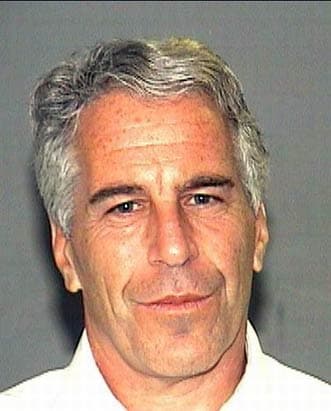
Jeffrey Epstein
PERSON • 7 mentions
American sex offender and financier (1953–2019)
JI
Jimenez
PERSON
Surname reference in Epstein-related documents
JU
Judson
PERSON
Surname or name fragment in documents

Kendall Coffey
PERSON
Census-designated place in Miami-Dade County, Florida, United States
LB
Lanna Belohlavek
PERSON
Person referenced in documents
MW
M. Weinberg
PERSON
Person referenced in documents
MA
Mabee
PERSON
NER artifact - OCR error or non-person text
MA
Mance
PERSON
NER artifact or unclear reference - possibly Mance Moreton
MW
Martin Weinberg
PERSON • 2 mentions
American attorney (born 1946)
MP
Mary A. Price
PERSON
Person referenced in documents
MA
Matthews
PERSON
Ambiguous surname reference in Epstein documents
ME
Megan
PERSON
Ambiguous first name - refers to multiple people in Epstein documents
NL
Nfiaderneanor LI
PERSON
Name reference in documents
Oliver Stone
PERSON
American film director, screenwriter, and producer (born 1946)
Pataki
PERSON
Surname reference in documents
PD
People u. Donk
PERSON
Name reference in documents
PC
People v. Curthoys
PERSON
Name reference in documents
PP
Pmvuring a Person
PERSON
Name reference in documents
RE
Recognizes
PERSON
Surname reference in documents
RB
RiC L. BRADSHAW
PERSON
Name reference in documents
RP
Ruth Pickholi
PERSON
Name reference in documents

Ruth Pickholz
PERSON
Person referenced in documents
SK
Santosky v. Kramer
PERSON
Name reference in documents

Sarah Ferguson
PERSON
British writer, charity patron, public speaker, film producer and television personality, and former duchess of York
SM
Sarogistration Matt
PERSON
Name reference in documents

Scarlett Johansson
PERSON
American actress (born 1984)
SP
Sexual Predator
PERSON
Person referenced in documents
SB
SHARON R. BOCK
PERSON
Person referenced in documents
SE
Siegel OpportemRp Ertiployer
PERSON
Name reference in documents

Solomon
PERSON
Ambiguous surname - refers to Robin Solomon, Jennifer Solomon, and others in Epstein documents
SH
SORA Hearing
PERSON
Person referenced in documents
SO
Sortien
PERSON
Name reference in documents
SA
Stephen Alexander
PERSON
American football player
Stephen Hawking
PERSON
British theoretical physicist, cosmologist and author (1942–2018)
SP
Stephen It Alexander, Psy
PERSON
Name reference in documents
ST
Stott
PERSON
Surname reference in Epstein-related documents
TE
TeCafte
PERSON
Name reference in documents

Thomas Jefferson
PERSON
President of the United States from 1801 to 1809
TA
Thu Anted
PERSON
Name reference in documents

Tony Blair
PERSON
Prime Minister of the United Kingdom from 1997 to 2007
UI
Ula inanufacturoit
PERSON
Name reference in documents
VE
Verniero
PERSON
Surname or name fragment in documents
VI
Vikki
PERSON
Name reference in documents
VB
Vikki J. Benkel
PERSON
Person referenced in documents
WE
Weiss
PERSON
American multinational white-shoe law firm headquartered in New York City
XE
Xeftr
PERSON
Name reference in documents
YB
Yikki r. Berke
PERSON
Name reference in documents
Alexander, S. & Wiatrowski
ORGANIZATION
Organization referenced in documents
ANO AffittATED PAATtaltgilaS
ORGANIZATION
Organization referenced in documents
anoThher
ORGANIZATION
Organization referenced in documents
Appellant
ORGANIZATION • 2 mentions
Organization referenced in documents
Atterbury
ORGANIZATION
Location or entity referenced in documents
Ccwresporide.nce
ORGANIZATION
Organization referenced in documents
Center for Student Development Florida Institute of Technology
ORGANIZATION
Organization referenced in documents
Clearlake Centre
ORGANIZATION
Organization referenced in documents
Cli 0
ORGANIZATION
Organization referenced in documents
Coned-Iva Law
ORGANIZATION
Organization referenced in documents
COurl
ORGANIZATION
Organization referenced in documents
CPLR 5513
ORGANIZATION
Organization referenced in documents
Criminal Department
ORGANIZATION
Organization referenced in documents
Criminal Term
ORGANIZATION
Organization referenced in documents
D.A.
ORGANIZATION
Organization referenced in documents
Deere
ORGANIZATION
Organization referenced in documents
Difonder
ORGANIZATION
Organization referenced in documents
DOCKET
ORGANIZATION
Organization referenced in documents
Docket Instil
ORGANIZATION
Organization referenced in documents
EPSTE7
ORGANIZATION
Organization referenced in documents
ert &dim
ORGANIZATION
Organization referenced in documents
Federal Due Process Rights
ORGANIZATION
Organization referenced in documents
Felony Solicitation for Prostitution
ORGANIZATION
Organization referenced in documents
FENSEIS
ORGANIZATION
Organization referenced in documents
FIRST DEPARTMENT
ORGANIZATION
Organization referenced in documents
Florida Bars
ORGANIZATION
Organization referenced in documents
Florida Board of Psychological Examiners: Psychologist
ORGANIZATION
Organization referenced in documents
Florida Department of Corrections Regarding Termination of Supervision
ORGANIZATION
Organization referenced in documents
Florida Institute of Technology
ORGANIZATION
Organization referenced in documents
Florida Science Foundation
ORGANIZATION
Research foundation in Florida
Florida State
ORGANIZATION
Organization referenced in documents
Fresh Del Monte Produce N.V.
ORGANIZATION
Organization referenced in documents
Hartford Fire Ins. Co.
ORGANIZATION
Organization referenced in documents
HEIGMT
ORGANIZATION
Organization referenced in documents
I. CURRENT OFFENSE'S
ORGANIZATION
Organization referenced in documents
IC) Concoals
ORGANIZATION
Organization referenced in documents
Identification
ORGANIZATION
Organization referenced in documents
Ifilililway Safety
ORGANIZATION
Organization referenced in documents
Iktane
ORGANIZATION
Organization referenced in documents
INAVON
ORGANIZATION
Organization referenced in documents
IncludIng • rural tout*
ORGANIZATION
Organization referenced in documents
Irctuding cola
ORGANIZATION
Organization referenced in documents
isa motor veit»
ORGANIZATION
Organization referenced in documents
ISO 1.3
ORGANIZATION
Organization referenced in documents
Jefferson Mental Health Center
ORGANIZATION
Organization referenced in documents
Kirkland & Ellis LLP
ORGANIZATION
Large law firm in the United States, based in Chicago, Illinois
KritnANn & Fans LLP
ORGANIZATION
Organization referenced in documents
l le
ORGANIZATION
Organization referenced in documents

Legislature
ORGANIZATION
State legislature
Louisiana State University Medical School (APA
ORGANIZATION
Organization referenced in documents
LSU Medical Center
ORGANIZATION
Organization referenced in documents
Matters Outside
ORGANIZATION
Organization referenced in documents
mid L
ORGANIZATION
Organization referenced in documents
MOLD REM
ORGANIZATION
Organization referenced in documents
MORday
ORGANIZATION
Organization referenced in documents
Motion for Travel
ORGANIZATION
Organization referenced in documents
National Business Institute, Inc.
ORGANIZATION
Organization referenced in documents
ND MITI
ORGANIZATION
Organization referenced in documents
Neuropsychiatry
ORGANIZATION
Organization referenced in documents
Neuropsychology
ORGANIZATION
Organization referenced in documents
New York State Bd
ORGANIZATION
Organization referenced in documents
New York State Division of Criminal Justice Services
ORGANIZATION
Organization referenced in documents
Nit 'ark
ORGANIZATION
Organization referenced in documents
Notice of Entry
ORGANIZATION
Organization referenced in documents
NTA LOCI
ORGANIZATION
Organization referenced in documents
NYSID
ORGANIZATION
Organization referenced in documents
NYSID N
ORGANIZATION
Organization referenced in documents
oRonto
ORGANIZATION
Organization referenced in documents
Palm Beach Police
ORGANIZATION
Organization referenced in documents
People of the Sow of New York
ORGANIZATION
Organization referenced in documents
People v. Sherard
ORGANIZATION
Organization referenced in documents
Police Department
ORGANIZATION
Police department
Pre-Hearing Investigation
ORGANIZATION
Organization referenced in documents
PUBLICATIONS & RESEARCH PAPERS
ORGANIZATION
Organization referenced in documents
Recommendation of Board of Examiners of Sex Offenders
ORGANIZATION
Organization referenced in documents
Red Springs City School
ORGANIZATION
Organization referenced in documents
REQJEST
ORGANIZATION
Organization referenced in documents
RET 0
ORGANIZATION
Organization referenced in documents
Robeson County Group Homes
ORGANIZATION
Organization referenced in documents
s. 794.011 Including
ORGANIZATION
Organization referenced in documents
Scotland County Mental Health Center
ORGANIZATION
Organization referenced in documents
Scotland County School
ORGANIZATION
Organization referenced in documents
See A.65 (Board Recommendation
ORGANIZATION
Organization referenced in documents
Sex Crimes Unit
ORGANIZATION
Organization referenced in documents
Sex Exam'rs
ORGANIZATION
Organization referenced in documents
Sex Exam'rs v. Ransom
ORGANIZATION
Organization referenced in documents
Sheriff
ORGANIZATION
Organization referenced in documents
SORA Court
ORGANIZATION
Organization referenced in documents
State Correctional Facilities
ORGANIZATION
Organization referenced in documents

Supreme Court
ORGANIZATION • 2 mentions
Highest court of jurisdiction in the US
Supreme Court - Criminal Tenn.
ORGANIZATION
Organization referenced in documents
the Board of Examiners
ORGANIZATION
Organization referenced in documents
the Board of Examiners of Sex Offenders'
ORGANIZATION
Organization referenced in documents
The Board's Recommendation
ORGANIZATION
Organization referenced in documents
the Circuit Court
ORGANIZATION
Organization referenced in documents
the Court of Appeals
ORGANIZATION
Organization referenced in documents
The Department of tlighvery Safety and Motor Voidctos
ORGANIZATION
Organization referenced in documents
the Division of Vocational Rehabilitation
ORGANIZATION
Organization referenced in documents
the Division of Youth Affairs
ORGANIZATION
Organization referenced in documents
the Dopartroont of Corrections
ORGANIZATION
Organization referenced in documents
the Facts Cited Therein
ORGANIZATION
Organization referenced in documents
the Final Determinations
ORGANIZATION
Organization referenced in documents
the Florida Parole Commission
ORGANIZATION
Organization referenced in documents
the Legal Aid Society
ORGANIZATION
Organization referenced in documents
The Legislature fin*
ORGANIZATION
Organization referenced in documents
the New York Police Department
ORGANIZATION
New York Police Department
the New York Supreme Court
ORGANIZATION
Organization referenced in documents
the Notice of Responsibilities
ORGANIZATION
Organization referenced in documents
the Office of Executive
ORGANIZATION
Organization referenced in documents
the Palm Beach County Sheriff's Office
ORGANIZATION
Organization referenced in documents
the Palm Chapter of the Florida Psychological Association
ORGANIZATION
Organization referenced in documents
The People's Investigation
ORGANIZATION
Organization referenced in documents
the Sable Palm Youth Service Center
ORGANIZATION
Organization referenced in documents
the Sheriffs Office
ORGANIZATION
Organization referenced in documents
the Wand Moat Walsh Child Protection and Safety Act
ORGANIZATION
Organization referenced in documents
the Work Release Program
ORGANIZATION
Organization referenced in documents
Tumid&
ORGANIZATION
Organization referenced in documents
turist nu=lim
ORGANIZATION
Organization referenced in documents
Txxurt
ORGANIZATION
Organization referenced in documents
University of Kentucky Medical Center (Outpatient Psychiatry
ORGANIZATION
Organization referenced in documents
V.I.C.
ORGANIZATION
Organization referenced in documents
Wuesthoff Memorial Hospital
ORGANIZATION
Organization referenced in documents
044mmegebtople
LOCATION
Location referenced in documents
Albany
LOCATION
Capital city of the State of New York, United States, and seat of Albany County
Atamut
LOCATION
Location referenced in documents
Currerg
LOCATION
Location referenced in documents
Dep't 1989
LOCATION
Location referenced in documents

Kentucky
LOCATION
State of the United States of America
Kings Cty
LOCATION
Location referenced in documents
L.A. 0
LOCATION
Location referenced in documents
Laurinberg
LOCATION
Location referenced in documents
Lexington
LOCATION
1925 Lexington-class aircraft carrier

Louisiana
LOCATION
State of the United States of America
Lumberton
LOCATION
Location referenced in documents

Melbourne
LOCATION
Capital city of Victoria, Australia

New Orleans
LOCATION
Largest city of the state of Louisiana, United States

New York
LOCATION • 2 mentions
Most populous city in the United States
New York City
LOCATION
Most populous city in the United States
New York County Clerk's
LOCATION
Location referenced in documents
New York District
LOCATION
Location referenced in documents
New York State
LOCATION
State in the northeastern United States
Nisdcmcanwr
LOCATION
Location referenced in documents

North Carolina
LOCATION
State of the United States of America
Palm Beach
LOCATION
Town in Palm Beach County, Florida, United States

Palm Beach County
LOCATION
County in Florida, United States of America
Palm Beach Sheriff's
LOCATION
Location referenced in documents
Palo Alto
LOCATION
City in Santa Clara County, California, United States
Redcross
LOCATION
Location referenced in documents
Rockledge
LOCATION
City in Brevard County, Florida, United States of America
sectiose485.05
LOCATION
Location referenced in documents
Sekel
LOCATION
Location referenced in documents

Shanghai
LOCATION
Provincial-level municipality in China
Southeastern Sheltered
LOCATION
Location referenced in documents

Tallahassee
LOCATION
County seat of Leon County, Florida, USA and Florida federated state capital city
tamil-od
LOCATION
Location referenced in documents
the State of New York
LOCATION
State in the northeastern United States

U.S. Virgin Islands
LOCATION
Unincorporated territory of the United States of America
West Palm Beach County Jail
LOCATION
Location referenced in documents
Withirstris
LOCATION
Location referenced in documents
Statistics
Pages:100
Entities:238
Sponsored