EFTA00028968 - EFTA00028973
Document EFTA00028968 is a legal document filed in the Southern District of New York, pertaining to the case of the United States of America v. Ghislaine Maxwell.
This document appears to be Ghislaine Maxwell's reply memorandum in support of her motion to dismiss either Count One or Count Three of the superseding indictment against her, arguing that the counts are multiplicitous. Maxwell's legal team, including Jeffrey S. Pagliuca, Laura A. Menninger, Christian R. Everdell and Bobbi C. Stemheim, argues that the government should be directed to elect which conspiracy charge it will prosecute and dismiss the other. The document references legal precedent, specifically United States v. Polizzi, to support the request for dismissal of one of the counts.
Key Highlights
- •Ghislaine Maxwell is seeking to dismiss one of the conspiracy charges against her.
- •The document argues that Counts 1 and 3 of the indictment are multiplicitous, charging the same crime based on identical facts.
- •Attorneys for Ghislaine Maxwell include Jeffrey S. Pagliuca, Laura A. Menninger, Christian R. Everdell and Bobbi C. Stemheim.
- •The document cites United States v. Polizzi as legal precedent for dismissing multiplicitous counts.
Frequently Asked Questions
Books for Further Reading
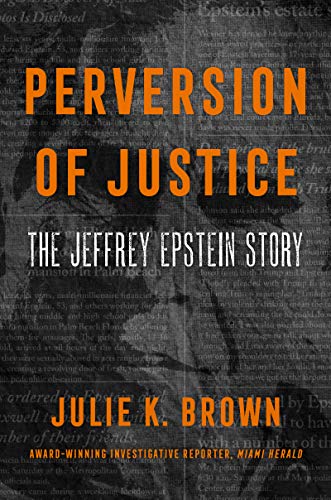
Perversion of Justice: The Jeffrey Epstein Story
Julie K. Brown
Investigative journalism that broke the Epstein case open

Filthy Rich: The Jeffrey Epstein Story
James Patterson
Bestselling account of Epstein's crimes and network
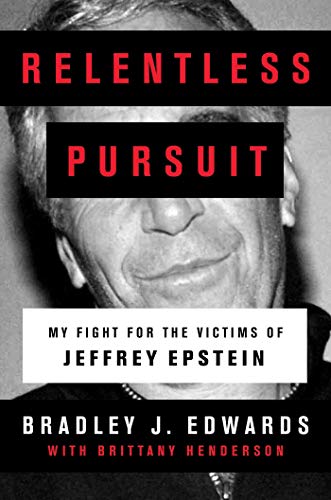
Relentless Pursuit: My Fight for the Victims of Jeffrey Epstein
Bradley J. Edwards
Victims' attorney's firsthand account
Document Information
Bates Range
EFTA00028968 - EFTA00028973
Pages
6
Document Content
Page 1 - EFTA00028968
UNITED STATES DISTRICT COURT SOUTHERN DISTRICT OF NEW YORK x UNITED STATES OF AMERICA, v. GHISLAINE MAXWELL, Defendant. x 20 Cr. 330 (MN) REPLY MEMORANDUM OF GHISLAINE MAXWELL IN SUPPORT OF HER MOTION TO DISMISS EITHER COUNT ONE OR COUNT THREE OF THE SUPERSEDING INDICTMENT AS MULTIPLICITOUS Jeffrey S. Pagliuca Laura A. Menninger HADDON, MORGAN & FOREMAN P.C. Christian R. Everdell COHEN & GRESSER LLP Bobbi C. Stemheim Law Offices of Bobbi C. Stemheim Attorneys for Ghislaine Maxwell EFTA00028968
Page 2 - EFTA00028969
The government does not dispute that Counts 1 and 3 charge Ms. Maxwell with the same crime, conspiracy in violation of 18 U.S.C. § 371, nor that the charges are based on identical facts. Effectively conceding that the counts are multiplicitious, the government argues that the motion is "premature," focusing only on the jeopardy problem that would occur if Ms. Maxwell were convicted on both counts at trial and ignoring the prejudice to Ms. Maxwell attendant to the overcharging. The government argues that the Court should defer ruling on this motion until "after the completion of trial" which will "ensure" a full factual record. Resp. at 172. The government is wrong. The Court can, and should, grant this Motion, direct the government to elect which of the conspiracy charges it will prosecute, and dismiss the other. The identical facts are plainly alleged in the superseding indictment ("Indictment"), and the government has presented no factual distinction in its response. Accordingly, no additional record is necessary and very clear authority exists supporting the relief requested by Ms. Maxwell, dismissal of one of the multiplicitous counts. "District courts presented with what are recognized before or during trial to be multiplicitous indictments will avoid any problem by requiring the prosecution to elect between counts charged rather than by merging the counts at sentencing." United States v. Polizzi, 257 F.R.D. 33, 36-37 (E.D.N.Y. 2009). The Court should order such an election and dismissal here. I. The Motion is Not Premature, and the Court has Discretion to Direct Election and Dismissal Pretrial The government's "prematurity" argument is misplaced. Pursuant to Federal Rule of Criminal Procedure 12(b)(3)(B)(ii), a defendant is required to raise arguments based on defects in the indictment, including "charging the same offense in more than one count (multiplicity)," by pretrial motion "if the basis for the motion is then reasonably available and the EFTA00028969
Page 3 - EFTA00028970
motion can be determined without a trial on the merits." See United States v. Dervishaj, 787 F. App'x 12, 15 (2d Cir. 2019), cert. denied, 140 S. Ct. 2548 (2020) (multiplicity argument waived because the defendant failed to raise the issue by pretrial motion). The government also ignores ample Second Circuit authority that authorizes the relief requested by Ms. Maxwell: The defendant may move to have the prosecution elect among the multiplicitous counts, with all but the one elected dismissed. This is a matter for trial court discretion, and is most appropriate when the mere making of the charges would prejudice the defendant with the jury. United States v. Reed, 639 F.2d 896, 905 (2d Cir. 1981).' The reason for this discretion is clear: The law protects an individual against multiplicitous indictments to avoid multiple sentences for a single offense and to eliminate the prejudice which such indictments may generate in the eyes of a jury. For when an indictment charges numerous offenses arising from the same conduct it may falsely suggest to a jury that a defendant has committed not one but several crimes. Once such a message is conveyed to the jury, the risk increases that the jury will be diverted from a careful analysis of the conduct at issue. Compromise verdicts or assumptions that, with so many charges pending the defendant must be guilty on at least some of them, pose significant threats to the proper functioning of the jury system. United States v. Clarridge, 811 F. Supp. 697, 702 (D.D.C. 1992) (cleaned up).2 Ms. Maxwell has been charged with the identical conduct in Counts 1-4. These multiple counts falsely suggest to the July that Ms. Maxwell is alleged to have committed more than one crime. The defect in the Indictment is patent and prejudicial, and the Court should remove the ' See also United States v. Ketchum, 320 F.2d 3, 7 (2d Cir.1963); United States v. Carter, 576 F.2d 1061, 1064 (3d Cir.1978); and United States v. Langford, 946 F.2d 798, 802 (11th Cir.1991). 2 See also United States v. Chacko, 169 F.3d 140, 145 (2d Cir.1999) (A multiplicitous indictment creates an exaggerated impression of a defendant's criminal activity by charging "an offense multiple times, in separate counts, when, in law and fact, only one crime has been committed."). 2 EFTA00028970
Sponsored
Page 4 - EFTA00028971
defect by requiring the government to elect which of the conspiracy charges it will move forward with and dismiss the remaining conspiracy charge. II. The Government Failed to Meet its Burden of Establishing the Two Alleged Conspiracies Are Distinct. To guard against the "well recognized danger" that prosecutors can easily "draft indictments that allege what appear to be separate conspiracies but may actually be parts of an overall conspiracy," where a defendant "makes a non-frivolous showing that two indictments in fact charge only one conspiracy, the burden shifts to the prosecution to show, by a preponderance of the evidence, that there are in fact two distinct conspiracies." United States v. Lopez, 356 F.3d 463, 467 (2d Cir. 2004) (citing United States v. DelVecchio, 800 F.2d 21, 22 (2d Cir. 1986)). As demonstrated in Ms. Maxwell's moving papers, application of the Koyfant multifactor test results in an identical overlap of alleged: participants, time, similarity of operation, overt acts, geography, objectives, and interdependence. Mot. at 2. The government has failed to proffer any evidence to the contrary, and Ms. Maxwell's Motion should be deemed confessed. CONCLUSION For the reasons stated in Ms. Maxwell's original Motion and this Reply, she requests that the Court enter an order requiring the government to elect the conspiracy charge it intends to prosecute and dismiss the remaining count. Dated: March 15, 2021 3 EFTA00028971
Page 5 - EFTA00028972
Respectfully submitted, s/ Jeffrey S. Pagliuca Jeffrey S. Pagliuca Laura A. Menninger HADDON, MORGAN & FOREMAN P.C. Christian R. Everdell COHEN & GRESSER LLP Bobbi C. Stemheim Law Offices of Bobbi C. Stemheim Attorneys for Ghislaine Maxwell 4 EFTA00028972
Page 6 - EFTA00028973
Certificate of Service I hereby certify that on March 15, 2021, I served by email, pursuant Rule 2(B) of the Court's individual practices in criminal cases, the Reply Memorandum of Ghislaine Maxwell in Support of Her Motion to Dismiss Either Count One Or Count Three of the Superseding Indictment as Multiplicitous upon the following: U.S. U.S. Attorne 's Office, SDNY s/ Christian R. Everdell 5 EFTA00028973
Entities Mentioned
BS
Bobbi C. Sternheim
PERSON
Defense attorney for Ghislaine Maxwell in sex trafficking trial
CH
Chacko
PERSON
Surname reference in Epstein-related documents

Christian R. Everdell
PERSON
Person referenced in documents
CL
Clarridge
PERSON
Name reference in documents
DE
Dervishaj
PERSON
Name reference in documents

Ghislaine Maxwell
PERSON • 4 mentions
British socialite and sex trafficker, daughter of Robert Maxwell, accomplice of Jeffrey Epstein
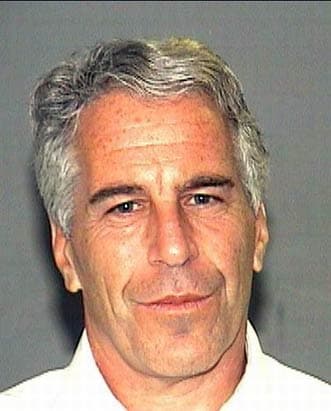
Jeffrey Epstein
PERSON
American sex offender and financier (1953–2019)
JP
Jeffrey Pagliuca
PERSON
American attorney, defense lawyer for Ghislaine Maxwell during her criminal trial
Jennifer Lopez
PERSON
American singer and actress (born 1969)
LA
Langford
PERSON
Surname reference in documents
LM
Laura Menninger
PERSON
American attorney, defense counsel for Ghislaine Maxwell in sex trafficking trial

Polizzi
PERSON
Name reference in documents
Gresser LLP
ORGANIZATION
Organization referenced in documents
HADDON, MORGAN & FOREMAN P.C.
ORGANIZATION
Organization referenced in documents
Ketchum
ORGANIZATION
Organization referenced in documents
Second Circuit
ORGANIZATION • 2 mentions
U.S. Court of Appeals for the Second Circuit
Statistics
Pages:6
Entities:16
Avg. OCR:0.9%
Sponsored