EFTA02444456
Document Information
Bates Range
EFTA02444456
Pages
24
Original Filename
EFTA02444456.pdf
Document Content
Page 1 - EFTA02444456_001
EFTA02444456
Page 2 - EFTA02444456_002
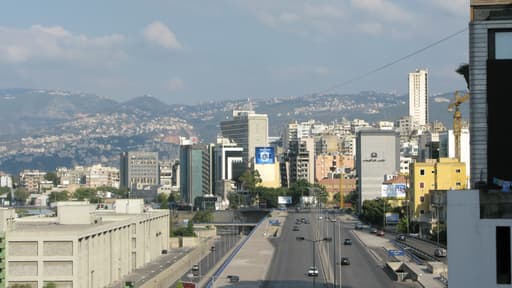
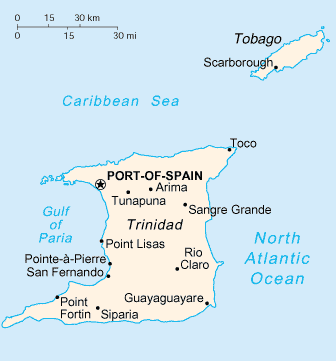
• Why Contract with Innviron? Design of More than 250 and construction management of more than 100 Solid Waste Management Facilities, including Landfills, Leachate and Gas Treatment Systems, Compost Plants, Transfer Stations, Sorting Facilities. Incinerators, Waste Gasification Facilities, Medical Waste Treatment Facilities, and Hazardous Waste Facilities Currently designing and permitting the first US commercial Waste Gasification Facility in Georgia, USA. Beginning construction on Gasification Facility in Trinidad in November 2009. 3 lnnviron personnel assisted in development of RCRA regulations, developed the geosynthetic lining system technologies, and developed Sorting Facility and Compost System Technologies. 4. Development of Solid and Hazardous Waste Management Regulations for Many Countries and States 5 Design, Construction, and Operation of Solid Waste Facilities in the USA, Argentina, Ecuador, the Bahamas, Oman. Lebanon, Panama, Turkey, and the UAE. • Published more than 100 papers on Solid and Hazardous Waste Management • Permitted only Hazardous Waste / Transuranic Waste Repository in the USA EFTA_R1_01521306 EFTA02444457
Page 3 - EFTA02444456_003
What is Gasificat si-F-- Gasification may be defined as follows: • "A process technology that is designed and operated producing synthesis gas through the chemical converse materials." 7acji4 carbonaceous • 10 114 • "A process that converts carbonaceous mater6ts through a process involving • partial oxidation of the feedstock in a reducing atmosphere irrtife presence of steam at temperatures sufficient to convert the feedstock to synthesis gas, to convert inorganic matter in the feedstock to a glassy solid material known as,, vitreous frit or slag, and to convert halogens into the corresponding acid halides." • "A process that incorporates a modern, high-temperature pressurized gasifier with auxiliary gas and water treatment systems to produce refined product synthesis gas, which when combusted, produces emissions in full compliance with the Clean Air Act." Wetherhold, B., Orr, D., and Maxwell, D., "A Comparison of Gasification and Incineration of Hazardous Wastes",prepared for US Department of Energy by Radian International LLC, 30 Mar. 2000 EFTA02444458
Sponsored
Page 4 - EFTA02444456_004
History of Gasification • Coal Gasification used to produce medium quality gas since middle 1800s. Coat heated in low oxygen environment to produce synthesis gas, that was burned for heating and lighting in the 1800s, and burned for electricity in the 1900s. • Gasification used for the past 50 years in the production of fuels and chemicals. • Waste Gasification used in treatment of hazardous wastes, and in conversion of MSW to Medium Calorific Value (MCV) fuel. EFTA_R1_01521308 EFTA02444459
Page 5 - EFTA02444456_005
Primary Advantages of Gasification • Ability to produce consistent, high-quality Synthesis Gas (Syngas) that can be used for energy production; • Ability to accommodate a wide variety of gaseous, liquid, and solid feedstocks; • Major components of Syngas are C412, and CO2, with low levels of N2 and CH4. SO, a d N0.14F substantially lower in Gasification Facilities:than J ncinerat n Facilities. .k. Yt a IM EFTA_R1_01521309 EFTA02444460
Page 6 - EFTA02444456_006
Major Subsystems in Gasification and Incineration Facilities 1. Waste Preparation and Feeding 2. Combustion and Gasification 3. Combustion Gas Cleanup versus Syngas Cleanup 4. Residue and Ash/Slag Handling ■,„ Pet 4 EFTA_R1_01521310 EFTA02444461
Sponsored
Page 7 - EFTA02444456_007
Key Differences Between Gasification and Incineration 2. Combustion versus Gasification Incineration Designed to maximize the conversion of feedstock to CO2 and H2O Large quantities of excess air Highly oxidizing environment Operated at temperatures below the ash melting point. Mineral matter converted to bottom ash and fly ash. Gasification Designed to maximize the conversion of feedstock to CO and H2 Limited quantities of oxygen Highly reducing environment Operated at temperatures above the ash melting point. Mineral matter converted to glassy slag and fine particulate matter (char). Wetherhold. B., Orr, D , and Maxwell, D., "A Comparison of` Gasification and Incineration ofl-la a .d Wastes',prepared for US Department of Energy by Radian International LLC, 30 Mar. 2000 EFTA_R1_01521311 EFTA02444462
Page 8 - EFTA02444456_008
Key Differences Between Gasification and Incineration 3. Gas Cleanup Incineration Flue Gas cleanup at atmospheric pressure Treated Flue Gas discharged to atmosphere Fuel sulfur converted to SO, and discharged with Flue Gas Gasification Syngas cleanup at high pressure Treated Syngas used for Power Production with subsequent Flue Gas discharge Recovery of reduced sulfur species in the form of high purity elemental sulfur or sulfuric acid byproduct prepared for US Department of Energy by Radian International LLC, 30 Mar. 2000 EFTA_R1_01521312 EFTA02444463
Page 9 - EFTA02444456_009
Key Differences Between Gasificati Incineration 4. Residue and Ash/Slag Handling Incineration Bottom ash and fly ash collected, treated, and disposed as a hazardous waste. Gasification Slag is non-leachable, non-hazardous and suitable for use in construction materials. Fine particulate matter recycled to gasifier or processed for metals reclamation. Wetherhold, B., On, D., and Maxwell, D., "A Comparison of Gasification and Incineration of Hazardous Wastes", prepared for US Department of Energy by Radian International LLC, 30 Mar. 2000 EFTA_R1_01521313 EFTA02444464
Sponsored
Page 10 - EFTA02444456_010
Gasification System Design 1. Gasification System operate by feeding carbon-containing waste materials into a heated chamber, with a limited and controlled amount of oxygen. This creates reducing conditions in the Gasification Reactor. 2. At high operating temperatures in the Gasification Reactor, chemical bonds are broken by oxidation and steam reforming at temperatures sufficiently high to promote rapid reactions. Gasification Reactor temperatures in range of 1,550 to 3,500 °F. Primary components of Syngas created in Gasification Reactor are CO and H2, with lesser amounts of H2O, CO2, N2, C114, H2S, and HCl. Waste materials are converted from solids to gases, they are not burned. Therefore, Flue Gas is much cleaner for Gasification Process. Slag has the consistency of glass, and Sulfur may be recovered in elemental form, which may be sold. EFTA_R1_01521314 EFTA02444465
Page 11 - EFTA02444456_011
Key Elements to a Successful Gasification Facility • Sorting Line required to remove high ash content materials such as metals, glass, concrete, brick, rock, and soil; • C&D materials should be diverted. Plastics and wood can be separated from CEtD and transported to Gasifier; • Shredder and pelletizer required to produce good quality, more uniform pellets, and to reduce moisture content of waste to about 20%; • Two stage Gasification required, (1) Conventional Gasification to convert solids to syngas; and (2) Ash slagging unit required to convert carbon in ash to syngas, increase BTUs of syngas, and convert ash to slag; • Cyclone required after Gasifier to remove particulate matter from syngas prior to combustion in Boiler; • Boiler with Steam Turbine more efficient than Gas Turbine; and • Air Quality Treatment system typically consists of Acid Gas Removal Unit, Electrostatic Precipitator, Bag House with Carbon Injection, and Stack. EFTA_R1_01521315 EFTA02444466
Page 12 - EFTA02444456_012
INNVIRON GASIFICATION SYSTEM SC SORTING LINE WI MAGNETIC BELT SHREDDER IRE DEBEADER STACK BAG OPENER PELLETIZER (OPTIONAL) FEED HOPPER TIRE SHREDDER FLUIDIZED BED GASIIER ASH/SLAG Kyr PROCESSING ELECTROSTATIC PRECIPITATOR BAGHOUSE WI ACID GAS CARBON & LIME REMOVAL UNIT INJECTION SYNGAS BOILER FLUE CYCLONE STEAM STEAM TURBINE GENERATOR ELECTRIC OUTPUT EFTA_R1_01521316 EFTA02444467
Sponsored
Page 13 - EFTA02444456_013
Comparison of Waste Technologies o Ener Description Total Electricity Cost of Electricity Unit cost of Waste per ton of Contstruciton produced per KW- Technology Quantity Prepared (Millons US$) per day hr per da (tons/day) Waste (MW- (MW-hr/ton) hrs/da,) ) (US$/kW' hr/dia) I nnviron 250 1.12 $25 192 $130.21 Gasifier Incinerator 250 0.4 $75 69 $1,086.96 Plasma Arc 250 0.5 $125 10$ $1,157.41 EFTA_R1_01521317 EFTA02444468
Page 14 - EFTA02444456_014
NO. CO VOC NH3 SOX PM 1pitO6 I Concentration ppm of Pollutants 2 3 @ 15%O2 2 5 N/A N/A Daily Emissions lbs/day 37 34 36 34 2.6 22 Annual Emissions tons/year 6.8 6.2 6.5 6.3 0.5 4.0 Exhaust temperature 26°C EFTA_R1_01521318 EFTA02444469
Page 15 - EFTA02444456_015
Flue Gas Emissions Substa Waste Gasification Facilities Comparison on Waste-to-Energy Criteria Pollutants EGaillIcatIon NI Incineration CI landfill Source: Integra Energy Consulting SO2 Particulate Matta CO, Equivalent Emissions per Unit of Power Generated 3 is Es c IS • • I 6 Is 05 0 la I07 275 GatlfiCallon Inc 'notation lardfilb wkli Gm Capture Source BOP Engineering EFTA_R1_01521319 EFTA02444470
Sponsored
Page 16 - EFTA02444456_016
Integrated Solid Waste Management Plan ficartS'orting • EFTA02444471
Page 17 - EFTA02444456_017
•••••••I • -__ IN N VI Re N w... rams 1 EFTA_R1_01521321 EFTA02444472
Page 18 - EFTA02444456_018
2 4' x 2' Hopper Horizontal Sorting Converyor 4' x 55', Variable Speed 30 Ton/Hr Shredder Typical or 2 Reception Hopper and Bag Opener 4' x 30' Inclined Variable Speed Conveyor n n n n 1 Li n Sorting Platform Crossbelt Magnetic Separator 4' x 4' Hopper 4' x 14' Horizontal Conveyor FIGURE 3. SORTING AND SEPERATION FACILITY LAYOUT r c Fr v.-) 3 INNVIRtN " C-L C T US09098 EFTA_R1_01521322 EFTA02444473
Sponsored
Page 19 - EFTA02444456_019
1 L -a 1 1 1, 1 1 1 1. I 1 ii INNVIRIN 04111£ 10 4 PROJEC1 nV US09096 DOCUMENT NO EFTA_R1_01521323 EFTA02444474
Page 20 - EFTA02444456_020
WASTE GASIFIER DESIGN Income from Sale of Power Income from 10 MW Gasifier (8.0 MW of Power to Grid): • qwaste = 250 tons/day • qp = 171.5 tons/day • E = (171.5 tons/day)(1.12 MW-hrs/ton)(365 days/yr)(1,000 KW-hrs/MW- hrs)(50.10/KW-hr) EFTA_R1_01521324 EFTA02444475
Page 21 - EFTA02444456_021
PRELIMINARY COST ESTIMATE Description 10 MW System 30 MW System Design and Permitting $1,000,000 $1,000,000 Construction Management $350,000 $450,000 Modification of Building $3,000,000 $5,000,000 Scales and Scalehouse $165,000 $165,000 Site Improvements $500,000 $500,000 Access Road, Fence, and Guardhouse $293,000 $293,000 10 MW Gasification System $15,000,000 $45,000,000 Mobile Plant Equipment $450,000 $650,000 Tire Shredder and Oversize Shredder $625,000 $900,000 Extend Grid 400 ft $500,000 $500,000 Offices (3000 ft2) $450,000 $450,000 Equipment Materials and Supplies $100,000 $100,000 Total Construction Cost $22,433,000 $55,008,000 Assumes that connection to Grid is at the building, no additional cost to extend power lines to the Building EFTA_R1_01521325 EFTA02444476
Sponsored
Page 22 - EFTA02444456_022
TYPICAL COMPONENTS OF REVENUE Description 10 MW System 30 MW System Tipping Fee to Process Waste: $40 per ton $3,942,000 $11,826,000 Sale of Recyclables: Ferrous Metals: ($60/ton) $280,977 $842,931 Aluminum: ($750/ton) $183,413 $550,239 Processing Fee: Tires: (1 ton/day) S36,500 $109,500 Telephone Poles and RR Ties (1 ton/day) $36,500 $109,500 Sale of Power: $7,010,920 $21,032,760 TOTAL PROJECTED REVENUE $11,490,310 $34,470,930 TOTAL PROJECTED OPERATING COST $6,894,186 $17,235,465 TOTAL PROJECTED EBITDA $4,596,124 $17,235,465 EFTA_R1_01521326 EFTA02444477
Page 23 - EFTA02444456_023
Conclusions 1. Need Tire Shredder and Debeader to process tires 2. Need Oversize Shredder to process Telephone Poles and Railroad Ties 3. Sorting Line needed to process waste, remove metals and HHW, protect >\ Shredder, Pelletizer, and Gasifier, and provide more uniform pellets 4. Facility would create a minimum of 21 to 50 new jobs 5. Potential Additional Sources of Income: Tires ($2/tire) Telephone Poles and Railroad Ties Carbon Credits Government Stimulus Money and Subsidies EFTA_R1_01521327 EFTA02444478
Page 24 - EFTA02444456_024
MINIMUM REQUIREMENTS • Long-Term Contract: Minimum Term = 20 years • Availability of waste (250 tons/day, 365 days/yr, for each 10 MW Gasification Line) • 8.0 MW/hr to Grid for each 10 MW Gasification Line • Support in Permitting the Facility • Assistance to Obtain Power Buy Back Agreement with the Local Utility Company or Base EFTA_R1_01521328 EFTA02444479
Entities Mentioned
GA
Gasificat
PERSON
Name reference in documents

Ghislaine Maxwell
PERSON
British socialite and sex trafficker, daughter of Robert Maxwell, accomplice of Jeffrey Epstein
PE
Pelletizer
PERSON
Name reference in documents

Samantha Power
PERSON
Irish-American academic, author and diplomat
WE
Wetherhold
PERSON
Name reference in documents
• Shredder
ORGANIZATION
Organization referenced in documents
Acid Gas Removal Unit
ORGANIZATION
Organization referenced in documents
Bag House
ORGANIZATION
Organization referenced in documents
Bag Opener
ORGANIZATION
Organization referenced in documents
BAGHOUSE WI
ORGANIZATION
Organization referenced in documents
C-L C T
ORGANIZATION
Organization referenced in documents
Combustion Gas Cleanup
ORGANIZATION
Organization referenced in documents
Construction Management
ORGANIZATION
Organization referenced in documents
Contstruciton
ORGANIZATION
Organization referenced in documents
Debeader
ORGANIZATION
Organization referenced in documents
Design of More than 250
ORGANIZATION
Organization referenced in documents
Design, Construction
ORGANIZATION
Organization referenced in documents
Development of Solid and Hazardous Waste Management
ORGANIZATION
Organization referenced in documents
Electrostatic Precipitator
ORGANIZATION
Organization referenced in documents
Equipment Materials and Supplies
ORGANIZATION
Organization referenced in documents
Flue Gas
ORGANIZATION
Organization referenced in documents
Gas Treatment Systems
ORGANIZATION
Organization referenced in documents
Gas Turbine
ORGANIZATION
Organization referenced in documents
Gasifier
ORGANIZATION
Organization referenced in documents
Gm Capture
ORGANIZATION
Organization referenced in documents
Guardhouse
ORGANIZATION
Organization referenced in documents
Innviron
ORGANIZATION
Organization referenced in documents
Integra Energy
ORGANIZATION
Organization referenced in documents
Integrated Solid Waste Management
ORGANIZATION
Organization referenced in documents
Major Subsystems
ORGANIZATION
Organization referenced in documents
Medium Calorific Value
ORGANIZATION
Organization referenced in documents
Mobile Plant Equipment
ORGANIZATION
Organization referenced in documents
MW Gasification System
ORGANIZATION
Organization referenced in documents
MW System
ORGANIZATION
Organization referenced in documents
Need Tire Shredder
ORGANIZATION
Organization referenced in documents
Operation of Solid Waste Facilities
ORGANIZATION
Organization referenced in documents
OPTIONAL
ORGANIZATION
Organization referenced in documents
Oversize Shredder
ORGANIZATION
Organization referenced in documents
PELLETIZER
ORGANIZATION
Organization referenced in documents
Power to Grid
ORGANIZATION
Organization referenced in documents
Radian International LLC
ORGANIZATION
Organization referenced in documents
Scalehouse
ORGANIZATION
Organization referenced in documents
Scales
ORGANIZATION
Organization referenced in documents
SEPERATION FACILITY
ORGANIZATION
Organization referenced in documents
Sorting Facility
ORGANIZATION
Organization referenced in documents
Stack
ORGANIZATION
Organization referenced in documents
Steam Turbine
ORGANIZATION
Organization referenced in documents
Telephone Poles and Railroad Ties
ORGANIZATION
Organization referenced in documents
Tire Shredder
ORGANIZATION
Organization referenced in documents

US Department of Energy
ORGANIZATION
Organization referenced in documents
Waste Gasification Facility
ORGANIZATION
Organization referenced in documents

Bahamas
LOCATION
Island sovereign state in the West Indies

Ecuador
LOCATION
Sovereign state in South America
Gasification
LOCATION
Location referenced in documents
Horizontal Conveyor
LOCATION
Location referenced in documents
Lebanon
LOCATION
Country in West Asia

Panama
LOCATION
Sovereign state in Central America
Successful Gasification
LOCATION
Location referenced in documents
the Gasification Reactor
LOCATION
Location referenced in documents
Trinidad
LOCATION
Larger of the two major islands which make up Trinidad and Tobago
Statistics
Pages:24
Entities:60
Sponsored