EFTA00020085 - EFTA00020087
Document EFTA00020085 is a letter from the U.S. Attorney's Office for the Southern District of New York to Judge Richard M. Berman concerning the case of United States v. Jeffrey Epstein following Epstein's death.
The letter, dated August 28, 2019, addresses legal arguments raised by the defense counsel after Jeffrey Epstein's death and argues for the dismissal of the indictment against him. It cites Second Circuit precedent regarding the abatement of actions upon penal statutes when a defendant dies before conviction and argues against the court conducting its own inquiry into Epstein's death or supervising the Grand Jury investigation. The document highlights the legal procedures and consequences following the death of a defendant in a criminal case.
Key Highlights
- •The document argues for the dismissal of the indictment against Jeffrey Epstein due to his death before conviction.
- •It cites the Second Circuit precedent regarding the abatement of legal actions upon the death of a defendant.
- •Geoffrey S. Berman, then U.S. Attorney, is one of the key people involved.
- •The letter argues the court does not have the authority to conduct its own inquiry into the circumstances of Jeffrey Epstein's suicide or supervise the ongoing Grand Jury investigation.
Frequently Asked Questions
Books for Further Reading
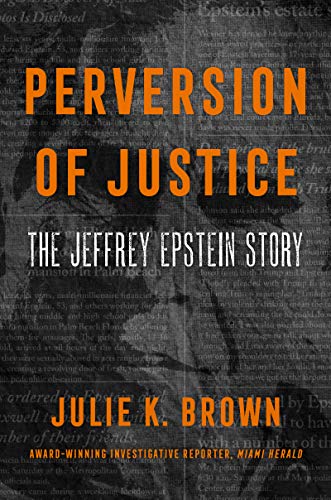
Perversion of Justice: The Jeffrey Epstein Story
Julie K. Brown
Investigative journalism that broke the Epstein case open
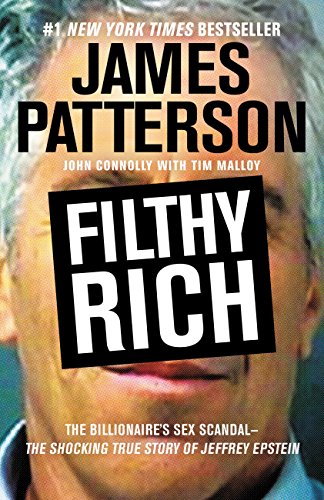
Filthy Rich: The Jeffrey Epstein Story
James Patterson
Bestselling account of Epstein's crimes and network
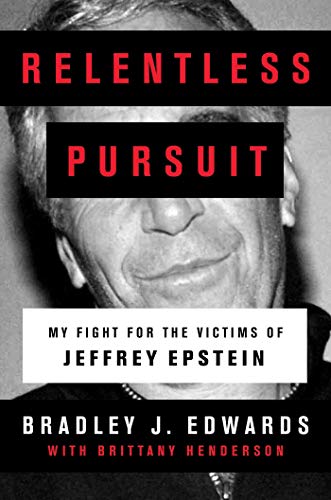
Relentless Pursuit: My Fight for the Victims of Jeffrey Epstein
Bradley J. Edwards
Victims' attorney's firsthand account
Document Information
Bates Range
EFTA00020085 - EFTA00020087
Pages
3
Document Content
Page 1 - EFTA00020085
U.S. Department of Justice United States Attorney Southern District of New York The Si/viol. Mollo Building One Saint Andrew's Plaza New York, New York 10007 August 28, 2019 By ECF and E-Mail Honorable Richard M. Berman United States District Judge Southern District of New York 500 Pearl Street New York, New York 10007 Re: United States v. Jeffrey Epstein, 19 Cr. 490 (RMB) Dear Judge Berman: The Government respectfully writes in response to legal arguments raised by defense counsel at the August 27, 2019 hearing on the Government's nolle prosequi motion. As set forth below, the Court must dismiss the Indictment where, as here, the defendant has died prior to a conviction becoming final. Moreover, the Court does not have the authority, inherent or otherwise, to conduct its own inquiry into the circumstances of Jeffrey Epstein's suicide, or to supervise the ongoing Grand Jury investigation. 1. The Rule of Abatement Requires the Dismissal of the Indictment As the Court is aware, clear Second Circuit precedent requires the dismissal of an indictment when a defendant dies before his conviction becomes final, under the "well-settled rule that actions upon penal statutes do not survive the death of the wrongdoer." United States v. Wright, 160 F.3d 905, 908 (2d Cir. 1998) (internal citation omitted). This rule applies with full force here, and requires the dismissal of the Indictment. See Transcript of Aug. 27, 2019 Hearing ("Tr.") at 9 (Court noting that "it is appropriate to conclude that if the rule of abatement applies to a convicted defendant as in the Wright case, it should also apply a fortiori in the Epstein case, which was still in the pretrial phase when Mr. Epstein died, when there had been no conviction."); see also United States v. Brooks, 872 F.3d 78, 87 (2d Cir. 2017), cert. denied, 139 S. Ct. 171, 202 L. Ed. 2d 37 (2018) ("This general rule, almost unanimously followed by the federal Courts of Appeals, has its roots in the common law doctrine of abatement ab initio: `everything associated with the case is extinguished, leaving the defendant as if he had never been indicted or convicted.") (collecting cases). 2. The Court Does Not Have the Authority to Conduct its Own Investigation At yesterday's hearing, defense counsel posited that the "court has the inherent authority to find out what happened on its watch," and asked the Court to "supervis[e], or at least keep an EFTA00020085
Page 2 - EFTA00020086
Page 2 interest in these proceeding[s]." (Tr. 17-18). Defense counsel is wrong. The Court lacks the constitutional authority to supervise a grand jury investigation or to appoint an independent prosecutor to investigate the circumstances surrounding Epstein's death. The only power the Constitution permits to be vested in federal judges is "[t]he judicial power of the United States," Art. III, § 1, which is the power to decide, in accordance with law, who should prevail in a case or controversy, see Art. III, § 2. That power does not include "'supervisory' authority" over the grand jury—"an institution separate from the courts, over whose functioning the courts do not preside." United States v. Williams, 504 U.S. 36, 45-46 (1992); see also United States v. Dionisio, 410 U.S. I, 17-18 (1973) (holding that the grand jury must remain "free to pursue its investigations unhindered by external influence or supervision so long as it does not trench upon the legitimate rights of any witness called before it."). To allow a court to supervise a grand jury's investigation would also likely conflict with the Fifth Amendment's constitutional guarantee of "an investigative body acting independently of either prosecuting attorney or judge."' Williams, 504 U.S. at 49 (quoting Dionisio, 410 U.S. at 16). The court's judicial power also "does not include the power to seek out law violators in order to punish them" and, accordingly, it is "well established that the judicial power does not generally include the power to prosecute crimes." Young v. U.S. a rel. Vuitton et Fils S.A., 481 U.S. 787, 816-17 (1987) (Scalia, J., concurring) (citing United States v. Cox, 342 F.2d 167 (5th Cir. 1965), and United States v. Thompson, 251 U.S. 407, 413-17 (1920)). Rather, the Constitution vests the power to conduct investigations and prosecute violations of the laws in the Executive. See Art. II, § 2, cl. 1; Heckler v. Chaney, 470 U.S. 821, 832 (1985); Buckley v. Valeo, 424 U.S. I, 138 (1976). Indeed, the Second Circuit has emphasized that judicial review and regulation of prosecutorial decisions would place courts in the "injudicious posture of becoming `superprosecutors,"' and would invite questions about "the judiciary's role of supervision," including "[a]t what point would the prosecutor be entitled to call a halt to further investigation," "[w]hat evidentiary standard would be used." Inmates of Attica Corr. Facility v. Rockefeller, 477 F.2d 375, 380 (2d Cir. 1973) (discussing action to require federal officials to investigate and prosecute persons who had allegedly violated criminal statutes). For those reasons, among many, a judge's authority to initiate a proceeding and appoint an attorney to conduct an investigation has been circumscribed by Congress and the Supreme Court. Only when a court order has been disobeyed does a court "possess inherent authority to initiate contempt proceedings." Young, 481 U.S. at 793. But, even in the unique context of criminal contempt—which is not at issue here—a court only has authority to appoint a private lawyer to prosecute the contempt where the United States Attorney has refused the prosecution. See Fed. R. Crim. P. 42(a)(2). The precedent cited by defense counsel—the special proceeding initiated by Judge Emmett Sullivan following the dismissal of the prosecution of Senator Ted Stevens—provides no authority for the exercise of the court's power here. See In re Special Proceeding, Misc. No. 09-0198 (EGS). In that case, after the Department of Justice dismissed the charges against Senator Stevens for apparent Brady violations, Judge Sullivan, pursuant to Rule 42, appointed a special prosecutor to investigate the violations. See United States v. Stevens, No. 08 Cr. 231 (EGS) (Apr. 8, 2009) (Dkt. No. 375); Reporter's Transcript of Proceedings, United States v. Stevens, No. 08 Cr. 231 (EGS), EFTA00020086
Page 3 - EFTA00020087
Page 3 at 46-47 (Apr. 7, 2009). But here, there is no allegation of disobedience of court order that would give the court authority to initiate a proceeding under Rule 42, or appoint a private attorney. Finally, it bears noting that the United States Attorney's Office, Federal Bureau of Investigation, and Department of Justice — Office of Inspector General are conducting an ongoing Grand Jury investigation into the circumstances surrounding Epstein's August 10, 2019 suicide. A separate investigation would likely, at best, be redundant and may risk undermining the existing investigation. Accordingly, for the foregoing reasons, we respectfully request that the Court grant Government's nolle prosequi motion. Very truly yours, GEOFFREY S. BERMAN United States Attorney by: /s/ Assistant United States Attorneys EFTA00020087
Entities Mentioned
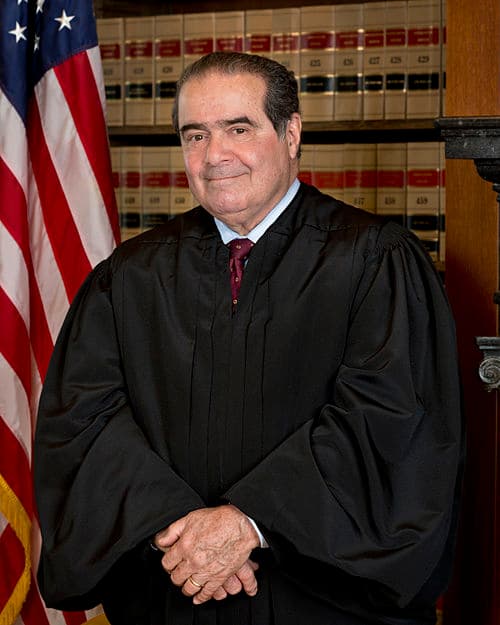
Antonin Scalia
PERSON
Associate Justice of the Supreme Court of the United States from 1986 to 2016

Brooks
PERSON
Ambiguous surname - refers to David Brooks, Alonzo Brooks, Rodney Brooks in various contexts

Buckley
PERSON
Surname reference in Epstein-related documents
CH
Chaney
PERSON
Surname reference in documents
DI
Dionisio
PERSON
Surname reference in documents
Emmett
PERSON
First name reference to multiple individuals in the documents

Geoffrey S. Berman
PERSON • 2 mentions
Former U.S. Attorney for the Southern District of New York who oversaw the 2019 federal indictment of Jeffrey Epstein
HE
Heckler
PERSON
Surname reference in documents

Jeffrey Epstein
PERSON • 4 mentions
American sex offender and financier (1953–2019)

Prince Andrew
PERSON
Third child of Queen Elizabeth II and Prince Philip, Duke of Edinburgh (born 1960)
Richard M. Berman
PERSON
American judge
ST
Stevens
PERSON
Artist
SU
Sullivan
PERSON
Surname reference in Epstein documents
Ted Stevens
PERSON
American politician (1923–2010)
TH
Thompson
PERSON
Surname reference in Epstein documents
VA
Valeo
PERSON
Name reference in documents
WR
Wright
PERSON
Surname reference in Epstein documents
Attica Corr.
ORGANIZATION
Organization referenced in documents
Courts of
ORGANIZATION
Organization referenced in documents
Grand Jury
ORGANIZATION
Grand jury, legal body for criminal proceedings

Office of Inspector General
ORGANIZATION
Oversight division of a United States federal or state agency
Second Circuit
ORGANIZATION • 2 mentions
U.S. Court of Appeals for the Second Circuit
U.S. Attorney's Office
ORGANIZATION
U.S. federal prosecutors office
Vuitton et Fils S.A.
ORGANIZATION
Organization referenced in documents
Statistics
Pages:3
Entities:24
Avg. OCR:0.9%
Sponsored