EFTA00018749 - EFTA00018756
Document EFTA00018749 is a letter motion from Ghislaine Maxwell's legal team to Judge Alison J. Nathan, requesting permission to use sealed discovery materials from her criminal case in her civil case, Giuffre v. Maxwell, and its related appeal.
The letter, dated August 17, 2020, seeks to modify a protective order to allow Maxwell to reference and file certain discovery materials under seal in the Giuffre v. Maxwell case and its appeal before the Second Circuit. Maxwell's lawyers state that access to these materials, particularly the 90,000 pages of documents from Boies Schiller & Flexner, is crucial for fairly determining issues impacting Maxwell's privacy and due process rights, as well as those of other third parties. The request is specifically for ten discrete items to be filed under seal with Judge Loretta Preska and the Second Circuit Court of Appeals.
Key Highlights
- •Ghislaine Maxwell requests to modify a protective order to use sealed discovery materials in her civil case
- •Alison J. Nathan is the presiding judge to whom the letter is addressed
- •The document references 90,000 pages of documents received from Boies Schiller & Flexner related to the Giuffre case
Frequently Asked Questions

Document Information
Bates Range
EFTA00018749 - EFTA00018756
Pages
8
Document Content
Page 1 - EFTA00018749
H A D D O N MORGAN FOREMAN August 17, 2020 VIA EMAIL The Honorable Alison J. Nathan United States District Court Southern District of New York 40 Foley Square New York, NY 10007 Re: Request to Modify Protective Order (UNDER SEAL)' United States v. Ghislaine Maxwell, 20 Cr. 330 (MN) Haddon, Morgan and Foreman, t.c Jeffrey Paglloca 150 East 10th Avenue Denver, Colorado 80203 rti 303.831.7364 FX 303.832.2628 www.hmflaw.com jpaglucaahmflaw.com Dear Judge Nathan, Defendant Ghislaine Maxwell, pursuant to paragraph 18 of this Court's Protective Order (Doc. # 36), requests that the Court enter an Order allowing her to refer to and file under seal in Giuffre v. Maxwell, 15-cv-5433 (LAP), and a related Second Circuit appeal, Giuffre v. Maxwell, No. 20- 2413 (the "Other Matters"), certain discovery materials produced by the government on August 5, 2020. She also seeks to refer to (but not file) discovery materials produced by the government on August 13, 2020, specifically the 90,000 pages of documents received from Boies Schiller & Flexner, which appears to include their entire civil file from the Giuffre case. 2 Disclosure to the judicial officers in the Other Matters is necessary for fair determination of important issues impacting the privacy and due process rights of Ms. Maxwell and other third parties. The ten discrete items to be filed ("the Material") are not confidential and disclosure confined to the Honorable Loretta Preska and the Second Circuit Court of Appeals, under seal, ' Ms. Maxwell seeks leave to file this Letter Motion under seal because it relates and refers to discovery materials deemed Confidential under the terms of the Protective Order in this case. 'Counsel for Ms. Maxwell have not conducted a document by document comparison of the 90,000 pages with documents in their possession related to the Maxwell civil matters but presumes they are the same. Paragraph 16 of the Protective Order in this case exempts information obtained "from a source other than the government." Because Ms. Maxwell has not yet compared the two sets of documents she makes this request out of an abundance of caution. EFTA00018749
Page 2 - EFTA00018750
The Honorable Alison J. Nathan August 17, 2020 Page 2 will not prejudice the government? The items to be referred to (and not filed) are confidential; accordingly, referring to them under seal in the Other Matters will not prejudice the government. Relevant Facts and Procedural History The defamation action and its Protective Order- Giuffre v. Maxwell In 2015, 'alleged in a civil suit that Ms. Maxwell defamed her, based on a statement from Ms. Maxwell's attorney-hired press agent generally denying as "untrue" and "obvious lies'as allegations that Ms. Maxwell participated in a scheme causing her to be "sexually abused and trafficked" by Jeffrey Epstein. Given the amount of personal, confidential material and information sought in discovery, the district court entered a stipulated Protective Order protecting confidential information from public disclosure. See Giuffre v. Maxwell, 15-cv- 7433 (Doc. # 62).4 The language agreed upon, and made an order of the district court, specifically excluded an exception for law enforcement. Ms. Maxwell shortly thereafter submitted to a deposition in reliance on the Protective Order; she also was compelled to — and did — sit for a second deposition in July 2016. A year later and literally days before trial, the parties agreed to a settlement of the defamation claim and the case was dismissed. The Jane Doe 43 matter On January 26, 2017, plaintiff Jane Doe 43 sued various individuals including Ms. Maxwell. A Protective Order substantially similar to the Protective Order entered in Giuffre v. Maxwell was entered by Magistrate Judge Netburn on November 29, 2018.5 That matter was settled and dismissed on December 20, 2018. Jane Doe 43 also was represented by BSF, the same lawyers who represent The Materials to be filed are attached, under seal, as exhibits 1-10. Although marked by the government as "Confidential," the Materials are not "Confidential" as that term has been defined by the Second Circuit. They consist of ex pane pleadings filed by the government, ex pane transcripts, and ex pane rulings. Boies, Schiller & Flexner ("BSF') lawyers, cooperating with the government, are aware of the Material. The Second Circuit has characterized these types of documents as "judicial documents" with a presumptive right of public access. See Brown v. Maxwell, 929 F.3d 41, 47 (2d Cir. 2019). Ms. Maxwell objected to the government's Confidential designation, under paragraph 9 of the Protective Order, and requested that the government withdraw the designation. The Court does not need to decide the issue of whether the Material is confidential at this time given that Ms. Maxwell seeks only to provide the Material to judicial officers under seal as information necessary to fairly decide pending issues in those cases. 4 Plaintiff originally proposed protective order language that would have allowed for a "law enforcement" exception. In particular, Paragraph l(a)4 of the draft proposed that "CONFIDENTIAL information shall not be disclosed or used for any purpose except the preparation and trial of this case and any related matter, including but not limited to, investigations by law enforcement." See Giuffre v. Maxwell, 15-cv-7433 (Doc. # 1078-4 at 4). Ms. Maxwell and her counsel rejected this proposed language because of her concerns that plaintiff and her lawyers were acting as either express or de facto agents of the government. 5 See Ex. 4 at p. 7. EFTA00018750
Page 3 - EFTA00018751
The Honorable Alison J. Nathan August 17, 2020 Page 3 The motion to unseal and the first appeal One year after Giuffre v. Maxwell was dismissed and closed, the Miami Herald sought to reopen the case and to unseal every sealed filing on the district court docket. The district court denied the motion to unseal. The Miami Herald appealed on September 28, 2018. On July 3, 2019 the Second Circuit reversed Judge Sweet's ruling. Brown v. Maxwell, 929 F.3d 41, 44-45 (2d Cir. 2019). Upon the issuance of the mandate, on August 9, 2019, it largely unsealed the summary judgment materials to the public and the press and remanded the case to the district court to conduct a particularized review of the remaining records. Id. at 53-54. The remand and the unsealing process. On July 9, the Giuffre case was assigned to the Honorable Loretta Preska who was charged with the difficult and time consuming task of sorting through thousands of filings, determining what documents were "judicial," what were not, determining the process to notify the hundreds of non-parties about their right to object to the disclosure of their confidential information, and implementing a protocol for maintaining or unsealing the sealed status of thousands of pages of material. Judge Preska sought input from the various Does, the lawyers for primarily Sigrid McCawley, a partner at BSF, and counsel for Ms. Maxwell. Judge Preska was obligated by the Brown Court first to identify what was or was not a "judicial document"; second, to determine the presumption of access to the document; and third, to identify and weigh numerous factors for or against unsealing a judicial document. Since August 2019, this process has consumed hundreds, if not thousands, of lawyer, court, and staff hours. On July 23, 2020, Judge Preska, over Ms. Maxwell's objection, ordered the unsealing of her April 2016 deposition transcript and the deposition transcript of John Doe 1. On July 30, 2020, Ms. Maxwell filed a notice of appeal to the Second Circuit and an emergency motion with the Second Circuit to stay the unsealing order pending appeal. See Giuffre v. Maxwell, No. 20-2413, Doc. # 10 (2d. Cir.) (Maxwell Emergency Motion for Stay). When Judge Preska ordered the unsealing of Ms. Maxwell's deposition on July 23 and denied Ms. Maxwell's motion to reconsider on July 30, she apparently did not know that, as described below, Chief Judge McMahon had already granted an ex pane request from the government to obtain Ms. Maxwell's deposition (among thousands of other confidential and sealed materials that were protected under the Protection Order from disclosures to non-parties) and that Magistrate Judge Netburn had denied such a request from the government. Ms. Maxwell and her attorneys did not know anything about the government's request for access to these materials. On July 31, 2020, the Second Circuit stayed Judge Preska's order unsealing Ms. Maxwell and John Doe 1's deposition transcripts. The Court ordered an expedited briefing schedule. Ms. Maxwell's opening brief is due on August 20, 2020. Oral argument is September 22, 2020. The Material The government apparently contacted BSF at some time before February 2019 while the Second Circuit appeal of Judge Sweet's order was pending. Based on some discussion with an as-yet unidentified BSF lawyer, the government served BSF with a subpoena to produce (apparently) all the BSF litigation files pertaining to both civil litigations. Ms. Maxwell was not served with EFTA00018751
Sponsored
Page 4 - EFTA00018752
The Honorable Alison J. Nathan August 17, 2020 Page 4 any subpoena. According to the government, "although [BSF] would not otherwise contest compliance with the Subpoena, [BSF] believe[d] that the Protective Order preclude[d] [BSF] from complying." See Exhibits 1 at p. 2 II 3 and 2, q 5. In or about February 28, 2019 the government first applied to Judge Sweet for relief. The government pressed its request in late March 2019 to Chief Judge McMahon and in April to Magistrate Judge Netburn. During these ex parte proceedings, the government made numerous unchallenged factual assertions. To Ms. Maxwell's knowledge, no one disclosed the pendency of these applications to any judicial officer associated with the appeal or the unsealing process. Certainly, no one -- not the government, any court, or any lawyer at BSF -- disclosed to Ms. Maxwell that, while the issues surrounding the unsealing of thousands of confidential documents were being litigated in the Second Circuit, BSF and the government were secretly working together to "modify" the Protective Orders so that the government could gain access to the materials subject to the Protective Orders. Over the last year, none of the filings submitted to any court involved in the sanctioned, public unsealing process hints at the fact that, even though Ms. Maxwell and numerous Does were contesting the release of the confidential information in the Second Circuit, BSF had already turned over (apparently) all of the confidential information to the government, as well as all of the discovery produced by Ms. Maxwell and numerous non-parties. Ms. Maxwell assumes that, to this day, Judge Preska has never been told that the government was given all the material as part of the Martindell-avoidance, ex pane processes in front of Judges Sweet, McMahon, and Netbum. The indictment with reference to sealed materials On July 2, 2020, one day after Ms. Maxwell filed her Reply concerning the unsealing of approximately 5,000 pages of material in the civil matter including her deposition, the government arrested Ms. Maxwell. On July 8, the government filed a superseding indictment alleging that Ms. Maxwell "assisted, facilitated, and contributed" to Epstein's abuse of minors. Regarding the civil action, the indictment alleges that in 2016 Ms. Maxwell made "efforts to conceal her conduct" by "repeatedly provid[ing] false and perjurious statements" in deposition testimony. Superseding Indictment, Doc. # 17 at 29 II 8. Ms. Maxwell first learned on August 7, 20206 how the government obtained the sealed transcripts. On the two applications referenced above (one before Chief Judge McMahon and the other before Magistrate Judge Netburn), the two SDNY courts rendered a split decision. Judge McMahon, based on many ex pane, but soon to be challenged, factual assertions granted the ex 6 The first batch of discovery was provided by the government to NY counsel on August 5, 2020 in the late afternoon on a hard disk. Due to the time upload and securely transfer files, undersigned counsel for Ms. Maxwell (also counsel for her in the Giuffre case) only received these materials at 11:38 a.m. on Friday, August 7, 2020. EFTA00018752
Page 5 - EFTA00018753
The Honorable Alison J. Nathan August 17, 2020 Page 5 pane application. Magistrate Judge Netburn denied the application. Both courts reached different results applying the same authority.' Counsel for Ms. Maxwell then learned, on August 14, 2020, that BSF has produced 90,000 pages of discovery from BSF, including their entire civil file comprised not only of sealed judicial documents but all of the discovery produced by Ms. Maxwell and numerous non-parties in the Giuffre case. As the Second Circuit has already held, much of the discovery was compelled, and responses provided, based on the promise of confidentiality by the Giuffre Protective Order. See Brown, 929 F.3d 41, n. 22 & 51. The pressing issue that necessitates the filing of this request concerns Ms. Maxwell's due process right to fairly litigate issues in the rapidly unfolding unsealing litigation and related appeal. These issues, in turn, impact her rights as the accused in this matter, constitutionally presumed innocent unless and until the government proves her guilt beyond all reasonable doubt. The Protective Order in this case The Protective Order in this case prohibits the use of the discovery materials or confidential- designated materials "for any civil proceeding or any purpose other than the defense of this action" absent mutual agreement in writing between the government and defense counsel or if "modified by further order of the Court." Doc. # 36 at 1(a), 10(a), 18. Ms. Maxwell agreed to that limitation after assurances by the government, consistent with their representation to this Court, that "the Government rarely provides any third party, including a witness, with any material they did not already possess," and therefore "concerns defense counsel raises about future use in civil litigation are not likely to occur." Letter of Alex Rossmiller at 6 (Doc. # 33) (July 28, 2020). This Court relied on that representation in its ruling that government witnesses should not be limited in their use of materials gained from the government in any related civil litigation. Memorandum Op'n & Order at 3 (July 30, 2020). Yet as described above, the government must have given a copy of the sealed order to BSF, BSF has now used that (or its omission) to their tactical advantage in the Giuffre unsealing process, and Ms. Maxwell is unable to respond to the judicial officers with the complete truth. Paragraph 18 of the Protective Order permits modification by the Court. Further, any concerns that the government may raise concerning their on-going grand jury investigation will be obviated by submission of these materials under seal in the other matters. The reasons this Court should grant the request In contravention of Martindell and its progeny, the government achieved modification of a valid protective order entered in connection with settled civil litigation. Knowing that significant issues relating to the confidences and identities of multiple deponents and other innocents were being actively litigated, it appears that the government worked in tandem with BSF to secretly obtain tens of thousands of pages of confidential information, discovery, and sealed materials. 7 The controlling authority relied on by both courts to reach opposite results is Martindell v. International Telephone and Telegraph Corp., 594 F.2d 291, 293 (2d Cir. 1979). EFTA00018753
Page 6 - EFTA00018754
The Honorable Alison J. Nathan August 17, 2020 Page 6 There are at least three compelling reasons to modify the Protective Order. First, Judge Preska might well decline to unseal Ms. Maxwell's depositions if she knew how the government obtained it despite the Protective Order. We do not know what impact the government's possession of the BSF file may have on the carefully crafted unsealing process. Judge Preska has jurisdiction over the Protective Order entered in the Giuffre v. Maxwell case. Issues related to the administration of that Protective Order should be litigated in that forum. There is a compelling need for Ms. Maxwell to be able to advise Judge Preska about the Material so that she and the non-parties can fairly adjudicate the multiple issues being addressed in the unsealing process. Judge Preska might decide that disclosure to the government obviates the need for further analysis of the remaining documents. The partial secrecy surrounding the Material has also fundamentally undermined the fairness of the adversarial process. Although the grand jury subpoena and government investigation were known to opposing civil counsel BSF, they failed to move for a modification of the Protective Order as contemplated by Martindell or disclose the material fact that these items had been handed over to the government months ago. Any suggestion that BSF's obligations regarding candor to the tribunal was somehow limited by the Fed. R. Crim.P. 6(e) is misplaced. "The rule does not impose any obligation of secrecy on witnesses." Fed. R. Crim. P. 6, Advisory Committee Note to Subdivision 6(e)2. Indeed, Martindell expressly contemplated that an affected party would have the ability to move to quash any subpoena issued by a grand jury that would implicate his or her rights under a valid protective order. Martindell, 524 F.2d at 294. Too many questions remain unanswered including exactly what was said between the government and BSF, when was it said, and precisely what was turned over. In the Giuffre v. Maxwell litigation, certain orders entered by Judge Sweet restricted certain information to "attorney eyes only." Without the ability to use the Material in the very limited fashion proposed Ms. Maxwell she is unfairly disadvantaged in the process. Moreover, instead of candidly revealing the fact of the subpoena and production, the BSF lawyers misleadingly suggested to the courts that Ms. Maxwell's concerns about an investigation were fabricated. Second, following the revelation that the government had already obtained her deposition through an ex parte proceeding, Ms. Maxwell moved Judge Preska to temporarily stay the unsealing process. See Giuffre v. Maxwell, 15-cv-7433 (Doc. # 1100). But because of the Protective Order in this case, Ms. Maxwell could not inform Judge Preska of what she knew. On August 12, Judge Preska denied the motion to stay, finding that: "Given that Ms. Maxwell is not at liberty to disclose this new information because it is subject to the protective order in the criminal action, . . . the Court has no reasonable basis to impose a stay." See Giuffre v. Maxwell, 15-cv-7433 (Doc. # 1103) Unless this Court modifies the Protective Order, Judge Preska will continue to remain in the dark, and Ms. Maxwell will be deprived of a fair opportunity to seek a stay of the unsealing process. The unsealing process in Giuffre is moving ahead to other pleadings and exhibits, which include Ms. Maxwell's July 2016 deposition, also sealed and a part of the indictment in this case. Without modification of this Protective Order, Ms. Maxwell EFTA00018754
Sponsored
Page 7 - EFTA00018755
The Honorable Alison J. Nathan August 17, 2020 Page 7 will not be able to articulate her many concerns fully and fairly about the unsealing of that deposition to Judge Preska. Further, and as this Court knows, ample Second Circuit authority supports staying a civil case pending the resolution of a related criminal case. See SEC v. Blaszczak, No. 17-CV-3919 (MN), 2018 WL 301091, at *1 (S.D.N.Y. Jan. 3, 2018) (granting motion to stay civil case and holding that "[a] district court may stay civil proceedings when related criminal proceedings are imminent or pending, and it will sometimes be prudential to do so" (quoting Louis Vuitton Ma!leder S.A. v. LY USA, Inc., 676 F.3d 83, 98 (2d Cir. 2012))). Among other things, the stay vindicates the Fifth Amendment and guards against witnesses learning information in the civil case and then "conforming" their testimony in the criminal case to what was disclosed in the civil case. This concern is all the more real when one law firm, BSF, is in possession of these sealed materials representing accusers who may be witnesses in this case. The concern becomes exponentially magnified when the accusers are purporting to recall and relate memories for events that allegedly occurred decades ago, and their credibility will be a central challenge at the criminal trial. Ms. Maxwell further anticipates the very immediate need to disclose the Materials to the Second Circuit Court of Appeals in connection with her appeal of Judge Preska's unsealing order, since the appellate opening brief due on August 20, 2020. Again, disclosure is necessary to correct the misleading statements of opposing counsel and to frame the issues related to the unsealing orders. Notably, the Material at issue is not accuser-related or sensitive in any regard. These ex parte pleadings, hearings, and rulings are already known to the BSF lawyers. These materials, absent sealing, would enjoy a presumptive right of public access as judicial documents. Given that the Material has been disclosed in this case by the government under the terms of this Court's Order, and without any application to the sealing courts, the government has conceded that this Court has the authority to authorize use of the Material under the terms of this Court's Protective Order. And, the government has previously agreed that the appropriate forum to consider issues related to the civil Protective Order is in the civil litigation, positing the opinion "that neither it nor this Court is well-positioned to, or should, become the arbiter of what is appropriate or permissible in civil cases." Doc. # 33 at 7. What Ms. Maxwell asks is that she be allowed to disclose, under seal, the Material so that she can advise the appropriate arbiters about information already known to but not disclosed by her opponent. The Protective Order in this case should not preclude judicial review by other Article III judicial officers The Material, as part of the court files in the United States District Court for the Southern District of New York, may be judicially noticed by either Judge Preska or the Second Circuit Court of Appeals. See FRE 201; Hong Mai Sa v. Doe, 406 F.3d 155, 158 (2d Cir. 2005) (the Second Circuit Court of Appeals can take judicial notice of its own files as well as those of the district court); In re Pruitt, 72 B.R. 436, 440 (Banks. E.D.N.Y. 1987) (a bankruptcy court may EFTA00018755
Page 8 - EFTA00018756
The Honorable Alison J. Nathan August 17, 2020 Page 8 take judicial notice of the contents of its own files proceeding and the case in which an adversary proceeding arose).8 The Protective Order restricts Ms. Maxwell from asking the Courts to exercise this authority or direct the Courts to the applicable miscellaneous actions. Given that the appellate court and district court are authorized to review, and are capable of reviewing, the Material it is illogical and unjust that Ms. Maxwell be prohibited from referencing the Material in the civil litigation. Conclusion Ms. Maxwell requests that this Court modify the Protective Order to allow her to refer to and file under seal in Giuffre v. Maxwell, 15-cv-5433 (LAP), and the related Second Circuit appeal, Giuffre v. Maxwell, No. 20-2413, the Material at issue in this letter motion. Respectfully Submitted, (fc Je rey S. Pagliuca CC: Counsel of Record (via Email) See also In the Matter of Lisse, 905 F.3d 495 (7th Cir. 2018) (under Rule 201, federal courts may take judicial notice of public records, such as state court orders); U.S. ex rel. Osheroff v. Humana Inc., 776 F.3d 805, 811 (11th Cir. 2015) (documents filed in state court litigation); Rosales-Martinez v. Palmer, 753 F.3d 890, 894 (9th Cir. 2014) (can take judicial notice of proceedings on any court); Fletcher v. Menard Correctional Center, 623 F.3d 1171, 1173 (7th Cir. 2010) (court can take judicial notice of other proceedings in a case involving the same litigant); U.S. v. Mattox, 402 Fed. Appx. 507, 509 n.5 (11th Cir. 2010) (court may take judicial notice of its own records and those of inferior courts). EFTA00018756
Entities Mentioned
AR
Alex Rossmiller
PERSON
Person referenced in documents
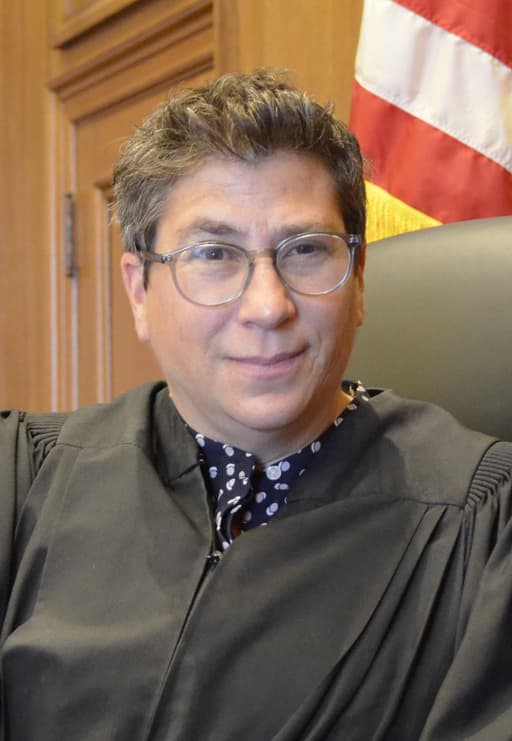
Alison J. Nathan
PERSON • 2 mentions
American federal judge who presided over the Ghislaine Maxwell criminal trial
BL
Blaszczak
PERSON
Surname reference in documents
CM
Colleen McMahon
PERSON
United States federal judge
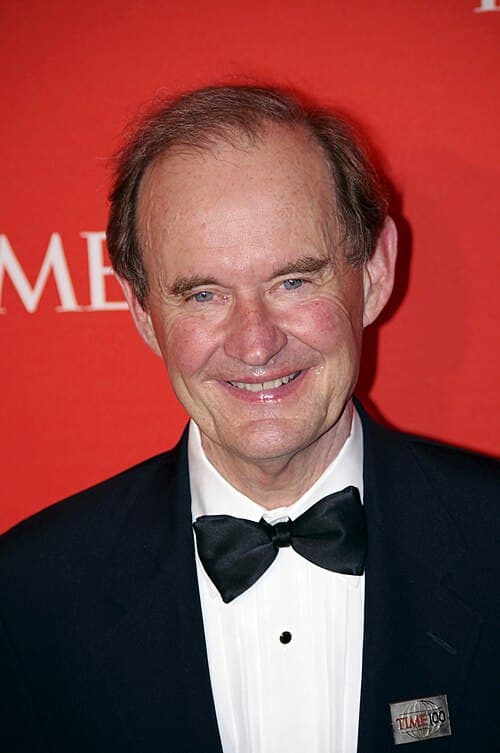
David Boies
PERSON
American lawyer and chairman
Fletcher
PERSON
American actress, singer, and songwriter

Ghislaine Maxwell
PERSON • 5 mentions
British socialite and sex trafficker, daughter of Robert Maxwell, accomplice of Jeffrey Epstein
HS
Hong Mai Sa
PERSON
Name reference in documents
JD
Jane Doe
PERSON
Pseudonym for anonymous victims/witnesses in Epstein legal proceedings

Jeffrey Epstein
PERSON • 3 mentions
American sex offender and financier (1953–2019)
JP
Jeffrey Paglloca
PERSON
Name reference in documents

Julie K. Brown
PERSON
American journalist
LI
Lisse
PERSON
Surname or name fragment in documents
LP
Loretta A. Preska
PERSON
Federal judge, Southern District of New York, presided over Epstein-related proceedings
LP
Loretta Preska
PERSON
Person referenced in documents
MA
Martindell
PERSON • 2 mentions
Surname reference in Epstein-related documents
MA
Mattox
PERSON
Name reference in documents
OS
Osheroff
PERSON
Name reference in documents
Palmer
PERSON
Surname reference in Epstein-related documents
PR
Pruitt
PERSON
Surname reference in documents
RO
Rosales
PERSON
Name reference in documents
SM
Sigrid McCawley
PERSON • 2 mentions
American attorney
SW
Sweet
PERSON
NER artifact - legal term or document reference misclassified as person
VIA EMAIL
PERSON
Person referenced in documents
Virginia Giuffre
PERSON
Advocate for sex trafficking victims (1983–2025)
BOIES, SCHILLER & FLEXNER
ORGANIZATION
Organization referenced in documents
Haddon, Morgan and Foreman
ORGANIZATION
Organization referenced in documents

Humana
ORGANIZATION
American managed health care company
International Telephone and Telegraph Corp.
ORGANIZATION
Organization referenced in documents
LY USA, Inc.
ORGANIZATION
Organization referenced in documents
Menard Correctional Center
ORGANIZATION
Organization referenced in documents
Second Circuit
ORGANIZATION • 2 mentions
U.S. Court of Appeals for the Second Circuit
the Brown Court
ORGANIZATION
Organization referenced in documents
The Second Circuit
ORGANIZATION
Organization referenced in documents

Colorado
LOCATION
State of the United States of America

Denver
LOCATION
Consolidated city-county and capital of Colorado, United States
Statistics
Pages:8
Entities:36
Avg. OCR:0.9%
Sponsored